Fair and Balanced? Hah!

No, This Is Not About Faux News

No, This Is Not About Faux News

The so-called liberally-biased media have created a monster. About ten or more years ago, it was thought by the news media that letting alternate points of view have their own voice would prevent accusations of bias. The right-wing jumped on that. They still accused the media of bias, but their representation in news story jumped to such an extent that the increasingly dim American public assumed their opinions were equally meritorious.

If you give the village idiot a soap box, you will find that crowds will gather; and people will sagely nod their heads as if they were receiving words of wisdom.

My opinion is probably a little more undemocratic. Instead of giving the Tea Party adherents a voice, I would have them pistol-whipped. What one former Republican consultant has called “a neo-Confederate insurgency” has now become, in effect, a coup d’état. That’s why some of my recent posts have sounded a little draconian. I don’t think that sitting down and negotiating with John Boehner is going to accomplish anything other than re-arranging the deck chairs on the Titanic. Perhaps if we arrested Boehner, Cantor, and some of their confederates and then proceeded to play hard ball with them, we might get through this.

I am not willing at this point to concede any points to the Tea Party and their Congressional stooges. Hit them hard and fast. Otherwise, welcome to the Confederate States of America II.


To Each According to His Needs

Llama

Llama

A similar arrangement prevailed with respect to the different manufactures as to the agricultural products of the country. The flocks of llamas, or Peruvian sheep, were appropriated exclusively to the Sun and to the Inca. Their number was immense. They were scattered over the different provinces, chiefly in the colder regions of the country, where they were intrusted to the care of experienced shepherds, who conducted them to different pastures according to the change of season. A large number was every year sent to the capital for the consumption of the Court, and for the religious festivals and sacrifices. But these were only the males, as no female was allowed to be killed. The regulations for the care and breeding of these flocks were prescribed with the greatest minuteness, and with a sagacity which excited the admiration of the Spaniards, who were familiar with the management of the great migratory flocks of merinos in their own country.

At the appointed season, they were all sheared, and the wool was deposited in the public magazines. It was then dealt out to each family in such quantities as sufficed for its wants, and was consigned to the female part of the household, who were well instructed in the business of spinning and weaving. When this labor was accomplished, and the family was provided with a coarse but warm covering, suited to the cold climate of the mountains,—for, in the lower country, cotton, furnished in like manner by the Crown, took the place, to a certain extent, of wool,— the people were required to labor for the Inca. The quantity of the cloth needed, as well as the peculiar kind and quality of the fabric, was first determined at Cuzco. The work was then apportioned among the different provinces. Officers, appointed for the purpose, superintended the distribution of the wool, so that the manufacture of the different articles should be intrusted to the most competent hands. They did not leave the matter here, but entered the dwellings, from time to time, and saw that the work was faithfully executed. This domestic inquisition was not confined to the labors for the Inca. It included, also, those for the several families; and care was taken that each household should employ the materials furnished for its own use in the manner that was intended, so that no one should be unprovided with necessary apparel. In this domestic labor all the female part of the establishment was expected to join. Occupation was found for all, from the child five years old to the aged matron not too infirm to hold a distaff. No one, at least none but the decrepit and the sick, was allowed to eat the bread of idleness in Peru. Idleness was a crime in the eye of the law, and, as such, severely punished; while industry was publicly commended and stimulated by rewards.—William H. Prescott, History of the Conquest of Peru


Food Fight

William H. Prescott (1796-1859)

William H. Prescott (1796-1859)

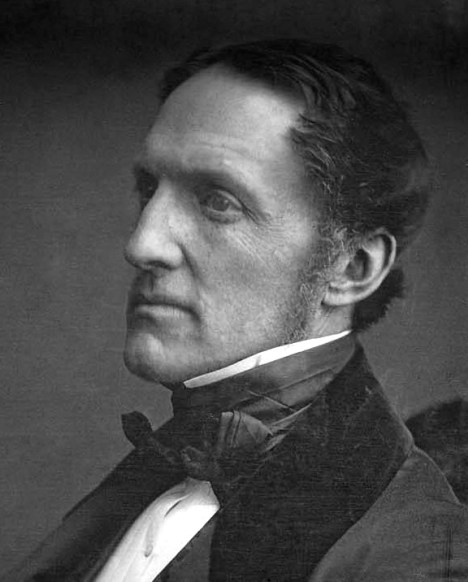
It all started with a food fight in the Harvard University dining hall, or commons. A not particularly distinguished student from a famous family, William Hickling Prescott was hit in the left eye with a crust of bread. The impact destroyed the vision of his left eye for life and, in fact, knocked him out. The trouble began when he started suffering degeneration in his right eye. During his youth, there were whole months at a time when Prescott was blind and had to stay in a darkened room.

But things got better. By then, Prescott went to Europe and fell in love with the history of Spain. He wrote The History of the Reign of Ferdinand and Isabella (1837), followed by The History of the Conquest of Mexico (1843) and The History of the Conquest of Peru (1847). During his most productive years, there were still times when he was unable to read or even see. Using the help of secretaries and a device called a noctograph, which enabled him to write clearly in total darkness, Prescott managed to write some of the greatest works of history published in the nineteenth century. In his Preface to The Conquest of Peru, he wrote:

While at the University, I received an injury in one of my eyes, which deprived me of the sight of it. The other, soon after, was attacked by inflammation so severely, that, for some time, I lost the sight of that also; and though it was subsequently restored, the organ was so much disordered as to remain permanently debilitated, while twice in my life, since, I have been deprived of the use of it for all purposes of reading and writing, for several years together. It was during one of these periods that I received from Madrid the materials for the “History of Ferdinand and Isabella,” and in my disabled condition, with my Transatlantic treasures lying around me, I was like one pining from hunger in the midst of abundance. In this state, I resolved to make the ear, if possible, do the work of the eye. I procured the services of a secretary, who read to me the various authorities; and in time I became so far familiar with the sounds of the different foreign languages (to some of which, indeed, I had been previously accustomed by a residence abroad), that I could comprehend his reading without much difficulty. As the reader proceeded, I dictated copious notes; and, when these had swelled to a considerable amount, they were read to me repeatedly, till I had mastered their contents sufficiently for the purposes of composition. The same notes furnished an easy means of reference to sustain the text.

Still another difficulty occurred, in the mechanical labor of writing, which I found a severe trial to the eye. This was remedied by means of a writing-case, such as is used by the blind, which enabled me to commit my thoughts to paper without the aid of sight, serving me equally well in the dark as in the light. The characters thus formed made a near approach to hieroglyphics; but my secretary became expert in the art of deciphering, and a fair copy—with a liberal allowance for unavoidable blunders—was transcribed for the ‘use of the printer. I have described the process with more minuteness, as some curiosity has been repeatedly expressed in reference to my modus operandi under my privations, and the knowledge of it may be of some assistance to others in similar circumstances.

Though I was encouraged by the sensible progress of my work, it was necessarily slow. But in time the tendency to inflammation diminished, and the strength of the eye was confirmed more and more. It was at length so far restored, that I could read for several hours of the day though my labors in this way necessarily terminated with the daylight. Nor could I ever dispense with the services of a secretary, or with the writing-case; for, contrary to the usual experience, I have found writing a severer trial to the eye than reading,—a remark, however, which does not apply to the reading of manuscript; and to enable myself therefore, to revise my composition more carefully, I caused a copy of the “History of Ferdinand and Isabella” to be printed for my own inspection, before it was sent to the press for publication. Such as I have described was the improved state of my health during the preparation of the “Conquest of Mexico”; and, satisfied with being raised so nearly to a level with the rest of my species, I scarcely envied the superior good fortune of those who could prolong their studies into the evening, and the later hours of the night.

But a change has again taken place during the last two years. The sight of my eye has become gradually dimmed, while the sensibility of the nerve has been so far increased, that for several weeks of the last year I have not opened a volume, and through the whole time I have not had the use of it, on an average, for more than an hour a day. Nor can I cheer myself with the delusive expectation, that, impaired as the organ has become, from having been tasked, probably, beyond its strength, it can ever renew its youth, or be of much service to me hereafter in my literary researches. Whether I shall have the heart to enter, as I had proposed, on a new and more extensive field of historical labor, with these impediments, I cannot say. Perhaps long habit, and a natural desire to follow up the career which I have so long pursued, may make this, in a manner, necessary, as my past experience has already proved that it is practicable.

It is with some frustration that I note that Prescott and his great contemporaries, Francis Parkman (The Oregon Trail, The French in North America) and John Lothrop Motley (The Rise of the Dutch Republic) are virtually ignored today—despite the fact that their literary histories are on a par with the best. That he was able to accomplish so much with his vision problems is a miracle. In fact, his histories in general are a miracle.

In preparation for an eventual visit to Peru, I am now reading The History of the Conquest of Peru and marvelling at its author’s insightfulness and sparkling literary style.

The Nature of the Soul

Cicero

Cicero

It’s impossible to locate an earthly origin of souls. There’s nothing mixed or compounded in souls, they’re not earth or made of earth. They’re not even moist or airy or fiery. There’s nothing in these elements that accounts for the power of memory, mind or thought, that recalls the past, foresees the future or comprehends the present. These faculties are divine; you won’t find a way for them to get to man except from god. The natural power of the soul is therefore unique, distinct from the usual and familiar elements. Whatever it is that thinks, knows, lives and grows must be heavenly, divine, and therefore eternal. And god, who is recognized by us, can only be recognized by a mind that is free and unencumbered, distinct from any mortal compound, sensing all and setting all in motion, itself endowed with eternal movement. The human mind consists of the same element, the same nature.—Marcus Tullius Cicero, Consolation

Arrest Congress!

It’s Time to Arrest These Criminals!

It’s Time to Arrest These Criminals!

Why are we coddling John “Crybaby” Boehner and his gang of oath violators. If they fail to raise the debt ceiling, they should be forced to do the perp walk—with hands cuffed—to the nearest calabozo. At that point, it becomes an act of treason against the country they have vowed to safeguard. They are no better than the guys shown in the above photo, and deserve not a whit more consideration. The mere fact that they won’t have access to their favorite booze will be sufficient to make most of them break down and start pointing fingers at one another.

Hurry Sundown

The Dread Santa Ana Winds Are Blowing

The Dread Santa Ana Winds Are Blowing

Generally speaking, the western beaches of Los Angeles have the cleanest air in Southern California—except when the Santa Ana Winds are blowing. A high pressure area parked over Nevada and Utah is sending winds from east to west (the opposite of the usual direction) and blowing all the pollution of the Los Angeles area out to sea. Today, the temperature was around 90° F (33° C)  with a brown horizon and smog over the sands of Santa Monica Bay.

Although we get some of our hottest weather this time of year, our only salvation is that sundown comes much earlier. Throughout the month of October, each day is approximately two minutes shorter than the one before it. That’s two minutes of intense sunshine in the bone-dry air that is not beating down on the uninsulated roof of our second-floor apartment, which was built almost seventy years ago. Another nice thing about sundown is that all the blowing dust in the air makes for occasional beautiful sunsets.

Also, around October the mercury drops down to about 60° F (16° C) at night, so the apartment cools down earlier. During the humidity of July, with its long days, it frequently doesn’t cool down until 3 am, if at all.

The Santa Ana Winds are also noted for virulent brush fires that spread uncontrollably through the hills and mountains surrounding the L.A. Basin. Right now, the wind is blowing around 20 miles per hour, which is approximately 9 meters a second. With some luck, we’ll get through this period without having the San Gabriels and Santa Monica Mountains erupt in flames.


A Tribute to an Old Enemy

General Vo Nguyen Giap of Viet Nam

General Vo Nguyen Giap of North Viet Nam

He was the greatest military figure of the Twentieth Century. In turn, he defeated the Armed Forces of France at Dien Bien Phu in 1953, and of the United States in 1975. Oh, and along the way, he defeated the Chinese Red Army in 1979, when they decided to invade Viet Nam in response to the latter’s occupation of Cambodia in 1978. And he cheated death for 102 years, dying today in Hanoi.

France, the United States, and China—in succession!

I could only wish the United States had produced a military leader as accomplished as Giap; but whenever they tried to, they ran into the hide-bound Pentagon and Washington bureaucracy. People like Billy Mitchell, George S. Patton, and Douglas MacArthur had the potential; but they did not have the political backup.

So, General Giap, I toast you as an honorable enemy!

Congress on Strike? Hire Scabs!

Who Needs ’em?

Who Needs ’em?

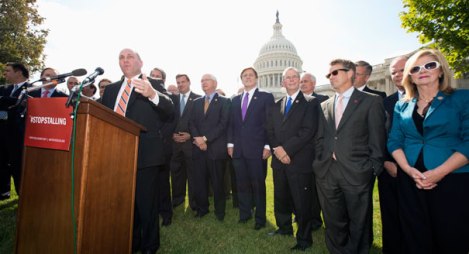
I am now going to sound like a Republican: If the U.S. House of Representatives refuses to do its job, give them pink slips and hire scabs. Of course, they would lose their Congressional health benefits and have to rely on Obamacare. It’s rather unlikely anyone else would be so stupid as to give them a job, so they would also have to go on public assistance. The one on the right in the above photo would make a great welfare queen.

In the past, I tried to stop writing about politics, but I find it’s impossible to remain silent when I see my country being attacked by the very people who are supposed to protect it. Didn’t they swear an oath? And now, they are threatening to destroy the U.S. because they don’t like a piece of legislation (the Affordable Care Act) that was duly passed by a previous Congress and vetted through the Supreme Court. Well, if they can do that, I say fire the mo-fos , and maybe give them each a 90-day jail sentence to go with the package. If the law of the land can be unlawfully attacked in this manner, the perquisites of the House of Representatives are also up for grabs.

Weepy John Boehner tells the nation, “This isn’t some damn game!” I say it is, and the crybaby ought to go, but maybe with a 1-year sentence for his part in the fracas.

Here’s the oath of office these scum broke: I do solemnly swear (or affirm) that I will support and defend the Constitution of the United States against all enemies, foreign and domestic; that I will bear true faith and allegiance to the same; that I take this obligation freely, without any mental reservation or purpose of evasion; and that I will well and faithfully discharge the duties of the office on which I am about to enter: So help me God.

Talking Point Nation

I Don’t Know What the Tiger Represents, but of the Piglets There Is Little Doubt

I Don’t Know What the Tiger Represents, but of the Piglets There Is Little Doubt

Every once in a while, some rabid right-wing nut job tries to take me on in these postings, but I never let them get very far. This is not a debating society; and all these goons have to offer are “talking points,” usually from some out-there conservative ideologue such as Glenn Beck or Bill O’Reilly. Typically, these talking points eventually all fall apart because they ultimately rely on some premise which I cannot accept.

For instance, anything that relies on the authority of the Bible or the Constitution is not automatically guaranteed acceptance from me. After all, I think the Second Amendment is a piece of excrement that appears to justify the NRA and other recidivist organizations, now that King George III is safely dead. And according to Article I, Section 2, isn’t our President three-fifths of a human being? (I think he’s twenty-fifths of a conservative Republican.) I know the wording has subsequently been amended, but the House of Representative’s record of racism makes me think they had crossed their fingers behind their backs. Besides, the bewigged Fathers of Our Country were men, not demigods, and as such made many mistakes and evasions that subsequently led to Civil War and hundreds of thousands of casualties a few decades later.

And don’t get me started on the Bible! Although I am by no means an atheist, I think most Bible-toting Evangelicals are little better than the Khmer Rouge, the Taliban, or Peru’s Sendero Luminoso (“Shining Path”) guerrillas. Quote some out-of-context verses at me, Sonny, and I’ll gladly demonstrate to you how you’re probably in violation of the strict dictates of the Books of Leviticus and Deuteronomy. I respect heartfelt beliefs, but note that I may be immune to them.

So if you read what I have to say and thing you can turn me around based on some Oxycontin-inspired argument that Rush Limbaugh pooted out of his butt cheeks, don’t expect me to provide you with a forum.

I suppose I admire how you clowns can hang together, which is convenient for the voters who will kick your Tea Party behinds out of office come next year.

Art and Courage

Opening Oneself Up to Create Art

Opening Oneself Up to Create Art

The reader walks away from real art heavier than she came to it. Fuller. All the attention and engagement and work you need to get from the reader can’t be for your benefit; it’s got to be for hers. What’s poisonous about the cultural environment today is that it makes this so scary to try to carry out. Really good work probably comes out of a willingness to disclose yourself, open yourself up in spiritual and emotional ways that risk making you look banal or melodramatic or naive or unhip or sappy, and to ask the reader really to feel something. To be willing to sort of die in order to move the reader, somehow. Even now I’m scared about how sappy this’ll look in print, saying this. And the effort actually to do it, not just talk about it, requires a kind of courage I don’t seem to have yet. … Maybe it’s as simple as trying to make the writing more generous and less ego-driven.—David Foster Wallace, Conversations with David Foster Wallace