

“The Best Solitary Company in the World”

I Mean the Book

I Mean the Book

Here is the best solitary company in the world, and in this particular chiefly excelling any other, that in my study I am sure to converse with none but wise men; but abroad it is impossible for me to avoid the society of fools. What an advantage have I, by this good fellowship, that, besides the help which I receive from hence, in reference to my life after this life, I can enjoy the life of so many ages before I lived! — that I can be acquainted with the passages of three or four thousand years ago, as if they were the weekly occurrences! Here, without travelling so far as Endor, I can call up the ablest spirits of those times, the learnedest philosophers, the wisest counsellors, the greatest generals, and make them serviceable to me. I can make bold with the best jewels they have in their treasury, with the same freedom that the Israelites borrowed of the Egyptians, and, without suspicion of felony, make use of them as mine own. I can here, without trespassing, go into their vineyards and not only eat my fill of their grapes for my pleasure, but put up as much as I will in my vessel, and store it up for my profit and advantage.—William Waller, Divine Meditations: Meditation Upon the Contentment I Have in My Books and Study
Traveling Alone

It Looks As If I’ll Be on My Own

It Looks As If I’ll Be on My Own

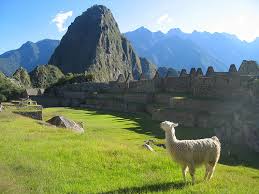
Martine and I had decided that, if she felt well enough to travel, we’d go together to France and Italy. If she felt unable to travel, I would go by myself to Peru and possibly Bolivia. At the end of January, we took a little test trip to the Anza-Borrego Desert in San Diego County. Although we had a firm bed, it wasn’t firm enough for Martine’s back. Fortunately, we had an air mattress that was firmer, so Martine slept on the floor. This option would not work as well for overseas travel, as both of us travel light.

On the plus side, Martine is getting better slowly; but she still depends heavily on a super firm couch and a super firm mattress for her comfort. Without these, she would be awake most of the night for all the days of our trip. Understandably, under those circumstances she would prefer to remain behind in Los Angeles.

I, on the other hand, have this great yearning for travel. The pity of it is, I will be deprived of my favorite traveling companion. I am used to this, as I have been alone in Iceland twice (2001 and 2013) and in Argentina once (2006). We will probably travel together to Southern Arizona by car—with the firm air mattress—so that Martine doesn’t get a case of cabin fever.

In the meantime, I am continuing my Peru reading program in preparation for a three week vacation there in September and October. As Rudyard Kipling wrote in his poem, “The Winners”:

Down to Gehenna or up to the Throne,
He travels the fastest who travels alone.

Most memorably, in Josef von Sternberg’s film Morocco (1930), Marlene Dietrich, writes these lines with her lipstick on a hotel room mirror before ditching Adolphe Menjou.

So I will travel faster, but I’d rather not be alone.


Robots, TED Talks, and Butchers’ Thumbs

Don’t Believe Everything You Hear!

Don’t Believe Everything You Hear!

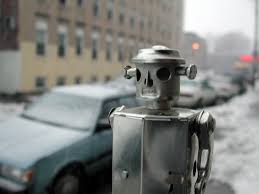
Coming home from work today (yes, now I’m working Saturdays), I heard something that made me sit bolt upright while listening to a National Public Radio program dedicated to TED talks. You may recall that TED (short for Technology, Entertainment, Design) is the dernier cri when it comes to spreading dubious notions. This one was a talk by Cynthia Breazeal of MIT entitled “The Rise of Personal Robots.”

Ms. Breazeal dreamed of a day when robots would solve many of our societal and personal problems. What makes me suspicious is what I call the Butcher’s Thumb Paradox. A good electronic scale makes weighing cuts of meat easy and accurate—except for one thing. I am referring to the butcher’s thumb, which, resting on the scale, adds several ounces to your purchase.

In the world of robotics, what would serve as the butcher’s thumb are the corporations that build the robots. The robots will serve you, the purchaser, to some extent; but, even more, they serve the marketing goals of the corporations that build them. That’s why robots have been used extensively to kill manufacturing jobs, because they are cheaper than humans, don’t ever unionize, and don’t require expensive health or workmen’s compensation insurance.

Remember how many technical support problems the telephone was supposed to solve. Now, when you call a major corporation for tech support, you get what’s called an automated attendant, which walks you through a script. Now I don’t know about you, but the option you are looking for doesn’t exist about 50-60% of the time. Why? Because it is never in the corporation’s best interest to explain anything to you which may require follow-up questions and answers. They’ll connect you to sales right away, but God help you if they accidentally billed you for a left-handed sky hook or delivered a device that was, in effect, a non-functioning paper weight. In fact, many vendors will now charge you to answer questions. Questions are quite simply unprofitable. Too bad about your needs!

Before we ever get a personal robot to help us with the housework or carry out the garbage, we will have robot bill collectors, robot parking police, and robot callers. (Wait a minute! We already have those! And aren’t they fun?)

So when TED speakers promise great money and time saving advances for us plain folks, keep looking for the butcher’s thumb. It’s there somewhere….