Drone World

Get Ready for New Legal and Ethical Problems

Get Ready for a Raft of New Legal and Ethical Problems

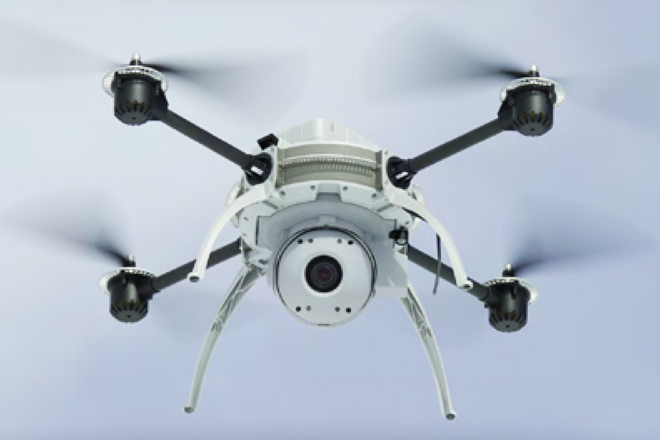
Technology is a double-edged sword. Every new development comes with a general realization that the people who engineered it didn’t quite think things through. Did you know that there is now a website entitled Drone Law News? Did you know that a drone flying at 2,300 feet had a near miss with a U.S. Airways Jet flying from Charlotte, NC to Tampa, FL? The newer drones have capabilities that are capable of causing nightmares, such that according to a Pew Research Center poll, “63 percent of respondents said using drones for personal and commercial purposes would be a change for the worse.”

And now, according to a friend of mine who is a motion picture cameraman, it is possible that the Malaysian Airlines Flight 370 disappearance could have been due to the plane carrying LiPo (or Lithium Polymer) batteries such as are used to power some drones in their cargo hold. These batteries are capable of combusting and causing fires that are difficult to put out, especially when a aircraft’s cabin fills up with smoke and passengers and crew start passing out.

Over and above all these personal and commercial considerations, we have seen now for several years a growing use of drones on the battlefield. They are useful for assassinating terrorists such as Anwar al-Awlaki in Yemen. Also they have a reputation for causing havoc and carnage at wedding parties in the Islamic world.


It’s Not Over Until the Bearded Lady Sings

In Eurovision, the Wurst Always Wins

In Eurovision, the Wurst Always Wins

I have always been amused by the annual Eurovision song contest, if only because it means so much to all the nations participating.This year, the winner was a bearded drag queen from Austria who goes by the name of Conchita Wurst (real name: Tom Neuwirth). I heard a bit of his/her number, “Rise Like a Phoenix,” on YouTube. I have to admit that Conchita was in good voice and deserved some credit for not turning the number into a freak show.

Every year, I root for Iceland to win. For a tiny little island nation (under 400,000 population), they have tons of raw musical talent. This year, the representative was a group called Pollapönk, which looks something like a cross between the Mighty Morphin Power Rangers and the Teletubbies. Their musical number was called “No Prejudice,” which you can see here at YouTube. This year Pollapönk placed a lowly fifteenth out of twenty-six. According to the Iceland Review website, their favorable votes came mostly from San Marino (8), France (7), and Italy (6).

I doubt anything lik Eurovision would ever make it big in the United States. Although Europe has the musical talent, Eurovision is far too political (big surprise!) and far too oriented toward a lumpenproletariat audience. It differs from such performers as Barry Manilow and Tom Jones mainly in the politically liberal orientation of the musical numbers presented.


Cockpit Confidential—Reflections

Art Deco Doors at LaGuardia’s Marine Air Terminal

Art Deco Doors at LaGuardia’s Marine Air Terminal

A little more than a month ago, I wrote a posting about Patrick Smith, whose Ask the Pilot website has inspired me to read his excellent new book, Cockpit Confidential: Everything You Need to Know About Air Travel, Questions, Answers & Reflections. If you want to read my original post, you can find it here. I thought I would like write about his book and why I think that anyone who is even remotely interested in travel should read it.

Most of the text is arranged in Question & Answer format, but the things I liked most about the book are the essays interspersed between the chapters. One of the things that has most irritated me about American airports is their swift decline from classy places to visit and soak oneself in the whole culture of flying to something that barely competes with inner city Greyhound bus terminals. In fact, I have never been to a bus terminal in Mexico or Argentina that wasn’t more comfortable than the best American airports I’ve seen. In one essay, Patrick produces a list entitled “Fifteen Things No Terminal Should Be Without,” which includes are such items as:

  • A fast, low-cost public transportation link to downtown. Only Cleveland and Portland, to my knowledge, can boast of this.
  • In-transit capabilities for passengers just transferring to another flight.
  • Complimentary wireless Internet.
  • Convenience stores.
  • Power ports for re-charging your portable electronics.
  • Showers and a short-stay hotel, instead of sleeping on a filthy floor in the terminal.
  • Play areas for children.
  • Better dining options, most especially fewer chain restaurants.
  • An information kiosk.
  • A bookstore.
  • Sufficient gate-side seating to accommodate all the passengers on a flight.
  • Finally, some aesthetic flair, such as the Marine Air Terminal at LaGuardia (departure exit pictured above).

We tend to think of flying as an experience fraught with massive inconvenience (to wit: the TSA, incomprehensible airport public address systems, and grubby terminals) and white-knuckle experiences (like air turbulence, bouncy landings, and ominous announcements from the cockpit). One of the things that Cockpit Confidential accomplishes in its 300 pages is to give you a good feeling for the amazing safety record of airlines around the world. When Malaysian Flight MH370 goes astray, it not only hits the news but stays there for weeks at a time until most TV viewers get a sick feeling in the pit of their stomach about flying in general.

Just to show that he doesn’t sugar-coat the airlines’ safety records, Smith provides a summary of the ten deadliest air disasters of all time (nine of which occurred in the 1970s and 1980s), with a survey of the special circumstances that led to them. He even provides an essay on the events of September 11, 2001 and why it is now totally unlikely that a similar event would ever happen again.

“Exuberant, Profuse, May Rot Your Teeth. Overall Grade: F”

“Exuberant, Profuse, May Rot Your Teeth. Overall Grade: F”

A special area of interest to the author is the subject of airline liveries (i.e. plane decorations), logos, and names. Above, for instance, is his evaluation of Southwest Airlines’ new livery, which he regards as the worst-designed of the top ten U.S. airlines. I was particularly amused by the names of some airlines that I never heard of, and would be especially wary of flying. They include such beauties as Kazanskoe Motorostroitel’noe Proizvodstevennoe Ob’yedinenie (“which is the sound a person makes when gargling aquarium gravel”); Zhezkazan Zhez Air (good for catching a few Z’s); Wizz Air; Kras Air (imagine an h after the s), and U-Land Airlines (now defunct).

In my previous post, I mentioned adding Cockpit Confidential to my TBR pile. Good thing, too, because Patrick’s book is definitely a keeper.


In the Rant Room

Ranting Is Almost Inherent in the Act of Blogging

Ranting Is Almost Inherent in the Act of Blogging

Although I didn’t know it at the time, “Rant Room” is an anagram for “Tarnmoor.” But then, so are “Man Rotor,” “Roman Rot,” “A Mr No Ort,” and “Rat Moron”; so perhaps it’s not worth reading too much into this. Looking back at some of my older postings, particularly during election years (of which this is one), I see that I have frequently indulged in knee-jerk reactions of outrage.

Outrage is so much a part of our national political scene. There is a whole spectrum of the media that feeds on outrage and slings it back magnified and undeodorized. One result is that millions of Americans have lost the ability to communicate with one another, except through the use of buzzwords and loaded talking points. Just look at this partial list of hot buttons (in no particular ordure) that have been used to poison the national debate:

Abortion. Benghazi. Socialism. Prayer. Voter ID. Unwed Mothers. Sharia. Bible. Gay Marriage. Rape. Makers. Takers. One Percent. Tea Party. Cliven Bundy. Racism. Climate Change. Evolution. Ownership. Fox News. Obama. Obamacare. Solar Power. Creationism. Nanny State. Guns. Marijuana. Welfare. Immigration. Terrorists. Hillary. Taxes. Death Panels. Fluoridation. LGBT. Sovereign Citizen.

This is a highly partial list, but it is enough to fuel years of debate and cripple the nation.

I may find myself writing about some of the above, but not, I hope, out of outrage. Please, Lord, let me shed light rather than darkness in the places where I walk.


It’s the Miracle Food!!!

You Must Eat Three Pounds of Kale a Day to Thrive

You Must Eat Seven Pounds of Kale a Day in Order to Survive!

Okay, so I lied, both in the title of this posting and the caption to the photo above. I’m sure kale is as good for you as any number of other greens which have tended to be ignored. And, to my mind, kale is by no means the tastiest of the bunch. If I had my druthers, I would select Swiss chard which I use in most of my soup recipes. It’s not as bitter as kale, and probably just as good.

In fact, I used NutritionData.Com to do a comparative analysis of 1 cup of cooked, boiled, drained, without salt kale and Swiss chard. Click on either of these and you will learn more than you ever needed or wanted to know. The important thing to remember is this: Kale is not a miracle food, but like all greens is good for you.

Kale is now riding the high horse of newspaper-sanctioned prosperity, until such time as the media discovers that it causes cancer, beri-beri, pellagra, dengue, and leprosy. In the meantime, I suppose you could continue to eat your seven pounds of kale daily, not neglecting all the other vitamins and minerals your body needs to function.

I am sure that, any day now, I will see kale capsules available on the nutritional supplements shelf of your local pharmacy. Each 1,000 MG capsule will run you $3.95; and you should take three a day, one with each meal. Or you’ll be able to get kale oil. Feel free to rub it all over your skin and see how it changes your coloration to dark green. And how healthy is that?


Tarnmoor’s ABCs: Iceland

Land of Fire, Ice—and Sagas

Land of Fire, Ice—and Sagas

I was so very impressed by Czeslaw Milosz’s book Milosz’s ABC’s. There, in the form of a brief and alphabetically-ordered personal encyclopedia, was the story of the life of a Nobel Prize winning poet, of the people, places, and things that meant the most to him. Because his origins were so far away (Lithuania and Poland) and so long ago (1920s and 1930s), there were relatively few entries that resonated personally with me. Except it was sad to see so many fascinating people who, unknown today, died during the war under unknown circumstances.

This blog entry is my own humble attempt to imitate a writer whom I have read on and off for thirty years without having sated my curiosity. Consequently, over the next few months, you will see a number of postings under the heading “Tarnmoor’s ABCs” that will attempt to do for my life what Milosz accomplished for his. I don’t guarantee that I will use up all 26 letters of the alphabet, but I’ll do my best. Today, we’re at the letter “I”:

I have been to Iceland twice, first in 2001 and then in 2013, both times by myself. (The first time, Martine didn’t want to go; the second time, she couldn’t.) During the two trips, I traveled around almost the entire circumference of the island, and through the interior on the Kjölur route, where we traveled on a long dirt road and forded several rivers between Geysir and Akureyri. Would I go again? Yes, in a heartbeat, but I’d like to go with someone so that we could rent a car and see some of the lush countryside off the main routes.

What led me to Iceland was, not surprisingly for a bookworm like me, was reading the Icelandic sagas. In the 13th century AD, there was no better literature being written anywhere in Europe. Other than a handful of Arthurian legends and a few devotional books, there just was no competition to the “Big Five” Sagas of Icelanders, namely: Njals Saga, Grettir’s Saga, Egils Saga, the Laxdaela Saga, and the Eyrbyggja Saga. I have read all five at least twice; the Njals Saga, the greatest of them all, at least three or four times. The last time I went, I visited two museums dedicated to individual sagas, in Hvõlsvollur (Njals Saga) and in Borgarnes (Egils Saga).

Both times, I did all my traveling by bus. Occasionally I took tours when I had to. Otherwise, I used the public Stræto and Sterna buses. It isn’t terribly difficult, as all bus drivers and just about everyone else under the age of 70 in Iceland speaks English. This is a function not only of education, but of the prevalence of English and American television programming.

At least once a day, I would have delicious fish dinners. At the majority of restaurants where I dined, I was no farther than a couple hundred feet from the fishing boats that had just brought in their catch. Until I went to Iceland, I had no idea of what fresh fish really tasted like. Now I do. I would just order the fish special of the day, even if I never heard of that fish species before. It was always scrumptious, whether it was arctic char, salt water catfish, and most especially my favorite—cod. In Southern California, I am allergic to shrimp and lobster. In the cold waters off Iceland, I had no allergy problems.

Until global warming becomes more prevalent, the tourist season in Iceland is a necessarily short one, lasting only from June to August. Already, at the end of August, many tourist facilities are converted back to school facilities and visiting hours are slashed. People start thinking about the darkness of winter. Toward the end of June, the sun never entirely sets. It is up when you go to bed, and up when you awake. I thought I would not be able to sleep under those conditions: If I tire myself out, which I frequently did, there was no problem.

I would love to fly back to Reykjavík with a Kindle loaded with Icelandic sagas.



A Plague on Both Your Houses!

Who Was That Masked Man?

Who Was That Masked Man?

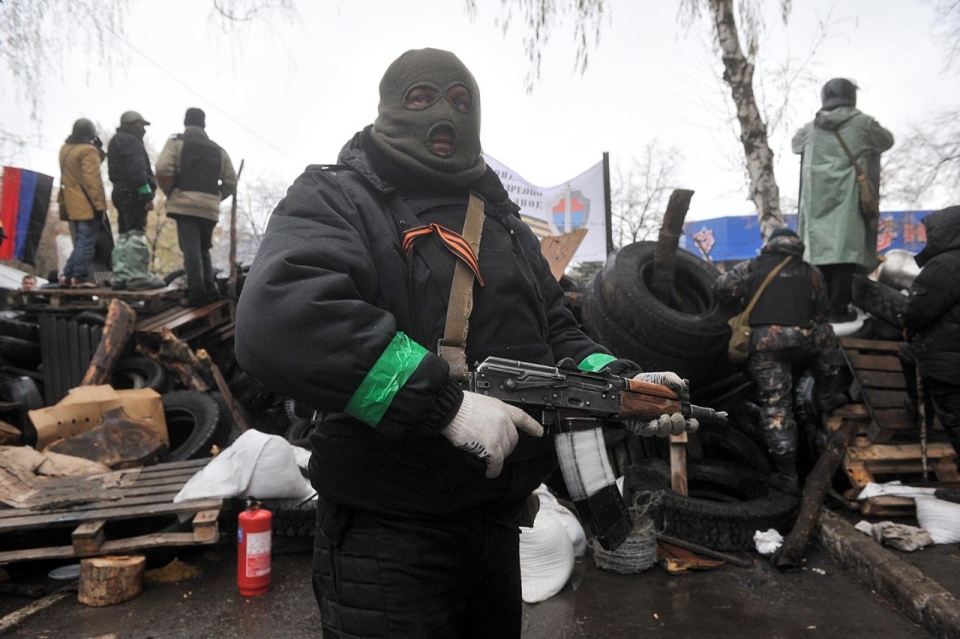
There are so many world conflicts today in which my natural response is negative toward all sides. The Ukraine conflict is one such example. One could be for either of two kleptocracies: Both Russia and Ukraine will do nothing in particular to improve the lives of their adherents. Because the people who live there know this, I have a suspicion that the reason so many of the combatants are masked is that, most likely, the civilian protesters are supported by Russian spetznaz special forces troops who don’t want to break their cover. And why shouldn’t Ukraine do the same? They probably do.

I am in a quandary because I like both the Russian and Ukrainian people. Their governments just happen to suck. My main reason for liking Russia, other than their great literature, is that Pussy Riot performer Nadezhda Tolokonnikova (shown below) is, to my mind, is one of the most beautiful brunettes who have ever lived. (Neither Nadezhda nor I think particularly much of Vladimir Putin.)

Nadezhda Tolokonnikova

Nadezhda Tolokonnikova

Seriously, though, I think Russia is more in the wrong on this issue than Ukraine. Probably the best thing would be for both sides to come to some agreement without getting the whole world’s panties in a bunch.


Solitude Is Essential

J. S. Mill

J. S. Mill

A population may be too crowded, though all be amply supplied with food and raiment. It is not good for man to be kept perforce at all times in the presence of his species. A world from which solitude is extirpated, is a very poor ideal. Solitude, in the sense of being often alone, is essential to any depth of meditation or of character; and solitude in the presence of natural beauty and grandeur, is the cradle of thoughts and aspirations which are not only good for the individual, but which society could ill do without. Nor is there much satisfaction in contemplating the world with nothing left to the spontaneous activity of nature; with every rood of land brought into cultivation, which is capable of growing food for human beings; every flowery waste or natural pasture ploughed up, all quadrupeds or birds which are not domesticated for man’s use exterminated as his rivals for food, every hedgerow or superfluous tree rooted out, and scarcely a place left where a wild shrub or flower could grow without being eradicated as a weed in the name of improved agriculture. If the earth must lose that great portion of its pleasantness which it owes to things that the unlimited increase of wealth and population would extirpate from it, for the mere purpose of enabling it to support a larger, but not a better or a happier population, I sincerely hope, for the sake of posterity, that they will be content to be stationary, long before necessity compels them to it.—John Stuart Mill, Principles of Political Economy

Tarnmoor’s ABCs: Honoré de Balzac

Honoré de Balzac (1799-1850)

Honoré de Balzac (1799-1850)

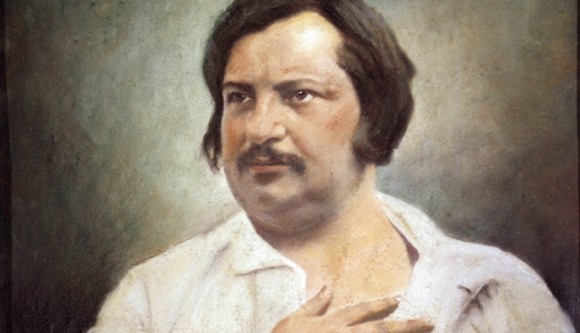
I don’t even remember what it was that led to me read Honoré de Balzac’s Père Goriot around 1970. It was a Penguin paperback with a cover illustration of the last chapter’s funeral scene at Père Lachaise cemetery in muted colors. The scene, quoted below, showed the book’s young hero Eugène de Rastignac, poor scion of a good family, seeing the virtually unattended obsequies of an old man, who, like King Lear, gave everything to his daughters. Except there was no Cordelia in this tale:

But just as the coffin was put in the hearse, two empty carriages, with the armorial bearings of the Comte de Restaud and the Baron de Nucingen, arrived and followed in the procession to Père-Lachaise. At six o’clock Goriot’s coffin was lowered into the grave, his daughters’’ servants standing round the while. The ecclesiastic recited the short prayer that the students could afford to pay for, and then both priest and lackeys disappeared at once. The two grave diggers flung in several spadefuls of earth, and then stopped and asked Rastignac for their fee. Eugène felt in vain in his pocket, and was obliged to borrow five francs of Christophe. This thing, so trifling in itself, gave Rastignac a terrible pang of distress. It was growing dusk, the damp twilight fretted his nerves; he gazed down into the grave and the tears he shed were drawn from him by the sacred emotion, a single-hearted sorrow. When such tears fall on earth, their radiance reaches heaven. And with that tear that fell on Father Goriot’s grave, Eugène Rastignac’s youth ended. He folded his arms and gazed at the clouded sky; and Christophe, after a glance at him, turned and went—Rastignac was left alone.

He went a few paces further, to the highest point of the cemetery, and looked out over Paris and the windings of the Seine; the lamps were beginning to shine on either side of the river. His eyes turned almost eagerly to the space between the column of the Place Vendome and the cupola of the Invalides; there lay the shining world that he had wished to reach. He glanced over that humming hive, seeming to draw a foretaste of its honey, and said magniloquently:

“Henceforth there is war between us.”

And by way of throwing down the glove to Society, Rastignac went to dine with Mme. de Nucingen.

At the time, I was only about 25 years old myself, and I felt myself, like de Rastignac, to be a creature of destiny. The years have shown that I was deluding myself, but that wasn’t Balzac’s fault.

Over the years, Balzac has continued to cast his spell on me. By now, I have read virtually everything Balzac published under his own name, as well as two works written under the pseudonym Horace de Saint-Aubin. I am a member of a reading group dedicated to Balzac under Yahoo!—a group which at one time read and discussed all of the author’s books over a period of several years.

Interestingly, Balzac is a rare example of a great writer who is not a consistently good writer. He was remarkably slapdash about composing and editing his works, yet he always entranced the reader by the breadth of his imagination which, to this day, has never been approached by any other writer, not even Marcel Proust. He is like a candle burning at both ends, a creature of soaring ambition, poor spending habits, and a remarkable understanding of how people interact in what is a material world. At his worst, he is a tedious dimestore philosopher in Seraphita and the second half of Louis Lambert.

Ah, but at his best, he is sublime. Even when all the pieces don’t add up, the following works are among the most powerful works ever penned:

  • The Wild Ass’s Skin (1831)
  • Colonel Chabert (1832)
  • Père Goriot (1835), his masterpiece
  • Lost Illusions (1843)
  • Cousin Bette (1846)
  • Cousin Pons (1847)
  • A Harlot High and Low (1847)

If you have a Kindle or other e-reading device, you can pick up Balzac’s complete work, translated into English, for free or for mere pennies. And be sure to visit La Comédie Humaine by Balzac, which was put together by members of the Yahoo! Balzac group, and which includes dozens of reviews and summaries written by me and others.


Beigli

Hungarian Ground Walnut and Poppy Seed Rolls (Beigli)

Hungarian Ground Walnut and Poppy Seed Rolls (Beigli)

Today was a combined Spring Festival and Mother’s Day Celebration at the San Fernando Grace Hungarian Reformed Church in Reseda.Martine and I always show up the first Sunday in May to help relieve the parishioners of their excellent home cooked food. Available was gulyás leves (better known as Hungarian Goulash, actually a beef and vegetable soup), Hungarian kolbasz sausage with red cabbage, barbecued pork (laci pecsenye), and langos (a fried bread concoction that Hungarians go gaga over). But the starring attraction were the many varieties of pastries, especially a type of custardy cheesecake not quite as sweet as the deli variety, and, of course, beigli.

When I was a kid in Cleveland, it was the beigli with ground walnut that I most particularly remembered. My Mom made it at least once a week, together with the ground poppy seed variety which I did not like nearly as much Although Martine made major inroads on the pastry table, including several varieties to take home, for the first time I passed up sampling any. I know what it tastes like. I love it. But I have Type 2 Diabetes and am fighting a difficult battle.

Still, we had a good time, watching a recitation, singing, and dancing presentation on the subject of Mother’s Day. Then, the local dancing master, Tibor, showed couples how to dance the csardás, the most famous of the Magyar folk dances.

Finally, there was a literary event in which the author of a book on the 1956 Hungarian Revolution had two reciters read passages about how he fled Budapest to Yugoslavia and finally settled in the United States. I didn’t understand very much, as my Hungarian is quite rudimentary, and both the book and the recitation were mostly above my head. Still, it’s good for me to reacquaint myself with my native tongue, however much I stumble my way through it.