Stymie the Pollsters!

It Would Be Nice If This Election Unified Us, But....

It Would Be Nice If This Election Unified Us, But….

We’ve all had it up to here with the damnable Presidential Election of 2016. I think it’s time to throw some monkey wrenches, particularly at the work of political pollsters. When they call you in the evening (it’s always in the evening), politely but firmly decline to state your preferences or, in fact, to answer any questions at all. Just tell them it’s in violation of your religion.

Let’s face it, more than half the polls are abominations, but even the ones that aren’t deserve to be stymied at every turn. Until the candidates themselves lose all faith in the polls, the horrendous campaign meat grinder will continue to burn money and patience until we are so disgusted as to consider renouncing our citizenship.

Whether its Cheeto-Brain or the Great Stone Spouse who wins, no one will be particularly happy. We are in a period that resembles the Roman Empire after the Antonine “good” emperors, when Rome had one ruler after another mercifully assassinated by the Praetorian Guard, until the reign of the truly dreadful Elagabalus from AD 218 to 222 .

Marching Through Georgia

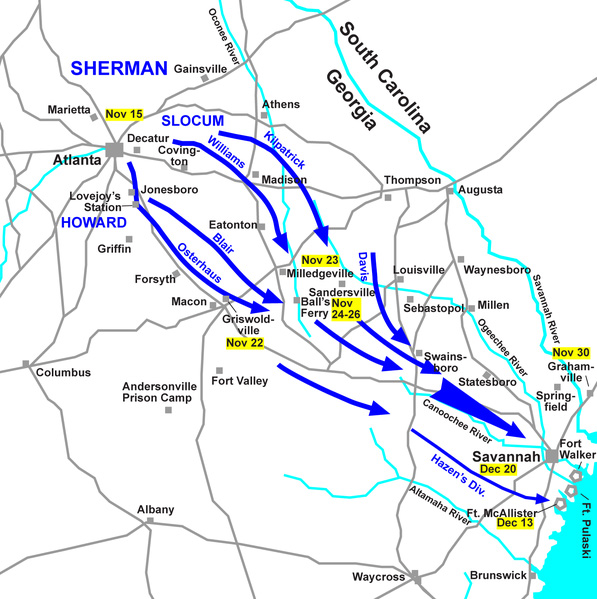
The Route of Sherman’s March to the Sea

The Route of Sherman’s March to the Sea

Much has been written about William Tecumseh Sherman’s March to the Sea in terms of its savagery—but almost nothing in terms of its ingenuity. After Atlanta was destroyed by Sherman’s forces, Confederate General John Bell Hood decided to attack toward Tennessee, destroying Sherman’s supplies.

But what Sherman had decided instead was to avoid Hood’s army altogether and march to Savannah, where he could be resupplied with Union ships waiting near the harbor. So he divided his army into two columns and, while marching, supplied his army with provender hijacked from plantations in the rich farm land along the route. In fact, Sherman arrived in Savannah with more cattle than he started from in Atlanta. And his men were well fed with turkeys, hogs, sweet potatoes, molasses, and corn that they were able to commandeer enroute.

William Tecumseh Sherman - 1893 Stamp Issue

William Tecumseh Sherman – 1893 Stamp Issue

It had been always been the Union Army’s strategy to fight and defeat the enemy’s army. Even Ulysses S. Grant, besieging Petersburg on the outskirts of Richmond, had doubts about the plan, but finally decided to give his approval. Sherman wasted no time in disappearing from the scene, fighting no battles until he re-emerged at Savannah.

The Confederates were thoroughly confused. Hood was marching his army into Tennessee, where it ran into George Thomas’s forces at Franklin and Nashville. Other Confederates thought that Sherman’s goal was Macon or Augusta, which they dutifully reinforced, only to be avoided by Sherman’s columns as they attacked no city larger than Milledgeville, which was until 1868, the State Capitol.

I am currently reading Shelby Foote’s The Civil War: A Narrative, Red River to Appomatox, which provides a Southern view of the end of the Civil War. Even Foote does not accept that Sherman’s soldiers were particularly brutal, though there was a considerable amount of agricultural theft, freeing of slaves, and destruction of property. It seems to have been under control, however, and Foote makes no claims of murder or rapine.


Walk Like an Egyptian

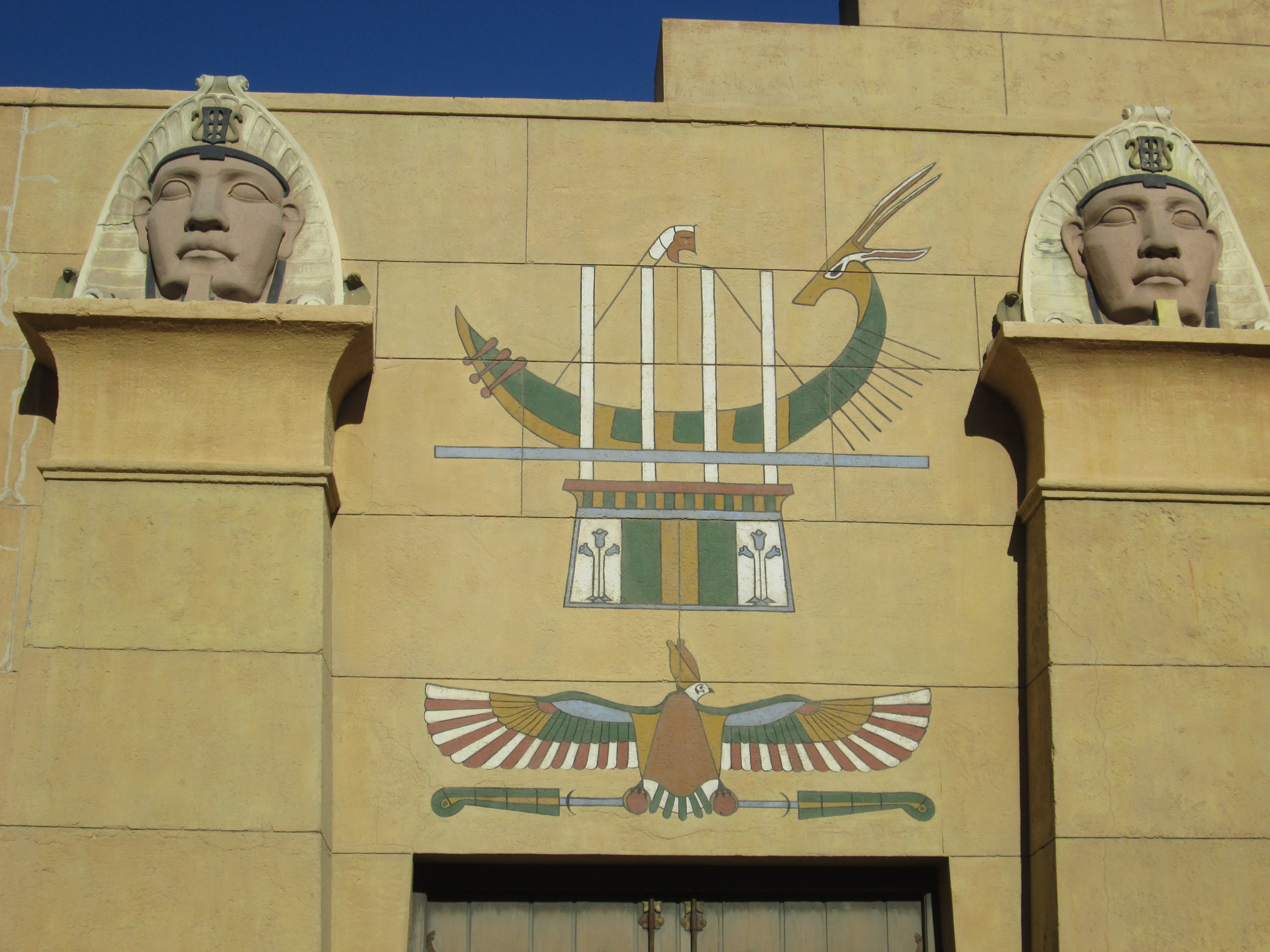
Part of the Painted Facade of Grauman’s Egyptian Theater in Hollywood

Part of the Painted Facade of Grauman’s Egyptian Theater in Hollywood

If it’s Labor Day weekend, it’s also time for the 52nd Annual Cinecon Classic Film Festival. So Martine and I invaded Hollywood, parked our chariot at Loew’s Hollywood Hotel, and proceeded to view several newly restored films at Grauman’s Egyptian Theater. These included:

  • An episode of a hokey old serial called Jungle Mystery.
  • Three Laurel & Hardy rareties, including Berth Marks and Come Clean.
  • A silent comedy called More Pay—Less Work from 1926.
  • A Columbia film released during World War Two which uniquely accuses the Nazis of atrocities against the Jews: None Shall Escape (1944) starring a radiant Marsha Hunt and directed by Andre de Toth.

Cinecon has thinned out a bit since last year. President Robert S. Birchard, having served in that capacity since 1998, died of a heart attack in May. Many such as my late friends Norman Witty and Lee Sanders had also passed on. Every year, there are more canes and more geriatric ailments in evidence. The pity of it is that Cinecon has difficulties recruiting younger members, who would consider the restored 1920s and 1930s films as ancient history. The organization would have to move more into the 1950s-1970s to get the attention of Generation Xers, not to mention Millennials.

The Hollywood Walk of Fame

The Hollywood Walk of Fame

Hollywood itself was filled with young tourists of the tattooed and pierced variety who sashayed up and down the street shooting pictures of the commemorative stars on the sidewalk with their cell phones. On holiday weekends, the Boulevard is a big-time crowd scene, with scores of tour buses taking them to see homes of the rich and famous—or whatever it is they show them. Whenever they accost me for a tour, I offer to give it myself, saying “Hey, I live in this dump!”


Slow Days, Fast Company

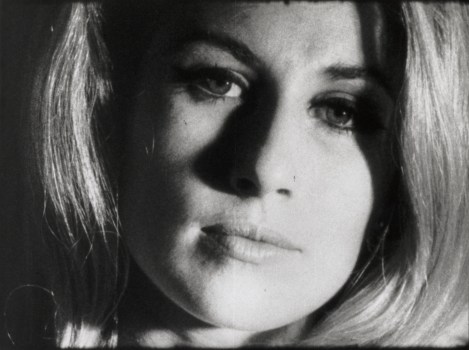
Eve Babitz

Eve Babitz

The following is based on a book review I published on Goodreads.Com yesterday:

In the 1960s and 1970s, when I used to dread the approach of another lonely weekend, I wished I could meet a girl like Eve Babitz, intelligent, articulate, and drop-dead beautiful. And there she was, living just a few miles from me in Hollywood while I was in Santa Monica. Describing a friend of hers, “she lacked that element, raw and beckoning, that trailed like a vapor” behind her.

Like her first book, Eve’s Hollywood, Slow Days, Fast Company: The World, the Flesh, and L.A. is a series of seemingly biographical essays with a hefty admixture of fiction. Where the first book talked about Eve’s teeny-bopper years in the 1960s, in her second she becomes the lovely, knowing score girl that everyone wants to meet … and bed. She hung out with the likes of Jim Morrison, Steve Martin, artist Ed Ruscha, and gallery owner Walter Hopps.

Highly Recommended

Highly Recommended

What she writes about in Slow Days, Fast Company is about her friendships and relationships with people who are usually not identified with their last names; and even their first names could have been modified. In the end, it doesn’t matter a bit. Eve knows success, and how it twists people so they becoming boring “celebrities” who rely on drugs and booze to get through the day. She writes:

But everyone knows that it would have been much better to have been popular in high school when your blood was clean, and pure lust and kisses lasted forever, Chocolate Cokes in high school are better than caviar on a yacht when you’re forty-five. It’s common knowledge.

Eve Babitz knew herself far better than most people, and she had a wicked sense of humor, as in this exchange:

The very next night I was having dinner with this fashionable young rich man who looked at me as I smoothed some paté over some toast and said, “You better watch out with that stuff. It’ll make you fat.”

“Well, gee,” I said to him, “there are so many perfect women, it’s just horrible you have to spend time sitting here with me.”

Horrible indeed! No use being morose about it, however. Even if I never found an Eve Babitz, I can appreciate her discriminating mind even at this distant remove. This is a girl who did not believe in the viability of most relationships: “The real truth is that I’ve never known any man-woman thing to pan out (it may pan out to them, of course, but couples in middle age who don’t speak to each other are not my idea of a good movie.)”

Eve Babitz in her time and place—Los Angeles in the 1960s and 1970s—was as good as they come. She is in many ways the best that Los Angeles has to offer. If you read her books, I think you will understand why.