How To Be Hateful

Martin Shkreli As Seen By Court Artist

Some people have a unique ability to be hateful. Perhaps the most obvious example is one Martin Shkreli, who is quite possibly the most hated person in America today. A corrupt entrepreneur, Shkreli is perhaps most famous for raising the price of a vital medication from $13.50 to $750.00 per pill. That, however, is not why he was brought to justice: Rather it was his securities fraud violations of SEC procedures while running MSMB Capital and MSMB Healthcare. Now it appears that his behavior during and after the trial might result in a heavier legal penalty when the court reconvenes.

The court artist portrait of Shkreli above makes him look like an ogre from a fairy tale. Or look at this depiction:

Gollum + Shkreli


Only in the case of our current president have I seen someone who is so determined to be widely hated. There is one problem with that type of provacative behavior: One usually pays for it in the end.

The Apocalypse of Pop Culture?

Game Boy

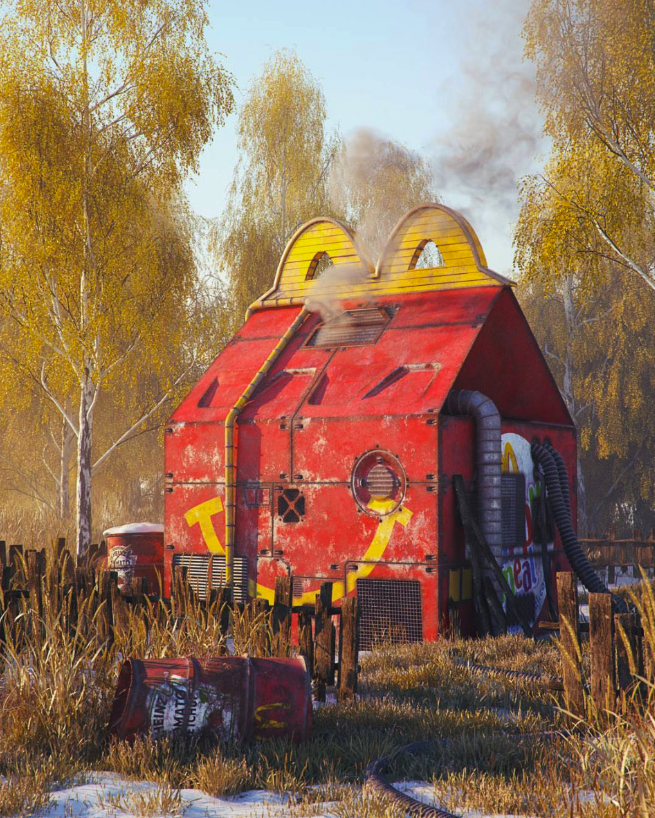
Lately, I have seen a number of paintings by Filip Hodas, a self-proclaimed 3-D artist from the Czech Republic. The illustrations shown here can be described under the heading of the Apocalypse of Pop Culture. Not all his work is on this theme, but the images that startled me definitely were. (You can see more of his work by clicking here.)

It is somewhat appropriate that the images of much-loved pop icons in the process of falling into disrepair and ruin comes from a resident of Prague. The Czechs, like the Hungarians and other Eastern Europeans were essentially trashed under the postwar Russian occupation. So now, as the West begins its own decline, why should our icons escape the wrecking ball of history?

McDonald’s Happy Meal

I particularly love the McDonald’s Happy Meal box, turned into a kind of rural slum dwelling. One can almost expect to see an American Hansel and Gretel wending their way to this sagging ruin.

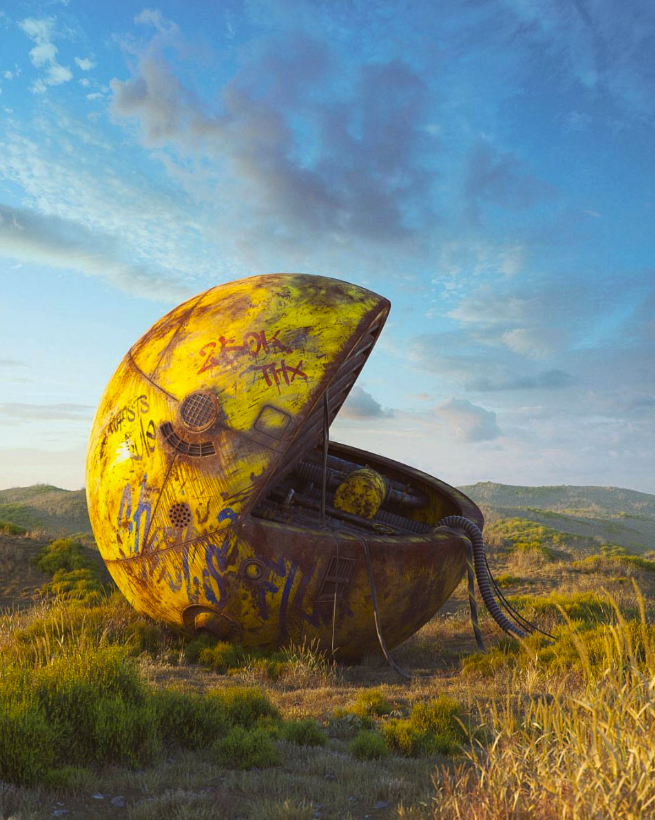
Allow me to leave you with one final Hodas image, that of a wrecked and graffiti-covered Pac Man:

Pac Man

Notice the THX graffiti.

Serendipity: Getting High on … Bananas?

How I Learned About Bananadine aka Mellow Yellow

It was the March 24, 1967 issue of the Los Angeles Free Press that taught me all about how to get high on bananas. You can see the cover of the issue in question illustrated above. Did I run to the nearest supermarket and buy up all the bananas in sight? No, I didn’t. It was just six months after my brain surgery to remove a chromophobe adenoma from the center of my head; and I was not about to go experimenting with psychedelic drugs. I was just finishing my first quarter as a graduate student at UCLA’s Film School. Although I loved the Free Press and looked for it religiously each week, I was both impressed and somewhat repelled by the whole hippie phenomenon.

What is this about getting high on bananas? Just read this excerpt from Thomas Pynchon’s Inherent Vice, which reminded me of this news story that happened some half century ago:

Bigfoot had been driving around once a week to Kozmik Banana, a frozen-banana shop near the Gordita Beach pier, creeping in by way of the alley in back. It was a classic shakedown. Kevin the owner, instead of throwing away the banana peels, was cashing in on a hippie belief of the moment by converting them to a smoking product he called Yellow Haze. Specially trained crews of speed freaks, kept out of sight nearby in a deserted resort hotel about to be demolished, worked three shifts carefully scraping off the insides of the banana peels and obtaining, after oven-drying and pulverizing it, a powdery black substance they wrapped in plastic bags to sell to the deluded and desperate. Some who smoked it reported psychedelic journeys to other places and times. Others came down with horrible nose, throat, and lung symptoms that lasted for weeks. The belief in psychedelic bananas went on, however, gleefully promoted by underground papers which ran learned articles comparing diagrams of banana molecules to those of LSD and including alleged excerpts from Indonesian professional journals about native cults of the banana and so forth, and Kevin was raking in thousands.  Bigfoot saw no reason why law enforcement shouldn’t b cut in for a share of the proceeds.

So, as you see, however much I dearly loved the Freep, the whole thing was an early instance of fake news on the (far) left.

The Free Press Called it “Bananadine”

I remember that the Free Press even had a bookstore on Fairfax, specializing in subversive titles, but with enough interesting general literature available to whet my appetite. A big plus is that it was right across the street from Canter’s Deli, which was open all hours, making it a popular nosh stop for film addicts discussing the pictures they had just seen. Martine and I still go there from time to time for their corned beef, pastrami, and other delights.

Up-Yours-Ism

Promise Them Anything, But Give Them the Finger

It has not taken long for Americans to find out what they have in President Trumpf. During the campaign, a number of different positions were taken. Let’s face it: Many of them were contradictory. What we ended up with was lots of promises, few of which were kept. Our Presidente is not a particularly bright man whose political philosophy appears to be Up-Yours-Ism.

Unless you are either a billionaire or a tyrannical dictator, you are probably a pathetic loser. So, basically, Up Yours! Remember that famous White House Press Dinner at which Barack Obama lambasted Trumpf, who sat glowering in the audience, resolved to completely undo everything his predecessor ever did. (And he’s still trying to prosecute “Crooked Hillary.”) This is a man who wants to get even with everybody who ever mocked him—and that includes most of the American people. They don’t like me? Then, Up Yours!

Funny thing, though, it’s not always a good thing to have all your wishes come true. Look at the stories of Croesus and Midas. Trumpf lives all by himself in the White House, which he thinks is a dump, probably because it doesn’t have gold plumbing fixtures. His wife doesn’t want to live with him. He doesn’t trust anyone for more than the lifetime of a fruit fly. His only out is golf at various clubs he owns around the world. Plus, he must be aware that the wolves are gathering in an attempt to put an end to his presidency. But that only feeds the troll, to which his inevitable response is: Up Yours!

This is a new experience for the American people, being treated as a bunch of losers by a self-styled billionaire. How does he feel about those ever-declining poll numbers. Wait, never mind! That’s just fake news. Up Yours!


Italy’s “Other” Orgy Island

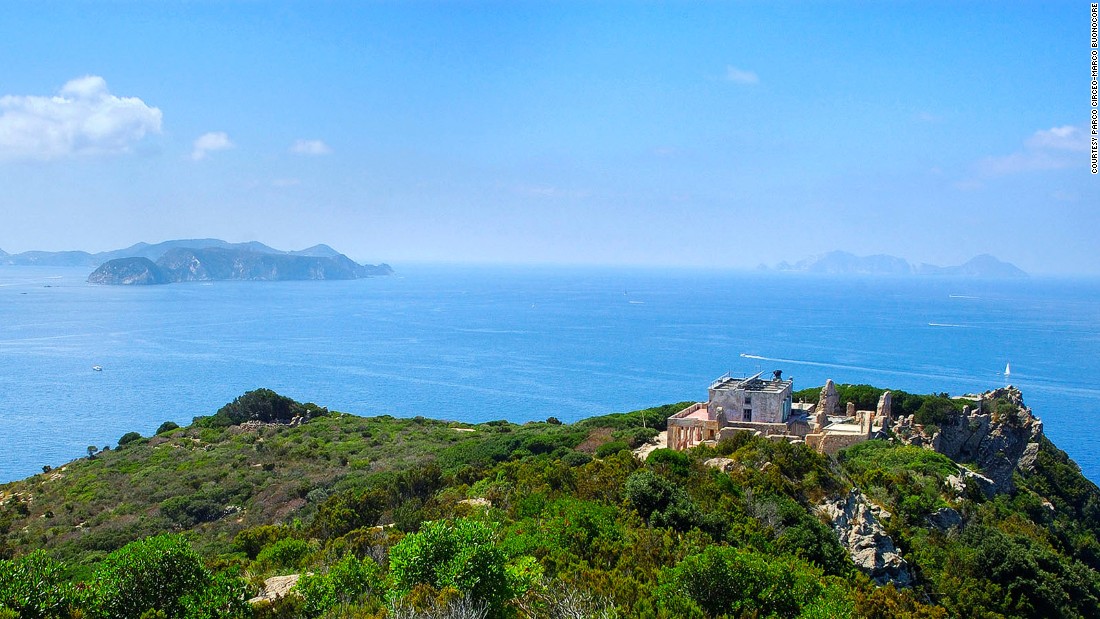
The Mediterranean Isle of Zannone

The original orgy island was Capri, where the Emperor Tiberius dwelt in the Villa Jovis and was entertained by nude underage “spintrians” in his pools and grottoes. You can read about the whole sad affair in Suetonius, or if you are pressed for time, try here.  (It is for a reason that Capri means “goat” in Italian.)

More recently, there was a nearby island, slightly to the north and west, called Zannone. The tiny islet contained a single villa owned by the Marquis Camillo Casati and inhabited with his sexy actress wife Anna Fallarino. The Marquis let his wife have public sex with visitors, handymen, boatmen—whoever—just so long as he was able to watch and take pictures. He eventually accumulated 1,500 photos of his wife enjoying the favors of a range of men.

The Marquis’s Actress Wife, Anna Fallarino

But all good hings must come to an end. It appears that Anna fell in love with one of her transient paramours, which gave the Marquis pangs of envy. On August 30, 1970, he got a pistol, shot Anna and her lover, Massimo Minorenti, and then turned the pistol on himself. There was brain matter and blood all over the seventeenth century paintings at the scene of the crime. You can read more about this scandalous affair on CNN or this website.

I decided to write this post today because my most popular article in the last five years was about news orgies and showed a picture of several kangaroos in compromising positions. My guess is that a lot of pizza-faced youngsters Google “orgy” and “orgies” for prurient reasons. So, let the games begin!


Favorite Films: Kiss Me Deadly (1955)

Mike Hammer Watches Lily Carver Go Up the Stairs of Her Fleabag Hotel

There are few films as hard-boiled as Robert Aldrich’s Kiss Me Deadly, based on the Mickey Spillane novel of the same name (but with a comma after “Kiss Me”). Ralph Meeker’s Mike Hammer is a handsome young thug who does not shrink at dispensing excruciating pain or administering summary execution. The movie is fairly close to the spirit of the novel, with one major difference. What Spillane’s private eye is looking for is some kind of drug; Aldrich instead made it some kind of radioactive material that explodes when mixed with air. Also, the film is set in Los Angeles rather than New York; and it uses the change of scene to advantage.

As the villainous Dr. Soberin (Albert Dekker) says to Hammer as he is tied to a bed:

Lie still. Why torment yourself? Who would you see? Someone you do not know, a stranger. What is it we are seeking? Diamonds, rubies, gold? Perhaps narcotics? How civilized this earth used to be. But as the world becomes more primitive, its treasures become more fabulous [italics mine]. Perhaps sentiment will succeed where greed failed. You will die, Mr. Hammer. But your friend, you can save her. Yes you can. The young lady you picked up on the highway. She wrote you a letter. In it were two words: ‘Remember Me.’ She asks you to remember. What is it you must remember? [he injects Hammer with a hypodermic needle full of sodium pentothal] And while you sleep, your subconscious will provide the answer. And you will cry out what it is that you must remember. Pleasant dreams, Mr. Hammer.
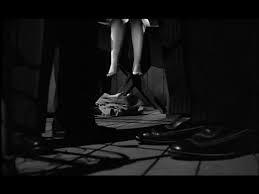
The Legs of Christina Bailey—All That We See After She Has Been Tortured to Death

The film came under some scrutiny by the Kefauver Commission, which described it as “designed to ruin young viewers.” Well, Martine and I allowed our minds to be ruined by the Criterion Collection DVD we watched on this muggy Los Angeles afternoon.

Mickey Spillane has not fared well with the critics, although his Mike Hammer novels were wildly popular. Over 225 million copies in paperback were sold around the world, far outstripping the sales of works by more literary writers as Raymond Chandler, Dashiell Hammett, and Ross Macdonald. I think I will re-read some of his more popular titles in the next few months. Why not? There is something enduring about his work, though I do not think it will ever received the sanction of the Library of America.
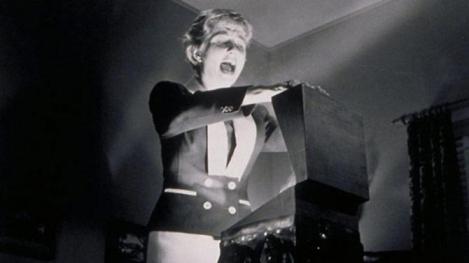
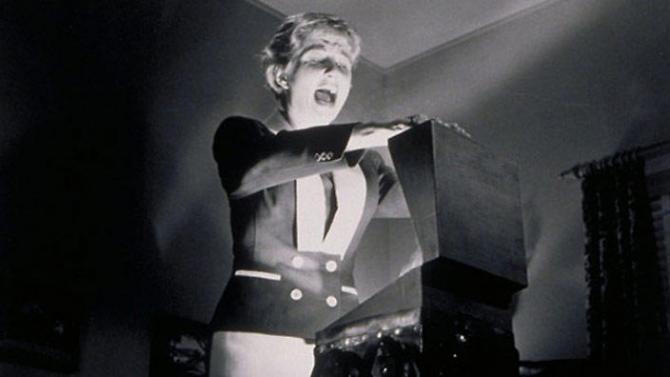
“Lily Carver” (Gabrielle) Opens the Briefcase, Setting Off a Nuclear Explosion


This is not a film to which you should expose your young children. Like the Spillane books, it is clearly adult. But by the same token, it is worth seeing multiple times—if you can take it.


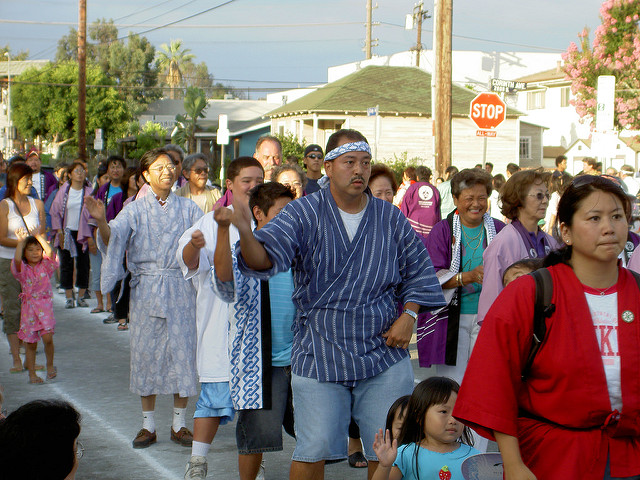
Dancing to Welcome the Spirits of the Dead

West L.A. Obon Festival Eleven Years Ago

I have been attending the West Los Angeles Buddhist Temple’s Obon Festival for more than forty years now, and today was no exception. I chowed down on the Men’s Club udon soup—two bowls, no less!—and sat with Martine to watch the cheerful dances in which the spirits of the dead were welcomed. As usual, all he participants seemed to be having a great time. One nice thing about this festival is that all are welcome, regardless of race, color, or creed.

This time, I neglected to bring my camera, so I am sharing with you a picture I took in 2006. The same tall Japanese Obon dancer was there today, looking not much older than he did eleven years ago.

Poster for the Festival We Attended


Although I have not done it in over fifty years, some day I will attend one of the West L.A. Buddhist Temple’s services. I should, inasmuch as the Temple has played such a benign part in my life over so long a period of time.

The Dumpster Fire Spreads

There’s a Lot of GOP Hotfoots in Washington Today

The Trumpf Administration (it’s actually funny to think of it as an “Administration”—more like a dumpster fire that just got out of control) is so ridiculously beleaguered that it’s almost funny. Except that it’s happening to each and every one of us. We escaped having a health program that would have demised several million Americans rather unceremoniously.

But there will be other chances, what with the other pending items on the GOP agenda. After today, though, I can’t see ol’ Turtleface McConnell smiling with any degree of sincerity.

And, as more Trumpf insiders become outsiders, I can see more embarrassing stories bedeviling the man from Mar-a-Lago. Such as the time the Presidente called in Reince Priebus to the Oval Office for the sole purpose of killing a fly.

It Started Small but Grew to Engulf a Whole Nation

It looks now as if Trumpf has enemies in both major political parties. Do you suppose that eventually, someone will develop the spine to remove this chucklehead from office?

No Longer a Gallophobe

Nobel Prize-Winning Author Patrick Modiano

It was not always that I was in love with French culture. Perhaps, when I was young, I was tired of being thought to be French just because my last name is Paris. (Actually, it’s pronounced PAH-rrhish with a slightly trilled “r”.) It reached a crescendo in 1976, when my Laker Airlines flight to London stopped for some cockamamie reason at Le Bourget in Paris when we were all subject to security checks. When a French border guard wanted me to open up the back of my Olympus OM-1 camera and expose half a roll of film, I refused and called the man a cochon. Fortunately, I got away with it, though I probably shouldn’t have.

Now I am a devoted Francophile. What happened? First of all, Martine is French; and I went to France with her twice, where I found the French to be not at all as I thought them to be. Even the Parisians were all right. I suspect they seemed better because I speak fairly decent French and I could communicate with them.

I am now co-moderator of the Yahoo! French Literature reading group. Although the group concentrates on French literature of the 19th century, I discovered many 20th century classics reading books with the group. I thought I would share the ten I liked best over the last few years, presented here in alphabetical order by author:

  1. Georges Bernanos: Diary of a Country Priest. Made into a wonderful film by Robert Bresson.
  2. Louis-Ferdinand Céline: Journey to the End of the Night. I had read this before, but liked it even more on re-reading it.
  3. J M G Le Clézio: The Prospector. Looking for pirate treasure in Mauritius.
  4. Albert Cohen: Belle du Seigneur. A great novel about obsessive love set in the period between the two world wars.
  5. Jean Giono: The Horseman on the Roof. A wonderful historical novel about plague in Southern France.
  6. Julien Gracq: The Opposing Shore. I had never heard of Gracq before, but this is a wonderful story about contacts between two civilizations that have drifted apart. Like the West and Islam.
  7. François Mauriac: Thérèse Desqueyroux. A profoundly Catholic novel about a murderess.
  8. Patrick Modiano: Out of the Dark. Recalls the world of the New Wave films of the 1950s and 1960s. I have since read several more of Modiano’s books and find he is one of my favorites.
  9. Marcel Pagnol: My Father’s Glory. A sentimental memoir of a childhood in Provence.
  10. Raymond Queneau: The Last Days. I just read this one a couple of weeks ago. A wonderful study of life in Paris circa 1920.

I have left out Marcel Proust, who means more to me than all of the above put together, and also Georges Simenon, who also is well known in the West.

“We Are Of This Place”

Courtyard of the Indian Pueblo Cultural Center

One of the very best places to visit in Albuquerque is the Indian Pueblo Cultural Center, just a mile or so north of Old Town. I have seen various Indian tribal centers before, but not one in which the overwhelming theme is not what separates them, but what unites them. It was founded and is run by the nineteen Pueblos of New Mexico, not all of which even speak the same language. In fact there are five separate languages among the Pueblos: Tiwa, Tewa, Keres, Towa, and Zuñi.

But then, this unity is what makes the nineteen Pueblos strong—ever since they joined to throw the Spanish out of New Mexico in 1680. Sure, they were reconquered twelve years later, but they continued to act as a tribal family. And when the United States took over the territory during the Mexican War of 1846-1848, they settled down and managed to avoid the suffering felt by the more nomadic Navajo and Apaches. There were no Pueblo leaders who were forced to live in swamps of Florida: They pretty much remained in place for the next three hundred years or so.

Fortunately, the Americans were not quite so insistent about converting the Pueblos. As Dr. Joe S. Sando of Jemez Plueblo wrote:

The Spanish pressured the Pueblo People to limit our ceremonial dances and participation in religious activities. Instead we were forced to attend the Spanish house of worship. How could we relinquish a religion which was not a weekly exercise? Our belief system was interwoven into every part of our daily lives. It was this religion that helped to maintain our peaceful attitudes and balance in our daily lives.

Even so, the 19th century Americans had Pueblo and other Native children to be sent to distant boarding schools back East, where an attempt was made to, in effect, de-racinate them.

The overall impact of the Indian Pueblo Cultural Center is a positive one. There are even dances at certain times, and there is an excellent restaurant called the Pueblo Harvest Café which is one of the best places to eat in the whole city.