Serendipity: “A Mighty, Harmonious Beauty”

Isak Dinesen (1885-1962) in Her Youth

The following is from a chapter entitled “On Mottoes in My Life” from her book Daguerrotypes and Other Essays. I decided to find a picture of Danish Baroness Karen Blixen (aka Isak Dinesen) when she was young and beautiful. It is sad that so many great authors are only photographed when they are old, which presents us with an odd and somewhat misleading view of their life. Anyhow, here goes:

An old Chinese mandarin, during the minority of the young Emperor, had been governing the country for him. When the Emperor came of age the old man gave him back the ring which had served as an emblem of his vicariate, and said to his young sovereign:

“In this ring I have had set  an inscription which your dear Majesty may found useful. It is to be read in times of danger, doubt and defeat. It is to be read, as well, in times of conquest, triumph and glory.”

The inscription in the ring read: “This, too, will pass.”

The sentence is not to be taken to mean that, in their passing, tears and laughter, hopes and disappointments disappear into a void. But it tells you that all will be absorbed into a unity. Soon we shall see them as integral parts of the full picture of the man or woman.

Upon the lips of the great poet the passing takes the form of a mighty, harmonious beauty:

Nothing of him that doth fade,
but doth suffer sea-change
into something rich and strange.

We may make use of the words—even when we are speaking about ourselves—without vainglory. Each one among us will feel in his heart the inherent richness and strangeness of this one thing: his life.


Discovering the Long Scroll

Excerpt from the Long Scroll of Sesshū Tōyō

For the first time in my life, I away away from home, alone. I was seventeen years old when I found myself at Dartmouth College. The only person I knew from before was Frank Opaskar, with whom I had gone to Chanel High School in Bedford, Ohio. But I quickly found myself becoming estranged from Frank because of his anxiety about his complexion. I had the top bunk in our dorm room, and Frank insisted in smearing himself with Noxzema. Every night, I was wafted into sleep by the medicated stench of his facial preparation.

Naturally, I was desperate to lift my mind from the humdrum life of study and Noxzema. Fortunately, I found several ways of escape. One of them was art….

In my first year at Dartmouth, the Hopkins Center for the Arts opened. One of the first shows in the art gallery was of the Long Landscape Scroll by Sesshū Tōyō (1420-1506), a Zen Buddhist master whose art work made me feel at home. I don’t know why: I had had no previous exposure in my Catholic education to Zen ink and wash paintings of the Muromachi school.

But what I saw was magical. It was a landscape of mists and rocks and water in which pilgrims were trekking from one place to another. I loved it at once. Did I see a sudden paradigm of my own life, wrenched from a close Hungarian family into the wide world? I followed the scroll from left to right—not just once, but many times in numerous visits while the exhibit lasted.

If you want to see what I saw, you can see an image by clicking here. Scroll about a third of the way down and scroll slowly to the right. The image doesn’t allow you to get close, but you get the general idea. I bought a copy of the scroll from Tuttle, the Japanese-American publishing house then located in nearby Rutland, Vermont.

You can say it was Sesshū Tōyō  who introduced me to Zen Buddhism. It was a splendid introduction.

Where It All Began

Sayyid Qutb in an Egyptian Prison

Islamic fundamentalism of the jihad variety began a little more than half a century ago with Sayyid Qutb (1906-1966), the founder of the Islamic Brotherhood, which gave birth to al Qaeda. He is the author of several seminal works including Social Justice (1949) and Milestones (1964). He also is credited with a 30-volume commentary on the Qur’an called In the Shade of the Qur’an. Early in his career, he spent two years in the United States teaching college in Washington, DC; Greeley, CO; and Stanford University.

About American women he wrote:

The American girl is well acquainted with her body’s seductive capacity. She knows it lies in the face, and in expressive eyes, and thirsty lips. She knows seductiveness lies in the round breasts, the full buttocks, and in the shapely thighs, sleek legs – and she shows all this and does not hide it. [I always thought this was a global phenomenon]

He did not have much good to say about the tastes of the average American:

The American is primitive in his artistic taste, both in what he enjoys as art and in his own artistic works. “Jazz” music is his music of choice. This is that music that the Negroes invented to satisfy their primitive inclinations, as well as their desire to be noisy on the one hand and to excite bestial tendencies on the other. The American’s intoxication in “”jazz” music does not reach its full completion until the music is accompanied by singing that is just as coarse and obnoxious as the music itself. Meanwhile, the noise of the instruments and the voices mounts, and it rings in the ears to an unbearable degree… The agitation of the multitude increases, and the voices of approval mount, and their palms ring out in vehement, continuous applause that all but deafens the ears.

I wonder what he would think of Hip-Hop. He seems not to have liked African-Americans very much.

In the end, I think that Qutb was not very comfortable in his own skin. For one thing, although an Egyptian, his ancestry is part Indian—and we know what happened between the Hindus and the Muslims in India and Pakistan in 1948 (Hint: widespread massacres). In the end, Gamal Abdel Nasser had him imprisoned and hanged in 1966 as a threat to the emerging Egyptian nation state. Qutb and his followers were enemies of nationalism in general and advocated an Islamic government that transcended the borders of existing nation states.

Many of the Islamic terrorists of our day are inspired by entities that pay homage to Qutb, including al Qaeda and ISIS/ISIL/Daesh.

A Yankee Way of Knowledge?

Carlos Castaneda’s First Don Juan Book

In the 1970s I was heavily influenced by the works of Carlos Castaneda based on the teachings of a Yaqui shaman named Don Juan Matus. The first book, whose cover is shown above, hit me between the eyes. And for years afterwards, I was kept in a high state of excitation by the books that followed. Although I was deeply influenced by the teachings described by Castaneda, one thing I was not affected by was the taking of mescaline, which played a major part in the teachings.

At the time, I considered myself lucky to be alive. In 1966 I had major brain surgery (a pituitary tumor, or chromophobe adenoma); and I knew I had to take steroids as long as I lived, as my body no longer produced any. So taking mescaline, LSD, cocaine, psilocybin, opium, and what not were strictly out of the question. (I did, however, take marijuana socially, especially in the form of brownies—smoking always made me go into asthmatic spasms.) But, other than that damnable mescaline, the concepts that Castaneda came up with were so damned brilliant that I was in thrall.

This evening, I had an interesting conversation with my friend Peter about those days. It has been years since I even thought about Castaneda. Now I want to re-read his books, which I still have on my back shelves, just to reacquaint myself with the young man that was me some forty plus years ago.

Carlos was actually born in Cajamarca, Peru, and came to this country in the early 1950s, becoming a naturalized citizen in 1957. As critics started looking at his books as works of fiction, it became evident that he had done some cross-cultural comparisons. In place of the Amazonian tribes that take ayahuasca to produce visions, he set his works among the Yaqui Indians of Northern Mexico. Unfortunately, he used Spanish terms that were not common among the Yaqui, arousing suspicions.

There is an anecdote about a patient describing his life to a psychiatrist, who keeps nodding his head and saying, “That’s very interesting!” Finally, the patient gets angry and says, “Well, that’s all a pack of lies which I just made up. What do you think of that?” The psychiatrist does not miss a beat: “That’s even MORE interesting!” That, in the end, is my reaction to Castaneda. I think there are some fascinating truths to be found in his books, along with some things that were just made up.

I will return to the subject as I re-read his books.


John Wayne Never Fought Them

Old Photo of Jemez Pueblo Architecture

The Indians we know most about are the ones that appeared in the old Westerns: The Navajo, Apaches, Comanches, and Sioux. There are some twenty Indian tribes in New Mexico and Arizona that, insofar as I know, never appeared in any. John Wayne never fought them, nor did Randolph Scott or Jimmy Stewart or Audie Murphy. I am referring to the Pueblo Indians, most of which are located around Albuquerque and Santa Fe, New Mexico.

We know that the Navajo, Apaches, Comanches, and Sioux have been warlike. But did you know that the only successful Indian revolt against Western colonization was fought by an alliance of Pueblos in 1680. It was not until twelve years later that the Spanish reconquered the territory, but even then with difficulty. Many of the most warlike Pueblos simply united with the Hopis and Navajos.

I have just finished reading The Pueblo Revolt: The Secret Rebellion That Drove the Spaniards Out of the Southwest by David Roberts (New York: Simon & Schuster, 2004). The key word in the title is “secret.” To this day, the Pueblos do not choose to discuss the conflict—even one that occurred over four centuries ago. Consequently, most people do not know about it.

Pueblo Revolt Scene Painted on a Hide

Why the secrecy? I think it is a cultural trait. Years ago, Martine and I spent the night on the Zuñi Reservation at a time when most of the town and surrounding areas were off limits to non-Zuñis because some tourist had misbehaved at a ceremonial in the distant past. One cannot just waltz into a Puebloan reservation and have the run of the place. You will be referred to the tribal authorities, who most likely will ignore your request as a matter of course. It’s not that they are unfriendly: For them survival involves buttoning their lips, even if it involves a 450-year-old secret that just happens to be none of your beeswax.

Rope-a-Dope

There’s No Hope Here!

I strongly suspect that, sometime in the next few months, the Trumpf presidency will be terminated. Either he will be impeached or found incompetent or, if they take my suggestion, dropped at high altitude from a helicopter with a leaky container of blood into a part of the ocean full of sharks. There have been bad presidents before, but there never has been a worse one.

The only complication is that Trumpf is adding to the possible charges against him at the rate of three or four a day. What will he have to do to trigger the inevitable? Will he have to rape a nun or slug an autistic child or make Ivanka his new vice president? Will he have to form a pact with North Korea to help them with their nuclear program? I am losing count. This man is not only dangerous: He is very busy f*cking up big time.

Grass Roots

The Logo of the Los Angeles Unified School District

It’s election time in Los Angeles again. This time, it’s a runoff between two school board candidates, incumbent Steve Zimmer and challenger Nick Melvoin. The issue between them relates to which candidate is for Charter Schools and which is against. On one hand (Zimmer), you have the teachers’ unions; on the other (Melvoin), you have big corporations. In an election such as this, I look carefully to see who’s spending more money—and I vote against that candidate or issue.

I am amazed that so many millions of dollars are being spent for two seats on the school board. Today alone, I have received eight live telephone calls and robocalls. Because of the tendency for elections in L.A. to go toxic quickly, I tend to be a bit abrupt with the live callers. One accused me of being against grass roots campaigning. I agreed with him and said that, increasingly, I find election campaigns—in general—to be overlong and overblown. So, yes, mark me down as being against grass roots or any other type of roots that are being shoved forcibly down my gullet.

The more money that is spent on politics, the more corrupt it is likely to be. Since I have no school aged children (or any other for that matter), I have no horse in this particular race; but I am more than willing to study the issues and vote according to my conscience. That usually involves ignoring all phone calls and TV ads (I don’t even watch TV) and reading the Los Angeles Times and maybe doing some Internet research. That might sound primitive to you, but that’s how I decide for whom or what to vote.

Wings Around the World

The First Douglas DC-3, “The Spirit of Santa Monica”

When I first moved in Los Angeles at the tail end of 1966, a large chunk of the City of Santa Monica consisted of the Douglas Aircraft plant between Ocean Park and Airport Boulevards. It is long since gone. All that remains is a small Museum of Flying that mostly celebrates the legacy of Donald Douglas and his company. Out front, permanently mounted, is the first DC-3, “The Spirit of Santa Monica.”

The first airplanes to circumnavigate the globe was a team of Douglas World Cruiser planes piloted by U.S. Army Air Service pilots in 1924. A number of displays at the museum dedicate that Herculean 175-day series of flights.

When it was located a couple blocks north, the Museum of Flying used to be bigger, but then it was forced to move out to the boonies. After a few years, a much smaller museum came back. No matter, it’s still fun.

When I look back over the last hundred or so years, the biggest miracle was the airplane. Man has wanted to fly ever since he learned how to use tools, but it was only about a hundred years ago that passenger flight became possible. My two-hour flight to Albuquerque next month would have been impossible. I would have had to board a Santa Fe train that takes many more hours to cover the distance. And before the Transcontinental Railroad, it would take 20 miles a day by horse and wagon—if I were lucky.

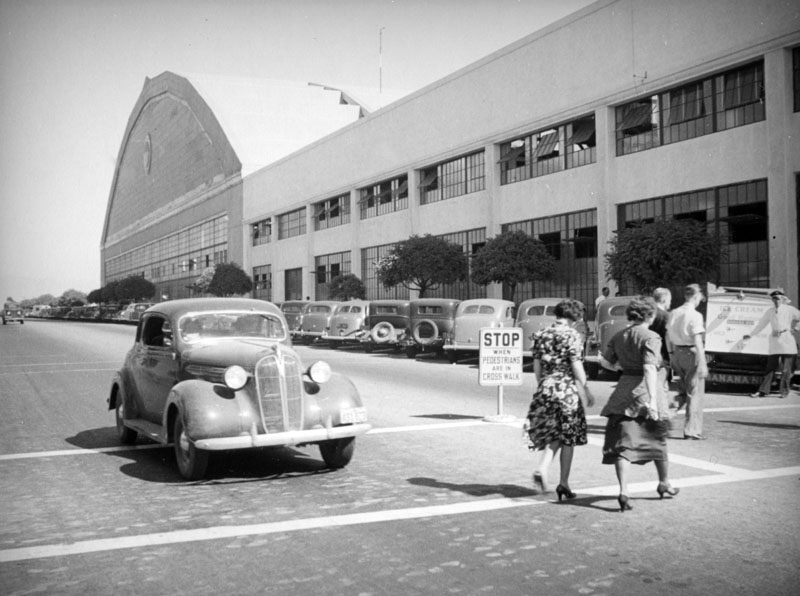
Douglas Aircraft in Santa Monica in the 1940s

Probably the best aviation museum Martine and I have visited is the one in Palm Springs. It’s so mhuge that one could easily spend two days exploring all the exhibits. There is also a nice one on the outskirts of Paso Robles north of San Luis Obispo. Probably what makes these museums fun is that there are so many retired pilots acting as docents who have their subject down cold. Within a few years, as the World War Two generation fades into memory, many of these airports may no longer be viable. So see them while you can.

“Sonora Wind”

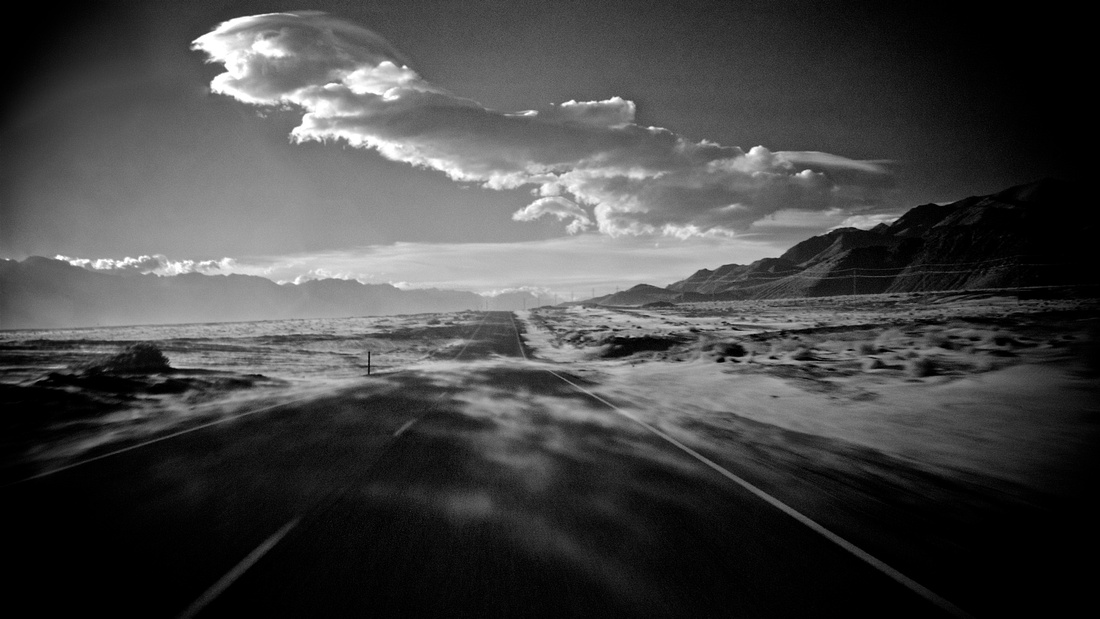
Wind-Blown Sand Near Keeler, CA

It’s the end of the week, and I feel like a poem. I have this slim Everyman volume entitled Poems of the American West , selected and edited by Robert Mezey. The poem entitled “Sonora Wind,” written by Arizona poet Richard Shelton, also described those horrible Santa Ana winds that sweep through Los Angeles from the vastness of the desert.

Sonora Wind

Nobody can stop this dry wind,
this disaster of a wind. Nobody
can heal it, soothe it, send it on.
It remains. Has it nowhere else
to go? Has it been forbidden
to return to where it came from?

It is driving us mad with the sound
of a wound torn open again
and again. It can bend us down
as it bends the greasewood.
It can desiccate our minds.

It screams at us with the voice
of a raging mute who has no words
to tell his pain. When we begin
to scream in return, it rips
the words from our mouths,
replacing them with sand, the taste
of all the evil ever done to us
by those who died before we could
tell them how much we hated them.

W. H. Auden’s “Good Angel”

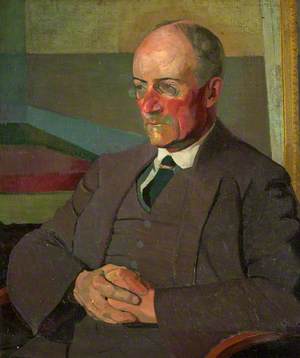
Hannay, Lynton; Professor W. P. Ker (1855-1923)

Extending from the reign of Queen Victoria to the aftermath of World War II, Britain produced a bumper crop of great literary scholars and essayists. I have already written about F. L. Lucas (1894-1967). I am currently exploring the work of W. P. Ker, short for William Paton Ker. It was poet W. H. Auden who, in The Dyer’s Hand, penned this tribute to the Scottish scholar:

[w]hat good angel lured me into Blackwell’s [Oxford Bookstore] one afternoon and, from such a wilderness of volumes, picked out for me the essays of W. P. Ker? No other critic whom I have subsequently read could have granted me the same vision of a kind of literary All Souls Night in which the dead, the living and the unborn writers of every age and tongue were seen as engaged upon a common, noble and civilizing task. No other could have so instantaneously aroused in me a fascination with prosody, which I have never lost.

I have been reading Volume I Ker’s Collected Essays, which one of the literature librarians at the Los Angeles Central Library entrusted me to take out, though it belongs to the Reference Collection. I read with interest until, suddenly, beginning with Page 109, I hate pay dirt. No doubt the name of Horace Walpole probably doesn’t mean much to most people, unless they suffered through the gothic The Castle of Otranto in college English. Instead, Ker concentrates on Walpole’s letters. Here he describes the country around Chamonix in the Alpes in a letter to his friend Paget Toynbee on September 18, 1739:

But the road, West, the road! winding round a prodigious mountain, and surrounded with others, all shagged with hanging woods, obscured with pines, or lost in clouds. Below, a torrent breaking through cliffs, and tumbling through fragments of rocks! Sheets of cascades forcing their silver speed down channeled precipices, and hastening into the roughened river at the bottom. Now and then and old footbridge, with a broken rail, a leaning cross, a cottage or the ruin of an hermitage. This sounds too bombastic and too romantic to one who has not seen it, too cold for one that has. If I could send you my letter post between two lovely tempests that echoed each other’s wrath, you might have some idea of this noble roaring scene, as you were reading it.

There are almost no collections of literary letters being written now, because there are no letters. There are scads of e-mails, tweets, text messages—few of which will be (or deserve to be) saved. Ker himself explains why such letters are valuable:

There is an interest in reading a series of letters like this which is not found even in personal memoirs. It may be a childish idea, but somehow in reading letters one seems to be nearer to the reality than in reading any other history. The phantoms of the past rise there less pale and shadowy than in common history, they come nearer to us, the colours deepen, the voices are more distinct. Letters like those of Cicero are not a record of the time; they are the life itself, the very accents of the time. He does not write any more to Atticus or to his brother: he writes to us: he tells us how Caesar came to stay with him, how they talked at dinner, how they spoke, Caesar spoke.

I wasted no time in buying Volume I of Horace Walpole’s collected letters (only 99 cents on Kindle). And I will, of course, finish reading Ker’s Collected Essays.
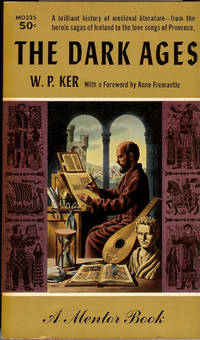
Ker’s Excellent The Dark Ages (1904)

This is not the first work of Ker’s that I have read. I own an old Mentor paperback edition of his The Dark Ages, and I have read portions of his Epic and Romance (1908), which is still available through Dover Publications.