Caught Between the Warring Twins

Emil, Margit, and Elek Paris

The following post appeared on my Multiply.Com blog site on January 16, 2011.

It’s been a while since I revisited my past. This time, I’m going back into the period before my birth. The above picture was taken at some point in the 1930s and shows the Paris twins, Elek (Alex) and Emil, and their sister Margit.

Can I tell which one of the men is my father? Probably, it is the one on the right, because my father Elek was always better tanned and more athletic but not so well dressed as Emil. Even later in life, I sometimes had to wait for them to start talking before I recognized them, because they had very distinctive voices.

Elek and Emil could never live far apart from each other. When Emil bought a condominium in Hollywood, Florida, my Dad followed—in the same Carriage Hills condo complex. My father died in October 1985; and Emil died a few months later, of pretty much the same combination of diabetes and heart failure. At my Dad’s funeral, Emil was visibly shaken, as if his world had been taken away from him.

All their lives, the two twins competed through their children. Dad had the two sons, my brother Dan and myself; Uncle Emil had a son and daughter, Emil Jr. and Peggy. At times, the competition got bitter, especially when my cousins faltered in school and in their personal lives. Dan and I, however, always liked our cousins and regretted any bad blood between the brothers. They were just that way.

Margit was a different case: She never married. I don’t even know whether she dated very much or even wanted to marry eventually. Some years after this photo was taken, she opened May’s Bridal Shop in Garfield Heights, Ohio, and lived on the premises spending her time sewing bridal gowns. My job when visiting there was to pick up fallen pins with a magnet. I would also look with admiration at all her old calendars with Currier & Ives illustrations.

I don’t remember when Margit (whom we called Nana) closed the shop and retired to Florence, South Carolina, but I think it was in the early 1970s. She didn’t last very long because, shortly after I returned from Hungary in 1977, I got a call that Margit had died suddenly. The timing was unfortunate, as my parents were still in Hungary visiting. So I notified my brother and the two of us attended the funeral—after sending a telegram to Dad in Hungary. He was very broken-up that he couldn’t make the funeral in time, but was grateful that Dan and I went.

Whatever the competitiveness between the frequently warring twins, I always felt that my Uncle, my cousins, and my Aunt loved us for what we were. Although Margit was closer to her brother Emil than to Elek, that never impacted on the next generation. I did feel, however, that my Dad had never said certain unkind things about my cousins that I wish he hadn’t. Cousin Emil was always good-hearted and frequently protected me from neighborhood bullies when I was a little shrimp of a kid; and Cousin Peggy was, I always thought, incredibly cute.

A life is always strange when one looks at it all of a piece. I cannot help but feel that I have grossly oversimplified the complex web of interrelationships that existed among us. The important thing is that I accepted the few bad things because they were more than made up for with kindness and love. Elek, Emil, and Margit now exist inside of me; and all the conflicts have been resolved.
 

Favorite Films: Doctor Mabuse Der Spieler

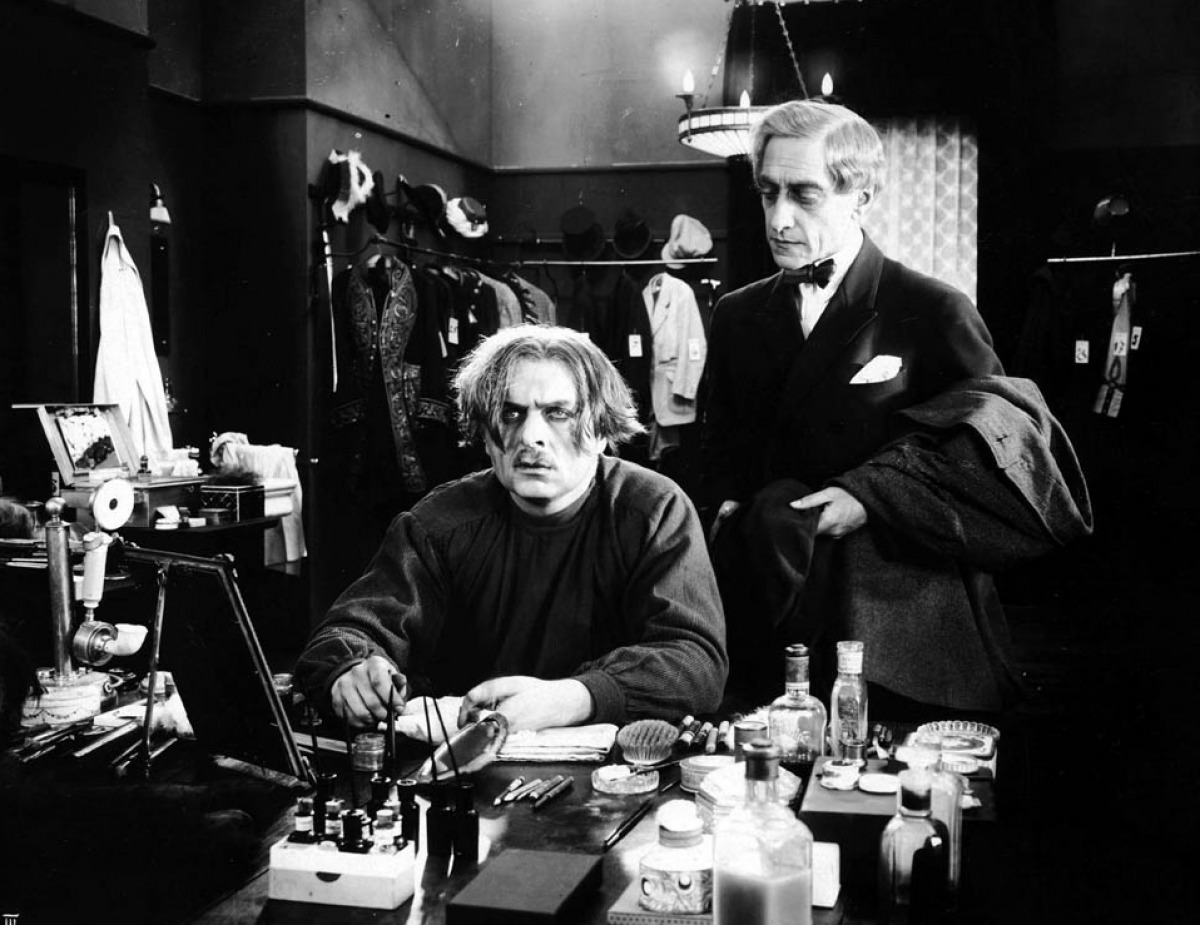
Doctor Mabuse Putting On a New Disguise

I’m going out on a limb to recommend a 4+ hour 1922 German film about a master criminal. Dr Mabuse der Spieler (Dr Mabuse the Gambler) is the first—and best—of three films that Fritz Lang directed about a master criminal named Mabuse, who was not only a gambler, but a counterfeiter, psychoanalyst, illusionist, stock manipulator, hypnotist, murderer, and a master of disguise. The other two Mabuse films Lang directed were The Testament of Dr Mabuse (1933) and The 1000 Eyes of Dr Mabuse (1960).

The original film starred Rudolf Klein-Rogge as the master criminal, Bernhard Goetzke as State Prosecutor Norbert van Wenk, and Alfred Abel as Count Told.

The period from 1918 through 1924 was a brutal time for the newly founded Weimar Republic after the German loss of World War I. The Treaty of Versailles and the heavy reparations it forced on Germany ultimately led to Hitler and the Third Reich. But before that, it led to political turmoil and hyperinflation. Lang’s film  brought together many of these threads in a film which, however long, maintains a high level of excitement throughout. Much higher, I would add, than most American superhero epics of recent years.

Although he is fantastically wealthy from his crimes, Mabuse is more interested in accumulating power over people than cash. There is a strong element of egoism in his attempts to break people who oppose him or otherwise stand in his way. His main opponent is the State Prosecutor von Wenk, whom Mabuse first hypnotizes into losing at cards and then attempts to assassinate him by bombing his office and getting him by hynotic suggestion to drive an automobile over a cliff. It takes a while, but eventually von Wenk concludes that Mabuse is the man of a thousand faces who has been causing all these crimes.

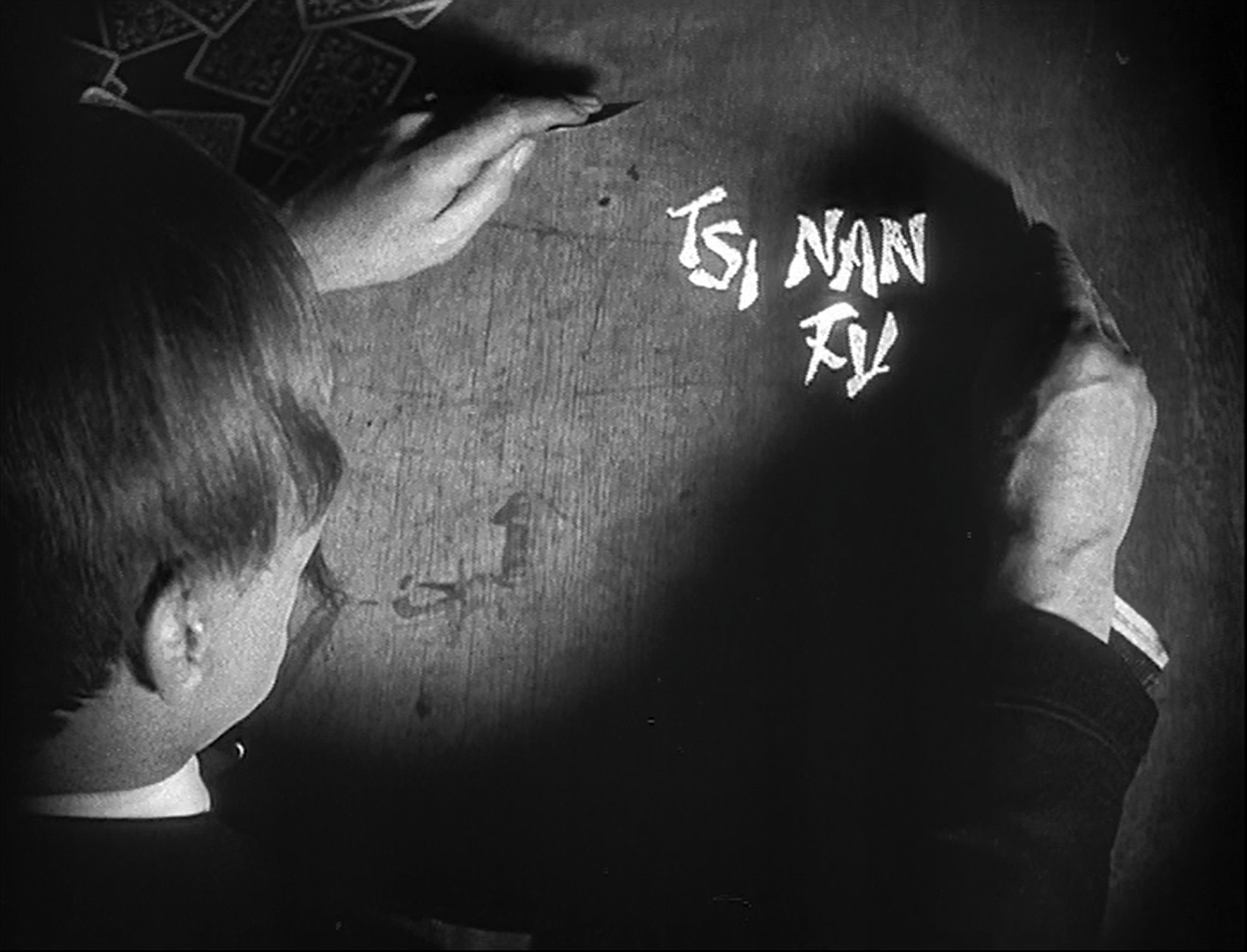
One of Mabuse’s Hypnotic Suggestions Against von Wenk

I don’t know if I can convince any of you to get this film (which is released in two parts) and actually watch it, I will have to employ hypnotic suggestion to urge you in the process. So here goes: TSI NAN FU and MELIOR. You won’t know what I mean unless you see both parts of the film. So, Ha!


Because It’s There!

A Tree in the Center of the Road? Yes, This Is Paraguay!

My mind keeps returning to Paraguay, and this without having done my Guatemala trip yet. There is something attractive to me about a country with such a screwed-up history. And yet, at the same time, the country fascinated Graham Greene and kept appearing, albeit peripherally, in his books, such as Travels with My Aunt (1969), A Sort of Life (1971), and The Honorary Consul (1973). It is also the country which gave birth to one of South America’s greatest (and most unsung) authors, Augusto Roa Bastos, who wrote The Son of Man (1960).

I want to go to Asunción, learn how to speak Guaraní, and drink endless glasses of iced tereré infused with herbs. I will read more about the sad history of the place and enjoy myself thoroughly. It will give me great pleasure to hear people ask me, “Why Paraguay?” I will, of course, answer them by saying, “Because it’s there!”

Palo Borracho Trees by Filadelfia in the Gran Chaco

Or, if I were someone other than who I am, I could take a gigantic passenger ship to some Caribbean isles where the sun will scorch the skin off my back and my fellow passengers will bore me into catatonic rage.


“This Be the Verse”

Is This Why the Poet Never Married?

I can’t believe that I’ve ignored Philip Larkin’s poetry for so long. I guess that’s what happens when you have too many damned books. This is one of my favorites by Larkin. It’s called:

This Be the Verse

They fuck you up, your mum and dad.
They may not mean to, but they do.
They fill you with the faults they had
And add some extra, just for you.

But they were fucked up in their turn
By fools in old-style hats and coats,
Who half the time were soppy-stern
And half at one another’s throats.

Man hands on misery to man.
It deepens like a coastal shelf.
Get out as early as you can,
And don’t have any kids yourself.

Apparently, the poet took these words to heart, as he never married or had children.

Serendipity: Philip Larkin’s Deafness

British Poet Philip Larkin (1922-1985)

Considering how much I like him, I wonder why I haven’t written about Philip Larkin before. Today, I read a piece in the Times Literary Supplement by his literary executor, Graeme Richardson, that contained some wonderful anecdotes, among which was the following.

Once Larkin was unable to have me to dinner in college, so we met for lunch instead, in a pub almost opposite Magdalen College called The Aldgate. A degree ceremony was taking place elsewhere in the city, and the bar where we had our beer and ham sandwiches was full of gownwearing graduates and their proud parents. One of these recent graduates (a “sweet girl graduate,” in fact), recognized Larkin and brought across her napkin for him to sign. Despite his reputation as a semi-recluse, and her obvious fear that he might growl and tell her to go away, he graciously did as she asked. As she withdrew clutching her trophy, I said something about her being pretty. “I know,” he said. “You wouldn’t believe what a disadvantage my deafness has been to me all my life. I shudder to think how many women have come up to me and said, ‘Take me, lover,’ only to have me reply, ‘Yes it is rather warm for the time of year, isn’t it.’”


The Houses of Poets

The Robert Frost House in Franconia, NH

When traveling, I like to visit the houses in which poets I admire lived. When I was in Chile in 2015, I made a point of visiting all three of Pablo Neruda’s houses: Isla Negra, La Sebastiana, and La Chascona. In Paris, I visited the flat in which Victor Hugo had lived. And, in Franconia, New Hampshire, I visited the farmhouse which Robert Frost occupied beginning in 1915 after he published his collection A Boy’s Will and afterwards as a summer house through most of the 1930s.

Frost remains one of my favorite American poets, along with Emily Dickinson and Walt Whitman. If you look through the same window a great poet has looked through, you begin to understand something about his work.

Mailbox at the Franconia House

Before he died in 1963, I attended a poetry reading by Frost at the newly opened Hopkins Center at Dartmouth College. Frost had attended Dartmouth for a while, but dropped out. He also attended Harvard, but he never graduated college. As old as he was, Frost was in complete command of his mind at the age of 87. And I have been moved by his poetry ever since. I got the feeling that Frost was not the bumbling old poet who read his poem “The Gift Outright” at John F. Kennedy’s inauguration in 1961: Hearing him speak, I had a feeling that Frost knew exactly what he was doing, and had no trouble handling an auditorium filled with sharp college undergraduates.


Like Nowhere Else on Earth

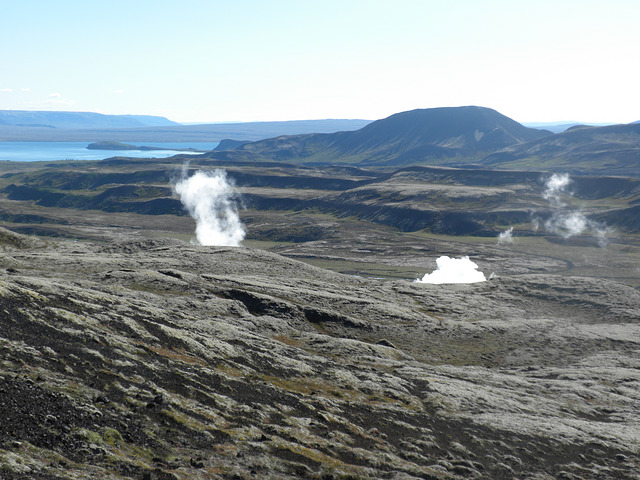
Fumaroles on the Road to Þingvellir

It isn’t long after you leave the airport at Keflavík that you see with your own eyes that Iceland is like nowhere else on earth. You are now in Volcanoland, on an island where there is an almost total lack of trees. There is an old joke: What do you do when you’re lost in an Icelandic forest? The answer: Stand up. Nowhere in Iceland are there trees in any number that tower above the human form. There are black sand beaches, steam venting from fumaroles visible between Keflavík and Reykjavík, hotel showers that smell of sulphur, strange ice floes tinged with a light blue shade, seemingly hundreds of waterfalls, numerous active volcanoes—and that is only the beginning.

I have been to Iceland twice, in 2001 and 2013. And I want to go again. It’s not exactly a budget destination. Yet the country is teeming with European tourists, mostly of the backpacker persuasion.

Duck-Shaped Ice Floe in the Lagoon at Jökulsárlón

On both of my trips, I visited Jökulsárlón, the lagoon full of blue-tinged ice floes from the giant Vatnajökull Glacier that is the largest in Europe. I took an amphibious boat tour of the lagoon and even tasted the ancient ice from the glacier. The lagoon is so striking that all scheduled buses passing it stop over for around an hour so that the tourists can get their fill of the sights.

Strange Rock Formations at Dimmuborgir by Lake Mývatn

The strange rock formations at Dimmuborgir by the southeast shore of Lake Mývatn are said to be the homes of elves who suddenly pop up through a hidden door and drag unsuspecting Icelanders to their subterranean halls.

Even in Reykjavík, there are strange unexplained things. To avoid jet lag, I took a ghost walk from the old harbor to the cemetery of Hólavallagarður. Although I slept well that night, I had the strangest dreams.


Hollywood’s Own Muse

Eve Babitz, Author of Black Swans

Perhaps the saddest thing about Southern California is that so much that has been written about the area comes from clueless East Coast authors who whose work is characterized by a kind of extreme cultural tone-deafness. If you want a true picture of Los Angeles, you have to read Eve Babitz who, alone, seems to understand what the city in which I live is all about. In her story “Self-Enchanted City” in her story collection Black Swan, she writes:

When people would first arrive from New York, they’d say stuff like “This place is full of fruits and nuts and you have no seasons.” So I knew they saw through the cheap thrills of shallow sunshine and were principled easterners determined to be unimpressed. But after a few weeks, even they would show up at Barney’s Beanery driving a brown Porsche, and they’d move into one of those Snow White wishing-well houses where all they could hear were birdies in the trees and all they could see were hollyhocks, roses, and lemon blossoms. And then they’d undergo a kind of molecular transformation, losing all their winter fat, their bad teeth, and their attitude that life was about artists being screwed by “the establishment.” And if they were fast enough on their feet, they’d soon become the establishment themselves. Or, at the very least, they’d wind up writing screenplays about Marxist good guys disguised as cat burglars.

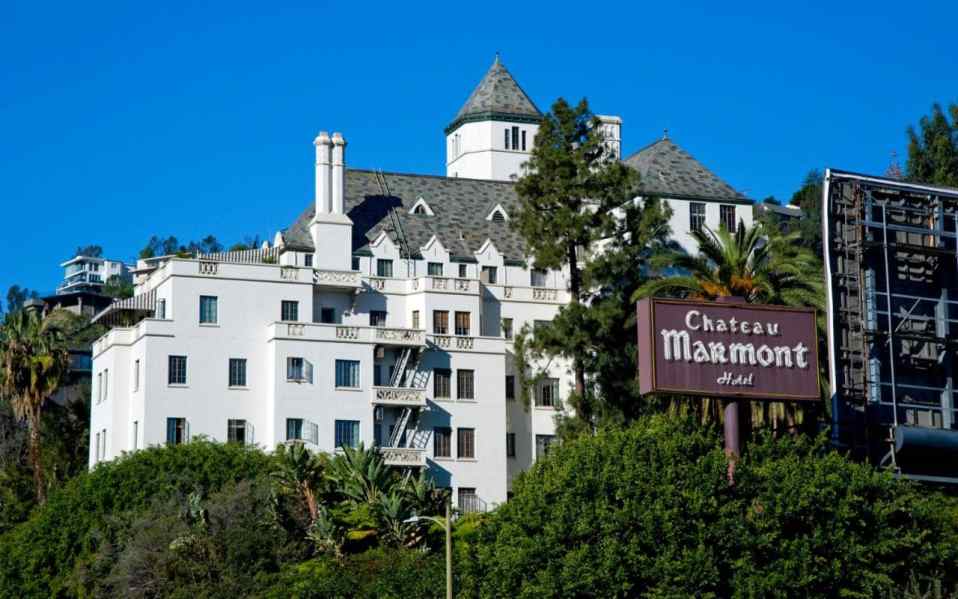
The Chateau Marmont, Archetypal Hollywood Hotel on the Sunset Strip

Eve neglects to mention that they still kept one foot in the East by wearing a New York Times baseball cap. Earlier, she describes what has happened to Hollywood:

But for anything to age gracefully, eternal vigilance is necessary, and Hollywood has not been carefully tended. It has been knocked down flights of stairs, abandoned, left for dead, and sold into slavery. Still, if you ask me, some parts are just as beautiful as my dream version—even more beautiful if you subscribe to the Tennessee Williams decadence-as-poetry theory that ravaged radiance is even better than earnest maintenance.

I am only about a third of the way into Black Swan, but am continuing to make further discoveries every page.


Tikal

Temple 1 at Tikal in the Petén Region of Guatemala

I had always wanted to visit Tikal. In the 1980s, when I visited Yucatán several times, I wanted to swing south through Belize to the ruinsat Tikal. Unfortunately, a murderous religious madman named Efraín Ríos Montt was in charge at the time; and the State Department was recommending that American tourists stay well away from the massacres and disappearances that were plaguing Guatemala at the time.

Tikal is huge, 575 square kilometers (222 square miles) in area. It almost defined the Classic Period of Mayan archeology, from approximately 200 AD to 800 AD at its height. The area in which it is located is a monkey jungle, pure and simple. With my hared of mosquitoes, I am thinking of spending three nights in nearby El Remate, where the hotels have electricity 24 hours a day, and not just sometimes. If there is air conditioning, or at the very least a functioning ceiling fan, one can escape being bitten to death and coming home with Zika or Malaria or Dengue, to name just a few baddies.

The Shores of Lago de Petén at El Remate

Although Guatemala is not a large country by North American standards, the road from Guatemala City to El Remate takes twelve hours or more on good roads. One has to go all the way to the Atlantic Coast before cutting north. There is a little matter of some high mountains preventing a direct route. If I took the mountain route, it would take at least twenty hours and several buses. I am actually thinking of flying from Guatemala City to Flores, which is within a few miles of El Remate. (I could stay in Flores, for that matter, but if I wanted to spend two days at the ruins, I want to be a bit closer to Tikal.)

There are sunrise and sunset tours at Tikal, but I don’t want to lose sleep just so I can gamble on a perfect sunrise or sunset. I’m willing to take pot luck.


Serendipity: Remind You of Someone?

Grove of Apollo

I read the following at one of my favorite websites, Laudator Temporis Acti for September 7, 2018, where it reminded me of a certain denizen of the White House. The speaker is Libanius in his Orations 1.255.

The successor of this ungodly fellow was another unbeliever himself. He took up his office and began to run to fat through his self-indulgence, as being a man of property, but his property was the fruit of his wickedness. He was more stupid than the other in that, upon my telling him to do no damage to Daphne and to lay no axe to its cypresses, he became my foe….

Further on, at 1.262, he writes:

The rule of our pot-bellied governor was a harsh one, for his wrath had been kindled by a piece of deceit. He had decided to lay the axe to the cypresses in Daphne, and I, realizing that such a course would bring no good to any who chopped them down, advised one of his boon companions that he should not incur the anger of Apollo because of the trees, especially since his temple had already been afflicted by similar misdeeds. I told him that I would invite the emperor to show concern for Daphne, or rather to emphasize the concern he felt already, for he was not without it, as it was.

Now imagine the cypresses in the Grove of Apollo were one of our recent National Monuments.

Libanius was a resident of Antioch in the fourth century A.D. He was a Greek teacher of rhetoric of the sophist school. Through the rise of Christianity, he remainded faithful to the old pagan state religion of Rome.