Giorgio di Chirico, Surrealist Painter

His Surrealist Landscapes Are Endlessly Fascinating

The scene is a port somewhere. You can see the unfurled sails of a ship just over the wall while two muffled figures hover around the entrance of a building. There is a tower just over the wall that could be a lighthouse, but maybe not. Note the conflicting shadows: The building on the left is casting its shadow in the 4 o’clock position, while the unseen structures on the right have shadows that are closer to the 10 o’clock position, I love these strange Mediterranean landscapes which seem to suggest so much but say nothing clearly.

Giorgio di Chirico (1888-1978) was, to my mind, the greatest of the surrealist painters. Although I prefer the landscapes, he painted other subjects as well:

Miscellaneous Objects Suggesting Strange Geometries

In one of his writings, the painter states, “What is especially needed is great sensitivity: to look upon everything in the world as enigma….To live in the world as in an immense museum of strange things.” The above image certainly qualifies.
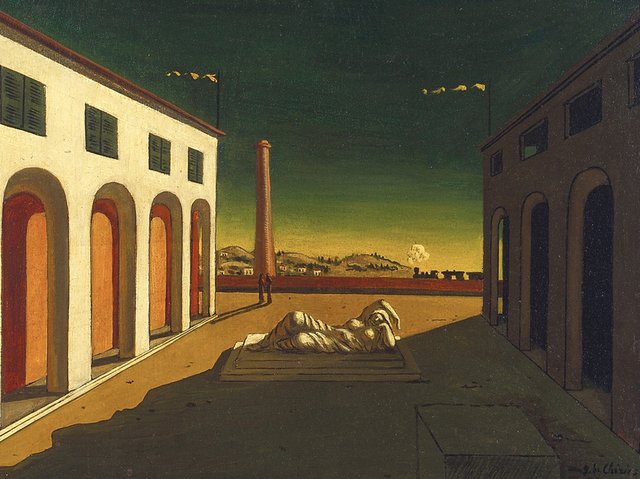
Another Chirico Landscape

The flags atop the facing buildings show a strong wind blowing from right to left. The steam from the locomotive beyond the wall in the background, on the other hand, is going straight up. Again, we have two muffled figures in the middle distance and a strange statue of a reclining male in the middle of the square. Again—not unusual with Chirico—the shadows are a little inconsistent. Where, for instance, is the shadow of the tall phallic tower.


“Married Blues”

I Never Had One Myself, But I Could Imagine …

The following poem by Kenneth Rexroth appeared in a poetry collection in Everyman’s Library Pocket Poets entitled Blues Poems. It is entitled “Married Blues.” I know I never had any children (I’m sterile as a result of an old pituitary tumor), never even got married; but I can appreciate Rexroth’s poetic vision.

Married Blues

I didn’t want it, you wanted it.
Now you’ve got it you don’t like it.
You can’t get out of it now.

Pork and beans, diapers to wash,
Too poor for the movies, too tired to love,
There’s nothing we can do.

Hot stenographers on the subway.
The grocery boy’s got a big one.
We can’t do anything about it.

You’re only young once.
You’ve got to go when your time comes.
That’s how it is. Nobody can change it.

Guys in big cars whistle.
Freight trains moan in the night.
We can’t get away with it.

That’s the way life is.
Everybody’s in the same fix.
It will never be any different.


Crypto-Economics

Stack of Cryptocurrencies Including Bitcoin and Others

Today was my day downtown. After my mindful meditation session, I took the Dash B bus to Chinatown and had a delicious lunch of Beef in Black Bean Sauce at the Hong Kong BBQ on Broadway. As I ate my lunch, I read a long article in The New Yorker about cryptocurrencies. It was entitled “The Stuff Dreams Are Made Of” and was by Nick Paumgarten. I have held back from the subject because I used to be a computer programmer myself and know how tempting it can be to game whatever system I am designing to my advantage.

People are so mesmerized by the concept of a blockchain because it is something new and edgy. Therefore it exercises a powerful attraction, especially to people who are not quite conversant with the technology.

Do you know what a blockchain is? One can’t advance far into the subject without coming to terms with the concept. Here is a link to a graphic presentation from Reuters entitled “Blockchain Explained”: Click Here. I am familiar with hash codes in search algorithms, so I feel somewhat familiar with the ground. What disturbs me is that human nature keeps rearing its ugly head and leading to the system being easily scammed. Also, I am not happy about ransomware from hackers demanding payment in cryptocurrencies, because the transfer is untraceable by law enforcement.

I am always suspicious about economic activities that require more faith than I am willing to repose in them. There is such a marketing aspect to the whole technology that one feels one were being assailed by timesharing condominium salesmen, as I was when I landed at the Cabo San Lucas airport a couple years ago.

What if cryptocurrencies became more popular than the 1% share of the global financial services market they currently occupy. Even at the current level, blockchain software requires incredible computer power. According to the Paumgarten article:

This year, it is said, the Bitcoin network will use as much energy as the nation of Austria, and produce as much carbon dioxide as a million transatlantic flights. Mining rigs—computers designed specifically to do this work—are thirsty machines. Mining farms tend to sprout up where juice is cheap (typically, in proximity to hydropower projects with excess capacity to unload) and where temperatures are low (so you don’t have to burn even more electricity to keep the rigs cool). There are open-air warehouses in remote corners of sub-Arctic Canada, Russia, and China, with machines whirring away on the tundra, creating magic money, while the permafrost melts.

I can foresee Thomas Pynchon writing a sequel to his Bleeding Edge about this activity. It’s almost as if the subject of cryptocurrencies and the high priests who run them were made to order for him.

As David Chaum, one of the pioneers of cryptocurrency software, once said, “There’s never been, in the history of civilization, this much money aggregated as a result of doing nothing.”

My Brilliant Acting Career

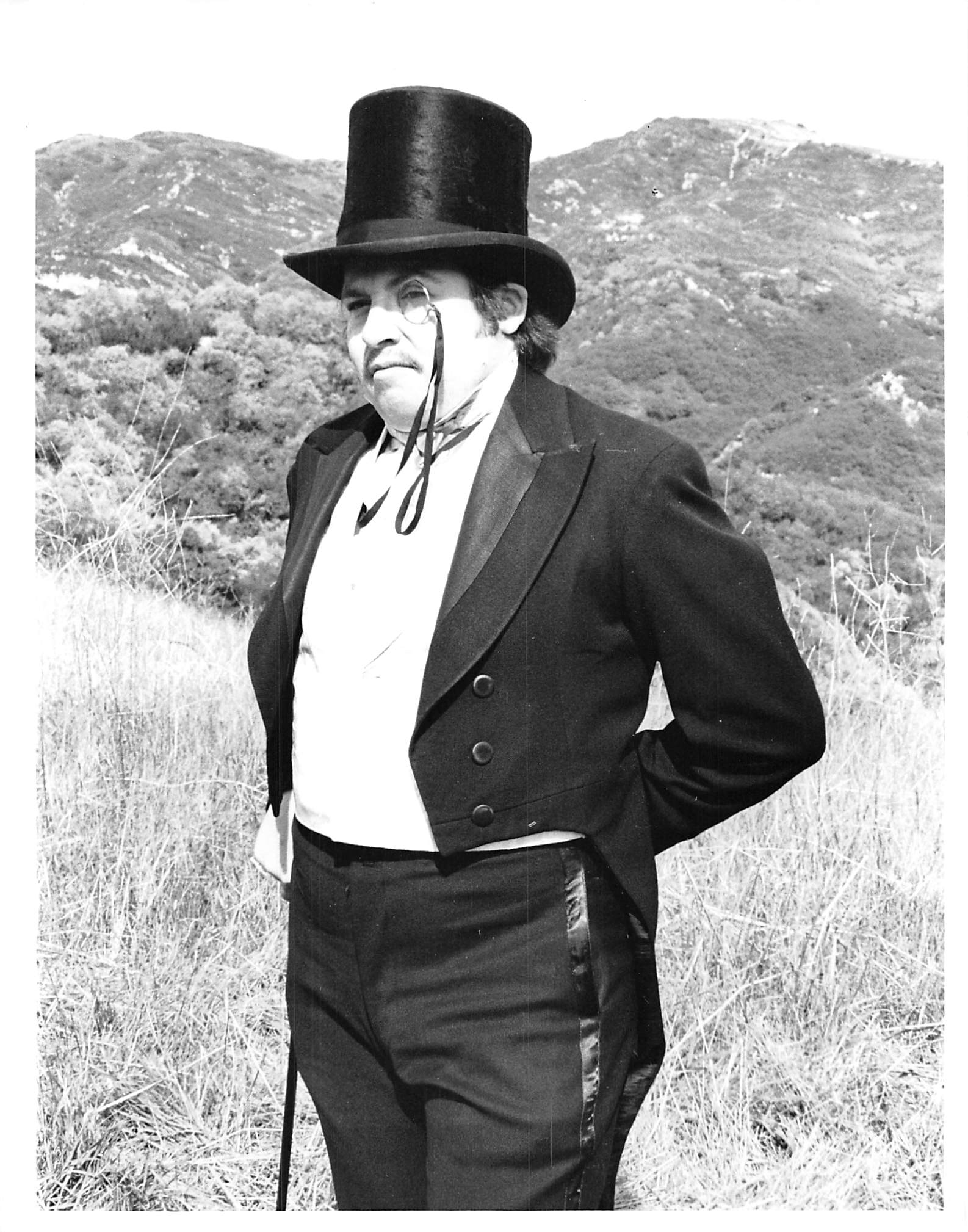
Me As a Dissolute 19th Century Gambler

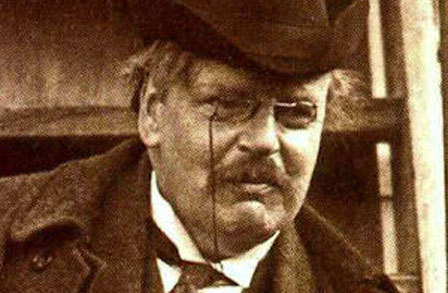
Martine and I have been working at thinning my overflowing collection of books and papers. Today, two 8 x 10 photos emerged of me in a 1970s student film by Trevor Black and Lynette Cahill. If I remember rightly, the film was based on a Chekhov story called “The Duel.” I played a bit part as a cheating gambler. How any self-respecting gambler sport such a rat’s nest of a hairdo is beyond me. The interesting thing is that, unconsciously, in costume I resembled my literary hero, G. K. Chesterton, hair and all. (Today my hair is not much to look at.)

G. K. Chesterton

I enjoyed this brief acting stint, though I was never requested to act again. No casting directors have besieged me to try out for any major studio (or even indie) productions. No matter: I was never really that interested in film production, whether as director, crew, or actor. I just liked to see, talk about, and write about great films. I would have liked to become a professor of film history, but that was not in the cards for me; and I have no regrets about the winding path I wound up taking.

Here is another view of me in costume, acting as the second in a duel:

Me as the Crooked Gambler Acting as the Second in a Duel


If any of you have any lucrative roles for a ratty looking retired guy, please contact me at once.
 

Favorite Films: Two Men in Manhattan (1959)

French Film Director Jean-Pierre Melville (1917-1973)

You have to admit it: He looks like an American. But he comes by it honestly. Not only is he a hero of the French Resistance during the Second World War, but his code name was Melville, based on his love of Herman Melville’s Moby Dick. His real name was Jean-Pierre Grumbach, born an Alsatian Jew in Paris; but he signed all his films as Jean-Pierre Melville.

I have seen four of Melville’s thirteen films. Although the French New Wave of the 1960s resulted in a publicity windfall for Jean-Luc Godard, François Truffaut, and Alain Resnais, there were many French directors who never became quite so well-known across the Atlantic. Jean-Pierre Melville is one of them. Others include Jacques Becker, Jacques Rivette, and Claude Chabrol.

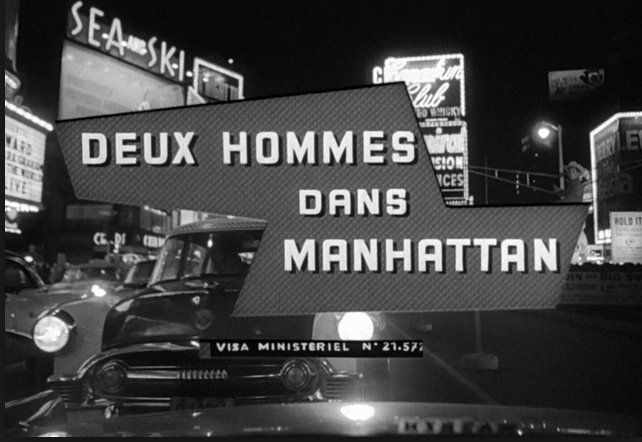
Two Men in Manhattan (Deux Hommes dans Manhattan) is like a Valentine dedicated to New York City at night. A newsman for Agence France Presse in New York is told to investigate the non-appearance of a French diplomat at the United Nations. Moreau (played by Melville himself) looks up his paparazzi friend Delmas. Together, they search for three known past girlfriends of the diplomat, including a Broadway actress, a jazz singer, and a stripper. They even visit a high-priced prostitute known to favor diplomats. When they find that he has died in a girlfriend’s apartment, a conflict erupts when Delmas sees the potential for selling photos that show his death to have been a squalid one. It turns out the deceased was a hero in the Resistance, and Moreau’s boss wants the negatives of the pictures Delmas took.

French Title for Two Men in Manhattan

In no American film of the period have I seen such beautiful scenes of night-time Manhattan. The exteriors in this film are lovely, and the scuttlebutt is that Melville shot them himself. If so, I would regard it as high on the list of the best noir films, irrespective of country of origin.

If you should rent the DVD, I suggest you also watch the extra footage of a conversation between Jonathan Rosenbaum and Ignatiy Vishnevetsky, two knowledgeable film critics who provide excellent background to the movie and Melville’s career.


Fending Off the Wrathful Deities

Another Eastern Holy Book I Forgot to Mention Yesterday

Memory is like that. You write about the importance of A and B in your life, and then you realize you have left out C. In addition to the Bhagavad Gita and the Tao Te Ching, the other work of Eastern wisdom you have totally forgotten is The Tibetan Book of the Dead. In many ways, it’s he most important of the three. The Christians have their Hell, the Jews their Sheol, the Muslims their Jahannam … but for the Tantric Buddhists of Tibet, Hell was a way station on the road to rebirth.

When one died, one entered an in-between state known as the Bardo. The goal for a Tibetan was to prepare oneself to be assailed by wrathful deities. By expressing fear at this confrontation, the departed soul was delivered over for rebirth. The wrathful deities are, in a way, like the ghosts in Charles Dickens’s A Christmas Carol: They were there only for Scrooge’s benefit.

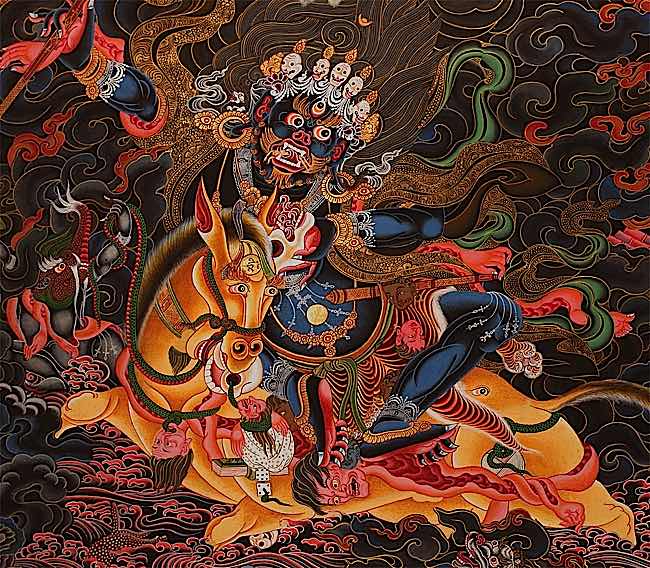
According to the Buddhist Weekly, one of the worst of the wrathful deities was Palden Lhamo, illustrated above:

With a world-shaking cry the figure, now blue black, starts to its feet… The giant figure pounds forward, wild hair streaming upward, tied around with snakes. The massive body, nearly naked, girt only in a tiger-skin, wears skulls—pretty, staring skulls—as jewels. Snake-enwreathed, fang-mouthed, three eyes glaring bloodshot from an awesome face, he marches onward bellowing challenge…

The goal in Tantric Buddhism is not heaven, of which there is no sign in the religion, but annihilation. That is the only true nirvana. To be reborn is a defeat of sorts.

In many ways—even before one dies—one is always fending off wrathful deities, be they Trump or one’s boss or one’s wife. In many ways, fending off the wrathful deities is not only important after one’s death, but also during one’s life.


The Bhagavad Gita

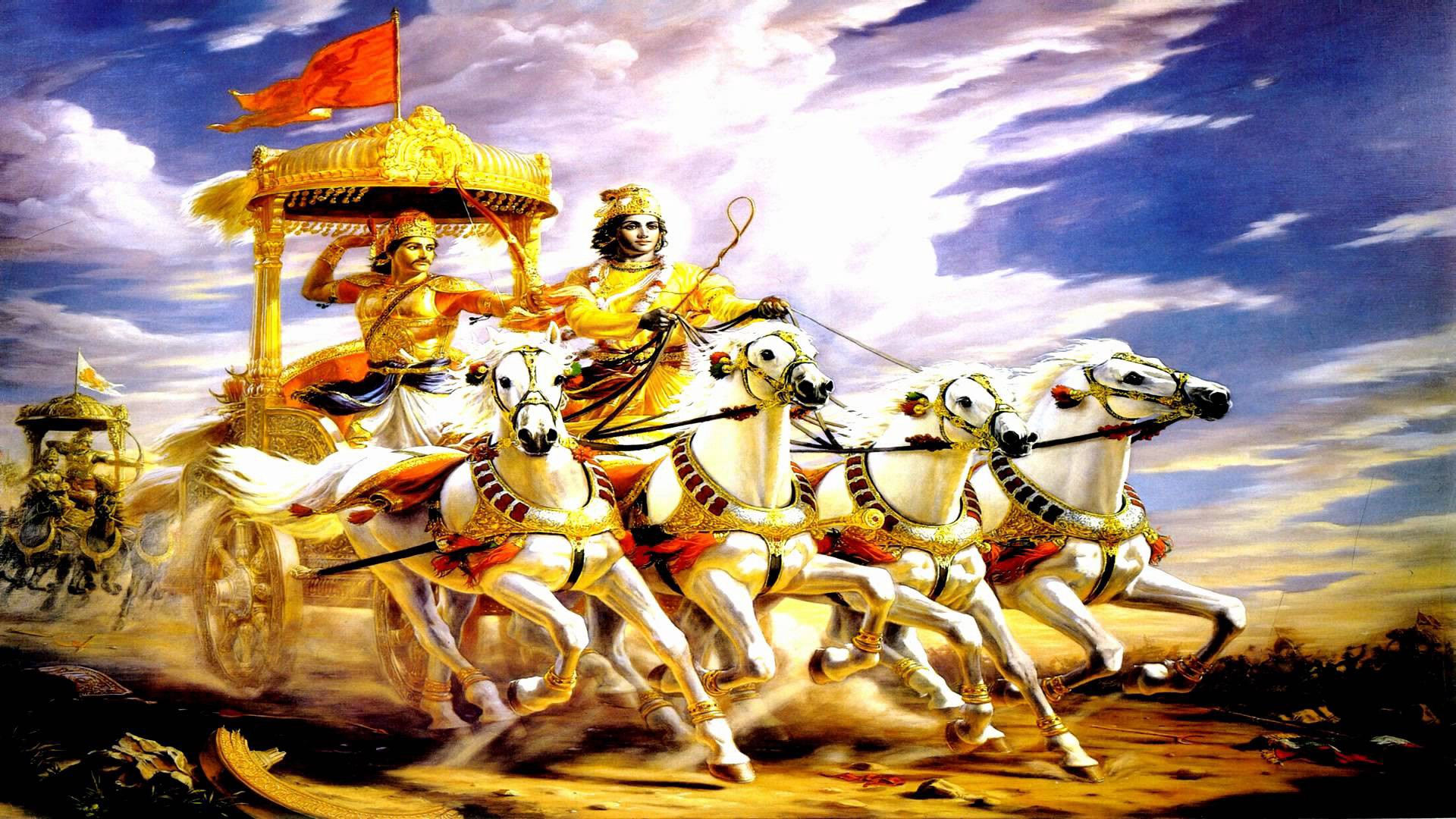
Arjuna and Krishna with the Pandava Army at Kurukshetra

Of all the deep books of Eastern wisdom, the two that have most influenced me are the  Tao Te Ching of Laotse and the Bhagavad Gita, a selection of some 700 lines from India’s national epic, The Mahabharata. Both are relatively short, yet abruptly different from the theistic traditions of the Judaeo-Christian and Islamic faiths.

I was first introduced to the Bhagavad Gita in 1975, on the bus between Chichen Itza and Mérida in Yucatán. I was sitting next to a cute Canadian girl who, as I recall, berated me for being too pompous. (She was right.) She gave me her copy of the Hindu scripture as a corrective to my sense of self-importance. Since then, I have read it several times.

Arjuna is with the god Krishna at the battlefield of Kurukshetra. As he scans the Kaurava army arrayed on the field against him, he expresses doubts about his role in fighting the battle. The Bhagavad Gita is the dialogue between Arjuna and Krishna on the subject:

Look upon pleasure and pain, victory and defeat, with an equal eye. Make ready for the combat, and thou shalt commit no sin.

Krishna continues:

He who wherever he goes is attached to no person and to no place by ties of flesh; who accepts good and evil alike, neither welcoming the one nor shrinking from the other—take him to be the one who is merged to the Infinite.

In the end, Arjuna resolves to commit himself to the battle. This is all very different from turning the other cheek, and certainly a good deal bloodier.

The quotes above are from the edition I read most recently, the translation for Shambala Pocket Classics by Shri Purohit Swami.


On Fire—Again!

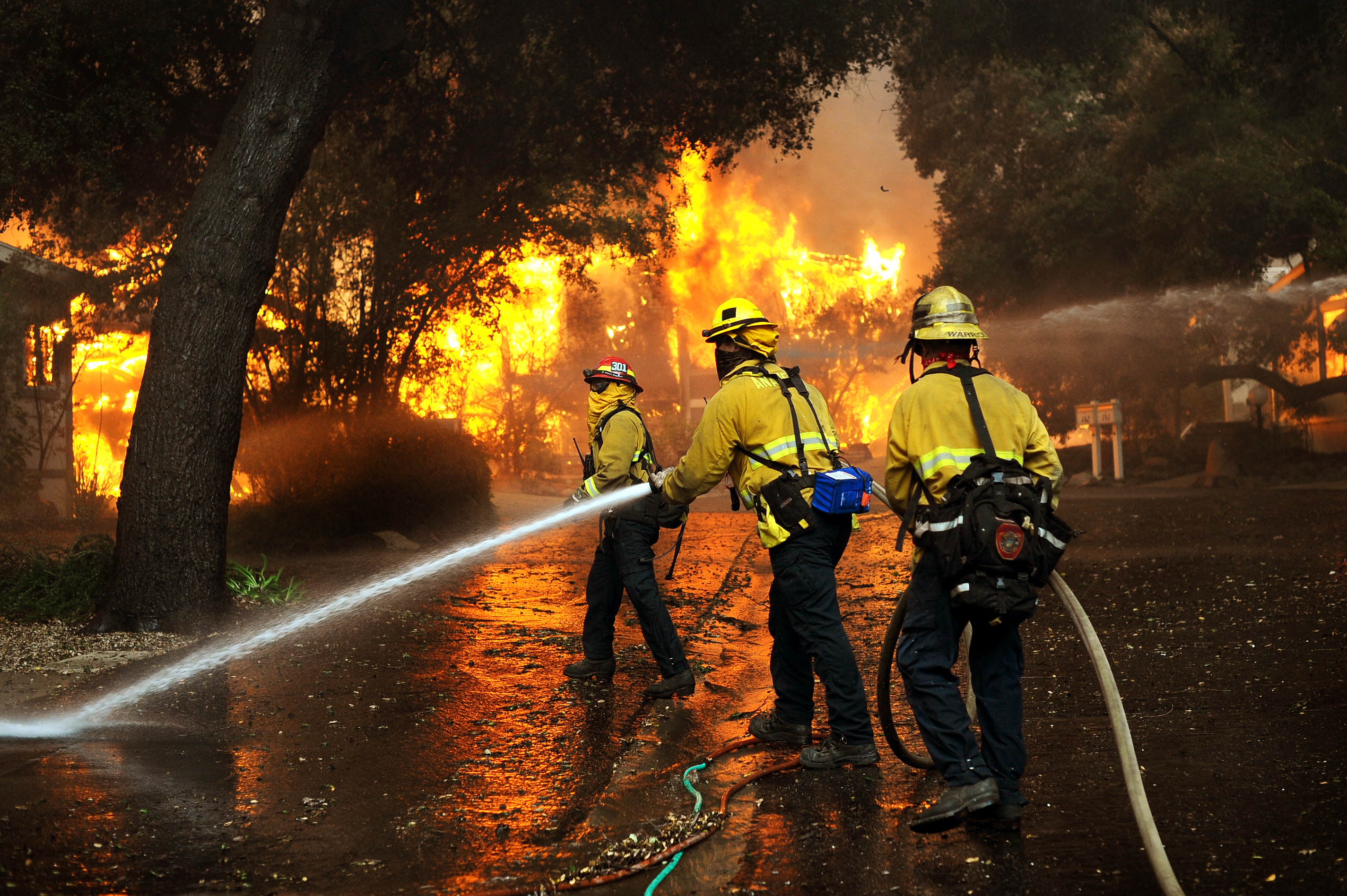
Firefighters Battling Flames in the Woolsey Fire

Consider this a recipe for disaster: High winds blowing from east to west, bone dry humidity, and large swaths of dry brush. The result? One of the giant fires that sweep through California destroying trees, brush, and houses. Martine and I have been sneezing all night from the accumulation of ash in the air. Tomorrow, my car will probably be covered with a thin layer of the stuff, because I am parked in a carport rather than a closed garage.

Please let me begin by assuring you that I do not live in a zone that is susceptible to brush fires. The people whose housing is threatened are, generally speaking, wealthy. Such top-drawer areas as Malibu, Bell Canyon, Calabasas, Agoura, and West Hills have been requested to evacuate their homes. Those who don’t are in danger of burning to a crisp with all their possessions.

I don’t sympathize much with the home-owners so much as I do with the poor firefighters. Combating these blazes is like working overtime in hell. In addition to the local fire departments, many prisoners and professional brush fire fighters are involved.

As many houses are destroyed will be rebuilt, paid for with insurance money. In a few years, during another drought, they will go up in flames again. And again. And again.


Star Wars and Axe Wars

Fresco at Maya Site at Bonampak in Chiapas

I have just finished reading Peter D. Harrison’s The Lords of Tikal: Rulers of an Ancient Maya City. During the reign of the kalomtes, or divine kings of the Classic period of Maya history, wars were almost constant. They were of two kinds:

  • “Star Wars” are wars whose timing is mandated by the positions of the planets, especially Venus. These do not usually involve massive destruction or conquest.
  • “Axe Wars” are wars of conquest or revenge.

In all my postings on the Maya, I have neglected to note one important fact: the Maya were never an empire of diverse peoples, such as the Aztecs in Northern Mexico and the Inca in the Andes. Instead, there were powerful city/states that rose into prominence and just as often fell to other Maya city/states. Tikal in Guatemala was probably the largest; but at different times such cities as Palenque, Calakmul, Chichen Itza, and Cobá in Mexico; Copán in Honduras; Caracol in Belize; and El Mirador, Dos Pilas, and Quirigua in Guatemala were first among equals.

With so many hundreds of Maya cities spread across Southern Mexico and Central America, the number of possible wars numbers in the hundreds or even thousands. When I think on this, I realize that the Maya were probably pretty happy to get rid of their kings and concentrate on survival rather than fighting in astrologically dictated conflicts or axe wars against powerful entities like Calakmul.

Then, too, it was hard work building all those temples and pyramids when none of the people of the Americas had the use of the wheel. Stones had to be shaped and carried long distances by men. There was probably a massive sigh of relief throughout the Maya world when all this war and labor was mostly behind them.


It Could Have Been Worse

The Results Aren’t All In Yet, But It Looks As If All Is Not Lost

Elections are mixed events. Never have I been entirely happy with the results. And sometimes, when I seemed happier than other times, I was hurt by what I felt was betrayal for the people I supported. The situation is worse in California, largely because of the stupid propositions that are usually supported by out-of-state corporate interests and give us the chance to hoist ourselves on our own petards. We are still suffering from the notorious Proposition 13 of 1978, which was a boon to homeowners but a bane for renters.

The good news is that Trump will have a more difficult time converting the U.S. into a Thousand Year Reich. The bad news? Where are all these angry white males coming from? and why do they want to destroy this country? I have already declared myself to be an Independent; and I have even resigned from the white race (considering myself to be Finno-Ugric, from the Asian side of the Ural Mountains); but I have no intention of resigning from the masculine gender.

Probably the worst night of my life was election day in 2016. I was in Quito, Ecuador watching the results come in on CNN at the Viejo Cuba Hotel. When I saw that Trump was winning, I almost considered not returning to the U.S. In the end, I gritted my teeth for the circus that was sure to come, and in fact did come. That so many Americans are still committed to this circus is a mystery to me. I guess I just don’t understand (let alone tolerate) these voters.