Gladiatorial Television

Who Needs Lions vs. Christians When There’s the News?

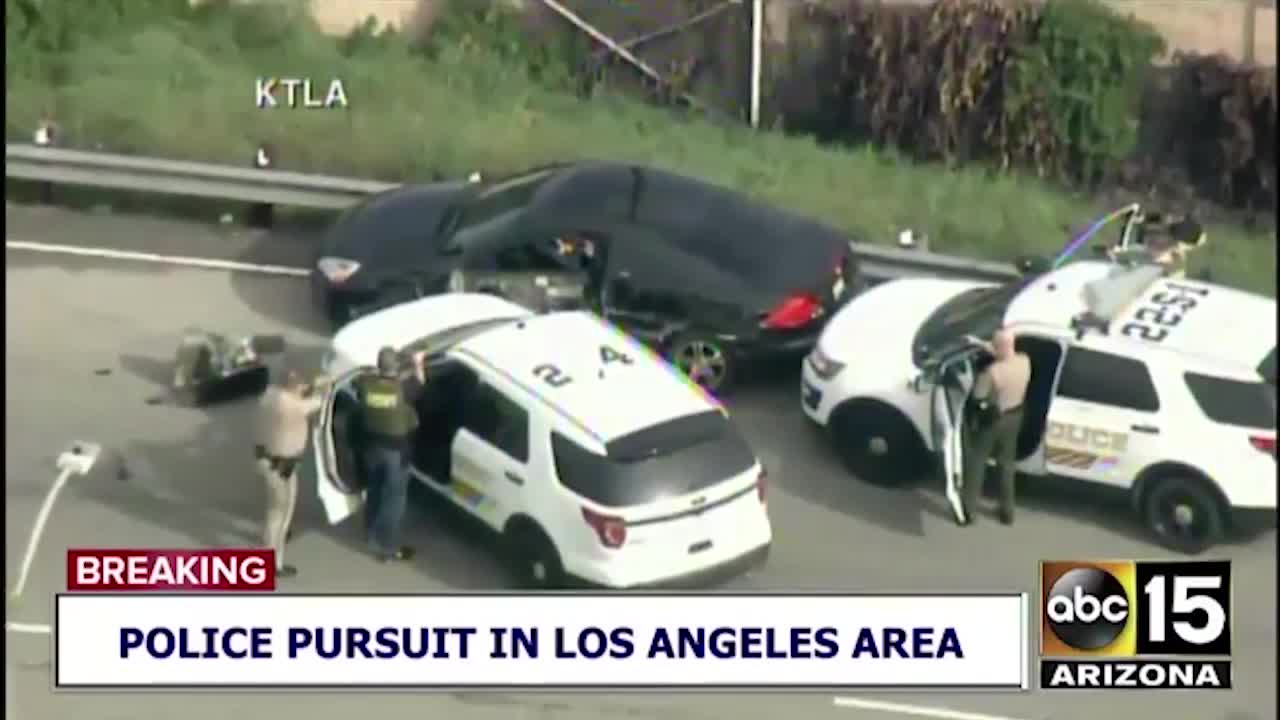
When you have ten million people in a large, spread-out county like Los Angeles, you get to watch a lot of gladiatorial events on the evening news. Most of these are car chases, whenever some chicken-necked loser decides to steal a car and lead the police on a freeway chase. In almost all cases, the perpetrators are spread-eagled on the tarmac while being cuffed by a legion of angry police on their best behavior.

Today, there was a special event. An allegedly homeless man wearing an LA Dodgers hat and no shirt caused a ruckus in the 2000 Block of Brighton Avenue in San Gabriel. Around 1:30 in the afternoon, his girlfriend or acquaintance reported him to the police. The Sheriff’s Department showed up in force. When the man in question began firing at the police, the SWAT team was called in. But that was only the beginning. He set fire to two houses, continued shooting at the police, throwing lit firecrackers at them (?!), and running back and forth from house to car and boat and back again.

Houses Burning in San Gabriel

Of course, the fire department was unable to save the first house that was set afire, because the gunman kept threatening the first responders for upwards of five hours. Eventually, someone decided that enough was enough. First they hit the suspect with a rubber bullet, then they filled his hiding place with tear gas, then moved in and killed him proper using the real stuff.

In the meantime, they had to close down both lanes of the nearby San Bernardino Freeway (I-10) because the house was right up against the freeway, and the gunman kept firing in all directions. Tens of thousands of motorists trying to get home after work were affected.

If this is the kind of entertainment you crave, come to Los Angeles. But if you’re a chicken-necked loser or a shirtless bum, go elsewhere. Like Texas.
 

The Zombie Apocalypse Comes to Coronel Pringles

The Zombie Apocalypse Pays a Visit to South America

Who or why or what is Coronel Pringles? Actually, it’s a medium-sized town of no particular distinction in the Province of Buenos Aires, not too far north of Bahía Blanca. It is perhaps best known not only as the birthplace of Argentinian novelist César Aira, but the scene of several of his stories. One of these stories is Dinner (or Cena in Spanish), first published in 2006.

The story starts slowly enough with a penniless bachelor in his sixties who has moved back in with his mother. Together, they visit an unnamed friend of the unnamed narrator and view some of his collections. When they return home, the mother expresses dissatisfaction with the evening; and the son turns on the television … only to learn that the dead of Coronel Pringles are rising from their graves and attacking the living:

This was as improbable as an adolescent fantasy. It was, however, true. The guard who sounded the alarm first heard some rustling sounds that kept getting louder and spreading across the graveyard. He came out of the lodge to take a look and hadn’t even made it across the tiled courtyard to where the first lane of cypeses ended when, in addition to the worrisome rustlings, he began to hear the loud banging of stone and metal, which seconds later spread and combined into a deafening roar that reverberated near and far, from the first wing of the wall of niches to the rows of graves extending for more than a mile.

The Area Around Coronel Pringles

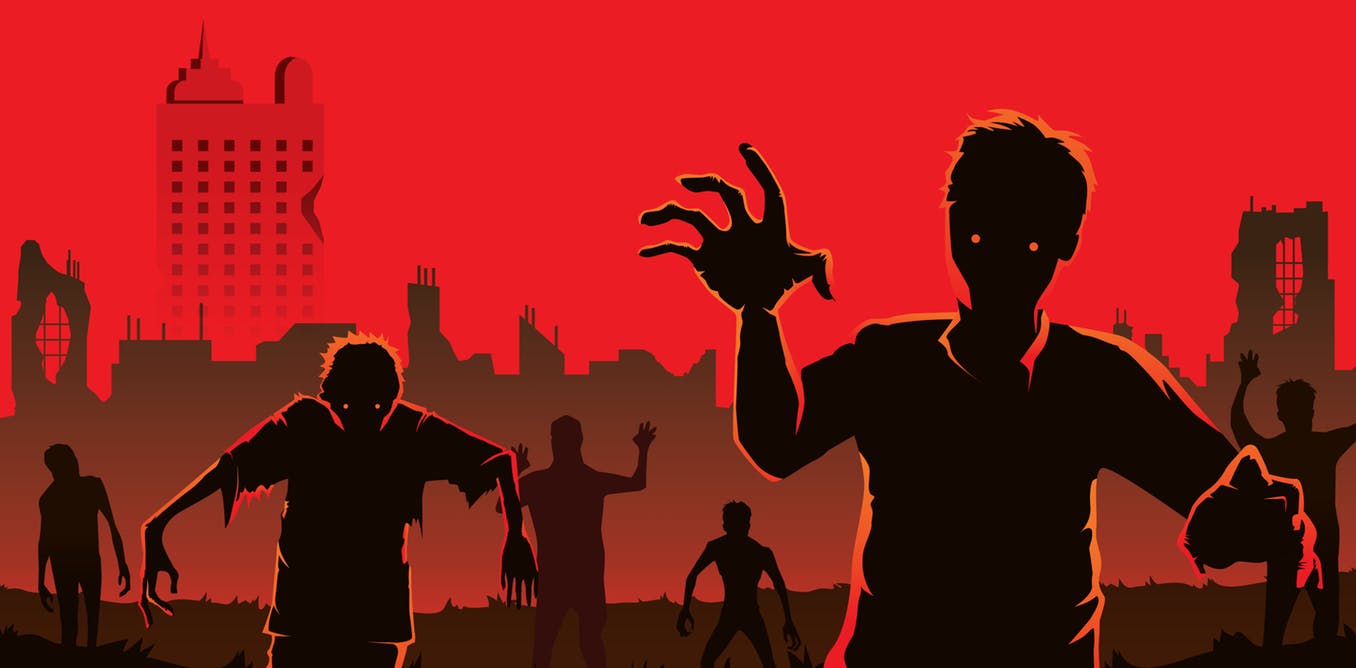
At first the newly risen dead show a lack of coordination, but they begin to pick up speed. “No two were the same, except in how horrible they were, in the conventional way corpses are horrible: shards of greenish skin, bearded skulls, remnants of eyes shining in bony sockets, sullied shrouds.”

What do these undead do? They go for the brains of the living (as expected), but what interests them most are the endorphins contained therein, which they suck out with ghoulish glee. Is there nothing that can stop these delinquent ancestors from decimating all of Coronel Pringles? Well, yes, there is, but you’ll have to read this short (101 pages) but delightful book for yourself to find out. Be prepared for a completely surprising dénouement in Part III.


My Favorite Founding Father

Thomas Jefferson (1743-1826)

My favorite founding father is also the most problematical, namely: Thomas Jefferson. We know him as the Third President of the United States. What was even more interesting was how he saw himself, based on the epitaph he had composed for himself:

HERE WAS BURIED THOMAS JEFFERSON, AUTHOR OF THE DECLARATION OF AMERICAN INDEPENDENCE, OF THE STATUTE OF VIRGINIA FOR RELIGIOUS FREEDOM, AND FATHER OF THE UNIVERSITY OF VIRGINIA.

Note that he doesn’t make any mention of the four years he served as Vice President to John Adams, let alone the two terms as President. The Statute of Virginia for Religious Freedom is interesting, because it removes its author from consideration by religious fundamentalists as a kindred spirit. Jefferson was a Deist, not really a practicing Christian in the religious sense.

And the University of Virginia? The Charlottesville campus was indeed Jefferson’s creation, in terms of its architecture, administration policy, and faculty staffing.

Why did Jefferson not consider his presidency one of this chief accomplishments? For one thing, he was basically a shy person who did not like the whole give and take 0of politics. During the eight years of his Presidency, he gave only two speeches, and they were written by him for his two inaugurations. Not a good speaker, he was, however, a wizard writer, and his Declaration of Independence was indeed a work that will live forever. (Until Trump decides to repeal it.)

I have just finished reading Joseph J. Ellis’s American Sphinx: The Character of Thomas Jefferson (New York: Alfred A Knopf, 2001). A winner of the National Book Award, Ellis’s book examines Jefferson’s tendency to balance contradictory ideas on such issues as slavery (he was against it, yet he owned slaves without emancipating them), states’ rights, the Federal Government, and the Supreme Court.


Influence Numero Uno, 1960s Style

R. Crumb Was My Guru in Dem Days

The 1960s were a difficult time for me. I was all set to start graduate school in film history and criticism in September of 1966, when, quite suddenly, I was in a coma at Fairview General Hospital, with my body surrounded by ice to bring my temperature down. It was then that my pituitary tumor decided to make a major incursion on my optic nerve and brain that almost carried me into the next world. Somehow, I struggled back to consciousness, received the last sacraments of the Catholic Church (the aptly named Extreme Unction), and was ready to remove a “cyst” (that’s what the doctor called it) from my pituitary.

Did I even know what the pituitary gland was? Not really. Within a few days, my brain was hinged back to allow a surgical suction device to remove the enlarged and inflamed gland. When later I saw my neurosurgeon and asked how big the tumor was, he answered, “About the size of a grapefruit.”

When I finally made it to Los Angeles after Christmas in 1966, I noticed some changes to my ways of thinking:

  1. I felt that because of my weird ten years of illness that I was, for all intents and purposes, from Mars.
  2. Quite suddenly, I lost my faith in religion.
  3. I found myself with a really weird sense of humor.

Self Portrait of Cartoonist R. Crumb

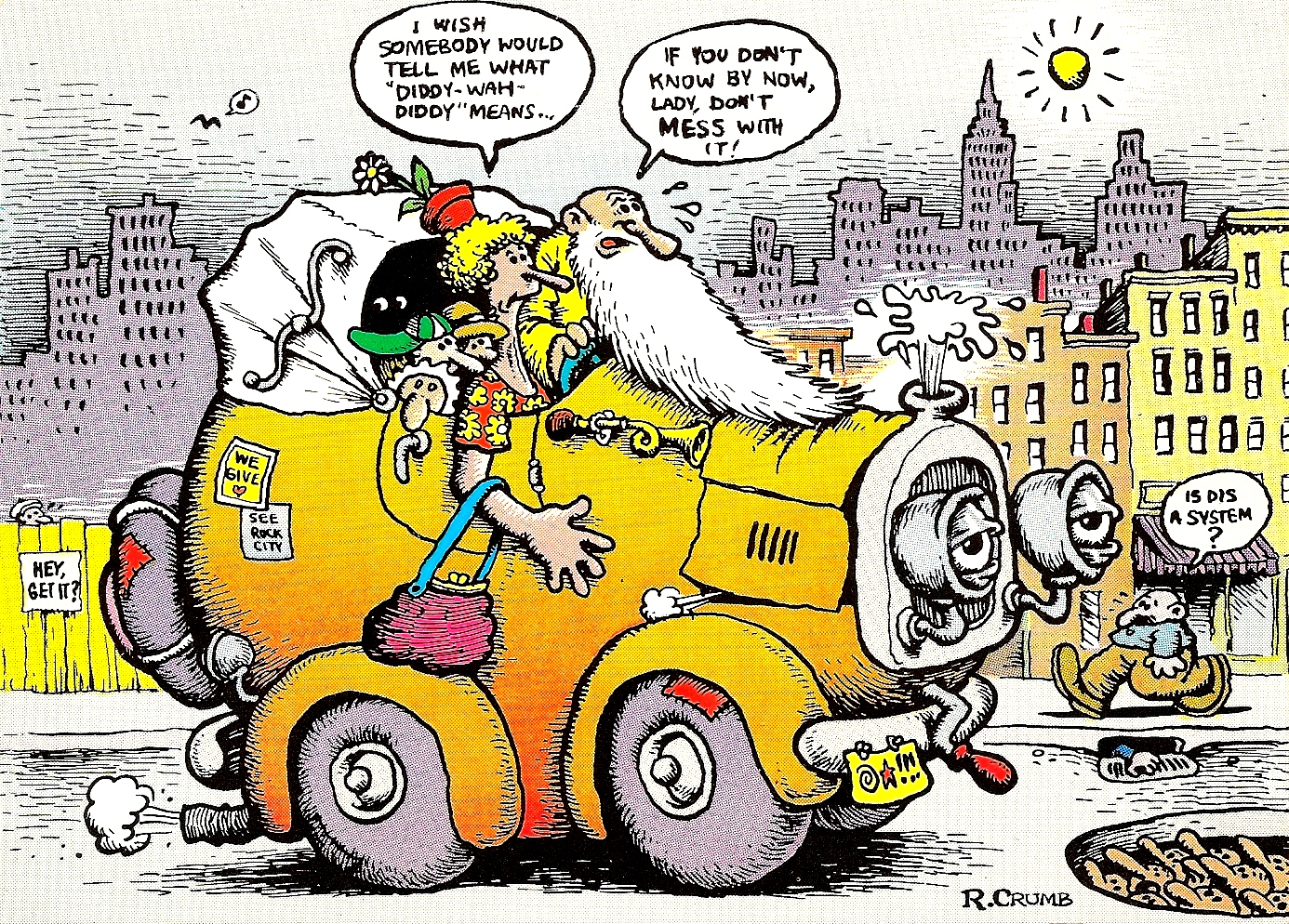
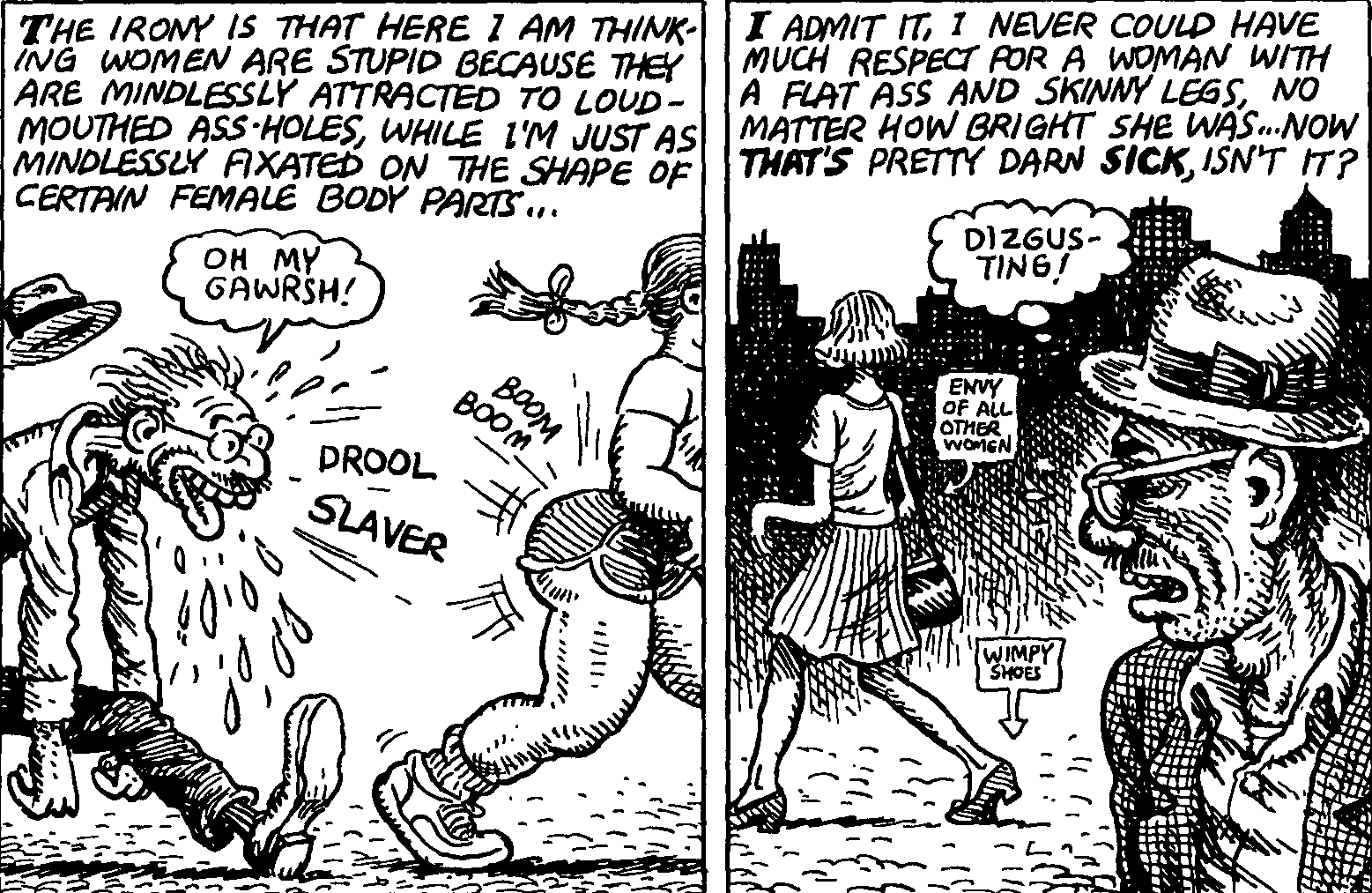
Since I was now in Los Angeles, I drifted toward certain local influences, such as The Los Angeles Free Press, an underground newspaper that mirrored my own sense of disillusionment. Then I made the discovery of R. Crumb, whose Zap Comics, Fritz the Cat, and other series were required reading. There was Mister Natural, Flakey Foont, and a whole galaxy of characters. Admittedly, there was a lot of misogynistic sexuality, which was a Crumb trademark, but that was the way I was feeling  about myself. It rubbed me the wrong way that women seemed to lie so casually and hurtfully. It was years before I understand that was a defense mechanism from weirdos like me.

Some of Crumb’s Early Misogyny

Oddly, I never outgrew my admiration of Crumb’s work. I no longer accept all of Crumb’s own neuroses and psychoses, but I believe he was a great cartoonist, and that his work will be remembered long after I am gone.


The Lomita Railroad Museum

The Lomita Railroad Museum

One does not expect to see a railroad museum on a residential suburban street, yet there it was. Plus it was not built at the site of an old station or railroad yard. The station building is a built-from-scratch replica of the station in Wakefield, Massachusetts. It was built on 250th Street because that’s where Irene Lewis lived. The Lomita Railroad Museum is her creation, in memory of her late husband Martin, and it is a tribute to the love that the Lewises had for railroading.

Today was a prototypical June gloom day, so Martine paged through our copy of Passport 2 History: Your Guide to 83 Historic Sites in 9 Counties of Central and Southern California, an occasionally revised booklet that has resulted in a number of fun day trips for the two of us.

In addition to the station building with its numerous exhibits, there is a 1902 Southern Pacific steam locomotive with tender and a 1910 Union Pacific caboose. On adjoining properties, there is a Santa Fe caboose, a 1923 Union Oil tank car, and a 1913 outside-braced wood box car.

Martine with Locomotive Exhibit (Notice the Engineer’s Hat)

It’s always fun to see a real labor of love come to life the way the Lomita Railroad Museum has. Los Angeles is full of little corners where some person’s dream has resulted in a fun place to visit and be informed.

Especially now that the Los Angeles to San Francisco High Speed Railroad is in doubt because of funding woes, railroading is becoming more and more a thing of the past. Although they seem to be thriving in Europe and parts of Asia, the railroads in North America have given way to trucks (for freight) and buses (for passengers).

I will never forget the awe I felt as a cub scout waiting for a passenger train to take members of my “den” to distant Ashtabula, Ohio. As the giant steam locomotive pulled up to the station, I felt a frisson of terror at such power as we were enveloped in steam.