Attenuation of Ethnicity

Picture from the West L.A. Buddhist Temple Obon Festival 2007

I have been attending the West Los Angeles Buddhist Temple’s Obon Festival for many years now, going back to the 1970s. Now Martine joins me and takes as much pleasure in the festivities as I do.

One thing that both of us noticed was that the festival was less Japanese. It was also not so well attended, and most of the dancers wore ordinary casual clothes. Only a few of the men and women wore kimonos, where in the past most of the participants were more traditionally dressed.

As a Hungarian-American who was born in a rich ethnic tradition in a Hungarian neighborhood in Cleveland, I am constantly aware that our ethnic traditions are being gradually attenuated over time. When I first came to L.A., there were a number of Hungarian restaurants. Now the count is down to zero. The same thing is happening to other ethnicities, such as the Japanese and even the Mexicans.

I suppose it is only natural that over time we are becoming more homogeneous. Even though the Obon Festival was a bit less Japanese, those of us who were present enjoyed it nonetheless. The Men’s Club udon noodle soup was delicious: This year it even had fish cakes with the barbecued pork.

In a way, one of the reasons I am no longer interested in belonging to a Hungarian group is that, in the long run, it will inevitably become a shadow of what it once was. If there are no Hungarian restaurants in town, I have some old Hungarian cookbooks and can make the dishes myself.


Once Upon a Time in Alternate History

10050 Cielo Drive, Site of the Sharon Tate Killings

One of my favorite novels by Philip K. Dick is The Man in the High Castle (1962), in which the United States has lost the Second World War. Germany occupies the Eastern U.S.; and Japan, the Western U.S. In his film Once Upon a Time in Hollywood (2019), Quentin Tarantino dishes up an alternative view of the Sharon Tate killings at 10050 Cielo Drive in Beverly Hills.

I don’t want to spoil the film for any of my readers, so I will hint that in the movie, all the killing takes place next door. Involved are not Sharon Tate and her guests, but Western star Rick Dalton and his stuntman buddy Cliff Booth.

The odd thing is that I actually know the person who occupied the house that is either next door or almost next door. That person was film actor Richard Anderson.

Richard Anderson (1926-2017)

The resident of 10120 Cielo Drive was an actor best known for his role as Oscar Goldman in the TV series The Six-Million Dollar Man. He also had a supporting role in such films as Forbidden Planet (1956), Paths of Glory (1957), The Long Hot Summer (1958), Seven Days in May (1964), and Ted Turner’s Gettysburg (1993). He was our client in the accounting firm in which I worked, and was probably our staff’s favorite client for his lack of pretense, honesty, and overall aura of kindness. When he died in 2017, shortly before I retired, we were all devastated.

So I was amused when Tarantino turns Sharon Tate’s neighbors into wish-fulfillment he-man heroes. I never had a chance to ask Richard about the Manson killings, since it was not considered kosher to pry about painful moments in the life of our clients. But I thought about it from time to time.


On the Surface of Things

Brad Pitt and Leonardo diCaprio in Tarantino’s Once Upon a Time in Hollywood

Once of Oscar Wilde’s most memorable observations in The Picture of Dorian Gray is: “It is only shallow people who do not judge by appearances. The true mystery of the world is the visible, not the invisible….”

That thought flitted in and out of my consciousness as I watched Quentin Tarantino’s Once Upon a Time in Hollywood. Was it a great film? No, but it caught the feeling of the late 1960s in Los Angeles. I had arrived from Cleveland at the tail end of 1966, and I recalled the strange vibe of the times. There was, first of all, the music. Then there were the hippies. I remember buying The Free Press for a quarter every Friday and reading it religiously. It all seemed to come to a head with Charles Manson’s Helter Skelter murders, also known as the Tate-La Bianca killings.

Margaret Qualley as Pussycat, a Manson Girl

One of the things I remember most vividly is my attraction/repulsion response to hippie chicks. Right around 1969, when the film was set, I remember riding the Santa Monica Bus to my job at System Development Corporation. A very cute young blonde boarded on 14th Street with a very short dress on which was written the word “Bamboo” in red over every inch of its white cloth. Her dress was so short that it was of considerable gynecological interest—such that the bus driver almost involuntarily handed her an obscene compliment. She promptly crimsoned and got off the bus at the next stop. But I still remember her vividly some half century later.

Apparently Tarantino felt the same way about the sudden glimpses of female flesh that appeared in the late Sixties. Even the look of L.A. was lovingly captured, from the smog to the relatively light traffic. I loved that about the film.

There were other things that didn’t work quite so well. More about that later.


A Tale of Two Civilizations

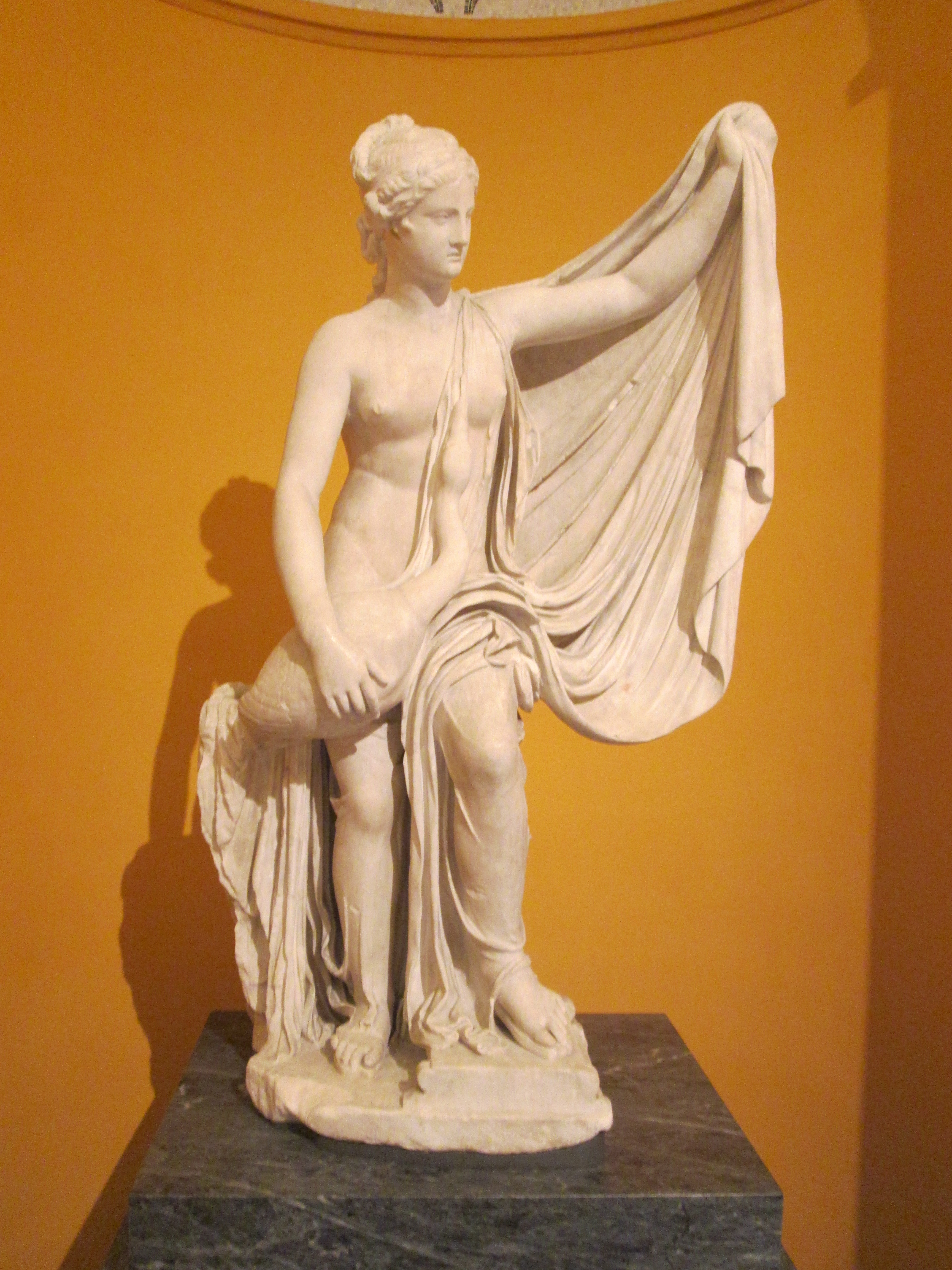
Statue of Leda and Zeus Disguised as a Swan

I tend to like to visit the Getty Villa in Pacific Palisades at regular intervals. It is a museum primarily of Greek and Roman antiquities in a building that is based on Herculaneum’s Villa of the Papyri. For some reason, this visit I became interested in comparing Greek and Roman images to the Maya images I saw in Guatemala and Honduras in January. We know how Greek and Roman civilization contributed to later European civilization, especially from the Renaissance onward. But what about Maya civilization?

Unlike the ancient Greeks and Romans, Maya civilization was never wholly extinguished—although the Spanish under such conquistadores as the Montejos and Alvarado gave it their best shot. It continues to exist, though there are some major differences:

  • Maya civilization consisted, like the ancient Greeks, of city states—except, where the Greek language was widely understood, there are over thirty different major dialects of the Mayan language.
  • The god kings of the Maya polities were typically not worshiped across the entire Maya area.
  • Both civilizations had writing, but among the Maya, it was limited to the priestly scribes and not generally known even among the noble classes.
  • Most of the surviving Maya codices were burned by Catholic priests and monks as being heretical.
  • Today only a handful of Maya works survive dating from the early years of Maya-Spanish interaction, the most prominent of which if The Popol Vuh. In contrast, there are hundreds, if not thousands, of works coming to us from the Greeks and Romans.

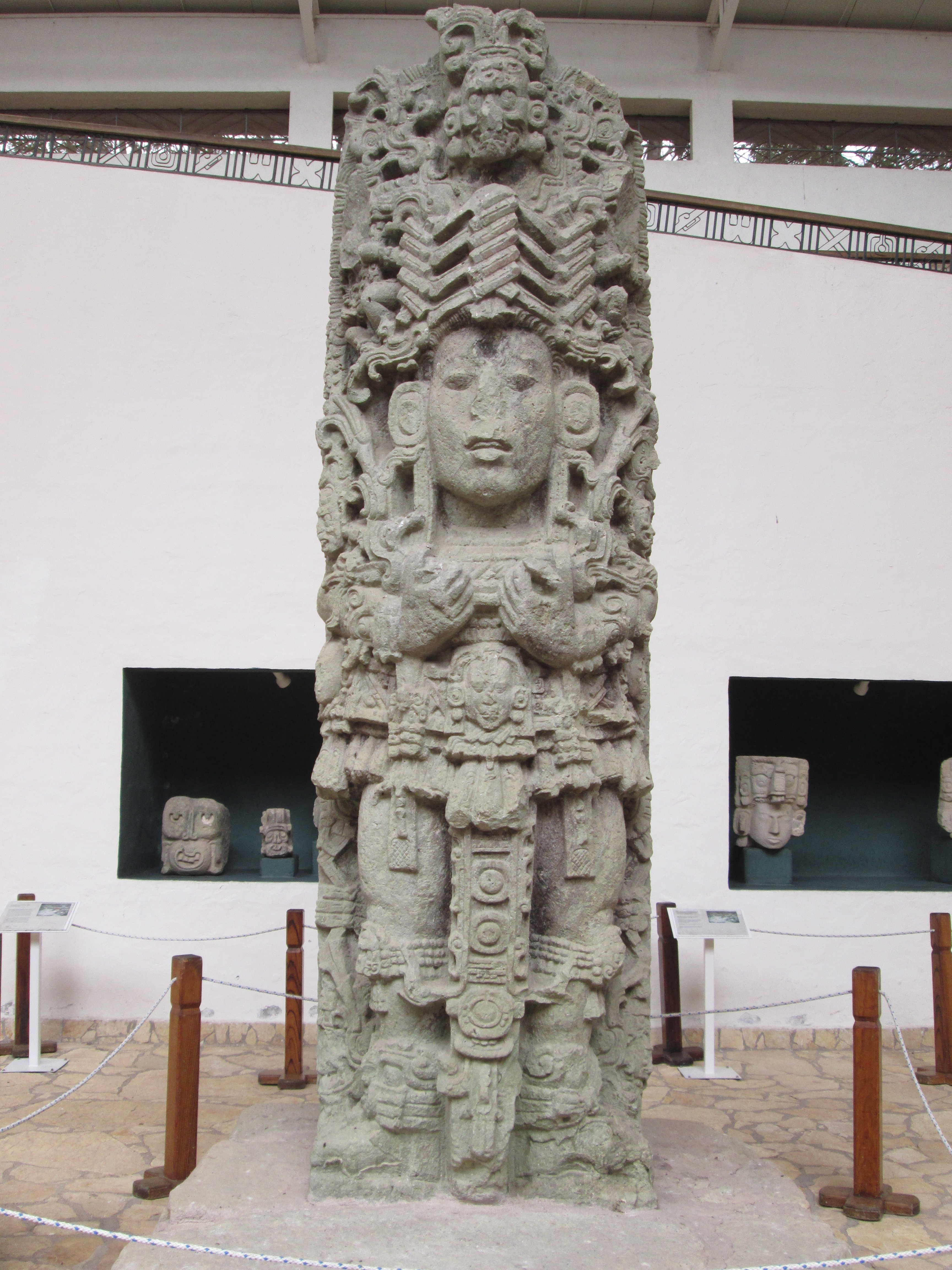
Stela A from Copán in Honduras Depicting 18 Rabbit

Look at the figure above from Stela A in the Copán Museum. It depicts god king 18 Rabbit, thirteenth in the succession of Copán rulers, who was beheaded when Copán was defeated in war by the smaller polity of Quiriguá, after which point there wasn’t quite so much point in worshiping him. And this fact was discovered only after a century of research in deciphering Mayan glyphs. Mention 18 Rabbit to a Maya from Yucatán or Palenque, and you will only get a quizzical look. Not in their area, Mon!

Now look at the story of Leda and the Swan, and read W.B. Yeats’s great poem on the subject. In the Western world of today, tens of thousands of people are familiar with the myth, if not more.


Escaping the Heat

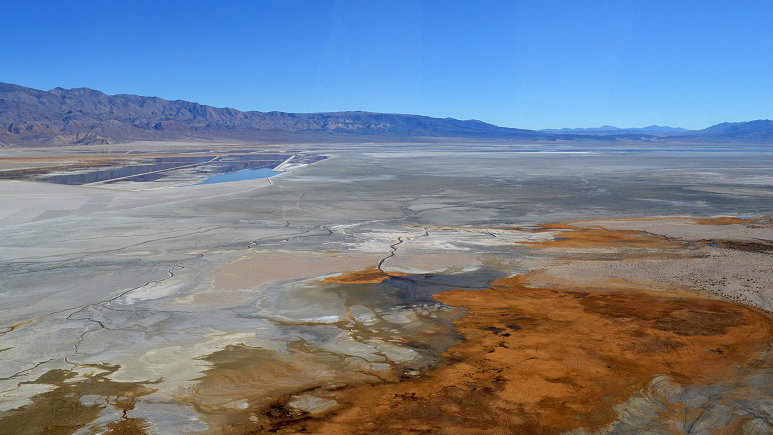
Owens Dry Lake South of Lone Pine with Its Toxic Dust

South of Bishop, the Owens Valley can make you feel as if you were in a hot oven. Although the area is considered as high desert, it is not all that high. The elevations from south to north vary only by some 500 feet (152 meters). Here is the data in both feet and meters:

  • Olancha – 3,658 feet (1,115 meters)
  • Lone Pine – 3,727 feet (1,1136 meters)
  • Independence – 3,930 feet (1,198 meters)
  • Big Pine – 3,989 feet (1,216 meters)
  • Bishop – 4,150 feet (1,254 meters)

When we were in Big Pine two weeks ago, it was 95º Fahrenheit (35º Celsius), and we were sweltering. After eating lunch, we headed up into the White Mountains to visit the Schulman Grove of the Ancient Bristlecone Pine Forest at an elevation of over 10,100 feet (3,078 meters). In some 30 miles (48 km) we were to climb some 6,000 feet (1,829 meters).

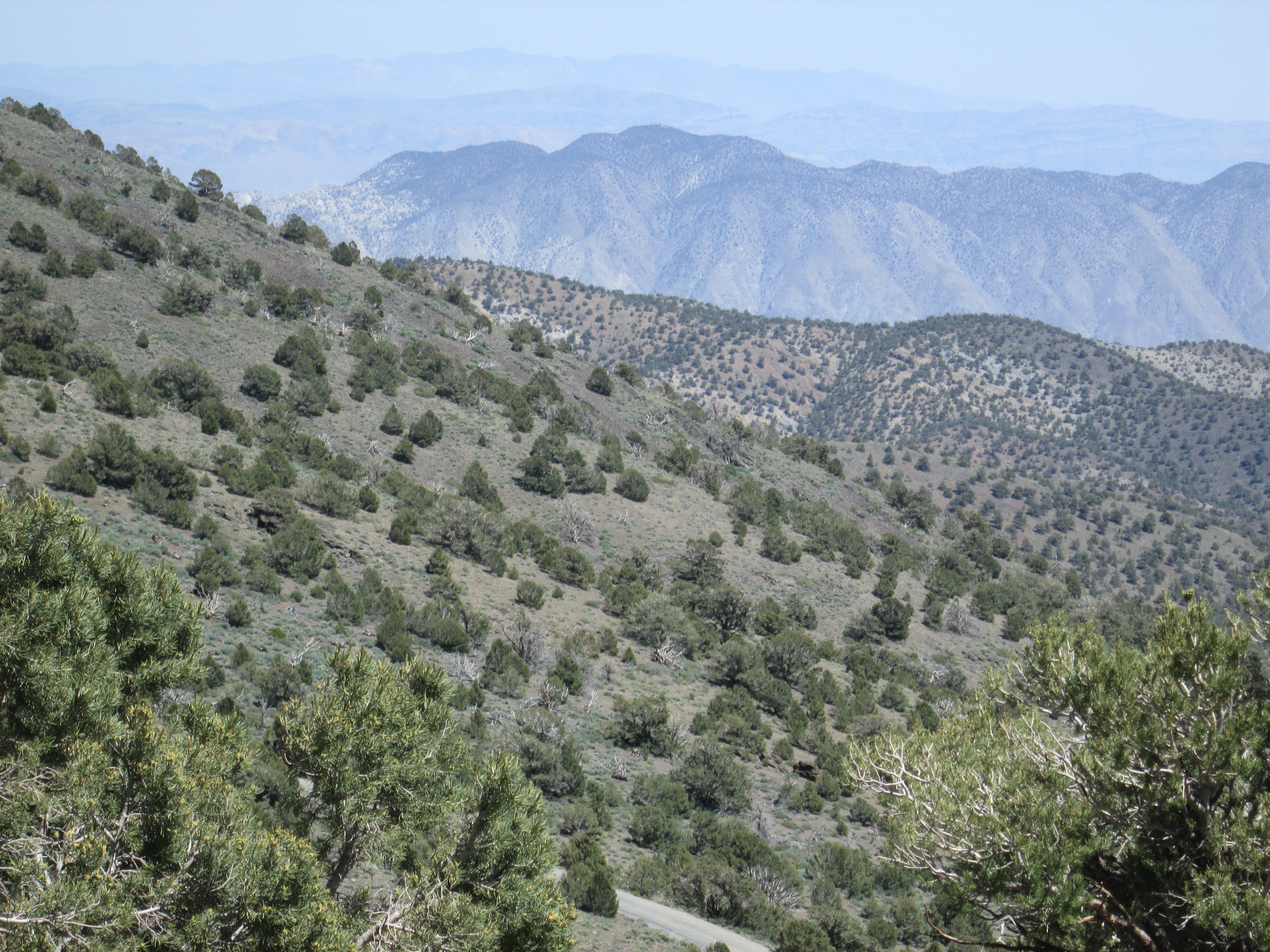
In my 2018 Subaru Forester, there is a display showing the current outside temperature. After our hot morning on the floor of the valley, we saw the temperature decline by some 20º Fahrenheit and become downright cool by the time we reached the piñon pine zone.

In the Piñon Pine Zone: The Sierra Nevada in the Background and the White Mountains in the Foreground

By the time we got to the Schulman Grove, we were perfectly comfortable. There is a backpacker rule of thumb that the temperature drops by 3.5-5.0º Fahrenheit per 1,000 feet, depending on a fairly large number of variables.

In the past, Martine developed a headache when we got to 8,000 feet elevation at Chama, NM and Mesa Verde, CO. This time we both felt great at 10,100 feet. Was the difference that we drank a whole lot more water? Could be.


Pinus longaeva

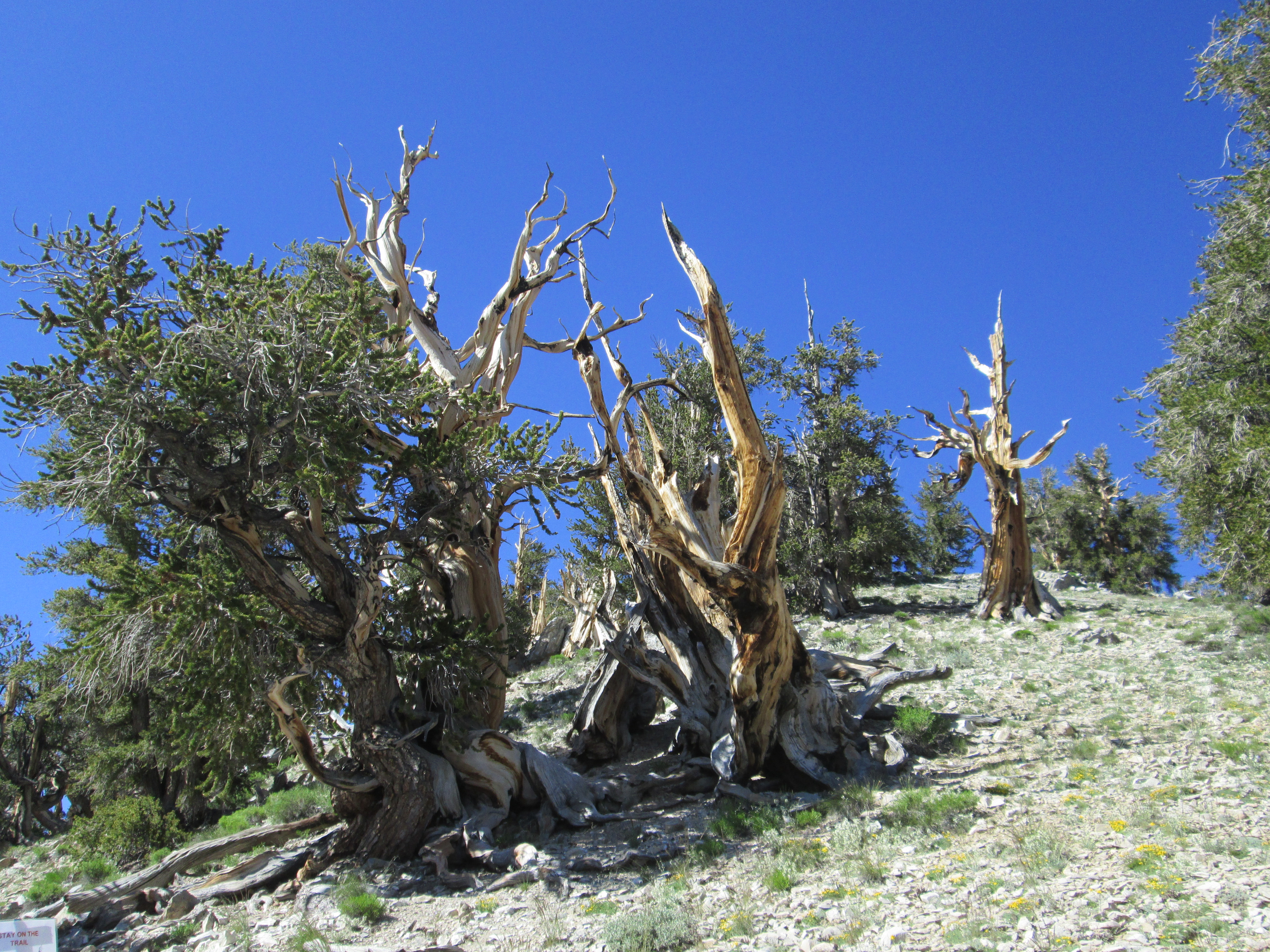
The Bristlecone Pine Forest at 10,100 Feet Elevation

Perhaps the most interesting destination on our recent trip to the Eastern Sierras was the Ancient Bristlecone Pine Forest in the Inyo National Forest in the White Mountains. The living bristlecones are as old as 4,862 years old. Using the science of dendrochronology, or tree-ring dating, it is possible to go back almost 10,000 years comparing overlapping dry/wet year rings with those of standing dead bristlecones and even fallen dead bristlecones. Because of the climate near the peaks of the White Mountains is so dry and windy, fungi that destroy the dead wood are slow to take hold.

The following illustration shows how the sequencing of dry/wet years going back in time works:

How Dendrochronology Works

Using these methods, it is possible to scientifically disprove Bishop Ussher’s contention that the creation dated back to 4004 B.C. Dendrochronologists can take wooden lintels from Maya ruins and prove when the piece of wood was cut down. They have shown that the ruins of Stonehenge, for example, are a thousand years older than previously thought—which knocks into a cocked hat the anthropological theory that European civilization had its cultural origins in the Middle East.

Martine and I took the Discovery Trail from the Schulman Grove Visitor’s Center at the Ancient Bristlecone Pine Forest. We were unable to finish the trail, because it kept going to higher elevations, and I was having some trouble with breathing and light-headedness. Fortunately, these symptoms became less pronounced as we went about a hundred feet lower.

This Bristlecone Had, at Some Point, Been Subject to Fire

At the Visitor’s Center, I bought a bookmark with “Advice from a Bristlecone Pine,” which consisted of the following:

  • Sink your roots into the earth
  • Keep growing
  • Be content with your natural beauty
  • Weather adversity
  • Go out on a limb
  • Its OK to be a little gnarly
  • Honor your elders!

That second last bit about being a little gnarly is particularly interesting. The tall straight bristlecone pines are never as old as the twisted trunks and branches of trees that grow closer to the ground. Part of these trees could be bead, but they contain live branches that can continue living until something kills them. Amazing trees!


Indian Wells

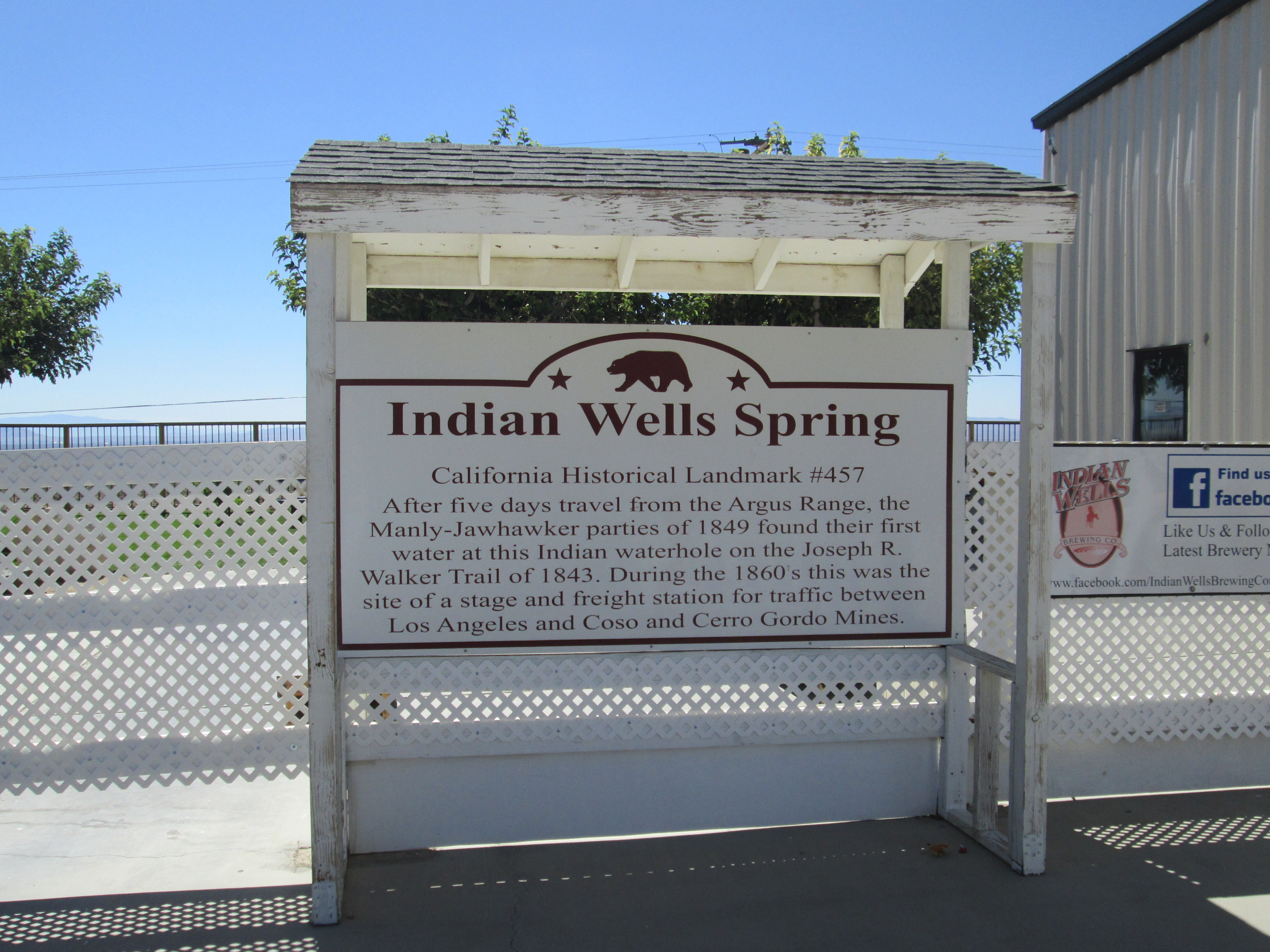
The Serious Side of Indian Wells

California Route 14 cuts directly through the Antelope Valley and the Mojave Desert until it joins with U.S. 395 just north of Inyokern and just a few miles west of the epicenters of the Ridgecrest earthquakes. Along the side of 14 are a number of deserted motels and restaurants dating back to the 1930s. And there is also the Indian Wells Brewing Company, the manufacturers of Rocket Fizz Sodas, which, unlike the ruined properties, is very much a going concern.

On our way back to Los Angeles from the Eastern Sierras, the Indian Wells Brewing Company was the last stop on our trip. I didn’t know what to expect; but what Martine and I found turned out to be a hoot. Although the company also manufactures beers, I didn’t try them because I had to drive back to L.A. traffic stone sober. But the soda pops were a different story.

Alien Snot and Worm Ooze Are Just Two of the Colorful Soda Brands

So far I have tried the Marilyn Monroe Lemonade Soda, the Rocket Fizz Pineapple Soda, and the Tyler the Kid Sarsaparilla (which was delicious). We also got bottles of the King Kong Cola, the Three Stooges Root Beer, and a Key Lime-flavored Soda, which I suspect will be just as good. Altogether, we spent an hour at their store in the desert being entertained by the wild array of amusing brand names and the wild sense of humor they exhibited.

Beer Keg Urinal in the Restroom


Next time we drive around there, I’m going to have to try some of their beers.

The Only Language the Devil Respects

Hungarian Poet Borbély Szilárd (1963-2014)

This post is a tribute to my strange native language, Hungarian, which is one of only four non-Indo-European languages in Europe. (The others are Basque, Estonian, and Finnish.) It is also a tribute to one of the great Hungarian poets of our time: Borbély Szilard. Get the pronunciation right: It’s BOHRR-bay SEE-lard.

I have decided to print the following poem first in English translation, and then in the original Magyar language. My intent is to show you what a strange language Hungarian is, so alien from any other language you may know. In his novel Budapest, the Brazilian novelist Chico Buarque writes that Hungarian “is rumoured to be the only tongue in the world the devil respects.”

Computer, Evening

There are certain moments in the evening when
one is too tired to do more.
Just to sit quietly. Not tired enough for sleep,
but not really energetic either. You read a few lines

from Kosztolányi about autumn and the soul, mysterious
way stations, the passing of time. For time is like life
itself: it leaves its imprint on the body alone.
In consciousness, on the soul, or the relational

structures of language. I don’t really know. Someone looks
out from the window, to see the stars growing distant
or whatever else they are doing. And thinks about

this: between the stars and the earth, he lived. Afraid
to sleep. Like a child in the evening, always seeking
a pretext. While the computer’s screen saver swirls.

Now for the original Magyar:

A Számítógép Este

Vannak azok a pillanatok este, amikor
az ember fáradt már bármit csinálni.
Csak ül csendben. Még nem álmos, de
nem is friss. Olvas néhány Kosztolányi

sort lélekről, őszről, titokzatos megállókról,
elmúlódő időről. Mert az idő is olyan, mint
az élet: csupán a testen hagy nyomot.
A tudatban, a lélekben vagy a nyelv

viszonyrendszerébden. Nem is tudom. Valaki
kinéz az ablakon, hogy távol a csillagok
vajon mit is csinálnak. Elgondolkodik azon,

hogy a föld és a csillagok közt élt ő. Fél
elaludni. Mint a gyerek este, kifogást
keres. Amíg táncol a képernyőkímélő.

I don’t expect you to understand a word of the Hungarian. It is one of the most difficult languages in the world to learn. But it was the first language I learned, and it has had a lasting effect on my life. First of all, it is an agglutinative language, like Turkish, Korean, and Swahili. It puts together elements into long words such as viszonyrendszerébden (relational structures of language) and képernyőkímélő (screen saver). Note also the double acute accent in words such as őszről (about autumn). It represents a lengthening of the umlauted vowel sound.

The reference to Kosztolányi is to Hungarian poet and prose writer Dezső Kosztolányi (1885-1936).


Favorite Films: Popeye with Robin Williams

Robin Williams and Shelley Duvall Star in the 1980 Film

On Wednesday, i was delighted to find a cheap DVD of one of my favorite films from the 1980s: Robert Altman’s Popeye (1980) from Paramount. I don’t really think it’s a great film, but I find it to be a lovable one, especially for the first hour. (It kind of goes off the rails at the end.) Filming in Malta, Altman creates a whole world in the rackety port of Sweethaven. From the first scene, when Popeye arrives at the port in a wild thunderstorm in a tiny rowboat, we are precipitated into an invented world that is different from but not incompatible with the Max and Richard Fleischer cartoons of past decades. At the same time, it is a musical with strange tunes and a dance film with strange moves.

The Set of Sweethaven Which Forms the World of Altman’s Popeye

At first, Popeye is viewed by the village as an unwanted stranger. He manages to get a room in a boarding house run by the Oyl family, where he meets the daughter Olive. Shelley Duvall as Olive Oyl is perfect casting, even better (but not by much) than Robin Williams as Popeye the Sailor man. Interestingly, the story is about not only the growing relationship between Popeye and Olive, but also about how Popeye learns the benefits of swallowing large amounts of canned spinach.

Bluto is, as expected, the villain of the piece, along with the shadowy figure known as the Commodore (who turns out to be Ray Walston as Popeye’s pappy). Popeye romances Olive away from Bluto, about whom she could only say that he’s “large.”

I love to lose myself in the rich multitextured goofiness of this film. By now I have easily seen it more than ten times.


How to Fight a Playground Bully

We Don’t Have to Name Names, Do We?

The Democrats have a daunting task in front of them—especially if they go about business as usual. That is guaranteed to fail. The rules are different now. The times have changed. So here are my suggestions for victory. Warning: They’re not pretty.

Victory is Possible

Just remember one thing: Playground bullies are punks. They can be defeated, but not with the usual political weapons. Really strong people don’t need to be such devious liars. Bone spurs, indeed!

How About a Nickname for Him?

I say, fat-shame the SOB! How about using an uncomplimentary nickname like Tubbo or Lard Ass? Use photographs of him at the golf course, where he looks his worst. I know it’s juvenile, but it will work against him.

Names That Have Lost Their Magic

The names I am referring to are words like Democrat or Liberal, or even Socialist. Yes, there is no reason one can’t change the name of a political party. And while you’re at it, get rid of the Hillary Clinton people like Tom Perez. As I said earlier, business as usual will notwork in 2020.

Ideological Purity vs. Power

Another way to word this is: Stop being stupid about small points of ideological purity. It’s all about power, and you can’t get power if you’re part of a circular firing squad. Don’t get stuck on a single issue like abortion, police brutality, LGBTQ and other identity groupings, or guns. You have to reach for that ring on the merry-go-round, and not hand devastating weapons to your enemies.

Distribute Opioids to the Red States

This is my nastiest suggestion. Let’s face it: These people hate city dwellers. They’ll hate whatever you do because they just think you hate Jesus or want to kill babies or encourage Arab terrorists or freaking whatever.