Construction Fever

The Proposed Ivy Station Complex in Culver City

In the context of Los Angeles history, real estate is the unforgivable “sin against the Holy Ghost.” For decades, local politicians have regaled us with promises. When elected, they changed their tune and essentially gave in to the wild schemes of real estate developers. As I traveled along the Expo Line this afternoon, I passed dozens of large high-rise construction projects.

Theoretically, these projects are based on the principle of increasing the tax base. Unfortunately, the move-ins into the new buildings will leave in their wake an untenable number of vacancies. It’s not as if the new tenants will be new businesses and people who have just moved into the Los Angeles area. In the end, all that will happen will be a combination of untenably high rents and older buildings that are now vacant. And what about the effect on vehicular traffic?

One reason for the huge population of homeless in Southern California is the high price of rental real estate. If it weren’t for rent control, I would be hard put to remain in the Golden State.


Gothick

The Four Volumes of Ann Radcliffe’s The Mysteries of Udolpho

I have been spending some time lately reading 18th century English literature. As an English major at Dartmouth College, my favorite course was Chauncey Chester Loomis’s survey of the 18th century English novel. Although he is known primarily for his work on Arctic exploration, I admired his teaching and only now am filling in some of the gaps of what he taught me, which gaps were mostly the result of my own laziness at the time.

Over the last month, I have read Horace Walpole’s The Castle of Otranto, which I didn’t much like, and Laurence Sterne’s The Life and Opinions of Tristram Shandy, Gentleman, which I thought was fantastic (reprising my reaction back in the 1960s). Tonight, I have completed Ann Radcliffe’s The Mysteries of Udolpho, which was not on my course syllabus, but which was highly regarded as a work of the gothick sensibility of the times.

The Plot of Udolpho (Much Condensed)

The setting for the middle third of the book is the grim Castle of Udolpho in the Pennine Mountains near Venice, Italy. Emily Saint-Aubert, being a minor,must submit to the will of her cruel, unfeeling aunt, Madame Cheron, who marries a dubious Italian bandit chief known as Count Montini.

The Grim Castle of Udolpho

In many ways, the highly atmospheric castle with all its ruined galleries, secret passages, outlandish tapestries, and the cavorting banditti who make the castle their headquarters is the star of the novel. It is hard for a 21st century male such as myself to admire a frequently fainting heroine such as Mlle. Saint-Aubert. I managed to stick it out for the novel’s full 620 pages because Ann Radcliffe is really a superior writer. The things I didn’t like about it were more the result of the culture of the times than any deficit in the author’s abilities. There are some beautiful passages and not a few negligible verses.
 

Garbage to Go

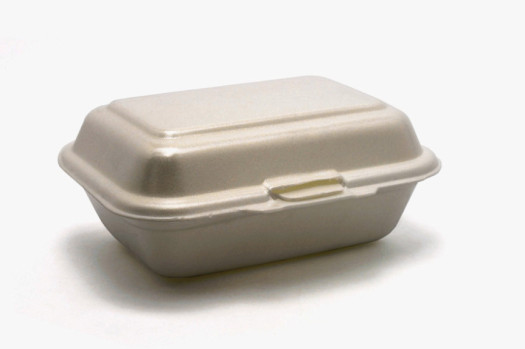
Styrofoam Food Container: Can It Be Recycled?

Anyone who cares about the environment is likely to be interested in recycling. I count Martine and me in this category. Recent developments, however, have thrown a monkey-wrench into the recycling debate. We used to send huge bales of newsprint and plastic to China and other Southeast Asian countries to rework into other products. This they did—to some of the so-called “recyclables,” but only if they were profitable. The rest usually found their way into the Great Pacific Garbage Patch , a monument to the failure of recycling.

At the same time we carefully sort our garbage between the dumpster and the blue recycling bins, it seems that everything (except, possibly, aluminum cans and certain plastics codes type 1 and 2) winds up in landfills.

According to LA Sanitation, the following plastics are recyclable:

Plastics

All plastics numbers 1 through 7

Empty plastic containers, wiped out if possible, including:

    • Soda bottles
    • Juice bottles
    • Detergent containers
    • Bleach containers
    • Shampoo bottles
    • Lotion bottles
    • Mouthwash bottles
    • Dishwashing liquid bottles
    • Milk jugs
    • Tubs for margarine and yogurt
    • Plastic planters
    • Food and blister packaging
    • Rigid clamshell packaging
    • All clean plastic bags (grocery bags, dry cleaner bags, and film plastics)
    • All clean polystyrene products (plates, cups, containers, egg cartons, block packaging, and packing materials)
    • Plastic hangers
    • Non-electric plastic toys
    • Plastic swimming pools
    • Plastic laundry baskets
    • Car seats (cloth removed)

If you wonder what the plastic recycling codes mean, click here. The easiest to recycle are plastic types 1 (PETE: Polythylene Terephthalate, such as soda bottles) and 2 (HDPE: High-Density Polyethylene, used for detergents, milk, bleach, shampoos, and motor oil). As you can see, Los Angeles collects types 1 through 7, but most are handled in landfills with all the other trash.

The pity of it is that something can be done, but the economic will to do so is lacking. In the meantime, the plastic manufacturing companies continue to churn out their products and pay lobbyists to fight ordinances to regulate them.

The Ultimate Survivor

A Tardigrade (Milnesium tardigradum)

Perhaps the hardiest creature on the face of the earth, or under the sea, is barely large enough to be seen by the naked eye. There are some twelve hundred species of tardigrade, which, if they were our size, would be terrifying. In fact, they are usually about 0.5 mm in size, have eight legs, and are usually referred to as water bears. Under normal circumstances, they live for several months; but, under periods of extreme stress, roll up into a tiny barrel shape called a tun and turn themselves off for as many days, weeks, months, years, or even decades pass and circumstances improve.

What the tardigrade could survive includes:

  • A few minutes at 151° Celsius (304° Fahrenheit)
  • Thirty years at -20° Celsius (-4° Fahrenheit)
  • A few days at -200° Celsius (-328° Fahrenheit)
  • A few minutes at 272° Celsius (-458° Fahrenheit)

They can also survive at sea level, at the bottom of the deepest depth of the Pacific (the Marianas Trench) and even the weightlessness and radiation of outer space. This was tested at the Space Station: Although some of the tardigrades dies, most survived and returned to normal when they landed on earth.

If you have a few minutes, I urge you to watch this informative BBC video, which contains further amazing statistics about this creature:

We talk about colonizing the planets and distant stars. I am not sure that we could, but I have every confidence that the tardigrades could.

Strokkur

The Geyser Strokkur (“Churn”) Erupts

Everyone knows what a geyser is, but do you know that it is named after a particular geyser named Geysir in the Haukadalur Valley east of Reykjavík, Iceland? Its situation is similar to that of Old Faithful in Yellowstone National Park. In their hurry to precipitate an eruption hordes of tourists over the years have poured detergents and other foreign substances into the holes and succeeded only in making the eruptions more sporadic and unpredictable.

Tourists still visit the area in great numbers in the various Golden Circle or Great Circle tours offered by coach lines. (These tours usually include Þingvellir National Park and the waterfall at Gullfoss, among others.) Instead of waiting for Geysir, they have the nearby frequent eruptions of Strokkur, “The Churn,” which sends a column of steam 15-40 meters high every 6-10 minutes.

Tourists Waiting for the Next Eruption of Strokkur


Iceland has a number of these geothermal areas. Visiting them calls for a certain amount of care as a slight misstep can result in boiling your foot as the soil around your footprints starts to sink. Not all of these areas are carefully fenced; and tourists, being their usual irrepressible selves, have a tendency to risk a serious hotfoot.

Deadly Nightshade

So Many Foods I Love Are Related to Deadly Nightshade

On several occasions, I have been warned by good friends to beware of foods that are related to deadly nightshade (a.k.a. belladonna). Unfortunately, these include some of my favorites, including:

  • Potatoes
  • Tomatoes
  • Chile peppers
  • Bell peppers
  • Eggplant
  • Paprika

It is not unusual to find foods that have unsavory relatives. Perhaps most common of these is common table salt, which is made up of two poisonous elements, sodium and chlorine. Despite all the bad press that salt has received from many in the medical profession, it is indisputable that the human body cannot exist without it, especially in hot climates.

Despite what some of my more health-food conscious friends may say, I have no intention in cutting back on members of the family Solanaceae. In fact, I believe that the foods in the above list are positively good for me. If anything, I will eat more of them in future. For instance, I cannot imagine living my life without chile peppers.


Different

Columbus Discovered a Whole New World

As we approach Columbus Day (October 12), it is useful to note that there few monuments to him in most of the New World. Just as there are few monuments to Hernan Cortés or Francisco Pizarro. It would be sort of like Jews creating monuments to Heinrich Himmler or Adolph Eichmann. Since most Gringos are of European ancestry, we have a hard time seeing the world from the eyes of the Caribs who first saw Columbus on San Salvador on October 12, 1492. Oh, by the way, there are no more Caribs. They all died off from the diseases the conquerors brought with them or the subsequent enslavement by their new masters.

The above image from Quito’s Mindalae Museum has a distinctively non European air about it. Pre-Columbian art, in general, looks odd to Gringos, unless they have developed the fine art of seeing the world through the eyes of other peoples. This is something even our President hasn’t done, inasmuch as he sees Mexican and Central American refugees as rapists. (Talk about the pot calling the kettle black!)

Nowhere is the difference between our culture and theirs more prominent than on the subject of religion. Below, for instance, is an image of the Maya maize god, Hun Hunahpu:

The Maya Maize God

The gods of the Maya pantheon at times appear to partake of the characteristics of lizards, alligators, monkeys, and other creatures—quite different from the Judaeo-Christian and Islamic Deity.

Different as they were from us, the Maya developed a calendar that, even after over a thousand years, is more accurate than our own. They had writing, which, though resembling monsters more than characters in the Greek and Roman alphabets, still enabled them to write their history.

Mayan Glyphs

Even though the cultures of the Old World have proven so dominant, we are only now discovering that the Maya had their own strengths. Although the Aztecs and Inca are no longer active cultures, there are still six million Maya speaking some thirty dialects of the Mayan tongue. The old Mayan glyphs may no longer be in use, but there is still an active Maya culture—actually, a number of them.


Coming Apart Like a Cheap Suit

In the End, Will His Main Legacy Be Gold Plumbing Fixtures?

I fear that, in our country’s history, the Trump administration will in the end be like a persistent skid mark on one’s underwear. The disintegration seems to be accelerating, as our President is being assailed on all sides—except by his die-hard fans in flyover country. The incompetence almost seems to be spreading, like the Nothing in the movie The Neverending Story (1984). In that film, the Nothing is described as “a manifestation of the loss of hopes and dreams.” That is a very good description of the way I feel as the 2020 election approaches.

Since his inauguration in January 2017, Trump has become the anti-President, whose main goal was the dismantling of the apparatus of government—especially those benefits that seemed to benefit voters in any way. His rule has benefited only those multi-millionaires, who, like him, are against paying any taxes at all.

The political parties gearing up for 2020 are like, to use a witticism by Jorge Luis Borges, two bald men fighting over a comb.


Things We Take for Granted

We Can’t Make Assumptions That Health Care Will Be There for Us

We walk into the kitchen, pick up a glass, and turn the tap on. What if nothing comes out? Or, worse, what if what comes out is polluted like the water in Flint, Michigan? What if we flush the toilet, and it just won’t go down because the sewer line is all backed up? What if the traffic signals just stop working? Or the telephone lines? Or the electricity?

Every day of our lives, we make casual assumptions that what has worked in the past will continue to work. I have this odd inkling that perhaps we are living at the start of a period in which things we assume will work, just won’t work.

I recently read an article on Salon.Com about how some 20% of rural hospitals are on the point of collapse. Given the money-grubbing nature of our healthcare system—especially on the part of pharmaceutical corporations and health insurers—I can see why there aren’t enough dollars in rural areas to motivate hospitals to remain in business.

This comes at a bad time, when the political divide between the urban areas on the coasts and what has come to be called “flyover country” has led to hard feelings. Much of Trump’s support is, I feel, based more on this urban/rural divide than any particular love for the orange-headed horror. Things can only get worse if Aunt Tillie dies trying to get to a distant hospital, but doesn’t make it.

Government can rectify this situation, but only if voters are willing to let government do the things that government does best. The nihilistic conservatism and Tea Party anarchy of the times makes this difficult.


Dostoyevsky Describes Trump Voters

The Supporters of Trump: A Great Mystery?

I am re-reading the Richard Pevear and Larissa Volkhonsky translation of Fyodor Dostoeyevsky’s Notes from the Underground. Suddenly, I saw the following passage, which predicted the emergence of Trump and his supporters:

Man really is stupid, phenomenally stupid. That is, he’s by no means stupid, but he’s so ungrateful that it would be hard to find the likes of him. I, for example, would not be the least bit surprised if suddenly, out of the blue, amid the universal future reasonableness, some gentleman of ignoble, or, better, of retrograde and jeering physiognomy, should emerge, set his arms akimbo, and say to us all: “Well, gentlemen, why don’t we reduce all this reasonableness to dust with one good kick, for the sole purpose of sending all these logarithms to the devil and living once more according to our own stupid will!” That would still be nothing, but what is offensive is that he’d be sure to find followers: that’s how man is arranged. And all this for the emptiest of reasons, which would seem not even worth mentioning: namely, that man, whoever he might be, has always and everywhere liked to act as he wants, and not at all as reason and profit dictate; and one sometimes even positively must (this is my [i.e. Dostoyevsky’s] idea now).