
The Zoo Lady and the Politicos

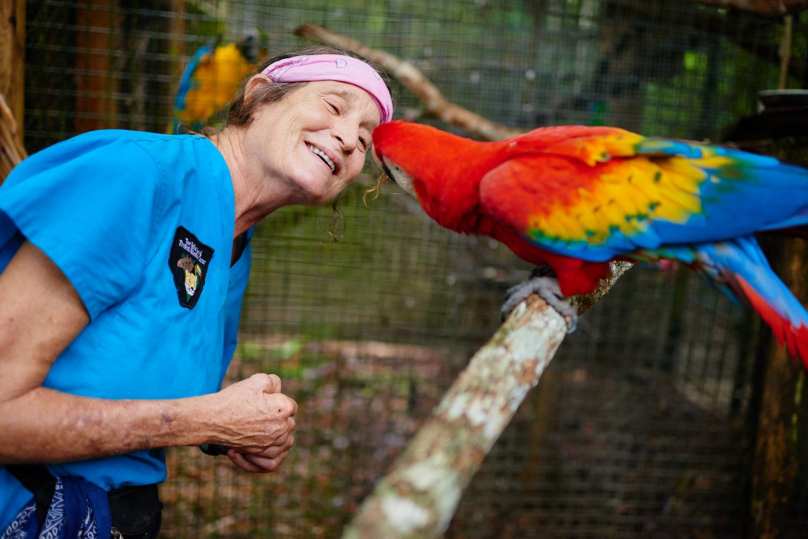
Sharon Matola (1954-2021) and Scarlet Macaw

I just finished reading a book about the difficulty of fighting an environmental battle in a developing country. The book was Bruce Barcott’s The Last Flight of the Scarlet Macaw: One Woman’s Fight to Save the World’s Most Beautiful Bird (New York: Random House, 2008). The story is set in Belize where a naturalist from Baltimore named Sharon Matola founded a zoo consisting solely of critters from within the borders of the country.

Sharon was particularly proud of her scarlet macaws. Now these are a kind of bird that is not endangered in South America; but the Central American variety, a legitimate subspecies, could be found in the valley of the Macal River, where they had their nests. When suddenly it was announced by the Belize government that a dam (to be called the Chalillo Dam) was to be built smack in the middle of the macaws’ nesting territory, Sharon went to war against the forces behind the dam.

These included not only a Canadian firm named Fortis but a number of Belize politicos who stood to gain from kickbacks and other underhanded tricks possible when dealing with large construction projects such as Chalillo. Barcott’s book not only gives us an excellent picture of what the tiny Central American country of Belize—formerly known as British Honduras—is all about, but gives us blow-by-blow accounts of Sharon’s war against the Powers That Be.

Well, in the end, the Powers That Be won, and the dam got built. The politicos were so irate about this gringo lady’s attempt to subvert “cheap electricity for the masses” that they scheduled a massive landfill to be created right next door to the Belize Zoo. Fortunately for the Zoo Lady, that project failed when it was demonstrated that a river important to longtime Belizean residents would become badly polluted.

In the end, she had other irons in the fire, such as reintroducing harpy eagles to Belize. Alas, however, Sharon died of a heart attack at the age of 66. Fortunately, her zoo continues on; and I have earmarked it for a visit if I can take a trip to Belize.

One Word: Plastic

Do We Eat a Credit Card Worth of Plastic Every Week?

In 2019, the World Wildlife Fund quoted research from the University of Newcastle, Australia, to the effect that all of us eat a credit card worth of plastic in our food every week. I have heard the expression that you have to eat a peck of dirt before you die, but this is ridiculous. I read an article entitled “No, you don’t eat a credit card worth of plastic every week. But you still swallow a lot of it” on Salon.Com.

Although plastics of various sorts have been around for decades, they have not been studied as intensively as they deserve to be. After all, we as a people tend to be early adopters of convenient new technologies. It is only later that the grim news hits the streets.

It’s the same with cell phones. There have been arguments pro and con about the phones causing brain cancer, but it is very likely that there are other ill effects that will not come out for years. Back in the mid 1980s, I was involved selling demographic data for telephone service providers to be used in deciding where to erect cell phone towers. Now I feel somewhat guilty about my participation in this effort.

Getting back to plastics, an article in the journal Environmental Health Perspectives stated:

Current estimates suggest that over 10,000 unique chemicals are linked to chemical manufacturing, many with unknown health effects and others identified as chemicals of concern. With such a large number of chemicals, it is very challenging to identify the key exposures we should be measuring to study health impacts of microplastics, as well as understanding their levels in humans.

Dr. Shanna Swan, a professor of environmental medicine and public health at Mount Sinai School of Medicine in New York City, has documented plummeting human sperm counts possibly being affected by widespread plastic pollution: “I think it is important to note that micro and nanoplastics (MNPs) can increase the body burden of the previously recognized — and often studied — chemicals in plastic (most notably phthalates, bisphenols, parabens etc.).”

I suppose we’ll find out the whole truth eventually, but not before the human species has been irretrievably changed by the prevalence of plastics in our environment and our food.

Garbage to Go

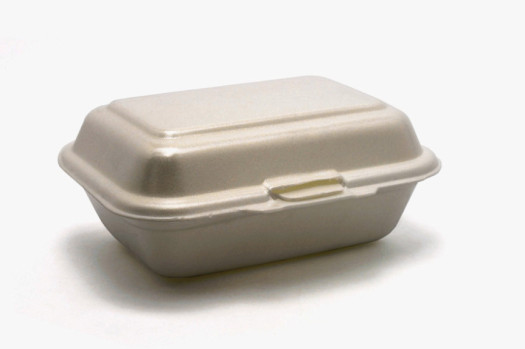
Styrofoam Food Container: Can It Be Recycled?

Anyone who cares about the environment is likely to be interested in recycling. I count Martine and me in this category. Recent developments, however, have thrown a monkey-wrench into the recycling debate. We used to send huge bales of newsprint and plastic to China and other Southeast Asian countries to rework into other products. This they did—to some of the so-called “recyclables,” but only if they were profitable. The rest usually found their way into the Great Pacific Garbage Patch , a monument to the failure of recycling.

At the same time we carefully sort our garbage between the dumpster and the blue recycling bins, it seems that everything (except, possibly, aluminum cans and certain plastics codes type 1 and 2) winds up in landfills.

According to LA Sanitation, the following plastics are recyclable:

Plastics

All plastics numbers 1 through 7

Empty plastic containers, wiped out if possible, including:

    • Soda bottles
    • Juice bottles
    • Detergent containers
    • Bleach containers
    • Shampoo bottles
    • Lotion bottles
    • Mouthwash bottles
    • Dishwashing liquid bottles
    • Milk jugs
    • Tubs for margarine and yogurt
    • Plastic planters
    • Food and blister packaging
    • Rigid clamshell packaging
    • All clean plastic bags (grocery bags, dry cleaner bags, and film plastics)
    • All clean polystyrene products (plates, cups, containers, egg cartons, block packaging, and packing materials)
    • Plastic hangers
    • Non-electric plastic toys
    • Plastic swimming pools
    • Plastic laundry baskets
    • Car seats (cloth removed)

If you wonder what the plastic recycling codes mean, click here. The easiest to recycle are plastic types 1 (PETE: Polythylene Terephthalate, such as soda bottles) and 2 (HDPE: High-Density Polyethylene, used for detergents, milk, bleach, shampoos, and motor oil). As you can see, Los Angeles collects types 1 through 7, but most are handled in landfills with all the other trash.

The pity of it is that something can be done, but the economic will to do so is lacking. In the meantime, the plastic manufacturing companies continue to churn out their products and pay lobbyists to fight ordinances to regulate them.