The Zoo Lady and the Politicos

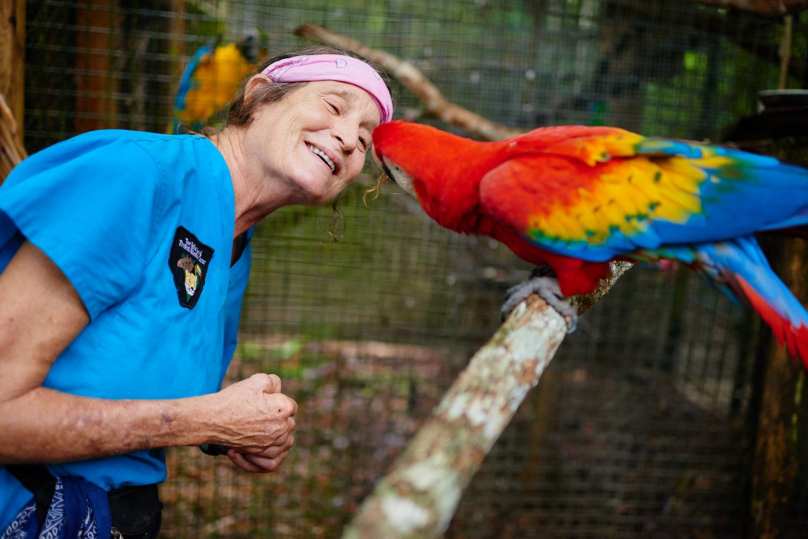
Sharon Matola (1954-2021) and Scarlet Macaw

I just finished reading a book about the difficulty of fighting an environmental battle in a developing country. The book was Bruce Barcott’s The Last Flight of the Scarlet Macaw: One Woman’s Fight to Save the World’s Most Beautiful Bird (New York: Random House, 2008). The story is set in Belize where a naturalist from Baltimore named Sharon Matola founded a zoo consisting solely of critters from within the borders of the country.

Sharon was particularly proud of her scarlet macaws. Now these are a kind of bird that is not endangered in South America; but the Central American variety, a legitimate subspecies, could be found in the valley of the Macal River, where they had their nests. When suddenly it was announced by the Belize government that a dam (to be called the Chalillo Dam) was to be built smack in the middle of the macaws’ nesting territory, Sharon went to war against the forces behind the dam.

These included not only a Canadian firm named Fortis but a number of Belize politicos who stood to gain from kickbacks and other underhanded tricks possible when dealing with large construction projects such as Chalillo. Barcott’s book not only gives us an excellent picture of what the tiny Central American country of Belize—formerly known as British Honduras—is all about, but gives us blow-by-blow accounts of Sharon’s war against the Powers That Be.

Well, in the end, the Powers That Be won, and the dam got built. The politicos were so irate about this gringo lady’s attempt to subvert “cheap electricity for the masses” that they scheduled a massive landfill to be created right next door to the Belize Zoo. Fortunately for the Zoo Lady, that project failed when it was demonstrated that a river important to longtime Belizean residents would become badly polluted.

In the end, she had other irons in the fire, such as reintroducing harpy eagles to Belize. Alas, however, Sharon died of a heart attack at the age of 66. Fortunately, her zoo continues on; and I have earmarked it for a visit if I can take a trip to Belize.
Belize It or Not

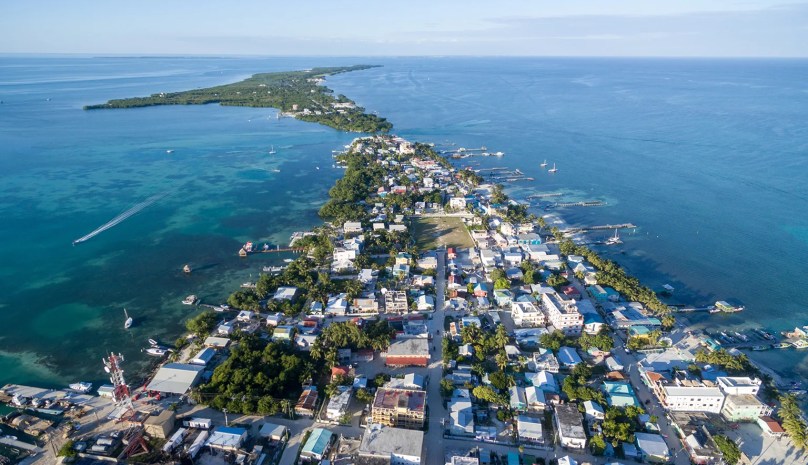
The Village on Caye Caulker

Now that I am living on a fixed income, I daydream incessantly about travel. My latest pipe dream is about visiting Belize with Martine. She has decided she doesn’t like Mexico, so maybe Central America is more her style. I would love to spend a week on Caye Caulker in Belize, which is a 45-minute boat ride (or 10-minute flight by Cessna) from Belize City.

The advantages of Caye Caulker are beguiling to a traveler like me:

  • The island is made of coral and is very near the Belize Barrier Reef, second only to Great Barrier Reef of Australia in size.
  • It is a relatively inexpensive destination with few of the all-inclusive resorts that suck dollars from U.S. tourists in places like Cancún.
  • There are no cars, just bicycles and battery-powered golf carts.
  • The whole island is walkable.
  • At both the northern and southern extremes, there are interesting wooded areas for hiking.
  • There is an intriguing mix of places to stay, eat, and drink—with the main drinks being Belikin Beer and local rum.

On the minus side—though not really from my point of view:

  • There are no sandy beaches as the island is made of coral.
  • One must protect against ankle-biting sand flies in the hour just before sunset.
  • The water close to shore is full of irritating sea grass, necessitating water shoes for comfort.
  • It can be really hot and humid. (Hey, it’s the tropics!)

Most people who go to Caye Caulker go for the diving, snorkeling, and other water sports. None of these are interesting to me because I am too old for that sort of thing. It would be fun. however, to relax with a good book; splash around a bit in the water; try Belizian, Mayan, and Caribbean food; and take walks. If it’s too pokey for Martine, we could even spend a day or two in more heavily populated Ambergris Caye, which is 30-45 minutes north by water taxi.

To BZ or Not To BZ

Beach Scene at Caye Caulker, Belize

Normally, I am not really a beach person. As my planned vacation to Yucatán takes place, I am thinking of also including Caye Caulker in Belize as a little side trip, a sort of vacation from my vacation so to speak. Why on earth would I be interested in knocking around on a Caribbean island? Especially when there’s nothing of any archeological import to be found there. I don’t particularly like to swim, snorkel, or dive: Hell, I don’t even like wearing shorts.

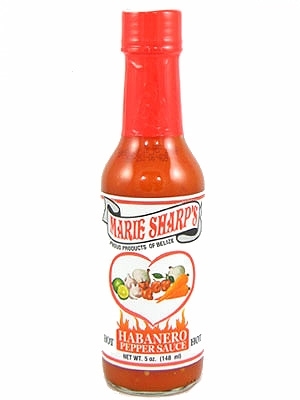
The answer goes back to my last trip. Throughout Eastern Guatemala, there was one condiment that was de rigeur on every restaurant table. It was a bottle of Marie Sharp’s Hot Habanero Pepper Sauce. Now I have always been partial to habañero (aka Scotch Bonnet) chiles, ever since my 1975 trip to Yucatán. Until I encountered those Marie Sharp’s sauces, with their motto “Proud Products of Belize,” I was contented with the El Yucateco Salsas de Chile Habañero, which came on hot and fierce, and maybe a little raw. What fascinated me about the Marie Sharp’s product was that it had the heat, but also the sweetness of carrots. How did she do it?

The Product in Question

Mind you, I still like El Yucateco, but Marie has won me over.

Now, how does that translate me wanting to spend a few days on an island off the coast of Belize? When I went to Guatemala, I was intrigued by the cultural mix at the port of Livingston: Maya, Garifuna, etc. I thought it would be fun after tromping through miles of Maya ruins in the jungle to sit under a palapa with a cool drink (perhaps a Belikin beer) and a good book. And available to me would be the best of Maya and Caribbean cooking. That sounds like a culinarily and culturally interesting diversion.

Marie Sharp’s manufacturing complex is actually by Stann’s Creek near Dangriga in Southern Belize, but that’s a tad too jungly for me.

From Chetumal in Mexico, I could take a quick boat ride to Caye (that’s pronounced KEY in Belize) Caulker and pass through customs at Ambergris Caye. So I might very well BZ happy there.