Museo Larco

This is the scanned image of my ticket to the Museo Larco in Lima, Peru. It was the first tourist sight I visited in Lima back in 2015—and it was an eye-opener. Founded in 1926, it was dedicated to the northern coastal cultures of Peru, of which there were many. We tend to think, “Peru … Yeah, that’s the Incas.” Except that the Incas were 15th century latecomers, and some of the earlier cultures were more advanced than they were.

Besides the Incas, there were the Moche, the Wari, the Chimu, the Chavin, the Paracas, the Nazca, the Chachapoyas, and many others.
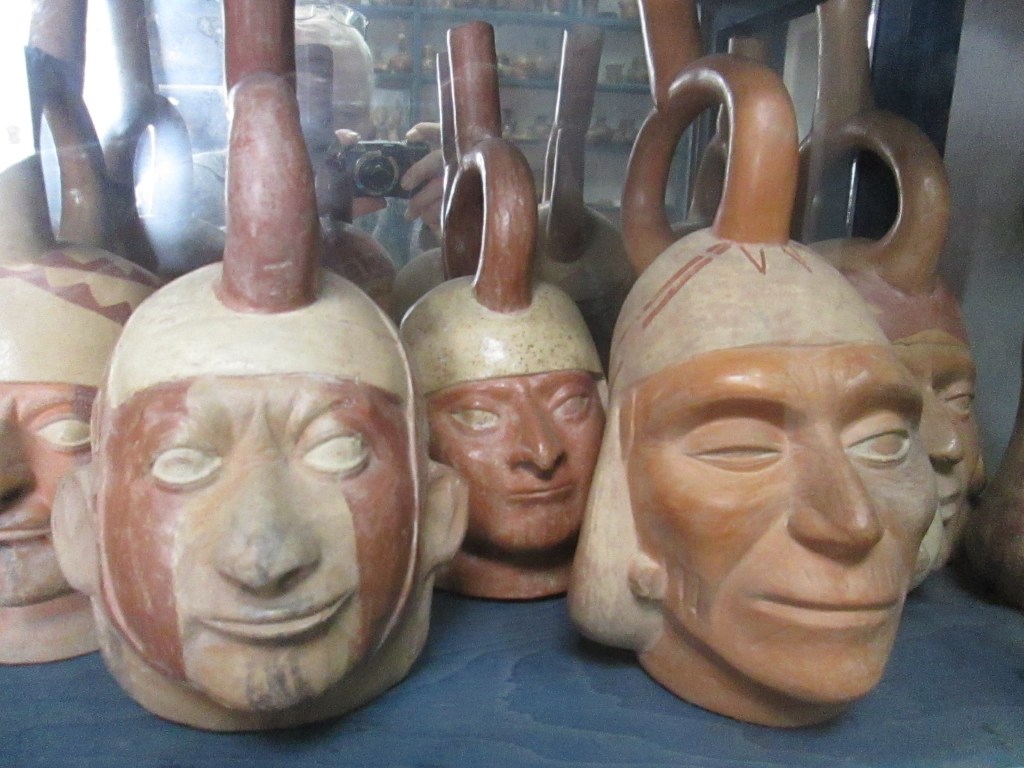
There were scores of these Moche heads at the museum. Like the famous terra cotta warriors at Xian in China, all had distinctive facial features as if they were based on particular individuals.

In addition there were elaborate textiles dating back centuries and still in excellent condition. There were even a few quipus, collections of knotted cords that were used for accounting purposes. None of these peoples appear to have had a written language like the Maya or Aztecs.
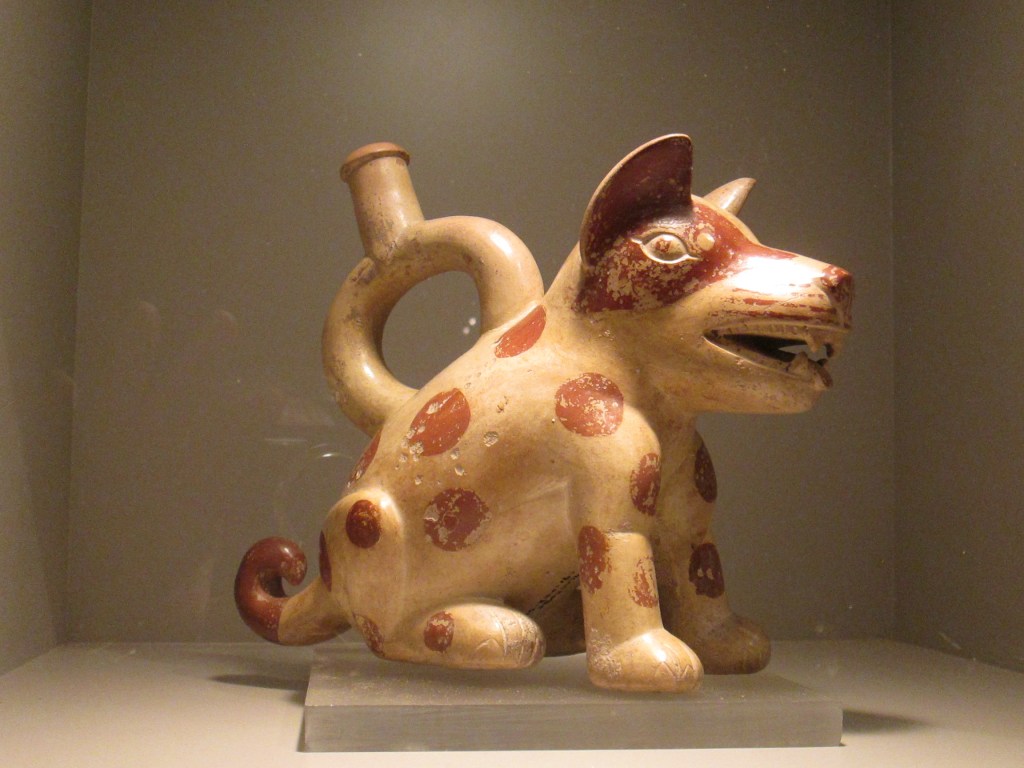
In common with many of the early Mexican cultures, the Moche had cute pottery fashioned in the shape of animals, such as the above dog.

One great thing about many museums in Latin America is that they frequently had adjoining cafés with excellent meals. The Museo Larco was no exception.

If you should find your way to Peru after they horrible Covid infestation, remember that there are a whole lot more to see than just the ruins of Machu Picchu. I could have spent several weeks in Lima without exhausting the list of places I wanted to see, such as the Police Museum in Callao.
Endless Drought

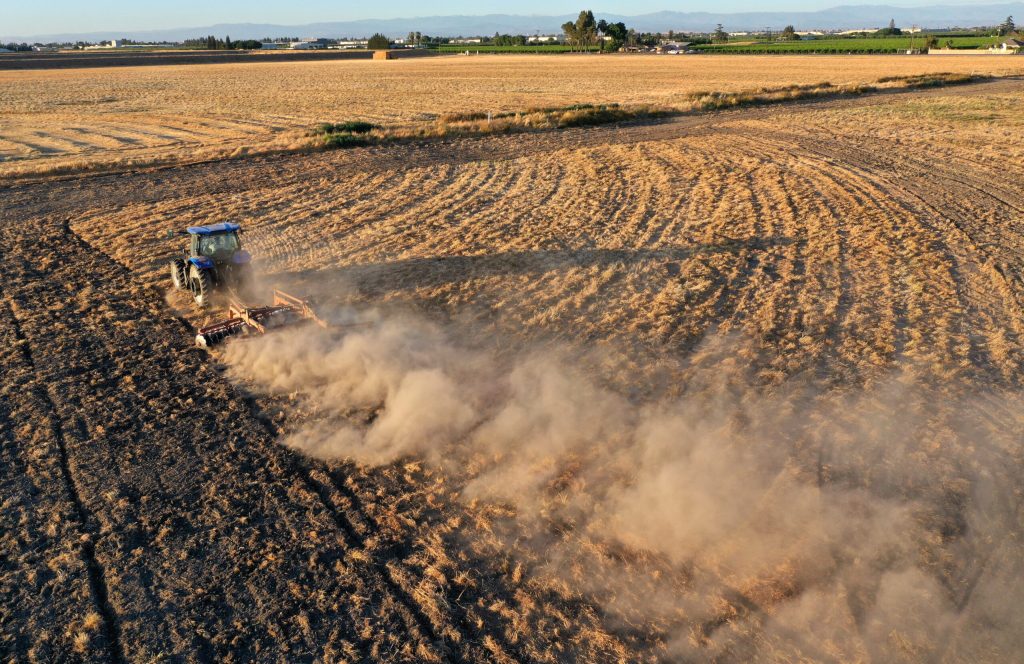
MADERA, CALIFORNIA – MAY 25: In an aerial view, a tractor kicks up dust as it plows a dry field on May 25, 2021 in Madera, California. As California enters an extreme drought emergency, water is starting to become scarce in California’s Central Valley, one of the most productive agricultural regions in the world. Farmers are facing a shortage of water to use on their crops as wells and reservoirs dry up. Some are pulling out water dependent crops, like almonds, or opting to leave acres fallow. (Photo by Justin Sullivan/Getty Images)

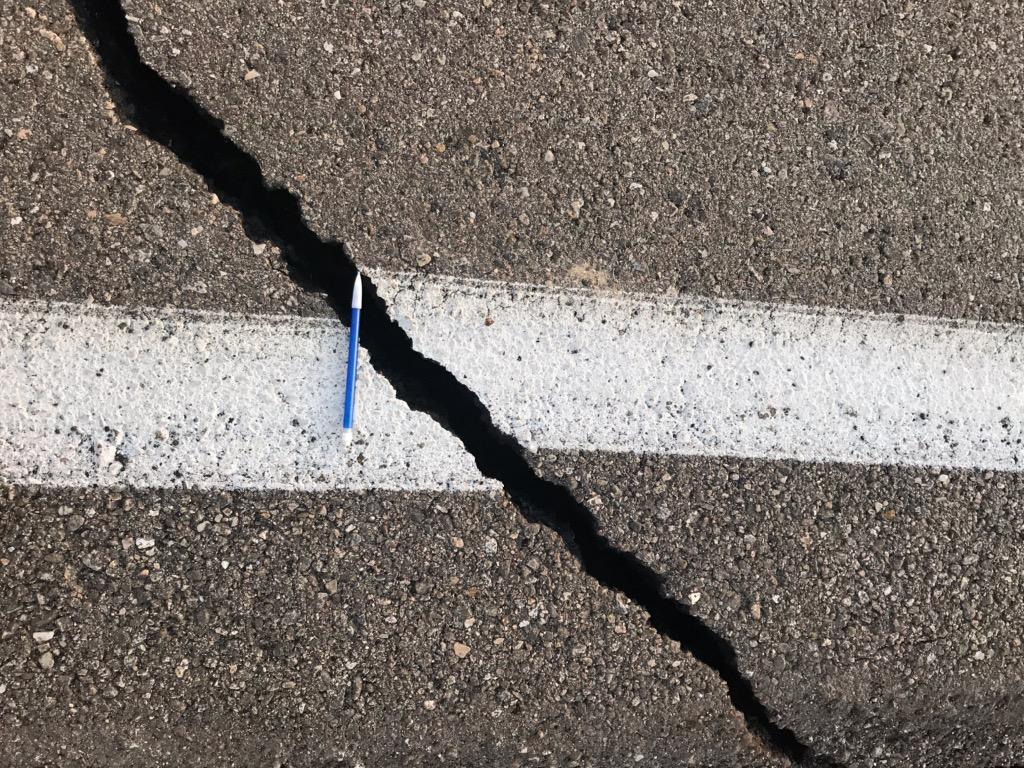
In Southern California, we have not seen so much as an inch of rain since last February or March. Oh, we get the occasional “dirty drizzle,” which succeeds only in leaving a layer of dust on our windshields as it dries. Today’s headline in the Los Angeles Times reads “Winter Tale: A ‘No Snow’ State.”

You might not associate California with snow, but the snowpack on the Sierra Nevada Range is the main source of irrigation for California agriculture. If that dries up, large parts of the San Joaquin Valley will no longer be able to reach the 12.8% of U.S. agricultural production that it hitherto enjoyed.

We usually think of water as used primarily for drinking and washing, yet 70% of global fresh water resources is used for irrigation. And also for keeping useless front lawns green.

Something is clearly happening that will make California a less desirable place to live. Late night comics are having a field day talking about our year-round wildfires.

I don’t have any idea what is going to happen. It could be that the rains and snows of yesteryear will return. Or, they may not.

Like Father, Like Son

The illustration above is of Pierre-Auguste Renoir’s La Promenade, painted in 1870, and on display at the Getty Center in Los Angeles. I have always been partial to Renoir’s paintings, particularly when they have these luminous portraits of women. In the painting, the man’s face is in shadow; he is reduced to a polite gesture of leading his lady on. The young woman, on the other hand, lights up the canvas.

What I find truly amazing is that much of the same sensibility was passed on to his son, Jean, who became one of the great motion picture directors. There are times when the viewer feels that the father could have directed the same scene in the same way.

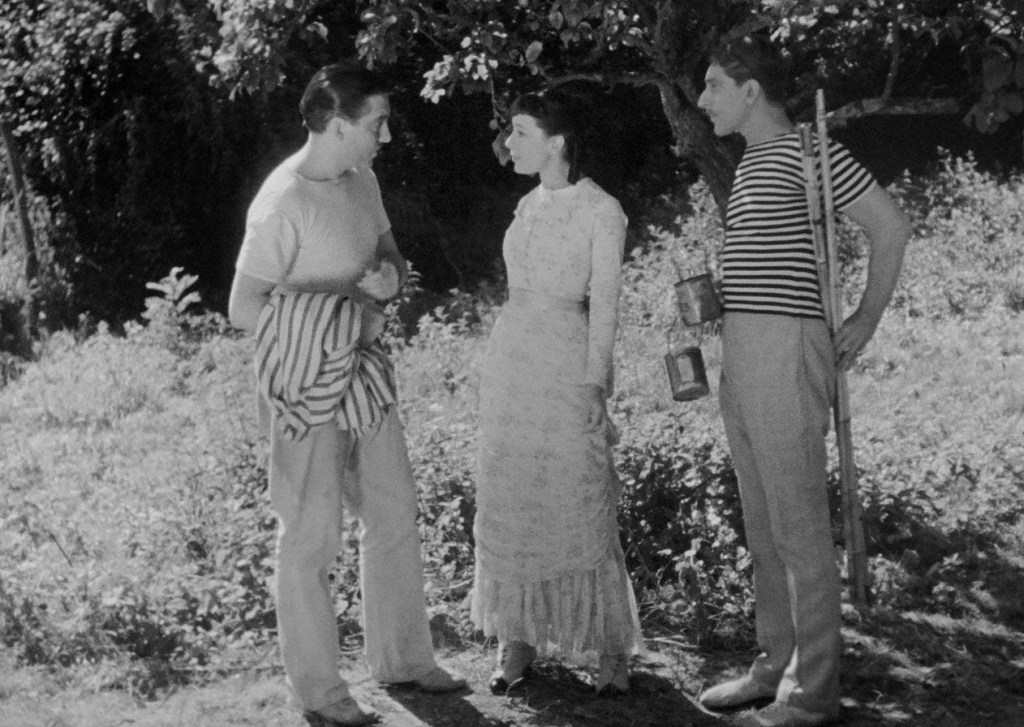
Above is a still from A Day in the Country (1946), which is set in the same period and shows us a picnic in the woods—with the same feeling of the radiance of the female character. Some of the same feeling is in his earlier The Rules of the Game (1939), which is set in the present day. The men in the film all fly around the Marquise de la Chesnaye (played by Nora Gregor) like moths circling a flame.

Of course, Jean Renoir was very conscious of his father’s work, appearing in several of the paintings. He also wrote a beautiful biography of him called Renoir, My Father, which is available in a New York Review edition and is well worth reading.

Samurai Swordplay

A few days ago, I promised to list my favorite Japanese samurai films. Here I present the annotated list in alphabetical order by eight directors, with my favorite samurai film for each director:

  • Hideo Gosha: Goyokin (1969) See also his early Three Outlaw Samurai (1964) and Sword of the Beast (1965).
  • Kazuo Ikehiro: Trail of Traps (1967). My favorite of the Kyoshiro Nemuri films starring Raizo Ichikawa.
  • Hiroshi Inagaki: Samurai Trilogy, comprising Musashi Miyamoto (1954), The Duel at Ichijoji Temple (1955), and Duel on Ganryu Island (1956).
  • Masaki Kobayashi: Harakiri (1962) starring the great Tatsuya Nakadai.
  • Akira Kurosawa: The Seven Samurai (1954), just one of over a dozen great chambara epics usually starring Toshiro Mifune.
  • Kenji Misumi: Lone Wolf and Cub: Sword of Vengeance (1972). Weird and entertaining.
  • Kihachi Okamoto: Sword of Doom (1965), another great Nakadai role.
  • Kimiyoshi Yasuda: Zatoichi’s Fire Festival (1970), one of a score of films starring Shintaro Katsu as a blind samurai warrior. Very funny.

After the 1970s, the studio system that supported the great Japanese films of the postwar period collapsed because the studios made more money selling their studio space in a real estate bubble than they ever did making movies. There’s a lesson to be learned there.

“Don’t Bother the Earth Spirit”

I have just finished reading Joy Harjo’s Crazy Brave: A Memoir, which made me hungry to read more of her poetry. Harjo is a Muscogee (Creek) Indian who also happens to be the Poet Laureate of the United States. Below is a short prose poem of hers:

Don’t Bother the Earth Spirit

Don’t bother the earth spirit who lives here. She is working on a story. It is the oldest story in the world and it is delicate, changing. If she sees you watching she will invite you in for coffee, give you warm bread, and you will be obligated to stay and listen. But this is no ordinary story. You will have to endure earthquakes, lightning, the deaths of all those you love, the most blinding beauty. It’s a story so compelling you may never want to leave; this is how she traps you. See that stone finger over there? That is the only one who ever escaped.

The Mad Eyes of Oliver Haddo

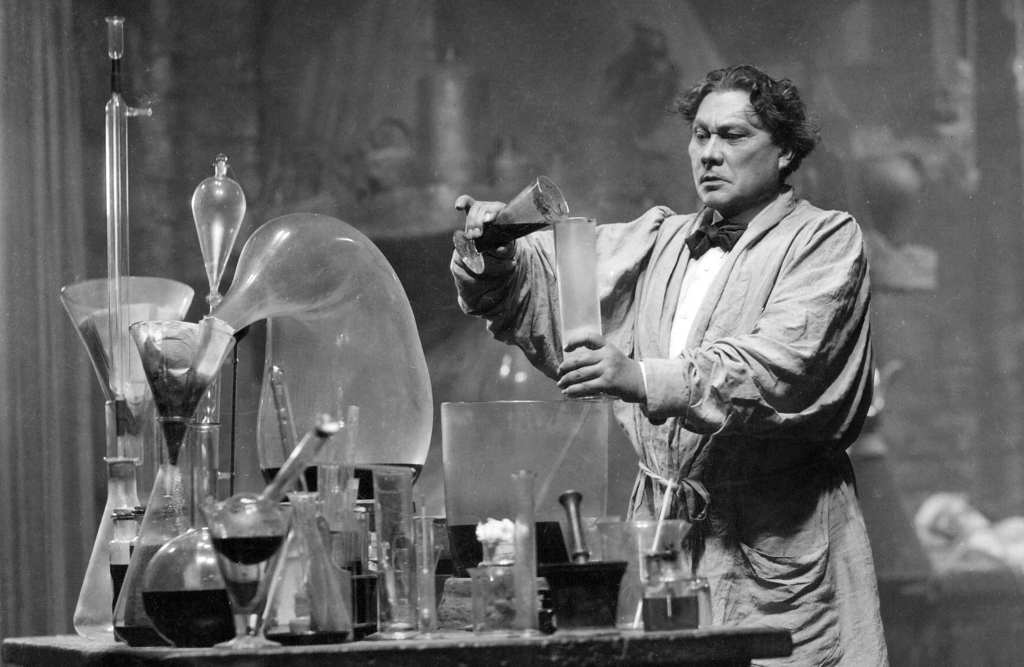
It’s always interesting to see a famous film director acting in a movie made by others. I am thinking of John Huston in Roman Polanski’s Chinatown (1974), Erich Von Stroheim in Jean Renoir’s Grand Illusion (1937), Victor Sjöström in Ingmar Bergman’s Wild Strawberries (1959), and Paul Wegener in Rex Ingram’s The Magician (1926).

Who’s Paul Wegener, you ask? He directed (and acted in) The Golem: How He Came Into the World (1920), which was a surprisingly good film considering its early production date.

Here’s Paul Wegener as the Golem, a monster created by a rabbi to protect the Jewish residents of Prague from oppression. He actually directed two other films about the Golem going back to 1915, but those films have been lost.

In The Magician, Wegener plays the magician Oliver Haddo, who is obsessed in hypnotizing Margaret Dauncey (played by Alice Terry, Rex Ingram’s wife) and creating life by killing her and taking the blood directly from her heart. Fortunately, her fiancé and guardian arrive at Haddo’s mad doctor’s castle and put the kibosh on him.

Rex Ingram made a number of classic silent films. The most famous is The Four Horsemen of the Apocalypse (1921), which catapulted Rudolph Valentino to stardom. After sparring with studio bosses, he repaired to Southern France with his wife Alice Terry and made a number of beautiful films such as Mare Nostrum and The Magician, both filmed in 1926.

He is not to be confused with the black actor known by the same name.

Ronin

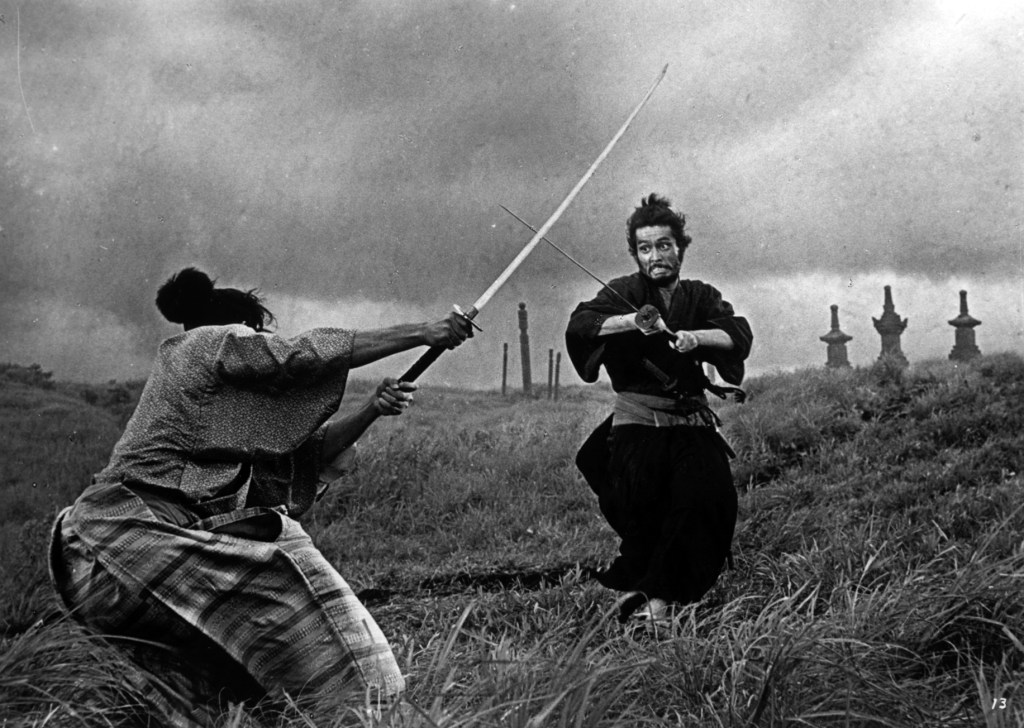
It is without a doubt one of the most incredible shots in the history of the cinema. And yet it was the work of a director, Hideo Gosha, on his first motion picture, Three Outlaw Samurai (1964). Picture to yourself a peasant who with two of his friends kidnapped the daughter of a corrupt local magistrate as part of a protest against his cruel administration. Instead of keeping his promises, this magistrate sends thugs to kill him. As he lies bleeding with his back slashed by a sword, we cut to a closeup up the peasant, dying, looking with wide-eyed wonder at a lone wildflower growing in front of his face.

In the 1950s and 1960s, the Japanese cinema was at its height, one of the most fascinating in the world. The best of their films were in a genre known as jidaigeki, historical pictures set mostly during the Tokugawa Shogunate between 1603 and 1868. Starring most prominently were samurai, particularly masterless or outlaw samurai called ronin. Other films in the genre portrayed gangsters (yakuza), merchants, even peasants.

I had seen Three Outlaw Samurai at least twice before, but this time the film’s pessimism struck home. Aiding the peasants in their protest are three ronin who, one by one, come together. They are unable, however, to help the peasants win. After the three who kidnapped the magistrate’s daughter are killed, the other peasants in the surrounding villages are afraid to present their protest to a wondering clan chief who is due to visit in a few days. It is because of this visit that the magistrate hires waves of goons to attack not only the protestors, but previous goons who are asking for too much money.

The bloodshed is considerable. The three ronin kill at least a hundred of the magistrate’s men, who in turn kill large numbers of peasants. At the end, the three ronin decide to travel together in a direction selected by chance.

Ever since I first fell in love with movies as a student at Dartmouth, I have loved the fast action of chambara (“sword fight”) films. But, like the best Westerns, these “Easterns” can attain the status of high art. In a future post, I will list my favorite samurai films.

Second Class

When I went to Yucatán in 2020, I had not been to Mexico for many years. I was pleasantly surprised that even the second class buses were air-conditioned and relatively new. Back in the early 1980s, I remember the old Unión de Camioneros de Yucatán buses with their broken windows and busted seats. Now there were a whole spate of new companies, such as Oriente (shown above). This was the bus I took from Izamal to Mérida.

In all, I took six trips using second class buses:

  • Izamal to Mérida
  • Mérida to Uxmal
  • Uxmal to Campeche
  • Chichén Itzá to Valladolid
  • Mérida to Progreso
  • Progreso to Merida

The first four were on comfortable new Oriente buses. The last two were on a shabbier line that just ran every few minutes between Mérida’s Autoprogreso Station some twenty miles to the port of Progreso.

Above is the first class bus ticket I used to get from Campeche to Merida. The second class route took some 5-6 hours stopping at numerous small inland towns. The ADO (Autobuses de Oriente) line pretty much owns first class routes in Yucatán. From Campeche to Mérida, it took the coastal toll road, which took only about 2 hours.

What’s the difference between first class and second class buses in Mexico? The first class routes are theoretically point to point, not making any pickups or drop-offs along the way. I say “theoretically” because drivers are not above going out of their way for friends. On a second class route, anyone can stop a bus anywhere. When I was going from Chichén Itzá to Valladolid. I stood in the bushes across the street from the Dolores Alba motel and waved down the Valladolid bus. Piece of cake.

Pilgrims and Indians

I have always had my suspicions about the first Thanksgiving feast in 1621. There is no record of what was on the menu, only a few words by Governor William Bradford about the preparations for the feast:

Our harvest being gotten in, our governor sent four men on fowling, that so we might after a special manner rejoice together, after we had gathered the fruits of our labors; they four in one day killed as much fowl, as with a little help beside, served the Company almost a week.

Were potatoes served at the first Thanksgiving? Not likely, as potatoes were a South American tuber originating either in Peru or Chiloe Island in Chile. And it is highly unlikely that the Spanish conquistadores made any contribution to the Pilgrims’ harvest feast. Were green beans available to the colonists in Massachusetts during November? I doubt it.

Cranberries and pumpkins might very well have been at the feast, along with various types of squash and beans.

Turkey may well have been among the fowl served, though there probably were a number of other types, not only of fowl but other types of meat as well, including, perhaps, venison.

Whatever you choose to have at your family’s gathering tomorrow, I hope you all have a good time. Just remember one thing: Do not, under any circumstances, discuss politics, even if everyone is likely to be more or less in agreement. As with religion, everyone has his own bête noire where governing is concerned.

Politics in America is one thing for which we have scant reason to be thankful.

Gridlock on the Nile

I have just enjoyed reading Rosemary Mahoney’s Down the Nile: Alone in a Fisherman’s Skiff about her trip—solo—in a rowboat between Aswan and Qena. I loved her description of what it’s like to drive in Egypt. Following is a selection from her chapter on Luxor.

Egyptians drive in a fashion that could only be described as chaotic. They seemed compelled to position their car in front of the one ahead of them at any cost. At night they drove with their headlights off until an oncoming car approached, at which time they helpfully blinded the opposing driver with a sudden flash of the high beams. And Egyptian highways were minefields of disaster. There were always skinny figures leaping across them at just the wrong moment, entire families sitting down to picnics in the middle of them, cars speeding along them in the wrong direction, men stopping their cars to pee in the fast lane, sudden pointless barriers stretched across the road, or wayward oil barrels, or boulders, or a huge herd of hobbled goats. Every ten miles or so the hideously crushed hull of a truck or car would appear at the edge of the road, the rusting, twisted remains of past accidents, and yet these gruesome and shockingly numerous reminders never seemed to chasten Egyptian drivers. They raced and careered and honked their way along with the heedless abandon of people who believe either that they are invincible or that life has no value whatever.