Crouching: Oliver Moorman and Hilary Paris Moorman Standing: Jennifer Duche, Me, Lori Paris, Ely Moorman, Dan Paris, Joseph Moorman
Just to get the relationships straight:
Dan Paris is my younger brother. He is married to Lori Paris.
Jennifer Duche is Lori’s daughter from an earlier marriage.
Dan’s daughter from an earlier marriage is Hilary Paris (and therefore my niece).
Hilary Paris is married to Joseph Moorman with two sons, Oliver and Ely.
I just happened to wander into the picture.
Ours is a widely diverse family, including anti-vaxxers, a Trump supporter, a Yoga instructor, a Seattle Parks & Recreation employee, two Hungarians, a Master Builder, a travel specialist, and me—perhaps the strangest one of all.
Joe and Hilary rented an Air B&B house in Indio, California, where most of the get-togethers were held.
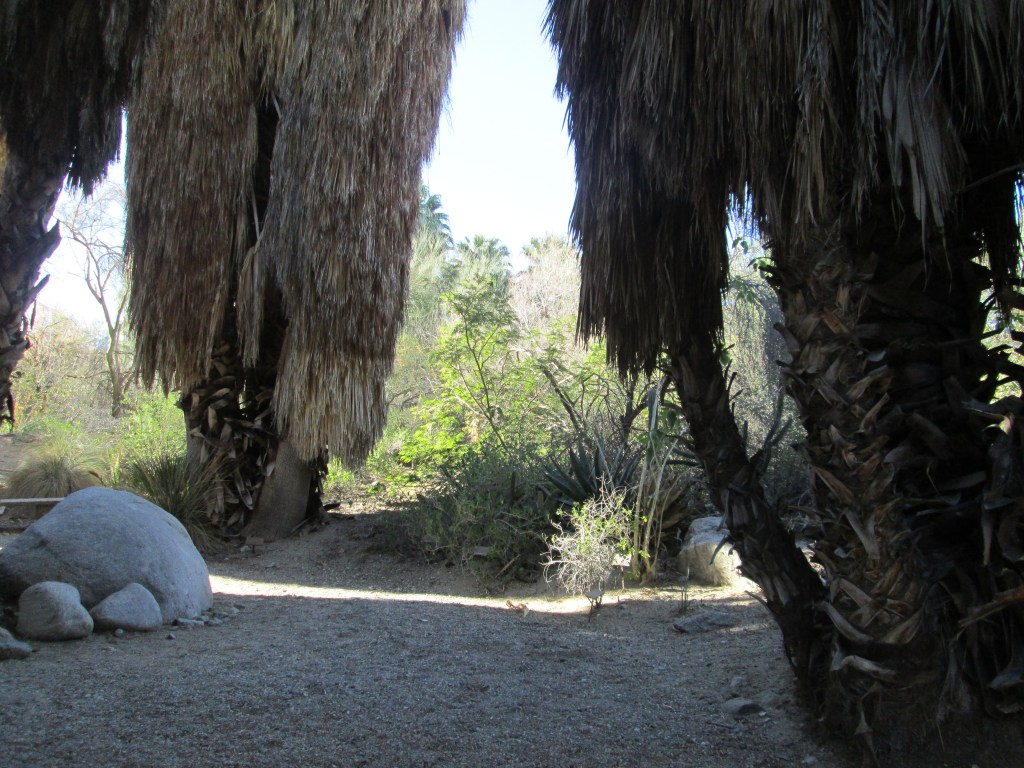
In addition to family stuff, I saw the new James Bond film (No Time to Die) and liked it, and I visited the Living Desert Zoo in Palm Desert, where I took pictures (which you will sample in the coming days).
The weather was a bit on the cool side, with a wild and windy rain squall on my final evening in the desert.
José Ferrer, Sting, and Sian Phillips in David Lynch’s Dune (1984)
There are movies which one likes but almost no one considers to be really good. Yet one watches them hungrily every time they appear on television. In that category for me are the Coen Brothers’ The Big Lebowski, both parts of Quentin Tarantino’s Kill Bill, Paul Verhoeven’s Showgirls, Michael Cimino’s Heaven’s Gate, and—last but not least—David Lynch’s Dune.
I have read Frank Herbert’s novel Dune several times, and all the sequels at least once, even the over-long God Emperor of Dune. I love the mythology that Herbert created and could hardly wait for it to be turned into film, though I knew the story was so vast that it was virtually unfilmable.
Arch-Villain Sting as Feyd Rautha in an Expansive Mood
I could easily enumerate the flaws of David Lynch’s film version as well as anyone: Kyle MacLachlan was his usual wooden self. The story was too big to be filmed. There was too much dreamy interior monologue about the sleeper awakening. Some characters, like Chani (Sean Young), Duncan Idaho (Richard Jordan), Gurney Halleck (Patrick Stewart), and the Shadout Mapes (Linda Hunt) were wasted. And so on ad infinitum.
But the first hour of the film is outstanding, featuring some of the most outrageous steampunk set designs. The villains, the Harkonnens, are truly horrible, especially the Baron Vladimir Harkonnen. It’s only when Paul and his Bene Gesserit mother are among the Fremen natives of Planet Arrakis that things get a tad sketchy.
I still love the film, having seen it about a dozen times.
Later this month, another version, covering only the first half of the novel, is to be released. I will review it after I’ve seen it.
Somehow Al Capp Understood What “The Zuckerface” Was All About
The Shmoos first made their appearance in the Li’l Abner comic strip in 1948. I cannot help but think they were the original forerunner of The Zuckerface, CEO of FaceBook. According to Wikipedia:
A shmoo is shaped like a plump bowling pin with stubby legs. It has smooth skin, eyebrows, and sparse whiskers—but no arms, nose, or ears. Its feet are short and round, but dexterous, as the shmoo’s comic book adventures make clear. It has a rich gamut of facial expressions and often expresses love by exuding hearts over its head.
Of course, there isn’t exactly a one-to-one correspondence between all the attributes of the Shmoo and those of the CEO of FaceBook. But isn’t there clearly a resemblance?
Uncanny, Isn’t it?
It’s such a pity that FaceBook has turned into a force for evil, especially among the young and feeble-minded, and that the company’s management persists in ignoring that fact.
It looks kind of idyllic, doesn’t it? The damned thing is it can be idyllic, or it can be hellacious. Fortunately, the weather in the desert is cooling somewhat, and I don’t have to worry about losing any skin if I touch any of the metal surfaces on my car.
On Saturday, I will drive to Palm Springs for a mini-family-reunion, staying in a cheap motel in the area. I am primarily interested in spending time with my brother and sister-in-law, and I hope to take some pictures of the weekend. Martine will stay behind in L.A., as she is not feeling well.
Monday is Columbus Day. Although it has become something of a bogus holiday, it is still observed by governments, banks, and some school districts; so I will stay on until Tuesday morning, when I drive back to Los Angeles.
Over the last couple of years, I have watched dozens of film noir productions. The genre predominated in the 1940s and 1950s, but never really went away. Why was it such a big thing? Following is one interesting answer from Ryan Reft writing for LA television station KCET’s website:
Yet to live in the 1940s, to watch Europe fall to fascism, realize the depth and horror of the Holocaust, witness the birth of the atomic age, and fear the outbreak of nuclear war and global destruction invoked no small amount of anxiety. Domestically, rapid urbanization, social dislocation, protests for civil rights by African Americans and others that challenged the status quo, and changing gender roles, added, perhaps even superseded, worries about the international situation.
Perhaps the sense of dissociation created by the Depression, World War Two, and the uneasiness of the Atomic Age was the beginning of the major divisions that haunt the United States in the 21st Century.
Gloria Grahame and Humphrey Bogart in Nicholas Ray’s In a Lonely Place (1950)
Noir signaled numerous changes in American society. Reft continues:
Unsurprisingly, popular culture reflected these anxieties. Beginning arguably with the “Maltese Falcon” in 1941 and extending into the late 1950s, film noir depicted a nation in which the American dream was treated as a “bitter irony”, marriage as “absolutely horrific”, the police and politicians were “bleak, amoral and ugly”, and morality little more than situational; “anyone in the right or wrong circumstances, was capable of almost anything” ….
I know I am deeply affected by the edginess of these films, and I feel they explain in some large sense how we got where we are today, which is a darker, more urban world bereft of the old rural sunshine. Compare the Will Rogers films from the 1930s with the noir films of ten years later. It seems as if the fabric of society has been torn.
Dante Gabriel Rossetti’s Model Elizabeth “Lizzie” Siddal
The Pre-Raphaelite Brotherhood consisted of a number of painters, most notably Dante Gabriel Rossetti, John Everett Millais, William Holman Hunt and others. During the five years of its existence, it created a number of unforgettable images featuring a number of stunning models.
In his extensive history, The Victorians, A N Wilson writes:
The word ‘Pre-Raphaelite’ in popular modern parlance does not refer to particular painting techniques or attitudes to the Middle Ages. It means young women with pale faces, pouting lips and abundant hair. The hair was important; so important that hairdressing, for the first time in English history, came out of the private domain of the home.
Elizabeth Siddal as Ophelia in a Painting by Millais
Pre-eminent of the abundant red-haired models of the Pre-Raphaelites was Elizabeth Siddal, who had a relationship of sorts with Rossetti. When she died in 1862 after years of drug abuse with laudanum (opium), she was buried with the only copy of a manuscript of poems by Rossetti, who later regretted his impulsive act. In fact, by 1870 he regretted his impulsive act of burying the manuscript with Siddal. He had the body exhumed and retrieved his manuscript.
Other equally beautiful Pre-Raphaelite models were Fanny Cornforth and Annie Miller.
Fanny Cornforth in “The Kissed Mouth” by D G Rossetti
Annie Miller in D G Rossetti’s “The Woman in Yellow”
The more things change, the more they remain the same. The following is from A N Wilson’s The Victorians describing the outbreak of cholera in London in the late 1840s.
It was not until the cholera microbe was isolated and identified by Koch in 1883 that [Dr John] Snow’s brilliant hunch—turning to circumstantial deduction—was proved. Snow tried—and [Edwin] Chadwick too—to spread the gospel of cleanliness as a guard against water-borne disease: the creation of good drains; lodging houses for vagrants; public washhouses; quarantine for local visitors. The coal-miners were the group that suffered more from cholera than any other—Snow urged that their work conditions be divided into four-hour shifts so that they did not need to use the coal pits as privies. In parts of London where the classes washed their hands—Belgravia—the rate of death by cholera was 28 in 10,000, compared with 186 per 10,000 in poorer districts. But, of course, such measures could not be introduced without control, and—as in the case with the Irish [potato] famine—the true laissez-faire liberal would, quite literally, prefer death to state interference. [Italics mine]
This is one of my favorite poems by Robert Browning. It tells the tale of a dying ecclesiastic who, before he dies, learns that he is not highly regarded.
The Bishop Orders His Tomb at St. Praxed’s Church
Rome, 15—
VANITY, saith the preacher, vanity!
Draw round my bed: is Anselm keeping back?
Nephews—sons mine … ah God, I know not! Well—
She, men would have to be your mother once,
Old Gandolf envied me, so fair she was!
What ’s done is done, and she is dead beside,
Dead long ago, and I am Bishop since,
And as she died so must we die ourselves,
And thence ye may perceive the world ’s a dream.
Life, how and what is it? As here I lie
In this state-chamber, dying by degrees,
Hours and long hours in the dead night, I ask
“Do I live, am I dead?” Peace, peace seems all.
Saint Praxed’s ever was the church for peace;
And so, about this tomb of mine. I fought
With tooth and nail to save my niche, ye know:
—Old Gandolf cozened me, despite my care;
Shrewd was that snatch from out the corner South
He graced his carrion with, God curse the same!
Yet still my niche is not so cramped but thence
One sees the pulpit on the epistle-side,
And somewhat of the choir, those silent seats,
And up into the aery dome where live
The angels, and a sunbeam ’s sure to lurk:
And I shall fill my slab of basalt there,
And ’neath my tabernacle take my rest,
With those nine columns round me, two and two,
The odd one at my feet where Anselm stands:
Peach-blossom marble all, the rare, the ripe
As fresh-poured red wine of a mighty pulse.
—Old Gandolf with his paltry onion-stone,
Put me where I may look at him! True peach,
Rosy and flawless: how I earned the prize!
Draw close: that conflagration of my church
—What then? So much was saved if aught were missed!
My sons, ye would not be my death! Go dig
The white-grape vineyard where the oil-press stood,
Drop water gently till the surface sink,
And if ye find … Ah God, I know not, I!…
Bedded in store of rotten figleaves soft,
And corded up in a tight olive-frail,
Some lump, ah God, of lapis lazuli.
Big as a Jew’s head cut off at the nape,
Blue as a vein o’er the Madonna’s breast …
Sons, all have I bequeathed you, villas, all,
That brave Frascati villa with its bath,
So, let the blue lump poise between my knees,
Like God the Father’s globe on both his hands
Ye worship in the Jesu Church so gay,
For Gandolf shall not choose but see and burst!
Swift as a weaver’s shuttle fleet our years:
Man goeth to the grave, and where is he?
Did I say basalt for my slab, sons? Black—
’Twas ever antique-black I meant! How else
Shall ye contrast my frieze to come beneath?
The bas-relief in bronze ye promised me,
Those Pans and Nymphs ye wot of, and perchance
Some tripod, thyrsus, with a vase or so,
The Saviour at his sermon on the mount,
Saint Praxed in a glory, and one Pan
Ready to twitch the Nymph’s last garment off,
And Moses with the tables … but I know
Ye mark me not! What do they whisper thee,
Child of my bowels, Anselm? Ah, ye hope
To revel down my villas while I gasp
Bricked o’er with beggar’s mouldy travertine
Which Gandolf from his tomb-top chuckles at!
Nay, boys, ye love me—all of jasper, then!
’Tis jasper ye stand pledged to, lest I grieve
My bath must needs be left behind, alas!
One block, pure green as a pistachio-nut,
There ’s plenty jasper somewhere in the world—
And have I not Saint Praxed’s ear to pray
Horses for ye, and brown Greek manuscripts,
And mistresses with great smooth marbly limbs?
—That ’s if ye carve my epitaph aright,
Choice Latin, picked phrase, Tully’s every word,
No gaudy ware like Gandolf’s second line—
Tully, my masters? Ulpian serves his need!
And then how I shall lie through centuries,
And hear the blessed mutter of the mass,
And see God made and eaten all day long,
And feel the steady candle-flame, and taste
Good strong thick stupefying incense-smoke!
For as I lie here, hours of the dead night,
Dying in state and by such slow degrees,
I fold my arms as if they clasped a crook,
And stretch my feet forth straight as stone can point,
And let the bedclothes, for a mortcloth, drop
Into great laps and folds of sculptor’s work:
And as yon tapers dwindle, and strange thoughts
Grow, with a certain humming in my ears,
About the life before I lived this life,
And this life too, popes, cardinals, and priests,
Saint Praxed at his sermon on the mount,
Your tall pale mother with her talking eyes,
And new-found agate urns as fresh as day,
And marble’s language, Latin pure, discreet,
—Aha, ELUCESCEBAT quoth our friend?
No Tully, said I, Ulpian at the best!
Evil and brief hath been my pilgrimage.
All lapis, all, sons! Else I give the Pope
My villas! Will ye ever eat my heart?
Ever your eyes were as a lizard’s quick,
They glitter like your mother’s for my soul,
Or ye would heighten my impoverished frieze,
Piece out its starved design, and fill my vase
With grapes, and add a vizor and a Term,
And to the tripod ye would tie a lynx
That in his struggle throws the thyrsus down,
To comfort me on my entablature
Whereon I am to lie till I must ask
“Do I live, am I dead?” There, leave me, there!
For ye have stabbed me with ingratitude
To death: ye wish it—God, ye wish it! Stone—
Gritstone, a-crumble! Clammy squares which sweat
As if the corpse they keep were oozing through—
And no more lapis to delight the world!
Well go! I bless ye. Fewer tapers there,
But in a row: and, going, turn your backs
—Ay, like departing altar-ministrants,
And leave me in my church, the church for peace,
That I may watch at leisure if he leers—
Old Gandolf, at me, from his onion-stone,
As still he envied me, so fair she was!
The Covid-19 Epidemic Was Just One of Many Outbreaks
We’ve all heard about the Bubonic Plague in Medieval Europe, and even more recently in Daniel Defoe’s London (see A Journal of the Plague Year). Probably the worst were the combined plagues brought to the New World by the Spanish and the Portuguese. The native Meso-American population was to drop by more than 80% due to the combined ravages of smallpox, measles, and malaria (the latter was brought in with black slaves from Africa).
In more recent times, the British Isles have been ravaged by cholera. In his The Victorians, historian A. N. Wilson writes: “After 1832, there were to be three major cholera epidemics in Britain: 1848-9, 1853-4 and 1866. The first of these killed 53,000 in England and Wales, 8,000 in Scotland; the next killed 26,000—but 10,000 in London.”
More recently, the Spanish Influenza epidemic of 1918-1919 infected approximately one-third of the world’s population and killed 50 million worldwide.
It is fortunate that vaccinations to fight Covid-19 have been developed. The pity of it is that many of the poorer nations do not have the vaccine, and many of the richer nations are populated by ignorant doofuses who refuse to be vaccinated.
Yesterday, I got the Fluzone High-Dose Seasonal Influenza Vaccine at my local Walgreen’s. I would also have gotten the Covid-19 booster shot the same day, but I had to make an appointment on the Internet because their system was down. So today I returned and got a jab in my other arm.
I have a difficult time understanding anti-vaxxers with their silly reasons for not getting their shots. It is a strange time in history when people would rather be dead or kill their friends, neighbors, and acquaintances rather than submit to a simple shot. Perhaps, at bottom they’re cowards about a little pain. And in both cases for me, there was very little pain, and it was short-lived.
You must be logged in to post a comment.