Puno Gets No Respect

Bicycle Repair Shop in Puno

Bicycle Repair Shop in Puno

As one who lived the first seventeen years of his life in Cleveland, Ohio, I am well aware that some places come as a major disappointment to travelers. Cleveland was usually referred to as “The Mistake on the Lake” and, parodying the Chamber of Commerce motto of “The Best Location in the Nation,” “The Worst Location in the Nation.” And on the old Dobie Gillis TV show, wasn’t that hippie Maynard G. Krebs always going to see a movie called The Monster That Devoured Cleveland.

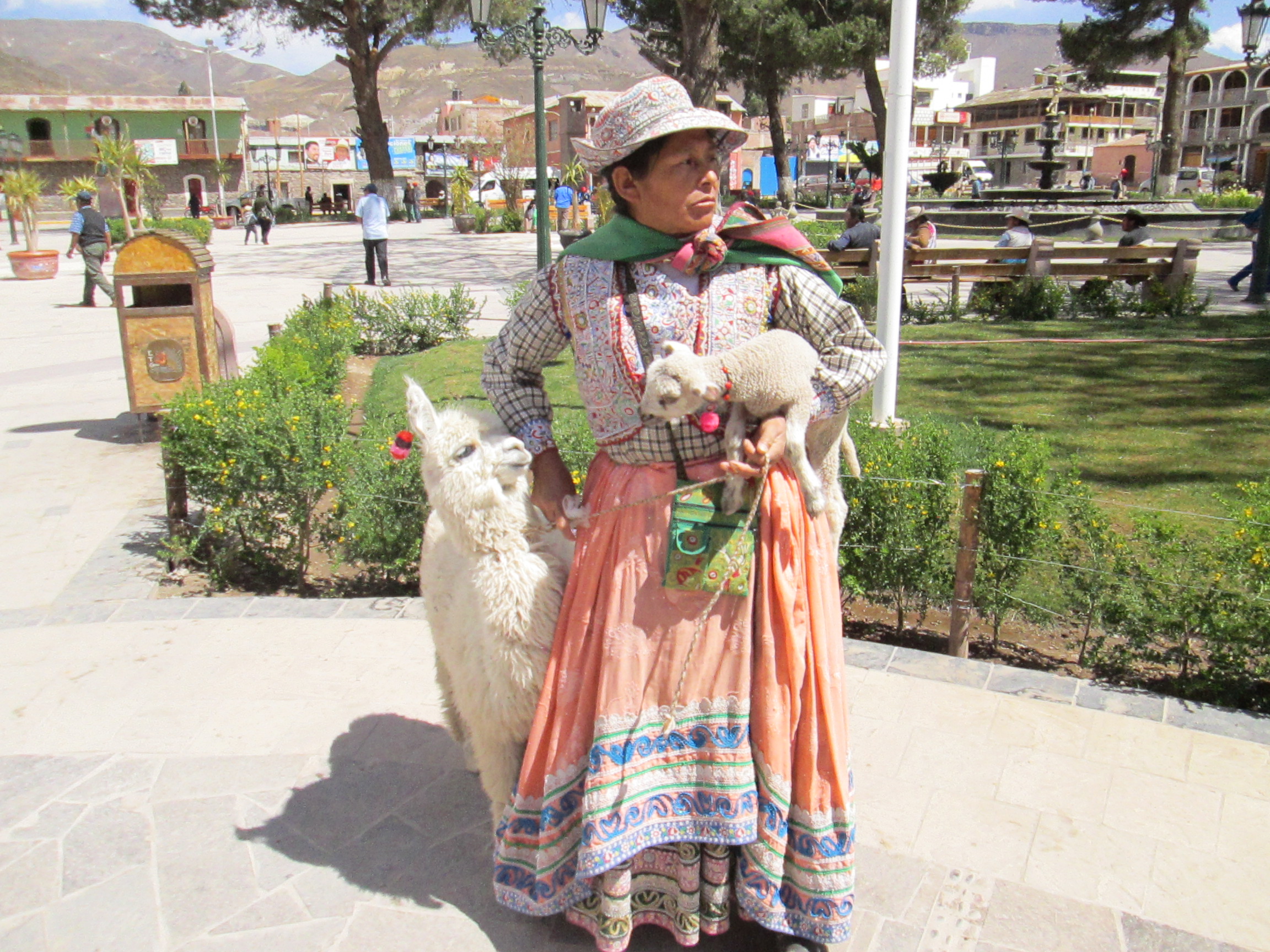
Well, Puno is one of those cities that gets no respect. A major entrepot for goods being trucked from Peru to Bolivia and vice versa. It is also one of Peru’s major centers of indigenous population, including both Quechuas and Aymaras.

If you take a look at the books written by travelers, you get a pretty dim view of the place. Paul Theroux (The Old Patagonian Express) and Christopher Isherwood (The Condor and the Cows) didn’t even give the place a chance: They arrived at night and left that same night on a boat bound across lake Titicaca for Copacabana, Bolivia. Since there are now no boat crossings to Bolivia—unless one is on an expensive catamaran tour—that option no longer exists.

When Patrick Leigh Fermor visited in the early 1970s (Three Letters from the Andes), he didn’t have much good to say about the place:

There was little for the eye to feast on outside. Puno is an assembly of corrugated iron roofs, sidings and goods yards sprawling round a church like a Gothic mud pie. We picked our way through the debris and squatting Aymara Indians—treading softly lest we tread on their dreams—to a ramshackle lacustrine port where an old steamer lay at anchor, brought piecemeal overland long before the railway, so that each plate was cut down to the weight a mule can carry, and sometimes a llama, then welded and riveted together again on the lake shore.

Fermor describes being met at the train station by a gaggle of unruly Aymara porters “seizing our luggage and bickering and punching each other all the way across the tracks to the repellent Ferrocarril hotel,” which had mislaid all the partys reservations.

Some years later, Michael Jacobs (The Andes), had this to say about Puno: “Neither of us was keen to stay any longer than necessary in Puno, which looked, under bright sunlight, even uglier than I had remembered it. The sun accentuated its resemblance to a waste tip of dirty brown boxes washed up by the lake.”

In Cut Stones and Crossroads, Ronald Wright damns the city with faint praise: “Puno has improved: I’ve found a hotel with hot water and a restaurant with hot food.” In The White Rock, Hugh Thomson considers Puno a “‘one-nighter,’ if that.”

Given all that bad publicity, I am sure that I will enjoy Puno. There isn’t much to see in the city proper (or should I say improper?), but there are the burial towers at Sillustani and the Islands of Taquile and Amantani in the middle of the lake. Plus, I will be trying to outlast the soroche I am sure will overtake me there at the elevation of 12,500 feet. Hey, nothing can surprise me: I’m from Cleveland.


Tarnmoor’s ABCs: Los Angeles

Venice Beach 2002

Venice Beach 2002

I was so very impressed by Czeslaw Milosz’s book Milosz’s ABC’s. There, in the form of a brief and alphabetically-ordered personal encyclopedia, was the story of the life of a Nobel Prize winning poet, of the people, places, and things that meant the most to him. Because his origins were so far away (Lithuania and Poland) and so long ago (1920s and 1930s), there were relatively few entries that resonated personally with me. Except it was sad to see so many fascinating people who, unknown today, died during the war under unknown circumstances.

My own ABCs consist of places I have loved (Iceland), things I feared (Earthquakes), writers I have admired (Chesterton, Balzac, and Borges); things associated with my past life (Cleveland and Dartmouth College), people who have influenced me (John F. Kennedy), and things I love to do (Automobiles and Books). This blog entry is my own humble attempt to imitate a writer whom I have read on and off for thirty years without having sated my curiosity. Consequently, over the months to come, you will see a number of postings under the heading “Tarnmoor’s ABCs” that will attempt to do for my life what Milosz accomplished for his. To see my other entries under this category, hit the tag below marked “ABCs”. I don’t guarantee that I will use up all 26 letters of the alphabet, but I’ll do my best. Today, we’re at the letter “L,” for Los Angeles, where I have lived for almost half a century..

Los Angeles is a difficult place to get to know. It took me at least five years before I even had a grudging acceptance of the city. Now I feel that I love it, for all its strange ways. I do not love the earthquakes, the hot weather, the gigantic brush fires that fill my lungs with ash, the self-entitled young professionals in their expensive sports cars, the decaying infrastructure, the Santa Ana Winds that make the skin peel off around my fingernails, or the long distances involved in going just about anywhere. And yet, there is a quality of the light that suffuses this place, especially early and late in the day. I also like the blend of cultures, mostly Latino and Asian, that make this a cosmopolitan metropolis.

This is a city that has its own literature. Here, for instance, is Raymond Chandler in his story “Red Wind”:

There was a desert wind blowing that night. It was one of those hot dry Santa Anas that come down through the mountain passes and curl your hair and make your nerves jump and your skin itch. On nights like that every booze party ends in a fight. Meek little wives feel the edge of the carving knife and study their husbands’ necks. Anything can happen. You can even get a full glass of beer at a cocktail lounge.

Mostly because of the outside influence of Hollywood in its glory days, many great writers passes this way and left their mark: Aldous Huxley, Bertolt Brecht, Thomas Mann, William Faulkner, Scott Fitzgerald, Nathanael West, John Fante, Evelyn Waugh, Ray Bradbury, and Joan Didion—just to name a few. If you like that sort of thing (I do not), there has also been a lot of modern art and architecture produced.

You may have heard that California is in a historic drought and has received precious little rain for the last three years. When I go to Lima, Peru, later this summer, I will be in another Pacific coast city where it almost never rains. I suspect it will remind me of L.A., except for the very different cultural context.

Would I ever move from Los Angeles? Possibly. Around the time I retire, I will no doubt come to the realization that I can no longer afford to live here. When that happens, it will be a difficult time for me. But then, nothing is forever.


The Phantom Beep

It Was Driving Me Nuts

It Was Driving Me Nuts

It happened yesterday morning at work. Every 30 seconds, like clockwork, I would hear a beep. At first I thought it was the microwave in our office kitchen, but it continued to happen. Then I thought it was our HP 9050 copier. In fact, I identified the sound as coming from the rear left of the sorter. At that point, I called LaserCare to send out a rep to shut off the beep. He came out and checked out the machine, but he couldn’t figure out the source.

Around this time, I went to the other side of the office and heard it coming from around there. First I suspected the secretary’s laser printer, but it continued after I unplugged out. Then my attention was drawn to the smoke alarms overhead. I called the Office of the Building, and they sound out a technician to check it out. After he informed me that the alarms were not battery operated, I had an awful suspicion.

The beeps were coming from me!

After I had a Transient Ischemic Attack (TIA) a couple of weeks ago, the UCLA Cardiology Department fitted me with an event monitor “just in case.” While I was wearing the unit on my belt, the cable connection from the unit to the contact points on my chest had worked loose. Partly, it was because the plastic tab connecting the unit to my belt had gotten stretched.

So now I wear the unit in a small digital camera case. The only problem is that there is a visible wire that emerges from the case and disappears into my shirt. When people notice it, I warn them to be careful of what they say because I’m wearing a wire….

Tarnmoor’s ABCs: Kennedy

President John F. Kennedy

President John F. Kennedy

I was so very impressed by Czeslaw Milosz’s book Milosz’s ABC’s. There, in the form of a brief and alphabetically-ordered personal encyclopedia, was the story of the life of a Nobel Prize winning poet, of the people, places, and things that meant the most to him. Because his origins were so far away (Lithuania and Poland) and so long ago (1920s and 1930s), there were relatively few entries that resonated personally with me. Except it was sad to see so many fascinating people who, unknown today, died during the war under unknown circumstances.

My own ABCs consist of places I have loved (Iceland), things I feared (Earthquakes), writers I have admired (Chesterton, Balzac, and Borges); things associated with my past life (Cleveland and Dartmouth College), and things I love to do (Automobiles and Books). This blog entry is my own humble attempt to imitate a writer whom I have read on and off for thirty years without having sated my curiosity. Consequently, over the months to come, you will see a number of postings under the heading “Tarnmoor’s ABCs” that will attempt to do for my life what Milosz accomplished for his. To see my other entries under this category, hit the tag below marked “ABCs”. I don’t guarantee that I will use up all 26 letters of the alphabet, but I’ll do my best. Today, we’re at the letter “K,” for President John F. Kennedy.

I was a high school junior in a Catholic High School during the 1960 U.S. presidential election. The fact that a Catholic was daring to run again for the highest office in the land after the pasting that Al Smith had received in 1928 was wonderful to me. Richard Nixon with his dark jowls looked like a criminal; and people were saying that a Catholic president would become a mere catspaw to the Pope. (Since the pope at that time was John XXIII, that didn’t strike me as a bad thing.)

There was so much hope placed in John Kennedy: He was the best, the brightest of his generation. When he was shot in Dallas on November 22, 1963, something died within me. Lyndon Johnson was in many ways a good president, but the war in Viet Nam grew bigger, uglier, and ever more unwinnable. And then after him came the beginnings of that horrible conservative anschluss that is still affecting us today.

After John was killed, I placed my hope in Bobby Kennedy. He wasn’t, to my mind, the shining beacon of his older brother, but he was good. I remember being woken up by a phone call on June 6, 1968 by my friend Peter. He had been filming at the Ambassador Hotel in Los Angeles when Sirhan Sirhan shot Bobby. The FBI collected Peter’s film (which, in any case, didn’t capture the shooting) and never returned it. I was never a supporter of Ted Kennedy for president, though I think he was a great senator. I think we all had had too much heartbreak with the Kennedy family.

Barack Obama ran in 2008 under the motto HOPE. That was my feeling about the Kennedys. Alas, that hope was dashed on the rocks of American politics.

Curiously, John Kennedy and I were similar in one odd respect: He had Addison’s Disease, an adrenal insufficiency that is part of my own panhypopituitarism.


Inti Raymi

Inca Warrior

Inca Warrior

Before Francisco Pizarro upset the whole apple cart, Inti Raymi was one of four major Inca festivals celebrated in Cusco. It is still celebrated annually, except the venue has moved to the nearby ruins of Sacsayhuamán—usually pronounced by American tourists as “Sexy Woman.” The following description of the festival’s origin is from Wikipedia:

According to chronicler Garcilaso de la Vega, Sapa Inca Pachacuti created the Inti Raymi to celebrate the new year in the Andes of the Southern Hemisphere. The ceremony was also said to indicate the mythical origin of the Incas. It lasted for nine days and was filled with colorful dances and processions, as well as animal sacrifices to thank Pachamama and to ensure a good cropping season. The last Inti Raymi with the Inca Emperor’s presence was carried out in 1535, after which the Spanish and the Catholic priests banned it.

Since 1944, there has been a re-enactment of the Inti Raymi ceremonies on June 24 of each year. Although this re-enactment is mostly for the benefit of tourists, there are still real Inti Raymi ceremonies held by Quechuan peoples throughout the Andes.

Boterismo

Yes, They Are a Little Thick

Yes, They Are a Little Thick

When Martine and I were in Calgary in 2010, Martine and I saw an exhibit entitled “The Baroque World of Fernando Botero” at the city’s Glenbow Museum. (Other than the fish and chips, it was the only thing I remember really liking about the city.) It was my first acquaintance with the Colombian artist other than an odd book cover or two, and I found myself liking his vertically challenged and horizontally enhanced vision. Born in Medellin, Colombia, in 1932, Fernando Botero has developed a unique style in both painting and sculpture. To see a gallery of his work, click here.

For your enjoyment, here is what Botero does to the art of ballet:

Botero Ballerina

Botero Ballerina

Is that an apple atop her head?


Things Not Worth Doing: One of a Series

Do You Know Anyone Whose Opinion Was Changed by One?

Do You Know Anyone Whose Opinion Was Changed by One?

I have always wondered why people are so willing to advertise their political opinions, especially by sticking bumper stickers on their cars. I can think of at least three reasons why this is not such a good idea:

  1. There are parts of town where I would not like to advertise my political beliefs, such as in Orange or San Diego Counties. My car is not a new one, but at least it still runs for now.
  2. IIt is distinctively possible that your favorite candidate could turn out to be an unregenerate louse. After all, why would someone want to go into politics any more unless one is on a power trip? (It didn’t used to be that way, but it is today.)
  3. Bumper stickers are a lot like tattoos: They’re a lot easier to apply than to remove.

As for myself, this blog is my bumper sticker. If, after reading it, you think I am a political conservative, you must not have read it very carefully.


The Gringo Trail

The Volcano El Misti Rises Above the Cathedral of Arequipa

The Volcano El Misti Rises Above the Cathedral of Arequipa

Most tourists visiting South America tend to follow a well-beaten path to such destinations as Iguazu Falls and Machu Picchu. This is so pronounced in Peru that there is a roughly U-Shaped itinerary known as the Gringo Trail. It stretches from Lima south to Arequipa, occasionally taking in such stopovers as Paracas, Nazca, and the Oasis of Huacachina. Then, around Arequipa, there is Colca Canyon (twice as deep as our Grand Canyon), and the even more remote and even deeper canyon at Cotahuasi. From there, the tourist usually heads of Cusco, Machu Picchu, and Lake Titicaca. Backpackers frequently continue on to Copacabana and La Paz in Bolivia and on south.

In September, I myself will be hitting the Gringo Trail. The difference is that I will be avoiding two groups of people that constitute most of the tourists: backpackers and charter bus tour groups. I will probably encounter some of the same people several times, but I will likely not be traveling with them; and I won’t be staying in neither youth hostels nor five star hotels. I don’t mind the backpackers that much, but I dislike getting stuck in a party hostel in which the drinking and loud talk continue far into the wee hours of the morning. It will actually b quite a challenge to be taking the Gringo Trail while avoiding other travelers.

There are other sights in Peru beyond the Gringo Trail, but first I have to see to what extent I am affected by soroche, acut mountain sickness. It would be nice some day to visit Ancash, Huancayo, and Huancavelica. As for the Amazon areas, no thanks: I loathe mosquitoes.

When Hungarians Picnic

My Father and My Uncle at a Picnic

My Father and My Uncle at a Picnic

Set your Wayback Machine to about seventy-five years ago. At one of Cleveland’s many parks, you would see those two irrepressible Slovak twins—Elek (Alex) and Emil Paris—and their girls having a Hungarian-style picnic. The entrée of choice is likely to be szalonnás kenjer, or sliced rye bread with chopped onions, paprika, and smoked bacon drippings. On the left is Elek, my father, with either a girlfriend or his first wife, who was said to be overweight. Next to her are my Aunt Annabelle (née Herbaj) and Uncle Emil. It was a scene to be repeated well into my teen years, except the girlfriend/first wife was replaced by my mother.

Speaking of Hungarian picnics, allow me to quote Carl Sandburg to you. His short poem is called “Happiness”:

I asked the professors who teach the meaning of life
      to tell me what is happiness.
And I went to famous executives who boss the work of
      thousands of men.
They all shook their heads and gave me a smile as though
      I was trying to fool with them
And then one Sunday afternoon I wandered out along
      the Desplaines river
And I saw a crowd of Hungarians under the trees with
      their women and children and a keg of beer and an
      accordion.

I’m not altogether sure about the accordion. The Paris brothers were too busy eating to sing. On the other hand, when I went to Slovakia with my parents in 1977 (it was then part of Czechoslovakia), we sang all the old songs with my pretty cousins Gabriela, Margit, and Marinka (the last two being themselves twins).

A brief note about nationality: Like the Kurds, the Slovaks were a cohesive people for hundreds of years before ever having a country of their own, until Vaclav Havel, last President of Czechoslovakia, granted them their independence in 1993. When my father and uncle were born in 1911, Slovakia was a part of the Austro-Hungarian Empire that was administered by the Hungarians. In the end, my father spoke better Hungarian than Slovak; though I found out as early as 1977, Hungarian was spoken only by the old people.


Denial and Nullification

How Can We Stop Thinking of Them?

How Can We Stop Thinking of Them?

In the minds of many Americans who live in the so-called Red States, their values are under siege. They believe that what made this country great was heterosexuality, Evangelical Christianity, racial and ethnic homogeneity, unregulated gun ownership, and overall lack of government interference in their lives. Back in some Golden Age, people did not need a handout to survive. Of course, many did not survive because life was hard and old Doc Peabody just didn’t know how to do anything but dispense aspirin.

Then, over time, corporations took over the farms; and the more promising youth left for the coastal states. Those who were left behind continued to espouse the same values as their fathers. Suddenly, however, it seems that most Americans were no longer in the Grant Wood American Gothic mold. They were Black, Asian, Mexican, Muslim, Liberal, Queer, Educated, Feminists—in short “Not Our Kind of People.”

One result is the growth of a political movement to turn back the tide of history. So we have people whose main strategy is denial. Denial of science, of demographic change, of agnosticism, of the urban poor. Life for the Tea Party and their camp followers is one of nullification of what they do not understand. And since they do not try to understand anything outside their narrow orbit, it is an ultimately defeatist stance of a party in retreat.

Yesterday, I read an interesting article by Christopher S. Parker called “Whither the Tea Party? The Future of a Political Movement,” published by the Brookings Institution. Click the link labelled “Download the paper” for the complete text.

Parker does not think the Tea Party is going away soon, irrespective how many times it is bloodied at the polls:

Some may question whether or not this is really an “astroturf” [as opposed to grassroots] movement, one that wouldn’t survive in the absence of support from the Koch Brothers, or other big-money funding sources. But Tea Party membership has continued to grow over the last year. As IREHR [Institute for Research and Education on Human Rights] indicates, this was during a time when big-money donors were all but absent: 82 percent of the donations to five Tea Party affiliated organizations were un-itemized individual donations, which are capped at $200, and 97 percent of the itemized contributions to three national Tea Party affiliated Super PACs—Freedom Works for America, Patriot Super PAC, and Tea Party Patriots Citizens Fund—failed to exceed $1,000. This suggests that the Tea Party movement isn’t “astroturf.” It’s a real grassroots movement, one that will likely be around a while.

As long as there are white Americans in the former Confederate States of America and Great Plains who feel disenfranchised, there will either be a Tea Party to minister to their needs. Or else, more likely over time, their needs will act as yeast in a Republican Party that has been largely taken over by their political and social agenda.

Change will not stop because it is in the interests of a large bloc of the U.S. population to halt it in its tracks. Over the long haul, there will be a continuing battle that will resemble some of the political battles of the Nineteenth Century over Free Silver and the Nativists. I expect it will be ugly, even if it is a losing battle: There will still be casualties on both sides.