Pundits for the Feeble-Minded

“Ditto-Head”—Another Term for the Brainless?

“Ditto-Head”—Another Term for the Brainless?

I am weary of expending my energy reacting to people who say stupid things in public for the purpose of self-aggrandizement, either in the form of fame or money. This has become an age of talking heads who flood the media in order to appeal to the feeble-minded, the left behind, the village idiots. Here, in alphabetical order by last name, are sixteen chronic offenders:

  • Michele Bachmann, Congressman (R-Minnesota). If you can stand to look at her gorgon eyes without turning to stone, you are a better man than I am, Gunga Din.
  • Glenn Beck, Pundit. The rodeo clown of the right wing.
  • Patrick Buchanan, Pundit. Occasionally lucid, usually not.
  • Dick Cheney, Former Vice President. Mean and scary. One of the Beasts of the Apocalypse.
  • Ann Coulter, Pundit. So vicious that she gets in the way of her own message. May be a transsexual.
  • Ted Cruz (and his father Rafael Cruz), Senator (R-Texas). Deceptively smooth rightist ideologue.
  • Newt Gingrich, Former Speaker of the House (R-Georgia). Smart enough to know better, but wants the right wing to win to protect his own shaky legacy.
  • Louis Gohmert, Congressman (R-Texas). His crazy quotes liven many press stories.
  • Sean Hannity, Fox News Pundit. Smarmy and fascistic.
  • Wayne La Pierre, NRA Spokesman. Wants to arm everybody. A shill for the arms industry.
  • Rush Limbaugh, Pundit. If you do the opposite of what he advocates, you’ll probably be okay.
  • Bill O’Reilly, Fox News Pundit. Showers with falafel.
  • Sarah Palin, Ex-Governor (R-Alaska) and Pundit. The only pundit I know who may be more stupid than her followers.
  • Rand Paul, Senator (R-Kentucky). What happens when you mate a libertarian with a Brillo Pad ®?
  • Pat Robertson, Televangelist. Probably can be forgiven for his advanced age, during which he has surprisingly not been struck by lightning once for his pronouncements.
  • Antonin Scalia, Associate Justice U.S. Supreme Court. If there’s something evil that a judge can say, it’ll be Scalia saying it.

Let me quote Shakespeare’s Hamlet: “Let the doors be shut upon him that he may play the fool nowhere but in’s own house.”

Birthday of an Island

The Island of Surtsey as It Is Today

The Island of Surtsey as It Is Today

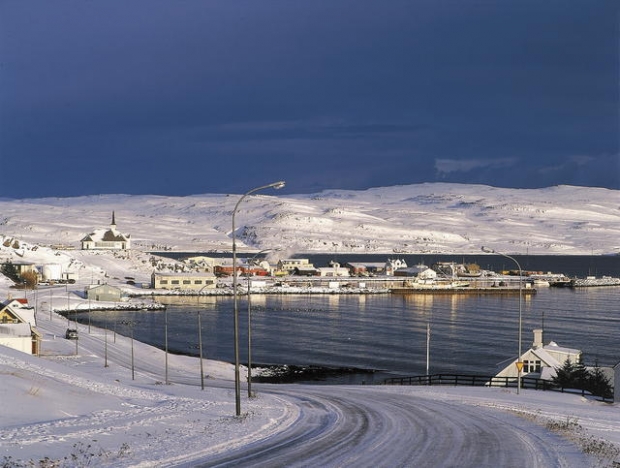
Fifty years ago today, the Island of Surtsey was born as the result of an undersea volcanic eruption in Iceland’s Westmann (Vestmannæyjar) Islands. Named after Surtr, one of the giants of Norse mythology, the island was at one time one square mile, but as a result of erosion has over the last fifty years been whittled down to a little more than half that size.

Did I visit Surtsey on my trip to Iceland this summer? I would have if it weren’t forbidden. Only scientists can visit the island, and only under restrictive conditions. For instance, they must not carry seeds to the island. One time, tomato plants started to grow as a result of a tomato seeds being in one of the researchers’ excreta. All biota on the island must have come there naturally as a result of wind or transport by birds. There are few places on earth which are unaffected by human habitation: The intent is to see what happens when we humans don’t have our thumbs resting on the scales.

The photo above is from Páll Stefánsson of The Iceland Review.

Judging a Book by Its Cover

In 1960, This Looked Ultra-Cool

In 1960, This Looked Ultra-Cool

It is always a good idea to re-examine from time to time a book or movie that had particularly impressed you. I decided yesterday to re-read A. E. Van Vogt’s Empire of the Atom (1957), which I first read around 1960, and twice subsequently. Its hero, Lord Clane is a mutant as a result of exposure to radioactivity. The time is at some remote point in the future, presumably after a nuclear war. All of Earth is under control of the House of Linn, which rules the planet as if it were the Roman Empire.

So very much, in fact, like the Roman Empire that the first half of the book was cribbed from Robert Graves’s 1934 classic I, Claudius. There is a one-to-one correspondence between Van Vogt’s characters and Graves’s Romans: Clane is Claudius; Creg, Germanicus; the Lord Leader, Augustus; Lydia, Augustus’s wife Livia; and Lord Tews, Livia’s son Tiberius. Only about 60% into the story does Van Vogt escape from his slavish borrowing. At least he doesn’t try to muddy his story by introducing an equivalent to Caligula. It bothers me that I did not notice all this when I re-read the book in 1990, years after I had read the Graves books and seen the BBC I, Claudius TV series.

Still, even with the plagiarism, there are numerous incongruities. The Linns have spaceships with which they conduct wars on Venus and Mars; yet their main weapons are bows and arrows, lances, and swords. They use nuclear energy, but regard it as a “gift from the gods.” Their gods, in fact, are Uranium, Plutonium, Radium, and Ecks (“X”?).

Well, then, what was it that drew me to this book? Pure and simple, I loved the cover (shown above). As a teen, I was a rather sickly individual with frequent headaches—by this time I already was suffering from the pituitary tumor (chromophobe adenoma) that was to reach a climax six years later. Clane was actually a handsome man provided he wore the flowing temple robes that hid his deformities:

After re-reading the message, [Clane] walked slowly to the full-length mirror in the adjoining bathroom, and stared at his image.

He was dressed in the fairly presentable reading gown of a temple scientist. Like all his temple clothing, the cloth folds of this concealed the “differences” from casual view. An observer would have to be very acute to see how carefully the cloak was drawn around his neck, and how tightly the arm ends were tied together at his wrists.

Whoever was responsible for the book’s dust jacket was a genius. Man, I wouldn’t have minded being a mutant if I had a face like that! But, like many teens, especially short, chubby ones, I used fantasy to escape the realities of my situation. Now, half a century and more onward, it doesn’t seem to matter as much any more. I am what I am, and I do not look unkindly on what and who I have become.

“Worse Than Worthless”?

Tattooed Boy

Tattooed Boy

I tried to point out some of the cultural meanings of the vogue for tattooing. First, it was aesthetically worse than worthless. Tattoos were always kitsch, implying not only the absence of taste but the presence of dishonest emotion.

Second, the vogue represented a desperate (and rather sad) attempt on a mass scale to achieve individuality and character by means of mere adornment, which implied both intellectual vacuity and unhealthy self-absorption.

And third, it represented mass downward cultural and social aspiration, since everyone understood that tattooing had a traditional association with low social class and, above all, with aggression and criminality. It was, in effect, a visible symbol of the greatest, though totally ersatz, virtue of our time: an inclusive unwillingness to make judgments of morality or value.—Theodore Dalrymple

Looking Out for Number Two

Elegance and—Yes!—Squalor

Elegance and—Yes!—Squalor

The galleries of 17th and 18th Century French furniture at the Getty Center are our favorite parts of their permanent collection. For one thing, they’re not as crowded as the galleries with paintings; for another, they let you take photographs. An elegant table or chair or cabinet can be just as much a work of art as a sculpture or an oil painting. It’s just that we are conditioned by our culture to regard fine art as something in oils on a canvas or wood backing. In fact, some of the furniture in the Getty incorporate small paintings on some of their panels.

Which brings me, by a commodius vicus of recirculation, to the Palace of Versailles in France. Imagine several miles of corridors with furniture such as pictured above, gorgeous drapes, halls with mirrors, paintings, gilded moldings, and in general the finest workmanship in all the fittings.

There was, however, one glaring exception: There were no bathrooms. Oh, the king, queen, and selected nobles had their own chaises percées which they could summon with a hand signal to one of their entourage. Anyone who was properly dressed (that meant a sword for you gentlemen, which could be rented from the palace concierge upon entry) would walk into the palace, wander into the King’s bedroom and watch him snuggle with his consort from behind a gold railing, and stroll through the grounds at his leisure.

But, being a mammal, there was always the chance that he or she would get “caught short.” When asking for the nearest restroom would get you nothing but disrespectful sniggers. According to one Internet source:

It’s difficult to believe today when gazing at the gleaming golden palace, but life at Versailles was actually quite dirty. There were no bathrooms as we would know them. Courtiers and royalty used decorative commodes in each room, while commoners simply relieved themselves in the hallways or stairwells. No one bothered to house-train the royal dogs, and servants did not consider cleaning up after them to be part of their job description. The constantly-altered chimneys did not draw well, so everything inside was covered with soot. The filth and disorder at Versailles during the ancient regime were noted in many records of the time.

So, imagine, if you will, what it was like to tour the palace being careful not to slip on another person’s bodily effluvia. Because it was considered beneath the monarch to concern himself with such trivial matters, it was not until 1715 that he ordered a weekly cleanup of the corridors by his servants. Imagine what it must have been like by then. Even today it’s a problem for tourists, according to one TripAdvisor report.

What a contrast between elegance and squalor!

Never the Twain Shall Meet

Cincinnati? Isn’t That Part of the Confederacy?

Cincinnati? Isn’t That Part of the Confederacy?

I was born in Cleveland, Ohio, and spent the first seventeen years of my life there. During that whole time, and even since then, I have never known a Clevelander who has been to Cincinnati. By air, the two cities are a mere 217 miles (or 349 km) apart. That really isn’t very far, considering that there is a good deal greater distance between Los Angeles and San Francisco. And yet Angelenos travel to San Francisco, Portland, Seattle, and Vancouver (and vice versa) a good deal more than Clevelanders travel to Cincinnati.

Why do you suppose that is? I thought about it for a while and came to the conclusion that Ohio is somewhat like Iraq or Syria, where two or more cultures co-exist (when they are not killing one another). Northeastern Ohio, where Cleveland lies, is pretty much a blue state kind of area, heavily into unions and the Democratic Party; whereas Southern Ohio is solidly Republican.

For instance, Ohio’s 8th Congressional District, currently represented by John Boehner, has not sent a Democrat to Congress since 1937.

Yesterday, while Martine and I were eating lunch at Jerry’s Deli in Marina Del Rey, the TV monitors were televising a game between the Cincinnati Bengals and the Baltimore Ravens. I’d be willing to bet there are more Bengal fans in Los Angeles than there are in Cleveland. It’s almost as if the inhabitants of “The Mistake on the Lake” (as Cleveland is known to those who, ulp, love her) think they are part of the Confederate States of America. And, in a way, they are….

Boardwalk Empire

No, Not Atlantic City: Try the Left Coast

No, Not Atlantic City: Try the Left Coast

Today I did my Marina Del Rey/Venice Boardwalk walk, about five miles in all. The final destination was Small World Books, where I found a copy in Spanish of Jorge Luis Borges’s Poesias Completas.While I drank a lemonade, I shot the above photograph of a bicycle rental shop across the alley from my table. In the meantime, several guys tried to sell me CDs recorded by their garage hip hop band. Once again, I told them I bought only music from dead white guys who wore powdered wigs.

Another guy try to divert me to the medical marijuana “doctor” he was working for, saying it was all legal. Having a whole medical delivery system based on a single remedy is like having separate shops for aspirin, Vicodin, acetaminophen, and Prozac.My only answer was a shrug followed by, “Sorry, I don’t need it”—with the implication that I am even now as trippy as they come.

I like the Venice Boardwalk. It remains so incredibly seedy and picturesque. Today there were half a dozen food catering trucks with various specialties parked in a circle, as if they expected Red Indians on paint horses to attack them with bows, arrows, and war whoops. I passed on them, as I had a lunch date with Martine at Jerry’s Deli in Marina Del Rey.

You can always tell the people from out of town. They’re always snapping cellphone pictures of things I take for granted, like lifeguard stations and sidewalk vendors.

The weather was utterly delightful: Sunny and high seventies.


An Old Friend from Patagonia

Young Magellanic Penguin at the Aquarium of the Pacific

Young Magellanic Penguin at the Aquarium of the Pacific

Today, Martine and I cashed in on a two-for-one discount ticket at Long Beach’s Aquarium of the Pacific. As usual, it was a wonderful experience—with one exception: the large numbers of small children in evidence. Although we were there at opening time at 9:00 am, so were the crowds; and they only grew as the day wore on. But then, there was enough to see to keep the curmudgeon side of me in abeyance. It is a rare achievement for me not to have thrown any whining, obstreperous toddlers into the shark tank. And the sharks also looked mighty appreciative at my consideration.

Before the crowds got too large, we saw a presentation about penguins at the Aquarium’s Molina Animal Care Center. On display was a young Magellanic penguin, of the type Martine and I saw two years ago in Patagonia, first at Isla Martillo in Tierra Del Fuego and then at the giant rookery at Punta Tombo in the State of Chubut. These are not to be compared with the larger Empire and King penguins to be found in Antarctica. Instead, they are to be found mostly in the southern parts Argentina and Chile. Below are some Magellanic penguins Martine and I saw on Isla Martillo on the Beagle Channel in Tierra Del Fuego, near Estancia Harberton.

Adult Magellanic Penguins

Adult Magellanic Penguins

Penguins are having a rough time of it because of the changes in ocean temperature due to global warming. Instead, jellyfish seem to be taking over by eating the penguins’ favorite food, krill. For more information, click on this article from The Telegraph. That would be a shame. No one ever had the urge to hug a jellyfish, but there is something about penguins that makes one’s heart go out to them.

The Peruvian Military Academy

The Colegio Militar Leoncio Prado Near Lima

The Colegio Militar Leoncio Prado Near Lima

I have just finished reading the first novel by the Nobel Prize winning Peruvian author Mario Vargas Llosa, The Time of the Hero (1963). The originally published title, The City and the Dogs (La Ciudad y los Perros) is probably more appropriate, given the subject matter. As in the United States, military schools are primarily for children of good families from broken homes in which one of the parents (usually the father) wants to “make a man” out of an unruly son. I read over half the book before realizing that the Colegio Militar Leoncio Prado (CMLP) is a real institution in the La Perla district of Lima. It is named after a colonel who was executed by the Chileans after being captured at the Battle of Huamachuco (1883) during the “War of the Pacific” between Bolivia and Peru against Chile. (It was during that war that Bolivia lost its only access to the Pacific by way of the port of Antofagasta.)

Vargas Llosa’s CMLP is full of brutal young scamps who break all the rules, haze one another almost beyond endurance, and in general make a mockery of all attempts to civilize them. The author spent several years here from the age of fourteen. Instead of going for a commission in the military, he left the Academy and went on to become a writer and journalist in the northern city of Piura. His book seemed so uncomplimentary to the CMLP that, at first, it bought up copies of the book and had them burned, thinking they were a propaganda tool of the Ecuadorians. Now they are proud of the exposure the novel gave them.

The book centers on Alberto Fernández Temple, a teen from a broken family, and his relations to The Circle, a group of determined cadets who defend themselves and their interests from the officers and the other classes. He befriends Ricardo Arana, nicknamed the Slave, who tries to follow the rules but pays the ultimate price. When Arana informs on a fellow cadet in The Circle who steals a copy of a chemistry exam, he is shot in the head during military maneuvers. This sets Alberto off and he goes up against all his classmates, especially the Jaguar, who is their ringleader. This roils not only the students, but the staff, who are less interested in justice than in smoothing over the crisis.

The Time of the Hero is not a book that holds out much hope for its characters, but it is nonetheless an interesting first effort by Vargas Llosa, who is obviously attempting to exorcise some of the baneful effects of his tenure at the Academy.

If you are interested, you can check out the website of the CMLP and particularly this YouTube video of goose-stepping cadets who are singing as they march.

You Need to Breathe and You Need to Be

French Writer Albert Camus, Born 100 Years Ago Today

French Writer Albert Camus, Born 100 Years Ago Today

Find meaning. Distinguish melancholy from sadness. Go out for a walk. It doesn’t have to be a romantic walk in the park, spring at its most spectacular moment, flowers and smells and outstanding poetical imagery smoothly transferring you into another world. It doesn’t have to be a walk during which you’ll have multiple life epiphanies and discover meanings no other brain ever managed to encounter. Do not be afraid of spending quality time by yourself. Find meaning or don’t find meaning but ‘steal’ some time and give it freely and exclusively to your own self. Opt for privacy and solitude. That doesn’t make you antisocial or cause you to reject the rest of the world. But you need to breathe. And you need to be.—Albert Camus, Notebooks 1951-1959