
You Need to Breathe and You Need to Be

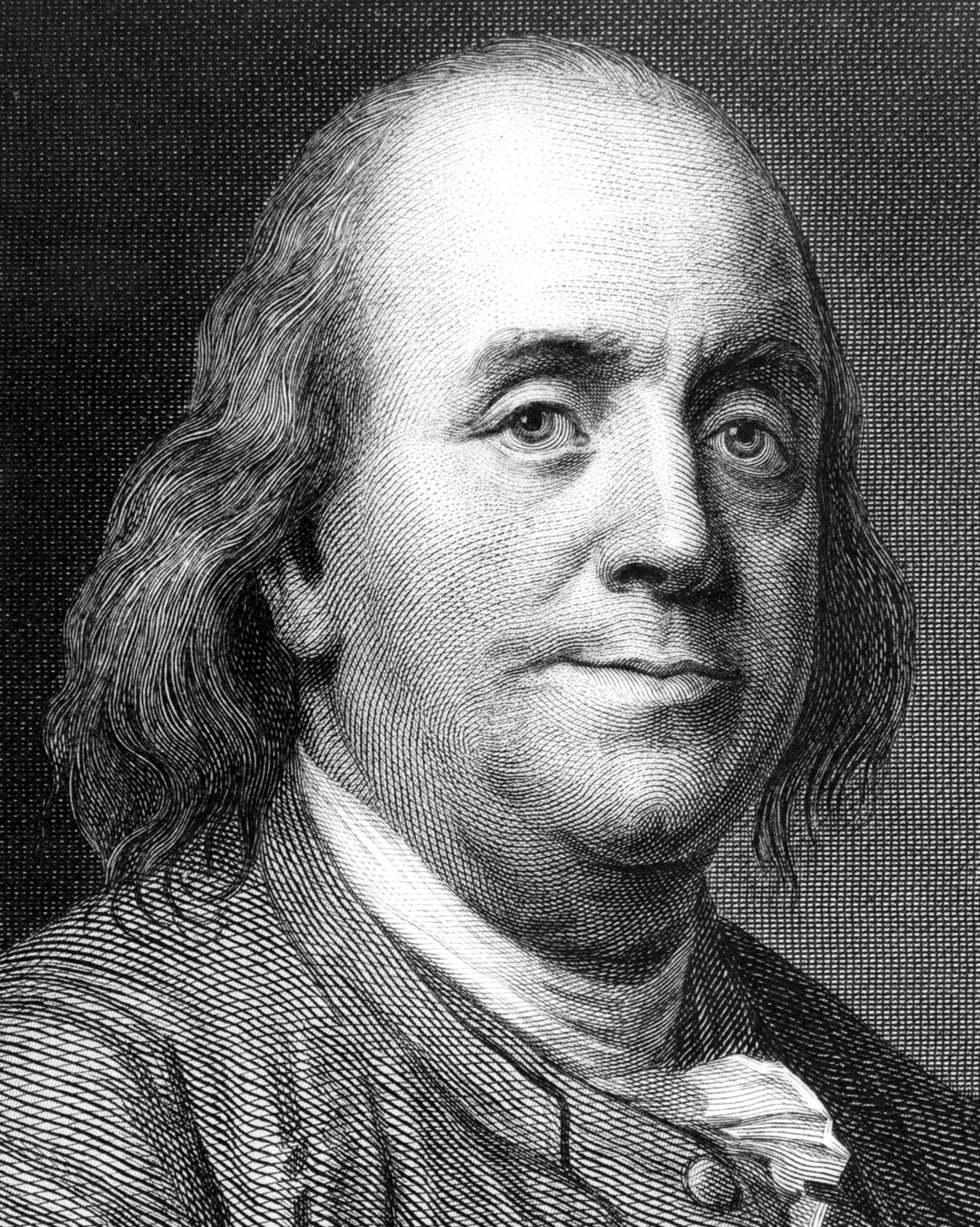
French Writer Albert Camus, Born 100 Years Ago Today

French Writer Albert Camus, Born 100 Years Ago Today

Find meaning. Distinguish melancholy from sadness. Go out for a walk. It doesn’t have to be a romantic walk in the park, spring at its most spectacular moment, flowers and smells and outstanding poetical imagery smoothly transferring you into another world. It doesn’t have to be a walk during which you’ll have multiple life epiphanies and discover meanings no other brain ever managed to encounter. Do not be afraid of spending quality time by yourself. Find meaning or don’t find meaning but ‘steal’ some time and give it freely and exclusively to your own self. Opt for privacy and solitude. That doesn’t make you antisocial or cause you to reject the rest of the world. But you need to breathe. And you need to be.—Albert Camus, Notebooks 1951-1959

One Hundred Years of Camus

French Writer Albert Camus, Born 100 Years Ago Today

French Writer Albert Camus, Born 100 Years Ago Today

There are few recent writers and thinkers in the West who have influenced me as much as Albert Camus, who was born a hundred years ago today in Dréan, Algeria. As a philosopher, I think he was far more of an “honest broker” than his countryman Jean-Paul Sartre; and his ideas have far more relevance to everyday human life than the English and European philosophers who spent the last century analyzing language. In fact, to my mind, there has been very little in Western philosophy that has moved me since Marcus Tullius Cicero’s Tusculan Disputations some two thousand years ago.

Central to his thinking is the Greek myth of Sisyphus. According to Wikipedia:

As a punishment for his trickery, King Sisyphus [of Corinth] was made to roll a huge boulder up a steep hill. Before he could reach the top, however, the massive stone would always roll back down, forcing him to begin again. The maddening nature of the punishment was reserved for King Sisyphus due to his hubristic belief that his cleverness surpassed that of Zeus himself. Zeus accordingly displayed his own cleverness by enchanting the boulder into rolling away from King Sisyphus before he reached the top which ended up consigning Sisyphus to an eternity of useless efforts and unending frustration. Thus it came to pass that pointless or interminable activities are sometimes described as Sisyphean.

What Camus does with this idea is interesting:

I leave Sisyphus at the foot of the mountain. One always finds one’s burden again. But Sisyphus teaches the higher fidelity that negates the gods and raises rocks. He too concludes that all is well. This universe henceforth without a master seems to him neither sterile nor futile. Each atom of that stone, each mineral flake of that night-filled mountain, in itself, forms a world. The struggle itself toward the heights is enough to fill a man’s heart. One must imagine Sisyphus happy.

His novels published during his lifetime—The Stranger (1942), The Plague (1947), and The Fall (1956)— are worth reading and re-reading, not only for their ideas, but for their style. I hope to read more of the author’s journalism, essays and Notebooks in the coming year. Also recommended are his plays, particularly Caligula (1938) and The Misunderstanding (1944).

I still remember a lecture at Dartmouth College almost half a century ago in which Professor Robert Benamou pointed out how, in The Stranger, the trial of Meursault for murder deliberately makes the accused appear to be habitually amoral and criminal by a clever use of the past imperfect tense—whereas in fact, the first half of the book shows a series of unique occurrences that by no means define his character.

The more of Camus I read, the more I think he is the only one of the Twentieth Century Existential philosophers who had anything to say to me.


Lydda

The (Former) Palestinian City of Lydda

The (Former) Palestinian City of Lydda (ca. 1900)

It looks idyllic, doesn’t it? And it was, until 1948. At that point, the newly formed Israel Defense Forces expelled the inhabitants of this peaceful city in which Jews and Palestinians had lived side by side for generations. In an article for the New Yorker published in the October 21, 2013 issue entitled “Lydda, 1948,” Ari Shavit writes:

But, looking straight ahead at Lydda, I wonder if peace is possible. Our side is clear: we had to come into the Lydda Valley and we had to take the Lydda Valley. There is no other home for us, and there was no other way. But the Arabs’ side, the Palestinian side, is equally clear: they cannot forget Lydda and they cannot forgive us for Lydda. You can argue that it is not the occupation of 1967 that is at the core of the Israel-Palestinian conflict, but the tragedy of 1948. It’s not only the settlements that are an obstacle to peace but the Palestinians’ yearning to return, one way or another, to Lydda and to dozens of other small towns and villages that vanished during one cataclysmic year. But the Jewish State cannot let them return. Israel has a right to live, and if Israel is to live it cannot resolve the Lydda issue. What is needed to make peace now between the two peoples of this land may prove more than humans can summon.

I sit here in West Los Angeles, within hailing distance of the Gabrielino Indians’ shrine at Kuruvungna Springs on the grounds of the present-day University High School. In June and July of this year, I vacationed in Iceland, where a resurgent Viking population drove out the Irish monks that had originally settled the island. (Now there is no trace of their ever having done so.) If all goes well, my next vacation will be in Peru, where the Spanish looted and destroyed the Inca Empire. Their criollo descendants still control the economy and the political power, leaving the Andean serranos and jungle tribes near the headwaters of the Amazon as second-class citizens.

Unfortunately, with its burgeoning West Bank settlements, Israel is continuing the process it began in 1948 of squeezing out, to the maximum extent possible, the indigenous Palestinian population. I cannot condone Israel’s settlement policy, especially with its Likud Party racist underpinnings; but I cannot afford to be too absolute because I realize there is a faint trace of blood on my own hands and on those of my forebears.


“A Frail Jetty Facing North”

Oedipus and Antigone

Oedipus and Antigone

What is unwisdom but the lusting after
Longevity: to be old and full of days!
For the vast and unremitting tide of years
Casts up to view more sorrowful things than joyful;
And as for pleasures, once beyond our prime,
They all drift out of reach, they are washed away.
And the same gaunt bailiff calls upon us all,
Summoning into Darkness, to those wards
Where is no music, dance, or marriage hymn
That soothes or gladdens. To the tenements of Death.

Not to be born is, past all yearning, best.
And second best is, having seen the light,
To return at once to deep oblivion.
When youth has gone, and the baseless dreams of youth,
What misery does not then jostle man’s elbow,
Join him as a companion, share his bread?
Betrayal, envy, calumny and bloodshed
Move in on him, and finally Old Age—
Infirm, despised Old Age—joins in his ruin,
The crowning taunt of his indignities.

So is it with that man, not just with me.
He seems like a frail jetty facing North
Whose pilings the waves batter from all quarters;
From where the sun comes up, from where it sets,
From freezing boreal regions, from below,
A whole winter of miseries now assails him,
Thrashes his sides and breaks over his head.—Sophocles, Oedipus at Colonus (Trans. Anthony Hecht)

Shooters, Shooters Everywhere

Shooter Paul Anthony Ciancia

Airport Shooter Paul Anthony Ciancia

Just as the Christmas shopping season is about to begin, people are newly afraid to go to shopping centers, airports, and other public places because of the growing trend of what the New Jersey police call “Suicide by Cop.” Some unbalanced person gets a cache of firearms with enough bullets to depopulate a mid-sized town and then goes on a shooting spree until he is felled by the police. In the meantime, a number of innocent people who just had the misfortune of being there at the time lie dead or wounded on the ground.

For this trend, we must thank the members of the National Rifle Association (NRA) for their desire to promote the sale of firearms to certifiable loonies and, in general, to deteriorate the quality of life in America. The pudgy-fingered, middle-aged members of the NRA are accessories to murder and mayhem, which they defend by referring to themselves as a militia per the Second Amendment. Since when are militias created to thin the population of innocent men, women, and children? I am sure that Wayne La Pierre and other gun whores have what they consider to be a perfectly legitimate argument. To which I counter thus: There was a time when this sort of thing didn’t happen. You gun fanciers made it possible and, in fact, easy. Therefore you are responsible.

After November 15, I avoid visiting shopping centers and other places where people congregate to buy gifts. I feel sorry for the so-called brick-and-mortar retail establishments because I feel that their influence on American culture will eventually wane. For years now, I have done virtually all my holiday shopping on the Internet. It is just not worth exposing Martine and myself to well-armed fruitcakes in large target-rich public places. And, besides, the parking has always been a major hassle.

So, is it possible that the shooters will put an end to most public manifestations of Christmas? That’s something to think about. After all, the trend is nowhere near dying down. If there’s one thing the United States is richly endowed with, it’s lunatics.

A Two-Tiered Highway System

Bus Accident in the Andes

Bus Accident in the Andes

Peru is a major destination for international tourism. It can also be a deadly one. While the nation has improved the highway system connecting such tourist magnets as Lima, Arequipa, Nazca, Cusco, and Arequipa, many large towns in the Andes are linked by roads that are unsafe. This is compounded by the fact that not only the highways, but also the long-distance bus lines, are also two-tiered. A point-to-point Cruz del Sur, Oltursa, or Ormeño bus will generally get you to your destination safely; but a second class bus plying the roads between such cities as Huancayo and Ayacucho takes much longer, picks up and drops off passengers whenever requested, and is likely to have an overtired driver who has been at the job for over twelve hours. When that is combined with night driving, inclement weather, and bad roads, the result can be a fatal accident such as the one illustrated above.

According to the Peru This Week website:

Congresswoman [Veronika] Mendoza has highlighted the inequality inherent in the consistent state of disrepair of roads in rural Peru. “It absolutely cannot be that only roads on tourist routes are in a good condition while the internal transport highways that Cusquenos use aren’t being cared for in the same way,” Mendoza stated, later adding that “We also have to consider the additional difficulty for transportation that the arrival of the rainy season will bring.”

Statistics released by Sutran, Peru’s national government land transport authority, reveal that road deaths have risen dramatically in the past year. According to El Comercio, deaths caused by road accidents from January to August 2013 have risen 36.5% compared with the same period last year.

Many American tourists are interested in following the line of the Andes and visiting the highland cities with their spectacular mountain views and native arts and crafts. While this is not impossible, there is considerable risk attached to such an itinerary.

Photo of Serrano Boy

Photo of Serrano Boy

Part of the problem is that, as in other countries that are racially divided, Peru suffers from racism against serranos and cholos, descendants of the Incas and other peoples inhabiting the Andes. We tend to think of the Andean tribal peoples as being the majority in Peru, but that is not the case: The narrow coastal desert zone holds the majority of the population as well as the economical and political power. The result is that the rural Andes are underserved by good roads and public transportation.

If and when my planned trip to Peru takes place, I will be careful to take the first class buses to major tourist destinations—at least until I have been able to scope out the situation myself.

Inspiration Point


At Will Rogers State Historical Park’s Inspiration Point

At Will Rogers State Historic Park’s Inspiration Point

Tomorrow is the 134th anniversary of Will Rogers’ birth. In commemoration, the Will Rogers Ranch Foundation had a birthday party for him, complete with music, an art show, and free cupcakes. After the music, which was mostly 1930s vintage (Will died in a 1935 plane crash in Alaska), Martine and I hiked up to the top of Inspiration Point. The trail is along a relatively easy fire road with a 116-foot gain, about 1.25 miles in length. From up top, you can see a broad swath of Los Angeles extending from downtown to Westwood to Santa Monica and south along Santa Monica Bay to the Palos Verdes Peninsula. You can see the bay behind me and a piece of Will’s polo field just to my right.

Will Rogers State Historic Park is the nicest stretch of greenery near where I live. For a $12.00 day use fee per car, one could watch a polo match (the season is over for now), barbecue some hamburgers, tour Will’s ranch house with a docent, loll aound on the lawn, or take a hike. The Inspiration Point hike is more in the nature of a stroll, but branching out from it is the Santa Monica Mountains Backbone Trail, linking Will Rogers with Topanga State Park, Malibu Creek State Park, and ultimately Point Mugu State Park in Ventura County—some forty miles up and down the ridge line of the Santa Monica Range.

Martine and I usually wind up visiting the Park three or four times a year. Even on the hottest days of summer, its proximity to the ocean usually means there is an occasional breeze. (Farther inland, there is no such relief.)

It was a good day.


Omigosh, What Have I Done?

Saint George by Dosso Dossi (ca. 1515)

Saint George by Dosso Dossi (ca. 1515)

Today Martine and I drove to the Getty Center and looked at the paintings, special exhibitions, and decorative arts. What particularly interested me was a painting by the Italian Dosso Dossi (born Giovanni di Niccolò de Luteri) around 1515 of Saint George immediately after slaying the dragon. It’s not an expression of joy or celebration by any means. Almost, it seems as if the saint is asking himself, “Oh my God, what have I done?” Perhaps some ancient knowledge of the dragon’s has been conveyed to the Roman soldier, and he foresees that the world will never be the same again.

The painting is a small one, measuring 27½ x 24 inches, and by no means in a dominant location in the exhibition hall. Still, the facial expression drew my attention immediately and held it. I would have liked to photograph it (without flash, of course), but the guard in that particular hall forbade it; so I noted the name of the artist and luckily found it on the Getty Center website, which describes the oil as follows:

Dosso Dossi depicted the aftermath of Saint George’s battle with the dragon, in which he wields the creature’s bloodied head and the lance broken during the fight. Under an emerging rainbow, the victorious patron saint of Ferrara, Italy, emerges from the darkness of the battle. Dossi poignantly expressed his subject’s recent emotional turmoil in the saint’s penetrating expression. He appears weary yet resolute in his triumph.

The symbols of Saint George’s Christian faith—crosses rendered in vivid strokes of red paint as though the blood of his opponent drips down its shaft—mark the weapon. The color of the crosses echoes the blood ringing the beast’s mouth and also symbolizes the blood of Christ.

I don’t altogether agree with Saint George appearing “weary but resolute in his triumph.” I guess each work of art speaks to different people in different ways.

There is a poem by Jorge Luis Borges entitled “Limits” which, to me, conveys the spirit of this painting:

There is a line of Verlaine I shall not recall again,
There is a nearby street forbidden to my step,
There is a mirror that has seen me for the last time,
There is a door I have shut until the end of the world.
Among the books in my library (I have them before me)
There are some I shall never reopen.
This summer I complete my fiftieth year:
Death reduces me incessantly.

(Translated by Anthony Kerrigan)

Can It Ever Get This Bad Here?

Mariano Melgarejo, Dictator of Brazil 1864-1871

Mariano Melgarejo, Dictator of Bolivia 1864-1871

I have just finished re-reading Eric Lawlor’s In Bolivia. In the process, I found a political leader who was probably the most incompetent, yet tyrannical ever to rule outside of North Korea. I am referring to General Mariano Melgarejo (1829-1871), the 18th President of Bolivia. Following are a few anecdotes about his rule—some of which may be apocryphal—but all with enough truth in them to be believable.

At a diplomatic function in 1867, the British ambassador refused to drink a glass of chicha, a cloudy but potent drink made of fermented maize. This incensed Melgarejo so much that he made him drink a whole bowl of liquid chocolate and then had him mounted ass-backwards and naked on a donkey and paraded three times around the Plaza Murillo, afterwards ordering him back to London. When the ambassador explained to Queen Victoria how he was treated, Her Majesty promptly ordered the British fleet to shell La Paz, the capital. Fortunately, someone in the Admiralty had the good sense to remind Her Majesty that Bolivia was a landlocked country, and that his ships’ projectiles could not penetrate that far. Whereupon, good Queen Vicky asked for a map of South America and drew a big letter “X” over it, declaring, “Bolivia does not exist.” In fact, diplomatic relations were not restored until 1910.

During the Franco-Prussian War in 1870, Melgarejo wished to come out on the side of Napoleon III and the Second Empire. Unfortunately, he had no idea where France was located, so he sent his army marching eastward. When some brave soul on his general staff commented that the army would have to cross the Atlantic Ocean, the generalissimo shot back, “Don’t be stupid! We’ll take a short cut through the brush!”

In another version of this story, which sounds equally apocryphal, the Bolivian army sent to relieve France ran into some rainy weather. As Lawlor tells it, “Melgarejo, jealous of his comfort, ordered his soldiers back to their barracks.” The rest is history: The Germans overran France and sent Napoleon III packing.

Lawlor continues:

Another told of Melgarejo returning to La Paz after touring the provinces to discover that a former president, Manuel Isidoro Belzú, had deposed him. Anticipating trouble, Belzú had filled Plaza Murillo with thousands of his followers. But Melgarejo was not cowed so easily. Drawing his pistol, he strode into the presidential palace and shot the interloper dead.

The gun still smoking in his hand, Melgarejo then addressed the mob. “Belzú is no more,” he said. “Who rules Bolivia now?” The crowd pondered the question but a moment. “Viva Melgarejo!,” it called back. “Viva la patria!

From the comfort of our couches, we can laugh at Bolivia; but remember it could get that bad over here. If some miserably ignorant Tea Partier ever got to be president, we would have to look away from Kim Kardashian’s ass for a second to consider how far we have sunk.

Frenchness

French Girl

French Girl

Now, “Frenchness” may seem to be an intolerably vague idea, and it smells of related notions like Volksgeist that have acquired a bad odor since ethnography became polluted with racism in the 1930s. Nonetheless, an idea may be valid even if it is vague and has been abused in the past. Frenchness exists….[I]t is a distinct cultural style; and it conveys a particular view of the world—a sense that life is hard, that you had better not have any illusions about selflessness in your fellow men, that clear-headedness and quick wit are necessary to protect what little you can extract from your surroundings, and that moral nicety will get you nowhere. Frenchness makes for ironic detachment. It tends to be negative and disabused. Unlike its Anglo-Saxon opposite, the Protestant ethic, it offers no formula for conquering the world. It is a defense strategy, well suited to an oppressed peasantry or an occupied country.—Robert Darnton, The Great Cat Massacre and Other Episodes in French Cultural History