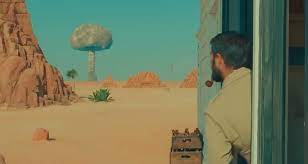
Hello Darkness, My Old Friend

Today Is the Darkest Day of the Year

In the Northern Hemisphere, where 90% of the Earth’s population lives, this is the Winter Solstice, the shortest day of the year. Conversely, in the Southern Hemisphere, it is the Summer Solstice, the longest day of the year. Apparently, it all has something to do with the way our planet is tilted on its axis, with us in the North being farther from the Sun.

Since I am retired, it doesn’t matter to me that it gets dark early. I no longer have to put up with December traffic on my way home from work in the dark.

And as for darkness, it really isn’t all that dark, With all the external building lighting, together with the numerous fairy lights from my computer, television, air purifier, microwave, and whatnot, I can usually make way way around my apartment in the wee hours of the morning without kicking the furniture with my bare feet.

As for the title of this post, it comes from Simon & Garfunkel’s hit song, “The Sound of Silence”:

Hello darkness, my old friend
I've come to talk with you again
Because a vision softly creeping
Left its seeds while I was sleeping
And the vision that was planted in my brain
Still remains
Within the sound of silence

What Are His Subhuman Powers?

One of 45’s New NFT Trading Cards: Only $99 Each!

It is ironic that so many people in America still see our last president not as he really is, but in the way he wants them to see him. His “Big Announcement” of last week was just another attempt to mulct the base by selling trading cards showing a set of highly idealized images of himself as a superhero.

I would like to think that the man’s powers are fading imperceptibly, from week to week, from a figure that purported to be a savior of the forgotten Americans of the Red States, to an extremely high maintenance liability known for shafting everyone who ever cared for him.

Instead of shelling out big money to support the man, I present to you a more realistic image of the 45th President of the U.S., who still thinks he’s President:

Statue of Donald J. Trump in New York

These images don’t cost no $99 either!

Watching Sports on TV

Messi and Teammates Celebrating After World Cup Victory

I woke up too late on Sunday morning to watch all of the Argentina-France World Cup Final. But I did see the second half, followed by the two overtime periods and the penalty kicks. And that hour and a half or so was the most exciting sports event I ever saw on television.

Now that pretty much everyone has weighed in on the game and Lionel Messi’s triumph and Kylian Mbappé’s stoic loss, I thought I would say a few words about the act of watching sports event. I am uniquely qualified inasmuch as I rarely watch sports events and have no clearcut team identification in any sport. Moreover, when I was growing up, my father would get so teed off when one of the Cleveland teams lost—and in those years they lost with amazing frequency—that I would have to go into hiding to avoid the paternal wrath.

It is only recently that I have come to love watching two types of sports events which, coincidentally, occur at four-year intervals. I am referring to World Cup Football (men and women) and the Summer Olympics. (The Winter Olympics—Meh!.) I have little interest in baseball, which typically involves a few minutes (if any) of intense action stretched out over several hours. American football, to me, is characterized by lots of starts and stops, followed after the so-called two-minute warning, by another hour or so of play.

Basketball has a lot of action, but there’s a lot of starts and stops there, too, as if the sport were devised with advertisers in mind. As for hockey, I find it too hard to follow the puck across the ice. All I see is the mayhem.

Only soccer football has continuous action, except for times when a player is injured or pretends to be injured. The final on Sunday built up to a pitch of excitement such that I have never experienced with any other sport. There was so much skill spread among so many players that it was a pity that someone had to lose. I would have been equally happy for either France or Argentina to win the game.

RIP P-22

Mountain Lion P-22 in Better Days

He could not express what he felt But when Mountain Lion P-22 was captured and euthanized a couple of days ago, Los Angeles suddenly woke up to the fact that it had lost a hero of sorts. He had survived for years on the fringes of urban civilization, feasting on kitties and obnoxious Yorkies. He had name recognition. In the end, though, it all caught up with him.

According to CNN:

The department said the “compassionate euthanasia” was unanimously recommended by the medical team at San Diego Zoo Safari Park and conducted under general anesthesia.

P-22 was given an “extensive evaluation” which “showed significant trauma to the mountain lion’s head, right eye and internal organs, confirming the suspicion of recent injury, such as a vehicle strike,” said the department. “The trauma to his internal organs would require invasive surgical repair.”

The 12-year-old mountain lion also had “significant pre-existing illnesses, including irreversible kidney disease, chronic weight loss, extensive parasitic skin infection over his entire body and localized arthritis,” according to the release.

He was in poor health overall and “may also have had additional underlying conditions not yet fully characterized by diagnostics,” said the department.

Over the years, we kept hearing about P-22’s exploits, how he was suddenly seen in somebody’s back yard or how he callously chomped on Fluffy. The point is: He survived under difficult circumstances. It’s a pity they felt they had to kill him: They should have put him out to stud.

The People Under the Bridge

The Homeless Encampment Under the I-10 Bridge Over Centinela Avenue in West L.A.

There is no monolithic group which falls under the term “homeless.” It includes a wide variety of people, some of whom are in transition to a better life, some of whom are out of their gourds, some of whom want to be able to take drugs and drink excessively without police interference, and some of whom are psychotic criminals.

In Los Angeles, they are begging for “spare change” by every freeway onramp and in front of virtually every convenience store. Many of them have sad stories to tell, some of which are partially true. They stretch out on bus seats and commuter trains and ride back and forth all day, occasionally hassling the other riders. The police are reluctant to deal with them because so many are vectors of communicable diseases. (I once worked with a secretary who was married to a U.S. Marshal who contracted tuberculosis from escorting a prisoner.)

Unlike the terminally Woke, my attitude toward the homeless is not: “Oh, the poor homeless!” In my mind, I separate the ones who are capable of being re-housed and following rules regarding behavior, booze, and drugs from those who actually prefer to live and die on the streets. It is my belief that most of the homeless fall into this latter category. I regard them as intractable bums who should be locked up.

Most bum encampments are surrounded by piles of trash of no earthly use to anyone. Martine and I have seen some bums emptying trash cans into the street or even setting fire to them. I am not inclined to be gentle with such rapscallions. Unless these sociopathic types are incarcerated, setting up a tent on the sidewalk will become an attractive alternative to anyone who is not interested in anything but destroying their minds and bodies.

Overreach

It’s a clear case of overreach. Having proven himself to be a genius in many fields, Elon Musk managed to endanger his reputation by inserting himself into a field in which he does not appear to have any knowledge or ability. The South African billionaire spent $44 billion buying Twitter, whereupon he set about to trash his investment and (perhaps) his reputation by his indecisiveness.

I am not myself a user of Twitter, which I see primarily as a tool for trolls. While it is tempting to lash out in a few pungent words with things which shouldn’t have been ought to have been said, my preference is for a more prolix medium. This has the advantage of sidestepping hateful Tweets that say more about the Tweeter than the Tweetee. I guess you might say I see myself as more of a Woofer than a Tweeter.

Musk may possibly undo some of the harm he has done to Twitter, but it will take time. Meanwhile, I wouldn’t like to be in his shoes—billionaire or not.

The Factions of the Hippodrome

Of late, I have become fascinated by literary and historical antecedents of our present divided political situation. In the United States, we have the Blue States versus the Red States. In a post from December 9 when I wrote about Charles Dickens describing the Blues and the Buffs at a parliamentary election at Eatanswill. One of the most amazing tales on the subject comes from Edward Gibbon’s The Decline and Fall of the Roman Empire when he describes the racing factions of the Hippodrome during the reign of Justinian in the 6th Century A.D. in Constantinople:

Constantinople adopted the follies, though not the virtues, of ancient Rome; and the same factions which had agitated the circus, raged with redoubled fury in the hippodrome. Under the reign of Anastasius, this popular frenzy was inflamed by religious zeal; and the greens, who had treacherously concealed stones and daggers under baskets of fruit, massacred, at a solemn festival, three thousand of their blue adversaries. From this capital, the pestilence was diffused into the provinces and cities of the East, and the sportive distinction of two colors produced two strong and irreconcilable factions, which shook the foundations of a feeble government. The popular dissensions, founded on the most serious interest, or holy pretence, have scarcely equalled the obstinacy of this wanton discord, which invaded the peace of families, divided friends and brothers, and tempted the female sex, though seldom seen in the circus, to espouse the inclinations of their lovers, or to contradict the wishes of their husbands. Every law, either human or divine, was trampled under foot, and as long as the party was successful, its deluded followers appeared careless of private distress or public calamity. The license, without the freedom, of democracy, was revived at Antioch and Constantinople, and the support of a faction became necessary to every candidate for civil or ecclesiastical honors. A secret attachment to the family or sect of Anastasius was imputed to the greens; the blues were zealously devoted to the cause of orthodoxy and Justinian, and their grateful patron protected, above five years, the disorders of a faction, whose seasonable tumults overawed the palace, the senate, and the capitals of the East. Insolent with royal favor, the blues affected to strike terror by a peculiar and Barbaric dress, the long hair of the Huns, their close sleeves and ample garments, a lofty step, and a sonorous voice. In the day they concealed their two-edged poniards, but in the night they boldly assembled in arms, and in numerous bands, prepared for every act of violence and rapine. Their adversaries of the green faction, or even inoffensive citizens, were stripped and often murdered by these nocturnal robbers, and it became dangerous to wear any gold buttons or girdles, or to appear at a late hour in the streets of a peaceful capital. A daring spirit, rising with impunity, proceeded to violate the safeguard of private houses; and fire was employed to facilitate the attack, or to conceal the crimes of these factious rioters. No place was safe or sacred from their depredations; to gratify either avarice or revenge, they profusely spilt the blood of the innocent; churches and altars were polluted by atrocious murders; and it was the boast of the assassins, that their dexterity could always inflict a mortal wound with a single stroke of their dagger. The dissolute youth of Constantinople adopted the blue livery of disorder; the laws were silent, and the bonds of society were relaxed: creditors were compelled to resign their obligations; judges to reverse their sentence; masters to enfranchise their slaves; fathers to supply the extravagance of their children; noble matrons were prostituted to the lust of their servants; beautiful boys were torn from the arms of their parents; and wives, unless they preferred a voluntary death, were ravished in the presence of their husbands. The despair of the greens, who were persecuted by their enemies, and deserted by the magistrates, assumed the privilege of defence, perhaps of retaliation; but those who survived the combat were dragged to execution, and the unhappy fugitives, escaping to woods and caverns, preyed without mercy on the society from whence they were expelled. Those ministers of justice who had courage to punish the crimes, and to brave the resentment, of the blues, became the victims of their indiscreet zeal; a præfect of Constantinople fled for refuge to the holy sepulchre, a count of the East was ignominiously whipped, and a governor of Cilicia was hanged, by the order of Theodora, on the tomb of two assassins whom he had condemned for the murder of his groom, and a daring attack upon his own life. An aspiring candidate may be tempted to build his greatness on the public confusion, but it is the interest as well as duty of a sovereign to maintain the authority of the laws. The first edict of Justinian, which was often repeated, and sometimes executed, announced his firm resolution to support the innocent, and to chastise the guilty, of every denomination and color. Yet the balance of justice was still inclined in favor of the blue faction, by the secret affection, the habits, and the fears of the emperor; his equity, after an apparent struggle, submitted, without reluctance, to the implacable passions of Theodora, and the empress never forgot, or forgave, the injuries of the comedian. At the accession of the younger Justin, the proclamation of equal and rigorous justice indirectly condemned the partiality of the former reign. “Ye blues, Justinian is no more! ye greens, he is still alive!”

A sedition, which almost laid Constantinople in ashes, was excited by the mutual hatred and momentary reconciliation of the two factions. In the fifth year of his reign, Justinian celebrated the festival of the ides of January; the games were incessantly disturbed by the clamorous discontent of the greens: till the twenty-second race, the emperor maintained his silent gravity; at length, yielding to his impatience, he condescended to hold, in abrupt sentences, and by the voice of a crier, the most singular dialogue that ever passed between a prince and his subjects. Their first complaints were respectful and modest; they accused the subordinate ministers of oppression, and proclaimed their wishes for the long life and victory of the emperor. “Be patient and attentive, ye insolent railers!” exclaimed Justinian; “be mute, ye Jews, Samaritans, and Manichaeans!” The greens still attempted to awaken his compassion. “We are poor, we are innocent, we are injured, we dare not pass through the streets: a general persecution is exercised against our name and color. Let us die, O emperor! but let us die by your command, and for your service!” But the repetition of partial and passionate invectives degraded, in their eyes, the majesty of the purple; they renounced allegiance to the prince who refused justice to his people; lamented that the father of Justinian had been born; and branded his son with the opprobrious names of a homicide, an ass, and a perjured tyrant. “Do you despise your lives?” cried the indignant monarch: the blues rose with fury from their seats; their hostile clamors thundered in the hippodrome; and their adversaries, deserting the unequal contest spread terror and despair through the streets of Constantinople. At this dangerous moment, seven notorious assassins of both factions, who had been condemned by the præfect, were carried round the city, and afterwards transported to the place of execution in the suburb of Pera. Four were immediately beheaded; a fifth was hanged: but when the same punishment was inflicted on the remaining two, the rope broke, they fell alive to the ground, the populace applauded their escape, and the monks of St. Conon, issuing from the neighboring convent, conveyed them in a boat to the sanctuary of the church. As one of these criminals was of the blue, and the other of the green livery, the two factions were equally provoked by the cruelty of their oppressor, or the ingratitude of their patron; and a short truce was concluded till they had delivered their prisoners and satisfied their revenge. The palace of the præfect, who withstood the seditious torrent, was instantly burnt, his officers and guards were massacred, the prisons were forced open, and freedom was restored to those who could only use it for the public destruction. A military force, which had been despatched to the aid of the civil magistrate, was fiercely encountered by an armed multitude, whose numbers and boldness continually increased; and the Heruli, the wildest Barbarians in the service of the empire, overturned the priests and their relics, which, from a pious motive, had been rashly interposed to separate the bloody conflict. The tumult was exasperated by this sacrilege, the people fought with enthusiasm in the cause of God; the women, from the roofs and windows, showered stones on the heads of the soldiers, who darted fire brands against the houses; and the various flames, which had been kindled by the hands of citizens and strangers, spread without control over the face of the city. The conflagration involved the cathedral of St. Sophia, the baths of Zeuxippus, a part of the palace, from the first entrance to the altar of Mars, and the long portico from the palace to the forum of Constantine: a large hospital, with the sick patients, was consumed; many churches and stately edifices were destroyed and an immense treasure of gold and silver was either melted or lost. From such scenes of horror and distress, the wise and wealthy citizens escaped over the Bosphorus to the Asiatic side; and during five days Constantinople was abandoned to the factions, whose watchword, Nika, vanquish! has given a name to this memorable sedition.

An Enduring Masterpiece

Sam Weller and His Father Tony

Although I first read Charles Dickens’s The Pickwick Papers in the late 1960s, a number of its characters have remained fresh in my memory. Aside from Mr Pickwick himself, there was Sam Weller and his father Tony, Job Trotter, Sergeant Buzfuz, and Angelo Cyrus Bantam. I have always regarded this book as one of Dickens’s best, though I had the feeling in the back of my mind that I would not think so upon re-reading it.

Fortunately, I was wrong. I loved the book—again. It is one of those long picaresque shaggy-dog stories that sags in some places, but rises to incredible heights during such set pieces as the parliamentary election at Eatanswill, the trial of Mr Pickwick for breach of promise, the time spent in the Fleet debtors’ prison, and the Christmas festivities at Dingley Dell.

The book starts slowly with Pickwick and his three associates (Nathaniel Winkle, Augustus Snodgrass, and Tracy Tupman) as the main characters. Before long, however, we find that the real character of interest is Sam Weller, Pickwick’s manservant. Despite coming from the lower classes, his native wit is considerable, and before long he leaves everyone else in the shade. And he is 100% pure English: He almost defines Englishness.

As the book grinds to a halt, Dickens gives us a delirious ending:

Let us leave our old friend in one of those moments of unmixed happiness, of which, if we seek them, there are ever some, to cheer our transitory existence here. There are dark shadows on the earth, but its lights are stronger in the contrast. Some men, like bats or owls, have better eyes for the darkness than for the light. We, who have no such optical powers, are better pleased to take our last parting look at the visionary companions of many solitary hours, when the brief sunshine of the world is blazing full upon them.

In the end, we have been mightily entertained. There has been much humor and—a rarity in Dickens—very little extreme pathos.

Yes, indeed, this is still one of the great books!

Tsukioka Yoshitoshi

Tsukioka Yoshitoshi’s “The Story of Otomi and Yosaburo” (1885)

His working life spanned a period of cataclysmic change in Japanese culture. Japanese print maker Tsukioka Yoshitoshi (1839-1892) started out in the Edo Period before Commodore Perry opened his island nation to the Western world, and died during the Meiji Restoration, which saw Japan being increasingly influenced by American and European ways. Yoshitoshi himself was a traditionalist in a rapidly changing world.

The woodblock art form in which he worked was referred to as ukiyo-e, commonly translated as “pictures of the floating world.” According to John Fiorillo:

Yoshitoshi was arguably the finest ukiyo-e print designer of the late nineteenth century. His figures were vividly realized and invested with a realism that relied, not insignificantly, on superb drawing ability. As he broke away from stagnating convention, Yoshitoshi’s seemingly unfettered imagination found expression in many subjects: history, folklore, legend, warrior tales, women, daily life, and old and new customs. He was uniquely gifted as a visual artist and a connoisseur of stories about Japanese and Chinese history and legend. By bridging the transition from the feudal society of the Edo period to the enlightenment restoration of the Meiji period, he succeeded in revitalizing ukiyo-e in unexpected ways.

“A Young Woman from the Kansei Period Playing with Her Cat” (1888)

This print is from a series entitled Thirty-two types of Beauty in Daily Life (Fūzoku sanjūnisō).

“A Glimpse of the Moon” (1886)

This image is from a famous old tale. According to Scholten Japanese Art:

This composition presents a combination of stories and references. The tale originates from chapter 21 of the 14th-century historical epic Chronicle of Great Peace (Taiheiki). Lord Ko Moronao (d. 1351), a chief retainer of the Shogun Ashikaga Takauji (1305-1358), hears of a great beauty who happens to be the wife of another shogunal official, En’ya Takasada. Moronao arranges to see her after a bath and, even though she was without the feminine trappings of splendid robes and make-up, finds her irresistible. In an effort to take her for himself, he accuses En’ya of treason. But in a twist of fate, En’ya tries to flee and Moronao has the official and his family, including his wife, killed.

I decided to take a look at Yoshitoshi because he is not well known in the West, except to art specialists. His use of line and color in pursuit of traditional Japanese subjects during a period of transition makes him a great master in my book.

Beware: Raindrops!

Rain Predicted for Los Angeles! Flee to the Hills!

The dire warnings have been appearing on the news for several days now: Rain is coming to Los Angeles. The city of brown lawns (watering of which is forbidden) is about to entertain a soaker. In a city unused to rain, the water that turns everything green and fills the reservoirs is also a present danger.

For one thing, drivers don’t seem to be able to modify their motoring to accommodate wet roads and flooded street corners. (What, I wonder, would they do in the icy streets of Cleveland?) I always slow down when it rains. It helps that my vehicle is an all-wheel-drive Subaru Forester.

Weather forecasting in a region of mountain ranges, valleys, and dry rivers with concrete banks is a chancy thing. Undoubtedly, some areas will get several inches of rain—mostly in the mountains; but in our neck of the woods, we rarely get as much as the news forecasts. At least in the last several decades, there is been a palpable drying trend. I remember some rainstorms of the 1970s and 1980s that did significant damage and dumped large amounts of precipitation.

I actually like the rain—even when it tends to fall on the weekends. Now that I’m retired, that’s no longer an issue.