Wackadoodle Warriors

Ammon Bundy and His Motley Crüe

Ammon Bundy and His Motley Crüe

For several weeks now, we have been regaled with stories about the Men of Malheur (French for “unhappiness”) holed up with their leader, Ammon Bundy at an Oregon federal wildlife refuge. They are dressed in camouflage, armed to the teeth, and muy macho. The fact that  cynical Americans have been mailing them dildos and sexual lubricants suggests another view of these wackadoodle warriors.

All of them are equipped with copies of the U.S. Constitution. Considering their educational level, however, it might as well be Ludwig Wittgenstein’s Tractatus Logico-Philosophicus. I rather suspect that most are hoping to fall in a hail of bullets defending their beliefs, whatever they may be. Fortunately, the Feds are willing to pick them off one by one as the protest decays, which it gives every sign of doing. Eventually, it will all end up in court, with the defendants angry and confused as to why they are being picked on.

The Second Amendment of the Constitution states: “A well regulated Militia, being necessary to the security of a free State, the right of the people to keep and bear Arms, shall not be infringed.” The resemblance of these bozos to a “well regulated militia” is at best highly speculative.

Beyond the Law?

Enron’s Ken Lay—Convicted But Died Before Sentencing

Enron’s Ken Lay—Convicted But Died Before Sentencing

There is one class of people who are almost untouchable when they commit economic crimes while at the helm of their companies: I am referring to Chief Executive Officers (CEOs), to which I might also add Chief Financial Officers (CFOs) and Chief Operating Officers (COOs). To date, there has been no major prosecutions of the bank and securities firms CEOs who were responsible for the Great Recession of 2008—despite the fact that they, in many cases, knowingly put together subprime mortgage securities backed (essentially) by hope and pixie dust.

There have been cases of CEOs who have served time (or are serving time). These include:

  1. Jeff Skilling, Enron
  2. Martha Stewart, Martha Stewart Living Omnimedia
  3. Sanjay Kumar, Computer Associates
  4. Dennis Kozlowski, Tyco
  5. John Rigas, Adelphia
  6. Martin L. Grass, Rite-Aid
  7. Joseph Nacchio, Qwest
  8. Walter Forbes, Cendant
  9. Richard Scrushy, HealthSouth
  10. Bernie Ebbers, WorldCom

Ken Lay of Enron would have joined that list, but he died of a heart attack before sentencing. For more information about the above, click here.

There are class action suits, but these have a way of punishing the innocent and leaving the guilty scot-free. For one thing, it is the shareholders who suffer, not the executives. In many cases, it is the shareholders who have  initiated the cases and suffer from the resulting devaluation of their securities. And probably the biggest beneficiaries are law firms specializing in class action cases. These boys make out like bandits.

Whether CEOs wind up doing the perp walk is not the main point. I would be happy to see blame ascribed and large fines levied.

When Terrorists Control the News Cycle

It’s All a Matter of Timing

It’s All a Matter of Timing

I first discovered this during the Iraq war starting around 8-10 years ago. The forerunner of ISIS, Abu Musab al-Zarqawi’s al-Qaida in Iraq, never had to go all out against their American enemies: One attack every few days would keep the news cycle forever buzzing. By the time the story was ready to go to an inner page, there would be a new improvised explosive device (IED) that caused American casualties, and the fearmongering would start up again at full volume.

The bombing in Jakarta was, I really believe, such an incident. Of the seven deaths, five were up the suicide bombers themselves, so the butcher’s bill was negligible. Or it could be as little as the guy in France who attacked a police station with a meat cleaver, only to be met by a hail of bullets from the flics.

Key to this strategy is (1) maintaining a high level of fear (and ISIS knows that Americans are a bunch of scaredy cats) and (2) repeat every couple of days, preferably in a new part of the world. Next time, maybe Iceland or Paraguay or Bermuda. Make people think the ISIS baddies are everywhere and all-powerful. That serves as a potent recruiting aid to bring in new fighters and their molls, especially since there are so many millions of young suburbanites around the world who have little or no moral compass.

I think the best way to combat this strategy is to steer clear of the news: Don’t let it control your life. And feel free to sneer.

What, No Hajj?

Saudi Arabia Has Halted All Flights To/From Iran

Saudi Arabia Has Halted All Flights To/From Iran

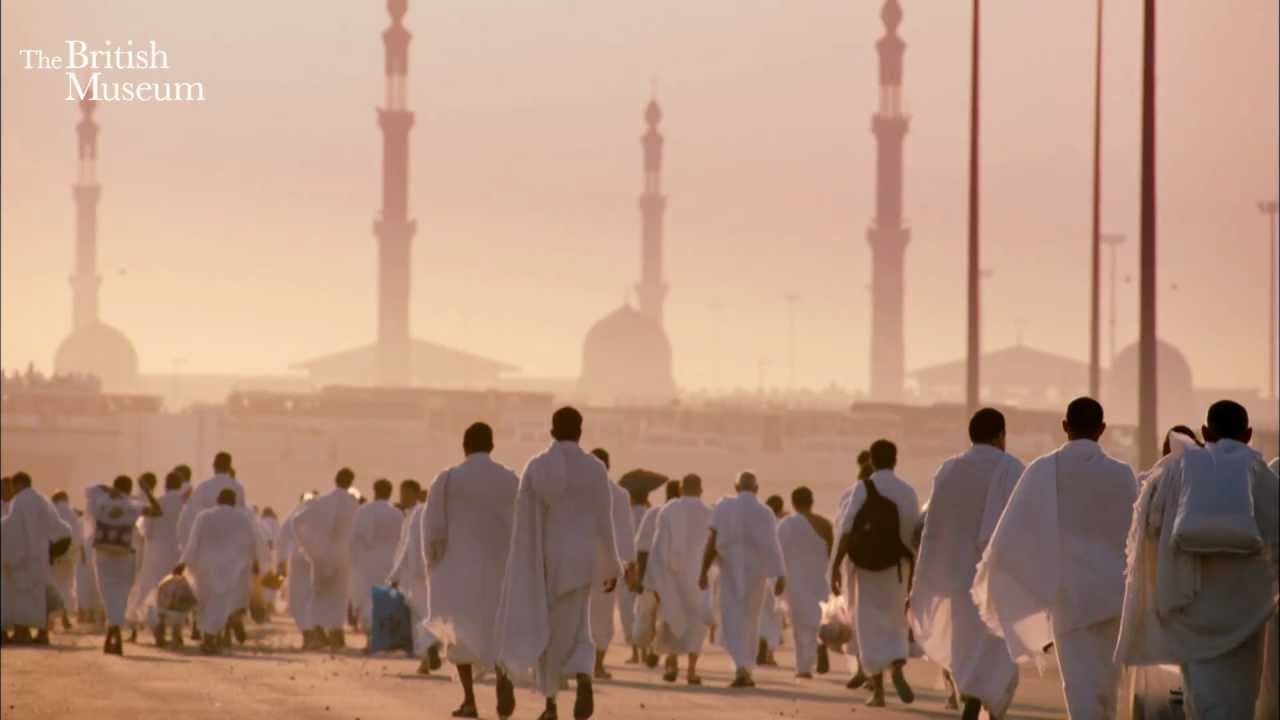
It is a mandatory religious duty for all Muslims, at least once in their life, to make a pilgrimage to Mecca. Now that Saudi Arabia and Iran are on the outs, the Saudis have forbidden all flights linking their two countries. This alone has the potential of leading to further nastiness. Admittedly, Iranian pilgrims can still go by boat (and risk being robbed by Somali pirates) or by land (and risk being robbed by bandits).

I cannot help but think that the real reason for all this nastiness is the conflict in Yemen between Shi’a rebels (called the Houthis) and the Saudis and their allies. In the end, the Saudis may think now is the time to rid themselves of the Shi’a menace once and for all.

Now what is this Sunni/Shi’a split all about? According to the BBC:

In early Islamic history, the Shia were a movement – literally “Shiat Ali” or the “Party of Ali”. They claimed that Ali was the rightful successor to the Prophet Muhammad as leader (imam) of the Muslim community following his death in 632.

Ali was assassinated in 661 after a five-year caliphate that was marred by civil war. His sons, Hassan and Hussein, were denied what they thought was their legitimate right of accession to the caliphate.

Hassan is believed to have been poisoned in 680 by Muawiyah, the first caliph of the Sunni Umayyad dynasty, while Hussein was killed on the battlefield by the Umayyads in 681. These events gave rise to the Shia concept of martyrdom and the rituals of grieving.

There are three main branches of Shia Islam today—the Zaidis, Ismailis and Ithna Asharis (Twelvers or Imamis). The Ithna Asharis are the largest group and believe that Muhammad’s religious leadership, spiritual authority and divine guidance were passed on to 12 of his descendants, beginning with Ali, Hassan and Hussein.

The 12th Imam, Muhammad al-Mahdi, is said to have disappeared from a cave below a mosque in 878. Ithna Asharis believe the so-called “awaited imam” did not die and will return at the end of time to restore justice on earth.

In other words, the roots of the conflict go all the way back 1,400 years and show no signs of slackening.

It’s a sobering thought that we, who cannot even pronounce the name “Muawiyah,” may be affected in some way by this stramash.

The Intimate Enemy

Sunni Anti-Shi’a Propaganda

Sunni Anti-Shi’a Propaganda

In a 1997 lecture entitled “The Origin of Satan in Christian Tradition,” Religious Historian Elaine Pagels writes about how the character of Satan morphed over the centuries from a messenger of God’s to His enemy:

So there are many stories about Satan’s origin; but what struck me about them is this. Diverse as they are, whichever version you choose, they all agree on one thing: that this greatest and most dangerous enemy did not originate (as we might have expected) as an outsider, an alien, or stranger. Satan is no distant enemy: on the contrary, he is an “intimate enemy”—one’s closest relative, older brother, or trusted colleague—the kind of person on whose goodwill and loyalty the well-being of family and society depends, but one who turns unexpectedly hostile, jealous, and dangerous.

So it is not the total outsider whom we hate, but the heretic—one whose belief is close to ours except on some details which to some will seem trivial. Such were the Arians and Nestorians in the early days of the Christian Church. And such are the Sunni and Shi’a over the last 1,400 years.

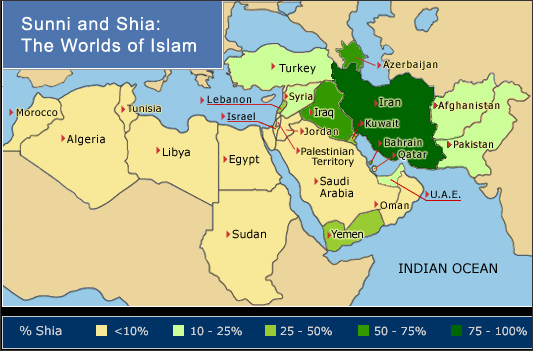
With the execution of a prominent Shi’a cleric (Sheikh Nimr al-Nimr), Saudi Arabia has earned the undying hatred of Iran. For many centuries, there has been a small Shi’a minority in the Eastern portion of the Arabian peninsula, and the executed sheikh was their religious leader. Shown below is a map illustrating the distribution of the two sects in the Middle East:

Percent Shi’a in the Middle East and North Africa

Percent Shi’a in the Middle East and North Africa

This comes at a bad time for Saudi Arabia, as the sharp decline in the price of oil is about to have dire consequences in the ability of the kingdom to provide benefits for its favored citizens. The price of gas has jumped 50%, water and electricity are going up, and the country’s safety net is in danger.

So what should we do? I think this is a good time to put our hands firmly in our pockets and start whistling until we see who wins, King Kong or the Dinosaur.

Green Zones of the Future?

Is This What the Pentagon Wants?

Is This What the Pentagon Really Wants?

I love listening to the Republican Presidential Candidates for 2016 talk about foreign policy. All agree that Barack Obama is a “pussy” and that what we need is to destroy ISIS. But do they want to send in our troops and open new Green Zones in Syria and Northern Iraq? Urm, well, not really. Although Ahmed Chalabi is no longer around to say that we would be greeted with candy and flowers, I am sure that there are some Pentagon planners who would love to see an expansion of their powers, despite the cost.

Can the United States effectively wage war in an area where it doesn’t know the language, the culture, or the players involved? I myself think that all our direct efforts would be foredoomed to failure. Perhaps we can seal off parts of the country and reserve them for tennis courts, driving ranges, and chain burger restaurants for our boys and girls in uniform. But haven’t we already done that? And with what results?

As much as we love seeing ourselves as the mighty victors of World War Two, we’ve done precious little to add to our reputation since then. But, heaven knows, we keep on trying, piling up failure upon spectacular failure. The only thing our politicians can hope for is that the voters have a short memory and an even shorter fuse.

In the end, what we are doing in the Middle East right now is probably the right thing. ISIS will eventually collapse on its own. Isn’t it really quite stupid to build a caliphate on a bunch of foreign mercenaries, some of them not even Muslim, recruited through social media?


The United States of Fear

Kalashnikov AK-47

Kalashnikov AK-47

When we won the Second World War, we changed as a people. It’s like the gunfighter who’s gained such a fearsome reputation that everyone comes gunning for him. And, indeed, as a nation we got our asses kicked in Korea, Viet Nam, Lebanon, Iraq, Afghanistan, Somalia, Libya, and a number of other places we never heard of before our famous victory. (Besides, truth to tell, the Second World War was more of a Russian victory than one for America and Britain: Stalin did far more to destroy the German war machine than we did.)

Sometime later, after we clumsily started being the world’s policeman, we discovered that we were not liked. For me, it all started in Caracas, Venezuela, in May 1958 when our Vice President, Richard M. Nixon, was met by an angry mob which attacked his limo. “How could that be?” I thought as a grade school student at the time. “Aren’t we the good guys?”

Then, shortly after I returned from Iceland in September 2001, the World Trade Center and the Pentagon were attacked by Al Qaida terrorists. Then we learned there are all these Muslims out to get us, people who revered the terrorists and decided to name their sons Osama. As recently as yesterday, I heard a Syrian refugee blame Washington and Moscow for destroying his country—as if ISIS, Al Qaida, and the Syrian Baath Party had no part to play in it.

With the world turning against us, we started to look fearfully at Afro-Americans and Mexican immigrants (whom Trump calls “rapists,” except for a handful of good ones). Among our own kind, there were these strange homosexuals who started attacking our cherished institution of marriage.

Well, I guess we should all buy guns, the more the better. Let’s all build ourselves a fort and blow the heads off anyone who crosses its perimeter. Or if we’re feeling particularly depressed, maybe we could shoot up our old school or our workplace. How dare anyone criticize us? After all, aren’t we the good guys?

Not any more we aren’t.


The Race to Germanistan

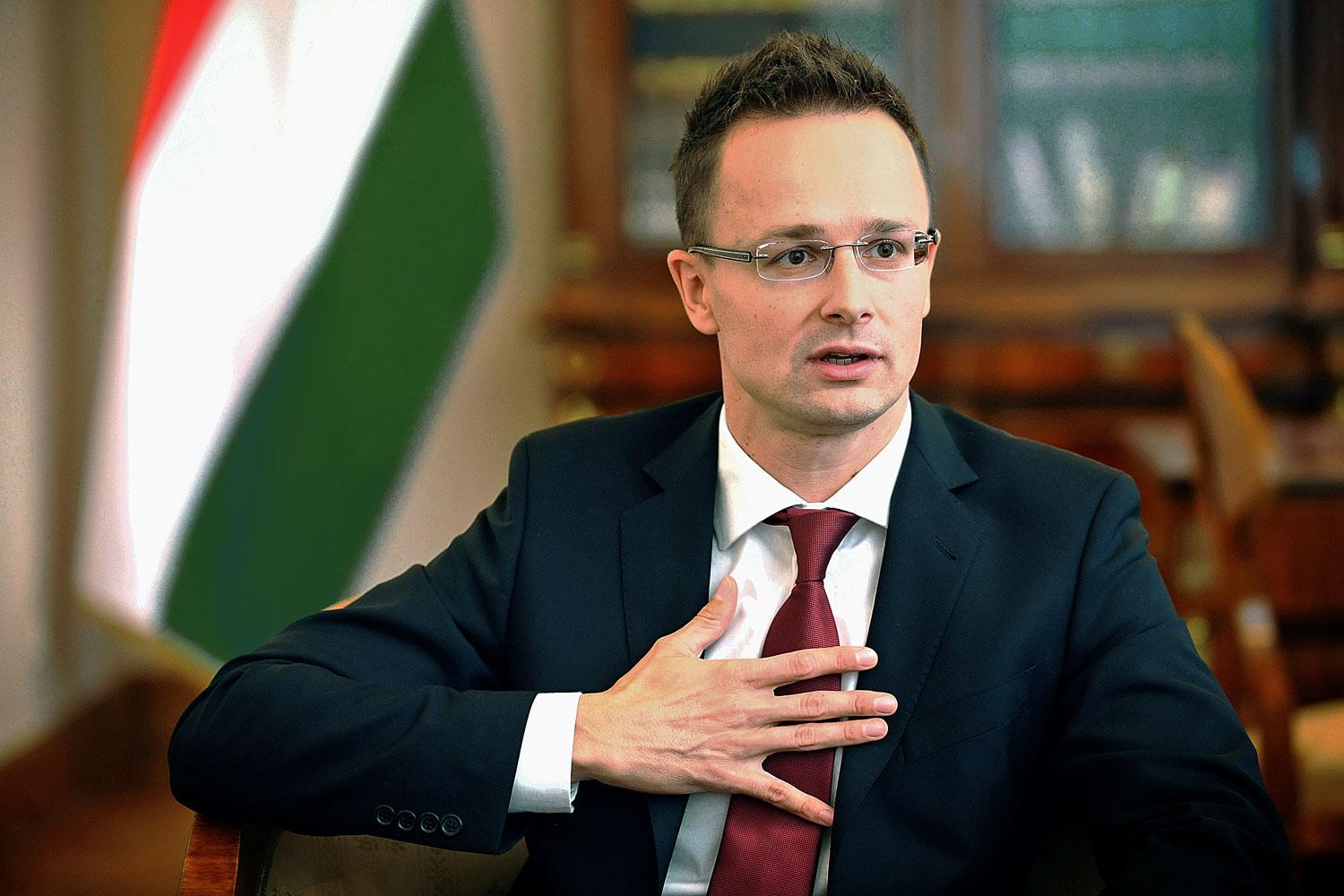
Hungarian Minister of Foreign Affairs Péter Szijjártó

Hungarian Minister of Foreign Affairs Péter Szijjártó

As you may know, I am sympathetic with Hungary’s decision to close its borders to the prospect of uncontrolled mass migration. In doing so, it took a lot of heat from the European Community as well as the U.N. For some quixotic reason, Germany’s Angela Merkel has opened the doors wide to hundreds of thousands of immigrants from the Middle East and North Africa. (Whether the German people will be quite so welcoming remains to be seen.)

Martine and I watched an interview on BBC with Hungarian Minister of Foreign Affairs Péter Szijjártó, a young well-spoken diplomat. The interviewer, Stephen Sackur, kept trying to pillory the Hungarians for acting in a way reminiscent of the darkest days of World War II. (All the while, Britain is less than willing to accept the onslaught of migrants waiting in Calais to stream through the Chunnel.)

Szijjártó correctly sees mass disorganized migration as a violation of sovereignty. He doesn’t want to see his country trashed, its crops trampled down, and its law enforcement officials beaten up for trying to restore order. You can see the 20-minute interview by clicking here.

My own opinion is that the mass migration of 2015 will not end well, neither for the participants, nor the countries along the way, nor for the ultimate destination: Germanistan.


Yes, It Does Make Sense …

Martin Shkreli of Turing Pharmaceuticals

Martin Shkreli of Turing Pharmaceuticals

There used to be a comic strip appearing in the sunday paper called “Hatlo’s Inferno” drawn by Jimmy Hatlo whose intent was to show annoying people in hell who are being pointed out to those touring Hades, presumably in air-conditioned buses. (See illustration below.)

Well, I would like to add a whole circle to the inferno for a young ex-hedge fund manager who purchased a drug company called Turing Pharmaceuticals which manufactured Daraprim, which is used to treat life-threatening parasitic infections in pregnant women and immuno-compromised individuals such as AIDS patients. Mr. Martin Shkresli—may his name go down in infamy—promptly raised the price of Dataprim from $13.50 per dose to $750.00 per dose.

Hatlo’s Inferno Cartoon

“Hatlo’s Inferno” Cartoon

Then he had the cojones to claim that the 5,500% increase wasn’t too much, considering. “It really doesn’t make any sense to get any criticism for this,” Shkreli claims.

Nonetheless, the criticism is coming in fast and furious, to the extent that Mr. Shkreli probably regrets his insatiable greed.

I Don’t Blame Hungary

Afghan Men Are Controlled by Hungarian Border Police

Afghan Men Are Controlled by Hungarian Border Police

For the last two weeks, the news has been full of a mighty onslaught of hundreds of thousands of people from Syria, Iraq, Afghanistan, and other countries to Northern Europe, where the streets are paved with gold. The numbers of refugees are almost comparable to those of the Huns, Vandals, Visigoths, Lombards, and Ostrogoths during the later Roman Empire.

That’s why many smaller Balkan and Central European countries have had enough. Rather than be inundated by invasion-strength numbers of mostly Islamic refugees, they have elected to close their borders. Even Germany has to revise its original open borders policy: There are far more than 800,000 refugees currently enroute to being second class citizens in western and northern Europe.

According to a chart published on the BBC website, only a plurality of the migrants between January and August of this year seeking asylum in Germany are from Syria:

Note the large Number of Balkan Refugees

Note the large Number of Balkan Refugees (Source: BBC)

Hungary has been widely attacked for its decision to seal its southern borders and attack crowds trying to break through with tear gas and water cannons. Even Serbia, whose hands are far from clean (note the large number of Serbians seeking refuge) went so far as to call Hungary “uncivilized” for attempting to divert the invasion.

Don’t forget that all of these countries on the road to Austria and Germany had been attacked and occupied by the Turks, in some places until only a hundred years ago. Budapest and other Hungarian cities are still full of Turkish baths and fortifications, with an occasional minaret breaking the skyline. Hungary is one of the two main invasion paths to Western Europe (the other is Poland), and fearful memories among my people are still raw after half a millennium.

Many if not most of the refugees will eventually find homes in Western Europe. Some will find their dreams coming true; some will be poor and unemployed, a prey to jihadist recruiters; some, as in Italy, will sell themselves into prostitution.  The refugees are a diverse bunch, and will undoubtedly be a political football for decades to come.