Plague Diary 3: Making Adjustments

Small World Books in Better Days

No one knows how long the current plague restrictions will be in place. I have to assume it will be for several weeks. During that time, I cannot go to the movies or dine at a restaurant or visit a museum. For lunch, I visited Bay Cities Imports, Santa Monica’s primo Italian import grocery, and bought one of their Spaniard sandwiches. Based on a review at the Food GPS site:

The Spaniard isn’t made to order; you’ll find them wrapped in white butcher paper on the deli counter, along with other grab-and-go sandwiches, meaning they may sit for awhile. Still, my experience with The Spaniard still worked out well. The small-ish sandwich was stacked with jamon serrano, coppa seca, honey ham, Pamplona chorizo, Gruyere cheese, oregano, parsley, roasted tomatoes, olive oil, black pepper, and rosemary on a chewy baguette. Next time, I’ll probably beg to go back to The Godmother like some kind of guilt-ridden sandwich adulterer, but I enjoyed my brief fling with The Spaniard.

Since I could not eat lunch at the store, I took my lunch with me and drove to Venice, stopping at a parking meter and munching away while a parking enforcement officer kept circling my car seeing if she could ticket me. I waved my sandwich at her by way of greeting.

After I finished, I popped some quarters in the meter and walked to Small World Books. As you can see in the above photo, the bookstore is in the same building as the Sidewalk Cafe. As the bookstore is run by the wife of the cafe owner, it was not altogether surprising that it, too, is closed for the duration.

So I headed home and watched a DVD version of Krzysztof Kieslowski’s Blue (1993), which I loved. I plan to see the other two films in the trilogy—White and Red (both 1994)—within the next few months. After dinner, I read another hundred pages of Jan Neruda’s Prague Tales.


Zeppelin Orgy

Book Based on the Movie

No one could say that it’s a good movie, but it certainly is an outrageous one. Cecil B. DeMille’s Madam Satan (1930) starts out as a fairly standard bedroom farce and ends with an hour-long orgy aboard a zeppelin that starts out being tethered at a New York airport, and ends up being destroyed in a sudden electrical storm. Oh, and by the way, it’s a musical.

I first saw the film when it was screened by the Dartmouth Film Society in the mid 1960s. More than half a century later, I was still amazed by the film, which was screened tonight by Turner Classic Movies (TCM).

The zeppelin sequence begins with a song and dance number which, no doubt, was considered very advanced for the time:

An “Electrical” Song and Dance Number Aboard the Zeppelin

Cecil B. DeMille was famous for, on one hand publicly adhering to Puritan morality, and on the other pushing the “sin” routines for all they’re worth. The film was released well before the Motion Picture Code was adopted in 1934. Between the advent of sound and the censorship of the Hays Office, Hollywood produced some pretty racy films such as Red Dust (1932) with Jean Harlow, Baby Face (1933) with Barbara Stanwyck, and King Kong (1933) with Fay Wray.

I remember seeing a racy outtakes reel from the latter film in which Kong exposes Fay Wray’s breasts and crushes a black native underfoot as if he were a cockroach.

The pre-code talkies produced by Hollywood tried to walk a straight and narrow path of Protestant morality, but had a little hypocritical fun doing it. The result is at times curiously sexy.


Phooey on the Oscars

I Continue My Decades-Long Boycott of the Oscars

Hollywood used to make great films. Sometimes they received awards from the Academy of Motion Picture Arts and Sciences. More frequently, they didn’t. The awards probably represented more than anything else the current state of film industry politics.

Every February, the Turner Classic Movies (TCM) channel presents its “31 Days of Oscar” series. Curiously, I find that TCM movies during this period are not as good or interesting as the usual offerings at other times. In fact, I am downright angry that the “Noir Alley” series hosted by Eddie Muller will not return until after the 31-day Oscar orgy takes place.

I am not even talking about the smarmy annual show where the awards are presented. Neither Martine nor I watch the show, which is understandable inasmuch as we do not bother to see the majority of films in contention.

So once again, we are on the outs as far as popular culture is concerned. No problem there!


Favorite Films: A Christmas Story (1983)

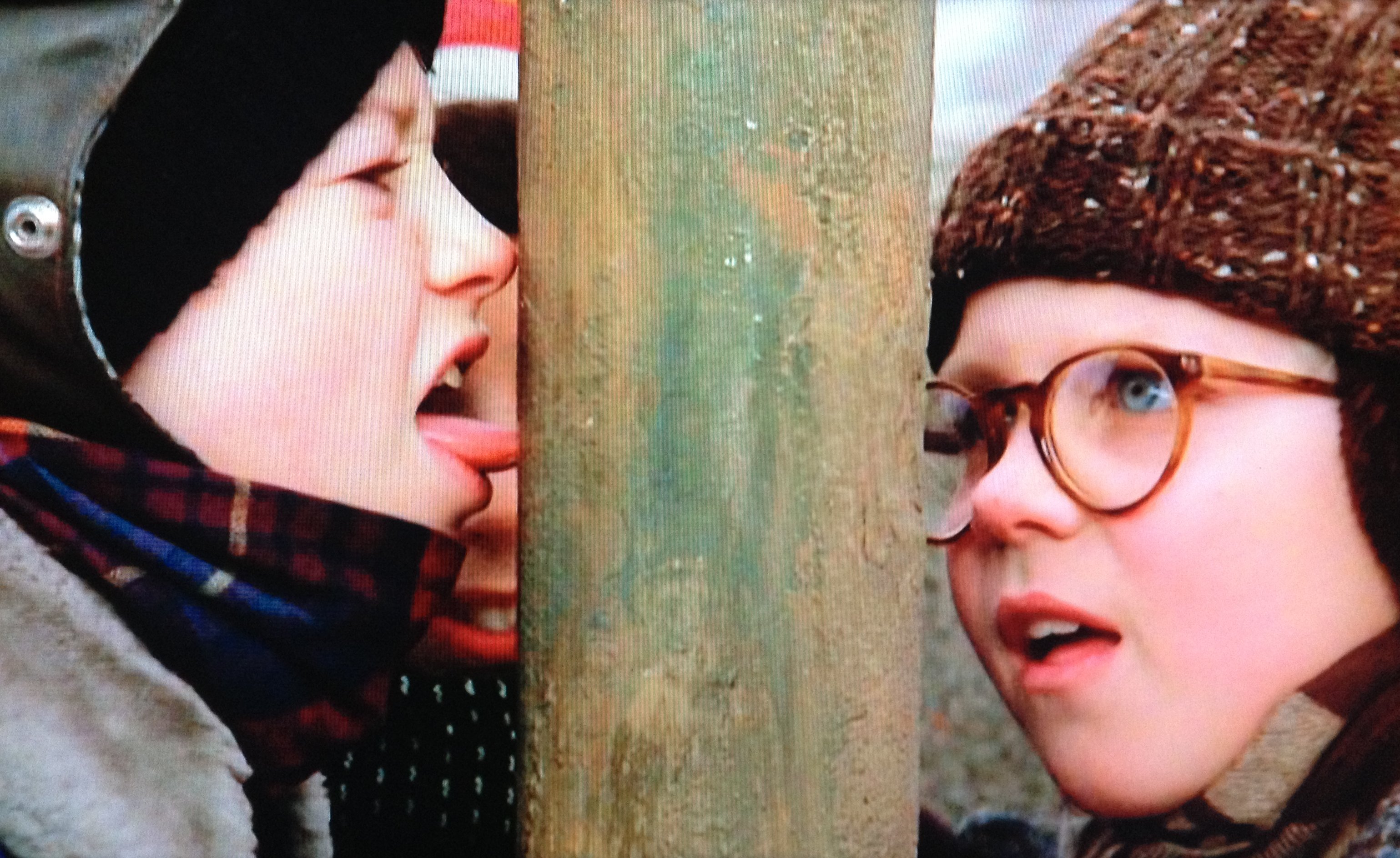
Scott Schwartz as Flick and Peter Billingsley as Ralphie

It’s refreshing that a film produced as late as the 1980s has become a legitimate Christmas classic. Seeing it repeatedly has not diminished its appeal, even when seen in bits and pieces on TV channels that played the film for 24 hours straight.

The director of A Christmas Story, Bob Clark, is a filmmaker who has not produced anything else that comes up to the standard of this, his masterpiece. I have read Jean Shepherd’s In God We Trust: All Others Pay Cash and loved it. As good as the original story was, the film was better. The direction of the actors, particularly the child actors, was as good as anything I have ever seen.

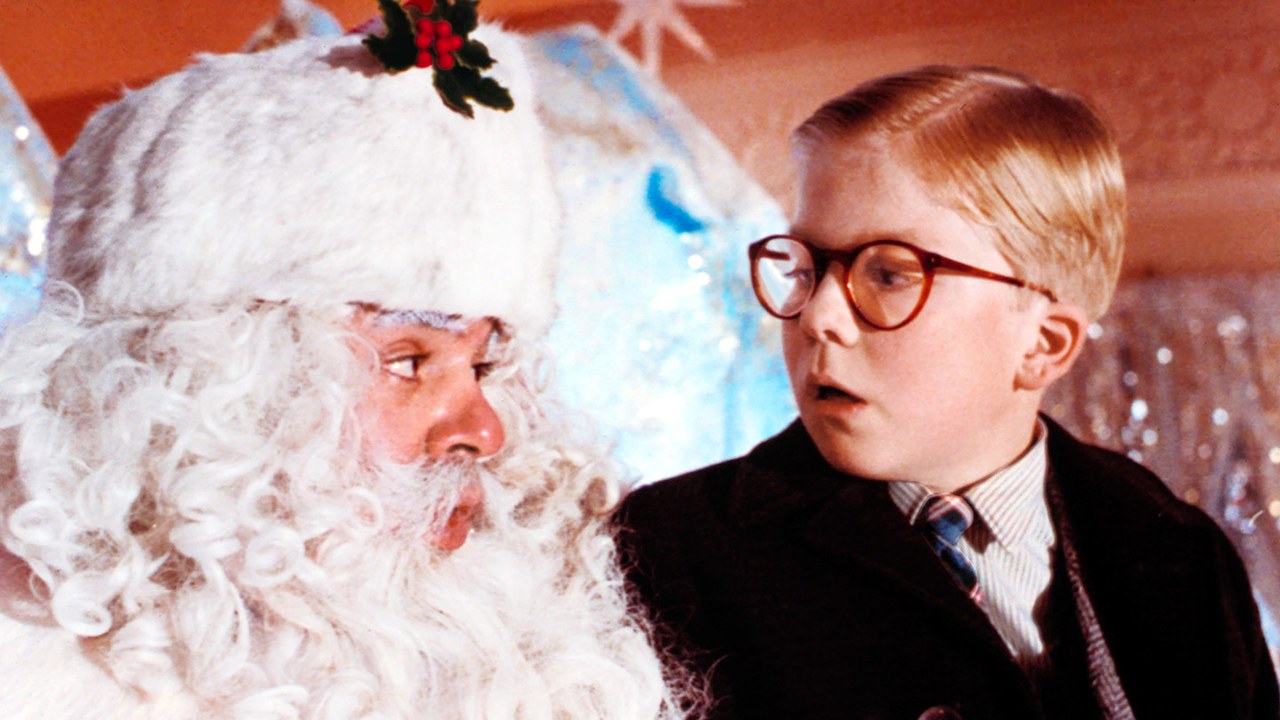
Peter Billingsley Faces Jeff Gillen as Santa

There is another reason I love the film. Although the story is set in Indiana, scenes were set on Public Square in Cleveland, Ohio, where I spent most of my childhood. I remember the Christmas parades there, and particularly the Christmas display windows at Higbee’s Department Store, which is clearly identified in the film. Other scenes may have been shot elsewhere, but most of the exteriors reminded me of Cleveland. Even Ralphie’s school looked exactly like Harvey Rice Elementary School, where I attended kindergarten and half of first grade. (I never finished first grade, but let that be our little secret.)

If I were the one scouting locations for A Christmas Story in such a way as to reflect my own childhood, I would not have done any differently than the producers of the film. That’s why every time I see this film, I am taking a trip down memory lane.


The Year of Noir

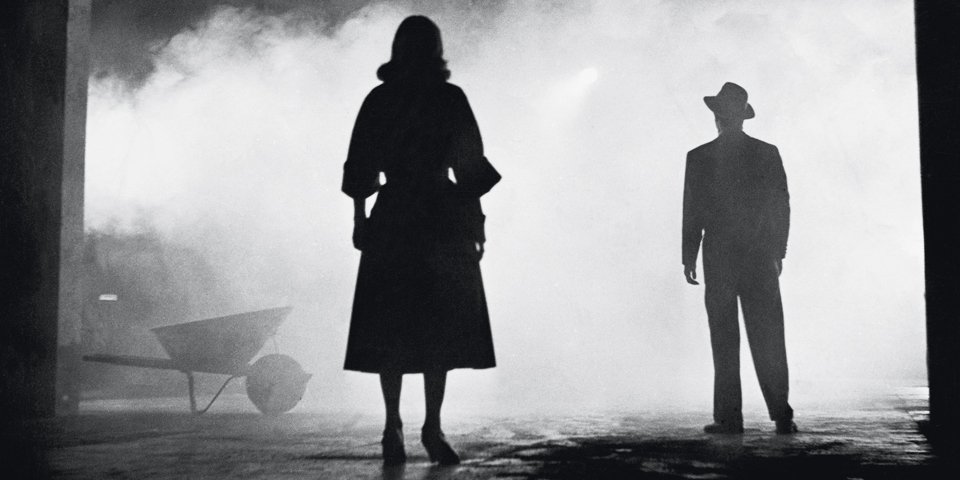
A Scene from the Noir Film The Big Combo (1955)

For me, 2019 has been the year of noir—both film noir, and somewhat less markedly, noir literature. I have just finished reading the New York Review edition of Elliott  Chaze’s 1953 novel Black Wings Has My Angel.

In my Goodreads.Com review of the novel, I quote this incredible passage from page 35:

After all, no matter how long you live, there aren’t too many really delicious moments along the way, since most of life is spent eating and sleeping and waiting for something to happen that never does. You can figure it out for yourself, using your own life as the scoreboard. Most of living is waiting to live. And you spend a great deal of time worrying about things that don’t matter and about people that don’t matter and all this is clear to you when you know the very day you’re going to die.

I wondered in my review why, after attaining a dominant position in the world after World War Two had crippled most everyone else, and after years of growing prosperity, the pessimism of noir became such a persistent theme in literature, film, and even art (q.v. Edward Hopper’s “Nighthawks”).

The best film noir productions I have seen in the last twelve months include (in the order I have seen them):

  • Joseph H. Lewis: The Big Combo (1955)
  • Byron Haskin: Too Late for Tears (1949)
  • Robert Montgomery: The Lady in the Lake (1947) – based on Raymond Chandler’s novel
  • Anthony Mann: Border Incident (1949)
  • Phil Karlson: 99 River Street (1953)
  • Norman Foster: Woman on the Run (1950)
  • Edmund Goulding: Nightmare Alley (1947) – based on William Henry Gresham’s novel
  • John Huston: The Asphalt Jungle (1950)
  • Samuel Fuller: Pick-Up on South Street (1953)
  • Fritz Lang: The Big Heat (1953) – probably the best of the bunch
  • John Huston: The Maltese Falcon (1941) – an early outlier
  • Fritz Lang: Clash by Night (1952)
  • Frank Tuttle: This Gun for Hire (1942) – based on Graham Greene’s novel A Gun for Sale
  • Abraham Polonsky: Force of Evil (1948)
  • Alexander Mackendrick: The Sweet Smell of Success (1957)

More than half the films were viewed on the TCM channel’s excellent “Noir Alley” series hosted by movie scholar Eddie Muller.

Although I consider myself an auteurist critic, I included the directors’ names in the list because of how widespread film noir productions were, especially in the postwar period, coming from a variety of studios and many different directors. Many were produced on shoestring budgets and sneaked through even though they were opposed by many studio heads, such as Louis B. Mayer of MGM.

Later this week, I will present a list noir writers who were partly responsible for the film trend.


The Annual Stooge-a-Thon

The Original Thee Stooges: Larry Fine and Moe and Curly Howard

Today, Martine and I attended the Three Stooges 22nd Annual Big Screen Event at the Alex Theater in Glendale. I think that the two of us have attended some 16 or 17 of the annual screenings over the years, missing only those years when I we nt off to South America in November. This is probably the only Stooges event where all the films shown are 35mm prints direct from Sony Pictures, which owns the rights to the Columbia Pictures screen archives.

The Stooges shorts are much more fun to watch with a large, enthusiastic audience—and attendance filled about 95% of the seats this afternoon. (We usually attend only the matinee performances.) Shown, in order, were the following Stooges shorts, all produced by Columbia:

  • “Pardon My Scotch” (1935)
  • “Saved by the Belle” (1939) directed by Charley Chase
  • “So Long Mr. Chumps” (1941)
  • “Studio Stoops” (1950) with Shemp Howard
  • “Three Pests in a Mess” (1945)
  • “Dizzy Pilots” (1943)

Between the two of us, Martine is the big Stooge fan. I was surprised to see that up to 40% of the audience consisted of women, who appeared to be as enthusiastic as the men.

For Martine, it was an opportunity to have some great chicken. For lunch, we went to Sevan Rotisserie Chicken on Glenoaks and, for dinner, Elena’s Greek and Armenian Restaurant on Glendale Boulevard.


Old Town Music Hall

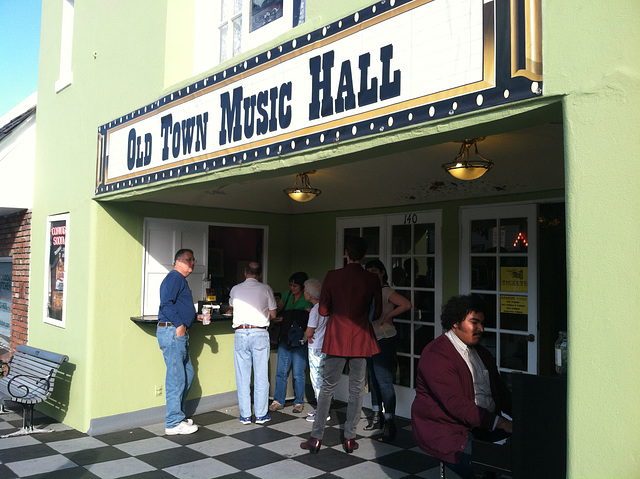
The Facade of the Old Town Music Hall in El Segundo

On hot summer weekends, Martine and I frequently found ourselves in the coastal enclave of El Segundo. Its southern boundary is the huge Standard Oil refinery, the second (“El Segundo”) to be located in California, the first being in Richmond. North is Los Angeles International Airport, and east lies the Pacific Coast Highway and a commercial/industrial area. The western boundary is the Pacific Ocean.

Situated on Richmond Street half a block from the refinery is the Old Town Music Hall, a former silent movie theater built in 1921. In 1968, it was re-opened as a repertory film theater and concert venue featuring a Mighty Wurlitzer organ.

A typical film screening features old classical films, opening with a Wurlitzer organ concert, followed by sing-along slides of old musical favorites and occasionally a short film. In October, we saw three films of a Halloween horror film series, including the original Frankenstein and Dracula as well as The Black Cat, which starred both Boris Karloff and Bela Lugosi. There are also programs featuring classical musicals and short comedies and cartoons.

In addition, there are occasional live music concerts, which we have not attended.

Interior of the Old Town Music Hall

The theater is run as a nonprofit organization under Section 501(c)(3). There is seating for only a couple hundred people, so profits are pretty much out of the question. The whole operation is clearly a labor of love.

We’re looking forward to a program of Laurel and Hardy shorts to be shown next weekend.


Favorite Films: Chinatown (1974)

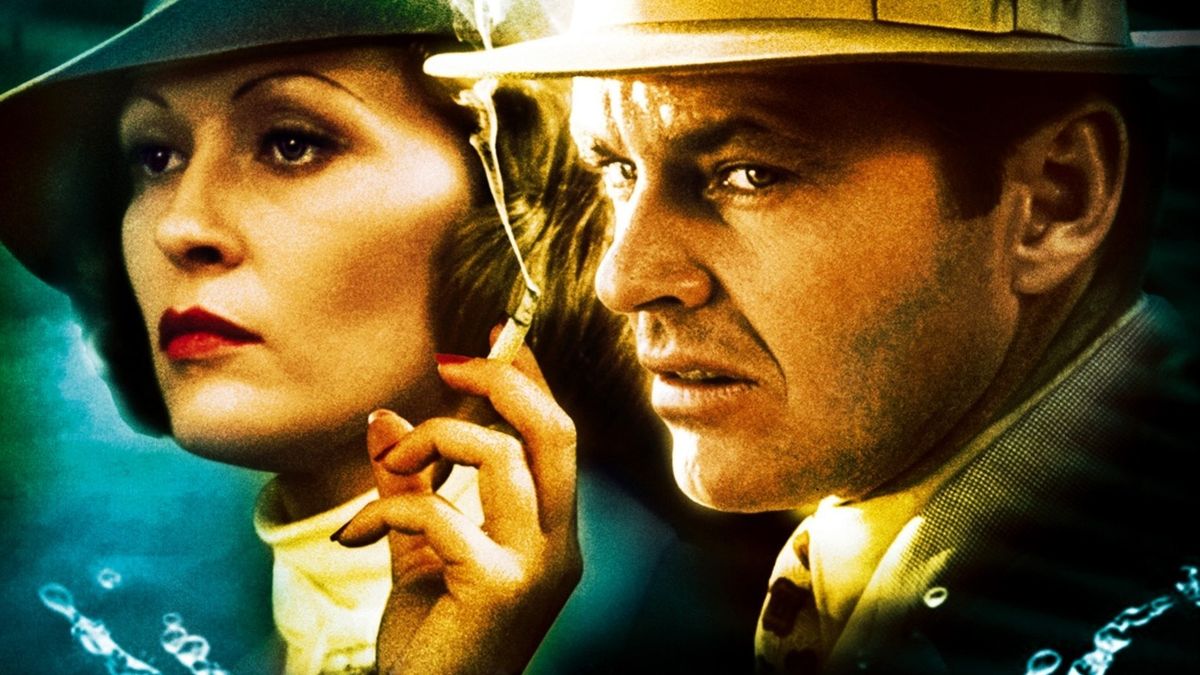
Faye Dunaway and Jack Nicholson in Chinatown

I have always loved film noir, a uniquely American genre that reveals the dark underbelly of life in the U.S. It gets particularly interesting when that revelation is from a foreign filmmaker who succeeds in seeing us for what we are. And, of course, although he is a great film artist, Polanski has been driven from our shores for statutory rape several years after his lovely pregnant wife, Sharon Tate, was mutilated and murdered by Charles Manson’s followers.

Last night I saw the unrelentingly vicious The Sweet Smell of Success (1957) with Burt Lancaster and Tony Curtis, directed by a Scotsman—Alexander Mackendrick—known mostly for such British comedies as Whisky Galore, The Ladykillers, and The Man in the White Suit. Tonight, after a long absence, I saw Chinatown (1974), one of the greatest (and last) noir masterpieces.

Director Roman Polanski in a Bit Part as a Thug

The film presents us with a conundrum about the strange murder of L.A. water commissioner Hollis Mulwray. Detective Jake Gittes (Nicholson) is hired by a woman posing as Mrs Mulwray to find the woman that her husband is seeing on the side. It turns out that the real Mrs Mulwray (Dunaway) did no such thing. But Gittes begins to uncover so many weird secrets relating to water delivery and real estate chicanery that the ultimate secret finally starts to make itself known. Film director John Huston as multimillionaire Noah Cross plays a pivotal role in pushing the film to its shocking conclusion.

We do not usually encounter a hero who is forced to submit to raw, naked power the way that Jake Gittes is forced to; and that is a more European contribution from the film’s Polish director. We are used to seeing our film heroes prevail against insuperable odds. Of course, that doesn’t usually happen in real life.

Chinatown is a film worth seeing many times. After all these years, I am only now beginning to understand it.


King of the Bs

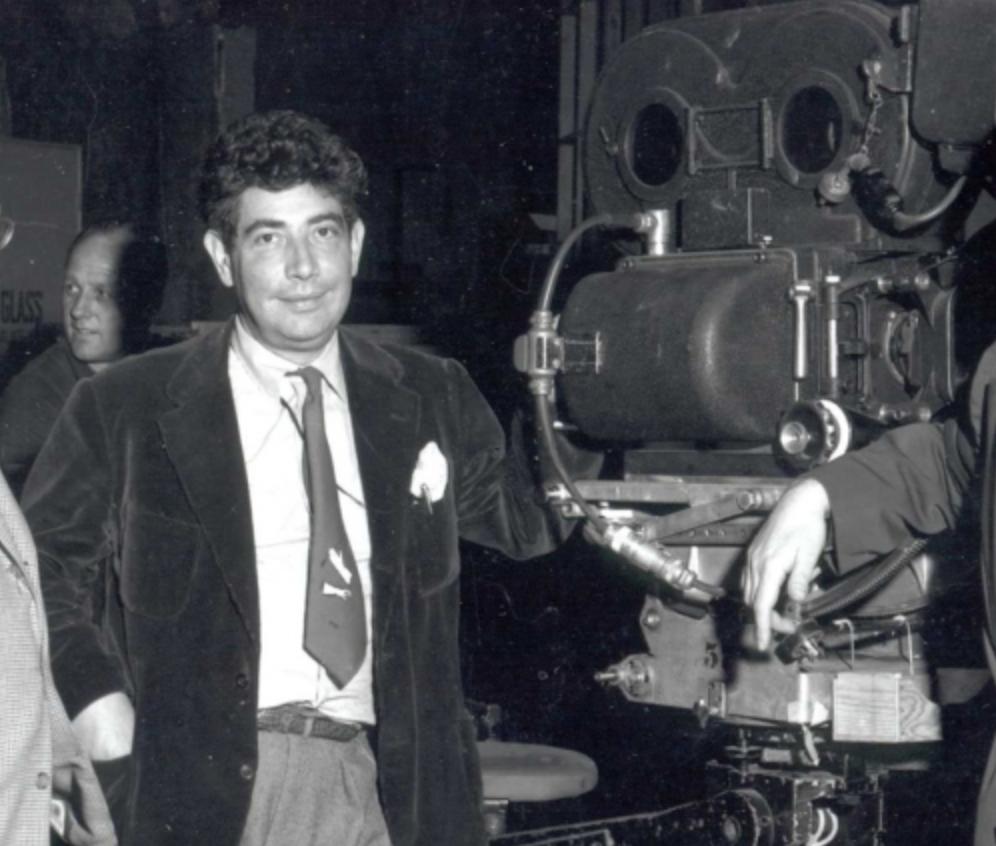
Filmmaker Edgar G. Ulmer (1904-1972)

Back in the day that the big Hollywood studios ran the film market, there were two categories that were offered to movie exhibitors. There were the A films and the B films. The idea was to offer two films to exhibitors for the price of one. The A film was the big draw and almost always the more expensive to produce. Then there were the B films, which were run second on the double features. Sometimes, the big studios produced them, but they also offered products from various small studios that were collectively known as “poverty row.” These studios included:

  • Republic Pictures
  • Monogram Pictures
  • Eagle-Lion Pictures
  • Producers Releasing Corporation (PRC)

The leading director for PRC was Austrian-born Edgar G. Ulmer who, despite the fact that he rarely worked for the majors, made several dozen films, some of which are masterpieces. My favorite of the lot is a horror film that starred both Bela Lugosi and Boris Karloff, The Black Cat (1934), which he made for Universal. Although the film made money, studio chief Carl Laemmle fired Ulmer for having an affair with one of his married execs. Ever after, Ulmer skirted the edges of the industry.

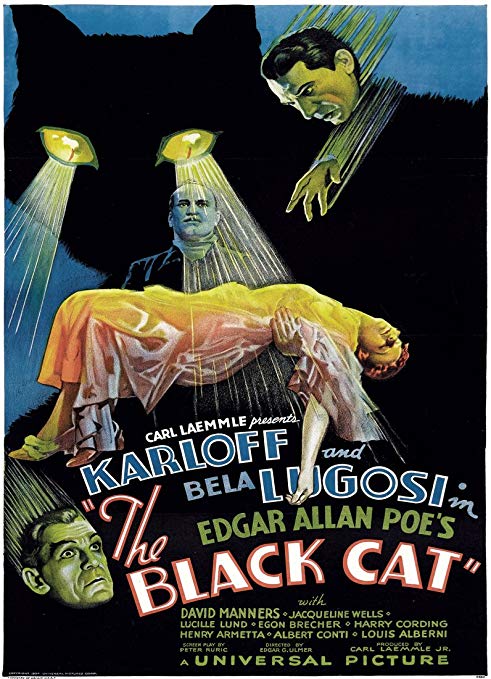
Incidentally, although the film poster claims that the story for the film was from Edgar Allan Poe, I challenge anyone to explain to me which scenes were from the story. There is a black cat that occasionally appears, but the tale is not Poe’s.

Poster for The Black Cat (1934)

Another great is Detour (1945), a film noir starring Tom Neal and Ann Savage. It’s an amazing film that stands up to repeated viewings. I also liked Bluebeard (1944) with John Carradine. Both films were made for PRC.

I recently saw a film about Ulmer which included an interview with the director. Again and again, when asked how long it took to shoot a named film, he uniformly answered “six days.” This is a man who knew how to produce a creditable work quickly and with a down-to-bone budget.


A Bookworm’s Day

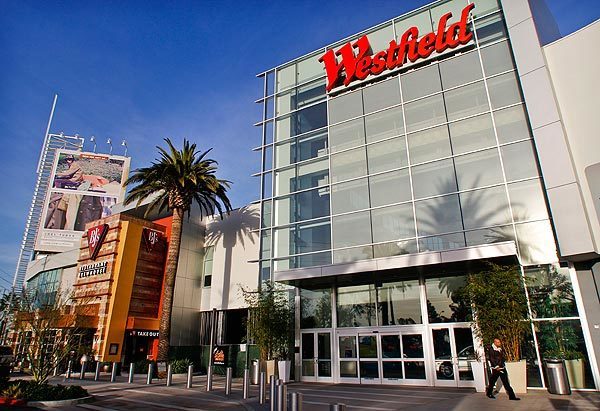
The Westfield Culver City Mall

Today was a day devoted to books. This morning, I took a box of 20 trade paperbacks to the Los Angeles Public Library in Mar Vista as a donation. They are about to have a large book sale in a couple of weeks, and I thought these books would probably sell. After I dropped them off, I sat in one of their comfy chairs and finished reading The Best American Travel Writing 2013, edited by Elizabeth Gilbert. Travel literature is one of my favorite book categories, accounting for much of my reading during the summer months. (As well as being an actual traveler, I am also an armchair traveler.) On my way out, a picked up a free library discard copy of Fodor’s Brazil (2016).

The reason? I am toying with the idea of flying to the State of Bahia, to Salvador and Ilheus, and reading Jorge Amado’s novels which are set there.

Next, I drove to the Westfield Culver City mall, where I ate a light vegetarian lunch at the Vietnamese restaurant in their top floor food court. Afterwards, I bought some milk chocolate clusters with walnuts, peanuts, pecans, and almonds. I spent a couple of hours looking at the Fodor Brazil guide before heading home.

Max von Sydow and Liv Ullmann Arrive on the Island in Hour of the Wolf

By the time I got back, Martine was gone for a doctor’s appointment, so I watched Ingmar Bergman’s Hour of the Wolf (1968), the closest the Swedish director ever came to a gothic horror film, starring Max von Sydow and Liv Ullmann staying on an island of vampires.

After preparing dinner, consisting of Hungarian fasirt with buttered corn on the cob. Afterwords, I started reading Valentin Kataev’s 1927 novel Embezzlers. All in all, not a bad day.