The World’s Greatest Epitaph

And Who, Might You Ask, Was Mel Blanc?

And Who, Might You Ask, Was Mel Blanc?

If you were born under a rock in Uzbekistan, you may not ever have heard the voice of Mel Blanc. But if you’ve ever seen a Warner Brothers Cartoon that featured Bugs Bunny, Daffy Duck, Sylvester the Cat, Porky Pig, Tweety Bird, Yosemite Sam, Foghorn Leghorn, Speedy Gonzales, Wile E. Coyote, Pepé le Pew, Marvin the Martian, or the Tasmanian Devil, you’ve heard just some of the wizardry of Mel Blanc.

Just to refresh your memory, here’s a little sample:

This afternoon Martine and I went to Hollywood Forever cemetery where many of the greats of Hollywood are buried. There you can find Rudolf Valentino, film moguls like Harry Cohn and Jesse L. Lasky, directors like Cecil B. DeMille and Edgar G. Ulmer, members of the Little Rascals like Carl “Alfalfa” Switzer and Darla Hood, and literally hundreds of Russians, Armenians, and Jews who have decided to spend a part of eternity at 6000 Santa Monica Boulevard. There is even the grave of aspiring starlet Virginia Rappe, who died of being raped at a famous party hosted by silent film star Roscoe “Fatty” Arbuckle.

But the best epitaph award clearly goes to Mel Blanc. After his death, Warner Brothers tried to find a replacement, but no one could match Melvin Jerome Blanc. He had a million voices, all of them clearly distinguishable one from the other, and they were all great.

The Man Who Gave Us the Tingler

He Made Being Scared Fun

He Made Being Scared Fun

Last Saturday, Martine and I visited one of the three places worth seeing in Hollywood, namely the Hollywood Heritage Museum, which is almost in the shadow of he Hollywood Bowl off Highland Avenue. (The other two places worth seeing are the Egyptian Theater, especially during Cinecon, and the Los Angeles Fire Department Historical Society’s museum on Cahuenga.)

It is not the museum I want to talk about right now—though I’ll get to it later—but an exhibit I saw there honoring that great showman of horror, William Castle, director of such classics as Macabre (1958), The House on Haunted Hill (1959), The Tingler (1959), 13 Ghosts (1960), Mr. Sardonicus (1961), and Homicidal (1961). Although he was active since the early 1940s, it is during this relatively short period in the 1950s and 1960s that he almost pre-empted the horror genre.

Could This Be the Original Prop for The Tingler?

Could This Be the Original Prop for The Tingler?

What make Castle famous at the time was that he were his publicity gimmicks. When he released Macabre, he had to mortgage his house, so he came up with some hilarious ideas to promote the picture, such as giving every customer a certificate for a $1,000 life insurance policy from Lloyds of London in case they should die of fright during the film. He stationed nurses in the lobbies and had hearses parked outside the theaters.

My favorite of his films was The Tingler, filmed in “Percepto.” According to Wikipedia:

The title character is a creature that attaches itself to the human spinal cord. It is activated by fright, and can only be destroyed by screaming. Castle purchased military surplus air-plane wing de-icers (consisting of vibrating motors) and had a crew travel from theatre to theatre attaching them to the underside of some of the seats (in that era, a movie did not necessarily open on the same night nationwide). In the finale, one of the creatures supposedly gets loose in the movie theatre itself. The buzzers were activated as the film’s star, Vincent Price, warned the audience to “scream—scream for your lives!” Some sources incorrectly state the seats were wired to give electrical jolts. Filmmaker and Castle fan John Waters recounted in Spine Tingler! how, as a youngster, he would search for a seat that had been wired in order to enjoy the full effect.

Well, he wasn’t the only one. Several years ago, the Alex Film Society in Glendale not only showed The Tingler, but claimed that some of the seats were “wired.” I was disappointed to see that the wiring was nothing more than some aluminum foil attached to the underside of some of the seats.

It didn’t matter. Martine and I loved the film anyhow, and we loved Castle’s gimmicks. Okay, maybe we were too sophisticated to be taken in by them, but we loved the idea that he made the horror picture not only scary, but funny.

I don’t know if Castle was a “great” director, but I still enjoy seeing his films.

Supreme Competence and Moral Probity

In at the Beginning of the Western Film Genre

In at the Beginning of the Western Film Genre

There were cowboy films before William S. Hart. As early as 1903, there was Edwin S. Porter’s The Great Train Robbery, which was filmed in the wilds of New Jersey. Then there were the films of Broncho Billy Anderson who was the first film western star—those his films were also shot back East and were redolent of New Jersey.

No, it was William S. Hart who really got the ball rolling back in 1914 when he teamed up with Producer Thomas H. Ince to produce a series of oaters at Santa Ynez Canyon just a few miles from where I live. (John Ford got started around 1917 with Harry Carey, Sr. in Straight Shootin’, but Hart quickly became the better known of the two stars.)

The Hart hero was almost always a loner, half-civilized if at all, but radiating an awakening sense of moral probity. While he was in the process of making his decision, God help any bad guys who tried to do him in in the meantime.

A Still from Travelin’ On: Hart with Monkey

A Still from Travelin’ On: Hart with Monkey

This was certainly true of Travelin’ On (1922), which I saw this morning at Cinecon. He is simply J.B., an illiterate loner who rides into a crude Arizona town run by Dandy Dan McGee, a saloon keeper who runs all the vices from his Palace of Chance. When a preacher, his wife and daughter pull into town in their wagon, they witness a fight between two toughs, which the preacher tries to stop. Some time later, Hart rides into town and runs afoul of Gila, one of McGee’s cronies, whom he makes short work of.

Both McGee and J.B. fall in love with the preacher’s wife. When Hart sees McGee make a move on her, he threatens to kill him the next time he sees him. Of course, he does, but not before he takes the rap for a stage robbery committed by, of all people, the preacher—and then he rides off alone, after saving the preacher from being justly hanged for his crime.

I never seem to tire of seeing Hart’s films. I visit his ranch in Newhall once or twice a year and see to some extent how his character was formed. He married a younger star named Winifred Westover and had a son named William S. Hart Jr. (whom I knew). He never remarried and lived on his ranch with his sister until his death in 1948.

It was around the time this film was made that Hart was upstaged by other Western stars, most notably Tom Mix. Mix was good, but there was something about Hart that was unique.


Two Christs for Modern Man

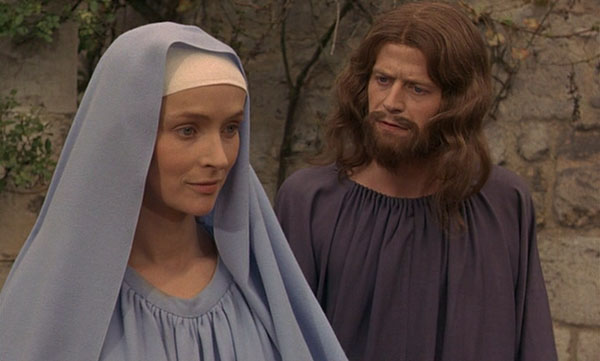
Bernard Verley as Christ and Edith Scob as Mary in Buñuel’s The Milky Way (1969)

Bernard Verley as Christ and Edith Scob as Mary in Luis Buñuel’s The Milky Way (1969)

After two centuries of Christian art,the West has produced thousands of images of Jesus Christ—almost none of which connects to people who are alive today. The Son of God is usually portrayed as a man who was born to be tortured to death on a cross, but not as a man who could gather around him twelve apostles and hundreds of followers.

One notable exception are the vignettes with Bernard Verley (above) as Christ in Luis Buñuel’s film The Milky Way (1969). The scene pictured above is at the marriage ceremony in Cana, when the Redeemer performed his first public miracle.

The other image is one I saw at the Getty Center today: It is the Italian painter Correggio’s “Head of Christ,” pictured below:

Correggio’s “The Head of Christ” (1530)

Correggio’s “The Head of Christ” (1530)

I like the look of consternation on Christ’s face as he contemplates what lies ahead while he is wearing the crown of thorns. This is the Christ who, the previous night at Gethsemani, had said: “My Father, if it be possible, let this cup pass from me; nevertheless, not as I will, but as you will.” He may be God, but the look on His face is 100% pure human.


Great Will Hunting

Poster for State Fair (1933) with Will Rogers

Poster for State Fair (1933) with Will Rogers

Every August around this time, the Will Rogers Ranch Foundation and California State Parks stage an outdoor screening of one of Will’s films. Last night it was the original version of State Fair (1933) directed by Henry King and starring Will and Janet Gaynor, with Lew Ayres and Sally Eilers. The Foundation called it “Movies in Will’s Back Yard”, as it took place on the putting green adjoining the Will Rogers Ranch.

As Lew Ayres said about Will, he’s not really an actor at all: he’s just a character. He would never select a role that would call for anything but allowing him to be himself. The result was a series of great pictures made in the early 1930s before he died in an Alaska plane crash in 1935. My favorites are A Connecticut Yankee (1931), Doctor Bull (1933), Judge Priest (1934), Life Begins at Forty (1935), and Steamboat Round the Bend (1935).

Despite the fact that he “couldn’t act,” Will Rogers was the best-paid actor in Hollywood just before his death. (It must have been because people liked him so much that they couldn’t care whether or not he was a genuine actor.)

He was also America’s number one columnist. Somehow, he managed to pull off the neat trick of having both Republicans and Democrats love him. Now that Robin Williams is gone, who is there alive who can make that claim?

Every year around this time, I write a post about Will Rogers because I admire him so much. Let me leave you with this little quote from one of his talks:

The average citizen knows only too well that it makes no difference to him which side wins. He realizes that the Republican elephant and the Democratic donkey have come to resemble each other so closely that it is practically impossible to tell them apart; both of them make the same braying noise, and neither of them ever says anything. The only perceptible difference is that the elephant is somewhat the larger of the two.

My Brother Sets Me Straight

Now I Know What I’m Going to See There!

Now I Know What I’m Going to See There in Peru!

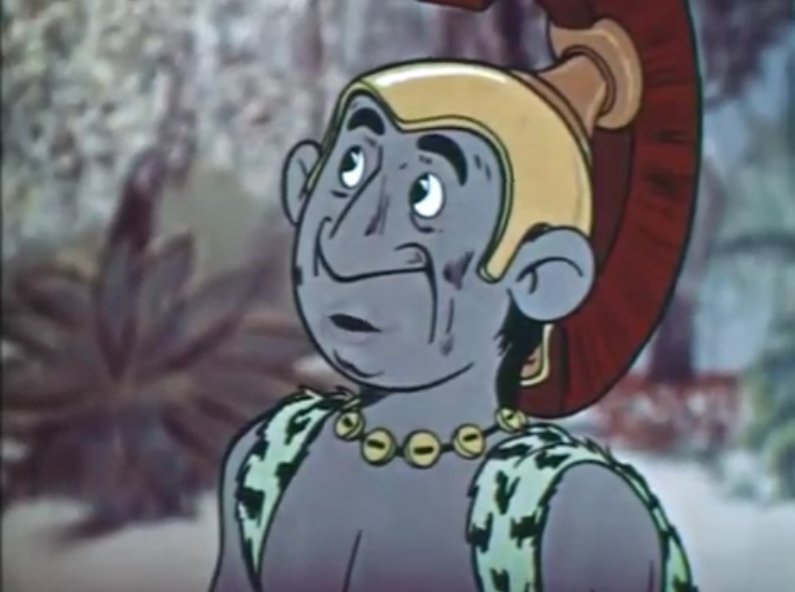
Last night, my brother left the following comment on my status on reading Nigel Davies’s book The Incas on Facebook: “How about The Dinky Incas”? That set me back for a minute. Who in blue blazes were the Dinky Incas? Well, there was only one way to find out: I Googled it. Then it all came back to me. There was an animated television series around 1959-1960 called “Clutch Cargo,” starring a ruggedly good-looking hero with an enormous jaw named Clutch Cargo who flew to strange locales with a small freckle-faced boy named Spinner and a dachshund named Paddlefoot. They engaged in the type of exotic adventures I recall from reading Carl Barks’s Uncle Scrooge comic books.

By the time my brother was of an age to enjoy the limited animation adventures of “Clutch Cargo,” I was already a teenager who was much too sophisticated for that type of stuff. Dan, on the other hand, was eight or nine years old and watched every episode.

Now You, Too, Can Follow Their Adventures

Now You, Too, Can Follow Their Adventures

The series on the “Dinky Incas” was about a missing archaeologist who was on a dig in Peru which resembled, more than anything else, a Mayan pyramid in the jungle. (The real Incas didn’t build pyramids and they preferred the higher-elevation altiplano to the jungles of the Amazon.) Clutch, Spinner, and Paddlefoot run into two unsavory characters who try to do away with them, because, of course, they’re after all the gold and jewels. But Clutch and his sidekicks take care of them right quick, as you can see for yourself if you have twenty minutes to watch the whole series, which is available by clicking here.

Mexican Bus Ride

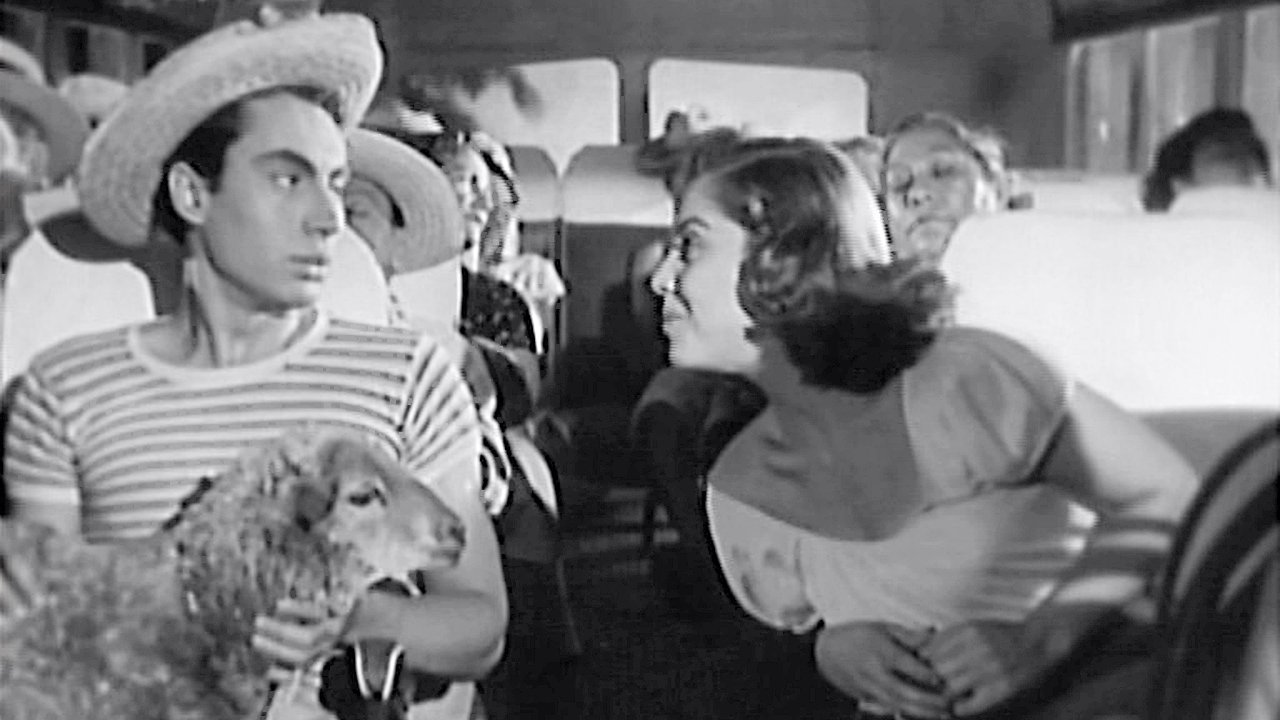
Still from Luis Buñuel’s Mexican Bus Ride (Subida Al Cielo, 1952)

Still from Luis Buñuel’s Mexican Bus Ride (Subida Al Cielo, 1952)

For various reasons, I am inordinately fond of the films that Luis Buñuel made in Mexico between 1946 and 1965. Since then, he has perhaps made greater films, but remember there is a big difference between fondness and admiration. Because these films were made in Mexico, where perhaps not enough money was budgeted for each production, the director had to use his ingenuity to make the films his own. And when he succeeded most, the results were wonderfully human and surreal. The films from this period that I liked the most are, in order of production:

  1. Los olvidados (1950). In the U.S. variously titled The Forgotten and The Young and the Damned.
  2. Susana (1951). In English: The Devil and the Flesh.
  3. Subida al cielo (1952). In English: Mexican Bus Ride and Ascent to Heaven (the literal translation of the Spanish title).
  4. El (1953), In English: This Strange Passion and Torments.
  5. La Ilusión viaja en tranvía (1954), In English: Illusion Travels by Streetcar.
  6. Abismos de pasíon (Cumbres borrascosas) (1954), In English: Wuthering Heights.
  7. The Adventures of Robinson Crusoe (1954).
  8. Ensayo de un crimen (1955). In English: The Criminal Life of Archibaldo de la Cruz.
  9. Nazarín (1959).
  10. El ángel exterminador (1962). In English: The Exterminating Angel.

Of these, the most admirable are the last two, just as the director was ready to step onto the world stage. But the ones I would like to watch over and over again are Mexican Bus Ride and Illusion Travels by Streetcar.

Mexican Poster for Mexican Bus Ride

Mexican Poster for Mexican Bus Ride

In the first film, a young man travels from a coastal village to a large market town on a long bus ride during which one passenger dies, another gives birth, and he himself is seduced by the lusciously ripe Lilia Prado (see photo above). Somehow all works out well, almost magically in fact. I have seen this film half a dozen times and am still not close to getting tired of it.

Illusion Travels by Streetcar involves—and tell me this is not unique—a hijacking of a streetcar in which a disconsolate streetcar driver who hijacks a streetcar, takes it on a route of his own devising while offering free rides to a motley crew of passengers who join him on his route.

Both films are hilarious and loving. It is obvious that Buñuel had considerable feeling for the people of Mexico, which shows through again and again.


Theta, Goddess of Television

What Happened to the Promise?

What Happened to the Promise?

Back in the 1970s, the first truly great television channel was born. It was called the Z Channel, and it was available only through Theta Cable Television, a subsidiary of TelePrompTer Corporation. Here was a channel made for film freaks such as myself. I could watch not only popular films, but film classics, including French, Italian, and Japanese classics with subtitles.

The trucks belonging to Theta Cable bore the following logo, of which I could find only this very imperfect example on the Internet:

Theta, Goddess of Television

Theta, Goddess of Television

The Z Channel ended badly with a murder/suicide when program director Jerry Harvey shot his wife and then turned the gun on himself.

Around then, the Z Channel segued into the Sports Channel, which interrupted their movies with Stanley Cub playoffs. I remember calling my cable provider and demanding to cancel the hockey channel. They knew what I was talking about.

There were other hopeful beginnings, such as Headline News, CNN, Bravo, TNT, and even MTV at the beginning. Now the only cable channel of any worth is Turner Classic Movies (TCM), which still has no advertising, and which shows films uncut and unscanned (i.e., letterbox versions). As far as I am concerned, the rest is mostly sports (way, way too much sports), right wing news, and celebrity gossip. I would be in heaven if all that mattered to me were Kim Kardashian’s ass and how the Cubs are faring against the Hornets. Oh, yes, and Benghazi!

Cable television was once a land of promise. Then, I suppose, Eve ate the apple; and we were all drummed out of paradise.


American Noir

One of the Greatest U.S. Noir Pictures

One of the Greatest Noir Pictures

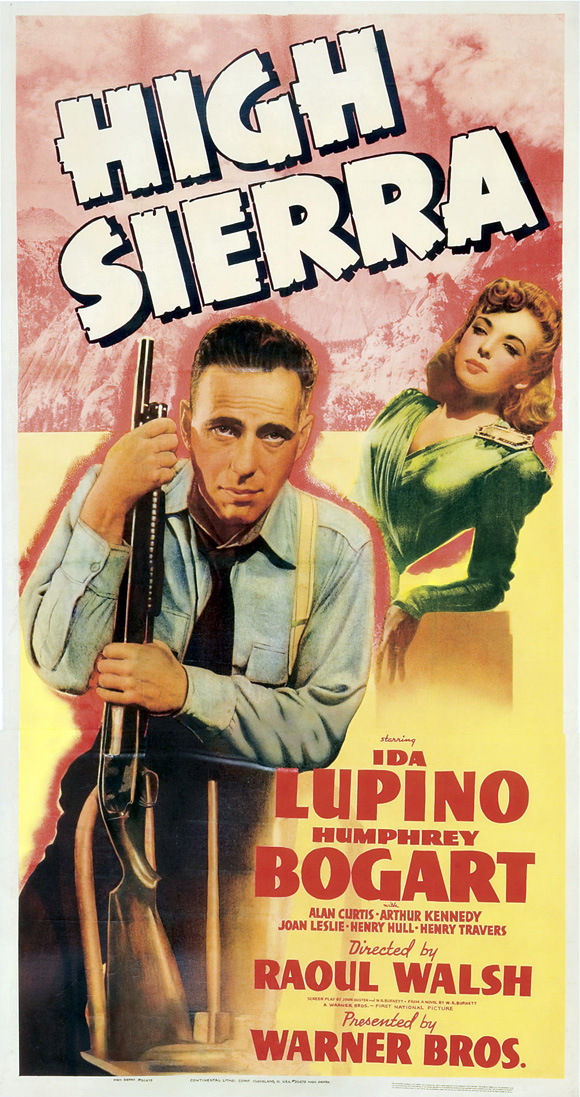
Today, I came back from working on a Saturday to see the end of Warner Brothers’ High Sierra (1941) with Martine. There was Roy “Mad Dog” Earle, trapped on an Eastern Sierra cliff face and surrounded by police and reporters waiting to put an end to his career of crime. I had seen the film so many times that it was now in my blood. It was one of a handful of U.S. films that defined for me the whole American experience between the 1930s and the 1950s. I thought I would put together a list of the films in the genre that were my favorites.

Here are thirteen of them, arranged in alphabetic order:

  • The Big Heat (1953), directed by Fritz Lang, with Glenn Ford and Gloria Grahame
  • The Big Sleep (1946), directed by Howard Hawks, with Humphrey Bogart and Lauren Bacall
  • Criss Cross (1949), directed by Robert Siodmak, with Burt Lancaster, Dan Duryea, and Yvonne De Carlo
  • Detour (1946), directed by Edgar G. Ulmer, with Tom Neal and Ann Savage
  • Double Indemnity (1944), directed by Billy Wilder, with Barbara Stanwyck and Fred MacMurray
  • Gun Crazy (1949), directed by Joseph H. Lewis, starring Peggy Cummins and John Dall
  • High Sierra (1941), directed by Raoul Walsh, with Humphrey Bogart and Ida Lupino
  • The Maltese Falcon (1941), directed by John Huston, with Humphrey Bogart, Peter Lorre, and Sydney Greenstreet
  • Out of the Past (1947), directed by Jacques Tourneur, with Robert Mitchum and Kirk Douglas
  • The Postman Always Rings Twice (1946), directed by Tay Garnett, with Lana Turner and John Garfield
  • They Live by Night (1949), directed by Nicholas Ray, with Farley Granger and Cathy O’Donnell
  • Where the Sidewalk Ends (1950), directed by Otto Preminger, with Dana Andrews and Gene Tierney
  • White Heat (1949), directed by Raoul Walsh, with James Cagney and Virginia Mayo

If this seems like a long list, please note that I could have stretched it to fifty or a hundred without too much difficulty. There were a lot of noir films made in Hollywood over a long period.

What are noir films? According to Alain Silver, James Ursini, and Elizabeth Ward’s Film Noir: The Encyclopedia (New York: Overlook Duckworth, 2010):

Film noir is grounded neither in personal creation nor in translation of another tradition into cinematic terms. Rather it is a self-contained reflection of American cultural preoccupations in film form. In short, it is the unique example of a wholly American film style. “Film noir” is literally “black film,” not just in the sense of reflecting a dark mood in American society, but equally, almost empirically, as a black slate on which the culture could inscribe its ills and in the process produce a catharsis to help relieve them.

There is a whole galaxy of elements which, together or in unison, make up a film noir plot. They include crime, police, private detectives, “bad girls,” urban environments with “mean streets,” and both inner and outer darkness.


Tarnmoor’s ABCs: Film

Mack Sennett Bathing Beauties

Mack Sennett Bathing Beauties

I was very impressed by Czeslaw Milosz’s book Milosz’s ABC’s. There, in the form of a brief and alphabetically-ordered personal encyclopedia, was the story of the life of a Nobel Prize winning poet, of the people, places, and things that meant the most to him. Because his origins were so far away (Lithuania and Poland) and so long ago (1920s and 1930s), there were relatively few entries that resonated personally with me. Except it was sad to see so many fascinating people who, unknown today, died during the war under unknown circumstances.

This blog entry is my own humble attempt to imitate a writer whom I have read on and off for thirty years without having sated my curiosity. Consequently, over the next few months, you will see a number of postings under the rubric “Tarnmoor’s ABCs” that will attempt to do for my life what Milosz accomplished for his. I don’t guarantee that I will use up all 26 letters of the alphabet, but I’ll do my best.

These Mack Sennett Bathing Beauties are not what you usually think of when you think of the movies, but that was about a hundred years ago. Film has been around for more than a century, and I have been  a film freak for almost half that time. It all started at Dartmouth College, where there were frequent free screenings at Fairbanks Hall. One afternoon in my freshman year, I saw Carl Theodor Dreyer’s Day of Wrath (1943), about witchcraft in seventeenth century Denmark. I was hooked.

Although my original intention was to become a professor of English, somewhere during my second or third year at college, I decided to switch to film. The Hopkins Center had just opened, and there was a large beautiful theater for screening films. The Dartmouth Film Society put on an ambitious year-long Alfred Hitchcock Retrospective, and my career choice began to waver. When, finally, Arthur L. Mayer, the author of Merely Colossal, came to teach a class in film history, my mind was made up.

Dartmouth had a long history of ties with the film industry. Its Baker Library was the home of the Irving Thalberg collection of Hollywood scripts. Graduates included such film luminaries as Joseph Losey, Robert Ryan, Budd Schulberg, David Picker, and Max Youngstein. Even before my senior year, I had decided to do my graduate work in film history and criticism. During the summer of 1965, I went with my parents to New York, mainly to see Haig P. Manoogian, who ran the film department at New York University. Mr. Manoogian was kind enough to see me, but not kind enough to encourage me—although he was a favorite of Martin Scorsese, who went to school there. I guess he was more interested in film production. (That summer, I also saw the New York World’s Fair of 1964-1965.)

That left the University of Southern California (USC) and UCLA. One of my Dartmouth classmates from the Class of 1965 had attended UCLA. When he came up to Dartmouth to visit, he discouraged me about USC, which he said was a slum and Smog Central.

So I came out to Southern California, where I still live. I attended graduate school at UCLA for several years until Professor Howard Suber put the kibosh on my budding career as a film professor. He was a lackadaisical academic who supposedly was working on a shot-by-shot analysis of Citizen Kane and who didn’t much like movies. I was about to write a thesis about the Westerns of John Ford with Robert Epstein as head of my thesis committee, but then Suber replaced him with himself. At that point, I knew I was finished, as there was little love lost between us. Years later, I joined a letter-writing campaign to have his tenure denied, calling him a cross between Mr. Pickwick and Caligula.

Although I’ve always loved film, I had by this time taught myself how to operate and program computers, and I got a job at System Development Corporation in Santa Monica. Curiously, the person I replaced at SDC was a young woman who had been murdered by a UCLA film student. So here I am today, a computer expert at a Westwood accounting firm, still in love with film, though greatly disappointed because all the great filmmakers I idolized are dead, and the quality of films now being produced has fallen markedly.