Tropical Iced Tea? Gack!

Not My Cup of Tea

Not My Cup of Tea

The following post is a reprint from my posting on Yahoo! 360 on June 28, 2007:

No one I know loves iced tea as much as I do, especially when the hot days follow one upon another. And I like fruit juices, though I prefer to eat fresh fruit with all the pulp and fibers included. But the one thing I will not abide is a mix of fruit juice with iced tea.

Los Angeles in particular is replacing regular iced tea with what is called “tropical iced tea,” consisting of tea mixed with essence of raspberry, passion fruit, kumquats, or turkey giblets. Today, I had lunch at the Noodle Planet in Westwood, where an excellent China Mist iced tea was typically on hand. But no more! The cute young waitress informed me that their China Mist was replaced by a “tropical” iced tea. She sidestepped with remarkable agility, I thought, as a three-meter flame roared out of my mouth and singed several adjoining tables.

I asked her, “How would you feel if I sprinkled some banana or coconut juice into your coffee? or if I spiked your Coca-Cola with essence of oregano and nopal cactus juice?”

The way I see it, there is a tendency to making everything tutti-frutti, whether soups, snacks, steaks, fish, beverages, or—where I do not generally object—desserts. If that is the main contribution of Southern California to haute cuisine, then I say, “Back to the basics!” Henceforth, I shall wear a brown turban and gather around me other iced tea fundamentalists. We shall strike terror into the hearts and pocketbooks of those who would adulterate tea.

Let’s face it, instead of fruit, the additives taste more like refined petrochemicals, at the same time killing the refreshing, slightly acidic taste of the tea itself.

In the end, I had to settle for water. At least, they haven’t gotten to that—yet!

NOTE: I make an exception for fresh slices of lemon, lime, and occasionally orange. This way, I can control the taste of the tea. No oil company or coal tar manufacturer is allowed to tinker with my tea!

Tarnmoor’s ABCs: Tea

Looks Good: I Think I’ll Have Three Cups

Looks Good: I Think I’ll Have Three Cups

All the blog posts in this series are based on Czeslaw Milosz’s book Milosz’s ABC’s. There, in the form of a brief and alphabetically-ordered personal encyclopedia, was the story of the life of a Nobel Prize winning poet, of the people, places, and things that meant the most to him.

My own ABCs consist of places I have loved (Iceland, Patagonia, Quebec, Scotland), things I feared (Earthquakes), writers I have admired (Chesterton, Balzac, Proust, and Borges); locales associated with my past life (Cleveland and Dartmouth College), people who have influenced me (John F. Kennedy), foods I love (Olives), and things I love to do (Automobiles and Books). This blog entry is my own humble attempt to imitate a writer whom I have read on and off for thirty years without having sated my curiosity. Consequently, over the weeks to come, you will see a number of postings under the heading “Tarnmoor’s ABCs” that will attempt to do for my life what Milosz accomplished for his. To see my other entries under this category, hit the tag below marked “ABCs”. I don’t guarantee that I will use up all 26 letters of the alphabet, but I’ll do my best. Today the letter is “T” for Tea.

Ever since I was a small child, I have preferred tea to coffee. I don’t even like the smell or even the look of coffee, let alone its taste. You won’t find me asking for a Venti anything at Starbuck’s. Barristas would have a difficult time making a living if they had to depend on people like me. What they do at their place of work, I could do more satisfactorily in my kitchen. And then, as my pot of tea cools, I have several additional glasses of iced tea.

While my favorite variety is Darjeeling, I will occasionally switch to Ceylon or Assam for variety. I also love green tea and several non Camellia sinensis local varieties, such as Té Manzanilla (chamomile) in Mexico or Yerba Mate in Argentina. People talk about herb teas as if tea is not an herb, but it is. I generally avoid more flowery teas, though a good Chinese jasmine is not bad on occasion.

While others spend many hundreds of dollars a year on coffee, my total expenditure on tea is considerably less than fifty dollars for far more tea than I can drink. A pound of loose tea leaves makes 240 cups of tea. By contrast, how many cups of coffee does a pound of beans make? Nowhere near, I’d wager.

Tonight, as I finish reading a book of Croatian writer Slavenka Drakulić ’s essays, I will have a tall glass of unsweetened iced tea made of Ahmad of London’s loose Ceylon blend.


Tarnmoor’s ABCs: Olives

I Cannot Live Without This Oleaginous Fruit

I Cannot Live Without This Oleaginous Fruit

I was so very impressed by Czeslaw Milosz’s book Milosz’s ABC’s. There, in the form of a brief and alphabetically-ordered personal encyclopedia, was the story of the life of a Nobel Prize winning poet, of the people, places, and things that meant the most to him. Because his origins were so far away (Lithuania and Poland) and so long ago (1920s and 1930s), there were relatively few entries that resonated personally with me. Except it was sad to see so many fascinating people who, unknown today, died during the war under unknown circumstances.

My own ABCs consist of places I have loved (Iceland), things I feared (Earthquakes), writers I have admired (Chesterton, Balzac, Proust, and Borges); things associated with my past life (Cleveland and Dartmouth College), people who have influenced me (John F. Kennedy), and things I love to do (Automobiles and Books). This blog entry is my own humble attempt to imitate a writer whom I have read on and off for thirty years without having sated my curiosity. Consequently, over the months to come, you will see a number of postings under the heading “Tarnmoor’s ABCs” that will attempt to do for my life what Milosz accomplished for his. To see my other entries under this category, hit the tag below marked “ABCs”. I don’t guarantee that I will use up all 26 letters of the alphabet, but I’ll do my best. Today the letter is “O” for Olives.

In his Meditations the Roman Emperor Marcus Aurelius wrote, “Always observe how ephemeral and worthless human things are. Pass then through this little space of time conformably to nature, and end thy journey in content, just as an olive falls off when it is ripe, blessing nature who produced it, and thanking the tree on which it grew.”

There is something ancient about the olive. It comes to us from the Biblical lands of the Eastern Mediterranean, from ancient Greece and Rome. If it were not for the fact that I live in California, which is known for its olives, I would probably have left it out of my diet altogether. Especially during the Dog Days of Summer, I find olives refreshing, such that I can make a meal out of olives and iced tea, and nothing else. It’s one of the few filling foods that are not contraindicated by my diabetes.

My favorite olives come from Cisneros Brothers in Hanford, California, particularly their Sicilian garlic-stuffed olives: big green fruits with a spicy garlic charge. When the days start getting warmer, I will either drive to Hanford or order a crate of them to see me through.

There are numerous health claims made for olives, about their anti-inflammatory and antioxidant qualities, and they may be true. Perhaps they cure cancer and powerfully increase male libido, but, truth to tell, I’d like them anyhow. I like them so much I even take an olive leaf nutritional supplement called oleuropein for good measure.


You Won’t Roue the Day …

The Base for All Great Hungarian Soups

The Base for All Great Hungarian Soups

In response to a request from my friend Lynette, I’m going to tell you all about what makes for a great Hungarian soup—and probably most great vegetable and meat soups as well. The secret is rántás, the Magyar equivalent of roue. Let’s begin with the ingredients, with the amounts for a week’s worth of soup for two (Martine and I like home-made soups):

  • 1 oz unsalted butter
  • 1 oz olive oil (need not be virgin: I prefer olive oil that’s been around, if you know what I mean)
  • 3 tbsps white flour
  • 1/2 minced onion (minced means chopped up real tiny)
  • 1/2 bunch minced parsley (again: go to town with your knife here)
  • 2 tbsps real Hungarian Szegedi paprika (not Spanish paprika!)

Heat the butter and oil in a saucepan until it melts, stirring well. Give it a minute or two before adding the white flour. Stir until the flour turns brown. Add the onion and parsley and finally the paprika. When your rántás is done, scoop it into your soup toureen and start adding the other good stuff.

Note that the photo above is your rántás after the first three ingredients only. In time, you will adjust the ingredients to more accurately accord with your taste buds.

You can sometimes find good Hungarian paprika in supermarkets, but I wouldn’t bet on it. I get mine from Otto’s Hungarian Import Store in Burbank, and I prefer this variety, the Imported Szegedi Hungarian Paprika. When you get your paprika, keep it in the refrigerator: bugs love it too much.


Soup or Salad

So You Think It’s Healthy, Huh?

So You Think It’s Healthy, Huh?

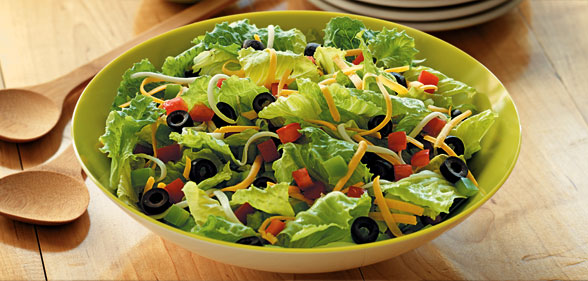
It was Canadian writer Douglas Coupland who wrote that “Salad bars are like a restaurant’s lungs. They soak up the impurities and bacteria in the environment, leaving you with much cleaner air to enjoy.”

We have taken it so much for granted that salads are the perfect food that we typically ignore a few basic facts. First of all, how many of you salad-eaters actually clean the veggies you use, especially the lettuces? And then, how many of you pour sugary, fatty glop over the salad in an effort to make it palatable?

When I was growing up in Cleveland, we never ate salads, except occasionally for a warm salad made with romaine lettuce and bacon—and even then I never cared for the stuff. We had our own vegetable garden out back, so we never lacked for vegetables, which we sometimes ate raw, as tomatoes; or canned, such as Hungarian yellow banana peppers; or cooked, as cabbage.

I think that Hungarians would much rather eat their veggies in a soup than in a salad. So yesterday, I prepared a Hungarian-style pea soup with carrots and potatoes. For that extra Vitamin B touch and some delicious background flavor, I blend Swiss chard and curly parsley with some of the stock and pour it into the tureen.

So go ahead and disconsolately pick at that dubious salad. I prefer good soup just about any time. In fact, only when the temperature soars into the 90s that I will occasionally eat a chopped salad at lunchtime with a light vinaigrette dressing. Otherwise, no way!


Don’t Toque to Me About Chefs!

Making a $25.00 Tower of Exotic Foodstuffs

Making a $45.00 Tower of Exotic Foodstuffs

The problem with American restaurants is that there are too many chefs and not enough cooks. Ever since the Food Network went on the air, people started paying too much attention to people with large white toques who like to mess around with food, forming little towers of quinoa with raspberry sauce and maybe a small amount of meat or fish. The less the foods appear to go together, the more renown the chef is likely to earn for his or her daring.

It’s become an epidemic. The tutsi-fruitsie is king. The ice tea is contaminated with passion fruit or other petrochemical waste. Side dishes avoid the usual rice or potatoes and provide instead broccolini with mashed yeast and ground Murano glass and Galena lead pellets.

Whenever I see some Culinary Institute of America (CIA) chef wearing a towering white toque, I know I’m in for a pretentious soaking. On the other hand, when I see what Hungarians call a szakács or szakácsnő (cook, masculine or feminine gender respectively), I know I am likely to have an excellent meal. There must be no toque or other sartorial trimmings. I want a good, honest cook who knows how to prepare food. And no little towers!

As for the Food Network, I hope they switch over to running “Antiques Roadshow” or “Pawn Stars.” Or maybe they can talk about Kim Kardashian or some other celebrity twinkie. They certainly have not done anything to improve the quality of food in this country.

In Search of the Next Superfood

Is It Chinese Goji Berries?

So Is It Now Chinese Goji Berries?

This is a kind of continuation of yesterday’s post about Clickbait. I get this picture that everything the news or the Internet says about health and nutrition is about 90% wrong. Every week, there’s a new cure for cancer; or a new superfood is discovered that is the holy grail to health, longevity, and a clear brain. It seems that, earlier this year, the superfood of choice was kale, at which I poked fun in a post last May. Before long, there were kale chips, kale jerky, kale pizza, and even 5,000 mg kale capsules suitable for horses.

As for myself, I don’t much care about this sterile quest. I’ve always believed that it is best to eat a varied diet rich in fruits and vegetables. There is no single food that I rely on to supply the majority of my nutritional needs. I have this friend whom I shall call Nelson, who discovers a new superfood every six months and tells me all about the benefits of eating lots of it. It has changed his life … until the next superfood comes along and takes its place.

There is a PBS channel in Orange County that Martine watches from time to time. A parade of health and nutrition gurus is paraded before the viewers with packaged books, DVDs, pills, and exercise programs. They will prevent cancer, keep your mind clear through your declining years, and make you look like twenty even when you’re on Medicare. I see the audiences who are lapping up every word these gurus say. These people want to be saved. They will send in their checks and get the package and perhaps follow the program for a week or two. In a couple months, you’ll see hem in another studio audience listening to a different guru with yet another program.

I am reminded of the Chinese search for the Pill of Immortality. It was a very powerful pill because, although it didn’t exist, it almost brought down one of the world’s great religions—Taoism. I’m waiting to see this pill on offer through a clickbait ad on the Internet.


A Joke Becomes a Reality

Now You Can Use a 3-D Printer to Make a Pizza

Now You Can Use a 3-D Printer to Make a Pizza

(No, this is not about the recently concluded midterm election: There’s nothing I could say about THAT subject that is fit for civilized company. So I will just shut up, grit my teeth, and soldier on.)

Years ago, I worked for a company called Urban Decision Systems which sold demographic data for site analysis. My office as Director of Corporate Communications was adjacent to the sales area, where there were three cubicles for order-takers. Nrxt to them was a counter with a FAX machine. One of the order-takers was a salesperson whom I shall call Vida. Once, when the FAX was not functioning properly, Vida asked me what was wrong. I answered her by saying that the sales manager had a pizza FAXed to him the previous evening, and that some of the pepperonis got caught in the machine during transmission. To my shock, she seemed to believe my story.

Today, thanks to a machine called the Foodini, a pizza can be “printed” using 3-D printer technology. I’m not quite sure how the pizza gets cooked in the printing process, but I’m sure that the engineers at Foodini will find a solution to that problem. (Of course, cold pizzas can be delicious, and are one of my favorite breakfast foods.)


Is This Necessarily a Good Thing?

“If It Doesn’t Get All Over the Place, It Doesn’t Belong in Your Face”

“If It Doesn’t Get All Over the Place, It Doesn’t Belong in Your Face”

The motto that serves as the caption to the above photograph comes from the Carls Jr. Restaurant Chain in the 1990s. Ads showed children trying to eat giant burgers that dripped all over the table and their clothes.

I myself am not partial to the idea of unmanageable food. I would rather convey my meal directly from the plate via a fork or spoon into my mouth, and thence to my esophagus. Much to Martine’s dismay, however, there are three things that lead to indelible food stains on my shirtfronts:

  1. When I eat alone, I am always reading a magazine or newspaper;
  2. There is a protuberance that juts out over my belt line that serves to catch whatever falls off my utensils; and
  3. I like Asian and Latino foods that are served with sauces that attack me when I am not super-careful.

I am not going to stop reading when I eat alone: That would be unthinkable. Of course, I could lose eighty pounds, but that’s even more unthinkable. Perhaps my forks or spoons should come equipped with a high-gravity force field that would keep food on it until it is suctioned off by my mouth.

Many times, when I call Martine from work, she complains about stains that she is using various chemical means to eradicate, but with mixed success. I talk about replacing the shirts with new ones, but that just tends to upset her.

A former girlfriend bought a gold lamé bib for me which I think looks slightly effeminate. Perhaps I should wear a poncho or raincoat whenever I eat. At least, it wouldn’t raise any more eyebrows than that damned gold lamé bib.


It’s the Miracle Food!!!

You Must Eat Three Pounds of Kale a Day to Thrive

You Must Eat Seven Pounds of Kale a Day in Order to Survive!

Okay, so I lied, both in the title of this posting and the caption to the photo above. I’m sure kale is as good for you as any number of other greens which have tended to be ignored. And, to my mind, kale is by no means the tastiest of the bunch. If I had my druthers, I would select Swiss chard which I use in most of my soup recipes. It’s not as bitter as kale, and probably just as good.

In fact, I used NutritionData.Com to do a comparative analysis of 1 cup of cooked, boiled, drained, without salt kale and Swiss chard. Click on either of these and you will learn more than you ever needed or wanted to know. The important thing to remember is this: Kale is not a miracle food, but like all greens is good for you.

Kale is now riding the high horse of newspaper-sanctioned prosperity, until such time as the media discovers that it causes cancer, beri-beri, pellagra, dengue, and leprosy. In the meantime, I suppose you could continue to eat your seven pounds of kale daily, not neglecting all the other vitamins and minerals your body needs to function.

I am sure that, any day now, I will see kale capsules available on the nutritional supplements shelf of your local pharmacy. Each 1,000 MG capsule will run you $3.95; and you should take three a day, one with each meal. Or you’ll be able to get kale oil. Feel free to rub it all over your skin and see how it changes your coloration to dark green. And how healthy is that?