The Street Food That Hijacked a Cuisine

A Typical Yanqui Mexican Dinner

A Typical Yanqui Mexican Dinner

The food pictured above is an almost archetypal Mexican meal. Except that you might have some difficulty ordering the same dishes in Mexico. First of all, tacos are almost never served in a crispy shell. You may get the beans as shown, but you are probably just as likely to get potatoes .

Mexican restaurant menus consist primarily of foods which, south of the border, are usually referred to as antojitos, or street food as sold by street vendors or market stalls. Typically included are such items as tacos, enchiladas, burritos (but only near the border with the U.S., else what you are ordering is a small burro), gorditas, quesadillas, tortas, chalupas, and tostadas. Common elements include corn (and very occasionally flour) tortillas, corn meal, chiles, a tomato-based sauce, meat fillings, and cheese.

But if you eat at an actual restaurant in Mexico, you are unlikely to find any concentration on antojitos, unless a large portion of their diners are Gringos. At lunchtime, you can almost order a comida corrida, or set menu, which includes soup and/or salad, a piece of meat, potatoes, and a postre, or dessert. You will almost never get tortilla chips.

Mind you, I love antojitos. For dinner tonight, a had a combo of string beef tamal and chile relleno with rice and beans, and chips and salsa. The only real Mexican touch was the pickled carrot salad. If I were in Ensenada and points south, I would prefer to find filete de pescado al mojo de ajo (filet of fish sautéed with garlic) with potatoes, perhaps with flan or queso napoletano for dessert.

So if what is keeping you from going to Mexico is a dislike for tacos or other tortilla-based foods, you need not worry. There will, of course, be differences, such as beef that is tougher and not aged as much as our way. But the general impression of the meal as a whole is nowhere like the one pictured above.

Soup Wisdom: The Secret Ingredient

Swiss Chard

Swiss Chard

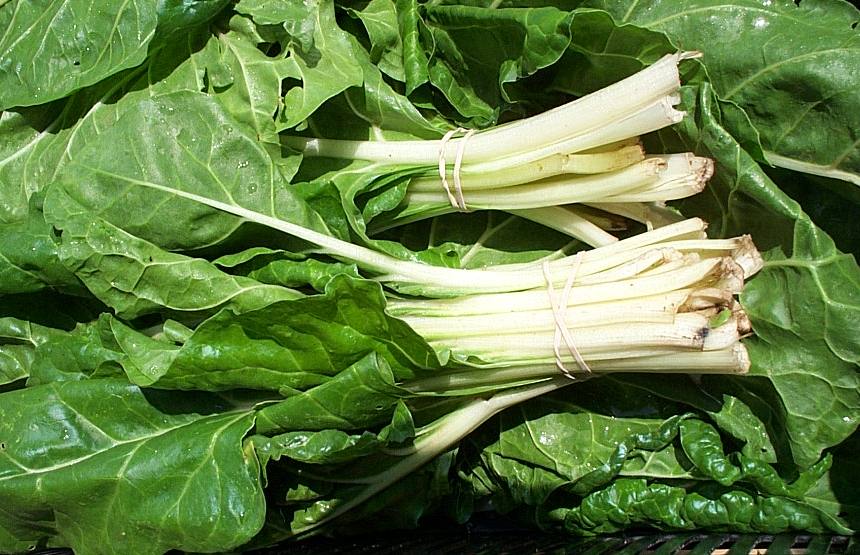
Over the New Years Weekend, two things happened. First, the weather dipped down into the 40s and 50s; then, Martine came down with a nasty cold. What that signaled to me was that it was time to cook a big tureen of soup. We settled on my mushroom and barley soup with added celery, carrots, and red potatoes.

What I’ ve been doing for a couple of years with good results is taking a big bunch of Swiss Chard and putting it through the blender either with water or stock—or both. For this, I prefer the green chard with white ribs, only because the brightly colored chards look a bit odd in the soups I cook.

The mixture of blended chard with, say, a good chicken stock such as the one I buy at Trader Joe’s, results in a really tasty broth. (Both of us went for seconds on the soup today.) Plus, you could hardly do better when it comes to nutrition: check this out. We tend not to eat enough vegetables anyhow.


The End of Summer

White Peaches

White Peaches

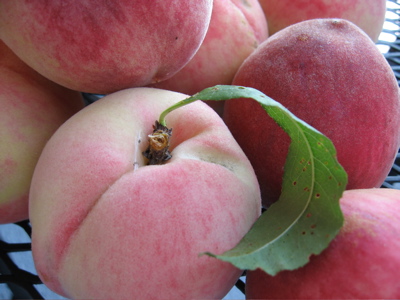
I do not regard Labor Day as the end of summer. Instead, I track the fruits that are in season. My favorites—cherries and apricots—have a short season lasting scarcely more than a month or so. Lasting about two or three months are when white peaches are in season. (I prefer them to yellow peaches, which I find to be too sweet.) When white peaches become pulpy, as I have observed at several places this week, summer is over.

Coming up is the season of Fuyu persimmons and pomegranates, which will last until some time in December. Then, or even before, I will have to switch to apples—preferably Honeycrisps. The worst time of the year for fruits is January and February, until the new season strawberries are ready for harvest.

As a diabetic, I am dependent on fruits for natural sweetness that does not tear down my health. And that’s why I am so fastened on fruit. I love going to places like Oak Glen in San Bernardino County, past Yucaipa, for fresh apples. There is a fruit stand called Cornejo’s near Fillmore where I can find wonderful fresh-picked fruit (though right now they are into Valencia oranges). The best fruits I have ever eaten were purchased from orchards in Tulare County on the road to Sequoia National Park.

So it goes, the year in fruit.


Eve Babitz and the Taquitos

Cielito Lindo, Specializing in Beef Taquitos on Olvera Street

Cielito Lindo, Specializing in Beef Taquitos on Olvera Street

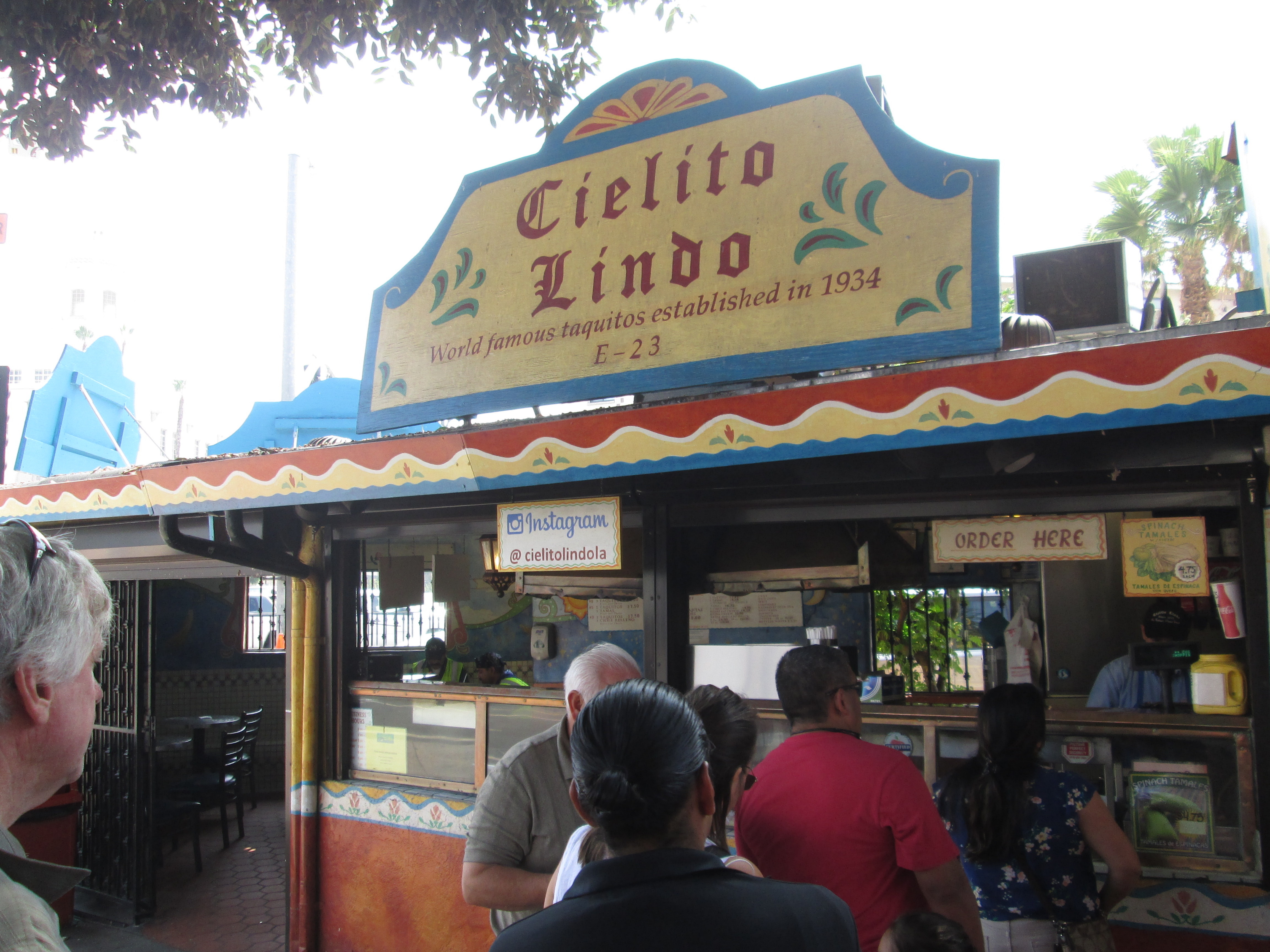
As I was visiting the Taste of Ecuador Festival by Olvera Street yesterday, I decided to find the place that Eve Babitz writes about in her book Eve’s Hollywood about what could have kept rock star Janis Joplin from OD’ing. Toward the end of the book is an essay entitled “The Landmark,” which she dedicated to food writer M. F. K. Fisher. She starts at the very beginning of Los Angeles:

In 1781 a Franciscan with 24 ex-cons and runaway slaves decided to name something that didn’t exist La Ciudad de Nuestra Signora [SIC] La Reina de Los Angeles and proceeded to build a church and a street called Olvera Street. The church and the street are still there, preserved by this huge city called L.A. as a landmark from when one street was named the City of Our Lady, Queen of the Angels. The street is uneven and bricky and lined with terrific shops where you can get things you think you want, cheap. And taquito stands for in case you get hungry. Taquitos are much better than heroin, it’s just that no one knows about them and heroin’s so celebrated.

Now Eve’s book was written over forty years ago. I decided to see if I could find her favorite taquito stand, which she describes as follows: “The best place to get them [taquitos], though they are also sold in other places throughout the mall, is the place on the Northeast part of Olvera Street.”

Making Taquitos at Cielito Lindo

Making Taquitos at Cielito Lindo

It just so happens that the Northeasternmost restaurant on Olvera Street is Cielito Lindo (“My Little Beautiful Heaven”), which has been around since 1934 and specializes in taquitos in a way that none of the other restaurants on the Street do. Once again, Eve continues:

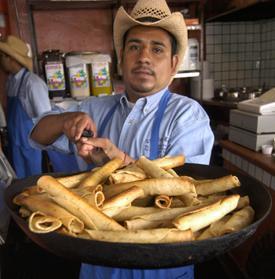
They have black frying pans with long handles that are about a foot and a half in diameter and have sides that flare out about 3 inches high so that oil won’t hit the cook. With metal prongs, the guy lays the raw taquitos neatly in the oil over a fire of coal that produces a heat of such intensity that blast-furnace clouds encompass the buyer as he watches the taquitos cook and the guy turns them over when they are done on one side.

Except for the coal fire, which is now probably against some city health or safety regulation, that’s pretty much what I saw at Cielito Lindo, such that I am 100% sure that this is the place to which Eve would have directed Janis Joplin to keep her from that nasty heroin.

By the way, the taquitos were delicious. I will return there for more. Their chile rellenos are pretty good, too.


Mexican Heartbeat

¡Muy Delicioso!

¡Muy Delicioso!

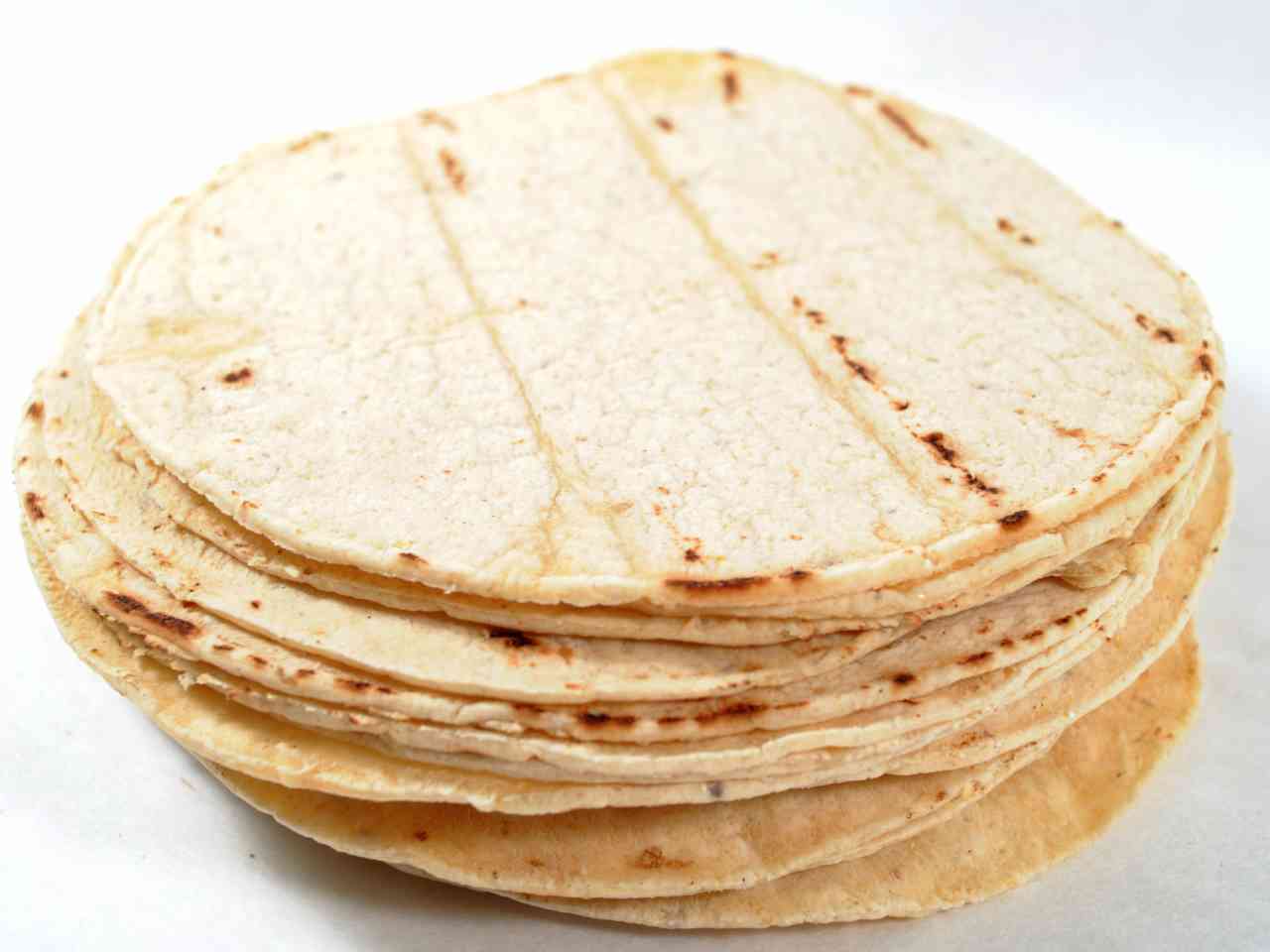
Fifty years in Los Angeles, and I’m turning into a Mexican! So many of the foods I used to like before—like rice, potatoes, bread, and gooey pastries—are now part of my pre-diabetic past. Lately, I’ve been eating a couple of tacos for lunch, preferably nopalitos (marinated prickly pear cactus) or fish with raw cabbage slaw. And for breakfast, I like to warm up some corn tortillas over a flame, roll them up in aluminum foil, and pop them in the oven. Warm them for a few minutes, and they taste great with sweet butter and a dash of salt.

I have heard it said that the sound of women’s hands rhythmically slapping the masa de maíz into little round cakes the heartbeat of Mexico. Perhaps I am developing a Mexican heart. There are far worse things in this world—though at least one presidential candidate would demur.

Apparently, the tortillas are helping my glucose readings stay lower. They satisfy my appetite without sending my sugar into the stratosphere.

Nopalitos

You Wouldn’t Think These Cacti Would Be Good Eating, Would You?

You Wouldn’t Think These Cacti Would Be Good Eating, Would You?

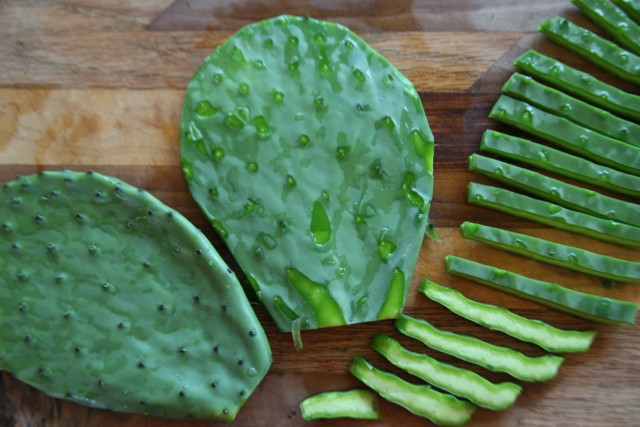
The first time I ran into the pads of prickly pear cactus (Opuntia) in a supermarket, I received a nasty shock. Out of curiosity, I handled them and found that the spines were still in them. My first impulse was to think, “Now why would anyone eat this stuff?”

But curiosity won out in the end. I think I first saw nopalitos on the menu at Paco’s Tacos in Culver City and decided to order them. First of all, it looked very different from the fresh cactus pads:

Hmmm, The Spines Are All Gone!

Hmmm, The Spines Are All Gone!

For one thing, the texture was all different, kind of like pickled okra—and the spines were all gone. Gingerly, I ate some with a fresh corn tortilla and loved the flavor.

Later, when my Type 2 Diabetes required some changes to my diet, I was delighted to find that nopalitos retard the absorption of sugars by the digestive system and thus have a low glycemic index. In Southern Calfornia, one could buy bottled nopalitos in virtually any supermarket and eat them as a salad, in the form of tacos, or cooked with scrambled eggs and chiles.

I don’t know whether it’s possible to find nopalitos outside of the American Southwest, but I think it’s worth making an effort. They’re delicious!


Eating Tacos Hunched Over

Tres Tacos

Tres Tacos

I walked to the Promenade in Santa Monica this morning. While there, I bought two Patrick Modiano novels and had lunch at the Lotería Grill. Of late i have become partial to a couple of soft tacos for lunch, wrapped in corn tortillas.

Naturally, I leaned over my plate, having learned that if I didn’t, there would be a pattern of food stains on my shirtfront resembling a blurry Mexican flag. It didn’t help that my pot belly pushed my shirt well into harm’s way.

There is an art to eating tacos. One has to pinch across the top so that the contents are held in while eating. It helps if the corn tortillas are relatively small so as to limit the possible damage.

According to the Popol Vuh, the great repository of myths of the Mayans, man was created from maize.  At first, the gods made four men who:

…were good people, handsome, with looks of the male kind. Thoughts came into existence and they gazed; their vision came all at once. Perfectly they saw, perfectly they knew everything under the sky, around in the sky, on the earth, everything was seen without any obstruction…As they looked, their knowledge became intense. Their sight passed through trees, through rocks, through lakes, through seas, through mountains, through plains.

The tacos didn’t quite do that for me, but they were good. I always appreciate food that is spicy hot, that bites back when I bite into it. And Mexican food that is authentic does that for me.


Berezina in a Dish

My Least Favorite Hungarian Food

My Least Favorite Hungarian Food

Whenever my mother made it, I always ran out of the house and stayed away until the smell dissipated. What made things difficult is that she always made kocsonya (pronounced KOH-chone-yah) in the winter. As my Uncle Emil used to say, he couldn’t eat any unless there was snow on the ground. I did him one better: I couldn’t eat kocsonya if there was any in the Western Hemisphere.

I’ve always said that a serving of the noxious stuff reminded me of a frozen river with mangled human and animal remains—very like the Berezina River in Belarus where Napoleon lost thousands of his remaining forces after retreating from Moscow.

Apparently there’s a Russian equivalent. In a short story entitled “Aspic,” Tatyana Tolstoya describes cooking up a batch very like the recipe I’m describing:

Now it’s boiling, raging. Now the surface is coated with gray, dirty ripples: all that’s bad, all that’s weighty, all that’s fearful, all that suffered, darted, and tried to break loose, oinked and mooed, couldn’t understand, resisted, and gasped for breath—all of it turns to muck. All the pain and death are gone, congealed into repugnant fluffy felt. Finito. Placidity, forgiveness.

Kind of makes vegetarianism attractive, no? And that’s about all I could say without retching….


On Eating Leaves

Some People’s Idea of a Meal

Some People’s Idea of a Meal

Sometimes I feel as if the entire medical profession is ganging up on me to eat salads with or without chicken. To begin with, I am no lover of chicken or turkey, though I like to use their stock in cooking soups.

But I draw the line at what the typical American considers a salad: a bunch of leaves with some goopy dressing. My complaint is not with raw vegetables. In hot weather I make good salads with red and green peppers, celery, onions, garlic, and even a few leaves of red leaf or butter lettuce mixed in. Salads consisting of nothing but leaves, as in “field greens,” I usually leave on my plate untouched. Without a decent crunch, salads come across as limp weeds with no character.

Now certain Middle Eastern salads are more to my liking, such as Shirazi or Israeli salads, with diced tomatoes and cucumbers—and no raw greens. Even Greek salads have some crunch, along with some tasty feta cheese for flavor. But American salads, well ….

I know that “they’re good for you”—but so is a lot of other unpalatable stuff. When I eat, I don’t like to feel that I am grazing in a meadow. (I suspect that most people who eat those all-leaf salads are doing it to make room for rich pastries or chocolates afterwards, when out of sight of one’s friends.)

Do I eat enough vegetables? Yes, indeed! All my dishes include a good mix of veggies. Especially my soups, which usually contain Swiss chard or kale mixed with stock in my blender.


Dreams of Soon Tofu

Cold Weather? Time for Soup!

Cold Weather? Time for Soup!

Today, Martine and I went to lunch at Galbi King. With the onset of cold weather in L.A., I felt like having some hot soup. And what can be hotter than extra spicy soon tofu? What is soon tofu? Here’s what one food writer on Chowhound.Com wrote:

Soon means “soft” in Korean, in this usage. So “soon tofu” is soft tofu. It’s quivery soft, like custard, but flavored with a savory broth filled with any number of good things from beef, to seafood, to pork. It’s just like the tofu in tofu fa, if you’ve ever had that.

At BCD and most other soft tofu joints in L.A. and OC [Orange County], the soft tofu comes bubbling in a stone crock to your table.

When the hot stone crock comes to your table, you break a raw egg in it—and prepare for a culinary paradise. I also spoon in some steamed rice to cool the fire. Mine was served with pork and was as spicy as the restaurant was willing to risk. As it happens, I am a certified chili-head, so I had no difficulty with the fiery broth. (Unless you too are one, don’t try this at home, Kids!)

Please note that not all Korean restaurants can make good soon tofu. I went to one Korean-owned place in the Patronato district of Santiago, Chile, and had a bowl that was sadly deficient in flavor. Even in Los Angeles, there are good Korean restaurants, and bad Korean restaurants.