In Praise of Tacos

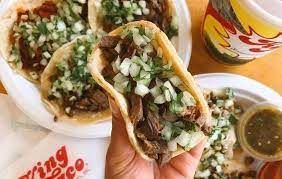
Tacos al Pastor from King Tacos

Tacos come in two basic varieties. There are the hard shell tacos which disintegrate the moment you put your hands on them; and there are the soft shell tacos, usually made with corn tortillas, which you can pinch without having a mess in your lap. I suppose there are soft shell flour tortillas in places like Northwest Mexico, but they are infrequently found across el border.

Today I drove Martine to Lakewood for an appointment with her ophthalmologist. On the way, I noticed there was a King Tacos on Lakewood Boulevard just south of Alondra, and a light suddenly went on in my memory. About twenty or thirty years ago, I attended an L.A. Galaxy professional soccer game at the Rose Bowl. While there, I bought several tacos from the concessionaire, who was King Tacos. I remember really liking them, but I had not been to any of the low rent parts of town where branches of King Tacos tend to congregate … until today.

I had three tacos el pastor with a Diet Pepsi, which I enjoyed mightily. There is something about Mexican antojitos (“little whimsies”) which help make Mexican cuisine one of the great world cuisines—and that’s before even figuring in some regional variants as Oaxácan and Yucatec cuisines.

I shall make it a point to return to King Tacos again. Still great after so many years!

Frito Pies

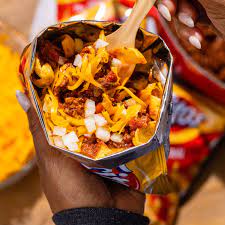
This Is the Way It Looked When I First Ate One

The first time I ate a Frito Pie, it looked like the above photo, and it was purchased from where it was invented, a lunch counter in Santa Fe, New Mexico.

The second time was today. I cooked it myself from this recipe. As I made it to please Martine, the finickiest of all eaters, there was no way I could add raw onions as a garnish. And I used a mild La Victoria Red Enchilada sauce, even though my preferences is for spicy hot dishes. I second the recommendation of using Ranch House canned beans, as they go very well with this recipe. Oh, and I recommend extra sharp cheddar cheese. By the way, don’t use any other chips other than original recipe Fritos: That’s why it’s called Frito Pie.

Tomorrow, I will serve the leftovers with cut up fresh avocado. It’s not in the recipe, but I think it would go well with it.

One Word: Plastic

Do We Eat a Credit Card Worth of Plastic Every Week?

In 2019, the World Wildlife Fund quoted research from the University of Newcastle, Australia, to the effect that all of us eat a credit card worth of plastic in our food every week. I have heard the expression that you have to eat a peck of dirt before you die, but this is ridiculous. I read an article entitled “No, you don’t eat a credit card worth of plastic every week. But you still swallow a lot of it” on Salon.Com.

Although plastics of various sorts have been around for decades, they have not been studied as intensively as they deserve to be. After all, we as a people tend to be early adopters of convenient new technologies. It is only later that the grim news hits the streets.

It’s the same with cell phones. There have been arguments pro and con about the phones causing brain cancer, but it is very likely that there are other ill effects that will not come out for years. Back in the mid 1980s, I was involved selling demographic data for telephone service providers to be used in deciding where to erect cell phone towers. Now I feel somewhat guilty about my participation in this effort.

Getting back to plastics, an article in the journal Environmental Health Perspectives stated:

Current estimates suggest that over 10,000 unique chemicals are linked to chemical manufacturing, many with unknown health effects and others identified as chemicals of concern. With such a large number of chemicals, it is very challenging to identify the key exposures we should be measuring to study health impacts of microplastics, as well as understanding their levels in humans.

Dr. Shanna Swan, a professor of environmental medicine and public health at Mount Sinai School of Medicine in New York City, has documented plummeting human sperm counts possibly being affected by widespread plastic pollution: “I think it is important to note that micro and nanoplastics (MNPs) can increase the body burden of the previously recognized — and often studied — chemicals in plastic (most notably phthalates, bisphenols, parabens etc.).”

I suppose we’ll find out the whole truth eventually, but not before the human species has been irretrievably changed by the prevalence of plastics in our environment and our food.

The Tea Drinker

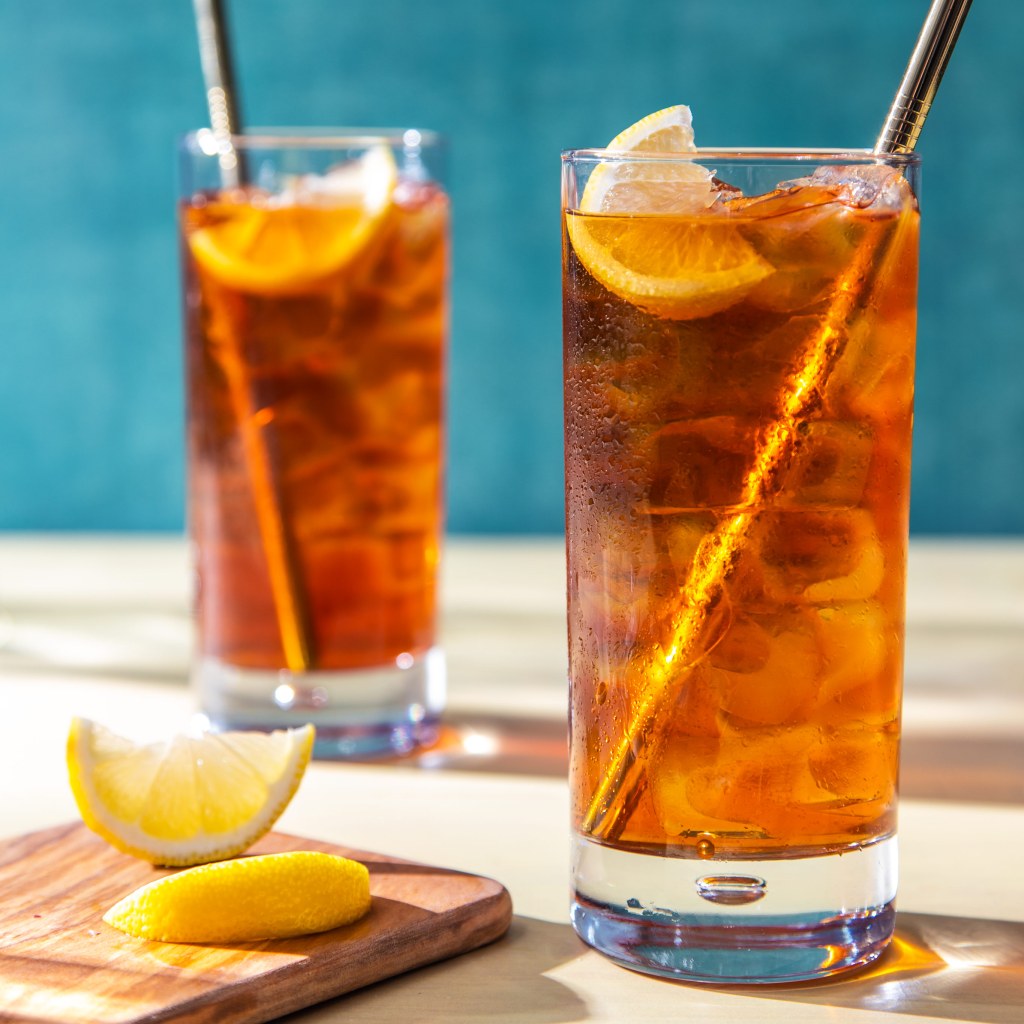
Iced Tea with Lemon

For many years now, I have begun each morning making a pot of Indian black tea, which I drink with a bit of honey (usually Mexican mesquite honey) and a squeeze of lime. By afternoon, what remains in the pot becomes iced tea—up to three glasses full. I try not to drink the entire contents of the pot every day, because tea acts as a diuretic. But in hot weather, I violate this rule of thumb.

Usually, I drink my iced tea without anything added. Sometimes, especially when there is company, I will fill a pitcher with iced tea and add artificial sweetener, the juice of a whole lemon, and a jigger of high quality dark rum, preferably Ron Zacapa Edición Negra from Guatemala or Myers’s Original Dark Rum from Jamaica. The rum is for flavor only and is not enough for intoxication.

My mother has told me that, as a baby, I used to sip from her coffee. Now I will not touch coffee, and do not even like coffee-flavored ice creams or candies. And when it comes to carbonated sodas, I rarely drink more than one glass every couple of weeks, usually at a restaurant.

That doesn’t quite make me a man of one beverage, but it comes close. I also like unsweetened mineral water, fruit juices, tomato juice, and lemonade. Put everything else I drink against hot and iced tea, however, and the tea I drink outweighs all my other options, except maybe for plain water, and that only during heat waves. (Too much tea, and I pretty much have to live in the bathroom.)

What is it about Indian black tea that appeals to me so much? It’s difficult o find the exact words, but good tea has a clarity of flavor that satisfies without causing satiety. For years, I have been buying Ahmad of London loose teas by the pound, usually:

  • Darjeeling, the best Indian black tea
  • Ceylon from Sri Lanka
  • Assam, Baruti and Ghalami varieties mostly in cold weather

Occasionally, when traveling, I will drink an English Breakfast or Irish Breakfast tea from tea bags. In Asian restaurants, I drink end enjoy green tea. But thank you, no Earl Grey please!

At the Supermarket

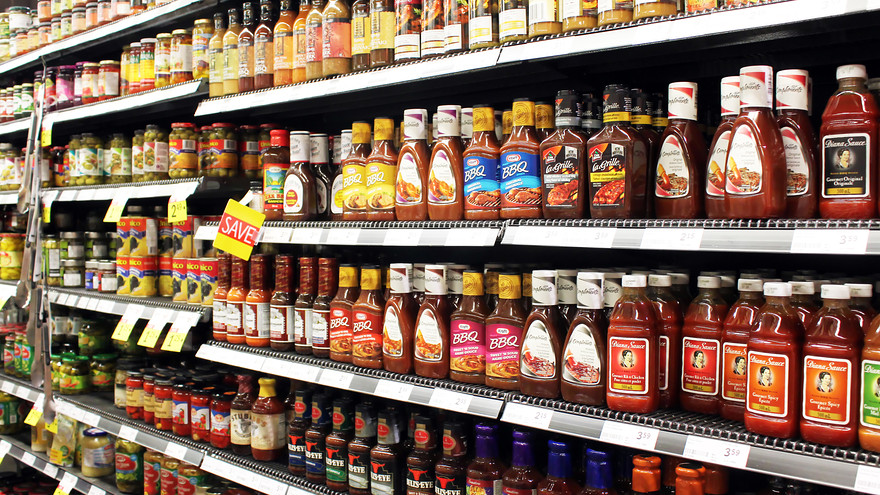
Infinite Variety: With/Without Sugar, Salt, Glucose, Etc.

There is nothing like a visit to the supermarket to demonstrate that not all is well with the Republic. It seems that one could buy tomato juice with or without salt or hot chile peppers. Of course, one could buy plain tomato juice, add the salt oneself and even add a few drops of my favorite Marie Sharp’s Chile Habanero sauce. And don’t get me started on milk. If you’re lactose intolerant, you could drink milk made from almonds, oats, soybeans, and (probably) kale. There is so much variety on the supermarket shelves that one is often hard pressed to find what one is looking for.

In case you didn’t know, there are firms which arrange the products on the shelf. Manufacturers pay to be at eye level. If you’re a cheapster selling a basic product, you will be stuck on the lowest shelf, which you cannot examine safely without getting a shopping cart up your backside.

Today, I was looking for a product rarely purchased by most Americans: whole granulation kasha, or buckwheat groats. I like preparing it with egg, onions, and bow-tie noodles as kasha varnishkes, a Jewish dish that Martine and I like. But there were zero varieties of kasha on the shelves, and probably several hundred varieties of rice, mostly not deserving of the shelf space they got.

So, instead, I got a can of clams and some linguine, with which I prepared today and (hopefully) tomorrow. Martine has told me, in no uncertain terms, that she doesn’t want linguine with clams; so she will shift for herself tomorrow. (Today, she finished off he Indian kima dish I prepared on Monday.) That is her prerogative: I remember my youth, when I was the pickiest kid in Cleveland.

Carnitas for My Birthday

Crispy Carnitas with Fresh Corn Tortillas. Yum!

Today I got taken out for my upcoming birthday. I had lunch with my brother and sister-in-law, my niece Jennifer, and her boyfriend John. I didn’t expect that birthday would be remembered—in fact, I haven’t given any thought to it at all. So it came as a pleasant surprise.

We were at the Kalaveras Restaurant in Redondo Beach. I was in the mood for a plato de carnitas with the pork slightly crispy. One of my favorite Mexican meals are home-made carnitas soft tacos with guacamole, hot sauce, and fire-roasted jalapeño chiles. The carnitas at Kalaveras came with cooked plantains and the usual beans and rice.

What with the conversation and the great food, I haven’t enjoyed myself half so much since Martine and I spent a week in Honolulu in September. Martine did not join us as she is still enduring the pain of a cast on her right arm after she broke two wrist bones late in December. She has a orthopedist appointment on Tuesday, so we’re both hoping the cast comes off, or is replaced with something less painful.

I don’t usually feel good about my birthday. In fact, I usually don’t feel anything about my birthday. Somehow, this year looks to be different.

Say Cheese!

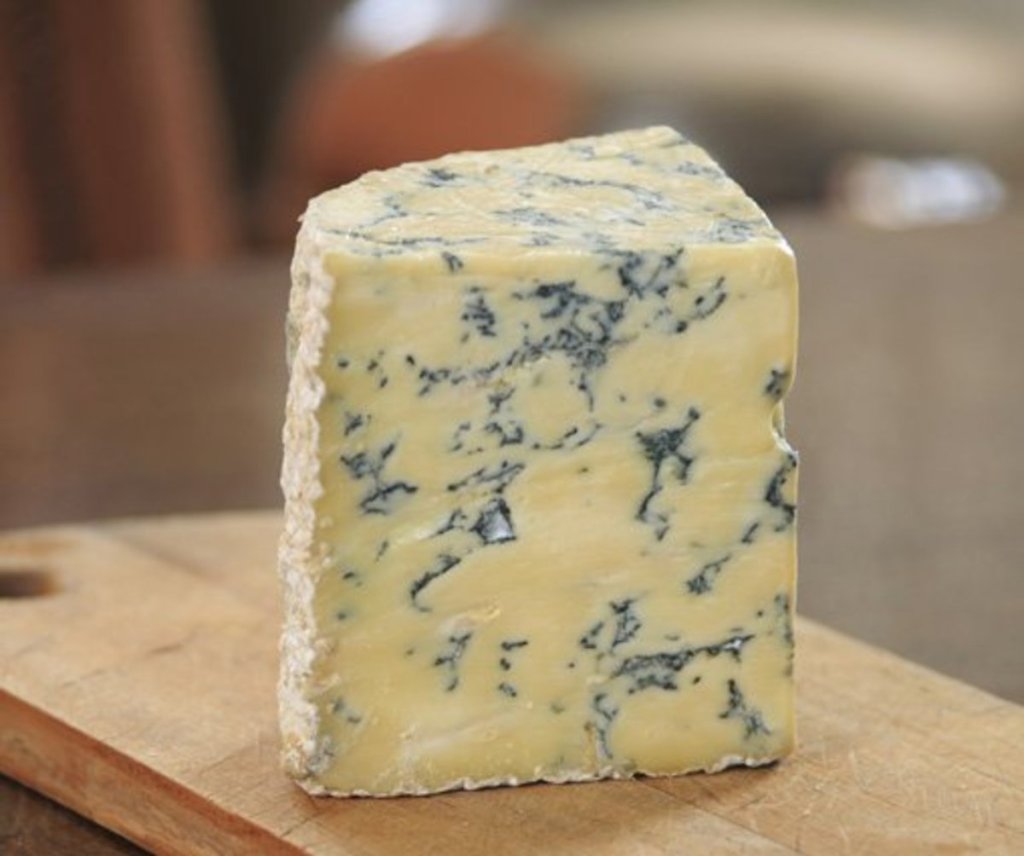
A Delicious Looking Piece of Stilton Cheese

Early in my adult life, I became a cheese-o-holic—particularly at breakfast time. I loved having hot Indian black tea with a couple cubic inches of cheese with crackers or bread.

Lately, I have taken to making my own Mexican quesadillas for breakfast using La Banderita soft flour tortillas, Monterey Jack cheese, and sliced pickled Jalapeños.

I usually have on hand Monterey Jack, Extra Sharp Cheddar, Parmesan, and a blue cheese, usually English Stilton. What I never eat is what is euphemistically called American Cheese or any similarly overprocessed “cheese food.”

Also excellent are sheep and goat cheeses. I remember visiting a wine and cheese shop in Amboise, France, that was built into the foot of the rock on which the Château d’Amboise was built. I must have tried a dozen varieties of goat cheese with local Loire wines. I was in hog heaven. I feel similarly about good quality feta cheese, especially in Greek dishes.

Once I open a packet of cheese, I always repackage it first in wax paper and then aluminum foil. It seems to last longer that way.

In terms of health, there are different points of view about cheese—as is true of almost any kind of food or drink. Despite the high sodium and fat content of cheese, my blood pressure and cholesterol are well under control. Consequently, I plan on continuing to enjoy cheese as long as I can.

Sushi

Assorted Sushi and Sushi Rolls

One of the best things about living in Southern California is the availability of good sushi. It’s something you have to be careful of, because sushi made with seafood that is not fresh can not only be disgusting, but can make you ill. So I always insist on going places that have a trained Japanese itamae, or sushi chef.

Also, I will only eat sushi in places where really fresh seafood is available. I have always joked about starting a rock band named Inland Sushi.

When we go to Honolulu next week, I hope to go some places where I can have sushi and Martine, who wouldn’t touch the stuff, could get something she likes close by. That is possible only in shopping malls like the Ala Moana Center and the International Marketplace and Royal Hawaiian Center. There used to be a couple of Japanese food malls near Waikiki, but they were shut down because of the Covid-19 pandemic.

It’s Greek to Me

Basil

They both look rather similar if you’re not a botanist: basil and oregano. I remember attending a cooking demonstration at a Greek Orthodox Church in Redondo Beach and being told by Pitsa Captain and Akrevoe Emmanouilides, the instructors, that in Greek cuisine the preferred spice was oregano. And that despite the fact that basil grew wild everywhere!

Although oregano is used in Italian cooking, the predominant flavor is of basil.

Oregano

In point of fact, I love both herbs. And I have even been known to use both of them in the same dish, especially pizza.

I love using fresh basil in my Italian cooking, even though I have to pay a bundle each time I buy it. Some day, I will probably create my own little herb garden in a box that hangs from the iron railing on the back steps of my apartment.

As for oregano, I have only ever used it dry and have not encountered any recipes that call for the fresh herb. I wonder why.

Cuy

BBQ Guinea Pig (Cuy)

In the Andes, one of the main sources of meat are guinea pigs. They are easy to raise, particularly if you don’t give them names or regard them as pets. The above picture was taken in Otavalo, Ecuador, famous for its Saturday tianguis, or market.

I have eaten many local foods, but never bothered to sample cuy, mostly because it is regarded as being full of tiny bones. According to one website:

All over Peru, towns honor the importance of cuy to their cuisine. Pachamanca, a traditional cooking method involving earthen ovens, often features guinea pig meat. A mural in the main cathedral of Cusco depicts Jesus and his disciples eating guinea pig at the Last Supper. During an annual festival in the town of Churin, residents celebrate cuy by dressing the animals up in colorful costumes. And across the country, townspeople gather and eat guinea pigs in honor of folk saints as part of a celebration known as jaca tsariy.

Guinea Pig Served at the Last Supper

In Chivay, Peru, I ate alpaca, which wasn’t half bad. I had the opportunity to eat edible clay at Sillustani, Peru; but I passed on it. That didn’t protect me from getting a horrible case of travelers’ diarrhea aboard a boat on Lake Titicaca.

In general, I took to the local cuisines of the Andean countries I visited. Perhaps one of the most interesting phenomena was the prevalence of chifas, Chinese restaurants, in all but the smallest towns. Even at Machu Picchu, I had a tasty wonton soup in the cool of the evening before my trip up the mountain.