What Do These Burmese Kings Have in Common?

Put Your Thinking Caps On

Put Your Thinking Caps On

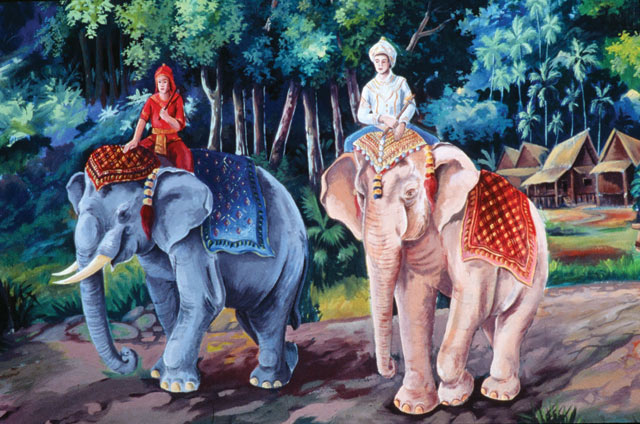
The four Burmese kings are: Uzana, Minrekyawswa, Razadarit, and (of course) Tabinshweti.

Uzana was trampled to death by an elephant in 1254; Minrekyawswa was crushed to death by an elephant in 1417;
Razadarit died while lassoing elephants in 1423; and Tabinshweti was beheaded while searching for an elephant in 1551.

Now if you were a king in Burma, that suggests you stay away from the GOP.

The above is courtesy of the Futility Closet.

Flea-Bitten Empire

With the Legions Came Another Invader ....

With the Legions Came Other Invaders ….

According to an article in The Guardian, we tend to give a lot of credit to the Romans for cleanliness and hygiene. What is not commonly associated with them are “lice, fleas, bed bugs, bacterial infections from contamination with human feces, and 25ft-long tapeworms, a misery spread across the empire by the Roman passion for fermented fish sauce.”

But what about all those Roman baths? Well, how often was the water changed? Or did the bathers regale themselves in a bacteriological soup until the bucket brigade of slaves renewed the water? Unchanged water “left the bathers swimming in a warm soup of bacteria and the eggs of parasites such as roundworm and whipworm.” Then, too, many simply bathed themselves in olive oil, which was cleaned off with a strigil, an kind of scraper with a curved blade used to scrape sweat and dirt from the skin in a hot-air bath or after exercise.

Roman Baths

Roman Baths

And what about those tapeworms? Here the culprit was the Romans’ use of a fermented raw fish sauce called garum. According to Piers Mitchell, from whose article in The Journal of Parasitology this information is derived: “Wrapped around the Romans’ intestines …, the parasites could remove nutrients from food before it could be digested, which could cause severe or even fatal anaemia. Evidence from some Roman sites in Italy revealed that up to 80% of the child skeletons had evidence of severe anaemia.”

Another common source of ill health was the use of human feces to fertilize vegetable gardens. If the human wastes were allowed to compost for a year or more, there would be no danger from bacteriological infections; but there is no proof that the Romans knew of this.

Archaeologists found that the Romans with their baths were no freer from infection and worms and such like than the supposedly more primitive Vikings.

Sic transit gloria Imperii!

King Charles’s Head

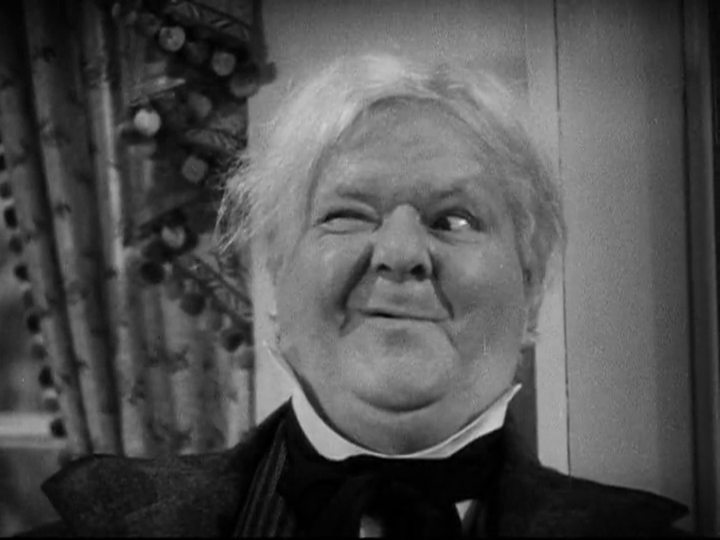
Mr. Dick, Who Cannot Get King Charles I’s Head Out of His Writing

Mr. Dick in David Copperfield, Who Cannot Get King Charles I’s Head Out of His Writing

Today, I attended the European History Meetup Group at the Will and Ariel Durant Branch Library in Hollywood. The subject under discussion was “The King, the Parliament, and the Death of Absolute Monarchy in Great Britain.” We concentrated on the Seventeenth Century, particularly the arrest and trial of Charles I, the rule of Oliver Cromwell as Protector, and the Restoration.

It was for this meeting that I had read Christopher Hill’s great book, The World Turned Upside Down: Radical Ideas During the English Revolution. As usual, for these meetings I am usually more interested in cultural history than names, dates, and battles.

The group leader, Bronislaw Meyler, does an excellent job of introducing the subject and putting all the pieces together.


America’s Concentration Camps

Why Not the Germans and Italians?

Why Not the Germans and Italians?

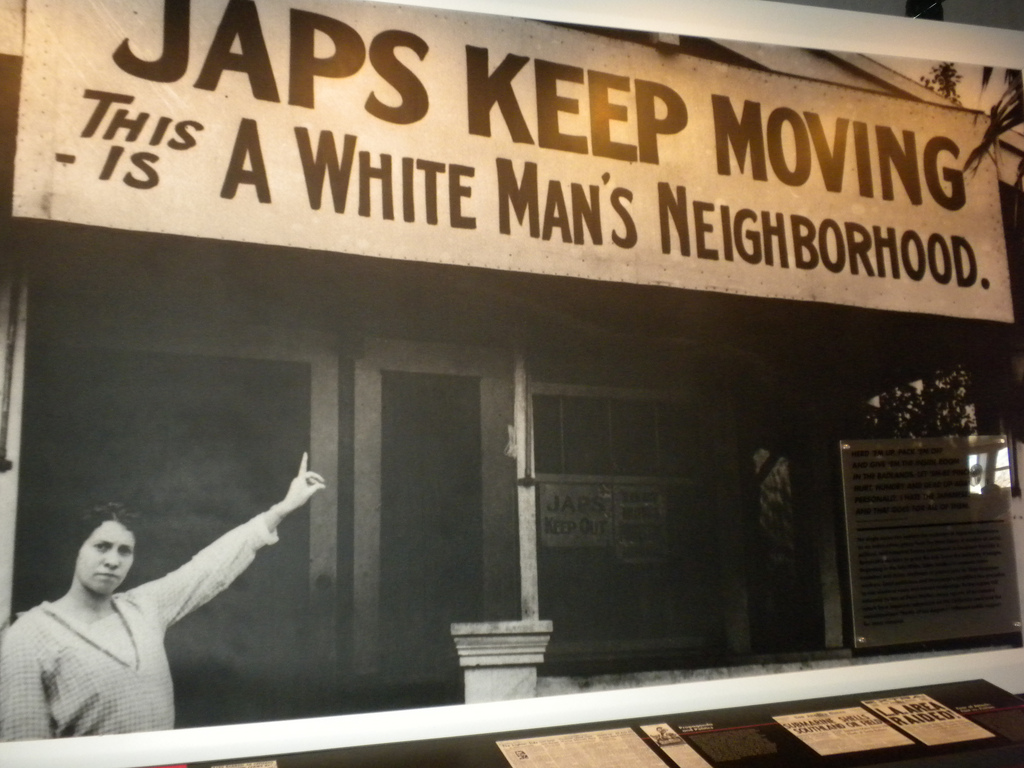
Today, Martine and I returned to the Skirball Cultural Center to see their new exhibit of Ansel Adams photographs of the Manzanar Relocation Center for Japanese-Americans during Wold War Two. In 2010, we had traveled to the Owens Valley to visit the Manzanar site, midway between Lone Pine and Independence. It was there I photographed the above rather disgusting display image.

Manzanar now has an interesting visitor center which is worth a stop on the long highway between Los Angeles and Reno.

In addition to Ansel Adams’s work, there are a number of photos by Dorothea Lange and others, as well as interesting documents relating to the “evacuation” and the maintenance of a system of concentration camps throughout the American Southwest.

Miné and Her Brother Hear the Radio Announcement About the Pearl Harbor Attack

Miné and Her Brother Hear the Radio Announcement About the Pearl Harbor Attack at Breakfast

Down the hall, there was a smaller exhibit of artwork by Miné Okubo, who published a book of sketches called Citizen 13660 about her experiences at the Tanforan and Topaz War Relocation Centers.

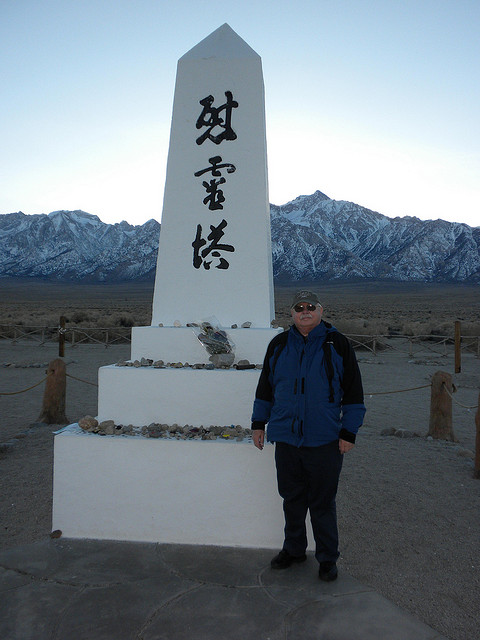
Below is a photo of me taken by Martine at the monument to those who died at Manzanar, in lieu of individual headstones.

Monument to Manzanar’s Dead

Monument to Manzanar’s Dead

Born in Discord

Map of Argentina in 1816

Map of Argentina in 1815

We tend to forget the sharp birth pangs of any republic. After we approved our famed constitution, it took seventy-five years and a bloody civil war in which millions died before we could begin to act as a unified country. (Though, even now, that seems in doubt.)

In Argentina, the process took roughly as long, and not without substantial rough spots until as recently as 2002. Originally, the country was called the United Provinces of the River Plate. Then, after the Congreso de Tucumán in 1815, the land was briefly named after the congress.

But major trouble lay ahead: A long conflict between the Federalists and the Unitarians. In South America, both parties had no relation to the U.S. Federalists or the Unitarian church. In San Martín: Argentine Soldier, American Hero, John Lynch wrote:

In spite of his fanatical liberalism, [Bernardino] Rivadavia was essentially a man of peace; bowing to the opposition of provincial caudillos and porteño [Buenos Aires] Federalists, he stepped down from the presidency in July 1827 and retired to poverty and exile. He did not appreciate the changing pattern of power in Argentina. Did San Martín? The Rivadavia group consisted essentially of intellectuals, bureaucrats, professional politicians, ‘career revolutionaries’ as they have been called, who did not represent a particular economic interest or social group. His [federalist] enemies, on the other hand possessed real power; the estancieros [ranchers] formed a strong political base, rooted in the country and the cattle industry, and they wanted their profits to remain in the province instead of being absorbed into a national economy. The estancieros were the new men of the revolution; they brought a military and economic power to the federal party and soon began to seek direct political power.

If you ever want to read a damning indictment of the Federalist caudillos, I recommend you read Domingo  Faustino Sarmiento’s Facundo, about the crimes of dictator Juan Manuel de Rosas. After several periods of political exile, Sarmiento became president of Argentina from 1868 to 1874.

When Everything Changed

The Caisson Bearing Kennedy’s Body Enroute to the Cemetery

The Caisson Bearing Kennedy’s Body Enroute to the Cemetery

It was another blast furnace day in Southern California. To avoid the smell of charred walls and furniture in our apartment, Martine and I decided to spend the afternoon in the air-conditioned video library of the Paley Center in Beverly Hills. While Martine watched Gale Storm in episodes of “My Little Margie” (1952-55), I watched the funeral cortège of the assassinated John F. Kennedy (November 24, 1963).

What would have happened if Kennedy were never shot dead in the streets of Dallas? (Way back in the depths of my mind, I have never forgiven Texas for being the scene of that sad event.) America was stunned. The news seemed to go on all hours: Poor Walter Cronkite talked about Lee Harvey OsBURN being shot by Jack Ruby. I remember watching the coverage at the auditorium of the newly opened Hopkins Center at Dartmouth College, where the TV coverage was aired in the auditorium.

Blackjack, the Riderless Horse in JFK’s Funeral Cortege

Blackjack, the Riderless Horse in JFK’s Funeral Cortège

The President was buried with full military honors. Six grey horses pulled the artillery caisson on which his flag-draped coffin lay. Behind the caisson was a riderless black horse named Blackjack with stirrups and riding boots reverse, whose friskiness was in marked contrast to the grim pace of the procession. The muffled drums, the horns breaking out into the marche funèbre, the tolling bells of St. Christopher’s church, the grim faces of First Lady Jacqueline Kennedy and the two surviving Kennedy brothers—all added up to one of history’s grinning death’s heads.

What would have happened if President Kennedy were not assassinated? Would the conservative insurgency that followed years later ever have happened? There are so many terms in the equation that follows that it is difficult to conclude anything with any degree of certainty. There was Viet Nam, Cuba, Communism, the Economy, even the Mafia to consider. I guess, in the end, whatever happened was fated to happen.

Certain images from that funeral have stuck in my mind. Among the heads of state, there was the gigantic Charles de Gaulle in the front line. There were endless women crying—women that looked different in that period over half a century ago. As the procession proceeded, it was followed on either side by hundreds, perhaps thousands of everyday people who wanted to miss nothing.

Under Four Flags

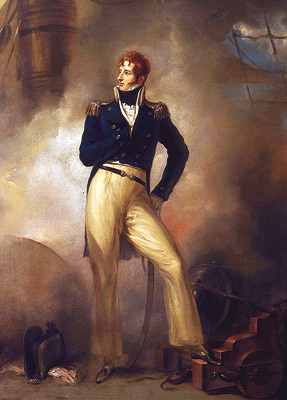
Lord Thomas Cochrane (1775-1860)

Lord Thomas Cochrane (1775-1860)

He must have been an amazing sight to his enemies, towering over six feet with red hair. Lord Thomas Cochrane, 10th Earl of Dundonald, was an impoverished Scot of noble birth who was a brilliant attacking sea captain. Because of various circumstances, mostly relating to his problems with authority, he was perhaps the most brilliant naval strategist who did not actually command a fleet. Had the Admiralty not been so venal and corrupt, he could have shortened the Napoleonic Wars by incursions against the mainland of France, forcing Napoleon back from Russia ahead of schedule. But that was not to be.

Some people are not meant to get along well with politicians. (I am one such myself, though not with one thousandth the talent of the Scotsman.) Cochrane developed a whole slew of enemies, hobnobbing as he did with Radicals as William Cobbett and Sir Francis Burdett. He even spent time at King’s Bench Prison for stock fraud—a mostly bogus charge cobbled together by his enemies with a complaisant and corrupt judge on the bench.

Stripped of his Order of the Bath and drummed out of the Navy, Cochrane accepted an offer the command the navy of the emerging Republic of Chile. He fought a number of sharp naval actions until the Spanish Pacific Fleet was driven off. Then he assisted Dom Pedro I of Brazil fight for that country’s independence from Brazil.

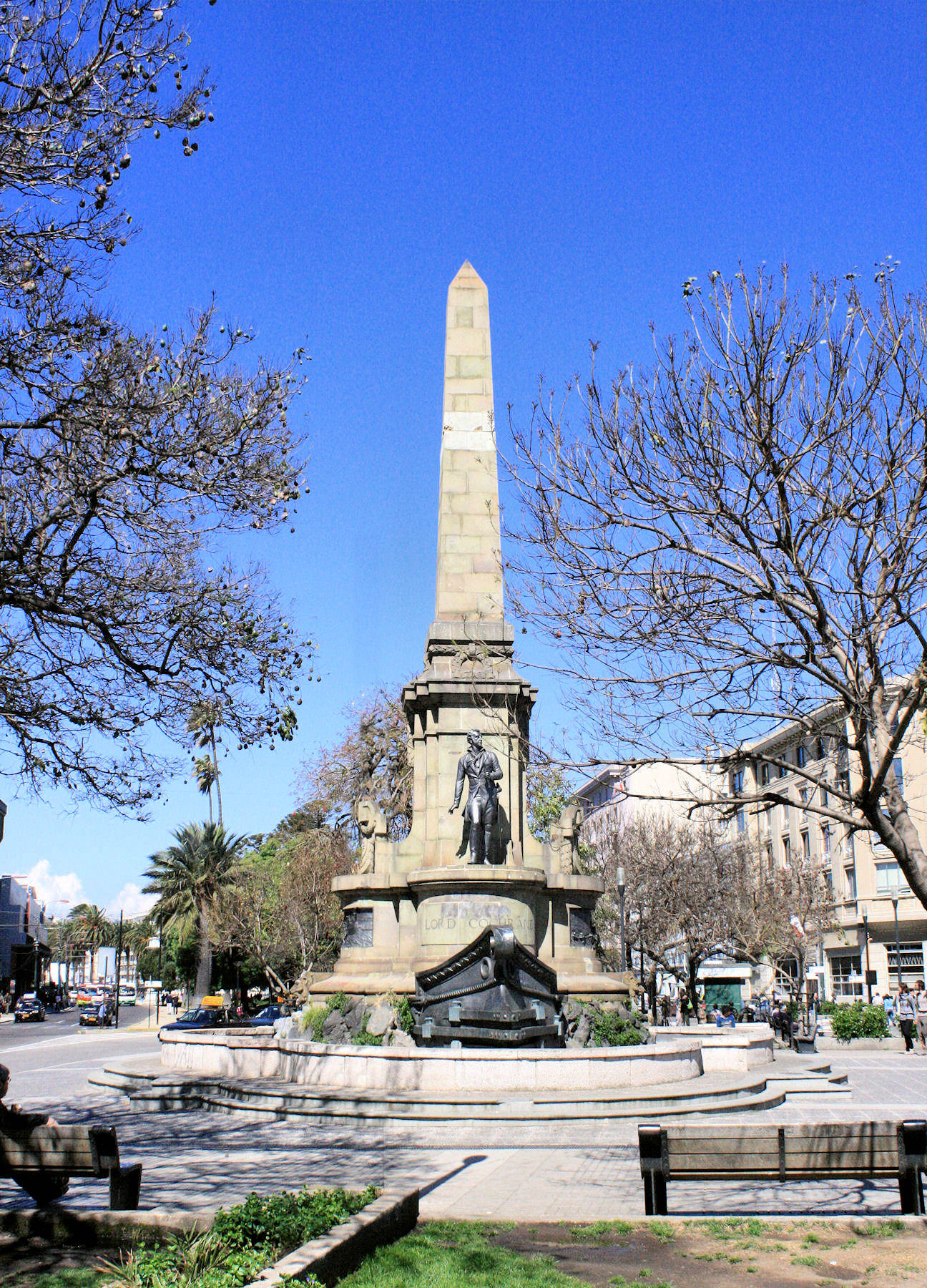
Memorial to Cochrane in Valparaiso, Chile

Memorial to Cochrane in Valparaiso, Chile

Finally, he ended up commanding the fleet of the Greeks who were then fighting to free themselves from the Ottomans. Here he was least effective, largely because of the rampant factionalism of the Greeks. According to Donald Thomas in his excellent biography Cochrane, “he wrote to the Chevalier Eynard of the Philhellenic Committee in Paris, describing the government of Greece as depending on ‘bands of undisciplined, ignorant, and lawless savages.’” This was a far cry from the well-trained British and Chilean sailors he had commanded.

Eventually, Greece won her independence, but only after the British, Russians, and French combined to dictate terms against the Turks.

Cochrane reminds me of General George Patton, another brilliant military leader who paid a heavy price for refusing to kiss the butts of military administrators.

I Am Attacked by the British

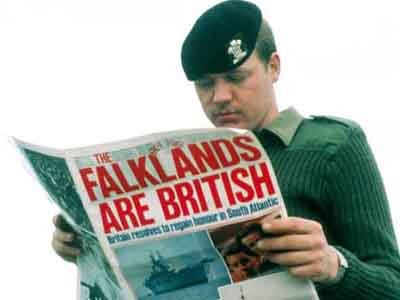
All I Did Was Express an Opinion

All I Did Was Express an Opinion

Yesterday, I posted a blog about the Falklands War of 1982 and ran into a hailstorm of British patriotism, challenging me to provide reasons. Very well, I am prepared to do so.

I prefer Argentina’s claims to Britain’s because … well … the Argentinians have better food. (The British cheeses, however, are vastly superior—especially Stilton.) I cannot help but think the poor mutton-eating settlers of the Falklands do not appreciate the extent to which they have been deprived.

Am I anti-British? By no means. On the other hand, I was never a supporter of Margaret Thatcher. But then, General Galtieri and his Junta win no awards either.

Let’s just call it an unsupported opinion by an obviously prejudiced observer.


Islas Malvinas

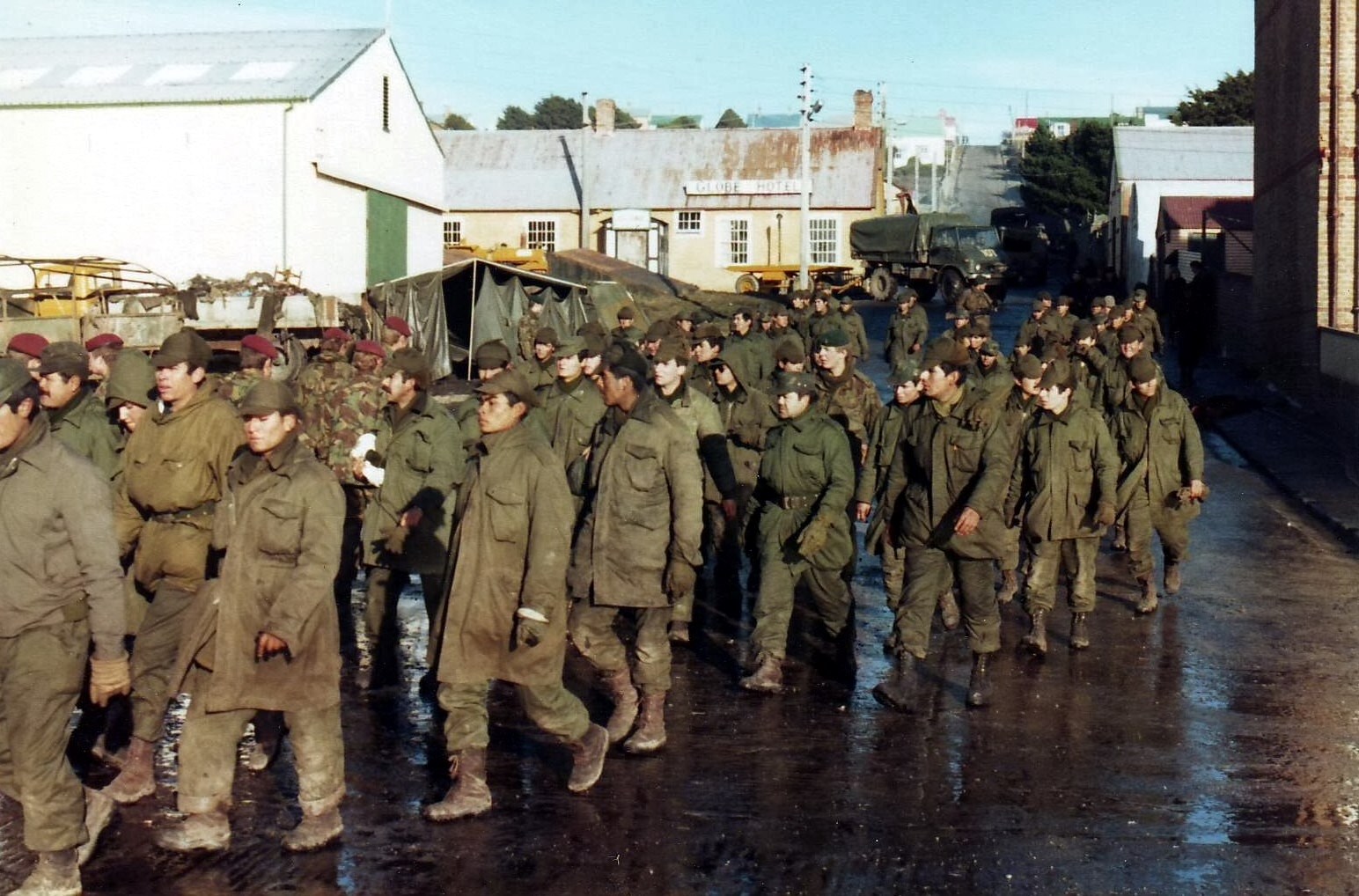
Argentine Prisoners of War in Port Stanley, 1982

Argentine Prisoners of War in Port Stanley, 1982

In 1982, Argentina invaded the Falkland Islands, which it had claimed ever since independence from Spain in 1810. However, England and France had also settled the archipelago, though France eventually abandoned their claims to Spain. Argentina could very well have won, except for one thing: Iron Lady Margaret Thatcher was in charge, and she was having none of it. A short but bloody conflict ensued, with the Brits coming out on top. The Argentine junta of General Galtieri promptly collapsed and was replaced by free elections.

To whom do the Falklands rightly belong? A British sea captain  named John Strong discovered the islands in 1690, and Louis Antoine de Bougainville started a French settlement in 1764. There were English, French, Spanish, and Argentinean gaucho settlers in the Falklands; but England decided to lay claim to the whole shooting match in 1833.

That has never sat well with Argentina, which calls the archipelago the Islas Malvinas. The airport in Tierra del Fuego’s Ushuaia is called Malvinas Argentinas International Airport. Streets throughout the Republic bear the name Malvinas. And now the new 50-peso note reiterates the Argentine claim. The country is full of monuments to the war dead, and woe betide any tourist who utters the name “Falklands.”

... for Now Anyhow

… for Now Anyhow

My friend Peter did some filming in the Falklands before the 1982 war, mostly of old sailing ship wrecks which had run aground there after Cape Horn storms. He told me that, although the Falklands are in some of the richest fishing waters on earth, the local English residents all prefer to eat mutton.

Who is right? England or Argentina? My preference goes to the Argeninians, though I doubt that the British would ever step down, especially as there is considerable oil exploration taking place.


“The Whole Country Is One Vast Forest”

Deep Forest

A French Visitor Describes a Very Different America

Among foreign visitors to the young United States around 1800 was one Constantin Volney, who was lucky to escape the Reign of Terror and the guillotine in his native France. His The Ruin was one of some seventy volumes of travels in the New World by French visitors during that time.

“Compared with France,” wrote Volney, “we may say that the entire country is one vast forest.” In the year 1796, he had traveled from Pennsylvania through Virginia and Kentucky to Detroit and back by way of Albany. During his travels, he wrote, “I scarce traveled three miles together on open and cleared land.”

This was at a time when Philadelphia was the largest city in the United States, with a population of some 70,000 inhabitants, followed by New York, with 60,000; Boston, with 25,000; and Baltimore, with 13,000. In 1800, these were the only American cities with more than 10,000 population.

I got these facts from Van Wyck Brooks’s The World of Washington Irving, which is showing me a far different picture of my country some two hundred years ago.