I Am Attacked by the British

All I Did Was Express an Opinion

All I Did Was Express an Opinion

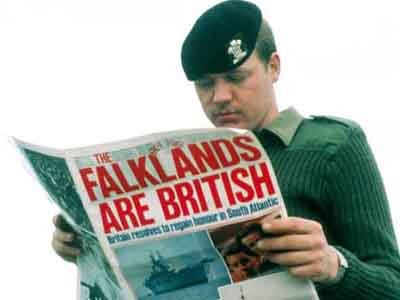
Yesterday, I posted a blog about the Falklands War of 1982 and ran into a hailstorm of British patriotism, challenging me to provide reasons. Very well, I am prepared to do so.

I prefer Argentina’s claims to Britain’s because … well … the Argentinians have better food. (The British cheeses, however, are vastly superior—especially Stilton.) I cannot help but think the poor mutton-eating settlers of the Falklands do not appreciate the extent to which they have been deprived.

Am I anti-British? By no means. On the other hand, I was never a supporter of Margaret Thatcher. But then, General Galtieri and his Junta win no awards either.

Let’s just call it an unsupported opinion by an obviously prejudiced observer.


Islas Malvinas

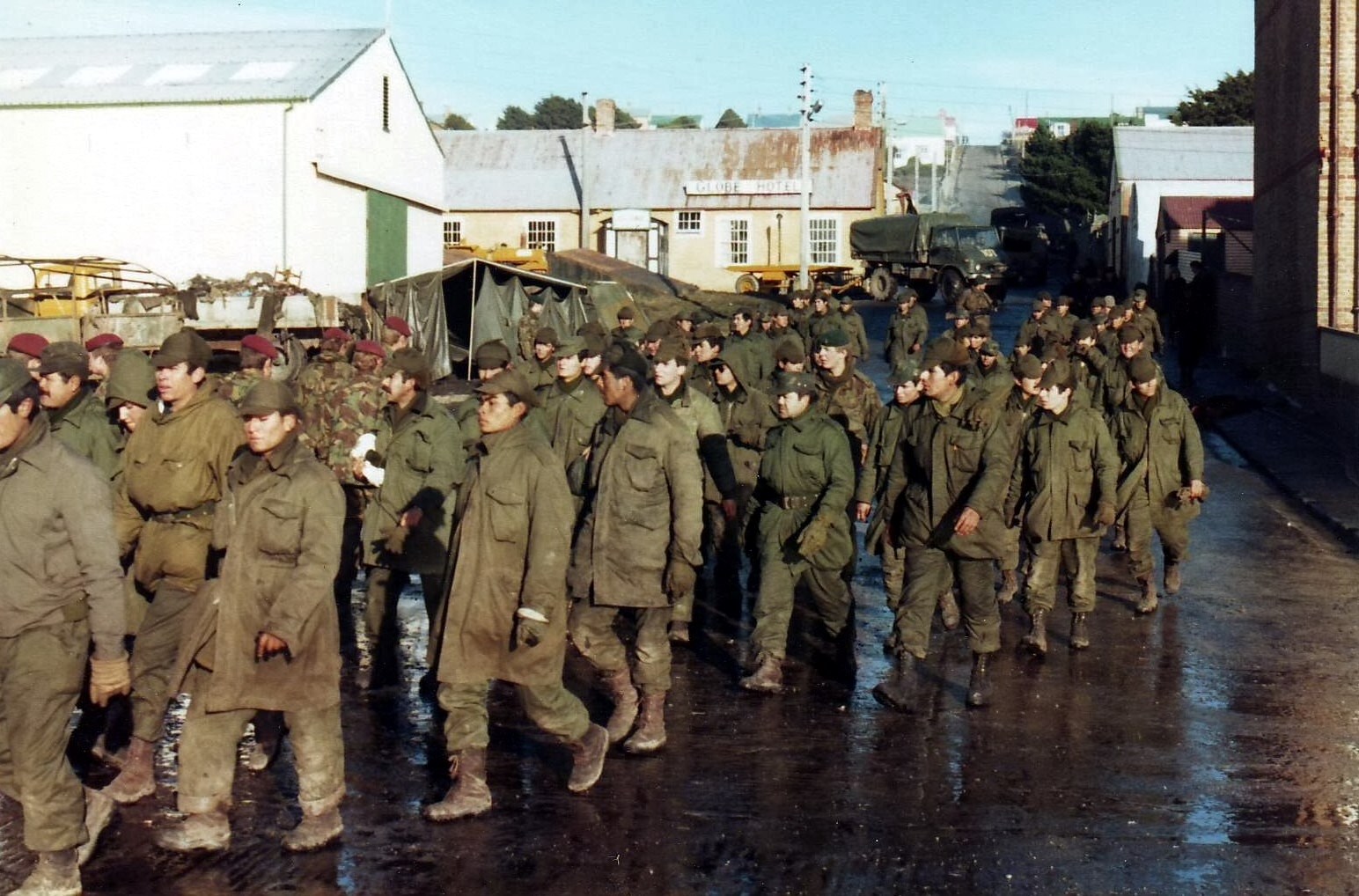
Argentine Prisoners of War in Port Stanley, 1982

Argentine Prisoners of War in Port Stanley, 1982

In 1982, Argentina invaded the Falkland Islands, which it had claimed ever since independence from Spain in 1810. However, England and France had also settled the archipelago, though France eventually abandoned their claims to Spain. Argentina could very well have won, except for one thing: Iron Lady Margaret Thatcher was in charge, and she was having none of it. A short but bloody conflict ensued, with the Brits coming out on top. The Argentine junta of General Galtieri promptly collapsed and was replaced by free elections.

To whom do the Falklands rightly belong? A British sea captain  named John Strong discovered the islands in 1690, and Louis Antoine de Bougainville started a French settlement in 1764. There were English, French, Spanish, and Argentinean gaucho settlers in the Falklands; but England decided to lay claim to the whole shooting match in 1833.

That has never sat well with Argentina, which calls the archipelago the Islas Malvinas. The airport in Tierra del Fuego’s Ushuaia is called Malvinas Argentinas International Airport. Streets throughout the Republic bear the name Malvinas. And now the new 50-peso note reiterates the Argentine claim. The country is full of monuments to the war dead, and woe betide any tourist who utters the name “Falklands.”

... for Now Anyhow

… for Now Anyhow

My friend Peter did some filming in the Falklands before the 1982 war, mostly of old sailing ship wrecks which had run aground there after Cape Horn storms. He told me that, although the Falklands are in some of the richest fishing waters on earth, the local English residents all prefer to eat mutton.

Who is right? England or Argentina? My preference goes to the Argeninians, though I doubt that the British would ever step down, especially as there is considerable oil exploration taking place.


“The Whole Country Is One Vast Forest”

Deep Forest

A French Visitor Describes a Very Different America

Among foreign visitors to the young United States around 1800 was one Constantin Volney, who was lucky to escape the Reign of Terror and the guillotine in his native France. His The Ruin was one of some seventy volumes of travels in the New World by French visitors during that time.

“Compared with France,” wrote Volney, “we may say that the entire country is one vast forest.” In the year 1796, he had traveled from Pennsylvania through Virginia and Kentucky to Detroit and back by way of Albany. During his travels, he wrote, “I scarce traveled three miles together on open and cleared land.”

This was at a time when Philadelphia was the largest city in the United States, with a population of some 70,000 inhabitants, followed by New York, with 60,000; Boston, with 25,000; and Baltimore, with 13,000. In 1800, these were the only American cities with more than 10,000 population.

I got these facts from Van Wyck Brooks’s The World of Washington Irving, which is showing me a far different picture of my country some two hundred years ago.


Don’t Cry for Me, Argentina!

Evita Perón Speaking into a Microphone

Evita Perón Speaking into a Microphone

When I first saw the above building in 2011, I thought it was decorated with Evita’s image while her widowed husband Juan was still alive. I was surprised to find that Cristina Fernández Kirchner, the current president of Argentina, put it up on the side of the Ministry of Health headquarters around the time of my visit. The building is on Avenida 9 de Julio, the giant fourteen-lane highway that runs north/south from Retiro to Constitucion Station.

As President Kirchner said when she unveiled the image: “She was the most hated but the most loved, the most offended, insulted and discounted but the most venerated – the most humiliated but today eternally victorious…. She taught us that to confront the powerful carries a high price.”

By the time I find myself in Argentina next, Kirchner will have been termed out of office. I wonder how she will be seen by future generations. Evita’s reputation is safe: she died of cancer at the age of 33 at the height of her popularity. She was just about to request sharing power with her husband when the illness struck. Cristina, on the other hand, has ruled Argentina alone, and with her late husband Nestor, since 2003.


The King in the Parking Lot

Portrait of Richard III Hanging in he National Portrait Gallery

Portrait of Richard III Hanging in he National Portrait Gallery

In Josephine Tey’s The Daughter of Time, Inspector Alan Grant of Scotland Yard is laid up in the hospital for a stretch, during which time he decides to investigate whether Richard III was really the villain painted by Shakespeare in his play of the same name. After examining the evidence, Grant decides in favor of the monarch killed at Bosworth Field on August 22, 1485. His successor, Henry VII, had Sir Thomas More write a biography blackening his name.

The portrait above also figured in Grant’s reasoning. Although it was painted over a century after Richard’s death, the subject’s face is not that of a vile murderer as described by Queen Margaret (widow of Henry VI) in the play:

From forth the kennel of thy womb hath crept
A hellhound that doth hunt us all to death:
That dog, that had his teeth before his eyes,
To worry lambs and lap their gentle blood,
That foul defacer of God’s handiwork,
That excellent grand tyrant of the earth
That reigns in gallèd eyes of weeping souls,
Thy womb let loose to chase us to our graves.

These lines are addressed to the old Duchess of York, Richard’s mother.

I was interested to hear that the body of Richard has finally been located, under the asphalt of a parking lot in Leicester. If you missed the story, you can find it, with photos, by clicking here.

The Shield Wall

Anglo-Saxon Battle Helmet

Anglo-Saxon Battle Helmet

I am continuing to undergo a period of interest in the Anglo-Saxons. It started with some old poetry, and now I am reading the latest in Bernard Cornwell’s excellent series various called Warrior Chronicles and Saxon Tales. Set in the Tenth Century, we see the half-pagan, half-Christian Uhtred of Bebbanburg and his son of the same name battling internal enemies in the Mercian kingdom as well as Viking raiders.

Warfare among the Anglo-Saxons was a bloody affair. The warriors on each side linked their shields together and proceeded to hack above and below them with swords and axes to bring down their foe. In The Empty Throne, we find the senior Uhtred laid up with battle scars, but pretending to be hurt more than he is.

Reading this description of shield wall battle from Cornwell’s earlier The Pagan Lord, one wonders that he is alive at all:

There is a way of battle. In the end the shield walls must meet and the slaughter will begin and one side will prevail and the other will be beaten down in a welter of butchery, but before the blades clash and before the shields crash, men must summon the nerve to make the charge. The two sides stare at each other, they taunt and insult each other. The young fools of each army will prance ahead of the wall and challenge their enemy to single combat, they will boast of the widows they plan to make and of the orphans who will weep for their fathers’ deaths. And the young fools fight and half of them will die, and the other half strut their bloody victory, but there is still no true victory because the shield walls have not met. And still the waiting goes on. Some men vomit with fear, others sing, some pray, but then at last one side will advance. It is usually a slow advance. Men crouch behind their shields, knowing that spears, axes and arrows will greet them before the shields slam together, and only when they are close, really close, does the attacker charge. Then there is a great bellow of noise, a roar of anger and fear, and the shields meet like thunder and the big blades fall and the swords stab and the shrieks fill the sky as the two shield walls fight to the death. That is the way of battle.

After years of reading Cornwell’s Richard Sharpe novels of the Napoleonic Wars, which I devoured with great pleasure, I find the Warrior Chronicles to be at least as good.

Petroleuses and Communards

Nope, Not the French Revolution—Eighty Years Later

Nope, Not the French Revolution—Eighty Years Later

Most Americans know little about French history, particularly in the years after the French Revolution and Napoleon. I mean, aren’t they “surrender monkeys”?

Not quite. In 1870-1871, Germany invaded France and crushed the French forces at Sedan, as described by Émile Zola in his novel Le Débacle (The Débacle). The Emperor Napoleon III hurriedly decamped; and the Third Republic under Adolphe Thiers, headquartered at Versailles, took over and continued the war. The problem was the city of Paris. The lightly armed National Guard wanted no truck with either Thiers or the Prussians, whereupon the forces of both laid siege to Paris.

This is when the Paris Commune was formed, which ran the besieged city from March to May of 1871. There were stories (probably mythical) of Parisiennes called petroleuses (illustrated above) armed with bottles of inflammable fluids roving the streets, setting fire to buildings. Admittedly, Napoleon III’s Tuileries Palace was torched; but most of the fires were attributable to French and Prussian cannon fire. Still, women found hurrying home with bottles of cooking oil were frequently executed on the spot.

Altogether, the casualties of the siege were about ten times larger than the entire Reign of Terror under Robespierre: The invading forces usually did not take prisoners and instead went in for an early version of ethnic cleansing, targeting mainly the working poor.

It was during this siege that the Parisians first developed a taste for horsemeat, which they were forced into eating along with dogs, cats, and various vermin when food supplies became scarce.

When I was in Paris, I visited the Communards’ Wall at Père Lachaise cemetery, where several hundred men, women, and children were captured, lined up against the wall, shot by firing squads, and buried in a mass grave.

Not too many years later, Vladimir Lenin carefully studied the lessons of the Paris Commune and adopted them in the Bolshevik Revolution, which was much less bloody than the events of Paris in May 1871.

The Phantom Republic

It Lasted for Less Than 24 Hours

It Lasted for Less Than 24 Hours

The darker green area on the above map marked Carpatho-Ukraine declared its independence from Czechoslovakia on March 15, 1939. Within less than 24 hours, it has been absorbed by Hungary with Nazi Germany’s blessing.I guess, from Germany’s point of view, it didn’t matter because it was inhabited by a bunch of Slavs, who were deemed to be of inferior racial stock. And Hungary by this time was an ally of Germany: My people were not only Aryans, they were Hung-Aryans. (In actuality, Hungary’s ruler, Admiral Horthy was intimidated into joining the Axis powers when he saw what happened to leaders of adjoining countries—such as the assassinated Engelbert Döllfuss of Austria—who were not part of Hitler’s program.)

When I was a young stamp collector, I was surprised to find that Hungary was not in the Overrun Countries commemorative series of 1943-1944. It was only later I found out that Hungary was part of the Axis.

The Overrun Countries: I Guess Hungary Was Part of the Bad Guys

The Overrun Countries: I Guess Hungary Was Part of the Bad Guys

Hungary paid dearly for being part of the Axis. Although we “got” the short-lived Republic of Carpatho-Ukraine, we lost thousands at Stalingrad when the Nazi 6th Army was surrounded by the Russians.

And, after World War Two, the Carpatho-Ukraine territories were made part of the Ukrainian Soviet Socialist Republic. And, as they say, that was that!

“This Moldy and Piety-Mouthing Hypocrite”

King Leopold II of Belgium (1839-1909)

King Leopold II of Belgium (1839-1909)

The writer of these lines was none other than Mark Twain, whose dander was up when he learned of the mutilations and massacres in the Congo attributable to Leopold II, the King of Belgium:

In fourteen years Leopold has deliberately destroyed more lives than have suffered death on all the battlefields of this planet for the past thousand years. In this vast statement I am well within the mark, several millions of lives within the mark. It is curious that the most advanced and most enlightened century of all the centuries the sun has looked upon should have the ghastly distinction of having produced this moldy and piety-mouthing hypocrite, this bloody monster whose mate is not findable in human history anywhere, and whose personality will surely shame hell itself when he arrives there—which will be soon, let us hope and trust. [from King Leopold’s Soliloquy (1905)]

Of course, Twain had not yet seen the likes of Adolph Hitler, Josef Stalin, or Pol Pot because that was to come later.

I have just finished reading Adam Hochschild’s King Leopold’s Ghost: A Story of Greed, Terror, and Heroism in Colonial Africa. The Belgian monarch brought something new to colonialism: He designated the Congo as his personal property, making sure that all the wealth that came in went into his personal coffers. No, the Belgians did not enjoy any of that wealth directly. It went into ostentatious palaces, young concubines, and villas on the Mediterranean—all of which were his personal property. He did not even have the saving grace of being a patron of the arts. He was a patron of whatever enriched him. He even made his people “lend” him millions to develop the slave economy of the Congo.

Congolese with Their Hands Cut Off

Congolese with Their Hands Cut Off

At first, the wealth of the Congo came from ivory. It was not long, however, that Leopold realized he could have a corner in rubber. Trees had been planted throughout Asia and Latin America, but would not come to maturity for a number of years. Therefore, Leopold ruthlessly turned the Congolese to harvesting rubber from the rubber trees that grew wild throughout the region. Women and children were held as hostages while their men were sent out to bring in their quota of rubber.

Woe betide any Congolese who didn’t fulfill his quota. They were killed; they hand their hands cut off; or both—and the hostages being held were likewise brutalized.

Eventually, the world caught on to what Leopold was doing—and many other European colonial powers such as France and Germany were also guilty, but not on the same grandiose scale.


Fifth Graders Against Communism

Back in Fifth Grade, We Knew All About the Red Menace

Back in Fifth Grade, We Knew All About the Red Menace

When I was a grade school student at St. Henry’s in Cleveland, we received a weekly newsletter reporting on the news of the world. Most particularly, we learned how the Communists who had recently taken over Eastern Europe were persecuting Catholics and suppressing the God-given rights of the people. At no time were we ever told that Hungary and several other of the Russian satellites fought on the German side in World War Two. And now the communists were threatening us! Several times a year, we had to do drills instructing us what to do in case of a nuclear attack. If you don’t already know, this 1951 video will explain it all to you:
 

(Those school desks were marvelous at protecting students from radiation and falling debris.)

At home, several times a year my mother put together bundles of used clothing she got from church sales to send to our friends and relatives in Hungary. After she’d accumulated about twenty or thirty pounds, she would wrap them in sturdy white cloth and write the address directly on the cloth with indelible ink. Then off it would go. With luck, the jackbooted thugs that worked for the Budapest Post Office would let selected items be delivered to the addressees. The rest, of course, was a perquisite for Communist Party apparatchiks.

Things came to a head during the Hungarian Revolution in 1956. When, after a few days of freedom, the Russian tanks rolled into Hungary and re-established Soviet rule, our family was appalled. Naturally we did what we could to help some of the refugees that made it across the line before the axe fell. (As it turned out, they were not nice people. How could that be? After all, they were Hungarians.)

And Now America Was Threatened, Too

And Now America Was Threatened, Too


Somehow, we made it through those dangerous years. We listened to the Civil Defense alarms that sounded a test on Fridays at noon. And we tuned in to Conelrad at 640 and 1240 on our radio dial. There was so much else, too, bad we licked Communism in the end. Or did we?