Old Bones

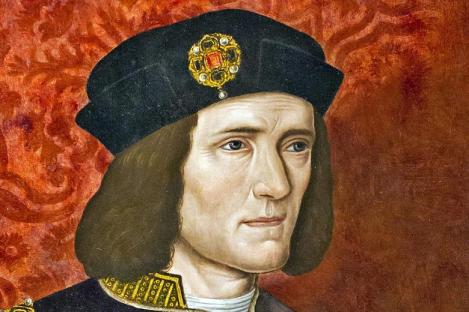
Richard III (1452-1485)

Richard III (1452-1485)

I was on a Laker Airlines flight from London Gatwick to Los Angeles in October 1976 when I read Josephine Tey’s novelized biography of Richard III entitled The Daughter of Time. In it, Tey’s Inspector Allan Grant, while recovering in a hospital, decides to investigate the life of Richard III. Based on the picture above, he could not believe that Richard could be such as arrant villain as Shakespeare portrayed him in his play.

There is little doubt that Richard seized the crown that properly belonged to his young nephews, the so-called Princes in the Tower, whom he may or may not have ordered to be killed. As king, he was not so very bad; but there is always that suspicion of evildoing at its outset.

Richard is one of the few kings of England who have a fan club dedicated to restoring his reputation.

Well, it appears that they have found and identified the remains of Richard, which were discovered in a shallow grave in a parking lot where Greyfriars Abbey once sat before Henry VIII had it razed. DNA was taken and compared with that of a lineal descendent in Canada and found to be a match. And, what is more, Richard’s body was slightly misshapen, not quite an out-and-out hunchback, but near to it.

Now, was he a good king or a bad king? Or was he merely indifferent? The question rages on.


The More Things Change …

Roman Graffiti from Pompeii

Roman Graffiti from Pompeii

Let us say we were seated across the table from an ancient Roman and, say, a Viking. Aside from the obvious language problem, would there be enough commonality to allow for a spirited discussion? I think there would be, primarily because I have read enough Roman and Viking (I should say Icelandic and Norse) literature to vouch for the fact that, when all is said and done, we are not all that different from one another.

Let me take as a case in point graffiti that has been discovered from the ruins of Pompeii and Herculaneum. You can probably find the equivalent in any nightclub’s restroom wall:

  • Philiros spado – “Philiros is a eunuch”
  • Apollinaris, medicus Titi Imperatoris hic cacavit bene – “Apollinaris, physician to the Emperor Titud, had a good crap here”
  • Oppi, emboliari, fur, furuncle – “Oppius, you’re a clown, a thief, and a cheap crook”
  • Miximus in lecto. Faetor, peccavimus, hospes. Si dices: quare? Nulla matella fuit –
    This one was found in an inn: “We have wet the bed. I admit we were wrong, my host, but if you ask why, it is because there was no chamber pot.”
  • Virgula Tertio su: Indecens esVirgula to Tertius: You are a nasty boy.“
  • Suspirium puellam Celadus thraex – “Celadus makes the girls moan”

Now I have not seen the graffiti of Ancient Rome, but I saw the viking graffiti in the tomb at Maes Howe in the Orkneys. Built over 5,000 years ago, Maes Howe was frequently visited by Viking raiders in the hopes that some buried treasure could be found there. They found none, but left such observations as the following in their Futharc runes:

  • “Thorni fucked. Helgi carved.”
  • “Ingigerth is the most beautiful of all women” next to a picture of a slobbering dog.
  • “These runes were carved by the man most skilled in runes in the Western Ocean.”

You can find more about the Pompeiian graffiti by clicking here. The runes at Maes Howe are explained here.

The more things change, the more they remain the same.

The Man from Stalingrad

Vasily Grossman (1905-1964)

Vasily Grossman (1905-1964)

Over the last year, I have been participating in a European History Meetup Group that, for a while anyway, turned into a Russian history group. We did readings and discussions on Peter the Great, Catherine the Great, Napoleon’s invasion of Russia, the Russian Revolution and Civil War, Stalin’s purges beginning in 1937, and two sessions on the Russian contribution to the Second World War.

Vasily Grossman was a loyal supporter of Stalin and, as such, served as a war correspondent for Krasnaya Zvezda, the official Red Army newspaper. He was in Moscow, Stalingrad, Kursk, and Berlin during the battles for those cities; and he provided eyewitness accounts of the liberation of the Nazi extermination camp at Treblinka.

Only toward the end of Stalin’s rule, when the dictator began to persecute the Russian Jews, did Grossman begin to rue his former attachment to the State. His great 900-page novel, Life and Fate, shows the actual change of mind taking place.

His extended Jewish family of Shaposhnikov women and their in-laws both suffer and are rewarded for their contributions to the State. Mostly, though, they suffer. Even the heroic tank commander, Nikolov, who leads the first Soviet armored units into the Ukraine, ends the book with an order to report to the stavka (General Staff) in Moscow. His scientist/academician, Viktor Shtrum, receives a congratulatory call from Stalin just when he thinks he is about to be arrested and interrogated—but then he is pressured into signing a statement that two physicians he respects were responsible for murdering the writer Maxim Gorky.

Stalin gives with one hand and takes away with the other. At the end of the Siege of Stalingrad, Grandma Shaposhnikov walks through the ruins and ponders:

And here she was, an old woman now, living and hoping, keeping faith, afraid of evil, full of anxiety for the living and an equal concern for the dead; here she was, looking at the ruins of her home, admiring the spring sky without knowing that she was admiring it, wondering why the future of those she loved was so obscure and the past so full of mistakes, not realizing that this very obscurity and unhappiness concealed a strange hope and clarity, not realizing that in the depths of her soul she already knew the meaning of both her own life and the lives of her nearest and dearest, not realizing that even though neither she herself nor any of them could tell what was in store, even though they all knew only too well that fate alone has the power to pardon and to chastise, to raise up to glory and to plunge into need, to reduce a man to labour-camp dust, nevertheless neither fate, nor history, nor the anger of the State, nor the glory and infamy of battle has any power to affect those who call themselves human beings. No, whatever life holds in store—hard-won glory, poverty and despair, or death in a labour camp—they will live as human beings and die as human beings, the same as those who have already perished; and in this alone lies man’s eternal and bitter victory over all the grandiose and inhuman forces that ever have been or will be …

Life and Fate is one of the great novels of twentieth century Russia, on a par with (and perhaps even a little bit better than) Anatoli Rybakov’s Arbat trilogy (Children of the Arbat, Fear, and Ashes and Dust).

As I wrote in my review of the book for Goodreads.Com:

I rather doubt that most readers will have the sitzfleisch to attack either Grossman or Rybakov. Unless one is somewhat familiar with the history and with Russian character names and patronymics, one is not likely to stray too far from the tried and true and excessively familiar. But, know this, there are rewards for those who do.

For an interesting perspective on Grossman, check out this site from the Jewish Daily Forward.

I Guess He Didn’t Like Cheltenham

RRCoverSThe Warwickshire Avon falls into the Severn here, and on the sides of both, for many miles back, there are the finest meadows that ever were seen. In looking over them, and beholding the endless flocks and herds, one wonders what can become of all the meat! By riding on about eight or nine miles farther, however, this wonder is a little diminished; for here we come to one of the devouring Wens; namely, Cheltenham, which is what they call a “watering place;” that is to say, a place, to which East India plunderers, West India floggers, English tax-gorgers, together with gluttons, drunkards, and debauchees of all descriptions, female as well as male, resort, at the suggestion of silently laughing quacks, in the hope of getting rid of the bodily consequences of their manifold sins and iniquities. When I enter a place like this, I always feel disposed to squeeze up my nose with my fingers. It is nonsense, to be sure; but I conceit that every two-legged creature, that I see coming near me, is about to cover me with the poisonous proceeds of its impurities. To places like this come all that is knavish and all that is foolish and all that is base; gamesters, pickpockets, and harlots; young wife-hunters in search of rich and ugly and old women, and young husband-hunters in search of rich and wrinkled or half-rotten men, the former resolutely bent, be the means what they may, to give the latter heirs to their lands and tenements. These things are notorious; and Sir William Scott, in his speech of 1802, in favour of the non-residence of the Clergy, expressly said, that they and their families ought to appear at watering places, and that this was amongst the means of making them respected by their flocks! Memorandum: he was a member for Oxford when he said this!—William Cobbett, Rural Rides


A B-17 Collision

B-17 in the Air

B-17 in the Air

This B-17 met a head-on attack by three Focke Wulf Fw 190 fighters. The gunners exploded two of them, and the top turret poured a stream of shells into the cockpit of the third. With a dead man at the controls, the fighter screamed in, and at a closing speed of 550 miles per hour smashed head-on into the number-three engine.

The tremendous impact of the crash tore off the propeller. It knocked the heavy bomber completely out of formation as though a giant hand has swatted a fly. The fighter cartwheeled crazily over the B-17.

It cut halfway through the wing, and then sliced a third of the way through the horizontal stabilizer. The top and ball turrets immediately jammed, the radio equipment was smashed to wreckage, and all the instruments “went crazy.” Pieces of metal from the exploding, disintegrating Focke Wulf tore through the fuselage, and a German gun barrel buried itself in the wall between the radio room and the bomb bay.

Crews of nearby bombers watched the collision. They saw a tremendous explosion, and the bomber hurtling helplessly out of control, tumbling as she fell. They reported when they returned to base that the Flying Fortress had blown up, and that the crew must be considered dead.

The old Queen hadn’t blown up, and the crew was far from dead. The pilots struggled wildly in the cockpit, and somehow between them, managed to bring their careening bomber back under control. The gunners shot down a fourth fighter that had closed in to watch the proceedings.

And then they brought her all the way back to England, and scraped her down for a belly landing on the runway.

Postscript: not a man was injured.—Martin Caidin, Black Thursday

Hugging the Enemy

General Vasily Chuikov, Commander of the 62nd Army at Stalingrad

General Vasily Chuikov, Commander of the 62nd Army at Stalingrad

We know a whole lot more about Field Marshal Friedrich Wilhelm Ernst Paulus, who commanded the German 6th Army besieging Stalingrad, than we know about General Vasily Ivanovich Chuikov, who fought the German war machine to a draw by his creative leadership of the Soviet 62nd Army. Part of the reason is that we have letters from Paulus and his staff describing the horrors of the siege of Stalingrad, letters that were to give Hitler and Goebbels fits as they tried to devise their own myth as to what really happened on the banks of the Volga.

What really happened was one of Stalin’s generals, who lived in a society where candid comments in private letters were used by the NKVD (predecessor of the KGB) as evidence of disloyalty to Stalin. Whatever Chuikov may have thought, it was what he did that made him one of Stalin’s favorite generals.

Both Hitler and Stalin had issued contradictory clear-cut orders regarding Stalingrad. Hitler insisted that the Wehrmacht capture the city at all cost, and that surrender was not an option. Stalin, on the other hand, issued equally clear-cut orders that the city must be held at all costs, and that surrender was not an option.

For almost six months, Chuikov invented a new kind of urban warfare in which the idea was to “hug the enemy.” By staying close to the Germans, Chuikov prevented the aerial bombardment by the Luftwaffe in that it turned out to be as dangerous to the Nazis as to the Red Army. By this time, much of the city was rubble. Chuikov ingeniously hid artillery and tanks in the ruins, and used small squads of six to eight men, supplemented by sharpshooters, to attack pockets of Wehrmacht troops. Extensive use was made of hand grenades and Molotov Cocktails.

Frequently, burnt-out tanks became bases for these squads, as the men were protected by the wrecked tank above their heads. The following is a quote from Chuikov:

The Germans underestimated our artillery. And they underestimated the effectiveness of our infantry against their tanks. This battle showed that tanks forced to operate in narrow quarters are of limited value; they’re just guns without mobility. In such conditions nothing can take the place of small groups of infantry, properly armed, and fighting with utmost determination. I don’t mean barricade street fighting—there was little of that—but groups converting every building into a fortress and fighting for it floor by floor and even room by room. Such defenders cannot be driven out either by tanks or planes. The Germans dropped over a million bombs on us but they did not dislodge our infantry from its decisive positions. On the other hand, tanks can be destroyed from buildings used as fortresses.

For five months, Chuikov fought the Germans to a draw. During this time, Marshal Georgi Zhukov formulated his Operation Uranus, which led to the encirclement and surrender of Paulus’s 6th Army.

Even as his men were out of ammunition and close to starving to death and being eaten alive by lice and other vermin, Hitler prevented them from surrendering. As it became obvious to the Fuehrer that Stalingrad was lost to him, he preferred the German people to think that the 6th Army committed mass suicide rather than surrender to the Russians. In the end, the 90,000 men who remained did surrender. Total German casualties were between 500,000 and 850,000 killed, wounded or captured.

Chuikov later led one of the armies converging on Berlin, where he accepted surrender of the city from General Helmuth Weidling. After the war, in 1955, he was made a Field Marshal by Khrushchev and eventually served as a member of the Central Committee of the Communist Party of the Soviet Union.

Even under a tyrant such as Stalin, it is possible to find heroism and innovation such as Chuikov’s. Because we tend to see World War Two as mostly a Anglo-American alliance, we have suppressed any knowledge of the awful 3,000-mile front that was the war in Russia, called by them the Great Patriotic War. They earned their victory … the hard way.

The Hamfisted Military of America

Infantry in Viet Nam

Infantry in Viet Nam

The United States has probably the most powerful military in the world—provided, of course, that it is used to fight the battles of the Second World War over again. You know what I mean: Those large set-piece battles with penetrations, encirclements, flanking maneuvers, the whole West Point 101 ball of wax.

Too bad that the wars we have gotten entangled in since the Second World War do not play to our strengths. One doesn’t need a college degree in military science to appreciate the following factors:

  1. Whereas the people of the United States know nothing about foreign languages and cultures, all cultures know a great deal more about us than we know about them.
  2. Because our news media blares all around the world, guerrilla fighters know when the American people are tired of a war and want to end it.
  3. If the “bad guys” a.k.a. “freedom fighters” want to win, they just have to blow up one or two Americans to smithereens every day or so. Just so long as every news cycle has some bad news in it.
  4. The nationals who have allied themselves with the American forces are highly suspect as to their allegiance. The ARVN (Army of the Republic of Viet Nam), for instance, acted as intelligence for the North Vietnamese. (Guess why so many incidents of “terror” in Afghanistan are committed by fighters wearing the uniforms of Karzai’s army and police.)
  5. Before long, the American forces will be confined to “Green Zones” or “strategic hamlets” or other fortified places where they could be picked off at will—usually just one or two at a time.

The thought keeps hitting me between the eyes: If we’re so stupid about it all and keep making the same mistakes over and over again, why do we even bother? What do we accomplish?

Infamy as a Way of Life

Israel’s Benjamin “Bibi” Netanyahu

Israel has a right to exist. The Palestinians have a right to exist—though no one but a few die-hard Arabs say that Palestine as a nation has a right to exist. I am not sure now that Bibi Netanyahu and his Likud Party, however, have a right to exist.

The path taken by Netanyahu’s Israel is a dangerous one. You could be hyper-aggressive and murderous to the maximum extent, but only insofar as the people are backing your every play. Eventually, you could cross a line where not only the world at large but your own people are tired of infamy as a way of life. What happens then? Can you continue to do the same sort of thing and continue to get away with it? Probably not.

Crusader States

The Arabs see Israel as just another “crusader state.” After the wildly successful First Crusade (1096-1099), much of the Holy Land was divided into a series of feudal states run by the Crusaders. These included the Kingdom of Jerusalem, the County of Tripoli, the Principality of Antioch, and the County of Edessa. Some of them lasted a surprisingly long time. And they might still be around today if the Arabs were not united under a powerful new leader like Saladin (from Kurdistan of all places), and the Crusaders became ever more disunited and fragmented over the next couple hundred years.

Who is to say that Israel’s continued aggression against the Palestinians and other Arabs will not result in a unified alliance to wipe it off the map? What will our attitude be in such a case? Will we have to send in our army to protect Israel’s right to exist? That would be good for another five hundred years of hatred in the Middle East.

I think the Western World had to keep a tight leash on Israel and do everything it can to stymie the right wing politicians who have been in the ascendant there since the days of Menachem Begin. (At the same, our own right wing will continue to support Israeli aggression and confuse the issue.)


The General Who Came Back from the Dead

Field Marshal Konstantin Rokossovsky of the Soviet Union

Stalin was one of the great paranoids of history. Beginning in 1937, he purged a large percentage of the top officers in his military—just before Hitler invaded Russia and caught the army and Stalin flat-footed. Gone were three of the five marshals of the Red Army, including Mikhail Tukhachevsky (a brilliant strategist who has influenced warfare to this day), Vasily Blyukher, and Aleksandr Yegorov; thirteen out of the fifteen army commanders; eight out of nine of the admirals; fifty of fifty-seven army corps commanders; 154 out of 186 division commanders, 16 of 16 army commissars; and 25 of 28 army corps commissars.

Did he not think he would be needing his military commanders to fight off the coming Nazi onslaught? It’s hard to tell, but when Operation Barbarossa kicked off in 1941, the Russians had 3.3 million men under arms, 2.1 million of whom were dead or missing in the third quarter of 1941 alone!

Somehow Stalin had to find generals to replace those whom he had shot or imprisoned. In fact, he had to release about 30% of the purged generals and admirals who were festering in various of his Gulags.

One of them was General Konstantin Rokossovsky, who was half-Polish and half-Russian. Under interrogation by Stalin’s NKVD (the predecessor of the KGB), the General had eight was his teeth knocked out (which is why you don’t find too many pictures of him smiling). Yet, Rokossovsky was the go-to guy for such operations as the victory at Stalingrad, where he all but wiped out a whole German army. For this, he was promoted to Field Marshal and, later, promoted to command one of the three Russian armies converging on Berlin.

After the war, he was made one of the leaders of the Polish Peoples’ Republic and returned to Russia to serve in several key defense posts under Khrushchev. He died in 1968 at the age of seventy-one and is buried in Red Square.

Apparently, once he returned to active service after being tortured and accused of false crimes—mostly for being an adherent of the brilliant Marshal Tukhachevsky—there was no longer any question of his loyalty, which he proved time and time again by clipping the wings of the Nazi war machine.

Here in the United States, we don’t know much about the men who had more to do with Hitler’s defeat than anyone on the Western Allies’ side, including Eisenhower, Patton, Bradley, and Montgomery. Rokossovsky was just one of those immortal heroes, along with others such as Zhukov, Konev, Vasilevsky, Cherniakhovsky, and other men whose names we can’t pronounce but who helped change the course of history.

The Time magazine cover shown above was for the issue of August 23, 1943.


The Bludgeon

German POW Surrendering to Russian Defender at Stalingrad

For us, it was the last “Good War.” For the Russians, it was “The Great Patriotic War,” in which 20-30 million soldiers and civilians died defending the Rodina, or Fatherland. I am currently reading David M. Glantz and Jonathan M. House’s When Titans Clashed: How the Red Army Stopped Hitler.

I’m not going to say we had it easy on the Western Front: There’s a lot we don’t know and perhaps never will know about some of the horrors of the Sicilian and Italian campaigns, as well as D-Day and its aftermath in France, Belgium, and Germany. (If you can, see John Huston’s WW2 documentaries, especially The Battle of San Pietro.) But there was something particularly horrible in the way that the two great 20th century dictators, Hitler and Stalin, moved great numbers of men and materiel across the Russian steppe as if it were a chessboard:

The superb German fighting machine was defeated by more than distance. The German rapier, designed to end conflict cleanly and efficiently, was dulled by repeated and often clumsy blows from a simple, dull, but very large Soviet bludgeon. That bludgeon took the form of successive waves of newly mobilized armies, each taking its toll of the invaders before shattering and being replaced by the next wave.

Stalin had a huge supply of manpower at his beck and call. Once the Nazis invaded Russia during Operation Barbarossa, their forces kept getting farther and farther from their source of supply, while, at the same time, the Russian supply lines were getting shorter and shorter as the battle zone neared Moscow, Leningrad, and Stalingrad.

It was not just a matter of manpower, however.The Russians were developing new tanks that could take on the best that the Panzer divisions could throw against them, new fighters and bombers that harassed the rapidly dwindling Luftwaffe, and bringing terrifying new weapons such as the Katyusha rocket launchers that helped to turn the tide against the hapless Germans, who were stuck fighting a two-front war once the Americans and British invaded North Africa, Italy, and France.

We don’t think much about the Eastern Front. After all, we weren’t there. And we were taught that the real show was in Western Europe. The Germans knew, though, that it was in Russia that the coffin nails were pounded into the Thousand-Year Reich. Hitler wound up blowing his brains out, while Stalin died in bed.

No, we don’t like to credit the Russians for their victory; but they deserved it. They certainly gave up enough to achieve it.