A small island of the north coast of Devonshire was once owned by a man who called himself a king, issued his own postage stamps, and even—until he was fined for doing so—his own coinage. Martin Coles Harman, who owned the island until his death in 1954, denominated the stamps (and coins) in monetary units of his own devising, which he called Puffins, after the bird which used to congregate on the island. One puffin equaled one British penny.
The stamps were in use to provide postage to Biddeford, Devon, as the Royal Mail had cancelled services to Lundy in 1927. The reason given? There were just two few people resident on the island to justify postal services. So Harman undertook to deliver the mail to Biddeford upon payment of a prescribed number of Puffins. The Lundy stamp appeared on the back of the envelope, so that it would not confuse the Royal Mail employees. On the front of the envelope appeared the appropriate British stamp.
Today, Lundy Island is controlled by the Landmark Trust and still issues its own stamps. And they are still denominated in Puffins. Only now they are good not only for the cross-channel hop to Biddeford, but to whatever destination the sender wishes, with the Royal Mail getting its cut. This is made possible because some 25,000 tourists a year visit the island and send letters and postcards therefrom using the new stamps.
When I used to collect stamps, I had a few Lundy stamps in my possession. At the time, the stamps from the island were considered to be “cinderellas,” that is to say, “anything resembling a postage stamp, but not issued for postal purposes by a government postal administration.” There is a wide variety of cinderella stamps, such as those printed for promotional use by businesses, churches, political or non-profit groups.
An 1836 Painting Showing the Sack of Rome by the Visigoths in AD 410
I have begun reading Thomas Hodgkin’s magisterial Italy and Her Invaders in the Folio Society edition, which has been retitled The Barbarian Invasions of the Roman Empire. The first volume covers the Visigoths and the Empire as it was from the death of Julian the Apostate in AD 363 to AD 414.
We entertain a false picture of the Roman Empire during the Fifth Century. In the late Third Century, the Emperor Diocletian decided that, insofar as administration was concerned, the Empire was too big for one man to control. He decided to divvy it up into four pieces, creating the Tetrarchy.
By the reign of Julian, the four pieces consisted of Gaul (including France, England, and Spain); Italy (including Italy, Austria, Yugoslavia, and North Africa); Illyricum (including Greece, Macedonia, and Ukraine); and the Orient (including Turkey, Bulgaria, Syria, and Egypt). Note that Egypt, which was the bread basket of the Empire, now shipped most of its grain to Constantinople, leaving Rome high and dry.
In fact, after Diocletian’s Tetrarchy, the city of Rome began to decline. The co-emperor ruled from either Milan or Ravenna. Both cities were closer to the Alps and the routes the Barbarians would take in attacking the Italian Peninsula.
The other “capitals” were Constantinople for the Orient; Augusta Treverorum, or Trier, for Gaul; and Thessalonika or Sirmium for Illyricum.
When I cam across this line in Hodgkin’s first volume, I realized that by this time Rome was toast:
Strange to say, during the whole preceding century, Rome had only four times seen an emperor within her walls, Constantine (312) after his victory over Maxentius, Constantius (357) four years after the overthrow of Magnentius, and Theodosius (389) after his defeat of maximus, and again (394) after his defeat of Eugenius.
Once the Barbarians started invading in numbers, Rome was just too far away from the action. Days were wasted getting to the top of the boot of Italy. So when Rome was sacked by the Barbarians, they were largely attacking a symbol rather than a seat of power.
Of late, I have become fascinated by literary and historical antecedents of our present divided political situation. In the United States, we have the Blue States versus the Red States. In a post from December 9 when I wrote about Charles Dickens describing the Blues and the Buffs at a parliamentary election at Eatanswill. One of the most amazing tales on the subject comes from Edward Gibbon’s The Decline and Fall of the Roman Empire when he describes the racing factions of the Hippodrome during the reign of Justinian in the 6th Century A.D. in Constantinople:
Constantinople adopted the follies, though not the virtues, of ancient Rome; and the same factions which had agitated the circus, raged with redoubled fury in the hippodrome. Under the reign of Anastasius, this popular frenzy was inflamed by religious zeal; and the greens, who had treacherously concealed stones and daggers under baskets of fruit, massacred, at a solemn festival, three thousand of their blue adversaries. From this capital, the pestilence was diffused into the provinces and cities of the East, and the sportive distinction of two colors produced two strong and irreconcilable factions, which shook the foundations of a feeble government. The popular dissensions, founded on the most serious interest, or holy pretence, have scarcely equalled the obstinacy of this wanton discord, which invaded the peace of families, divided friends and brothers, and tempted the female sex, though seldom seen in the circus, to espouse the inclinations of their lovers, or to contradict the wishes of their husbands. Every law, either human or divine, was trampled under foot, and as long as the party was successful, its deluded followers appeared careless of private distress or public calamity. The license, without the freedom, of democracy, was revived at Antioch and Constantinople, and the support of a faction became necessary to every candidate for civil or ecclesiastical honors. A secret attachment to the family or sect of Anastasius was imputed to the greens; the blues were zealously devoted to the cause of orthodoxy and Justinian, and their grateful patron protected, above five years, the disorders of a faction, whose seasonable tumults overawed the palace, the senate, and the capitals of the East. Insolent with royal favor, the blues affected to strike terror by a peculiar and Barbaric dress, the long hair of the Huns, their close sleeves and ample garments, a lofty step, and a sonorous voice. In the day they concealed their two-edged poniards, but in the night they boldly assembled in arms, and in numerous bands, prepared for every act of violence and rapine. Their adversaries of the green faction, or even inoffensive citizens, were stripped and often murdered by these nocturnal robbers, and it became dangerous to wear any gold buttons or girdles, or to appear at a late hour in the streets of a peaceful capital. A daring spirit, rising with impunity, proceeded to violate the safeguard of private houses; and fire was employed to facilitate the attack, or to conceal the crimes of these factious rioters. No place was safe or sacred from their depredations; to gratify either avarice or revenge, they profusely spilt the blood of the innocent; churches and altars were polluted by atrocious murders; and it was the boast of the assassins, that their dexterity could always inflict a mortal wound with a single stroke of their dagger. The dissolute youth of Constantinople adopted the blue livery of disorder; the laws were silent, and the bonds of society were relaxed: creditors were compelled to resign their obligations; judges to reverse their sentence; masters to enfranchise their slaves; fathers to supply the extravagance of their children; noble matrons were prostituted to the lust of their servants; beautiful boys were torn from the arms of their parents; and wives, unless they preferred a voluntary death, were ravished in the presence of their husbands. The despair of the greens, who were persecuted by their enemies, and deserted by the magistrates, assumed the privilege of defence, perhaps of retaliation; but those who survived the combat were dragged to execution, and the unhappy fugitives, escaping to woods and caverns, preyed without mercy on the society from whence they were expelled. Those ministers of justice who had courage to punish the crimes, and to brave the resentment, of the blues, became the victims of their indiscreet zeal; a præfect of Constantinople fled for refuge to the holy sepulchre, a count of the East was ignominiously whipped, and a governor of Cilicia was hanged, by the order of Theodora, on the tomb of two assassins whom he had condemned for the murder of his groom, and a daring attack upon his own life. An aspiring candidate may be tempted to build his greatness on the public confusion, but it is the interest as well as duty of a sovereign to maintain the authority of the laws. The first edict of Justinian, which was often repeated, and sometimes executed, announced his firm resolution to support the innocent, and to chastise the guilty, of every denomination and color. Yet the balance of justice was still inclined in favor of the blue faction, by the secret affection, the habits, and the fears of the emperor; his equity, after an apparent struggle, submitted, without reluctance, to the implacable passions of Theodora, and the empress never forgot, or forgave, the injuries of the comedian. At the accession of the younger Justin, the proclamation of equal and rigorous justice indirectly condemned the partiality of the former reign. “Ye blues, Justinian is no more! ye greens, he is still alive!”
A sedition, which almost laid Constantinople in ashes, was excited by the mutual hatred and momentary reconciliation of the two factions. In the fifth year of his reign, Justinian celebrated the festival of the ides of January; the games were incessantly disturbed by the clamorous discontent of the greens: till the twenty-second race, the emperor maintained his silent gravity; at length, yielding to his impatience, he condescended to hold, in abrupt sentences, and by the voice of a crier, the most singular dialogue that ever passed between a prince and his subjects. Their first complaints were respectful and modest; they accused the subordinate ministers of oppression, and proclaimed their wishes for the long life and victory of the emperor. “Be patient and attentive, ye insolent railers!” exclaimed Justinian; “be mute, ye Jews, Samaritans, and Manichaeans!” The greens still attempted to awaken his compassion. “We are poor, we are innocent, we are injured, we dare not pass through the streets: a general persecution is exercised against our name and color. Let us die, O emperor! but let us die by your command, and for your service!” But the repetition of partial and passionate invectives degraded, in their eyes, the majesty of the purple; they renounced allegiance to the prince who refused justice to his people; lamented that the father of Justinian had been born; and branded his son with the opprobrious names of a homicide, an ass, and a perjured tyrant. “Do you despise your lives?” cried the indignant monarch: the blues rose with fury from their seats; their hostile clamors thundered in the hippodrome; and their adversaries, deserting the unequal contest spread terror and despair through the streets of Constantinople. At this dangerous moment, seven notorious assassins of both factions, who had been condemned by the præfect, were carried round the city, and afterwards transported to the place of execution in the suburb of Pera. Four were immediately beheaded; a fifth was hanged: but when the same punishment was inflicted on the remaining two, the rope broke, they fell alive to the ground, the populace applauded their escape, and the monks of St. Conon, issuing from the neighboring convent, conveyed them in a boat to the sanctuary of the church. As one of these criminals was of the blue, and the other of the green livery, the two factions were equally provoked by the cruelty of their oppressor, or the ingratitude of their patron; and a short truce was concluded till they had delivered their prisoners and satisfied their revenge. The palace of the præfect, who withstood the seditious torrent, was instantly burnt, his officers and guards were massacred, the prisons were forced open, and freedom was restored to those who could only use it for the public destruction. A military force, which had been despatched to the aid of the civil magistrate, was fiercely encountered by an armed multitude, whose numbers and boldness continually increased; and the Heruli, the wildest Barbarians in the service of the empire, overturned the priests and their relics, which, from a pious motive, had been rashly interposed to separate the bloody conflict. The tumult was exasperated by this sacrilege, the people fought with enthusiasm in the cause of God; the women, from the roofs and windows, showered stones on the heads of the soldiers, who darted fire brands against the houses; and the various flames, which had been kindled by the hands of citizens and strangers, spread without control over the face of the city. The conflagration involved the cathedral of St. Sophia, the baths of Zeuxippus, a part of the palace, from the first entrance to the altar of Mars, and the long portico from the palace to the forum of Constantine: a large hospital, with the sick patients, was consumed; many churches and stately edifices were destroyed and an immense treasure of gold and silver was either melted or lost. From such scenes of horror and distress, the wise and wealthy citizens escaped over the Bosphorus to the Asiatic side; and during five days Constantinople was abandoned to the factions, whose watchword, Nika, vanquish! has given a name to this memorable sedition.
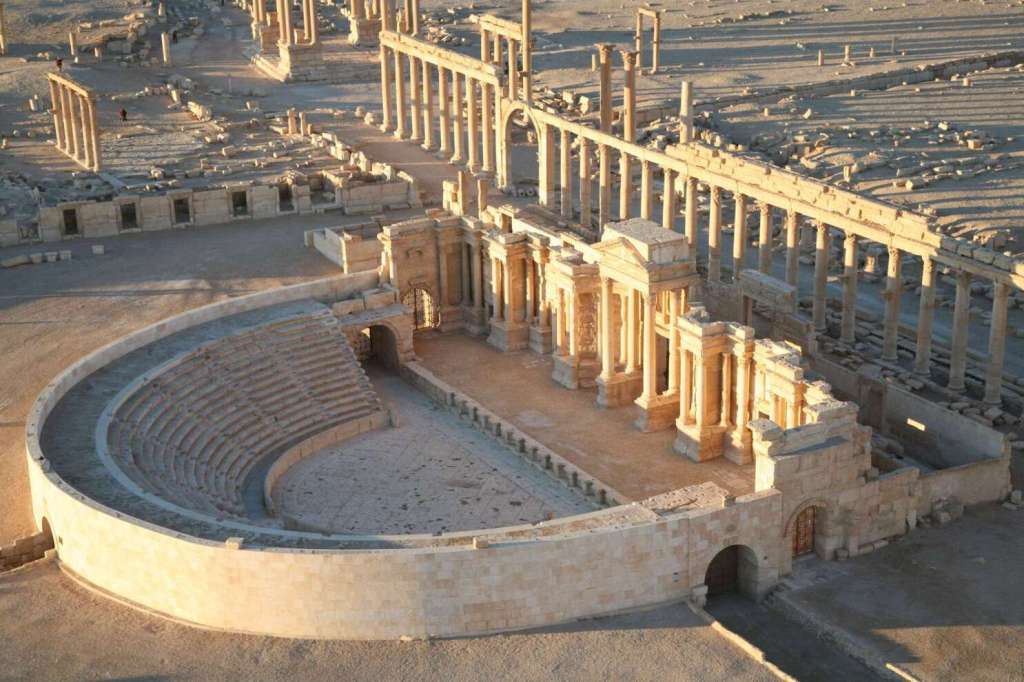
It’s all in ruin now, more so since the Islamic State (ISIS) decided to extend the ruination in 2015. There was a brief time in the third century A.D. when Palmyra was independent and prosperous. It stood midway between Rome and Persia and was coveted by both. It was ruled by such enlightened leaders as Septimius Odaenathus and, after his death, his widow Septimia Zenobia. Under Zenobia, Palmyra controlled lands from central Anatolia to Southern Egypt.
That was too much for Rome. In 273, the Roman Emperor Aurelian destroyed Palmyra and exiled Zenobia to Rome. At that time, the city had some 200,000 inhabitants. Somewhat later, Diocletian re-established the city, but it never again grew to the size and power it had under Odaenathus and Zenobia.
It is a wonderment to me that throughout history there existed little “golden ages” of relative happiness and prosperity. At Palmyra’s height, its people were considerably wealthier than the citizens of Rome itself. By the third century, the Roman Empire itself was powerful, though its original inhabitants had passed their zenith as all the resources were spent building up the massive army presence along the northern and eastern borders.
I sincerely hope the same thing will not happen to the United States. With this election, I breathed a little more easily and had a few glimmerings of hope.
Queen Lili’uokalani, the Last Sovereign Monarch of Hawai’i
Liliʻu Loloku Walania Kamakaʻeha was born in 1838 to a family of ali’i, or chieftains, in Honolulu. She was informally adopted by an even more noble couple and raised with their daughter, Bernice Pauahi Bishop, after whom the Bishop Museum is named. Her brother David Kalakaua was crowned King of Hawaii in 1874. When he died in 1891, Lili’uokalani, as she was now called, became Hawaii’s only regnant queen, at the age of 52.
Unfortunately, her reign was to last less than two years. Under Kalakaua, the American and European businessmen forced on the monarchy in 1887 what became referred to as the Bayonet Constitution, which, among other things, deprived native Hawaiians of the right to vote. In attempting to replace the Bayonet Constitution with one that recognized the rights of Native Hawaiians, Lili’uokalani ran afoul of the same bunch of avaricious businessmen who were responsible for the bayoneting of Hawaiian civil and voting rights.
The rest is history: Lili’uokalani was forced to abdicate. Then she was imprisoned in a room on the second floor of the Iolani Palace for treason committed against the “Provisional Government,” or PG, sometimes spelled PiG by Hawaiians. It took several years for the United States to annex Hawaii, which Grover Cleveland refused to do. But once the USS Maine was sunk in Havana Harbor, the land grab was on under President McKinley.
Although she reigned for only a short time, Lili’uokalani was a capable ruler, though not always able to decipher the deviousness of the Occidental mind. She was a talented musician who composed numerous songs still sung today, including “Aloha ’Oe.”
The William Wallace Monument in Stirling, Scotland
Within walking distance of the great fortified mountain that is Stirling Castle sits a monument to William Wallace, Scotland’s great hero and self-taught military genius. It was at Stirling Bridge in 1297 that William Wallace led a force of around 5,500 men, with only 300 cavalry, against 9,000 men, with 2,000 cavalry led by Hugh Cressingham for Edward Longshanks, King of England.
It was Wallace’s unique skill that he knew how to read a battlefield and make the land help him win. It was only when he was forced to fight a typical large scale battle at Falkirk in 1298 that he lost. After that, things went downhill for the Scot, who was betrayed to Edward and executed in 1305 without an actual trial.
Wallace was the son of a knight, who was knighted by Robert the Bruce only after Stirling Bridge. As such, he was looked down upon by the Scottish nobility, many of whom were more comfortable speaking in Norman French than either English or Gaelic. What the nobles were after was not freedom for Scotland, but more power and more wealth for their families. Relative commoners like Wallace didn’t count.
I have just finished reading Nigel Tranter’s historical novel The Wallace, which was likely more accurate than the considerable mythmaking evident in the film Braveheart. I have visited the Wallace monument twice on my travels and was impressed for the monument’s rare tribute to a person not of noble blood—unthinkable in the Middle Ages.
Talk about history: Scotland has had it. Think about how much mythmaking occurred when the Confederacy surrendered at Appomattox Courthouse. Well, Scotland was put through the mill by Perfidious Albion (England) for upwards of a thousand years—and they’re still chafing under the collar.
I am currently reading Nigel Tranter’s The Wallace about William Wallace’s revolt against English rule under Edward Longshanks (alias Edward I Plantagenet). It brings Mel Gibson’s film Braveheart (1995), though it is a much more detailed work about Wallace’s battles at Stirling Bridge (1297) and Falkirk (1298). We get to see in greater detail the treacherousness of the Scottish nobles, who were mostly in it for themselves.
Nigel Tranter (1909-2007)
Over his long career, Nigel Tranter wrote prolifically—not only the historical novels for which he is famous, but a five-volume history of the fortified house (read: castle) in Scotland, children’s books, novels set in the present day, and even Westerns. There is very little of the vast pageant of Scottish history that Tranter did nottouch upon, from St. Columba and Kenneth MacAlpine and MacBeth to the present day.
To date, I have read about a score of his novels, hardly making a dent in his total opus. And not a single one of his books has been a stinker. I regard him as one of the best writers of historical novels who ever lived, and also the most vivid describer of battles throughout history. His description of Wallace’s victory at Stirling Bridge is so vivid that I didn’t feel that I needed a map to follow the action.
The Tomb of the Kamehameha Dynasty of Hawaiian Kings
Honolulu’s Royal Mausoleum (or Mauna ‘Ala, “Fragrant Hills”) is the home of most of the two Hawaiian Royal Families of the Kamehameha and Kalakaua dynasties—with the sole exception of Kamehameha I “The Great,” who is buried in Maui.
As you can see from the fresh flower leis on the tomb, today’s Hawaiians revere the memory of their kings and regard the mausoleum as holy ground. Martine and I hope to visit it when we go to Hawaii in three months, perhaps visiting nearby Queen Emma’s Summer Palace the same day.
The Tomb of the Kalakaua Dynasty
It was King Kamehameha IV and his consort Queen Emma who had the mausoleum built in 1862. Unfortunately, the first occupant was their four-year-old son Prince Albert.
In addition to all the Hawaiian kings after Kamehameha I, many of the retainers and chiefs are also interred nearby. For a list of the occupants, click here.
Queen Lili‘uokalani on Hawaiian Postage Stamp
I include the above postage stamp image just to demonstrate that the Kingdom of Hawaii was a self-governing entity before being annexed by the United States in 1898. Queen Lili‘uokalani was the last monarch of the Hawaiian Islands.
Whenever I look back at the 1970s, it seems to me that everything was orange, burnt orange, or orange brown. There was also a kind o bold gaucherie in the fashion designs, from oversized collars for men to those ridiculous Bob Mackey dresses designed for the Carol Burnett Show.
I still watch reruns of the Carol Burnett Show from time to time on the ME Channel, especially when Comedy Central isn’t running new episodes of Trevor Noah in The Daily Show. I do it despite the fact that I will be inundated with ads for “Ask Your Doctor” prescription medications targeted at the elderly audience.
In general, I didn’t like the 1970s very much. Nixon was in the White House. It seemed all the hopeful promise of the 1960s was turning to a burnt orange shade of conformity. Some of the music was still good, but it seemed that the Silent Majority had won out.
Pio Pico lived in California under three flags: Spanish, Mexican, and the Stars and Stripes of the United States. One would think that he would not have fared well under the last of these. Actually, he had many friends among the American settlers who had moved to California earlier and adopted Mexican citizenship.
That did not prevent Pio Pico from being swindled. But then it seems that swindles were more the rule than the exception in early Southern Cal. Even his friends, the Workmans and Temples lurched from prosperity to disaster and back again. It seems everyone was in court suing one another. And justice did not always come out ahead.
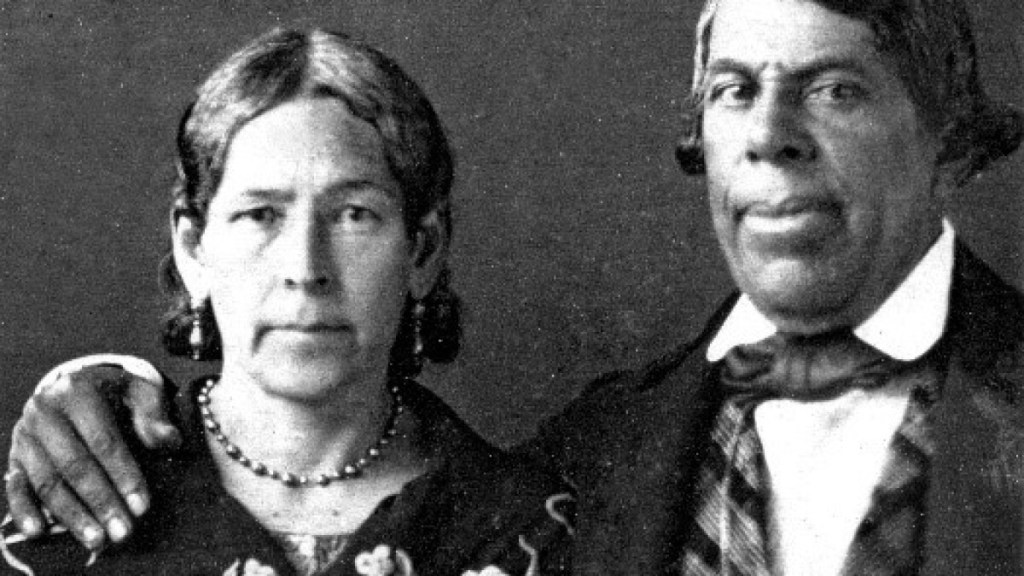
As one who has lost his pituitary gland to a tumor, I feel for Pico, who also had a pituitary disorder: in his case, acromegaly. In the picture above, note the fleshy lips and the enlarged ears and nose. Acromegaly results when the pituitary gland produces too much human growth hormone during the adult years. Exactly the opposite of what I had.
When Pico died in 1894 at the age of 93, he was buried at Calvary Cemetery in the Elysian Hills. When several years later, the tomb of him and his wife was vandalized, Walter Temple, the grandson of William Workman, obtained permission from Pico’s family to re-inter the remains in a mausoleum he built on the grounds of the Workman-Temple Family Homestead Museum in the City of Industry. If you are interested in learning more on the subject, consult Museum Director Paul R. Spitzzeri’s blog on the ties between the Workmans, Temples, and Pio Pico, the last Mexican governor of Alta California.






You must be logged in to post a comment.