Rock Schlock and Barrel

When I was young, we didn’t have a working radio. As a result I didn’t have any fave rock groups as I was growing up. By the time I was introduced to the Beatles, the Rolling Stones, and the Doors, I was well into my twenties.

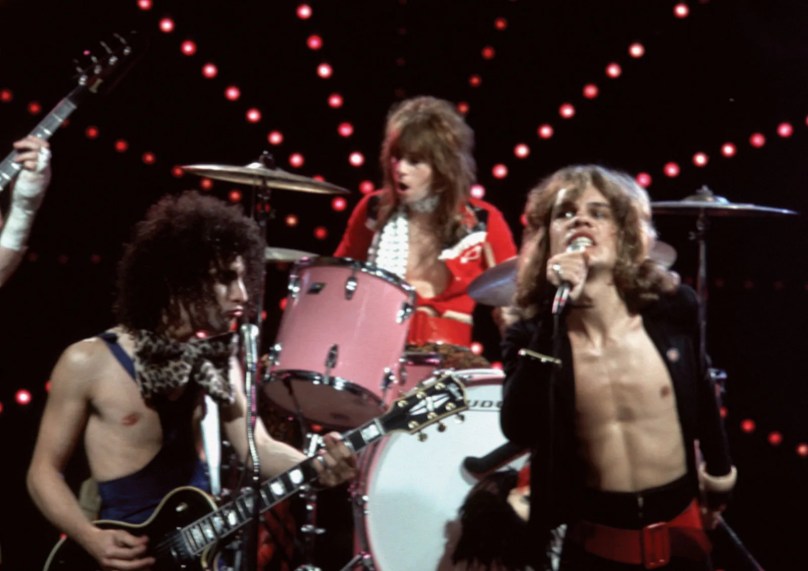
Even then, I never really liked the whole rock ethos, that whole thing where gaunt hippies pranced onstage while wielding electric guitars. Moreover, I never liked electric guitars. So, in effect, there never was a time when I could say that so and so was the music of my youth. I never had much music of any kind in my youth.

Then, when I was in my thirties, I discovered classical music right around the same time the compact disk (CD) came into being. A few years later, I finally learned to drive at the age of forty and discovered the classical music stations KFAC-FM and KUSC-FM. KFAC switched to Pop Music in 1989; so all I ever listen to on the radio today is KUSC.

Come to think of it, I never listen to Pop Music either. I have never yet heard any Taylor Swift songs. What floats my boat is Mahler, Sibelius, Bruckner, Dvorak, and Wagner.

I guess that makes me rather atypical for my generation. My cohort is busy listening on PBS to Peter, Paul & Mary concerts. Fortunately, I’m okay with that.

Saxophone Lessons

Downtown Cleveland When I Was Young

At the time I agreed to take saxophone lessons, not only did I not know what a saxophone was, but I had no idea I would have to spend hours each week “practicing.” I wanted to play a trombone, but the music store salesman saw the look in my parents’ eyes and said something to the effect that I had the wrong kind of teeth for blowing into a trombone. It worked: He made the sale.

My music teacher was Jack Upson, who had a studio on East 4th Street, almost in the dead center of the postcard image above. (The tall building was the Terminal Tower, at that time the tallest building in the U.S. outside of New York City.)

Every week, I took the 56A bus downtown. It let me off at Prospect and Ontario. From there, I walked two blocks or so to Jack Upson’s studio.

Truth to tell, I never liked the saxophone as a musical instrument. The moisture from my mouth formed a gooey discharge that made the reed of the sax very mucky after a while. What I did enjoy was being downtown on my own. I would eat lunch at Woolworth’s lunch counter, walk around a bit, and hang out at Schroeder’s book store on Public Square.

I started playing the sax at age nine and quit at age eighteen, when I went out of town to college. Seeing that my parents weren’t there to force me to practice, I just quit playing altogether. I was no good at it anyway; and it was no fun playing an instrument only because my mother and father liked it. More importantly, I didn’t like it.

Mozart on the 405

The San Diego Freeway (I-405) at Night

My two best friends each live 25 miles away: Bill K, in Altadena; and Peter J, in San Pedro. This afternoon I drove to San Pedro and discussed a film idea with Peter, whom I think is the ideal person to do a film about the whole hippie scene in Southern California in the late 1960s.

On the way back, I was listening to KUSC-FM. They were playing Mozart’s Requiem Mass in D, K. 626. Although I feel most partial to the 19th century romantic composers, Mozart strikes me as almost Godlike in the perfection of his music. The Requiem was composed in the last year of the composer’s life (1791) and eerily foresees his own upcoming death in abject poverty. There is a solemn magnificence to the Mass.

I felt quite strange driving in the L.A. traffic on the 405 at dusk, seeing the cars in front of, beside, and behind me almost as if they were notes in the symphony.

Frequently, I am powerfully moved by classical music. Pop music? Not at all. As I ascended the stairs to my apartment, my neighbor was playing some Mexican pop music that went BOOM BOOM BOOM with assorted moans and cries. No, there is no doubt where my preference lies.

A Cheerful Heart

Franz Joseph Haydn (1732-1809) was probably the most influential musical genius of his time. He befriended the younger Wolfgang Amadeus Mozart (1756-1791)—and outlived him. He also tutored Ludwig van Beethoven (1779-1827). He is considered the Father of the Symphony as well as the Father of the String Quartet.

For much of his incredibly productive career, Haydn was the court musician of the Eszterházy family in Hungary. He composed in all 104 symphonies and 68 string quartets. Today, as I drove to do some grocery shopping, I listened to one of his early symphonies on KUSC-FM and thought to myself that here was an artist who could genuinely not only feel joy but convey it to his listeners. But then, it was Haydn who said, “Since God has given me a cheerful heart, He will forgive me for serving Him cheerfully,”

Some day I would love to get CDs of all of his symphonies: In their totality, they represent one of the most concentrated collections of artistic happiness in the history of the world. If you are feeling down some day, try listening to his work; and you will see what I mean.

Music and Me

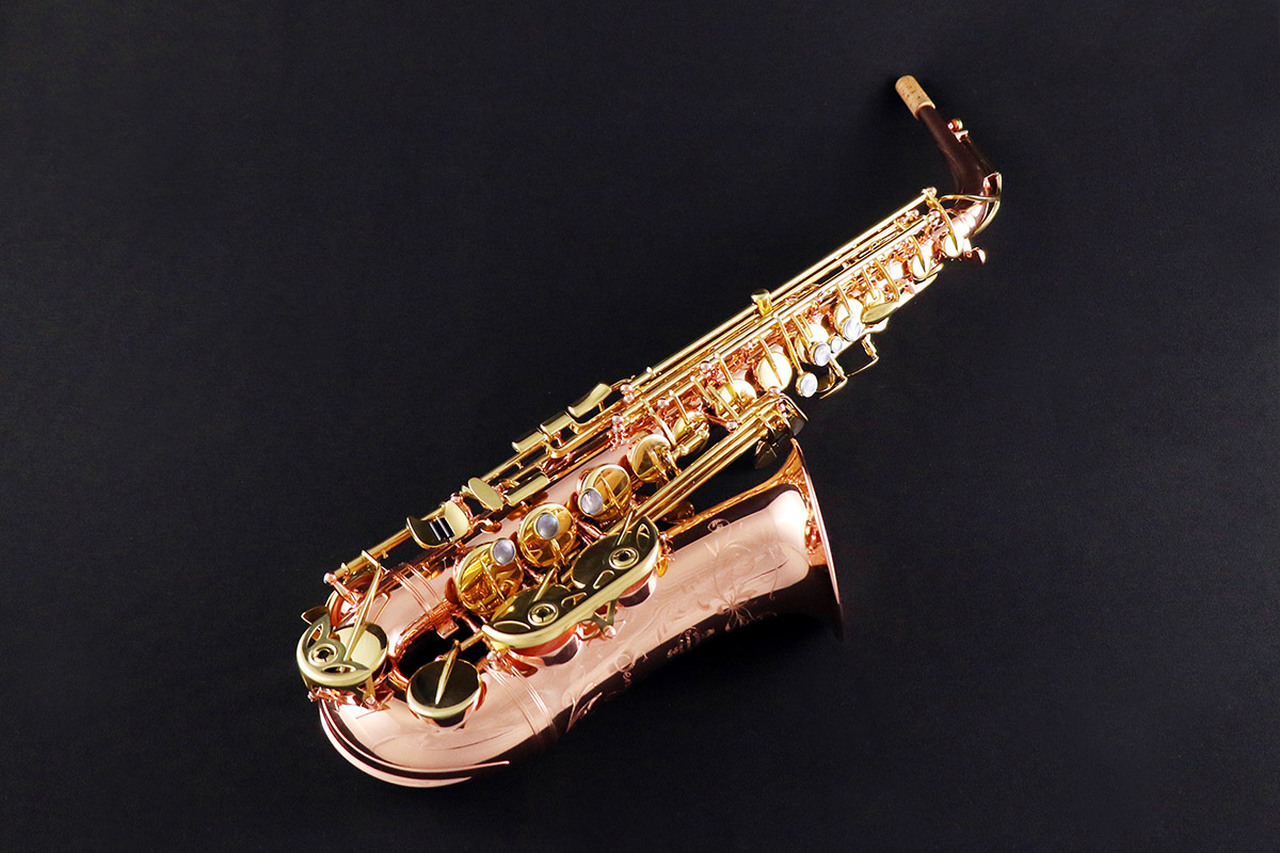
An Alto Saxophone: How It Consumed Ten Years of My Life

It is possible to love music and at the same time be a total incompetent when it came to performing it. It all started with voice after I joined the choir at Saint Henry School. I did not know, but soon found out that I sounded like a crow when singing the great Latin hymns of the Catholic liturgy. At least, it kept me from becoming an altar boy and having to wake up at 5:00 am to help officiate at the 6:00 am Mass, and memorize a ton of Latin in the process.

Both of my parents wished that their parents had let them play musical instruments. So they asked me what I would like to play. I quickly answered that I wanted a trombone. Mom and Dad took me to a music store at Prospect and Ontario in downtown Cleveland. The salesman agreed with my them that I did not have the right teeth for either a trombone or a trumpet, but that an alto saxophone was “very nice.”

Well, “very nice” translated into a whole new set of responsibilities, such as joining the band in high school and practicing for 30-60 minutes every day. All four years in high school, I played the sax in concerts and marched in formation during halftime at Chanel High’s games football games. It’s kind of hard to march in formations when there are only twenty or so members of the band, but we were game.

The only problem was that I didn’t much like playing the sax. There is something mucky about what happens to your saliva as it accumulates on the underside of a reed. Plus, I was pre-asthmatic, which probably should have disqualified me from any wind instruments. My parents, however, were determined to recover their $100+ dollar investment in the instrument by forcing me to play against my will.

Although I took my sax to college and even joined the Dartmouth College band, I saw that I was in with a group that was so much advanced over me in musical ability that I was only too happy to retire the sax and forego any further practice after only a couple of sessions. (Yay!)

Lochaber

Lochaber in the Scottish Highlands

This particular Hungarian has a warm place in his heart for the Highlands of Scotland. I have visited them several times beginning in 1976. In recent years, it has, like many things, become too expensive.

Another person who felt the same way was Francesco Barsanti (1690-1775), an Italian composer, flautist, and oboist who fell in love with the Highlands and lived most of his life in Britain.

Today, as I was returning home from the Farmers Market at 3rd and Fairfax, I was listening to KUSC-FM and heard a piece called “Lochaber” by Barsanti, as played by a San Francisco-based group called Voices of Music, which calls itself America’s premier early music ensemble. I was enchanted and was delighted to catch the entire piece. Here it is, as performed by the Voices of Music:

I hope you enjoy it as much as I did. During my drives around the city, I keep my car radio tuned to KUSC-FM at 91.5, where the music is all classical all the time. If you would like to sample their programming, I recommend you go to their website and listen to their programming, which you can do from anyplace on earth. They have an international audience and have introduced me over the years to many of my favorite pieces.

My Musical Career

I Thought It Would Be a Neat Idea, But What Did I Know?

One of the problems of being the firstborn son of poor parents is that you are elected to fulfill their unfulfilled wishes for their own lives. When I was nine years old, they decided that I should play a musical instrument. That sounded fine to me; it’s just that I didn’t realize the extent to which the hook was baited.

For some reason, I wanted to play a trombone. At the music store, my mother and father got the salesman to point out that my teeth weren’t right for playing the trombone. They both suggested I play the saxophone instead. I didn’t even know what a saxophone was. So I foolishly said, okay. Before I could say “Help: Get me out of here!” I had a music teacher downtown who would teach me the ways of the alto saxophone.

What follows resembles an episode of Leave It to Beaver. Each Saturday morning, I had to take the 56A bus downtown to Prospect and Ontario, from where I trudged with my instrument case to East 3rd Street where Mr. Jack Upson tried to make a musician out of me. The lessons were okay, I suppose, but the daily practice sessions were, quite simply, horrible. When I wanted to go outside to play, I was sternly reminded that I had roped my family into buying me a saxophone, which they couldn’t afford; and I had damned well sit down for an hour and practice. My mom’s favorite song was “Londonderry Air,” which she knew as “Danny Boy.” Just to make things totally untenable, my little brother Dan would show up for the song and grin while I tootled away while staring daggers at him.

At Chanel High School, I joined the Firebirds marching band. Just imagine what it was like to take the field at halftime and do formations with only twenty-odd instruments. All anyone in the stands ever heard was the booming of the drums.

This nonsense continued until I went away to college. Although I showed up for several Dartmouth band practices, I immediately saw that I was among people who knew how to play their instruments and who loved performing. I quietly left the band before the first football game and never picked up my saxophone again. After all, in Hanover, New Hampshire, there was no one to make me practice—and several classmates who would have tarred and feathered me if I had.


Real Genius

Hank Williams (1923-1953)

Where is the real artistic genius of America to be found? Sad to say, it’s not literature. It’s not painting or sculpture. Near as I can say, what the United States will be most remembered for is music—not only jazz, blues, soul, bluegrass, rockabilly, zydeco, gospel, country & western, but much of rock & roll as well. Names like Elvis Presley, Hank Williams, Miles Davis, Muddy Waters, John Coltrane, and a host of others will answer the question: What has America produced that will stand the test of time?

As a self-proclaimed intellectual, I am aware that such a title cuts no mustard in the U S of A. Far from it. It’s almost a term of opprobrium.

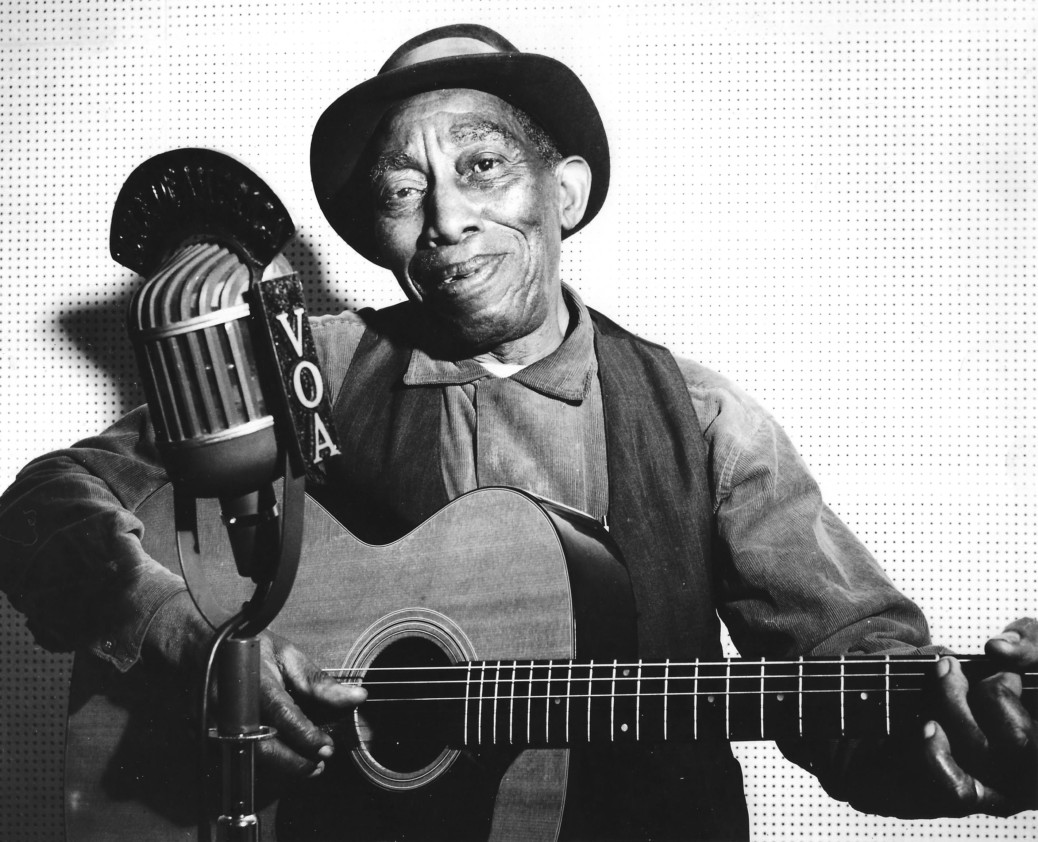
Mississippi John Hurt (1892-1966)—A Favorite of Mine

Curiously, in such a racist country as ours, it’s the only place that comfortably cuts through the racial divide.Black artists copied from the whites, though not nearly as much as white artists copied from African-Americans.

Of course, there is no Nobel Prize for music. It registers in the heart—and, typically American, at the Box Office.