Fairbanks Hall

Fairbanks Hall As It Is Today

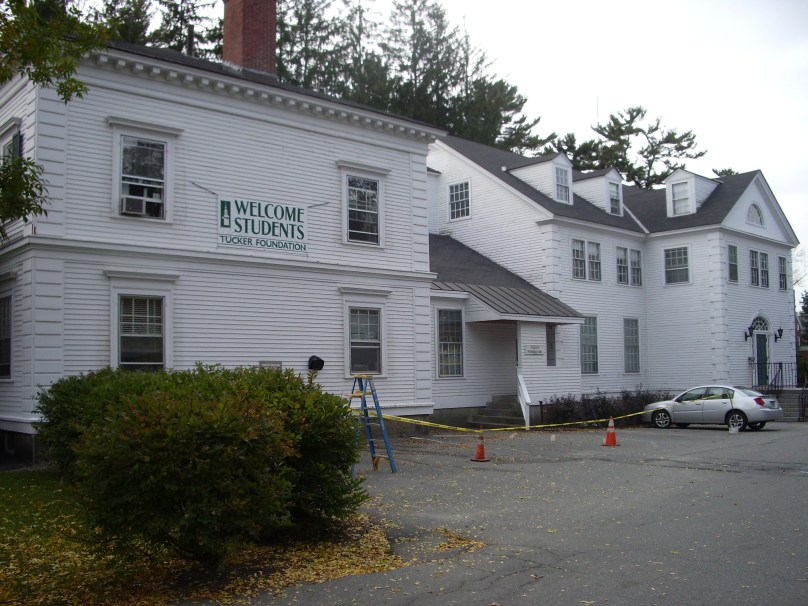
In the picture above, the left half of the building shown was added some time after I graduated from Dartmouth College in 1966. To see the Fairbanks Hall that I knew and loved, put your hand over the left half of the picture.

When I was a freshman at Dartmouth, I paid a visit to Fairbanks Hall in its old location just north of Baker Library. I heard that Dartmouth Films, which occupied the building, was showing free films. One day, I wondered into the small auditorium and saw Carl Theodor Dreyer’s 1943 masterpiece Day of Wrath (Vredens Dag) about witchcraft in the 17th century. The Danish film electrified me. I had seen a handful of foreign films back in Cleveland, but nothing this good.

That year, the Hopkins Center for the Arts had its grand opening, and the Dartmouth Film Society was able to screen films in the center’s large and fancy auditorium. At the time, I was planning on being an English major; but suddenly new possibilities opened up. The Film Society inaugurated the Hopkins Center auditorium with the world premier of John Huston’s Freud.

In my sophomore year, the college lifted Fairbanks Hall from its north campus location and plunked it down in the middle of the parking lot between Massachusetts Hall and the Hanover, New Hampshire cemetery. I started hanging out there, having long conversations with Blair Watson, who headed up Dartmouth Films, and David Stewart Hull, his assistant.

By my junior year, I was an active member of the Dartmouth Film Society; and the next year, I was its assistant director. By that time, my pituitary tumor was causing intense pain, usually in the form of frontal headaches which started just before noon and (for some reason) ended around midnight. In between those hours, I figured I could screen films for myself on the 16mm projector. I dropped in daily to see what films had been received for screening in classes around campus and threaded the projector if any of them looked interesting. There was a small screening booth I could use for the purpose.

Among the highlights of the films I saw that year were the Frank Capra Why We Fight films made to show Americans why we were fighting in the Second World War; Nelly Kaplan’s great documentary about the films of Abel Gance; René Clair’s French musicals Sous les toits de Paris and Le million; and a whole host of other highly miscellaneous films.

While in Fairbanks, I usually ran into my friend Peter, who was busy editing one of the films he had shot. Today, he lives some twenty-five miles south of me.

Fairbanks Hall had a major influence on my choice of graduate school. I had received a citation for excellence in a class on film history; and I decided to apply to the UCLA film school for an advanced degree in motion picture history and criticism.

Still a Bad Alumnus

Omigosh, Is It Time for My 60th Reunion Already?

This is a re-posting of my blog from March 18, 2016—ten years ago this month.

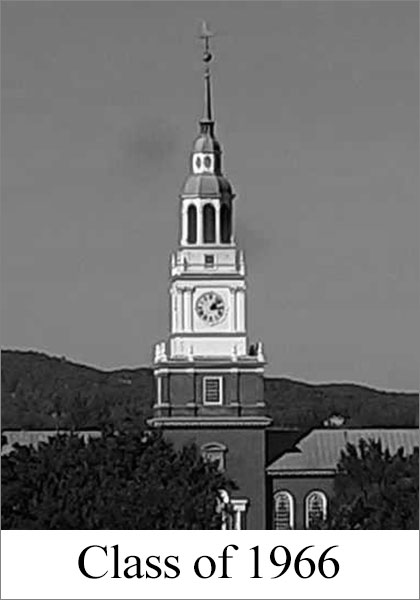
On June 3, 1966, I graduated with an A.B. from Dartmouth College. What’s an A.B, you may ask? Well, as my diploma is entirely in Latin, it stands for Artium Baccalaurei, or Bachelor of Arts.

Although I am besieged with mail from the college, asking for money, participation in local and national alumni events (such as my 60th Reunion), and deluxe trips around the world with other alums. Will I participate? Uh, no. That despite the fact that I was awarded a four-year alumni scholarship, for which I am grateful—but not in any material way.

What bothers me is that none of the people I knew and liked at Dartmouth are active with the alumni. Instead, it’s all the same gladhander crew that was active in the fraternity system (which I loathed), student government (for which I was not popular enough), and/or sports (for which I didn’t qualify). I went through four years of Dartmouth with a brain tumor, which was not operated on until September 1966. Until then, I looked like an extraordinarily pale and sickly middle school or high school student.

It’s not that I didn’t make friends easily. My oldest friend was one of my classmates who now lives only 25 miles from me in San Pedro. There are others, but they were all like me in one way or another—and none saw fit to become active with the alums.

Somehow I managed to survive the college years, and even enjoyed them despite a level of pain that would sink me into my grave today. Those frontal headaches were almost constant, the result of a pituitary tumor pressing against my optic nerve. Today I am a different person altogether.

The one debt I feel I owe Dartmouth is actually to the Catholic Student Center there. When I was lying near death at Fairview General Hospital in Cleveland, my parents were shocked to find that my student insurance had just expired. They told Monsignor William Nolan of the Center to pray for me, which he did—and more. He went to bat for me and bullyragged the insurance company into covering me. Imagine that happening today!

Monsignor Nolan has since gone to join his ancestors, but I still owe him. And he gets paid in full before anyone else at Dartmouth gets dime one from me.

The Book Lover

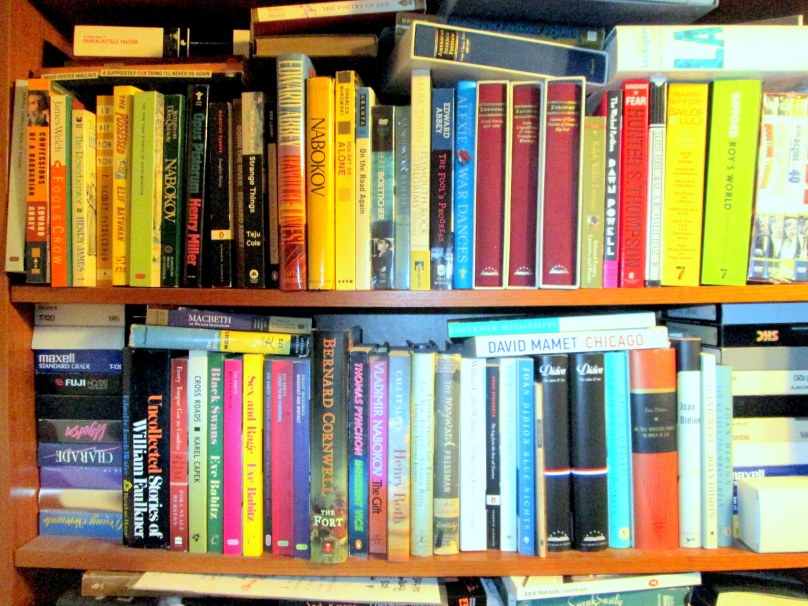
Part of My Library

I have always loved books. Perhaps, even, I have loved them too much. My two-bedroom apartment in West Los Angeles contains some six thousand books. Every room in my apartment has at least two bookcases, Although I am not now in a position to buy books the way I used to, I can’t get rid of them as fast as I bought them once upon a time.

Every walk I took ended in a bookstore, and rarely did I step back outside without buying at least one book. I am sure that, if I were not a book collector, I would have been able to buy a house. But then, I never really wanted to buy a house. I would be a terrible homeowner. I had doing yard work. I can’t fix anything. And I can’t imagine living the lifestyle of most homeowners. I am sure my neighbors would have ended up hating me.

On the other hand, books have saved my life. I was a sickly kid walking around for ten years with a pituitary tumor and severe frontal headaches. I was short for my age, pale, and absolutely zero when it came to sports. To compensate for my many deficits, I turned to books. In Cleveland, I took the 56A bus every week to the main branch of the Cleveland Public Library, stopping in on the way at Schroeder’s bookstore on Public Square, where I spent untold hours scanning the covers of the books on display.

My relatives didn’t think much of my being a bookworm. To my parents, books were innately messy unless they were all put away out of sight. Once, when my cousin Emil spotted me reading Mark Twain’s Tom Sawyer, he grabbed the volume from my hands and threw it on the floor. “That’s what I think of books!” he shouted.

But then I was the first in my family ever to graduate from college. And it was a prestigious Ivy League college to boot. And once I got a computer job in 1968, I was never unemployed for more than three months until the accounting firm where I was working in 2017 closed its doors.

No, in the end, I think I made all the right choices given the cards I was dealt. And I am happier for it.

Takony

It’s the Hungarian Word for Mucus

For the last couple of days, we have been experiencing a dry Santa Ana offshore wind. It’s like the sirocco in the Mediterranean: When it blows, everyone is uncomfortable. Perhaps the best description of the Santa Ana comes in a story by Raymond Chandler called “Red Wind”:

There was a desert wind blowing that night. It was one of those hot dry Santa Anas that come down through the mountain passes and curl your hair and make your nerves jump and your skin itch. On nights like that every booze party ends in a fight. Meek little wives feel the edge of the carving knife and study their husbands’ necks. Anything can happen. You can even get a full glass of beer at a cocktail lounge.

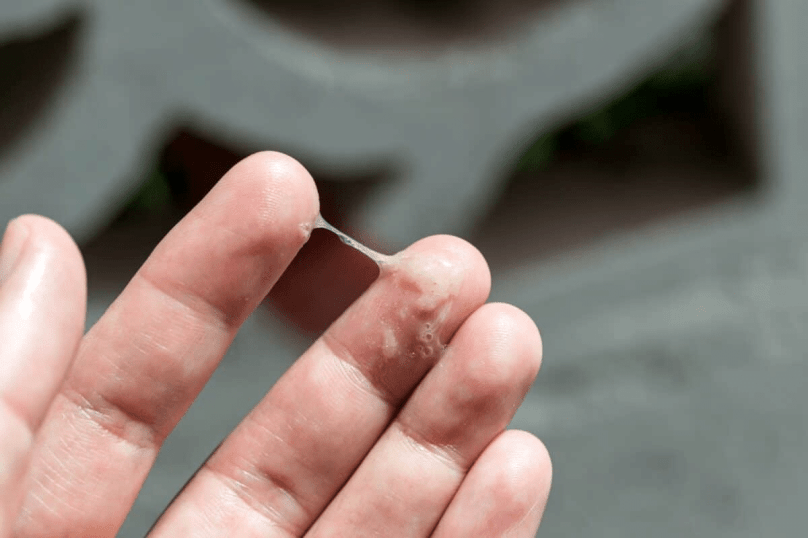
In my case, my life turns to outputting mucus, wither through sneezing or extensive nose blowing. My handkerchiefs turn soaking wet in minutes, though they can dry quickly if there is a pause in the snot generation.

By the looks of tomorrow’s weather forecast, tomorrow will not be a good day for me, as there will be only 15% humidity and wind blowing at sixteen miles per hour. It will be a good day to sit around with a pile of clean handkerchiefs and read a good book. (Paper towels tend to irritate my skin.)

A note about the Hungarian term that is the title of this blog. According to Google’s AI summary of the work taknyos:

“Taknyos” is a Hungarian adjective meaning “snotty,” “snivelly,” or having a runny nose, derived from the noun takony (snot). It is commonly used to describe children with cold symptoms, or colloquially as an insult for a young, inexperienced person. 

  • Literal Meaning: Snotty, covered in nasal mucus.
  • Colloquial Usage: Can be used to refer to a brat or a young, snot-nosed kid.
  • Related Term: Takony (noun) = snot/mucus.

Since I was allergic all my life, the words “takony” and “taknyos” were pretty liberally applied to me by my family and Hungarian friends. I’ve never been able to shake the implication.

Borges at Disneyland

Painting of Argentinean Poet Jorge-Luis Borges (1899-1986)

This was a dream I had last night: I was taking my favorite 20th century writer, Jorge-Luis Borges on a tour of Disneyland. It wasn’t the real Disneyland: It was a dream Disneyland whose dimensions were two kilometers by two kilometers. It was interesting because it taught me something about Borges as well as something about myself.

We started in a two-story pavilion dedicated to horror. I was eager to guide Borges through the different galleries, promising a special treat on the second floor, where there was a gallery dedicated to Edgar Allan Poe. At this point, Borges started to say something disparaging about Poe; but I shrugged it off and went on to the second floor, while the poet got interested in one of the ground floor galleries.

I looked forward to taking Borges to one of the restaurants in the park, but Borges said he had no interest in another buffet.

Suddenly, we cut to the railroad that circled Disneyland. It wasn’t anything like the actual railroad that goes through the park, but a more modernized train with multiple passenger cars in which we were seated on long benches facing the direction the train was going. In Disneyland, the round-the-park train seats passengers facing to the right, so that they could see the many dioramas.

At the station, I took a seat and turned to my left to see if Borges was following me. He wasn’t. Instead, a middle-aged couple sat next to me. I became agitated, as the train passed seemingly through miles of open country—a far cry from the city of Anaheim around the park. Around the halfway point, I stopped at a station and started looking for a Disney public relations rep so that he could stage a search for the lost Argentinean writer.

At this point I woke up and said to myself, “What a strange dream!”

Overlays

Because the previous two Thursdays were holidays—Christmas and New Years respectively—I missed out on two weeks of the Los Angeles Central Library’s Thursday mindful meditation sessions. Fortunately, yesterday’s guided meditation was something of a breakthrough for me.

Over the days of our lives there are a number of overlays, like street networks and buildings over a basic topographical map. By using our breath inhalation and exhalation as an anchor, we are near the base level of our being. Many of the things that distract us are familial, occupational, religious, or cultural overlays on this base level.

One of the advantages of being retired is a diminution of the overlays that affect us. Yesterday’s half hour guided meditation felt as if it took place within five minutes. I focused on my breath pretty much exclusively.

This evening, I was looking for an illustration that I could use to illustrate my point, but I could find only map overlay images that were too technical and were themselves distracting. In the end, all I could find was the standard lotus position figure. I couldn’t even assume a lotus position without having a crane or several firemen lift me from being all tied up in a sitting knot.

So when I talk of meditation, do not think of me as sitting in a lotus position with an epicene smile on my face. Think of me as seated on a sturdy wooden library chair in relative comfort.

Reindeer Games

Christmas Display at the Grier-Musser Museum

Just what are the reindeer games that Rudolph the Red-Nosed Reindeer was prevented from participating in? I strongly suspect that it involved buying into the whole michegaas connected with the holiday. Sometimes it seems to me, too, like a weird cult similar to the celebration of potlatch by the Indians of the Northwestern U.S.

Now that I’ve utterly confused you by introducing two unfamiliar terms in the opening paragraph of this post, I will admit to being of two minds about the season. On one hand, it is totally stress-inducing, with endless traditions and practices to make one feel guilty through their non-observance. On the other, it has the potential of bringing happiness to children and even to adults who don’t expect too much out of life.

If you take a close look at Charles Dickens’s A Christmas Carol, you can see it espouses some truly admirable virtues. And, really, it was this novelette by Charles Dickens that was responsible for much of what Christmas has become.

If you expect too much of Christmas, it will disappoint. But if you go for “Christmas Lite,” picking and choosing carefully how deep you step into the morass, you can actually have a pretty good time.

Martine and I are celebrating the holiday simply. Last Saturday, we saw Laurel and Hardy in March of the Wooden Soldiers at the Old Town Music Hall in El Segundo. I ordered a box of Royal Riviera Pears for her from Harry & David. Next Tuesday, I’ll cook up a big pot of beef stew from the New York Times recipe and serve it with Martine’s favorite Hungarian wine: Bull’s Blood of Eger (Egri Bikavér).

Then, of course we’ll look for some of our favorite Christmas films on TV, such as A Christmas Story, the Alastair Sim version of A Christmas Carol, It’s a Wonderful Life, The Bishop’s Wife, and Miracle on 34th Street.

We don’t have a Christmas tree (no room for one), but we did send out a handful of greeting cards to our closest friends.

Approaching Infinity

Why do I love chess so much? Let me count the ways:

  • It has been around since the 7th century AD.
  • It is played around the world, with the current champion being from the country of origin, namely, India.
  • “There are even more possible variations of chess games than there are atoms in the observable universe.” Read about the so-called Shannon Number.
  • It is possible to improve one’s game by studying games played in the last 200 years.
  • Hell, the number of reasons I love chess also approaches infinity.

Among the top fifty players in the world today are representatives from Norway, the United States, Germany, India, France, the Netherlands, China, Hungary, Uzbekistan, Vietnam, Azerbaijan, Russia, Slovenia, Serbia, England, Poland, Armenia, Croatia, and Sweden. In fact, the only parts of the world that are under-represented are Latin America and Africa.

I learned to play the game at the age of nine from the Hungarian husband of one of my mother’s friends. Since then, there has never been a time when I didn’t follow the chess news.

That does not mean I’m particularly good at the game. I may be just another patzer, to use the Yiddish term; but I am still working on improving my game whenever I can. Though I may not have too many years left, I never regard the study of chess games and puzzles as time wasted.

Recovering from Illness

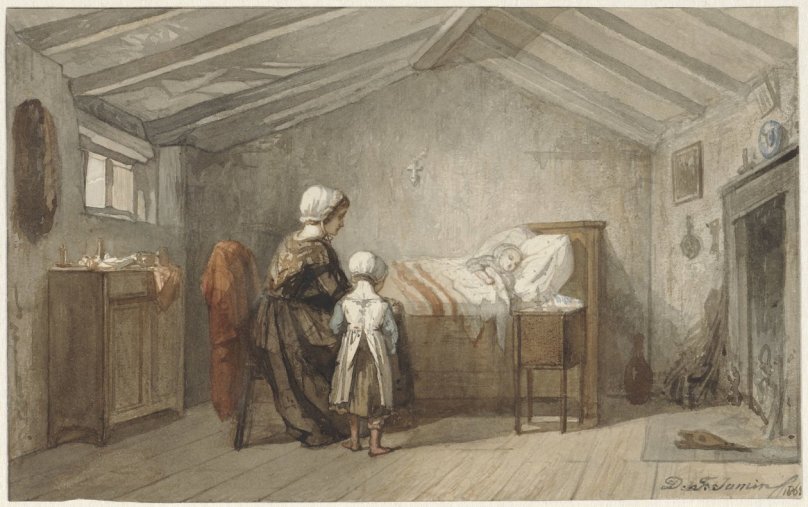
Mother and Daughter by the Sickbed of a Child by Diederik Franciscus Jamin

The above sketch from Amsterdam’s Rijks Museum pretty much describes how I spent most of this week. Something I ate on Tuesday violently disagreed with me, so in addition to the usual messy food poisoning symptoms, I was totally prostrated. Picture Martine at my side feeding me endless glasses of water to avoid dehydration along with hydrocortisone to make up for my body’s inability to produce adrenaline. Without the hydrocortisone, I was likely to die.

To avoid concentrating on the messy details, I would like to present a poem by Robert Louis Stevenson I remember from when I was a boy of ten sleeping in my parents’ bed while I was sick and they were at work. Half the time, my great-grandmother was around to feed me. It presents a very vivid picture of illness seen from the point of view of a child.

The Land of Counterpane

When I was sick and lay a-bed,
I had two pillows at my head,
And all my toys beside me lay,
To keep me happy all the day.

And sometimes for an hour or so
I watched my leaden soldiers go,
With different uniforms and drills,
Among the bed-clothes, through the hills;

And sometimes sent my ships in fleets
All up and down among the sheets;
Or brought my trees and houses out,
And planted cities all about.

I was the giant great and still
That sits upon the pillow-hill,
And sees before him, dale and plain,
The pleasant land of counterpane.

Acres of Cheap Crap

Several days ago, Martine expressed some interest in going to a Walmart … because, well, she hadn’t seen the inside of a megastore for several years. With some reluctance, I drove her to the giant Walmart in Panorama City, at the corner of Roscoe and Van Nuys. Originally, I intended to drop her off and go to a huge bookstore nearby. But then I asked myself, “Do I really need to buy more books?”

That was my mistake. For almost two hours I wandered around the store looking at all the merchandise. In the menswear department, I didn’t see any pants under 30 inches in the inseam. I looked at the shirts: They had flimsy pockets that would dump my reading glasses on the ground every time I bent over.

I guess that for some people seeing so much merchandise and so many services in one place was exhilarating. For me, it was profoundly depressing.

It brought to mind the Atlantic Mills megastore in Bedford, Ohio to which my parents took me. I remember we bought a clunky Recordak tape recorder there. Then there was the huge Fedco Store on La Cienega whose late night pharmacy I had to visit after a visit to the emergency ward for urethral strictures.

I was delighted when I got Martine to agree to leave after purchasing a box of cheap light bulbs. From there, we drove to Otto’s Hungarian Import Store and Deli in Burbank to buy some gyulai kolbasz sausage. We ate lunch nearby at Lancer’s on Victory near Magnolia. It’s one of those 1950s style coffee shops that managed to make it to the 21st century.