A Day at Universal Studios

Mohan Gopalakrishnan and Son Aravind by the Hogwarts Express Locomotive

The last two days I have been busy with an old friend visiting Los Angeles from India. I used to work at Urban Decision Systems with Mohan Gopalakrishnan, a brilliant young programmer who went on to work for a number of computing companies in the United States and India. He was accompanied by his 14-year-old son Aravind.

Today, I drove them to Universal Studios in the San Fernando Valley. We did all the usual tourist things: In addition to the Studio Tour, we saw the Special Effects Show and took a wild Jurassic Park Boat Ride. I was surprised that, at this date in June, there were so many thousands of tourists in attendance. Still, it was worth it. We had a lot of fun and managed to catch up on old times.

Mohan repeated his invitation to visit him in Chennai, where he lives, but I have already written a post about my hesitation to visit India. Who knows? Perhaps I might might take him up on his invite at some point, but I would first have to overcome my fears.

 

Two Old Friends

French Film Critic André Bazin

On Sunday, I was driving to San Pedro to see a friend; and I stopped at Michael R. Weinstein’s Collectible Books at Alpine Village. Sitting in the film section was a two-volume set of film criticism by André Bazin, the founder of Cahiers du Cinéma in 1951. I had owned hardbound copies of the set when I was a graduate student in the film department at UCLA. In fact, the two volumes of Qu’est-ce que le cinéma? (What Is Cinema?) had been translated into English by my favorite professor in the department, Hugh Gray.

Without any particular knowledge of the United States, Bazin was a marvelously intuitive critic who understood American film genres such as the Western almost as well as he did the French theatrical antecedents of his own country’s cinema. Re-reading his essays “The Western: Or the American Film Par Excellence” and “The Evolution of the Western,” I was taken back to my days as a film freak in the late 1960s and early 1970s. I was a devotee of Cahiers du Cinéma and of the politique des auteurs it espoused. And from there came my knowledge of and love for the American film, by way of France.

My classes with Hugh Gray were among the best I took at UCLA. The film department at UCLA had on its faculty both angels and demons, and Hugh was numbered among the angels.

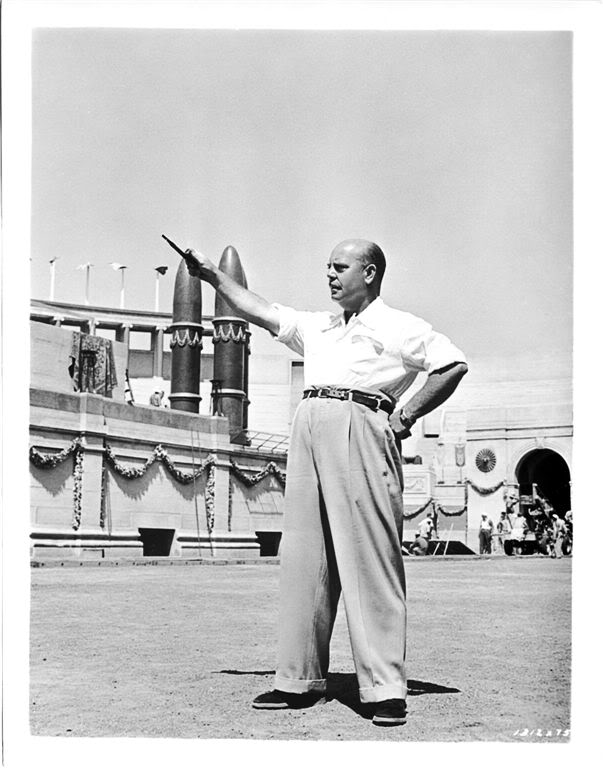
Hugh Gray as a Technical Specialist for Ancient Greek and Roman Film Subjects

Hugh had been an ordained Dominican priest earlier in life, but then left the order and got married. In Hollywood, he was the go-to man for films set in ancient Greece or Rome because of his wide knowledge of the subject. That wide knowledge, combined with his friendliness to his students, made him a superb professor.

I plan to re-read the Bazin essays in the months to come, thinking of the good times I had studying film at UCLA.

Fading Away

Little Girls in Greek Dance Costumes (2011)

In the time that Martine and I have been going to Greek church festivals in Los Angeles, we’ve noticed several trends:

  • The food is getting less authentic. Today, Martine ordered a spanakopita (spinach and cheese pie) that did not contain any cheese.
  • It seems that fewer of the parishioners speak Greek. Is it that the older generation is passing on?
  • The priests are less involved personally with the festivals, particularly in offering church tours to visitors.

This is less true of Saint Sophia Cathedral in downtown L.A. which draws crowds from a much larger area, and which is across the street from Papa Cristo’s, the most authentic Greek restaurant in town.

The same is true of the Hungarian festivals. At first, I felt abashed by my poor command of the Magyar language. Now my Hungarian seems to have gotten better, or again, are the old immigrants dying off and making my poor language skills look better by comparison?

I suppose this is a natural process. Many of the places we visit may not even be around in a few years. For instance, there do not seem to be any Hungarian restaurants left in our nation’s second largest city. Back when I first moved to L.A., there were a number of choices, especially the much lamented Hortobagy.

If you want a more authentic ethnic experience in Los Angeles, you have to look to Latin America and Asia. There is a bustling Thai and Korean scene; and numerous options involving Mexican, Central and South American culture. There are numerous places offering Oaxacan food. Culver City has an Indian restaurant offering the cuisine of Southern India’s State of Kerala.

As to the girls in the above photograph, I could have sworn that they were in a group of teenage girls who passed us on the way to our parked car. They were busy calling each other “chicken butt.”


The Seven Cities of Cibola

Some Kids Preferred Superheroes … But Not Me

When I look back at what I loved most as a kid, I would have to say that superheroes never made the list. Yes, yes, I know that a complete run of Marvel Comics from the 1950s would have made me wealthy. But not nearly as wealthy as my real hero—Scrooge McDuck. The reclusive millionaire of Duckburg was my Numero Uno comic book hero. Teamed up with his nephew Donald, and Donald’s nephews Huey, Dewey, and Louie, they had great comic book adventures.

You could talk about great comic book artists, but I would have to name Carl Barks (1901-2000), inventor of Uncle Scrooge. I still remember with great fondness two of his feature comic stories, “The Seven Cities of Cibola“ and “The Land Beneath the Ground.”

From “The Land Beneath the Ground”

The first is about finding El Dorado, the legendary city of gold which drew the Spanish conquistadores into the American Southwest, only to return with nothing but cactus spines. In Barks’s comic, the gang finds the city—but alas it’s all booby-trapped and they end up doing no better than Coronado.

The other one presents an alternative theory of earthquakes. Deep in the earth, there are two species known as “terries” and “fermies,” whose activities underground lead to earth tremors. When Uncle Scrooge finds that his money could disappear into a hole in the ground, he gets serious about investigating this phenomenon.


O Brave New World!

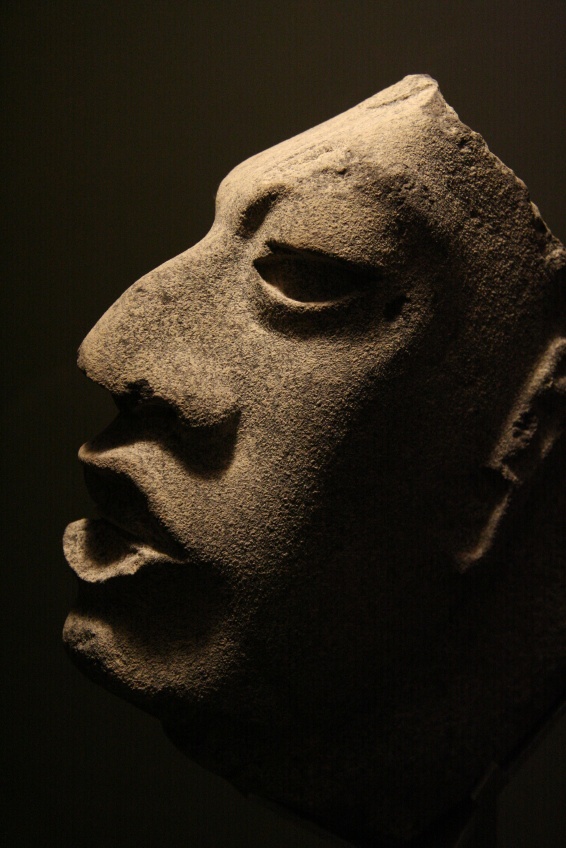
Maya Nose on Pre-Columbian Figure

The world opened up for me when I was thirty years old. It was the first time I even thought of breaking loose from my mother and father and exploring the world. For my first trip, I chose Yucatán in November 1975. And it was magical. First there was that cab ride to the Hotel Mérida past snack bars that were open to the street. It was my first experience of the tropics (other than Florida), and in the dark I saw men and women drinking beer and sodas. I was able to peer into houses and saw families watching television.

Once I checked in to my hotel, I stood at my sixth-floor window looking down onto Calle 60 and looking at passers-by walking on the sidewalk below. Suddenly one stopped and looked straight up at me. How did he know to do that? I stayed up until the wee hours of the morning, staring at an optician’s office across the way called Optica Rejón.

I was entranced by the zócalo and the 16th-century structures surrounding it. I had my boots polished every day. There was endless people-watching, all those Maya with their distinctive noses.

How many goodly creatures are there here!
How beauteous mankind is! O brave new world,
That has such people in ’t!


Around mid-afternoon, I hung out at the main entrance of the University (also on Calle 60, just a couple blocks from my hotel). So many beautiful young women that looked so different from the ones back home! Young Maya women are astonishingly good looking.

Can you wonder that, feeling the way I did about travel, that it would become a major feature of my life. Even though, in the next two years, I would travel to Europe, there was something about Latin American that lured me—and still does.

Return #4

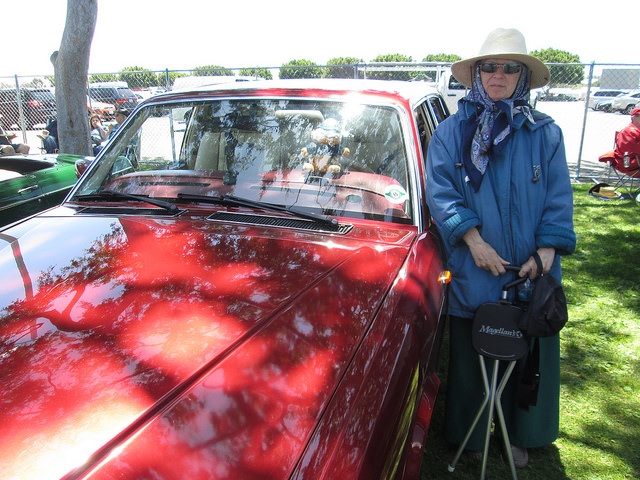
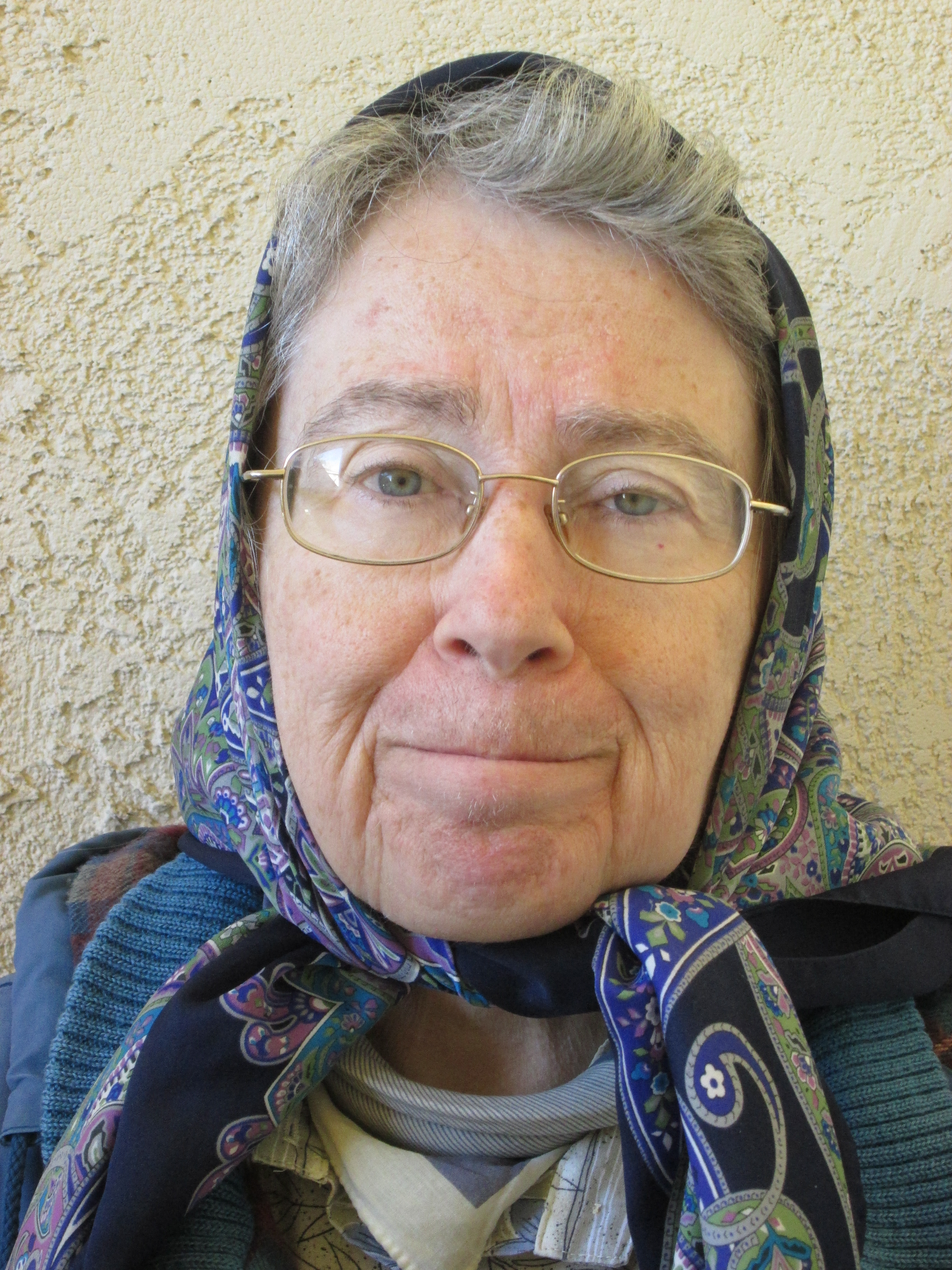
Martine at 2017 Scottish Festival

I am not used to being on an emotional roller coaster … but perhaps I’d better get used to it. As I was drinking a cup of hot green tea to soothe my laryngitis, I got a collect call from Martine to pick her up at the Greyhound Bus Station.

Within minutes, I was on the road; and Martine was there waiting for me. This was another escape attempt that didn’t quite pan out. It was to some unspecified location in the high desert. That was odd because my little girl hates the desert, ever since she spent two years at Twentynine Palms working at the Naval Hospital at the military base there. But, as usual, she didn’t want to talk about it. I think she is afraid that I’ll track her down and collaborate with police and social workers to have her returned to me. Actually, I wouldn’t do that, as it would erode her trust in me.

I suspect that she things that’s what I did during her Escape #2 to Truckee, California. Actually, it was the authorities in Truckee who contacted me and asked me to send them a Greyhound ticket via e-mail. They were the ones who took the initiative.

Will there be another attempt to leave L.A.? I suspect there will, even though she told me tonight that God apparently is putting up roadblocks in her attempts to get away from L.A.

Sigh!


Escape from Los Angeles

Martine Has Left Me Today for the Fourth Time

This morning, I drove Martine to the Greyhound Bus Station downtown for her fourth escape from me and Los Angeles. She has continued to be depressed and to spend the better part of the day in bed. Sometimes she would watch television (usually old classics from the 1950s and 1960s), and sometimes she would re-read the Book of Psalms from my old Good News Bible. There has never been an angry word between us, though at times she has picked on me for complaints of the “Who moved my cheese?” variety.

Some of my friends think I am well rid of her. I do not feel that way because I worry about her. She has a pattern of making bad decisions, such as the one that made her ineligible for Medicare. She doesn’t have much money left, and she has no one to go to. Her only family is a sick half-brother in New York and a sick half-sister in France. I’m pretty much all there is of her family, though we are not married. I would gladly have married her, but she decided she wanted to make all her own decisions.

I hope Martine comes back. The last time she escaped, she came back sick. I hope she comes back because she remembers that, yes, I love her, and that without me life is too lonely and too miserable. All my friends think she will return. I am not quite so sure.


Los Angeles the Hard Way

An Old RTD Bus on Its Route

When I first came to Los Angeles late in 1966, I did not know how to drive. And now I was living in a city in which it is considered to be impossible to get anywhere on public transit. For the next nineteen years, I was to disprove that. It was then that I began to study the city’s public transportation network. At that time, there was no fast rail, no subways—only buses. I lived in or near Santa Monica, so I could take either the Santa Monica Big Blue Buses or the orange RTD buses.

Why hadn’t I learned to drive? In Cleveland, we were too poor; and besides, my father was too impatient to teach me. When he tried, every time I made a mistake, he swatted me, hard. I thought it would be better if I put it off.

And so I did. Then something else came up. One of my family’s medical curses caught up with me in my twenties: high blood pressure. For years, I was taking a medication called Catapres that gave me narcolepsy, especially when I was a passenger in a moving automobile.

Suddenly, in 1985, I was off Catapres. The narcolepsy, having left me, no longer kept me from taking driving lessons at the ripe old age of 40. So I called the Sears-Roebuck driving school, and a patient teacher by the name of Jerry Kellman taught me. I passed my driving test with flying colors. I purchased a 1985 Mitsubishi Montero with automatic transmission (most in that model line were stick shift) and hit the roads.

Although I am on my third car, a 2018 Subaru Forester, I still take the buses (and now the trains, which Los Angeles now has) from time to time to go where I want without having to pay exorbitant parking fees. My trips downtown cost me a total of $1.50 there and back, which compares well to the $20-30 parking fees in cramped lots which would lead to dents in my new car.

So now I’m ambidextrous, to to speak. I can drive or take public transportation.


Buried Under Paperwork

I Might Be Retired, But the Paper Still Piles Up

I give up. After I spent several hour looking for a piece of paper this morning, I have decided to order a Fujitsu Scanner so that I can keep my documents on the hard drive, the way I did at work. Bureaucracies love burying us under unnecessary documents and forms, such that the important stuff gets lost in their midst.

It is so much easier to scan the important documents and set up a directory structure by organization (Medicare, Health Insurance), year, with special filenames for the really important stuff. It was so easy at work. At home, it is near impossible.

Next: What am I going to do about shredding unwanted documents that have my Social Security Number and credit card numbers on them?


Lawrence Ferlinghetti at Dartmouth

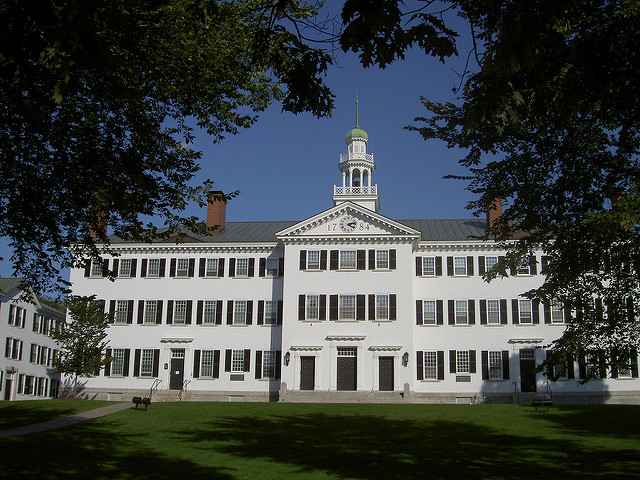
Dartmouth Hall

I was shocked to find that Lawrence Ferlinghetti (born in March 1919) was still alive. Today, I borrowed one of his poetry collections from the L.A. Central Library and remembered with great pleasure running into the poet himself at Dartmouth College around the mid 1960s. He was on campus to read a selection of poems from his collection A Coney Island of the Mind (1958) and to answer questions.

Never in my life had I seen someone with his uncanny ability to deflect questions. My classmates posed the usual bullshit queries that were typical of people who wanted to look very intellectual but didn’t know what they were talking about. I enjoyed the poems, and I liked all the anecdotes of the beatnik poets he published, such as Allen Ginsburg,  Gregory Corso, and Gary Snyder. But I kept my mouth shut lest I be exposed like so many of my classmates were.

Ferlinghetti’s Poetry Collection

I was pleasantly surprised to find that A Coney Island of the Mind is the best-selling poetry collection ever published in the United States, having sold in excess of a million copies.