Return #4

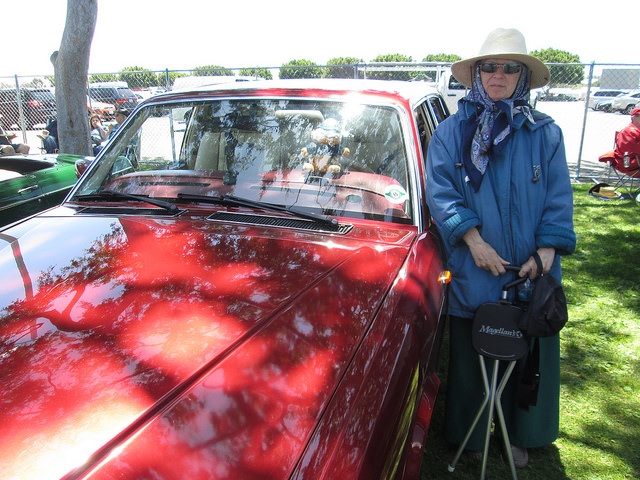
Martine at 2017 Scottish Festival

I am not used to being on an emotional roller coaster … but perhaps I’d better get used to it. As I was drinking a cup of hot green tea to soothe my laryngitis, I got a collect call from Martine to pick her up at the Greyhound Bus Station.

Within minutes, I was on the road; and Martine was there waiting for me. This was another escape attempt that didn’t quite pan out. It was to some unspecified location in the high desert. That was odd because my little girl hates the desert, ever since she spent two years at Twentynine Palms working at the Naval Hospital at the military base there. But, as usual, she didn’t want to talk about it. I think she is afraid that I’ll track her down and collaborate with police and social workers to have her returned to me. Actually, I wouldn’t do that, as it would erode her trust in me.

I suspect that she things that’s what I did during her Escape #2 to Truckee, California. Actually, it was the authorities in Truckee who contacted me and asked me to send them a Greyhound ticket via e-mail. They were the ones who took the initiative.

Will there be another attempt to leave L.A.? I suspect there will, even though she told me tonight that God apparently is putting up roadblocks in her attempts to get away from L.A.

Sigh!


Escape from Los Angeles

Martine Has Left Me Today for the Fourth Time

This morning, I drove Martine to the Greyhound Bus Station downtown for her fourth escape from me and Los Angeles. She has continued to be depressed and to spend the better part of the day in bed. Sometimes she would watch television (usually old classics from the 1950s and 1960s), and sometimes she would re-read the Book of Psalms from my old Good News Bible. There has never been an angry word between us, though at times she has picked on me for complaints of the “Who moved my cheese?” variety.

Some of my friends think I am well rid of her. I do not feel that way because I worry about her. She has a pattern of making bad decisions, such as the one that made her ineligible for Medicare. She doesn’t have much money left, and she has no one to go to. Her only family is a sick half-brother in New York and a sick half-sister in France. I’m pretty much all there is of her family, though we are not married. I would gladly have married her, but she decided she wanted to make all her own decisions.

I hope Martine comes back. The last time she escaped, she came back sick. I hope she comes back because she remembers that, yes, I love her, and that without me life is too lonely and too miserable. All my friends think she will return. I am not quite so sure.


Los Angeles the Hard Way

An Old RTD Bus on Its Route

When I first came to Los Angeles late in 1966, I did not know how to drive. And now I was living in a city in which it is considered to be impossible to get anywhere on public transit. For the next nineteen years, I was to disprove that. It was then that I began to study the city’s public transportation network. At that time, there was no fast rail, no subways—only buses. I lived in or near Santa Monica, so I could take either the Santa Monica Big Blue Buses or the orange RTD buses.

Why hadn’t I learned to drive? In Cleveland, we were too poor; and besides, my father was too impatient to teach me. When he tried, every time I made a mistake, he swatted me, hard. I thought it would be better if I put it off.

And so I did. Then something else came up. One of my family’s medical curses caught up with me in my twenties: high blood pressure. For years, I was taking a medication called Catapres that gave me narcolepsy, especially when I was a passenger in a moving automobile.

Suddenly, in 1985, I was off Catapres. The narcolepsy, having left me, no longer kept me from taking driving lessons at the ripe old age of 40. So I called the Sears-Roebuck driving school, and a patient teacher by the name of Jerry Kellman taught me. I passed my driving test with flying colors. I purchased a 1985 Mitsubishi Montero with automatic transmission (most in that model line were stick shift) and hit the roads.

Although I am on my third car, a 2018 Subaru Forester, I still take the buses (and now the trains, which Los Angeles now has) from time to time to go where I want without having to pay exorbitant parking fees. My trips downtown cost me a total of $1.50 there and back, which compares well to the $20-30 parking fees in cramped lots which would lead to dents in my new car.

So now I’m ambidextrous, to to speak. I can drive or take public transportation.


Buried Under Paperwork

I Might Be Retired, But the Paper Still Piles Up

I give up. After I spent several hour looking for a piece of paper this morning, I have decided to order a Fujitsu Scanner so that I can keep my documents on the hard drive, the way I did at work. Bureaucracies love burying us under unnecessary documents and forms, such that the important stuff gets lost in their midst.

It is so much easier to scan the important documents and set up a directory structure by organization (Medicare, Health Insurance), year, with special filenames for the really important stuff. It was so easy at work. At home, it is near impossible.

Next: What am I going to do about shredding unwanted documents that have my Social Security Number and credit card numbers on them?


Lawrence Ferlinghetti at Dartmouth

Dartmouth Hall

I was shocked to find that Lawrence Ferlinghetti (born in March 1919) was still alive. Today, I borrowed one of his poetry collections from the L.A. Central Library and remembered with great pleasure running into the poet himself at Dartmouth College around the mid 1960s. He was on campus to read a selection of poems from his collection A Coney Island of the Mind (1958) and to answer questions.

Never in my life had I seen someone with his uncanny ability to deflect questions. My classmates posed the usual bullshit queries that were typical of people who wanted to look very intellectual but didn’t know what they were talking about. I enjoyed the poems, and I liked all the anecdotes of the beatnik poets he published, such as Allen Ginsburg,  Gregory Corso, and Gary Snyder. But I kept my mouth shut lest I be exposed like so many of my classmates were.

Ferlinghetti’s Poetry Collection

I was pleasantly surprised to find that A Coney Island of the Mind is the best-selling poetry collection ever published in the United States, having sold in excess of a million copies.

Old Man …

… Who Doesn’t Realize He’s Getting Old

Unless one has children of one’s own, and if one is in reasonable health, one doesn’t really know one is getting old. Yesterday, my friend Bill Korn told me his own interpretation of my posting from a couple days ago, I Don’t Feel at Home Here, Either. The young, when they acknowledge my existence at all, seem surprised to see such a spry oldster doing approved things. Several weeks ago, I was about to enter a Trader Joe’s market when a younger woman flashed a delighted look at me, as if here was a decrepit old man doing the right thing. What was my reaction? I gave her the stink-eye, at maximum volume. She looked infuriated, as if I had stomped on her Yorkie or slipped her smart phone into a sewer grating.

What my reaction was saying was: “Don’t patronize me, you stupid beeyotch! I do not require your approval.”

But then, that’s me all over. I don’t cotton to strangers. When I am traveling in a foreign country and am approached by American tourists, I answer back in Hungarian. I think I’m taking after my Great Grandmother Lidia Toth (born in 1876), who could make a longshoreman blush with her swearing. She was one of those, “Who’re you looking at, Punk?” type of people, except her language was ever so much more colorful.

As a result, I am not likely to initiate contacts with strangers—with several exceptions. When I travel, I try hard to communicate with the locals and generally get good responses. I do not … ever … make … friends …. with …. American … tourists. Does that mean that I am anti-American? Not really, I just find it’s a waste of time. I even go out of my way to help foreign tourists who are obviously stuck in Los Angeles, which is not the easiest place in the world to get around in.


The Face of L.A.

By Now, he Majority of L.A.’s Population is Hispanic

Probably one of the reasons our Presidente hates California (other than the fact that we all pretty much despise him) is that there are so many Hispanics here. And I mean Hispanics of every variety, from Mexicans and Central and South Americans to Cubans and Puerto Ricans and even a few real live Spaniards. And here in Los Angeles, we pretty much get along with one another. I mean, after all, the city was founded in 1781 as El Pueblo de Nuestra Señora la Reina de Los Angeles de Porciúncula, long before there were any gringos in evidence. It was then part of Spain, then part of Mexico, and eventually part of the United States of America, who stole it fair and square from Mexico. We even got the papers to prove it.

I remember vividly when my brother and I had our first tacos. It was in New York City, of all places, where we were attending the World’s Fair of 1964-65. We bought it at the Mexico Pavilion. The real reason I was in the Big Apple was to check out New York University’s graduate school in film. Well, I wound up not going there because I didn’t like Haig P. Manoogian, who was top man there. I don’t think he liked me very much either. (Michael Scorsese, who attended NYU, thought Manoogian was hot stuff; but then he was a filmmaker, and I wasn’t interested in making films.)

When I finally picked UCLA as the place to go, I thought I would prepare myself by buying frozen food that purported to be Mexican cuisine. It really wasn’t. In fact, it was about as bland as any other frozen food available in Cleveland. It was not until I took the train to L.A. that I encountered the real thing. And I liked it, and I still do.

I’ve lived here now for more than fifty years and haven’t been raped once. Will someone please mention that to the Tweeter-in-Chief?


An Inflammation of the Eyelid Margin

Inflamed Eyelids of a Blepharitis Sufferer

No sooner did Martine return to Los Angeles than I broke out into an array of allergic responses. On one hand, I started going into sneezing fits and blowing my nose. More serious was a siege of blepharitis, a condition in which the eyelids feel like inflamed constantly itching parchment. The only thing that works against it is an expensive drug called Avenova, which, for some obscure reason, is not on Blue Cross’s approved drug formulary. I was able to pick up some today, so I am sure that the current infestation will not continue much longer.

Allergies have been one of the banes of my existence. In high school, I had a seborrheic dermatitis that made my scalp look full of snowflakes. Then there were the usual spring and fall respiratory allergies, which I still have to some degree. I am not able to eat shrimp or lobster unless it is caught in near-Arctic waters without getting a reaction that feels like a severe strep throat which lasts for two or three hours.

The worry and stress about Martine has certainly contributed to the intensity of my allergic responses. In time, it will gradually subside. I hope.


Not Out of the Woods Yet

The Conditions That Led to Martine’s Leaving Are Still in Place

I was happy to see Martine again yesterday, but her return had more to do with the discomfort of land travel over long distances on the cheap, and the fact that she had come down with a cold. She still hates Los Angeles and wants to leave. Yet, at the same time, she said she missed me and thought of me daily. (I also thought of her daily.)

Ultimately, to be cured of this mania, she has to takes steps to confront her depression: She spends some twelve hours a day in bad, and about six hours a day lying flat on her back on the couch. She does the laundry, washes the dishes, and cleans up around the apartment. That accounts for most of her time.

Today, I made a big pot of lentil soup with vegetables cooked in chicken stock. I hope it helps her with her cold.

I do not give Martine money to leave town, and on each of this trips, she wastes more of her own funds, which are dwindling rapidly. While she is with me, I will continue to pay for her food, rent, health, and recreation. I don’t think she can afford more than one or two at the most of these little escapes. But we are not talking about rational behavior here.

Whatever I can do without hurting myself, I will do. I feel no real resentment at her escapes, just sadness. I try to leave her with the feeling that, when the escape attempt fails, I will be there to try to pick up the pieces again.


Five Epiphanies

Ushuaia from the Air

It was James Joyce who, in Stephen Hero and The Portrait of the Artist as a Young Man, coined the term epiphanies to refer to moments of clarity and sudden recognition of another perspective. There were several points in my life in which I had a shock of recognition and that I looked back on as pivotal points in my development as a person. In this post, I recognize five such epiphanies that occurred in my life:

Dartmouth College 1962

It was a bad year. It looked as if my parents were headed for divorce, and rare was the day when there were no mutual recriminations. I was delighted that I was accepted at Dartmouth. When, during the summer, my future roommate’s parents drove me up to the campus, I fell in love with the place, deciding that here was a place I could heal.

Cleveland 1966

I was released from Fairview General Hospital after brain surgery to remove a pituitary tumor. As I was sitting as a passenger in our family automobile, I saw the people in the street almost as angelic beings. It was only after the operation that I was told how serious the operation was; and that my life was despaired of. I thought momentarily of Miranda’s lines in Shakespeare’s The Tempest:

Oh, wonder!
How many goodly creatures are there here!
How beauteous mankind is! O brave new world,
That has such people in ’t!
Uxmal 1975
On my first trip outside the United States, I arranged with Turistica Yucateca to have a driver take me to the Maya ruins at Uxmal in the Puuc Hills. As his car pulled up to the magnificent Templo del Adivino, he made a sign of the cross. I felt that I was on holy ground.
Death Valley 1979
It was my first camping trip and my first real introduction to the desert. We were at Furnace Creek, with desolation all around us. Just after sunrise, birds of every variety flocked to the campground and woke us up.
Ushuaia 2006
It was my first trip to South America. As our plane descended to Ushuaia, the southernmost city in the world, only 600 miles from Antarctica, I felt a shiver of excitement. Never mind that I was to break my shoulder in a blizzard within a few days, Ushuaia has always stood for a kind of subarctic wilderness. I returned in 2011 with Martine and would gladly return again.