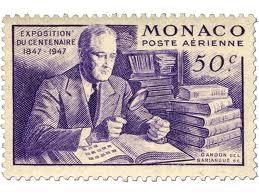
The Stamp Collector

Franklin Delano Roosevelt as a Stamp Collector

Franklin Delano Roosevelt as a Stamp Collector

Until around the age of thirty or so, I was a stamp collector, specializing in the United States, France, and Vatican City. Then I gave up on the hobby around the time several million other collectors did, probably because we’re all more distracted now with all the new electronic media. Although I sold the cream of my 19th century U.S. collection on eBay, I still have most of my albums. Looking back on my collecting days, I realize that the hobby actually contributed a great deal to my development.

From a relatively early age, I learned how to recognize foreign countries by how they identified themselves, not how we identified them. As I Hungarian, I knew that Hungarian stamps said Magyarország, not Hungary. Many countries, such as those in the Arabian Peninsula, Greece, Eastern Europe and the USSR, East Asia, and Armenia did not use the Roman alphabet, so I had to identify them using other means. (Of course, back then, we did not have the Internet to help us.) Just to give an idea of the complexity of identifying stamps by country, here are a few examples:

Bohmen und Mahren: Czechoslovakia under German Nazi occupation
ΕΔΔΑΣ: Greece
Hejaz and Nejd: The two sheikdoms that later made up Saudi Arabia
Island: Yes, an island, but more properly, Iceland
K.U.K: Bosnia and Herzegovina under the Austro-Hungarian Empire
Lietuva: Lithuania

The stamp illustrated below, for example, is from the USSR. But note that Russia was not the only country employing the Cyrillic alphabet: There was also Bulgaria, Serbia, the Ukraine, and other Eastern European stamp-issuing countries.
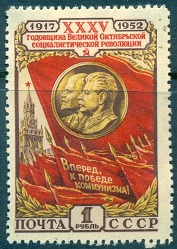
USSR Stamp Scott #1644

USSR Stamp Scott #1644

Also I learned about the currencies of those countries, such as Hungary’s own fillers, forints, and pengös. The above Russian stamp has a denomination of 1 ruble. Until recently, stamps of all countries adhered to a Universal Postal Union treaty that specified that the stamp bear a denomination in their local currency. Now, with the U.S. Postal Service’s “Forever” stamps, that convention is apparently no longer in force.

In addition, as a collector we had to be aware of fine printing details, such as those that characterized the issues of the American, Continental, and National Bank Note Companies in the 1870s in our own United States. These included secret marks, varieties in the number and spacing of perforations, paper and watermark variations. It was difficult but fun to find a more valuable Bank Note issue that had been wrongly classified by a seller or fellow collector.

No, I do not regret my stamp collecting days.

Little Princesses

Possibly the Wrong Paradigm

Possibly the Wrong Paradigm

Today, Martine and I spent the afternoon at the L.A. Greek Fest near downtown. Because the temperature was well into the Nineties, we spent most of our time in the school gym, which was air-conditioned and supplied with large tables. Around the edges of the room were merchants selling various gift items, including tiaras and shiny accessories to make little girls’ dresses resemble the costumes of fairy princesses. One even resembled an Egyptian headdress with a snake like the crown we imagine Cleopatra as sporting. Several little girls were prancing around the room with the sense of entitlement that a princess costume bestows on its wearers.

Really, what is a princess if not a girl who is entitled from birth? What does one do to become a princess? Simple: One is born to royal parents. And when a little girl grows up thinking she is a princess, what are her chances of happiness in a world in which a sense of entitlement will only carry one so far? Really, what is a true-life princess born into except the dynastic pursuit of a [preferably] male heir? In Westwood, near the UCLA campus, there are legions of little princesses who are now in their twenties. In lieu of fairy wands, they carry smart phones , but they still dress fancifully in other ways. Not a pretty sight.

And then I wonder: Am I carrying this too far? After all, little boys are drawn to violent fantasies of battle which are carried forward into the teen years with video games. Even I played cops and robbers and [shudder] cowboys and Indians. But what I really loved more than anything else were my plastic bricks. I would not only use my toy soldiers for going into battle: I actually created little cities for them, with more officers’ titles to go around than I had toy soldiers. Then, too, there was my Lionel O-Gauge electric train, which I played with for over a decade. Again, as with my toy soldiers, I made up series of towns connected by the railroad, complete with schedules. I remember that was a great deal of fun, and constructive, too, in the long run, because it gave play to my imagination.

But thank God I never wanted to be a little princess. Maybe a prince… I had dreams of being visited by people from Hungary who declared I was to be the new monarch of the ex-Communist satellite. That would have been dicey, because my father and my uncle were identical twins.

The Joys of Friendship

Mona and Wilder

Mona and Wilder

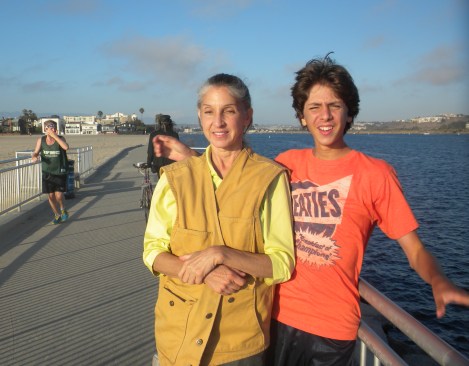
This evening, I got together with old friend Mona, with whom I used to work more than ten years ago. At the time, her little son Wilder was still an infant. No more, it seems. (It must be those Wheaties.)

Although my friends and I are all growing older, it is good to see their children thriving.

Because I lack a pituitary gland, I could never have children of my own. (And no, I was never very positive in my replies to people who said I could “just adopt,” as if all I had to do was put in a deposit at the neighborhood baby store.) So I take particular pleasure in seeing the children of my friends.

Martine was unable to join us, because her back was hurting her; so she was lying flat on her back wearing a brace when I returned from the Marina after seeing Mona.


Slowing Down Your Racing Mind

Twisting and Turning at Night?

Twisting and Turning at Night?

Last night I went to sleep quickly enough, but I awoke around 1 am worrying about, of all things, a spreadsheet I was working on to reconcile UBS brokerage statements with the General Ledger based on them. One brokerage account in particular was a mess, with the broker going wild buying and selling bits and pieces of stock and mutual funds to the point of wretched excess.

I have learned, however, that it is not possible to solve problems by worrying about them. Sometimes my mind at night goes racing around and around until I come up with endless permutations, but no solutions. I am not saying that you can’t solve problems in your sleep, but if a solution arises, it always arises suddenly.

So what I do to stop my mind from racing is to get up and watch some television—the only time I ever watch it—until I find something that engages my interest and stops me from thinking about work. It usually takes about thirty minutes before I’m ready to hit the sack again, usually successfully.

Sure enough, I produced the spreadsheet this morning with no particular difficulties. The account was indeed messed up, but now we have something to use to correct it.

Everyone has his or her own solution to this,  but I also find that taking some melatonin half an hour before bedtime also helps keep me deep in the arms of Morpheus.


Dental Brinkmanship

I Was Taking a Big Chance

I Was Taking a Big Chance

Just before I was about to leave for Iceland, I noticed that I not only had a cavity, but that it felt big enough to park a Chevy Suburban with room to spare. Moreover, when I ran my tongue over the spot, it felt sharp. I knew there wasn’t time to get the problem fixed before liftoff on June 19, so I took a big chance. After all, the worst that could happen was that I would have to see an Icelandic dentist.

On Saturday and today, I saw my own dentist; and he confirmed what happened. My crown on the second last top molar was breached both from the top and from the side. What I was feeling with my tongue was the sharp edge of what remained of the crown. There was a 50/50 chance that I would have to see a consulting dentist on an emergency basis for a quick root canal. Fortunately, Dr. Sun informed me that there were a few molecules of tooth tissue separating the cavity from the molar’s nerves. I lucked out.

This morning, he built up what was for all intents and purposes a new tooth on top of the foundation rubble that remained of my molar. First, he put in some insulating material called dycal to prevent the nerve from being irritated by the reinforced concrete with rebar that formed my repaired tooth. Later, he will replace the broken crown with a new one made with industrial diamonds.

All in all, I think I got off rather cheaply.

The Touch Screen Fugitive

This Interface Is Not for Me!

This Interface Is Not for Me!

When I lost my cell phone at the Ringling Brothers circus about ten days ago, all my friends assumed that I would replace it with a smart phone. Surprise! I bought one of the rare dumb phones, an LG model that does not have a touch screen interface.

What do I have against touch screen interfaces? I guess I associate smart phones with people who don’t know what to do with their hands, so they spend their lives tweezling around with a microscreen to play games, devise phantom to-do lists, send and read e-mails, and in general replace life with a digital simulacrum .

So today during lunch hour, I took my turn waiting in line at the local AT&T store, while some bonzoid in shorts apparently tried to stage a hostile takeover of the phone company using Lithuanian zinc futures. He took so long that the rep who was helping him went off to lunch, leaving him on hold on the phone.

My cell phone, on the other hand, is used almost exclusively for making calls. I don’t even like to receive calls on my cell. But then, whenever I removed my old Samsung cell phone from its holster, it would automatically shut down the incoming call.

I’m not saying I’ll never get a cell phone, it’s just that I’m not interesting at this time in expanding my cell phone usage, or dirtying up a tiny screen, making it even harder for my bad eyes to read it.

The Boy Who Loved Maps

Somehow, I Had to Get Out of Cleveland...

Somehow, I Had to Get Out of Cleveland…

Ever since I learned how to speak and read English, I grew to love maps. We had an old atlas whose binding was falling apart. Whenever I had a few spare moments, I would sit down, page through it, and try to memorize the maps that interested me most. Not that I understood what I was looking at: I remember pointing to a Mercator projection map of the world and claiming that Napoleon cheated us in the Louisiana Purchase, as Alaska was so much bigger. And Greenland was gigantic! Was it not one of the world powers?

Even as a boy in Cleveland, I loved the whole idea of far places, of different cultures. In the 1950s, read such obscure books as the Rev. Harold W. Rigney’s Four Years in a Red Hell about the Catholic priest’s imprisonment in Red China, and another book, whose name I have forgotten, about Soviet concentration camps around Vorkuta. What interested me was not so much the attacks on Communism as the books’ exotic locales.

Baudelaire describes me to a tee in “Le Voyage”:

Pour l’enfant amoureux de cartes et d’estampes,
L’univers est égal à son vaste appétit.
Ah! que le monde est grand à la clarté des lampes!
Aux yeux de souvenir que le monde est petit!

Which can be translated as follows (though I prefer the French):

For a child in love with maps and engravings,
The universe is equal to his vast appetite.
Ah, how the world is great by lamplight!
Through the eyes of memory the world is small.

Here I was, simultaneously hooked on the idea of travel and, at the same time, stuck in Cleveland. We didn’t have much money to allow for travel. All I can remember are a few day trips in Ohio, a few days in lovely Detroit, Niagara Falls (but I was only five), and trips to Florida at the ages of five and fourteen. Why do you suppose I wanted to leave Cleveland to go to college? Not only was my parents’ marriage threatening to go on the rocks (it somehow held), but I felt stifled by Cleveland’s provincial ways. All those Hungarian-American homebodies!

But there was always that atlas. You know what? I’m still that way. My mind is a capacious geographic storehouse. I can sketch the outlines of many of the countries on earth and locate their capitals and major cities. And I can tell you what countries border them.

That knowledge has always stood me in good stead. When I go somewhere I have never been before, I make sure that I am prepped for it. Although my vacations only run about two or three weeks, I can s-t-r-e-t-c-h out the time so that the vacation and its preparation take half a year. I started in on Iceland in February, and it won’t be until July that I work it all out of my system.

Acres and Acres of Carbs

Most Supermarkets Are—To Me Anyhow—Carb-filled Minefields

Most Supermarkets Are—To Me Anyhow—Carb-Filled Minefields

Under my new way of life, after I learned that my pancreas was in the process of giving up the ghost, mealtimes are fraught with danger. This morning was all right: I ate a can of smoked trout from Trader Joe’s and a few stoned wheat crackers. I made it through lunch all right, too: A tasty spicy calamari salad at a local Thai restaurant. Tonight, Martine and I will eat some of my ham and lima bean casserole, which has not proven too destructive, along with, perhaps, some cherries and a white peach. As for my beverages, it’s always unsweetened hot or iced tea.

But God, how I miss the carbohydrates! There are times I would sell my soul for some white rice, potatoes, noodles, bread, or candy. As for pizza, it is a thing of the past, a fond memory of times gone by.

I wish I had something to replace rice. My doctor says that barley has too many carbs (though it has an acceptable glycemic index). In tonight’s casserole, the lima beans are filling in for the carbs, though again my endocrinologist says they have too high a carb count, but an acceptable glycemic index. Perhaps I could serve Styrofoam pellets with meat and vegetables?

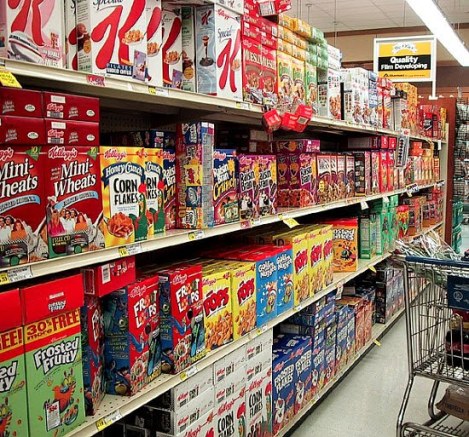
Going to the supermarket is like crossing a dangerous border. Whole aisles of the market are loaded with stuff I can’t eat. I never realized before that our whole culture is based on carbohydrates, that Americans eat vast amounts of the stuff. Some of them become grossly obese, some of them develop diabetes sooner than they normally would otherwise.

Tonight I will go to the market, mostly for tomatoes (they’re OK) and sweet peppers and other stuff I can munch upon without sending my sugar levels into the red zone.

It used to be that my doctor told me that if I lost weight, I might overcome my diabetes. But how does one lose weight when one has to take Prednisone, a known appetite-enhancer, just in order to survive? Oh, I can lose weight all right; but I would have to be in a concentration camp.

But I have free will to choose anything I want at the market. Perhaps some tasty noodles, some sugar-laden breakfast cereal (like 99% of them) or a fruit smoothie. But no, I will try to be good. I lost both of my parents to Type II Diabetes. I want to survive, even at the cost of jettisoning virtually everything I like to eat and concentrating on salads, fish, fruits, vegetables, and tea.

If you see a sad guy in the supermarket line with a pile of stuff that’s good for you, it may well be me.


The Traveling Cripple

In 2001, I Traveled with a Cane—In Considerable Pain

In 2001, I Traveled with a Cane—In Considerable Pain

When I went to Iceland in 2001 (and yes, this will be the last you will hear about my 2001 trip), I was in considerable pain from a severe case of osteoarthritis in my left femoral head. I had hobbled around with that arthritis ever since 1967, the year after I had my brain surgery. Once my pituitary gland was removed and I started taking hormones, I began to grow again. Unfortunately, my left hip joint did not take too kindly to the changes taking place to my body.

By the year 1997 or 1998, I was using a cane. People would constantly ask me why I was standing up when there was a nearby chair. I would answer them by saying because the pain of getting up was far worse than the mere inconvenience of standing. (I can still stand still for long periods of time without discomfort)

Things got worse when I landed in Iceland in August 2001. Of course, pain or no pain, it didn’t stop me from being active. The only effect was, on the two days of touring with my guide Illugi, I had to avoid climbing a particular hill and taking a trail around lava formations near Dettifoss. Otherwise, I was still pretty game.

Pain is one of those things which I can tolerate in fairly high doses. Not that I want to, but it is usually better than the alternative. Now that Martine is in pain from fibromyalgia (or something that looks and behaves very much like fibromyalgia), I tried to explain this to her; but she wasn’t buying it. Every person has his or her own acceptable threshold of pain, and mine just happens to be higher. Is it because I have been in fairly acute physical pain ever since my childhood—first from a pituitary tumor pressing on my optic nerve, and then from osteoarthritis? Only in the last ten years or so have I been as free of pain as I was when I was ten.

The photo above shows Lake Mÿvatn from my window at the Ferðaþjónustan Bjarg. (Don’t try to pronounce this without a Icelander present … or I should say don’t try to pronounce this with an Icelander present.) Notice the tents between the guesthouse and the lake’s edge.

Many campers don’t like the Bjarg and regard the management as unfriendly. I gained points when registering for one of the two rooms in the guesthouse by asking, “Wasn’t the name of Grettir Asmundarsson’s family home in West Iceland called Bjarg?” Not only was the owner shocked that an American knew this, but I quickly found that he was a big time fan of Grettir’s Saga and named his son Illugi (my guide) after Grettir’s youngest brother.

I loved the Bjarg Guesthouse. It had only two bedrooms, but a big kitchen, where I sat eating harðfiskur with fresh Icelandic butter spread on it. There was also a nice living room which I had to myself when I stayed there.


Martine Remonstrates with the Geese

Martine at the L.A. Arboretum

Martine at the L.A. Arboretum

Martine and my father have some interesting things in common. My Dad loved to feed the pigeons and, before he married my mother, had his own pigeon coop. Martine also likes to feed the birds, but she prefers ducks and especially geese.

Geese are not the most cooperative of birds. Years ago, when Martine lived in Twentynine Palms and worked at the U.S. Naval Hospital there, we used to have brunch at the Twentynine Palms Inn. On the premises, there was a little pond and some very obstreperous geese, who used to go after Martine. I would have to run at them shouting “Bo!” until they backed down. (Thus no one would claim that I couldn’t say “Bo!” to a goose.)

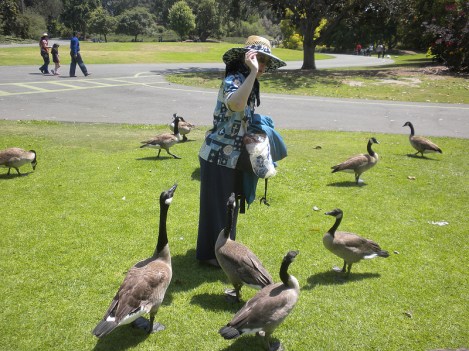
The last time we went to the L.A. Arboretum, Martine brought along with her a sack of stale bread which she threw at the resident geese and ducks. Predictably, the ganders were being hyper-aggressive and kept pecking at the females and beta and gamma ganders to monopolize the bread. In return, Martine would remonstrate with those geese and make a special effort to feed the better behaved birds more of the crumbs.

Anyhow, when she does that, I feel a special warmth for my little French girl. There is something so sweet about her criticizing the “bad” geese that my heart warms to her all the more.