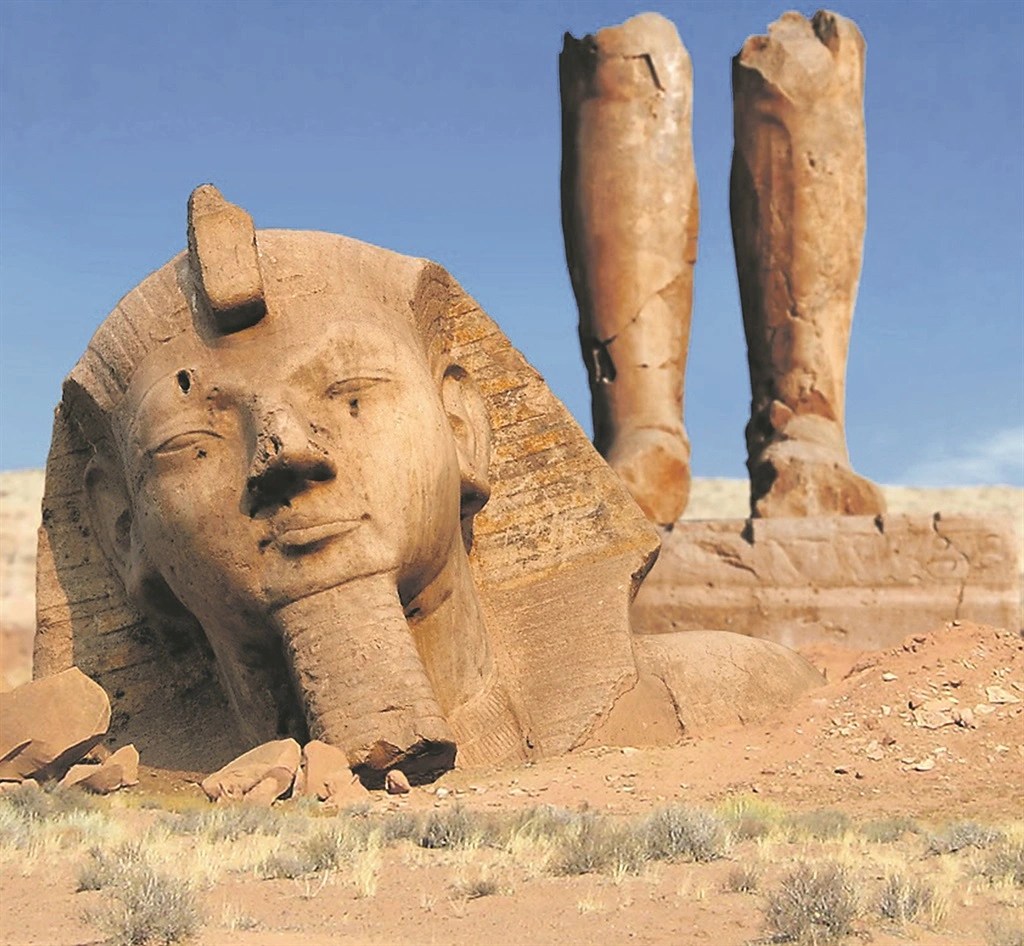
In this election season, with all those overweening ambitions in play, I like to think of Percy Bysshe Shelley (1792-1822) and his poem “Ozymandias.” Can you guess why?
Ozymandias
I met a traveller from an antique land Who said: “Two vast and trunkless legs of stone Stand in the desert . . . Near them, on the sand, Half sunk, a shattered visage lies, whose frown, And wrinkled lip, and sneer of cold command, Tell that its sculptor well those passions read Which yet survive, stamped on these lifeless things, The hand that mocked them, and the heart that fed: And on the pedestal these words appear: ‘My name is Ozymandias, king of kings: Look on my works, ye Mighty, and despair!’ Nothing beside remains. Round the decay Of that colossal wreck, boundless and bare The lone and level sands stretch far away.”
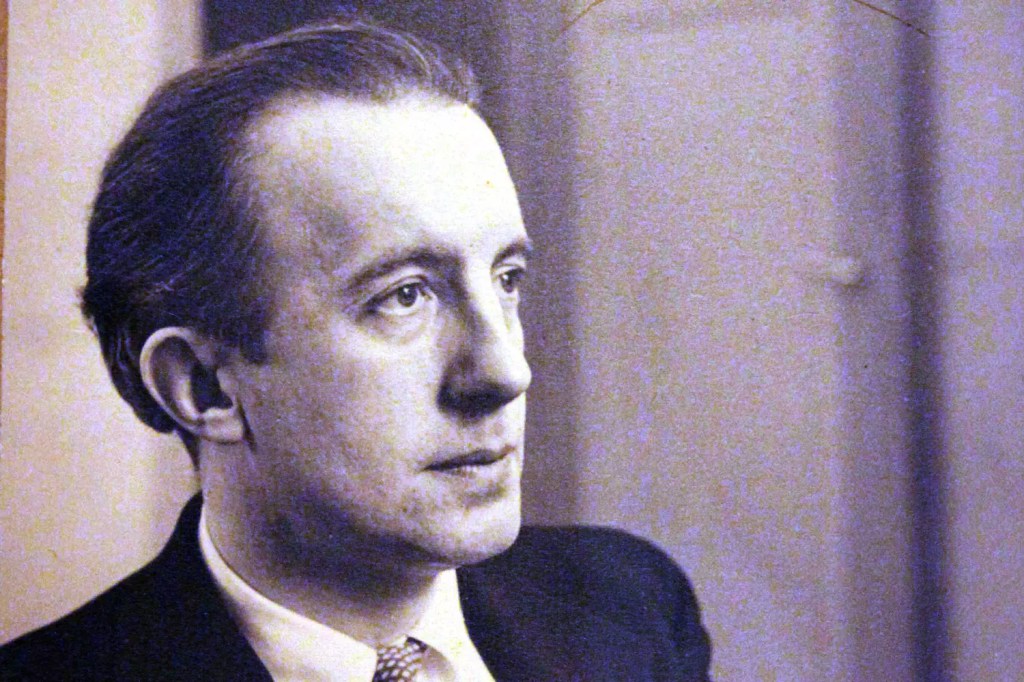
When I was studying French literature at Dartmouth College, I fell in love with the poems of Paul Éluard. I could not find a good translation of my favorite poem, “Pour vivre ici,” and I was too lazy to translate it myself without doing an injustice to the poem. (Perhaps, some other time.) Here, however, is another of his poems that I loved:
Liberté
On my school notebooks On my desk and on the trees On the sands of snow I write your name
On the pages I have read On all the white pages Stone, blood, paper or ash I write your name
On the images of gold On the weapons of the warriors On the crown of the king I write your name
On the jungle and the desert On the nest and on the brier On the echo of my childhood I write your name
On all my scarves of blue On the moist sunlit swamps On the living lake of moonlight I write your name
On the fields, on the horizon On the birds’ wings And on the mill of shadows I write your name
On each whiff of daybreak On the sea, on the boats On the demented mountaintop I write your name
On the froth of the cloud On the sweat of the storm On the dense rain and the flat I write your name
On the flickering figures On the bells of colors On the natural truth I write your name
On the high paths On the deployed routes On the crowd-thronged square I write your name
On the lamp which is lit On the lamp which isn’t On my reunited thoughts I write your name
On a fruit cut in two Of my mirror and my chamber On my bed, an empty shell I write your name
On my dog, greathearted and greedy On his pricked-up ears On his blundering paws I write your name
On the latch of my door On those familiar objects On the torrents of a good fire I write your name
On the harmony of the flesh On the faces of my friends On each outstretched hand I write your name
On the window of surprises On a pair of expectant lips In a state far deeper than silence I write your name
On my crumbled hiding-places On my sunken lighthouses On my walls and my ennui I write your name
On abstraction without desire On naked solitude On the marches of death I write your name
And for the want of a word I renew my life For I was born to know you To name you
Herman Melville is not known for his poetry, probably because he wrote it during an optimistic time in American history (i.e., after the Civil War) when his natural pessimism ran against the grain. Below is a poem that harks back to his years at sea aboard a whaler:
The Maldive Shark
About the Shark, phlegmatical one, Pale sot of the Maldive sea, The sleek little pilot-fish, azure and slim, How alert in attendance be. From his saw-pit of mouth, from his charnel of maw, They have nothing of harm to dread, But liquidly glide on his ghastly flank Or before his Gorgonian head; Or lurk in the port of serrated teeth In white triple tiers of glittering gates, And there find a haven when peril’s abroad, An asylum in jaws of the Fates! They are friends; and friendly they guide him to prey, Yet never partake of the treat — Eyes and brains to the dotard lethargic and dull, Pale ravener of horrible meat.
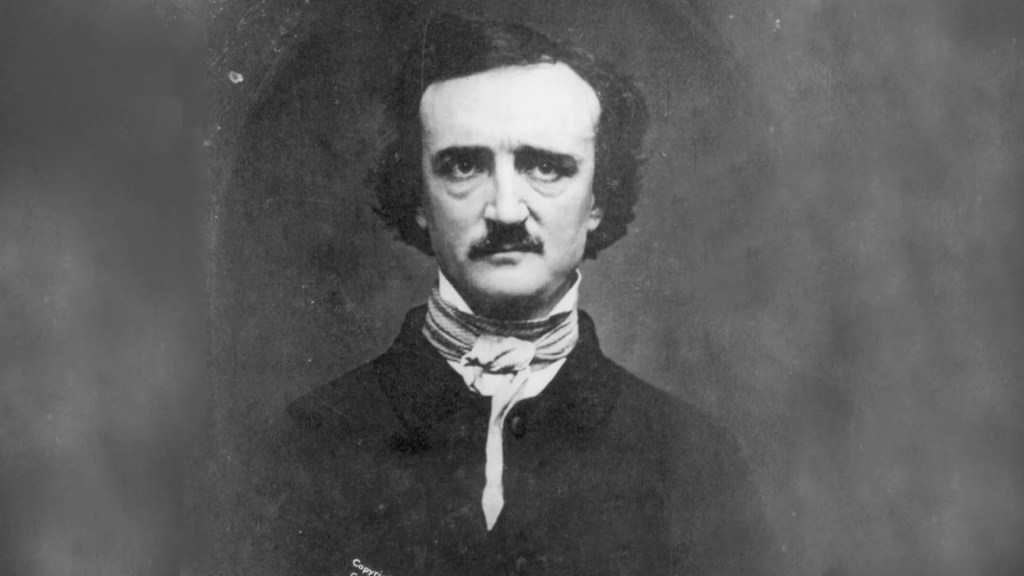
I am currently in the middle of the riches of Van Wyck Brooks’s The Times of Melville and Whitman (published 1947), devouring each chapter slowly, mining it for information on obscure 19th century American authors. I am even paying close attention to all the footnotes, in which I found this excerpt of a letter from Edgar Allan Poe to F. W. Thomas written on February 14, 1849. The subject was why Poe wasn’t interested in joining the Gold Rush:
Talking of gold and temptations at present held out to ‘poor-devil authors,’ did it ever strike you that all that is really valuable to a man of letters—to a poet in especial—is absolutely unpurchasable? Love, fame, the dominion of intellect, the consciousness of power, the thrilling sense of beauty, the free air of heaven, exercise of body and mind, with the physical and moral health which result—these and such as these are really all that a poet cares for—then answer me this—why should he go to California?
In fact, Poe wrote a poem on the subject:
Eldorado
Gaily bedight, A gallant knight, In sunshine and in shadow, Had journeyed long, Singing a song, In search of Eldorado.
But he grew old— This knight so bold— And o’er his heart a shadow Fell as he found No spot of ground That looked like Eldorado.
And, as his strength Failed him at length, He met a pilgrim shadow— “Shadow,” said he, “Where can it be— This land of Eldorado?”
“Over the Mountains Of the Moon, Down the Valley of the Shadow, Ride, boldly ride,” The shade replied— “If you seek for Eldorado!”
If the poem sounds vaguely familiar, it was quoted in its entirety in a Howard Hawks Western made in 1967 called, suitably enough, El Dorado. The film starred John Wayne, James Caan, and Robert Mitchum.
William Shakespeare’s Sonnet 129 is one of those poems which I have read again and again over the decades. The subject is lust, a frequent topic in the Bard’s poems and plays. When I first encountered it, I thought it was a bit on the ugly side; but as time went on, I began to see a certain beauty in it. Tell me what you think of it.
Th’ expense of spirit in a waste of shame Is lust in action; and till action, lust Is perjured, murd’rous, bloody, full of blame, Savage, extreme, rude, cruel, not to trust, Enjoyed no sooner but despisèd straight, Past reason hunted; and, no sooner had Past reason hated as a swallowed bait On purpose laid to make the taker mad; Mad in pursuit and in possession so, Had, having, and in quest to have, extreme; A bliss in proof and proved, a very woe; Before, a joy proposed; behind, a dream. All this the world well knows; yet none knows well To shun the heaven that leads men to this hell.
There are some strange byways in English poetry, such as Chidiock Tichborne’s “Elegy,” written the night before his execution for treason on September 20, 1586. At the age of twenty-four, he was eviscerated, hanged, and then drawn and quartered. His crime? Taking part in a plot to murder Queen Elizabeth I. He and all his co-conspirators were rounded up, tried, and executed.
Elegy
My prime of youth is but a frost of cares, My feast of joy is but a dish of pain, My crop of corn is but a field of tares, And all my good is but vain hope of gain; The day is past, and yet I saw no sun, And now I live, and now my life is done.
My tale was heard and yet it was not told, My fruit is fallen, and yet my leaves are green, My youth is spent and yet I am not old, I saw the world and yet I was not seen; My thread is cut and yet it is not spun, And now I live, and now my life is done.
I sought my death and found it in my womb, I looked for life and saw it was a shade, I trod the earth and knew it was my tomb, And now I die, and now I was but made; My glass is full, and now my glass is run, And now I live, and now my life is done.
A great poet, a magnificent artist, a deep visionary—William Blake (1757-1827) was all of these. And one of the poems where the visionary is predominant is his “Auguries of Innocence” (ca. 1803).
Auguries of Innocence
To see a World in a Grain of Sand And a Heaven in a Wild Flower Hold Infinity in the palm of your hand And Eternity in an hour
A Robin Red breast in a Cage Puts all Heaven in a Rage A Dove house fill’d with Doves & Pigeons Shudders Hell thro’ all its regions A dog starv’d at his Masters Gate Predicts the ruin of the State A Horse misus’d upon the Road Calls to Heaven for Human blood Each outcry of the hunted Hare A fibre from the Brain does tear A Skylark wounded in the wing A Cherubim does cease to sing The Game Cock clip’d & arm’d for fight Does the Rising Sun affright Every Wolf’s & Lion’s howl Raises from Hell a Human Soul The wild deer, wandring here & there Keeps the Human Soul from Care The Lamb misus’d breeds Public Strife And yet forgives the Butchers knife The Bat that flits at close of Eve Has left the Brain that wont Believe The Owl that calls upon the Night Speaks the Unbeliever’s fright He who shall hurt the little Wren Shall never be belov’d by Men He who the Ox to wrath has mov’d Shall never be by Woman lov’d The wanton Boy that kills the Fly Shall feel the Spiders enmity He who torments the Chafer’s Sprite Weaves a Bower in endless Night The Catterpiller on the Leaf Repeats to thee thy Mother’s grief Kill not the Moth nor Butterfly For the Last Judgment draweth nigh He who shall train the Horse to War Shall never pass the Polar Bar The Beggar’s Dog & Widow’s Cat Feed them & thou wilt grow fat The Gnat that sings his Summer’s Song Poison gets from Slander’s tongue The poison of the Snake & Newt Is the sweat of Envy’s Foot The poison of the Honey Bee Is the Artist’s Jealousy The Prince’s Robes & Beggar’s Rags Are Toadstools on the Miser’s Bags A Truth that’s told with bad intent Beats all the Lies you can invent It is right it should be so Man was made for Joy & Woe And when this we rightly know Thro’ the World we safely go Joy & Woe are woven fine A Clothing for the soul divine Under every grief & pine Runs a joy with silken twine The Babe is more than swadling Bands Throughout all these Human Lands Tools were made & Born were hands Every Farmer Understands Every Tear from Every Eye Becomes a Babe in Eternity This is caught by Females bright And return’d to its own delight The Bleat the Bark Bellow & Roar Are Waves that Beat on Heaven’s Shore The Babe that weeps the Rod beneath Writes Revenge in realms of Death The Beggar’s Rags fluttering in Air Does to Rags the Heavens tear The Soldier arm’d with Sword & Gun Palsied strikes the Summer’s Sun The poor Man’s Farthing is worth more Than all the Gold on Afric’s Shore One Mite wrung from the Labrer’s hands Shall buy & sell the Miser’s Lands Or if protected from on high Does that whole Nation sell & buy He who mocks the Infant’s Faith Shall be mock’d in Age & Death He who shall teach the Child to Doubt The rotting Grave shall ne’er get out He who respects the Infant’s faith Triumphs over Hell & Death The Child’s Toys & the Old Man’s Reasons Are the Fruits of the Two seasons The Questioner who sits so sly Shall never know how to Reply He who replies to words of Doubt Doth put the Light of Knowledge out The Strongest Poison ever known Came from Caesar’s Laurel Crown Nought can Deform the Human Race Like to the Armour’s iron brace When Gold & Gems adorn the Plow To peaceful Arts shall Envy Bow A Riddle or the Crickets Cry Is to Doubt a fit Reply The Emmet’s Inch & Eagle’s Mile Make Lame Philosophy to smile He who Doubts from what he sees Will ne’er Believe do what you Please If the Sun & Moon should Doubt They’d immediately Go out To be in a Passion you Good may Do But no Good if a Passion is in you The Whore & Gambler by the State Licenc’d build that Nation’s Fate The Harlot’s cry from Street to Street Shall weave Old England’s winding Sheet The Winners Shout the Losers Curse Dance before dead England’s Hearse Every Night & every Morn Some to Misery are Born Every Morn and every Night Some are Born to sweet delight Some are Born to sweet delight, Some are Born to Endless Night We are led to Believe a Lie When we see not Thro’ the Eye Which was Born in a Night to perish in a Night When the Soul Slept in Beams of Light God Appears & God is Light To those poor Souls who dwell in Night But does a Human Form Display To those who Dwell in Realms of day
Not too many people have anything good to say about television, except maybe poet Robert Pinsky in his poem “To Television.” I have long thought that his poem “Samurai Song” is one of the past poems written since WW2. Three times, he has served has poet laureate of the United States.
To Television
Not a “window on the world” But as we call you, A box a tube.
Terrarium of dreams and wonders. Coffer of shades, ordained Cotillion of phosphors Or liquid crystal
Homey miracle, tub Of acquiescence, vein of defiance. Your patron in the pantheon would be Hermes
Raster dance, Quick one, little thief, escort Of the dying and comfort of the sick,
In a blue glow my father and little sister sat Snuggled in one chair watching you Their wife and mother was sick in the head I scorned you and them as I scorned so much
Now I like you best in a hotel room, Maybe minutes Before I have to face an audience: behind The doors of the armoire, box Within a box—Tom & Jerry, or also brilliant And reassuring, Oprah Winfrey.
Thank you, for I watched, I watched Sid Caesar speaking French and Japanese not Through knowledge but imagination, His quickness, and Thank you, I watched live Jackie Robinson stealing
Home, the image—O strung shell—enduring Fleeter than light like those words we Remember in: they too are winged At the helmet and ankles.
Du Fu (aka Tu Fu) was born in AD 712 and died in 770. The following poem is from Kenneth Rexroth’s One Hundred Poems from the Chinese. It is a great favorite of mine.
Jade Flower Palace
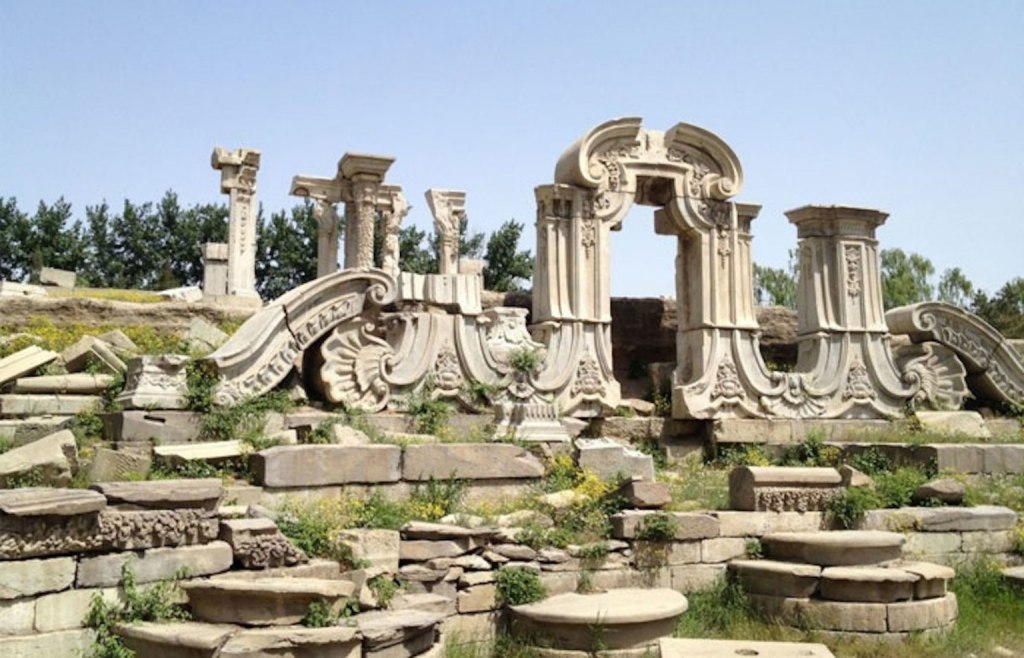
The stream swirls. The wind moans in The pines. Grey rats scurry over Broken tiles. What prince, long ago, Built this palace, standing in Ruins beside the cliffs? There are Green ghost fires in the black rooms. The shattered pavements are all Washed away. Ten thousand organ Pipes whistle and roar. The storm Scatters the red autumn leaves. His dancing girls are yellow dust. Their painted cheeks have crumbled Away. His gold chariots And courtiers are gone. Only A stone horse is left of his Glory. I sit on the grass and Start a poem, but the pathos of It overcomes me. The future Slips imperceptibly away. Who can say what the years will bring?





 Tarnmoor
You must be logged in to post a comment.