Three Poets: Maggie Millner

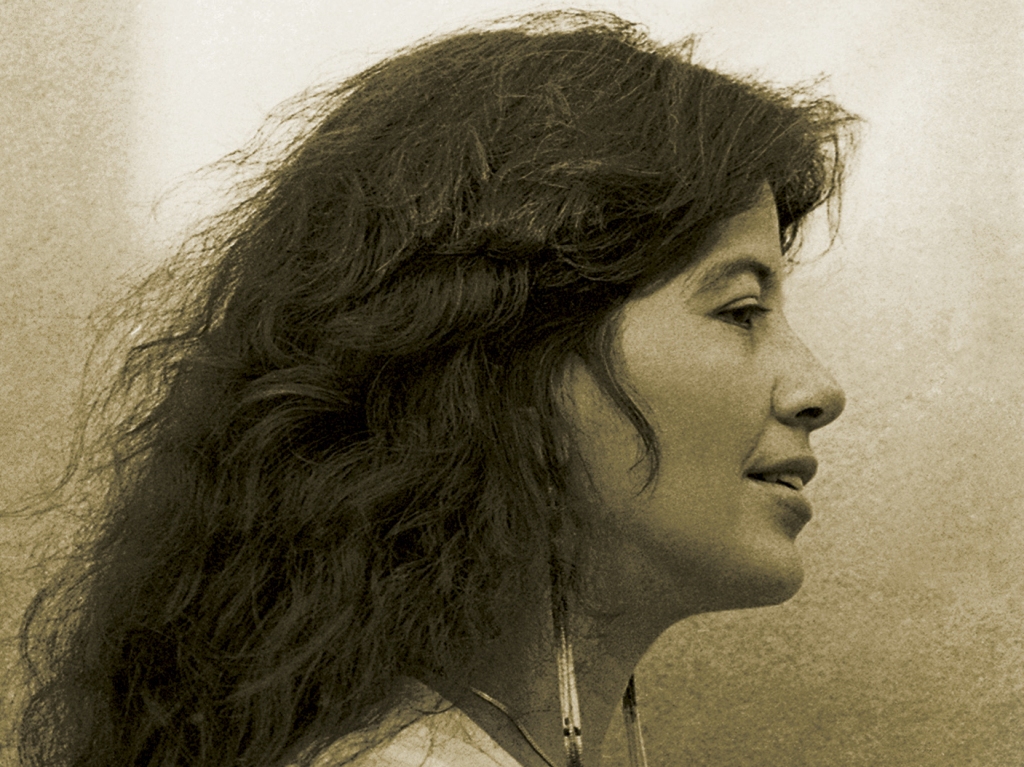
Poet Maggie Millner

It is no surprise that the three poets whose readings I most liked at the Los Angeles Times Book Festival Poetry Stage were all women. They represented three different life paths which, while typically feminine, were universal in their humanity.

The first is Maggie Millner, born in upstate New York, an instructor in writing at Yale University. The poem is from her poetry collection entitled Couplets.

1.12

There are many ways, of course,
of telling it. But each account obscures

some other version equally true.
One is that I lied to everyone I knew.

Another—this one I really do believe—
is that for years I loved him more than me.

I can conjure even now our first apartment’s tile:
white diamonds in their blue argyle

frieze around the sink, the dirty grout
I’d scour with a toothbrush while he was out

at work. I can count four bathmats
over eight years, hear the record player catch

every time we stood up from the table.
And I can still feel the invisible

moat we both lived in, on the other side of which
we knew lay torment, exile, wreckage,

the anarchy of singledom. Loss upon loss.
I remember testing it, the moat: throwing across

a rope to check its breadth, twice to the waist
wading in before retreating, shamefaced,

reining myself back. To him it was a sea
I think entirely impassable. To me

it was a dizzying ravine
that circled us for years, then cut between.

Where Reading Is Honored

Yes, It Really Was That Crowded

After several consecutive wet weekends, this last weekend was ideal for a big get-together. And that’s exactly what happened at the campus of the University of Southern California (USC) where the 2024 edition of the Los Angeles Times Book Festival took place. I do not recall being in such a crowd scene for decades. In fact, it was so crowded that I couldn’t buy more than three books because the booths that interested me the most were jammed with people.

The only reason I could tolerate the crowds is that they were there honoring books and reading, which are sacred to me. Never mind that most of them read nothing but crap. The important thing is that they were coming together to honor an activity that is disappearing from our anti-intellectual culture.

This time I noticed for the first time that so many of the booths related to self-publishing. And, since no one ever heard of these authors, their booths were, for the most part, unvisited. Well, they are part of the publishing world, too, and with luck a handful of them may make it to the big time.

As with last year, I spent most of my time at the Poetry Stage, where there was a different poetry reading every twenty minutes. There, I made the acquaintance of three women poets I will be discussing later this week.

The one that got away, however, was the Salvadorean poet Yesika Salgado, who spoke at the Latinidad Stage in Spanish, English, and Spanglish. She was magnificent. I couldn’t buy her book because the line to buy a copy and have the poet sign it was approximately a hundred persons long; and I was by that time exhausted and ready to return home.

I guess I should have spent more time at the Latinidad Stage. Even though my Spanish is pretty punk, the people in attendance were into their poets in a big way, and Yesika is a real force on the L.A. literary scene, as this YouTube video will show:

The Swan

French Poet Charles Baudelaire (1821-1867)

Today, as I was re-reading Patrick Modiano’s The Black Notebook (2012) with its labyrinthine reconstructions of an imperfectly remembered past, I thought of a poem by Charles Baudelaire that gave me the same feeling, It is called “The Swan”:

The Swan

I

Andromache, I think of you! The stream,
The poor, sad mirror where in bygone days
Shone all the majesty of your widowed grief,
The lying Simoïs flooded by your tears,
Made all my fertile memory blossom forth
As I passed by the new-built Carrousel.
Old Paris is no more (a town, alas,
Changes more quickly than man’s heart may change);
Yet in my mind I still can see the booths;
The heaps of brick and rough-hewn capitals;
The grass; the stones all over-green with moss;
The _débris_, and the square-set heaps of tiles.

There a menagerie was once outspread;
And there I saw, one morning at the hour
When toil awakes beneath the cold, clear sky,
And the road roars upon the silent air,
A swan who had escaped his cage, and walked
On the dry pavement with his webby feet,
And trailed his spotless plumage on the ground.
And near a waterless stream the piteous swan
Opened his beak, and bathing in the dust
His nervous wings, he cried (his heart the while
Filled with a vision of his own fair lake):
“O water, when then wilt thou come in rain?
Lightning, when wilt thou glitter?”
Sometimes yet
I see the hapless bird — strange, fatal myth —
Like him that Ovid writes of, lifting up
Unto the cruelly blue, ironic heavens,
With stretched, convulsive neck a thirsty face,
As though he sent reproaches up to God!

II

Paris may change; my melancholy is fixed.
New palaces, and scaffoldings, and blocks,
And suburbs old, are symbols all to me
Whose memories are as heavy as a stone.
And so, before the Louvre, to vex my soul,
The image came of my majestic swan
With his mad gestures, foolish and sublime,
As of an exile whom one great desire
Gnaws with no truce. And then I thought of you,
Andromache! torn from your hero’s arms;
Beneath the hand of Pyrrhus in his pride;
Bent o’er an empty tomb in ecstasy;
Widow of Hector — wife of Helenus!
And of the negress, wan and phthisical,
Tramping the mud, and with her haggard eyes
Seeking beyond the mighty walls of fog
The absent palm-trees of proud Africa;
Of all who lose that which they never find;
Of all who drink of tears; all whom grey grief
Gives suck to as the kindly wolf gave suck;
Of meagre orphans who like blossoms fade.
And one old Memory like a crying horn
Sounds through the forest where my soul is lost….
I think of sailors on some isle forgotten;
Of captives; vanquished … and of many more.

The translation is by F. P. Sturm.

“Prepare Yourselves”

Maya King at Mérida’s Palacio Canton Museum

After being conquered by the Spanish, the Maya of Yucatán wrote a series of miscellanies in the 17th and 18th centuries referred to as Chilam Balam. Many of the entries are poetic and filled with foreboding. Poet Christopher Sawyer-Lauçanno translated a number of them in his The Destruction of the Jaguar: Poems from the Books of Chilam Balam. Here is one of them:

Napuctum Speaks

Burn, burn, burn
on earth we shall burn
become cinders in
the blowing wind
drift over the land
over the mountains
out to sea.

What has been written
will be fulfilled.
What has been spoken
will come to be.

Weep, weep, weep
but know,
know well:
Ash does not suffer.

The Tiger at the Buenos Aires Zoo

The Buenos Aires Zoo that Jorge Luis Borges visited to be inspired by its tigers was closed in 2016, five years after Martine and I visited it. Its former space in Palermo is now occupied by an EcoPark.

Although he became almost totally blind in the 1950s because of an ophthalmic ailment inherited from his father, Borges in his poetry returned again and again to the tigers he heard roaring in the old zoo.

Below is one of my favorites—“The Gold of the Tigers”—translated by Alastair Reid:

The Gold of the Tigers

Up to the moment of the yellow sunset,
how many times will I have cast my eyes on
the sinewy-bodied tiger of Bengal
to-ing and fro-ing on its paced-out path
behind the labyrinthine iron bars,
never suspecting them to be a prison.
Afterwards, other tigers will appear:
the blazing tiger of Blake, burning bright;
and after that will come the other golds—
the amorous gold shower disguising Zeus,
the gold ring which, on every ninth night,
gives light to nine rings more, and these, nine more,
and there is never an end.
All the other overwhelming colors,
in company with the years, kept leaving me,
and now alone remains
the amorphous light, the inextricable shadow
and the gold of the beginning.
O sunsets, O tigers, O wonders
of myth and epic,
O gold more dear to me, gold of your hair
which these hands long to touch.

In this poem, Borges refers to William Blake’s poem “The Tyger”; to the Greek myth of Zeus impregnating Danaë disguised as a shower of gold; and the Norse myth of Draupnir, the self-replicating gold ring. The only color Borges was able to see as his blindness worsened was yellow. Finally, the golden-haired beauty referred to at the end was probably Norah Lange, the Norwegian-Argentinian writer whom Borges loved but who chose to marry rival poet Oliverio Girondo instead.

“It Is Bells Within”

Like me, Emily Dickinson loved reading. (Unlike me, she had the talent to show for it.) Today, I present one of her untitled poems on the joys of books.

Unto my books so good to turn
Far ends of tired days;
It half endears the abstinence,
And pain is missed in praise.

As flavors cheer retarded guests
With banquetings to be,
So spices stimulate the time
Till my small library.

It may be wilderness without,
Far feet of failing men,
But holiday excludes the night,
And it is bells within.

I thank these kinsmen of the shelf;
Their countenances bland
Enamour in prospective,
And satisfy, obtained.

Thoughts at Midnight

Thomas Hardy (1840-1928)

Even as I read one Dorsetshire author (John Cowper Powys), my mind goes to another who gave up writing novels and wrote nothing but poems for the rest of his life. I am thinking of Thomas Hardy. Here is a short poem by him:

Thoughts at Midnight

Mankind, you dismay me
When shadows waylay me! —
Not by your splendours
Do you affray me,
Not as pretenders
To demonic keenness,
Not by your meanness,
Nor your ill-teachings,
Nor your false preachings,
Nor your banalities
And immoralities,
Nor by your daring
Nor sinister bearing;
But by your madnesses
Capping cool badnesses,
Acting like puppets
Under Time’s buffets;
In superstitions
And ambitions
Moved by no wisdom,
Far-sight, or system,
Led by sheer senselessness
And presciencelessness
Into unreason
And hideous self-treason. . . .
God, look he on you,
Have mercy upon you!

Signs

Bronze Chinese Bells

Here is a poem by Jorge Luis Borges of Argentina that mentions the butterfly dream by Zhuangzi that I wrote about in yesterday’s post.

Signs

for Susana Bombal

Around 1915, in Geneva, I saw on the terrace
of a museum a tall bell with Chinese characters.
In 1976 I write these lines:

Undeciphered and alone, I know
in the vague night I can be a bronze
prayer or a saying in which is encoded
the flavor of a life or of an evening
or Chuang Tzu’s dream, which you know already,
or an insignificant date or a parable
or a great emperor, now a few syllables,
or the universe or your secret name
or that enigma you investigated in vain
for so long a time through all your days.
I can be anything. Leave me in the dark.

About that last line: Remember that for the last thirty or forty years of his life, Borges was blind.

If You’re Attacked by a Lion …

Poet and Comic Spike Milligan (1918-2002)

Born in British India, Spike Milligan was a comedian, writer, musician, poet, playwright and actor. He is probably best remembered for his role in “The Goon Show,” the British radio program that spawned much of British comedy for decades to come.

Here is a little sample of his work which I hope will make you laugh. He was a very funny man.

The Lion

If you’re attacked by a Lion
Find fresh underpants to try on
Lay on the ground quite still
Pretend you are very ill
Keep like that day after day
Perhaps the lion will go away.

“Alas, Alas for England”

In this election year, I came across a short poem by G. K. Chesterton (1874-1936) that expressed exactly what I feel about politicians.

Elegy in a Country Churchyard

The men that worked for England
They have their graves at home:
And birds and bees of England
About the cross can roam.

But they that fought for England,
Following a falling star,
Alas, alas for England
They have their graves afar.

And they that rule in England,

In stately conclave met,

Alas, alas for England

They have no graves as yet.