Bruce Chatwin introduced me to Welsh metaphysical poet Henry Vaughan. This poem goes by the rather clumsy name “Boethius, De Consolatione Philosophiae: Liber 2 Metrum 5.” For a 17th century poem, it is remarkably approachable today.
Happy that first white age when we Lived by the earth’s mere charity! No soft luxurious diet then Had effeminated men: No other meat, nor wine, had any Than the coarse mast, or simple honey; And by the parents’ care laid up, Cheap berries did the children sup. No pompous wear was in those days, Of gummy silks or scarlet blaize. Their beds were on some flow’ry brink, And clear spring-water was their drink. The shady pine in the sun’s heat Was their cool and known retreat, For then ’twas not cut down, but stood The youth and glory of the wood. The daring sailor with his slaves Then had not cut the swelling waves, Nor for desire of foreign store Seen any but his native shore. Nor stirring drum scarred that age, Nor the shrill trumpet’s active rage, No wounds by bitter hatred made, With warm blood soiled the shining blade; For how could hostile madness arm An age of love to public harm, When common justice none withstood, Nor sought rewards for spilling blood? Oh that at length our age would raise Into the temper of those days! But — worse than Etna’s fires! — debate And avarice inflame our state. Alas! who was it that first found Gold, hid of purpose under ground, That sought out pearls, and dived to find Such precious perils for mankind!
Here’s a post from ten years ago this month. I’ve always meant to read up on the Etruscans, as I admire what I know of their view of life—even though I’m not known for smiling.
The whole world of the smiling girl in he above photo is long gone, but her smile still speaks to us. It tells us that, even in Ancient Rome, there was something to laugh about. When I took the picture on Friday, I did not note the provenance of the figurine, but I wonder if it was Etruscan. This ancient people is the only one that has allowed itself to be depicted as wreathed in smiles—very contrary to the picture we have of the dour Romans.
Below is a hollow funerary urn from the Banditaccia Necropolis showing a married couple, whose ashes are presumably commingled therein:
I guess my little figurine is not Etruscan.Their images always show them as having sharp features and almond eyes. The girl above is definitely Roman.
Not to change the subject, but it reminds me somewhat of the following poem by Robert Browning:
My Last Duchess
That’s my last Duchess painted on the wall, Looking as if she were alive. I call That piece a wonder, now: Frà Pandolf’s hands Worked busily a day, and there she stands. Will ‘t please you sit and look at her? I said ‘Frà Pandolf’ by design, for never read Strangers like you that pictured countenance, The depth and passion of its earnest glance, But to myself they turned (since none puts by The curtain I have drawn for you, but I) And seemed as they would ask me, if they durst, How such a glance came there; so, not the first Are you to turn and ask thus. Sir, ‘t was not Her husband’s presence only, called that spot Of joy into the Duchess’ cheek: perhaps Frà Pandolf chanced to say, ‘Her mantle laps Over my lady’s wrist too much,’ or ‘Paint Must never hope to reproduce the faint Half-flush that dies along her throat:’ such stuff Was courtesy, she thought, and cause enough For calling up that spot of joy. She had A heart—how shall I say?—too soon made glad, Too easily impressed; she liked whate’er She looked on, and her looks went everywhere. Sir, ‘t was all one! My favour at her breast, The dropping of the daylight in the West, The bough of cherries some officious fool Broke in the orchard for her, the white mule She rode with round the terrace—all and each Would draw from her alike the approving speech, Or blush, at least. She thanked men,—good! but thanked Somehow—I know not how—as if she ranked My gift of a nine-hundred-years-old name With anybody’s gift. Who’d stoop to blame This sort of trifling? Even had you skill In speech—(which I have not)—to make your will Quite clear to such an one, and say, ‘Just this Or that in you disgusts me; here you miss, Or there exceed the mark’—and if she let Herself be lessened so, nor plainly set Her wits to yours, forsooth, and made excuse, —E’en then would be some stooping; and I choose Never to stoop. Oh, sir, she smiled, no doubt, Whene’er I passed her; but who passed without Much the same smile? This grew; I gave commands; Then all smiles stopped together. There she stands As if alive. Will ‘t please you rise? We’ll meet The company below then. I repeat, The Count your master’s known munificence Is ample warrant that no just pretence Of mine for dowry will be disallowed; Though his fair daughter’s self, as I avowed At starting, is my object. Nay, we’ll go Together down, sir. Notice Neptune, though, Taming a sea-horse, thought a rarity, Which Claus of Innsbruck cast in bronze for me!
That line about “all smiles stopped together” is grimly humorous.
Here’s a melancholy poem to autumn by e e cummings. Here in Southern California, the trees don’t drop their leaves: They just accumulate dust or burn down. But I remember November from my days in Cleveland and New Hampshire:
cruelly, love
walk the autumn long; the last flower in whose hair, they lips are cold with songs
for which is first to wither, to pass? shallowness of sunlight falls, and cruelly, across the grass Comes the moon
love, walk the autumn love, for the last flower in the hair withers; thy hair is acold with dreams, love thou art frail
—walk the longness of autumn smile dustily to the people, for winter who crookedly care.
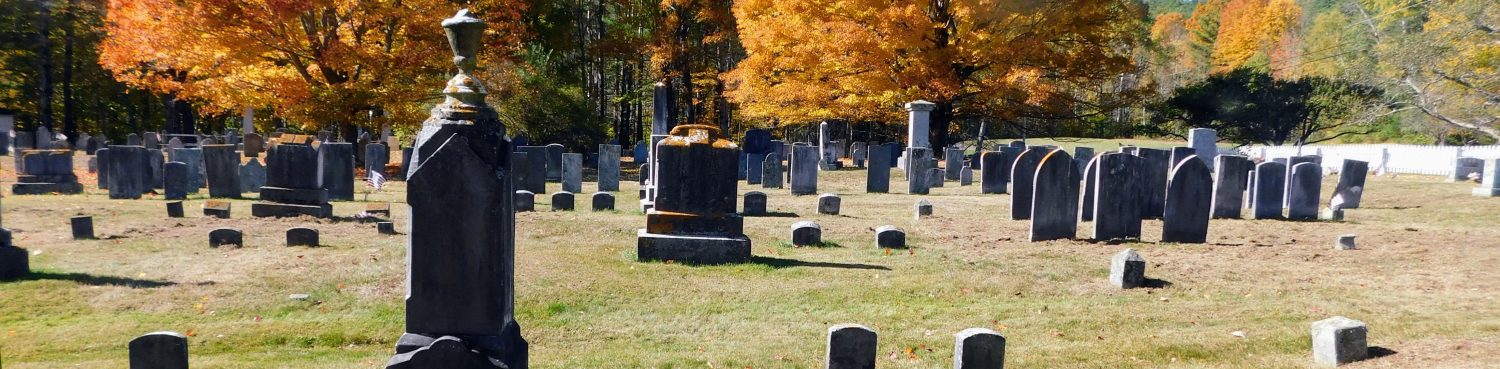
November 2 in the Catholic liturgy is All Souls’ Day, or in Mexico, El Dia de Los Muertos, the Day of the Dead. Here is a poem by Alberto Rios, a Hispanic resident of Arizona.
November 2: Día de los muertos
1
It is not simply the Day of the Dead—loud, and parties. More quietly, it is the day of my dead. The day of your dead.
These days, the neon of it all, the big-teeth, laughing skulls, The posed calacas and Catrinas and happy dead people doing funny things—
It’s all in good humor, and sometimes I can’t help myself: I laugh out loud, too. But I miss my father. My grandmother has been gone
Almost so long I can’t grab hold of her voice with my ears anymore, Not easily. My mother-in-law, she’s still here, still in things packed
In boxes, her laughter on videotape, and in conversations. Our dog died several years ago and I try to say his name
Whenever I leave the house—You take care of this house now, I say to him, the way I always have, the way he knows.
I grew up with the trips to the cemetery and pan de muerto, The prayers and the favorite foods, the carne asada, the beer.
But that was in the small town where my memory still lives. Today, I’m in the big city, and that small town feels far away.
2
The Day of the Dead—it’s really the days of the dead. All Saints’ Day, The first of November, also called the día de los angelitos—
Everybody thinks it’s Day of the Dead—but it’s not, not exactly. This first day is for those who have died a saint
And for the small innocents—the criaturas—the tender creatures Who have been taken from us all, sometimes without a name.
To die a saint deserves its day, to die a child. The following day, The second of November, this is for everybody else who has died
And there are so many, A grandmother, a father, a distant uncle or lost cousin.
It is hard enough to keep track even within one’s own family. But the day belongs to everyone, so many home altars,
So many parents gone, so many husbands, so many Aunt Normas, so many Connies and Matildes. Countless friends.
Still, by the end of the day, we all ask ourselves the same thing: Isn’t this all over yet?
3
All these dead coming after—and so close to—Halloween, The days all start to blend,
The goblins and princesses of the miniature world Not so different from the ways in which we imagine
Those who are gone, their memories smaller, their clothes brighter. We want to feed them only candy, too—so much candy
That our own mouths will get hypnotized by the sweetness, Our own eyes dazzled by the color, our noses by the smells
The first cool breath of fall makes, a fire always burning Somewhere out there. We feed our memories
And then, humans that we are, we just want to move quickly away From it all, happy for the richness of everything
If unsettled by the cut pumpkins and gourds, The howling decorations. The marigolds—cempasúchiles—
If it rains, they stink, these fussy flowers of the dead. Bread of the dead, day of the dead—it’s hard to keep saying the word.
4
The dead: They take over the town like beach vacationers, returning tourists getting into everything:
I had my honeymoon here, they say, and are always full of contagious nostalgia. But it’s all right. They go away, after a while.
They go, and you miss them all over again. The papel picado, the cut blue and red and green paper decorations,
The empanadas and coconut candy, the boxes of cajeta, saladitos, Which make your tongue white like a ghost’s—
You miss all of it soon enough, Pictures of people smiling, news stories, all the fiestas, all this exhaustion.
The coming night, the sweet breads, the bone tiredness of too much— Loud noise, loud colors, loud food, mariachis, even just talking.
It’s all a lot of noise, but it belongs here. The loud is to help us not think, To make us confuse the day and our feelings with happiness.
Because, you know, if we do think about our dead, Wherever they are, we’ll get sad, and begin to look across at each other.
The Argentinian poet Jorge Luis Borges could not play with a cat without thinking of those other cats he saw at the Buenos Aires Zoo too large and too ferocious for play.
To a Cat
Mirrors are not more silent nor the creeping dawn more secretive; in the moonlight, you are that panther we catch sight of from afar. By the inexplicable workings of a divine law, we look for you in vain; More remote, even, than the Ganges or the setting sun, yours is the solitude, yours the secret. Your haunch allows the lingering caress of my hand. You have accepted, since that long forgotten past, the love of the distrustful hand. You belong to another time. You are lord of a place bounded like a dream.
The Taoist sage Lao Tzu (floruit BCE 500), author of the Tao Te Ching, is one of those figures at the nexus of three great religions: Taoism, Buddhism, and Confucianism. Below is Sam Hamill’s translation of the second section of the Tao Te Ching, as printed in the Shambala Library edition of The Poetry of Zen:
Beauty and ugliness have one origin. Name beauty, and ugliness is. Recognizing virtue recognizes evil.
Is and is not produce one another. The difficult is born in the easy, long is defined by short, the high by the low. Instrument and voice achieve one harmony. Before and after have places.
That is why the sage can act without effort and teach without words, nurture things without possessing them, and accomplish things without expecting merit:
only one who makes no attempt to possess it cannot lose it.
In this election season, with all those overweening ambitions in play, I like to think of Percy Bysshe Shelley (1792-1822) and his poem “Ozymandias.” Can you guess why?
Ozymandias
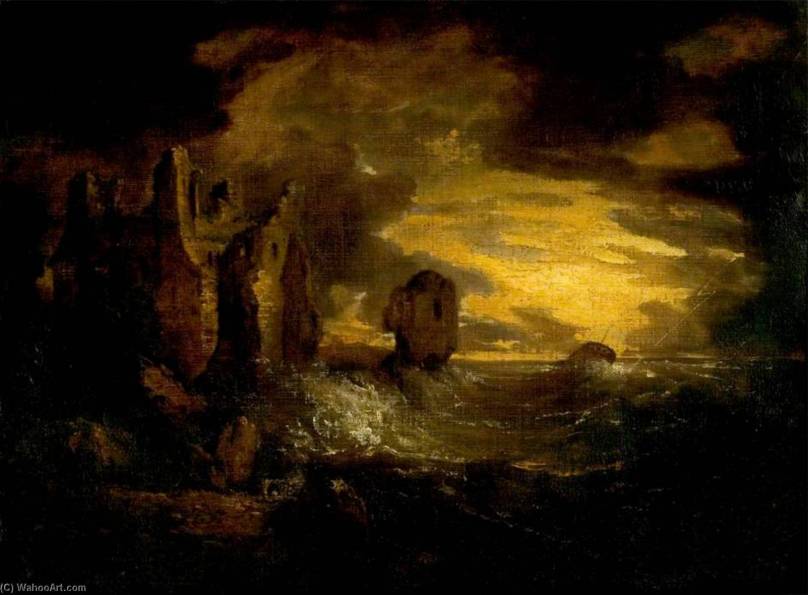
I met a traveller from an antique land Who said: “Two vast and trunkless legs of stone Stand in the desert . . . Near them, on the sand, Half sunk, a shattered visage lies, whose frown, And wrinkled lip, and sneer of cold command, Tell that its sculptor well those passions read Which yet survive, stamped on these lifeless things, The hand that mocked them, and the heart that fed: And on the pedestal these words appear: ‘My name is Ozymandias, king of kings: Look on my works, ye Mighty, and despair!’ Nothing beside remains. Round the decay Of that colossal wreck, boundless and bare The lone and level sands stretch far away.”
When I was studying French literature at Dartmouth College, I fell in love with the poems of Paul Éluard. I could not find a good translation of my favorite poem, “Pour vivre ici,” and I was too lazy to translate it myself without doing an injustice to the poem. (Perhaps, some other time.) Here, however, is another of his poems that I loved:
Liberté
On my school notebooks On my desk and on the trees On the sands of snow I write your name
On the pages I have read On all the white pages Stone, blood, paper or ash I write your name
On the images of gold On the weapons of the warriors On the crown of the king I write your name
On the jungle and the desert On the nest and on the brier On the echo of my childhood I write your name
On all my scarves of blue On the moist sunlit swamps On the living lake of moonlight I write your name
On the fields, on the horizon On the birds’ wings And on the mill of shadows I write your name
On each whiff of daybreak On the sea, on the boats On the demented mountaintop I write your name
On the froth of the cloud On the sweat of the storm On the dense rain and the flat I write your name
On the flickering figures On the bells of colors On the natural truth I write your name
On the high paths On the deployed routes On the crowd-thronged square I write your name
On the lamp which is lit On the lamp which isn’t On my reunited thoughts I write your name
On a fruit cut in two Of my mirror and my chamber On my bed, an empty shell I write your name
On my dog, greathearted and greedy On his pricked-up ears On his blundering paws I write your name
On the latch of my door On those familiar objects On the torrents of a good fire I write your name
On the harmony of the flesh On the faces of my friends On each outstretched hand I write your name
On the window of surprises On a pair of expectant lips In a state far deeper than silence I write your name
On my crumbled hiding-places On my sunken lighthouses On my walls and my ennui I write your name
On abstraction without desire On naked solitude On the marches of death I write your name
And for the want of a word I renew my life For I was born to know you To name you
Herman Melville is not known for his poetry, probably because he wrote it during an optimistic time in American history (i.e., after the Civil War) when his natural pessimism ran against the grain. Below is a poem that harks back to his years at sea aboard a whaler:
The Maldive Shark
About the Shark, phlegmatical one, Pale sot of the Maldive sea, The sleek little pilot-fish, azure and slim, How alert in attendance be. From his saw-pit of mouth, from his charnel of maw, They have nothing of harm to dread, But liquidly glide on his ghastly flank Or before his Gorgonian head; Or lurk in the port of serrated teeth In white triple tiers of glittering gates, And there find a haven when peril’s abroad, An asylum in jaws of the Fates! They are friends; and friendly they guide him to prey, Yet never partake of the treat — Eyes and brains to the dotard lethargic and dull, Pale ravener of horrible meat.
You must be logged in to post a comment.