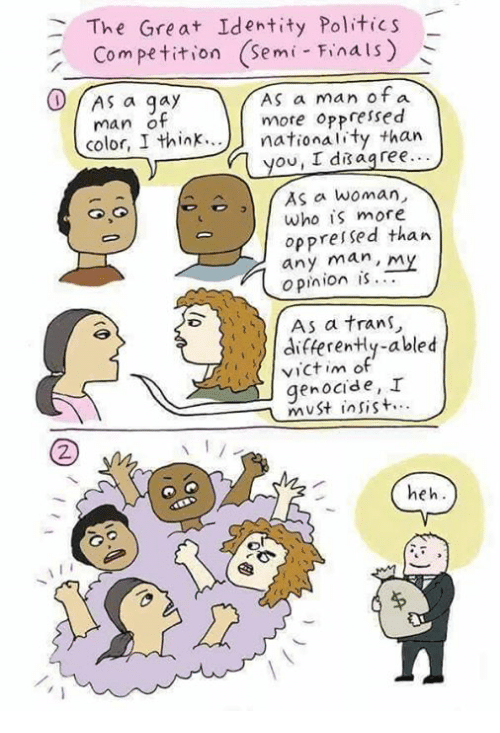
I couldn’t resist sharing this cartoon with you of our narcissistic Presidentissimo. As his enemies close in on him, he becomes ever more objectionable. Does he think his base will protect him? I don’t think his base is growing at all.
Home » politics (Page 13)
Elections are mixed events. Never have I been entirely happy with the results. And sometimes, when I seemed happier than other times, I was hurt by what I felt was betrayal for the people I supported. The situation is worse in California, largely because of the stupid propositions that are usually supported by out-of-state corporate interests and give us the chance to hoist ourselves on our own petards. We are still suffering from the notorious Proposition 13 of 1978, which was a boon to homeowners but a bane for renters.
The good news is that Trump will have a more difficult time converting the U.S. into a Thousand Year Reich. The bad news? Where are all these angry white males coming from? and why do they want to destroy this country? I have already declared myself to be an Independent; and I have even resigned from the white race (considering myself to be Finno-Ugric, from the Asian side of the Ural Mountains); but I have no intention of resigning from the masculine gender.
Probably the worst night of my life was election day in 2016. I was in Quito, Ecuador watching the results come in on CNN at the Viejo Cuba Hotel. When I saw that Trump was winning, I almost considered not returning to the U.S. In the end, I gritted my teeth for the circus that was sure to come, and in fact did come. That so many Americans are still committed to this circus is a mystery to me. I guess I just don’t understand (let alone tolerate) these voters.
If you fail to vote tomorrow, I hope it’s because you are a Trump supporter. For anyone else—and that includes the majority of Americans—the man and his minions are a stench in the nostrils. If you fail to vote because you were (a) hung over, (b) busy playing computer games, (c) studying for an exam, or (d) turned off by politics … then you have no cause … ever again … for complaint. You have failed in your primary duty as a citizen. Your very right to vote is in question, as witness the Republican anti-democratic voter suppression in Kansas and Georgia.
I know you have heard a lot about this election, and you’ve probably been turned off by everything you’ve heard. So what! I’m the guy who ends calls from political volunteers with a few choice swear words and hangs up. I do not care to discuss my political choices with what might turn out to be corporate shills hired by the Koch brothers or other disruptive forces.
Although I suspect he might be a Republican, I feel that cartoonist Scott Stantis is a Republican of the non-#$&!!@# variety. I have seen his thought evolve over the years to the extent that I cannot pass a day without reading his cartoons. Even if the characters in the above cartoon are right, and I suspect they are, there is too much of a danger of electing the Wrong nincompoops, like those Tea Party jerks who have caused so much damage to the country that I still love for all its wrong turns.
Vote. Be in charge. Stay in charge. And make the effort to stay in charge!
I think both sides have covered all the substantive issues, according to their various points of view. One thing I have not seen is how Brett Kavanaugh seems to have screwed the pooch as far as his nomination to the Supremes is concerned. (That won’t matter to Mitch McConnell, who at this point would gladly accept in nomination Jack the Ripper, Benedict Arnold, or even Judge John Hathorne of the Salem witch trials.)
Admittedly, the Democrats are enraged that are being requested to swallow the bolus of Kavaugh’s sexual and other moral misdeeds and his lies under oath. Somehow, I think he would still have gotten by if only he were nicer. That snarl, though, is such a clear sign of villainy that he is rapidly losing adherents. I mean, who wants to be associated with a guy whose main legal qualifications are his love of beer and pussy.
Over the last couple of days, I have been reading Mary Beard’s SPQR: A History of Ancient Rome. We think of the Roman Republic in very decorous terms, with all those dignified men in togas. We don’t see many representations of Roman plebeians, who were not permitted to wear the toga—let alone the thousands of slaves living in the city.
It was actually a far from decorous time, with over a hundred years of violent conflict between the optimates (wealthy upper classes) and the populares (common people). This century included the Brothers Gracchi, who were murdered; the brutal dictator Sulla; the victorious general Marius; and ended with the war between Julius Caesar and Pompey the Great. In many ways, it was reminiscent of our own times—a time when we are envisioning the end of our own Republic from the repeated assaults of the Dictator Trump.
Among the optimates, there were the senate, the consuls, the priesthood, all the Republican offices (Quaestor, Praetor, Aedile, etc.), as well as the class of equites, or knights. For most of its existence, these are the people who ruled the Republic. The populares, or plebeians, were everyone else (always excepting the slaves, who had no one to speak for them). The optimates did everything in their power to aggrandize their power at the expense of the populares. In fact, one of the reasons Julius Caesar was assassinated in the Senate in 44 BC was his policy of sharing power with the populares. The men who stabbed him were all Senators.
I am tempted to equate the optimates with Republicans, and the populares with Democrats. In fact, the situation was complicated by the inhabitants of the various provinces of the Republic—and these provinces began right outside the Rome city limits.
I read the following at one of my favorite websites, Laudator Temporis Acti for September 7, 2018, where it reminded me of a certain denizen of the White House. The speaker is Libanius in his Orations 1.255.
The successor of this ungodly fellow was another unbeliever himself. He took up his office and began to run to fat through his self-indulgence, as being a man of property, but his property was the fruit of his wickedness. He was more stupid than the other in that, upon my telling him to do no damage to Daphne and to lay no axe to its cypresses, he became my foe….
Further on, at 1.262, he writes:
The rule of our pot-bellied governor was a harsh one, for his wrath had been kindled by a piece of deceit. He had decided to lay the axe to the cypresses in Daphne, and I, realizing that such a course would bring no good to any who chopped them down, advised one of his boon companions that he should not incur the anger of Apollo because of the trees, especially since his temple had already been afflicted by similar misdeeds. I told him that I would invite the emperor to show concern for Daphne, or rather to emphasize the concern he felt already, for he was not without it, as it was.
Now imagine the cypresses in the Grove of Apollo were one of our recent National Monuments.
Libanius was a resident of Antioch in the fourth century A.D. He was a Greek teacher of rhetoric of the sophist school. Through the rise of Christianity, he remainded faithful to the old pagan state religion of Rome.
If we ever get through this presidency in one piece, we will look back on the cover art of The New Yorker as representative of the way that thinking, feeling people reacted to our 45th President. (As to how his supporters feel, I could care less.) I have been reading the magazine on and off for over half a century. In the end, what I remember most are the covers. There are a few stories that I will always remember, such as the issue that contained the whole of Truman Capote’s In Cold Blood.
I will always remember Election Night 2016 as the worst night of my life. I was in Quito, Ecuador, watching the results coming in on CNN. As the night went on, I was feeling sicker and sicker. The next day, I was to fly back to the U.S., which I suspected was about to be changed forever—for the worse!
He always presented himself as smart, handsome, and rich. It has become grotesquely apparent that he is dim, ugly, and corrupt. As to his handsomeness, there is this cover:
If you are feeling despondent about politics in America in 2018, I recommend you google YOUTUBE RIEFENSTAHL TRIUMPH OF THE WILL. People make a lot of glib comparisons between Trumpf’s Administration and Nazi Germany. Leni Riefenstahl’s great documentary of the 6th Nazi Party Congress in Nuremberg in 1933 will make you see how the present differs from that dismal event eighty-five years ago. The film is one and three quarters of an hour long, but it is mesmerizing in its icy control and will suggest several major differences between then and now.
First of all, Hitler and the Nazis were always on message. There are no 3 am Tweets that contradict one another. The Führer knew what he wanted to say and said it—even when he was lying through his teeth. A major attempt is made during the Congress to heal the split between the Brownshirts (the Stürmabteilung or SA) and the SS. Yet between the Congress and the time this film was released to the German public, the Night of the Long Knives took place, and the Brownshirts were purged, and many of its leaders were executed without benefit of trial. I can only wonder how the German people interpreted all the happy talk about the SA in the film when it was finally released.
It amazed me that so many of Hitler’s lieutenants were with him to the bitter end. It is true that Vice Führer Rudolf Hess defected to England, and many of the SA Leaders were no more; but there were Gõring, Goebbels, Himmler, Streicher, Von Schirach, and many others who made an appearance in the film stayed with Hitler through thick and thin. Compare that with the revolving door in Trumpf’s White House. First there is the inevitable publicity photo of our President smiling and pointing at his new hire as if to say, “See, I bring you the very best.” Then a few months later, “he was never any good anyway.”
Then, too, America is very different. Instead of all those Nazi salutes and Sieg Heils, there would be thousands of upraised middle fingers and hurled garbage. The only way Trumpf can raise a great multitude is in his dreams (witness the size of the inauguration crowd in January 2017).
Despite the fact that women do not play a major part in the 6th Nazi Party Congress, the film of the Congress was directed by a woman who was probably one of the greatest of all women film directors. Whether or not she was a loyal Nazi, she knew how to make a great film. Her film of the 1936 Berlin Olympiad was perhaps the greatest sports film ever made. Its hero turned out to be a non-Aryan American, the great black athlete Jesse Owens.
Riefenstahl got her start as an actress in a strange German film genre of the 1920s: brooding, mystical mountain films such as The Holy Mountain and The White Hell of Piz Palü.
Listening to the Current Occupant bluster in an all-caps tweet against Iran, I thought back o how, in the past, the Persians managed to flummox their enemies. And the Orange Baboon was not even in the top ten. As great as the extent of the Roman Empire was, it could never count Parthia (Persia) as one of its victims. According to Wikipedia,
Lasting over 680 years, the Roman–Persian Wars, if taken together, form the longest conflict in human history. Despite this, the frontier remained largely stable. A game of tug of war ensued: towns, fortifications, and provinces were continually sacked, captured, destroyed, and traded. Neither side had the logistical strength or manpower to maintain such lengthy campaigns far from their borders, and thus neither could advance too far without risking stretching its frontiers too thin. Both sides did make conquests beyond the border, but in time the balance was almost always restored. The line of stalemate shifted in the 2nd century AD: it had run along the northern Euphrates; the new line ran east, or later northeast, across Mesopotamia to the northern Tigris. There were several substantial shifts further north, in Armenia and the Caucasus. Although initially different in military tactics, the armies of both sides gradually adopted from each other and by the second half of the 6th century they were similar and evenly matched.
The first Roman-Persian/Parthian conflict began in 66 BC, in the time of the Roman Republic. The Romans and Persians did not call it quits until the Islamic conquests put an end to the Sasanian Empire and deprived the Byzantine Empire of much of its southern territories.
Perhaps the one symbol these conflicts have left with the oft-defeated Roman legionaries is a tactic known as the Parthian Shot. While appearing to retreat, Parthian light horsemen turned around in their saddles while appearing to retreat and shooting down the advancing Romans and shooting them down with arrows. This requires considerable skill, as the Parthian light horse did not have stirrups and had to guide their mounts strictly by the pressure of their legs.
So rage as the Twitterati will, I suggest that they be wary of the “retreating” enemy. I keep thinking of the advice the Delphic Oracle gave to King Croesus: “If you cross the river, a great empire will be destroyed,” And so it was—but it was his own empire. I believe the winning side were the Persians.
I have read Paul Theroux’s The Old Patagonian Express: By Train Through the Americas several times. It got me interested in visiting South and Central America in the first place; and I keep tryi9ng to relive the experience of reading it the first time. Back in the 1970s, there was still passenger rail service in Guatemala. Now there are only railroad museums with rusting locomotives. The following is the author’s take on recent Guatemalan history—which is still largely true.
I had a political reverie on that train [the one between Tecun Uman and Guatemala City]. It was this: the government held elections, encouraged people to vote, and appeared to be democratic. The army appeared to be impartial, the newspapers disinterested. And it remained a peasant society, basically underfed and unfree. It must perplex any peasant to be told he is living in a free country, when the facts of life contradict this. It might be that this does not perplex him; he has every reason to believe, in accordance with the evidence, that democracy is feudal, a bureaucracy run by crooks and trigger-happy vigilantes. When one sees a government of the Guatemalan sort professing such high-mindedness in its social aims and producing such mediocre results, one cannot be surprised if the peasant concludes that communism might be an improvement. It was a Latin American sickness: inferior government gave democracy an evil name and left people with no option but to seek an alternative.
You must be logged in to post a comment.