I Go Pogo

Walt Kelly’s Pogo Comic Strip

It is hard to believe that Pogo has not been a regular comic strip since July 1975. Since early childhood, I have been a big fan of newspaper comics; and Walt Kelly’s Pogo was one of my favorites. How is it that a cast of characters dwelling in Georgia’s Okefenokee Swamp could be so universal, even in our twisted times?

There was Pogo Possum himself, whom cartoonist Kelly described as “the reasonable, patient, softhearted, naive, friendly person we all think we are.” He is surrounded by such swamp buddies as the slow-witted Albert Alligator, generic expert Howland Owl, dim mud-turtle Churchill “Churchy” LaFemme, self-important canine Beauregard Bugleboy, misanthropic Porky Pine, and a host of others.

If I felt I could afford it, I would collect all the Pogo comic strip books and read them regularly. There aren’t too many current cartoon strips about which I could say that. It would be an activity best described as blowin’ smoke rings into the teeth of fate.

A Great Writer from Ukraine

Andrey Kurkov

Eight years ago, I came across a strange book that I fell in love with. It was by a Ukrainian author who was born in Leningrad (1961) and writes in Russian. Death and the Penguin (1996), his first novel translated into English, became an international bestseller. According to Wikipedia:

The novel follows the life of a young aspiring writer, Viktor Alekseyevich Zolotaryov, in a struggling post-Soviet society. Viktor, initially aiming to write novels, gets a job writing obituaries for a local newspaper. The source of the title is Viktor’s pet penguin Misha, a king penguin obtained after the local zoo in Kyiv gave away its animals to those who could afford to support them. Kurkov uses Misha as a sort of mirror of (and eventual source of salvation for) Viktor. Throughout the story, Misha is also lost, unhappy and generally out of his element, literally and figuratively. One of the striking themes of the novel is Viktor’s tendency to go from justifiably paranoid appraisals of his increasingly dangerous position to a serene, almost childish, peace of mind.

From then, I went on to two other novels and a nonfiction work:

  • Penguin Lost (2005), a sequel to Death and the Penguin
  • The Case of the General’s Thumb (2000)
  • Ukraine Diaries: Dispatches from Kiev (2014)

I am currently most of the way through my favorite of his works: Grey Bees (2018) about a gentle Russian beekeeper who lives in a mostly deserted village in the contested “Grey Zone” between Ukraine and the Russian-occupied Donetsk “People’s Republic,” formerly part of Ukraine. During the course of the story, Sergey Sergeyich travels between zones and tries to survive the fragmentation and confusion that occurs because of Putin’s desire to rebuild the Russian empire as it was. And this was before Putin’s 2022 invasion of Ukraine.

It is not possible to read this book without falling in love with the author’s gentleness in spite of the world falling to pieces around his ears.

Hoke Moseley

Damn! He Looks a Lot Like Me

I have just finished reading all of Charles Willeford’s Hoke Moseley novels about a Miami police sergeant investigating homicides. Unfortunately, there are only four novels in the series:

  • Miami Blues (1984)
  • New Hope for the Dead (1985)
  • Sideswipe (1987)
  • The Way We Die Now (1988)

Hoke Moseley is a decidedly soft-edged detective. He soaks his false teeth in a glass, has no ambitions regarding promotion, is helping to take care of his two teenage daughters as well as his pregnant Cuban police partner (he was not the father), and is actually an all-around nice guy. He drinks beer, plays Monopoly, and is, in many ways, quite average. Very refreshing for a change!

If you like the Florida crazies in the novels of John D. MacDonald, Elmore Leonard, and Carl Hiaasen, you will love Willeford’s Hokester. It’s too bad that he wrote his best novels at the end of his career (he died in 1988) instead of earlier. That way, he could have written more of the Moseley saga.

I urge you to start with Miami Blues and continue with the other three titles. In fact, I couldn’t think of a better series for summer reading.

Not Buk’s Cup of Tea at All

I encountered the following paragraph in Jean-François Duval’s Bukowski and the Beats: A Commentary on the Bet Generation:

It was Jack’[Kerouac’s] matinee idol looks that irritated Hank [Bukowski]. “He was even better looking than Marlon Brando,” Joyce Johnson, one of his girlfriends, said of him. As a good-looking rodeo rider and actor, Jack was too handsome to be “real,” authentic in the Bukowskian perspective (which was ever tinged with humor). Jack was lacking in ugliness that, according to Bukowski, allows a truer contact with the reality of the world more than beauty; ugliness is a safe conduct for hell and, as such, is infinitely closer to the truth. In fact, beauty is not even real to Buk’s eyes, beauty doesn’t make sense at all. As he said to [his friend] Sean Penn, “There is no such thing as beauty … it’s kind of a mirage of generalizations.” In Buk’s opinion, Kerouac seemed like a cheap Roy Rogers whose work gets lost in a swirl of glitter and illusions where the word “wonderful” crops up every three sentences. Jack went wrong in trying to go with “heart’s songs” and the illusions attached: hope of salvation on the road, faith in an idealized America, poetically fantasized, escape into an uncertain mysticism, oscillating between Buddhism and Catholicism. This was not Buk’s cup of tea at all.

Don’t Try.

Poet Charles Bukowski (1920-1994)

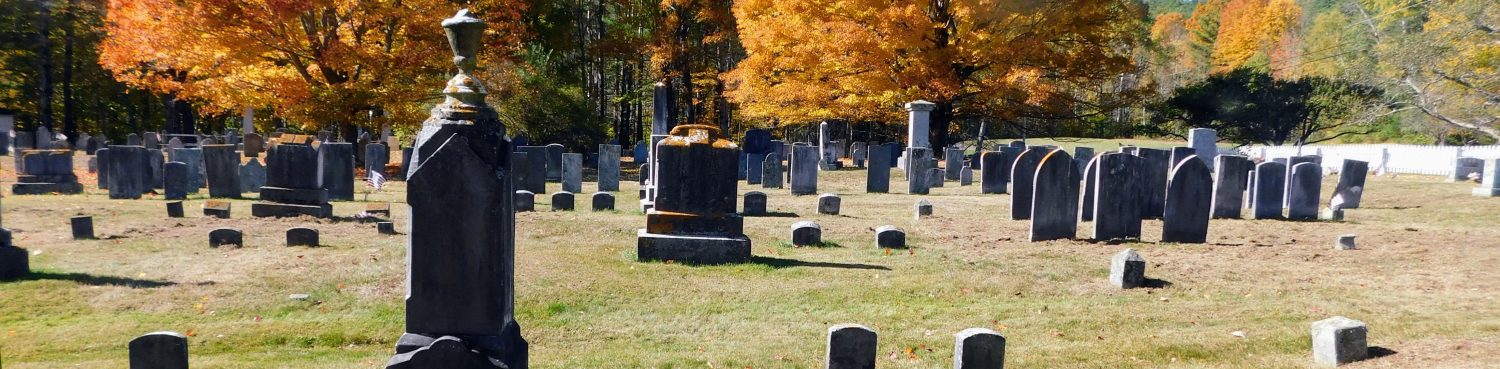
Whoever ordered the tombstone for poet and counterpuncher Charles Bukowski knew what he (or she) was about. There is a two-word epitaph: “Don’t Try.” Below it is a silhouette drawing of a boxer with his gloves raised.

The poet’s grave is at Green Hills Memorial Park in San Pedro which I have passed scores of times 0on visits to my friend Peter who lives a couple miles further south. Maybe next town, I’ll stop by and pay my last respects.

On Bukowski.Net, there is an explanation by Bukowski’s wife Linda which sheds some light on he meant:

See those big volumes of books? [Points to bookshelf] They’re called Who’s Who In America. It’s everybody, artists, scientists, whatever. So he was in there and they asked him to do a little thing about the books he’s written and duh, duh, duh. At the very end they say, ‘Is there anything you want to say?’, you know, ‘What is your philosophy of life?’, and some people would write a huge long thing. A dissertation, and some people would just go on and on. And Hank just put, “Don’t try.”

I am reminded of Portuguese writer Fernando Pessoa in The Book of Disquiet, who sees life as a roadside inn where we all have to stay until the coach from the abyss pulls up:

Night will fall on us all and the coach will pull up. I enjoy the breeze I’m given and the soul I was given to enjoy it with, and I no longer question or seek. If what I write in the book of travellers can, when read by others at some future date, also entertain them on their journey, then fine. If they don’t read it, or are not entertained, that’s fine too.

In the days to come, I plan several more posts about Bukowski and what he means to me.

A and Not-A, B and Not-B, C and Not-C

Joan Didion (1934-2021)

I am beginning to realize that what I admire most about the essays of Joan Didion is that they do not take a stand. They present both A and Not-A, B and Not-B, and C and Not-C. Take, for instance, the title essay in The White Album. There is a constant feeling of dread, yet Joan never takes the easy way out. Here, for example, she writes about Huey Newton of the Black Panthers:

I am telling you neither that Huey Newton killed John Frey nor that Huey Newton did not kill John Frey, for in the context of revolutionary politics Huey Newtons guilt or innocence was irrelevant. I am telling you only How Huey Newton happened to be in the Alameda County Jail, and why rallies were held in his name, demonstrations organized whenever he appeared in court.

There is also a description of a 1968 recording session by The Doors at which Jim Morrison was not initially present. When he arrived wearing his tight black vinyl pants, the scene was a discombobulated one:

The curious aspect of Morrison’s arrival was this: no one acknowledged it. Robby Krieger continued working out a guitar passage. John Densmore tuned his drums. Manzarek sat at the control console and twirled a corkscrew and let a girl rub his shoulders. The girl did not look at Morrison, although he was in her direct line of sight. An hour or so passed, and still no one had spoken to Morrison.

Didion does not say that Morrison was an inconsiderate dick: She presents the scene and lets you draw your own conclusions. Particularly revealing is a quote from a psychiatric evaluation of Didion in Santa Monica after she reported “an attack of vertigo, nausea, and a feeling that she was going to pass out.” The evaluation concluded:

Patient’s thematic productions on the Thematic Apperception Test emphasize her fundamentally pessimistic, fatalistic, and depressive view of the world around her. It is as though she feels deeply that all human effort is foredoomed to failure, a conviction which seems to push her further into a dependent, passive withdrawal. In her view she lives in a world of people moved by strange, conflicted, poorly comprehended, and, above all, devious motivations which commit them inevitably to conflict and failure….

In her place, we might all be tempted to put our thumbs on the scale, to introduce our own prejudices and draw a conclusion which may be no closer to the truth, but mainly revealing of our own misperceptions. I do find it odd that she would quote a lengthy psychiatric diagnosis of her sense of dread near the beginning of the essay, or anywhere within it for that matter.

Writing on Water

How Many Literary Classics Are About Surfing?

Paul Theroux’s novel Under the Wave at Waimea (2021) looks at life through the eyes of an aging champion surfer whose life takes a turn for the worse after he runs over a drunk, homeless cyclist near his home on the North Shore of O’ahu.

Theroux describes his hero, Joe Sharkey:

Sharkey surfed every day, and every day tried something new—a turn, a cutback, swiveling on the face of a wave as though carving his signature on it, writing on water. It was not practice or preparation; it was a way of spending the day, easing the passage of time; a way of living his life, because he made the moves his own.

With the help of his girlfriend, Olivia, Joe seeks to change his luck by trying to find out more about his victim, whose body is still identified at the morgue in Honolulu. The result is a spiritual journey to understand his life and the life of the people affected by the accident.

I have always thought of surfing as a lightweight activity. In his book, Theroux manages to interweave Joe Sharkey’s life on the waves with an almost metaphysical understanding of what it all means:

Nothing was certain. Every wave had a hidden contour and something like a mystical muscle in it that could trip you: every succeeding wave had the capacity to hold you down and suffocate you to death. The world was a wave, a wave was pitiless.

With Under the Wave at Waimea, Paul Theroux has attained a level of mastery in the art of fiction that I long suspected he had the potential for, but have not hitherto seen in print—though he came close on occasion.

I am happy to give my highest recommendation to his Under the Wave at Waimea, certainly the best current American novel I have read since 2000.

Have You Read These 7 Authors?

Lászlo Krasznahorkai (1954-Present)

Among my friends, I am known for the obscurity of my reading choices. In fact, I even split with one of my old friends because he thought most of my reading was not sufficiently dogmatic in a Marxist sense. Of course, he read about eight books a year, while I typically read somewhere between 150 and 160. Call me ugly, call me fat, call me vicious even—but don’t attack my reading choices.

Here are seven authors whose work I have read this year who are relatively unknown even to more literate readers, but they are all excellent writers. And several of them have won the Nobel Prize for Literature.

  • Ivo Andrić (1892-1975). Bosnian Serb.1921-1996) Nobel Prize. Most famous work: The Bridge on the Drina.
  • Nicolas Bouvier (1929-1998). Swiss. Travel writer. Most famous work: The Way of the World.
  • George Mackay Brown (1921-1996). Scottish from the Orkneys. Poet and fiction writer. Most famous work: Collected Poetry.
  • Patricia Highsmith (1921-1995). American. Mysteries. Most famous work: Strangers on a Train.
  • Lászlo Krasznahorkai (1954-Present). Hungarian. Novelist. Most famous work: The Melancholy of Resistance.
  • Patrick Modiano (1945-Present). French. Novelist. Nobel Prize. Most famous work: Pedigree.
  • Derek Walcott (1930-2017). Caribbean. Poet. Nobel Prize. Most famous work: Omeros.

If you recognize two or more of the above writers, you have my congratulations. I have read multiple works of five of the above. I plan to read more by Bouvier and Walcott in the coming six months.

Stirling Bridge

The William Wallace Monument in Stirling, Scotland

Within walking distance of the great fortified mountain that is Stirling Castle sits a monument to William Wallace, Scotland’s great hero and self-taught military genius. It was at Stirling Bridge in 1297 that William Wallace led a force of around 5,500 men, with only 300 cavalry, against 9,000 men, with 2,000 cavalry led by Hugh Cressingham for Edward Longshanks, King of England.

It was Wallace’s unique skill that he knew how to read a battlefield and make the land help him win. It was only when he was forced to fight a typical large scale battle at Falkirk in 1298 that he lost. After that, things went downhill for the Scot, who was betrayed to Edward and executed in 1305 without an actual trial.

Wallace was the son of a knight, who was knighted by Robert the Bruce only after Stirling Bridge. As such, he was looked down upon by the Scottish nobility, many of whom were more comfortable speaking in Norman French than either English or Gaelic. What the nobles were after was not freedom for Scotland, but more power and more wealth for their families. Relative commoners like Wallace didn’t count.

I have just finished reading Nigel Tranter’s historical novel The Wallace, which was likely more accurate than the considerable mythmaking evident in the film Braveheart. I have visited the Wallace monument twice on my travels and was impressed for the monument’s rare tribute to a person not of noble blood—unthinkable in the Middle Ages.

Extreme History

Battle Scene from Mel Gibson’s Braveheart

Talk about history: Scotland has had it. Think about how much mythmaking occurred when the Confederacy surrendered at Appomattox Courthouse. Well, Scotland was put through the mill by Perfidious Albion (England) for upwards of a thousand years—and they’re still chafing under the collar.

I am currently reading Nigel Tranter’s The Wallace about William Wallace’s revolt against English rule under Edward Longshanks (alias Edward I Plantagenet). It brings Mel Gibson’s film Braveheart (1995), though it is a much more detailed work about Wallace’s battles at Stirling Bridge (1297) and Falkirk (1298). We get to see in greater detail the treacherousness of the Scottish nobles, who were mostly in it for themselves.

Nigel Tranter (1909-2007)

Over his long career, Nigel Tranter wrote prolifically—not only the historical novels for which he is famous, but a five-volume history of the fortified house (read: castle) in Scotland, children’s books, novels set in the present day, and even Westerns. There is very little of the vast pageant of Scottish history that Tranter did not touch upon, from St. Columba and Kenneth MacAlpine and MacBeth to the present day.

To date, I have read about a score of his novels, hardly making a dent in his total opus. And not a single one of his books has been a stinker. I regard him as one of the best writers of historical novels who ever lived, and also the most vivid describer of battles throughout history. His description of Wallace’s victory at Stirling Bridge is so vivid that I didn’t feel that I needed a map to follow the action.