The Tao of Travel

Quito, Ecuador

One of my favorite travel books is Paul Theroux’s The Tao of Travel. When my favorite travel writer writes on the subject of travel literature, the result is nothing less than armchair satori. Take the following quote from his The Old Patagonia Express (1979), my first introduction to South America:

Travel is at its best a solitary enterprise: to see, to examine, to assess, you have to be alone and unencumbered. Other people can mislead you: they crowd your meandering impressions with their own; if they are companionable they obstruct your view, and if they are boring they corrupt the silence with non sequiturs, shattering your concentration with, “Oh, look, it’s raining” and “You see a lot of trees here.

It is hard to see clearly or to think straight in the company of other people. What is required is the lucidity of loneliness to capture that vision which, however banal, seems in your private mood to be special and worthy of interest.

Theroux’s book is full of such gems, such as this one from Mark Twain’s The Innocents Abroad (1869):

Travel is fatal to prejudice, bigotry and narrow-mindedness and many of our people need it sorely on those accounts. Broad, wholesome, charitable views of men and things cannot be acquired by vegetating in one little corner of the earth all one’s lifetime.

Here is a poetic contribution from Rudyard Kipling (“The Winners”:

Down to Gehenna or up to the Throne,
He travels the fastest who travels alone.


In Virginibus Puerisque, Robert Louis Stevenson imparts this wisdom:

Little do ye know your own blessedness; for to travel hopefully is a better thing than to arrive, and the true success is to labor.

As I return to this book, which I do often, I just want to set out for somewhere, anywhere. Well, maybe not Cleveland. Been there, done that!
Outstanding, Good, So-So, Stinko

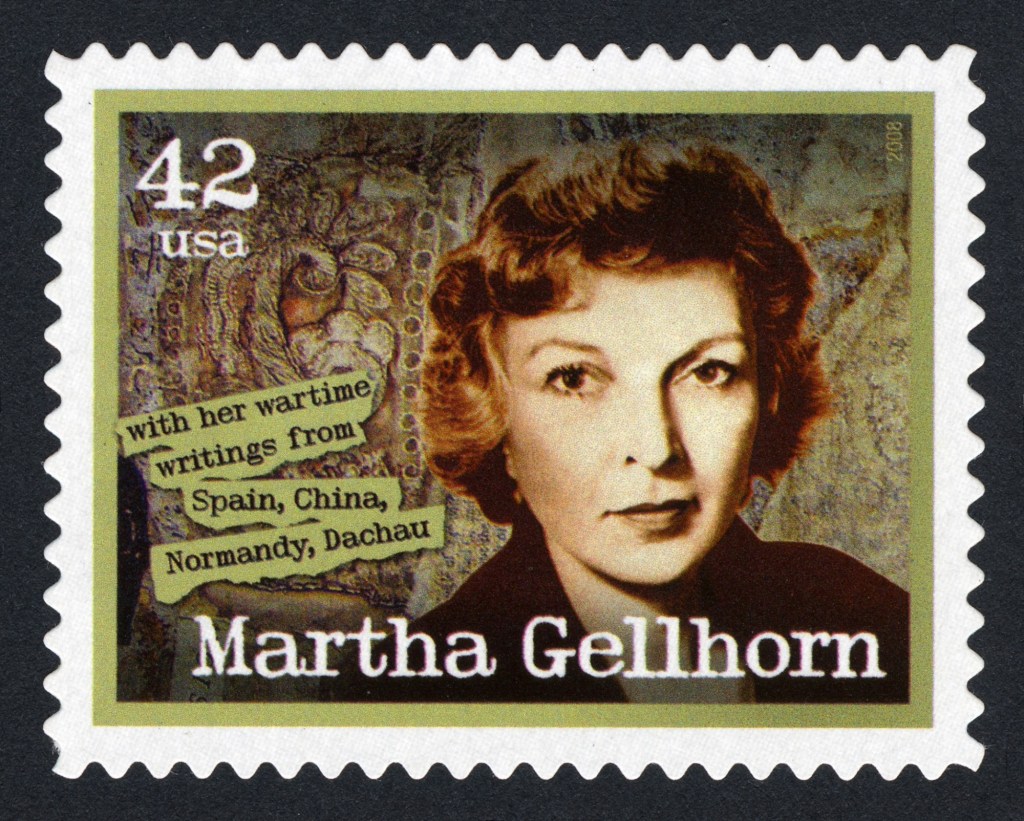
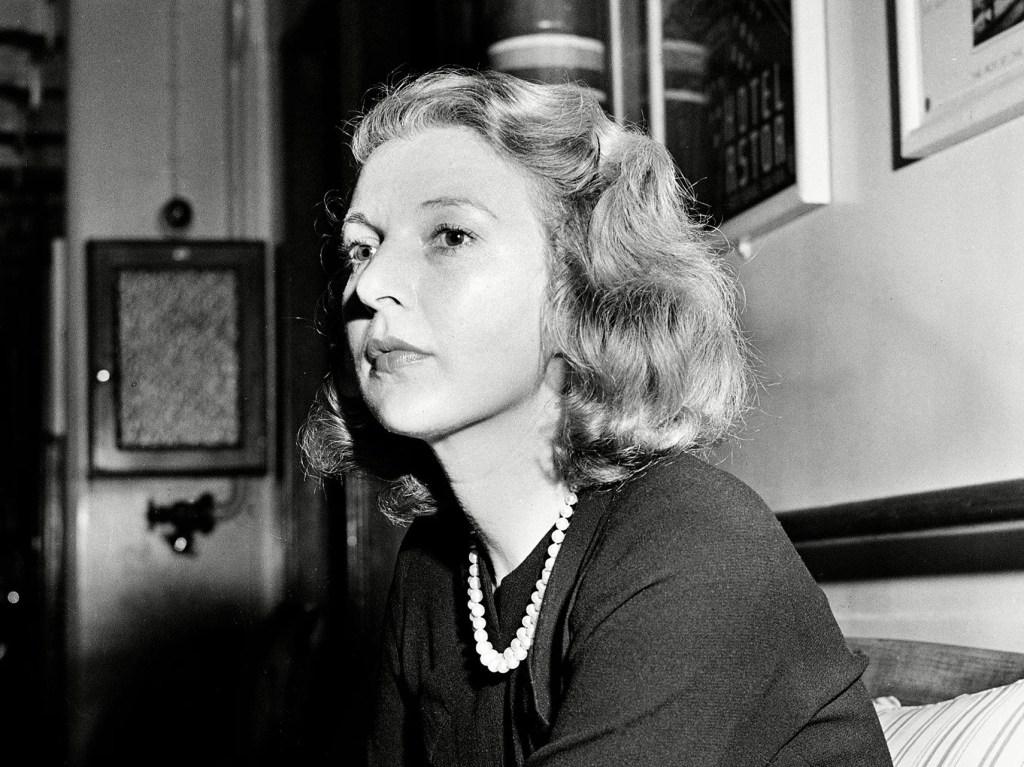
Martha Gellhorn

I have completed my Januarius Project for January 2022. Just to remind you, I typically reserve an entire month at or near the beginning of the year to introduce myself to authors whose work I have not hitherto read. Below is the summary, beginning with the best books and ending with the one stinko book.

Outstanding

  • Martha Gellhorn, Travels with Myself and Another. She might be Ernest Hemingway’s ex-wife, and she may well be as good if not better than her former hubby.
  • M F K Fischer, Two Towns in Provence. Consists of two parts, a great book on Aix-en-Provence, and a merely very very good book on Marseilles.
  • Saint Augustine, Confessions. I’d put this one off for decades, but it is really great, especially the chapter about time.
  • Kenzaburo Oe, A Personal Matter. A Nobel Prizewinner I will have to read more of.
  • Ben Loory, Stories for the Nighttime and Some for the Day. A great original short story collection of fantasy and horror.
  • Geoffrey Moorhouse, The Fearful Void. A solo journey across the width of the Sahara that didn’t pan out, though this book about it certainly did.
  • Derek Walcott, Midsummer. A Nobel Prizewinning poet from the Caribbean. Super stuff.

Good

  • Angela Carter, The Sadeian Woman and the Ideology of Pornography. What the Marquis and Pornhub have in common.
  • Nic Pizzolatto, Galveston. A promising neo-noir author.
  • Edward Whittemore, Quin’s Shanghai Circus. Wild, exotic, and interesting.
  • Eric Jager, The Last Duel: A True Story of Crime, Scandal, and Trial by Combat. The 2021 Ridley Scott movie was based on this medieval thriller.
  • Roger Shattuck, The Banquet Years: Origins of the Avante-Garde in France 1885 to World War I. How four French artists (a painter, a composer, a poet, and a playwright) influenced modern art.

So-So

  • Pete Beatty, Cuyahoga. A weird fantasy on the early history of Cleveland, the city of my birth.
  • Meghan Abbott, Die a Little. Vaguely promising, but typical of a New Yorker who knows very little about L.A.
  • Peter Theroux, Translating LA: A Tour of the Rainbow City. Better than most, but nearly so good as his brother Paul’s work.

Stinko

  • William Beckford, Vathek. This 1786 oriental fantasy is still studied in college. Why?

All in all, this year’s Januarius project was a rousing success. Twelve out of the sixteen authors I read for the first time are worth following up on in the months and years to come.

The Carbuncle of Giamschid

I usually write favorable reviews of most of the books I read, but this will be an exception. My review won’t hurt the author, as he died in 1844, unloved and unlamented. William Beckford’s Vathek was originally written in French by this British writer and translated into English by another.

It is an oriental fantasy, which means it is lush with weird details and productive of much wretched excess. One reads along this piece of overripe Turkish delight and comes across a sentence like this:

In the morning, which was lowering and rainy, the dwarfs mounted high poles like minarets, and called them to prayers. The whole congregation, which consisted of Sutlememe, Shaban, the four eunuchs, and some storks, were already assembled.

What in coruscating blue blazes were those storks doing there? There is no reason for their existence except to add some local color. And what about Sutlememe, Shaban, and the four eunuchs? Details without a reason for their existence is nothing less than a form of literary cancer. Instead of being organic to the story, the whole thing comes across as a massive inorganic blob.

Characters come on the scene and subplots are born without any reason for their existence:

Dread lady, you shall be obeyed; but I will not drown Nouronihar; she is sweeter to me than a Myrabolan comfit, and is enamoured of carbuncles, especially that of Giamschid, which hath also been promised to be conferred upon her; she therefore shall go along with us, for I intend to repose with her beneath the canopies of Soliman; I can sleep no more without her.

In the end, one feels as if one has swallowed whole a Myrabolan comfit and choked on it.

Read it if you dare, but be prepared to shove the Carbuncle of Giamschid where the sun doesn’t shine. God knows, I did!

The Geography of Los Angeles

One thing about Los Angeles is its distinctive geography, much celebrated in literature and film. You can always tell when some New Yorker just deplaned at LAX and started spouting inanities that displayed an ignorance of this geography. That’s what happened when I read Megan Abbott’s neo-noir thriller Die a Little. There were a few names like “Pico Boulevard” (which everyone here just calls Pico), the giant doughnut at Randy’s in Inglewood, even several restaurant names like the Apple Pan and Ciro’s—but they just didn’t hold together. It’s as if she was using a map and a guidebook and just pasting the places together.

Take Woody Allen’s film Annie Hall (1977) with its tone-deaf attacks on L.A.

After all, it’s been more than 35 years since Alvy Singer hilariously dissed the city in “Annie Hall,” saying that people here “don’t throw their garbage away, they make it into television shows” and that “the only cultural advantage is that you can make a right turn on a red light.”

I can only hope he enjoyed the mashed yeast he ordered on the Sunset Strip.

When you read Raymond Chandler or Ross Macdonald, you get a feeling for the crumbling sandstone of the coastal mountains, the transverse mountain ranges running west to east, the vast distances going from one point to another, as well as the odd architectural vibe of the place. When I first came out here in 1966, I was confused by all the stucco and chicken wire architecture, until I experienced my first real earthquake in 1971.

You can always tell when an east coast writer is slumming in Southern California. It doesn’t come across as real.

The Januarius Project 2022

Near the beginning of every year, I set aside a month dedicated to reading authors I have never read before. The reason is to keep my book choices from becoming stale as I stick to the same set of “canonical” writers. So far this month, I have completed four books:

  • Pete Beatty’s Cuyahoga, a tall tale of Cleveland, Ohio (the city of my birth) set in 1837.
  • Angela Carter’s The Sadeian Woman and the Ideology of Pornography, a study of how the Marquis de Sade’s fiction morphed into modern-day porn.
  • Martha Gellhorn’s Travels with Myself and Another, a travel classic by a famed war correspondent and former wife of Ernest Hemingway.
  • Nic Pizzolatto’s Galveston, a superb, but bleak neo-noir novel about a hit man on the run to a city about which he has fond memories due to an early relationship.

It’s still early in January. I am currently reading Megan Abbott’s Die a Little and have plans to read works by George Meredith, William Beckford, Walter Kempinksi, Sam Wasson, Lászlo Földényi, Ben Loory, Elizabeth Hardwick, among others. According to past experiences doing this sort of thing, I will end up liking about half of the Januarius finds enough to read other works by them.

One result is that I find myself reading more books by women authors, which is a good thing.

Horror Journeys

If you read Martha Gellhorn’s Travels with Myself and Another: A Memoir, you should probably start with the penultimate chapter entitled “What Bores Whom?” In it, she muses about a large group of hippies staying at her hotel in Eilath, Israel’s port on the Gulf of Aqaba. The gilded youth were mostly strung out on hash, and their conversation was mostly about how so-and-so was squashed out of his or her gourd. And then, quite suddenly, we get Martha’s thoughts about travel:

Thinking of those kids at Eilath has given me a new slant on horror journeys. They are entirely subjective. Well of course. If I had spent any time analyzing travel, instead of just moving about the world with the vigour of a Mexican jumping bean, I’d have seen that long ago. You define your own horror journey, according to your taste. My definition of what makes a journey wholly or partially horrible is boredom. Add discomfort, fatigue, strain in large amounts to get the purest-quality horror, but the kernel is boredom. I offer that as a universal test of travel, boredom, called by any other name, is why you yearn for the first available transport out.

Travels with Myself and Another gives us four journeys, all of which are quite horrorshow. But they are by no means boring, though I would have given money to have stayed at home. First there was her trip with then-husband Ernest Hemingway to China in the middle of her war with Japan. That was followed up by a boat trip in the Caribbean in 1942, at a time when Nazi U-Boats were sinking hundreds of ships there. The longest chapter is about a solo trip to Africa, starting in Cameroon, stopping in Chad and the Sudan, and finally a jaunt through East Africa in a Land Rover which she drove herself. Finally, there is a short chapter about a visit to Moscow around 1972 to visit Nadezhda Mandelstam, the widow of poet Osip Mandelstam—during which she could not get a single decent meal.

Although all four of her journeys are truly horrible, the author seems to revel in her difficulties. In a way, they make her observe more clearly. And her book is a travel classic despite all the “discomfort, fatigue, strain.”

I think I will read some of her war correspondence next to see how she regards travel when she is being fired upon.

Two Polar Voyages

December has seen a record-breaking cold snap in Los Angeles. So what do I do? I read two books about polar voyages, one an actual voyage, and the other a fanciful Jules Verne story.

Farthest North by the Norwegian Fridtjof Nansen (1861-1930) is the real thing. Nansen was a bona fide arctic explorer who was the first man to travel by sledge across Greenland and who got closer to the North Pole than anyone else before his 1893-96 voyage north of Siberia. he was not only a great explorer, but a humanitarian as well who won the Nobel Peace Prize in 1922 for his work protecting displaced victims of the First World War.

On his famous voyage, he lost no members of his expedition and came back with his ship intact.

This is in contrast to Jules Verne’s The Adventures of Captain Hatteras, which was published the year that Nansen was born. The godlike Captain Hatteras loses his ship to a mutiny, which ship, the Forward (curiously the same name as Nansen’s ship), is blown up by the mutineers. He also loses his mind, though he makes it to the Pole through some fanciful geography invented by Verne. Did you know there is an active volcano right at the North Pole? and that the ice floes do not exist above a certain latitude?

I don’t think I would like to have been under the command of Captain Hatteras. Give me Fridtjof Nansen any time!

Nightmare Alley²

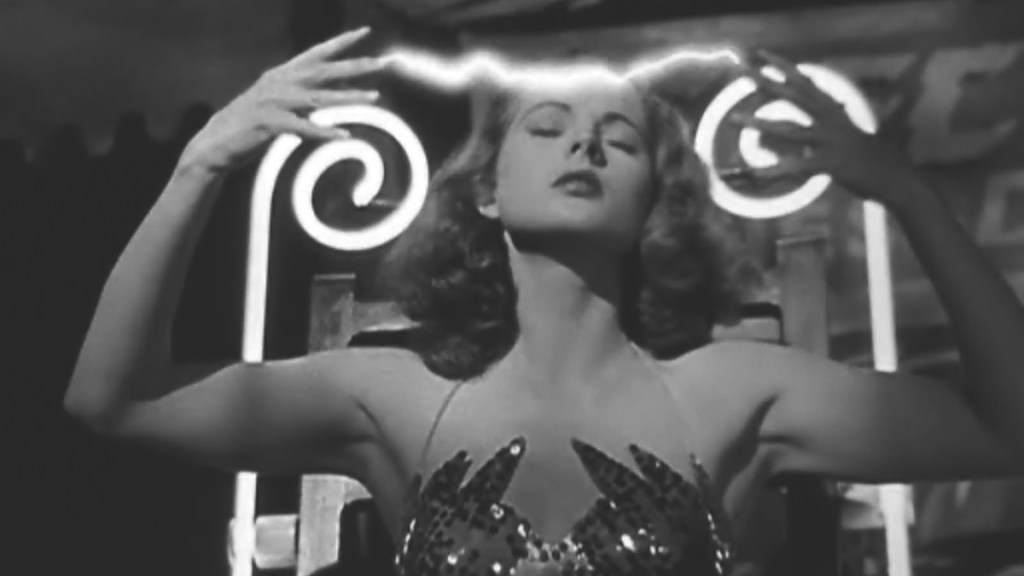
How do you feel about celebrating the holidays in a morass of darkness? That’s what I did today when I saw the 2021 remake of Nightmare Alley, directed by Guillermo del Toro and starring Bradley Cooper, Cate Blanchett, Toni Collette, Willem Dafoe, and Rooney Mara.

If there are any predictions possible from seeing a single film, I would have to say that we are entering a period of gloomy decadence. All the scenes take place either in heavy rain, a blizzard, and—just for a change—a modicum of dusty and hazy sunshine. Standing out from the dark edges are glittering reds, blues, greens, and browns.

Although the 2021 version followed the original 1947 film directed by Edmund Goulding and starring Tyrone Power as Stanton Carlisle, the del Toro film is ever more shady, especially with Cate Blanchett as the psychoanalyst Lilith Ritter. She not only robs Carlisle of his ill-gotten gains, but shoots his ear off with a 22 caliber pistol. Blanchett bids fair to become the neo-noir equivalent of such noir queens as Audrey Totter and Gloria Grahame.

Both film versions are worth seeing. In fact, I would also recommend reading the William Lindsay Gresham 1946 novel upon which they were based.

One side note: There is something unspeakably grimy and evil about the whole carny world as it is presented in books and films. If you are drawn in, you might also want to check out Robert Edmond Alter’s Carny Kill (1966). You might also want to dip into his Swamp Sister (1961). Neo-noir doesn’t get any better than this.

Irrelevant, You Say?

There is a tendency, especially among the young, to view the past as irrelevant. After all, the ancient Greeks did not have smartphones; Shakespeare and his contemporaries did not have video games; and 18th century gentlemen wore powdered wigs, took snuff, and made a big show of their calves. What can we possibly learn from them?

Part of the problem is the way we teach history in our schools. The denizens of past times are not allowed to speak for themselves. If they did, we would find that they were not so very different from us in what mattered: The differences are mostly superficial.

There is a wonderful website called Laudator Temporis Acti (Praiser of Time Past) in which we can find startling glimpses into the great minds of the past. Here, for instance, is Horace in one of his satires:

Seize the path, comrade, believe me. Since all terrestrial creatures
are fated to mortality, and since there is no
escape from death for either great or small, then, good friend,
while it is permitted, live happily among pleasant surroundings;
and live ever mindful of how brief is your span.

And here is Plutarch discussing the Spartans:

When one of the elderly men said to him in his old age, inasmuch as he saw the good old customs falling into desuetude, and other mischievous practices creeping in, that for this reason everything was getting to be topsy-turvy in Sparta, Agis said humorously, “Things are then but following a logical course if that is what is happening; for when I was a boy, I used to hear from my father that everything was topsy-turvy among them; and my father said that, when he was a boy, his father had said this to him; so nobody ought to be surprised if conditions later are worse than those earlier, but rather to wonder if they grow better or remain approximately the same.”

Lately, I have enjoyed reading the journals of James Boswell, son of the Laird of Auchinleck and author the great biography of his contemporary, Dr. Samuel Johnson. As a young man in his twenties, he carouses his way through London while sucking up to the nobility to get a commission in the King’s guards. Then he goes to Holland to study law and falls in love with a beautiful young heiress named Belle de Zuylen. Like many a millennial, he is frequently depressed and uncertain about how to proceed.

Belle de Zuylen

Then there is that master of wisecracks, Lucian of Samosata (circa 125-180), who scoffs at the gods and in every way looks as if he were about to launch into a Saturday Night Live skit:

They see nothing indecent in sexual intercourse, whether heterosexual or homosexual, and indulge in it quite openly, in full view of everyone. The only exception was Socrates, who was always swearing that his relations with young men were purely Platonic, but nobody believed him for a moment, and Hyacinthus and Narcissus gave first-hand evidence to the contrary.

When I go searching into the minds of men and women who lived in the past, I am constantly realizing that they are my contemporaries in every way except for accidentals that don’t much matter.

Go East Young Man

PARIS – JUNE 07: (FILE PHOTO) Bohumil Hrabal poses while in Paris,France on a promotional visit on the 7th of June 1995. (Photo by Ulf Andersen/Getty Images)

England and Western Europe do not have a monopoly on great literature. I love prospecting for interesting writers from Eastern Europe. Perhaps that has something to do with the fact that I am Hungarian (and Czech and Slovak), and that I feel that the writers of the East have gotten short shrift from the American literary establishment.

I have just finished reading Bohumil Hrabal’s Why I Write? and Other Early Prose Pieces, which consists of his early work, much of which was circulated via samizdat, or underground typescript distribution to bypass strict censorship. There is a freshness to most of the stories within and a sharp attention to dialog as it is actually spoken by common people. Several whole stories consist of stream of consciousness ramblings of Hrabal’s Uncle Pepin, who goes on for pages shifting from one topic to another. Footnotes explain many of the obscure local references to Bars in Prague and people unknown outside of the Czech Republic.

From Ukraine, there is Andrey Kurkov, whose Death and the Penguin fills us in on the absurdity of life in Kiev. His Ukraine Diaries bring us up to date on the tensions with Putin’s Russia.

The former Soviet Union is another good source, such as the literary journalism from Svetlana Alexievich of Belarus, who won the Nobel Prize for Literature in 2015. I was appalled by her book of interviews on the Russian War in Afghanistan, called (in English) Zinky Boys. I also read Voices from Chernobyl, which gives a Russian perspective on that disaster.

Anna Politkovskaya’s criticisms of Putin cost her her life. She was murdered at her block of flats upon returning from grocery shopping. Her books on Chechnya (especially A Small Corner of Hell: Dispatches from Chechnya) and Putin’s Russia earned her the enmity of Putin, who cynically staged a show trial of several stooges who probably didn’t have anything to do with her killing.

Every month I try to read at least one Eastern European book. Often, they are the best things I’ve read that month.