Boswell’s Clap

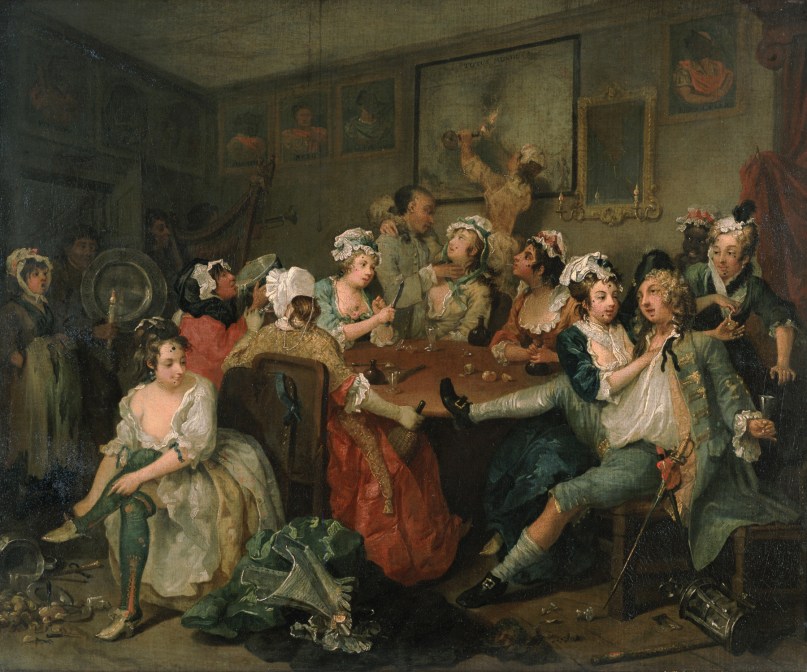
A Scene from William Hogarth’s The Rake’s Progress

I have been reading James Boswell’s London Journal 1762-1763. Inasmuch as I thought Boswell’s Life of Samuel Johnson LLD was one of the greatest books ever written, I thought it a shame that I had not read more of the great biographer.

At the time, Boswell was in his early twenties. His father, Lord Auchinlech (pronounced Affleck), had insisted that his son become a lawyer or merchant. Instead, James wanted to become an officer of the Guards, stationed in London. I am currently halfway through the book. Boswell spent many an anxious hour trying to win the patronage of powerful Scottish lords of the King’s party currying favor to this end. But, alas, no one went out of his way to help him.

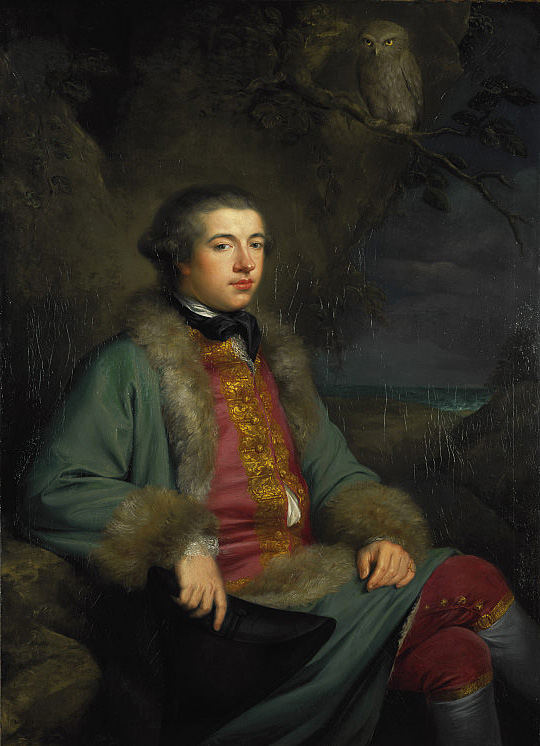
James Boswell (1740-1795)

What the young Scot found was a stubborn case of gonorrhea contracted from a pretty young actress whom he code-named Louisa. He built up to the affair with many weeks of visitations and gifts, only to come down with the clap for the third time in his life.

When he discovered he had been infected, Boswell mused about the effect his cure would have on his daily journal:

What will now become of my journal for some time? It must be a barren desert, a mere blank. To relate gravely that I rose, made water, took drugs, sat quiet, read a book, saw a friend or two day after day, must be exceedingly poor and tedious. My journal must therefore, like the newspapers, yield to the times.

Sounds like the coronavirus quarantine, doesn’t it?

Boswell’s journal makes for excellent reading. It shows its author to be an ambitious and randy young man who delights in conversation, especially with his fellow Scots. I can see myself making several more posts based on or inspired by this excellent book.

The Good, the Bad, and the Ugly

Kate Harris and Melissa Yule Atop India’s Nun-Kun Massif

I was a good boy during the month of January: I read all of the books I had planned to read during this year’s Januarius Project and then some. Here is the final list, in the order I read them with a short evaluation for each:

  • George Washington Cable, The Grandissimes. A pleasant surprise. ****
  • Ivy Compton-Burnett, Bullivant and the Lambs. Abandoned. Couldn’t abide it. *
  • Fredrik Backman, A Man Called Öve. Delightful Swedish novel. ****
  • Georges Lefebvre, The Coming of the French Revolution. Scholarly and interesting. ****
  • Trygve Gulbranssen, Beyond Sing the Woods. Interesting Norwegian tale. ****
  • Robert Goolrick, A Reliable Wife. Married life in Wisconsin in the 1800s. ****
  • Anne Brontë, Agnes Grey. Children are not always nice. ****
  • Kate Harris, Lands of Lost Borders: A Silk Road Journey. Great travel book. ****
  • Ragnar Jónasson, Nightblind. Icelandic police procedural. ***
  • Su Tong, Rice. A nasty character in 1930s China. ****
  • E R Eddison, The Worm Ourobouros. A fantasy novel that I abandoned, too wormy. *
  • Dzongsar Jamyang Khyentse, What Makes You NOT a Buddhist. A great intro. ****
  • Rachel Kushner, The Flamethrowers. The 1970s in New York and Italy. *****
  • Olga Grushin, The Dream Life of Sukhanov. Life is tough as the USSR comes unglued. *****
  • Ma Jian, Red Dust. A dissident travels around China in the 1980s. Great. *****

Chinese Dissident Ma Jian

That’s 15 books in all, not including F E Sillanpää’s Meek Heritage, which I finished on the last day of December 2020 ****.

With the exception of the two turkeys I abandoned (by Eddison and Compton-Burnett), I would have to say that this year’s Januarius Project was a smashing success. So successful, in fact, that I am planning a similar project for March, namely: reading only women authors. More about this as the month progresses.

Women Writers

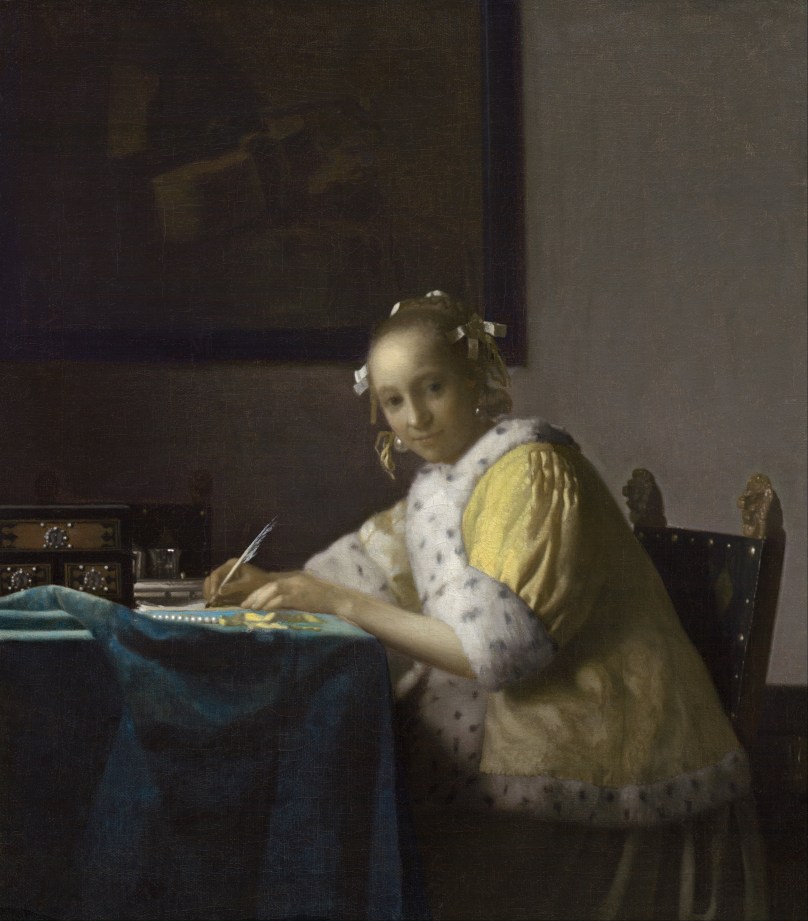
Vermeer’s Portrait of a Lady Writing

With a title like “Women Writers,” one might expect some heavy duty mansplaining about how women don’t really understand what life is about. Well, you won’t find it here. Even though, in the past, I have complained about fiction written by women being too “relationshippy,” I am beginning to appreciate the vision of the better women writers. Oh, there are plenty of distaff hacks, but I’m not talking about them here.

I have over the last few months read several novels written by women that managed to rock my world. They include:

  • Olga Grushin, The Dream Life of Sukhanov
  • Rachel Kushner, The Flamethrowers
  • Anne Bronte, Agnes Grey
  • Virginia Woolf, Orlando
  • Marie NDiaye, La Cheffe and My Heart Hemmed In
  • Tara Westover, Educated

Consequently, what I have decided to do is devote the entire month of March to reading about a dozen books by women authors, half by authors I have never read before, the other half by old favorites such as Ursula K. Le Guin, Joyce Carol Oates, Charlotte Bronte, and Patricia Highsmith. I haven’t decided which books yet, but there’s time to put the list together and let you know.

Currently, I am working my way through Olga Grushin’s The Dream Life of Sukhanov, a novel written in English by a Russian writer about a Soviet art magazine editor in the mid-1980s whose life comes unglued because of all the changes that are taking place just before the collapse of the Communist Party. At one point, the main character, Anatoly Pavlovich Sukhanov, muses to himself: “No, never again would he dare to accept any certainty with that bovine sense of simply receiving his due….”

Similarly, I plan to reject that similar “bovine sense” of underestimating women writers as a matter of course.

How To Survive the Red Brigades

Kidnap Victim of Italy’s Red Brigades in the 1970s

I have just finished reading a fascinating novel by Rachel Kushner entitled The Flamethrowers. In it, the author describes a young woman named only Reno who races motorcycles on Utah’s Bonneville Salt Flats, gets involved in the New York art scene of the 1970s, and even winds up in the middle of a Red Brigades terrorist cell in Rome. She manages to survive by not letting herself get weighted down.

The following is from my review of the book on Goodreads:

The heroine, referred to only as Reno (from where she was born), is a young woman into motorcycle racing and art circa 1975. She goes to New York, where she gets into the art scene and gets involved with two men, Ronnie Fontaine (briefly) and Sandro Valera, scion of the Italian family that manufactures Moto Valera motorcycles.

Few reviewers, I thought, understood where the book title came from. At one point, Sandro’s father criticizes his son’s admiration of the Italian motorcyclists who went into battle during World War I with flamethrowers on their backs:

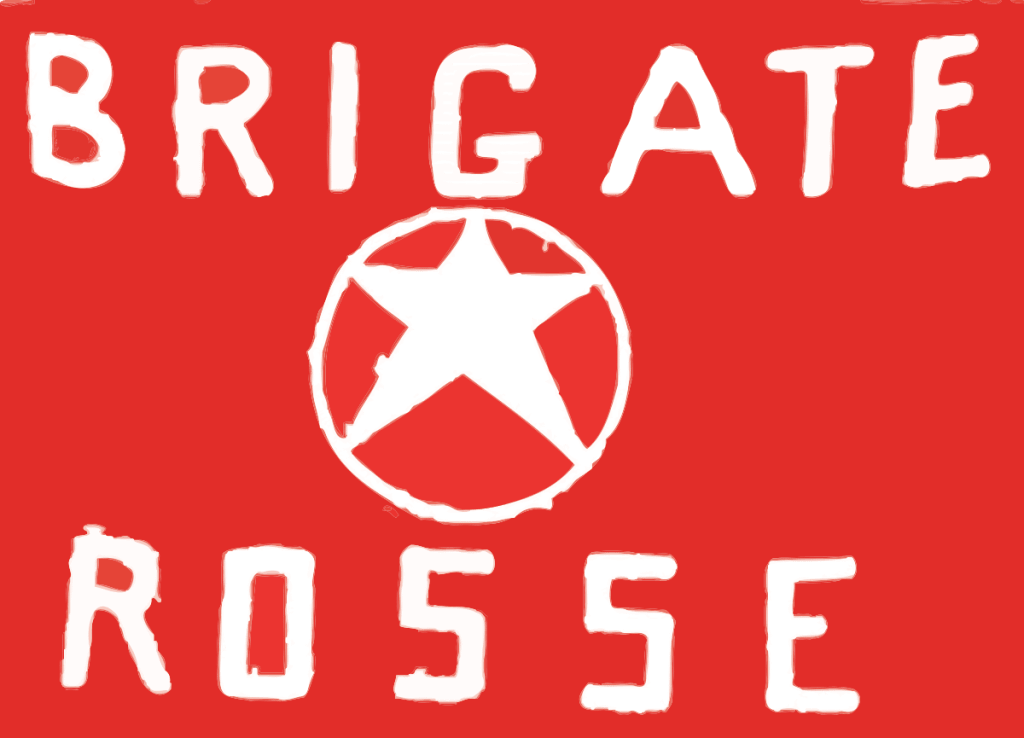
Flag of the Red Brigades

But then his father told him the flamethrowers were a hopeless lot. Their tanks were cumbersome and heavy and they were obvious and slow-moving targets and if they were ever caught they were shown no mercy. That’s not a thing you want to be, his father said, after which Sandro continued to love the flamethrowers best, to reserve for them a special fascination, in their eerie, hooded asbestos suit, the long and evil nozzle they aimed at enemy holdouts.

There are two related images to which the author refers. One is to native Brazilians who tapped the Valera-owned rubber trees carrying heavy stones so that their souls wouldn’t drift away. Another is to a would-be suicide Sandro saves from drowning in the East River: He had deliberately weighted himself down with multiple overcoats to facilitate his exit.

Reno carries no such weights. She doesn’t even seem to bear a last name. She goes through life without attaching herself irrevocably to someone who is too weighted down to survive in this world. At one point, she is in Italy among the Red Brigades, who were staging a mass demonstration with kidnappings. She moves through what is a terrorist cell without becoming weighted down with any of the ideology.

An interesting message from an interesting novelist.

Mickle Overspeech

I Am Currently Reading the Strangest Book

England has produced a rich crop of fantasy writers who have latched onto the brilliantly coruscating speech of the Middle Ages and the Elizabethan Era. Their styles are at times midway between poetic and overblown. There is a framing story in which a narrator is escorted by a strange bird to the planet Mercury (?!), where there is a war between the Demons and the Witches. BTW, our narrator is dropped in the second chapter and is not heard from again.

Who are the good guys? Well, E. R. Eddison, the author of The Worm Ourobouros (1922) is content to follow both sides. Unlike Tolkien, there is no clear cut good or evil. In fact, good and evil seem to be intermixed. Here is a sample of the language:

Juss, Goldry, and Spitfire, and ye other Demons, I come before you as the Ambassador of Gorice XI., most glorious King of Witchland, Lord and great Duke of Buteny and Estremerine, Commander of Shulan, Thramnë, Mingos, and Permio, and High Warden of the Esamocian Marches, Great Duke of Trace, King Paramount of Beshtria and Nevria and Prince of Ar, Great Lord over the country of Ojedia, Maltraeny, and of Baltary and Toribia, and Lord of many other countries, most glorious and most great, whose power and glory is over all the world and whose name shall endure for all generations. And first I bid you be bound by that reverence for my sacred office of envoy from the King, which is accorded by all people and potentates, save such as be utterly barbarous, to ambassadors and envoys.

I am still in the beginning chapters of The Worm Ourobouros, so I have not made up my mind about the book—yet. Will I be enthralled by the poetic language, or slightly nauseated by the endless archaisms? Time will tell. On the plus side, my copy of the book has introductions by Orville Prescott and James Stephens (who wrote the truly poetic The Crock of Gold). His work is also admired by the likes of James Branch Cabell, J. R. R. Tolkien, Robert Silverberg, and C. S. Lewis.

There is to be a wrestling match to the death between Gorice XI of Witchland and Lord Goldry Bluszko of Demonland in lieu of an outright war (at least for the time being):

My hippogriff travelleth as well in time as in space. Days and weeks have been left behind by us, in what seemeth to thee but the twinkling of an eye, and thou standest in the Foliot Isles, a land happy under the mild regiment of a peaceful prince, on the day appointed by King Gorice to wrastle with Lord Goldry Bluszco. Terrible must be the wrastling betwixt two such champions, and dark the issue thereof. And my heart is afraid for Goldry Bluszco, big and strong though he be and unconquered in war; for there hath not arisen in all the ages such a wrastler as this Gorice, and strong he is, and hard and unwearying, and skilled in every art of attack and defence, and subtle withal, and cruel and fell like a serpent.

I have had this book on my shelves since the late 1960s, when I bought it from the famed sci-fi/fantasy bookstore called A Change of Hobbit while it was still located in Westwood. The bookstore is no more, but it left behind fond memories by many sci-fi writers, including Harlan Ellison, who once wrote an original story while sitting in the display window of the store with a typewriter.

Ah, those were the days.

Two Types of Travel Books

The Blue City of Samarkand in Uzbekistan

Constantinople, Trebizond, Tbilisi, Baku, Samarkand, Bukhara, Tashkent, Lhasa—these are cities I would dearly love to know more about. So when I read Kate Harris’s Lands of Lost Borders: A Journey on the Silk Road, I looked forward to learning more about these magical places. Alas, I was disappointed: The book was more about a bicycle trip with little attention paid to destinations, and most of the attention paid to the roads connecting the destinations.

I had to remind myself that there are two types of travel books. First, there was my preferred kind, which combines personal experiences with history, literature, art, cuisine, and culture—the whole ball of wax! But there is another kind of travel book as well. Call it adventure travel or experiential travel. All mountain-climbing books fall into this category. They can be excellent reads, such as Jon Kracauer’s Into Thin Air, Alfred Alvarez’s Feeding the Rat, or any of Eric Shipton’s great books on mountains he has climbed.

Tibetan Monastery

Kate Harris and her companion Melissa Yule concentrated all their efforts in surviving a multiple-thousand-mile journey involving multiple mountain ranges and passes. It was quite an accomplishment, but it just left me hungry to learn more about Constantinople, Trebizond, Tbilisi, Baku, Samarkand, Bukhara, Tashkent, Lhasa, and points between.

Oh, well, as long as the quarantine and my health last, I’ll have the time to make up that deficit.

Acton Bell

The Three Brontë Sisters from Left to Right: Anne, Emily, and Charlotte

No family anywhere had three such eminent novelists, though they wrote at a time when women novelists were looked down upon. Consequently, they published under the names of Acton Bell (Anne), Ellis Bell (Emily), and Currer Bell (Charlotte).

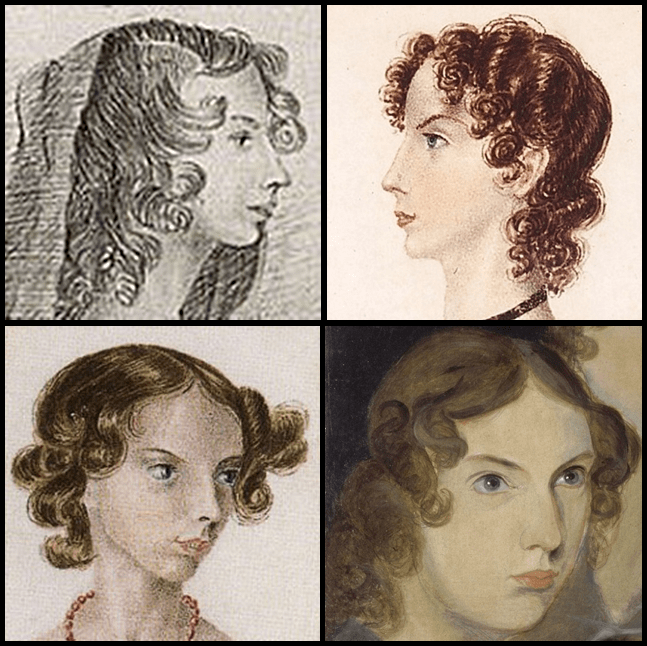
I have read and enjoyed the work of the two elder sisters, but until this week I had never read anything by Anne Brontë. I was delighted to find that she was as competent a writer as her sisters and perhaps a bit more modern in her outlook. Her novel Agnes Grey tells the story of a young governess dealing with the spoiled children of the well-to-do.

When one of her former charges (Rosalie) denigrates her eminent husband in front of a footman, she shows Agnes exactly what she thinks of servants:

Oh, no matter! I never care about the footmen; they’re mere automatons: it’s nothing to them what their superiors say or do; they won’t dare to repeat it; and as to what they think—if they presume to think at all—of course, nobody cares for that. It would be a pretty thing indeed, it we were to be tongue-tied by our servants!

Four Images of Anne Brontë Drawn by Her Brother Branwell

Rosalie is nothing, however, compared to the little monsters of her first experience as a governess:

My task of instruction and surveillance, instead of becoming easier as my charges and I got better accustomed to each other, became more arduous as their characters unfolded. The name of governess, I soon found, was a mere mockery as applied to me: my pupils had no more notion of obedience than a wild, unbroken colt. The habitual fear of their father’s peevish temper, and the dread of the punishments he was wont to inflict when irritated, kept them generally within bounds in his immediate presence. The girls, too, had some fear of their mother’s anger; and the boy might occasionally be bribed to do as she bid him by the hope of reward; but I had no rewards to offer; and as for punishments, I was given to understand, the parents reserved that privilege to themselves; and yet they expected me to keep my pupils in order. Other children might be guided by the fear of anger and the desire of approbation; but neither the one nor the other had any effect upon these.

This is quite different from the angelic Victorian children depicted in most novels, especially in those of Charles Dickens. So I was quite pleased to see that the youngest Brontë has some sand in her, and she was an excellent writer to boot—as good as her older siblings.

Library-To-Go

The Flower Street Entrance to the Los Angeles Central Library

The Central Library still looks like this, though most of the buildings around it have changed. What is more, after a devastating 1986 fire, the building was expanded on the Grand Avenue side and remodeled. Fortunately, the murals on the second floor rotunda were saved, leaving some of the old library highlights still intact.

Because of the coronavirus lockdown, patrons of the library may not enter the building. If I want access to the library’s holdings, however, I can access the Library-To-Go service. It involves four steps:

  • Select the books I want to read using the library’s website
  • Place a hold on those books and check the status every few days
  • When the books are marked as being available, use the library website to make an appointment for pickup
  • Show up at the approximate appointment time at the 5th street entrance, phone the librarians inside, and wait until they deliver the books to you in a brown paper bag

I am currently set to go downtown on Thursday morning to pick up four books: Jamyang Khyentse’s What Makes You NOT a Buddhist; Ma Jian’s Red Dust: A Path Through China; Rachel Kushner’s The Flamethrowers: A Novel; and Olga Grushin’s The Dream Life of Sukhanov. As I am still working on my Januarius Project. this month I am reading only books by authors I have not previously read.

Thanks to the library’s vast holdings, I can easily reserve books that are out of print and difficult to find.

Knocking the Knobel

Brazilian Novelist Jorge Amado (1912-2001)

The following is a repeat of a post I wrote five years ago, in January 2016. I have since read Meek Heritage by Finnish writer Frans Eemil Sillanpää and consider that he deserved his prize.

I don’t have too much good to say about the Swedish Academy, which decides who will receive the Nobel Prize for Literature. If you look at the list of its recipients, it would not take too much effort to produce a list of as great as or even greater literary figures who have not received the laureate. Let me take a stab at it:

  • Kobo Abe (Japan), Woman in the Dunes
  • Chinua Achebe (Nigeria), Things Fall Apart
  • Ryunosuke Akutagawa (Japan), Rashomon
  • Jorge Amado (Brazil), Gabriela: Clove and Cinnamon
  • W. H. Auden (UK), Poetry
  • Georges Bernanos (France), Mouchette
  • Jorge Luis Borges (Argentina), Ficciones
  • Joseph Conrad (UK/Poland), Nostromo
  • Richard Flanagan (Australia), The Narrow Road to the Deep North
  • Graham Greene (UK), The Heart of the Matter
  • Vassili Grossman (Russia), Life and Fate
  • Henry James (US/UK), The Ambassadors
  • James Joyce (Ireland), Ulysses
  • Yashar Kemal (Turkey), Memed, My Hawk
  • Gyula Krúdy (Hungary), The Red Post Coach
  • Stanislaw Lem (Poland), Solaris
  • Osip Mandelstam (Russia), Poetry
  • Vladimir Nabokov (US/Russia), Lolita
  • Fernando Pessoa (Portugal), The Book of Disquiet
  • Marcel Proust (France), In Search of Lost Time
  • Arkady and Boris Strugatsky (Russia), Roadside Picnic
  • Italo Svevo (Slovenia), Confessions of Zeno
  • Leo Tolstoy (Russia), Novels and Stories
  • Mark Twain (US), Novels and Stories
  • Evelyn Waugh (UK), Brideshead Revisited
  • Virginia Woolf (UK), Mrs Dalloway

As you can see, I have not overloaded the list with the names of American authors, in the interests of being fair. If I wanted to, I can add names like Philip Roth, Ursula K. Le Guin, Joyce Carol Oates, Philip K. Dick, Cormac McCarthy, James Baldwin, Ralph Ellison, and a few others.

These can replace such figures as the following, whose reputations have not kept up with the times: Bjornsterne Bjornson, José Echegaray, Giosue Carducci, Rudolf Christoph Eucken, Paul von Heyse, Verner von Heidenstam, Karl Adolph Gjellerup, Henrik Pontopiddan, Carl Spitteler, Jacinto Benavente, Grazia Deledda, Erik Axel Karlfeldt, Pearl S. Buck, Frans Eemil Sillanpaa [SIC], Johannes Vilhelm Jensen, Earl Russell, and a few dozen others—mostly Scandinavian nonentities which at one time were highly thought of by a couple dozen mouldy Swedish academics. (Please forgive me for being lax about the diacritical marks in the above names.)

Reinstating Januarius

The Month of January Is Named After the Two-Faced Roman God Janus

Except for the last two years, when I took January vacations to Guatemala and Yucatán respectively, I used to confine my reading for that month to authors I had not read before. Since my reading during trips is almost entirely on my Amazon Kindle, and I don’t like to experiment so much when I am away from my library, my vacation reading includes many familiar names.

Starting on New Years Day, I will once again return to what I call my Januarius Project, which is to familiarize myself with new authors so that my reading doesn’t become too rooted in the familiar. Among the books I have planned for next month are:

  • Franz Eemil Sillanpää’s Meek Heritage (Finland)
  • Fredrik Backman’s A Man Called Ove (Sweden)
  • Trygve Gulbrandsen’s Beyond Sing the Woods (Norway)
  • Ragnar Jónasson’s Nightblind (Iceland)
  • George Washington Cable’s The Grandissimes (USA)
  • Georges Lefebvre’s The Coming of the French Revolution (France)
  • Ivy Compton-Burnett’s Bullivant and the Lambs (England)
  • Compton Mackenzie’s Whisky Galore (Scotland), which was made into one of my favorite comic films
  • Anne Brontë’s Agnes Grey (England)

Frans Eemil Sillanpää (1888-1964)

I don’t know if I’ll complete all those books, but I will try. By the way, if you’ve noticed a preponderance of Scandinavian authors, that’s deliberate. I’ve read a lot of Icelandic literature, but very little from mainland Scandinavia.

We Americans tend, I think, to not stray far from American and English literature. And I have some friends who refuse to read a book that has been translated from another language—whereas roughly half of my reading is in translation.