Arthur’s Knights

Tapestry Showing Arthur and Guinevere

I am currently reading Chrétien de Troyes’s Arthurian tale Eric and Enide. I fell in love with this picturesque list of the Knights of the Round Table as detailed by this 12th century French author:

Before all the excellent knights, Gawain ought to be named the first, and second Erec the son of Lac, and third Lancelot of the Lake. Gornemant of Gohort was fourth, and the fifth was the Handsome Coward. The sixth was the Ugly Brave, the seventh Meliant of Liz, the eighth Mauduit the Wise, and the ninth Dodinel the Wild. Let Gandelu be named the tenth, for he was a goodly man. The others I shall mention without order, because the numbers bother me. Eslit was there with Briien, and Yvain the son of Uriien. And Yvain of Loenel was there, as well as Yvain the Adulterer. Beside Yvain of Cavaliot was Garravain of Estrangot. After the Knight with the Horn was the Youth with the Golden Ring. And Tristan who never laughed sat beside Bliobleheris, and beside Brun of Piciez was his brother Gru the Sullen. The Armourer sat next, who preferred war to peace. Next sat Karadues the Shortarmed, a knight of good cheer; and Caveron of Robendic, and the son of King Quenedic and the Youth of Quintareus and Yder of the Dolorous Mount. Gaheriet and Kay of Estraus, Amauguin and Gales the Bald, Grain, Gornevain, and Carabes, and Tor the son of King Aras, Girflet the son of Do, and Taulas, who never wearied of arms: and a young man of great merit, Loholt the son of King Arthur, and Sagremor the Impetuous, who should not be forgotten, nor Bedoiier the Master of the Horse, who was skilled at chess and trictrac, nor Bravain, nor King Lot, nor Galegantin of Wales, nor Gronosis, versed in evil, who was son of Kay the Seneschal, nor Labigodes the Courteous, nor Count Cadorcaniois, nor Letron of Prepelesant, whose manners were so excellent, nor Breon the son of Canodan, nor the Count of Honolan who had such a head of fine fair hair; he it was who received the King’s horn in an evil day; he never had any care for truth.

Svetlana: Circles of Hell

A Great Writer Who Manages to Look Like an Average Person

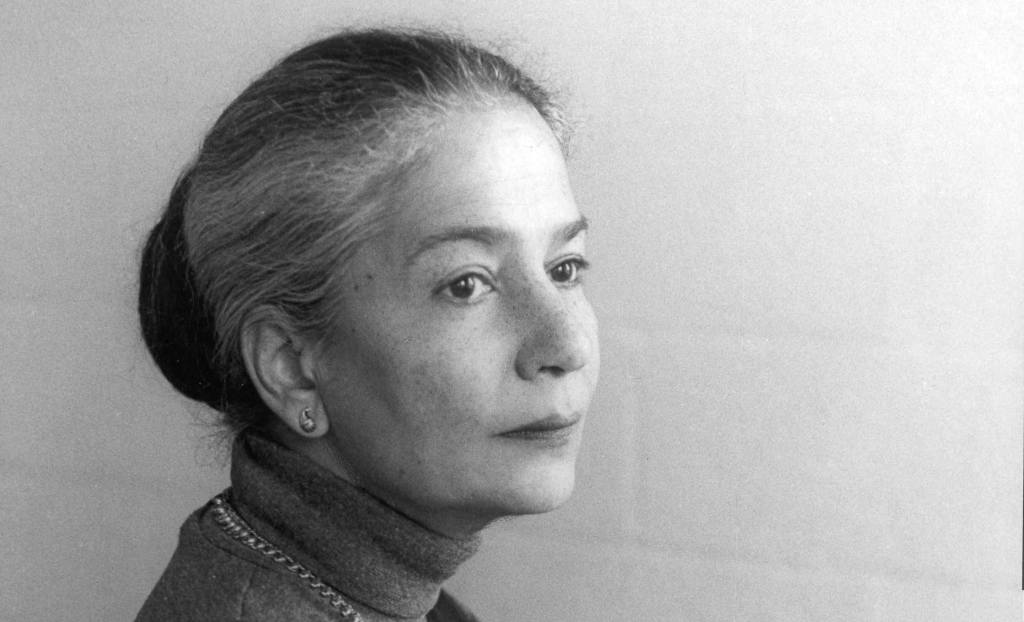
I have now reach three books by Svetlana Alexievich and regarded all of them as superb:

  • Secondhand Time: The Last of the Soviets (2014), about the lives of average Russians after the fall of Communism
  • Voices from Chernobyl: The Oral History of a Nuclear Disaster (1997)
  • Zinky Boys: Soviet Voices from the Afghanistan War (1991)

Reading each of those books was a profound experience. Very rarely do I ever re-read works of nonfiction, but I can conceive of myself re-reading all three of these books. Why? Because all of them struck me as being definitive, while all three of them represented multiple points of view. In her own words:

I’ve been searching for a literary method that would allow the closest possible approximation to real life. Reality has always attracted me like a magnet, it tortured and hypnotized me, I wanted to capture it on paper. So I immediately appropriated this genre of actual human voices and confessions, witness evidences and documents. This is how I hear and see the world – as a chorus of individual voices and a collage of everyday details. This is how my eye and ear function. In this way all my mental and emotional potential is realized to the full. In this way I can be simultaneously a writer, reporter, sociologist, psychologist and preacher.

There is something about Russian history that elicits both admiration and dismay:

If you look back at the whole of our history, both Soviet and post-Soviet, it is a huge common grave and a blood bath – an eternal dialogue of the executioners and the victims. The accursed Russian questions: what is to be done and who is to blame. The revolution, the gulags, the Second World War, the Soviet-Afghan war hidden from the people, the downfall of the great empire, the downfall of the giant socialist land, the land-utopia, and now a challenge of cosmic dimensions – Chernobyl. This is a challenge for all the living things on earth. Such is our history. And this is the theme of my books, this is my path, my circles of hell, from man to man.

I look forward to visiting more of these circles of hell in Svetlana Alexievich’s company. There are two more of her books available in English that I have not read: one about the role of women in the Great Patriotic War of 1941-1945, and another on the role of children in the same conflict.

Her work has been translated into 45 languages and published in 47 countries.

The Flowering of New England

Nathaniel Hawthorne’s Original House of the Seven Gables in Salem, Massachusetts

We tend to think that the most recent works of biography, history, or literary criticism are the best, on the general principle that the present corrects the errors of the past. Yet I do not think that is true. I like to read scholarly books written before our time. More often than not, I find they are better.

I am currently reading Van Wyck Brooks’s New England: Indian Summer, itself the sequel of The Flowering of New England. The books were published in 1940 and 1936 respectively. They are incredibly rich on a paragraph to paragraph level. There are numerous footnotes, which themselves are frequently more interesting than the text. As I read Brooks, I take notes for books to read in the future.

These titles are part of a series of five books called the “Makers and Finders” series. They consist of:

  • The Flowering of New England, 1815-1865, pub 1936
  • New England: Indian Summer, 1865-1915, pub 1940
  • The World of Washington Irving, pub 1944
  • The Times of Melville and Whitman, pub 1947
  • The Confident Years, 1885-1915, pub 1952

So far I have cracked only the first two titles, but I intend to read all five. Fortunately, they are readily available in used book stores, as they were exceedingly popular in the period they were written.

On the Cover of Time Magazine

It doesn’t much matter to me that Brooks’s writing is currently regarded as unfashionable. After all, I am wildly unfashionable. He did write a biography of Mark Twain that I didn’t like, but this “Makers and Finders” series is pure gold, compared to much of the dross being published today. These are books for people who like to read, and I am certainly one of them.

A Little Man With a Big Nose

Henry David Thoreau (1817-1862)

I have just finished reading Laura Dassow Walls’s Henry David Thoreau: A Life. As I have mentioned before, I don’t usually like biographies, because if you admire the person who is the subject of them, you are devastated when he or she dies in the last chapter. Sitting in my little library, I was devastated when the American I most loved and admired succumbed to consumption at the age of forty-four.

Everyone knows a little about Thoreau, most of it wrong. When I first read the book, I was told by friends that when he moved to his cabin by the shores of Walden Pond, Thoreau “cheated.” What kind of a hermit was he when he spent a lot of time in Concord with his friends. The answer is: He was no kind of a hermit. The first chapter of Walden, or Life in the Woods is entitled “Economy,” not some eremitical mumbo-jumbo.

Long after he returned to his house in Concord, Thoreau lived an active life giving speeches, writing thousands of pages of notes on nature, fulminating against slavery (his house was a station on the Underground Railroad), and supporting John Brown and his followers even after Brown was executed for his raid on Harper’s Ferry. He had read and understood Charles Darwin’s The Origin of Species, even while thousands of Americans condemned it as heretical.

I love the above photograph of Thoreau, which also is on the dust jacket of Laura Walls’s biography. Look at those piercing blue eyes. The scraggly beard was to warm his neck to protect him from the ravages of consumption.

This biography is nothing less than spectacular. I was saddened to come to the end of it.

Why do I admire Thoreau so much? I can only say that he was one of the most observant people who ever lived, easily on a par with John Muir and Charles Darwin. It was Thoreau’s notion of land set aside from human occupation as “commons” which led, via Muir, to the creation of the National Park System. Also, I regard Walden as a great book in a century that included such luminaries as Hawthorne, Melville, and Whitman.

Now I’m going to have to read some more Thoreau. Lucky me!

Captain of a Huckleberry Party

Author Laura Dassow Walls and Her Biography of Henry David Thoreau

Today I did not even set foot outside my apartment. It was a nice day, even a bit on the cool side, but I was entranced reading Laura Dassow Walls’s Henry David Thoreau: A Life.

Ever since I first read Walden, I have been entranced by Thoreau. I even liked A Week on the Concord and Merrimack Rivers, which was not exactly received with open arms when it was published. Wikipedia describes him as a Naturalist and indicates his chief interests as being (in no particular order) ethics, poetry, religion, politics, biology, philosophy, and history.

In addition, he was a pencil manufacturer (the family business), handyman, surveyor, builder, and agronomist. His published works represent but a small part of his interests. Perhaps his major work consisted of his notebooks, which were voluminous. His friend Ralph Waldo Emerson promoted him and his work, but lost interest as the friendship wore off and referred to Thoreau as the ideal captain of a huckleberry party.

I am not always fond of reading biographies: As soon as I become interested in the subject, he or she dies at the end of the book. Still, I always wanted to know more about Thoreau, so I’ll have to put up with some grief when I get to that last chapter.

I’ll leave you with this great quote from Walden:

However mean your life is, meet it and live it; do not shun it and call it hard names. It is not so bad as you are. It looks poorest when you are richest. The fault-finder will find faults even in paradise. Love your life, poor as it is. You may perhaps have some pleasant, thrilling, glorious hours, even in a poorhouse. The setting sun is reflected from the windows of the almshouse as brightly as from the rich man’s abode; the snow melts before its door as early in the spring. I do not see but a quiet mind may live as contentedly there, and have as cheering thoughts, as in a palace.

Never the Twain Shall Meet

Thomas Hart Benton Mural of Huck with N-Word Jim

This is a re-post from my January 7, 2011 blog for the late unlamented Multiply.Com.

As one who has frequently been accused of speaking in an “inappropriate” way, I am still grateful that no one has attempted to apply a muzzle to my face. (Not that some haven’t been thinking about it.) If someone tried, I would resist—which is more than poor Mark Twain can do a hundred years after his death.

Unless you have spent the last few weeks visiting the moons of Jupiter, you’ve probably heard that some publisher has attempted to bowdlerize Huckleberry Finn by giving the slave Nigger Jim a more respectable name, and I don’t mean Reginald or Percival. It’s the first word of his name—the so-called N-word—that many find objectionable.

So be it! While I would never venture to call a person of color a nigger under any circumstances, I find any attempt to tinker with a great author’s work objectionable on the face of it. If the name “Nigger Jim” is objectionable, I suggest that the offended parties restrict themselves to reading kiddie books written by the oh-so-politically-correct.

You can’t wipe out the sins of the past as if with an eraser on a clean board: People thought and wrote differently then. The past, they say, is a different country.

Yet it has not stopped people from trying. In the Eighteenth Century, Shakespeare’s plays were substantially re-written before being put on the stage—just to make them more acceptable. As soon as the powder fell out from peoples’ wigs, the changes were canned and the original was restored.

So you PC types can get all het up about this nonsense. Me, I’m going to go home and read Joseph Conrad’s The Afro-American of the Narcissus.

The picture above is a detail from a mural by Thomas Hart Benton of Huck Finn and Colored-Person James from the Missouri State Museum.

Happy Birthday, Bill!

The Martin Droeshout Portrait of Shakespeare for the First Folio

Today is the 457th birthday of William Shakespeare, the Bard of Avon. In my lifetime so far, I have read all the plays attributed to Shakespeare and about half of the poems. Many of the plays I have read multiple times, the leader being Hamlet. Currently, I am re-reading The Winter’s Tale, and, in the months to come, I hope to revisit several other of my favorite comedies, such as Measure for Measure, All’s Well That Ends Well, The Tempest, and Twelfth Night.

I know it would be better to see the plays performed. But even if Covid-19 were still not on the rampage, it’s not easy to see the Bard in performance. So I must reconcile myself to reading the plays.

All in all, he wrote some forty plays, most alone, but some in partnership with other playwrights. No, I do not think that Francis Bacon wrote his plays, nor the Earl of Southampton, nor Wile E. Coyote. I suppose I could live my life in an alternate universe like Donald Trump’s supporters, but I much prefer the real world. Consequently, I am not interested in doubting his authorship. After all, we probably know more about the Bard than we know about any of his contemporaries.

If you like Shakespeare as much as I do, I have a film to recommend: Jacques Rivette’s Paris nous appartient (Paris Belongs to Us) is about a group of young Parisians putting on a performance of Pericles, Prince of Tyre—not one of Shakespeare’s best plays, and one most likely not 100% written by him, but definitely fun for all Bardaholics.

Literature from the Hutongs of Beijing

A Colorful Hutong in the City of Beijing

In Northern Chinese cities, such as Beijing, hutongs are usually narrow alleys formed by adjoining sineyuan, or traditional courtyard residences, squeezed together. Over the last few years, I have enjoyed reading contemporary Chinese literature, which gives me an altogether different view of the Chinese people than I get from contemplating the actions of the Xi Jinping government.

I thought I would list here a few of the best Chinese novels of the latter half of the 20th Century:

  • Geo Xingjian’s Soul Mountain, probably the best Chinese novel I have read, winner of the 2000 Nobel Prize
  • Mo Yan’s Shifu, You’ll Do Anything for a Laugh, a collection of novellas
  • Ma Jian’s Red Dust, a novel that is also a fascinating travel guide as the hero escapes Beijing to discover his country
  • Ge Fei’s The Invisibility Cloak, a delightful comic novella
  • Su Tong’s Rice, the most serious book of the bunch with its villainous main character

After reading these books, I have a strong feeling for the essential humanity of the Chinese people. I would have no trouble interacting with them—except for the simple matter of the language barrier.

A Prickly Individual

Trinidad-Born Author V.S. Naipaul (1932-2018)

What happens when one of your favorite authors forms a friendship with another of your favorite authors and then writes a book about that friendship? That’s the case when Paul Theroux came out in 1998 with Sir Vidia’s Shadow: A Friendship Across Five Continents. Both authors wrote not only novels but travel books. IMHO, Naipaul was the better novelist (by a long shot); but Paul Theroux’s travel books are far better—to the extent that they have played a major role in the way I lived my life over the last forty years.

Sir Vidiadhar Surajprasad Naipaul was born in Trinidad of a Hindu Indian family. He parlayed his colonial background into a brilliant series of novels which eventually gained for him a knighthood (in 1990) and the Nobel Prize in Literature (in 2001). He encountered Paul Theroux in Uganda, where both were living for a while. They became fast friends even before Theroux published his first novel.

That friendship became an instrumental part of Theroux’s life. Even when separated by thousands of miles, they wrote to each other frequently. He was even sexually attracted to Naipaul’s first wife, Patricia, who died in 1996.

Patricia and Vidia Naipaul

Throughout the long friendship, Vidia Naipaul turned out to be a rather prickly individual. Some of it was due to his Brahmin fastidiousness:

“I can’t sleep in that bed,” he said. “It’s tainted. Why did he do it? The foolish, ignorant man!”

“What happened?” I asked.

“One of the workmen in Vidia’s bedroom was explaining something,” Pat began.

His face twisted in nausea, Vidia said, “And he sat on my bed…. He put his bottom on my bed.”

What would have bothered me more than it seemed to bother Theroux was that Naipaul was notorious about not picking up the check when they went out for dinner. And this was at a time when Paul was at the beginning of his career and constantly short of funds.

When Patricia died, the friendship suddenly came apart. Shortly after the funeral, Vidia married an Indian woman named Nadira, whom he had met previously in Africa. Quite suddenly, all of Paul’s attempts to contact Vidia were intercepted by Nadira, who was highly critical of the American writer.

The coffin nail was driven into the friendship when Paul and his son were taking a walk in London and suddenly encountered Vidia, who did not acknowledge him. When Paul addressed him, Vidia finally recognized him. When asked if he had received a recent fax from Paul, Naipaul was reluctant to discuss the matter further. When Paul asked what was to be done, Naipaul answered, “Take it on the chin and move on.”

Theroux was shocked:

He knew. It was over. It never occurred to me to chase him. There would be no more. And I understood the shock of something’s being over, like being slapped—hurt as the blood whipped through my body. “Like being hit by a two-by-four,” my friend had said when Vidia insulted her in Oregon.

This exchange takes place on the last page of the book. Theroux could have done a job of character assassination on his old friend, but he chose not to. After all those years, the friendship had meant a great deal to him, even if it ended badly.

I, too, have had prickly friends. Some I walked away from. Some I took up with again after a number of years had transpired. Would I have done differently than what I wound up doing in the end? Probably not.

In the end, I really liked Theroux’s book, which demonstrated that—for a time—his friendship with Vidia had great value in his life.

The Month of Reading Dangerously

Author Marilynne Robinson (Born 1943)

I dedicated last month to reading books only written by women. On March 5, I posted a TBR (To Be Read) list from which I would choose the titles I would undertake to read and review. As was typical, I wound up reading about half the books on the list, adding to them some last-minute choices. Here is the list of what I read:

  • Celeste Ng (United States), Little Fires Everywhere **** †
  • Joyce Carol Oates (United States), The Man Without a Shadow ****
  • Virginia Woolf (Britain), The Waves *****
  • Marilynne Robinson (United States), Gilead ***** †
  • Ludmilla Petrushevskaya (Russia), The Time: Night ****
  • Patricia Highsmith (United States), The Black House (Short Stories) *****
  • Silvia Moreno-Garcia (Mexico), Gods of Jade and Shadow ***** †
  • Colette (France), The Pure and the Impure ****
  • Eve Babitz (United States), L.A. Woman ****
  • Sofi Oksanen (Finland/Estonia), The Purge **** †
  • Rosario Santos—Editor (Bolivia), The Fat Man from La Paz (Short Stories) **** †
  • Clarice Lispector (Brazil), The Hour of the Star *****

There wasn’t a stinker in the bunch, and four of the choices were superb (Woolf, Moreno-Garcia, Highsmith, and Lispector). Five of the books marked with a dagger [†] were by authors I had never read before (Ng, Robinson, Moreno-Garcia, and Santos). On my original TBR list, I thought I had never read any Ludmilla Petrushevskaya before, but I was mistaken.

I will continue to read more books by women authors than I have in the past, though I may not repeat the intensity of March’s reading project. It was an interesting experiment, as all the choices were pretty high quality.