Serendipity: The Winds of Change

The Book Is the Same, Only the Reader Has Changed

The Book Is the Same, Only the Reader Has Changed

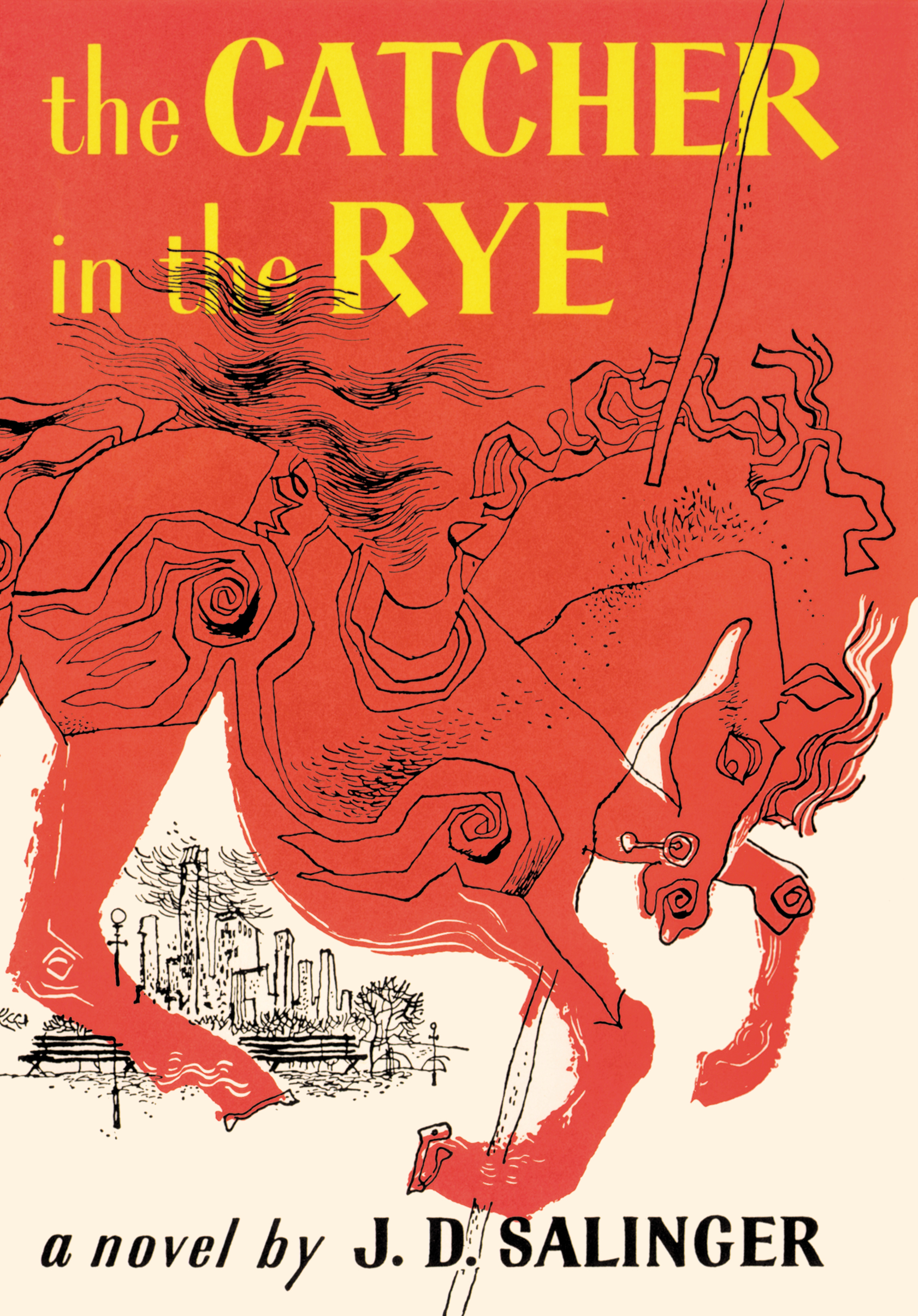
The thing about re-reading books you first encountered decades ago is to feel the winds of change in your life. When I first read J. D. Salinger’s The Catcher in the Rye, I was a high school student looking forward to leaving Cleveland to go to college. The book was a revelation to me, and re-reading it at this late stage in my life shows me sitting on the porch of our house at 3989 East 176th Street, turning the pages and marveling at a book written for kids like me. It’s a good feeling: I accept that 16-year-old kid. He was all right.

Following is a quote that pretty much describes my feeling at re-reading The Catcher in the Rye:

The best thing, though, in that museum was that everything always stayed right where it was. Nobody’d move. You could go there a hundred thousand times, and that Eskimo would still be just finished catching those two fish, the birds would still be on their way south, the deers would still be drinking out of that water hole, with their pretty antlers and their pretty, skinny legs, and that squaw with the naked bosom would still be weaving that same blanket. Nobody’d be different. The only thing that would be different would be you. Not that you’d be so much older or anything. It wouldn’t be that exactly. You’d just be different, that’s all. You’d have an overcoat on this time. Or that kid that was your partner in line last time had got scarlet fever and you’d have a new partner. Or you’d have a substitute taking the class, instead of Miss Aigletinger. Or you’d heard your mother and father having a terrific fight in the bathroom. Or you’d just passed by one of those puddles in the street with gasoline rainbows in them. I mean you’d be different in some way – I can’t explain what I mean. And even if I could, I’m not sure I’d feel like it.

Well, unlike Holden, I am in fact much older; but that’s okay. Better, in fact, than the alternative.


Meanwhile, Back in the Ukraine

Battle on January 10, 2014 at Kiev’s “Euromaidan”

Battle on January 10, 2014 at Kiev’s “Euromaidan”

The one Ukrainian author I have read is Andrey Kurkov, a Russian who lives in Kiev and considers himself Ukrainian. He is best known for three mystery novels, the first two of which feature a penguin named Mischa: Death and the Penguin, Penguin Lost, and The Case of the General’s Thumb.

During the 2013-2014 revolution that sent President Viktor Yanukovych to Russia requesting asylum from Putin, Kurkov kept a diary of daily events in Kiev, the Crimea, and Eastern Ukraine. It was published in 2014 as Ukrainian Diaries: Dispatches from Kiev. His mystery novels have a wry sense of humor which also carries over to this diary:

Posters and signs have been put up all over the country with images showing that all Ukrainians, after the signature of the Association Agreement with the EU, will become homosexuals. Even in the metro, each time you take an escalator, you have to pass dozens of these posters. In Kiev, he propaganda campaign is considered laughable, but I am afraid that in the east and in the provinces, people will naively believe that universal conversion to homosexuality is the condition imposed by Europe on Ukraine for the signature of the treaty. (November 28, 2013)

And: “Yesterday, Parliament announced an open forum day. Everyone was given the chance to speak. Or, in other words, no one listened.” (February 5, 2014)

Ukrainian Author Andrey Yuryevich Kurkov

Ukrainian Author Andrey Yuryevich Kurkov

Since it declared its independence from the former Soviet Union in 1991, the Ukraine has had a succession of governments that could only be described as a combination of thuggery and rapine—in fact, pretty much the sort of governing we could expect from a Donald J. Trump. You can see in Kurkov’s penguin mysteries the dysfunctionality of Ukrainian politics at work. Now, in the diaries, we see Kurkov losing sleep whether he would be dragged out of his flat by security forces, tortured, and killed.

Fortunately for us, he wasn’t. I look forward for his other works to be translated from Russian to English.


Getting Ready for Halloween

On Reading Ghost Stories

On Reading Ghost Stories

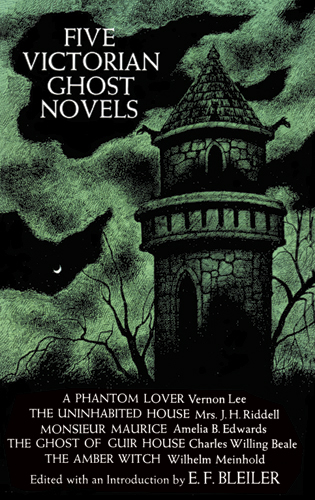
For several years now, I have been reading collections of horror stories published by Dover Publications. Apparently, there are so many of them, that I haven’t come anywhere near reading all of them. Here is a partial list of titles in this series:

  • Algernon Blackwood: Best Ghost Stories
  • J. Sheridan LeFanu: Best Ghost Stories
  • Bram Stoker: Best Ghost and Horror Stories
  • Arthur Conan Doyle: Best Supernatural Tales
  • Robert Louis Stevenson: The Body Snatcher and Other Tales
  • Hugh Lamb (ed.): A Bottomless Grave and Other Victorian Tales of Terror
  • Horace Walpole: The Castle of Otranto
  • Charles Dickens: A Christmas Carol
  • John Grafton (ed.): Classic Ghost Stories (I just finished this one tonight)
  • Algernon Blackwood: The Complete John Silence Stories
  • Bram Stoker: Dracula
  • E. F. Bleiler (ed.): Five Victorian Ghost Novels
  • Mary Shelley: Frankenstein (In four editions!)
  • Hugh Lamb (ed.): Gaslit Horror and Gaslit Nightmares
  • J. Sheridan LeFanu: Ghost Stories and Mysteries
  • M. R. James: Ghost Stories of an Antiquary
  • Ambrose Bierce: Ghost and Horror Stories
  • James Reynolds: Ghosts in Irish Houses

And this only takes us through the letter “G” in the alphabetical list of ghost titles. I have read almost all of these, and I have yet to find a bad collection (though some individual short stories may not be up to the general level).

I strongly recommend that you check out the excellent website of Dover Publications. The books are relatively inexpensive to begin with, but once they have our e-mail address, you will receive many attractive offers.

Then you, too, can shudder and shake your way through the dread month of October.


The Photographer and the Cañar

St. Anthony Day Parade

St. Anthony Day Parade

In preparation for my trip, I am reading Judy Blankenship’s excellent Cañar: A Year in the Highlands of Ecuador. Although the text is excellent, what impressed me the most were Judy’s photographic portraits in black and white of the Cañar villagers she and her husband Michael got to know in the time they spent in the indigenous Andean area some two hours north of Cuenca. Unfortunately, these portraits must be well protected, because I was unable to hijack any of them to show you. (I guess you’ll just have to get your hands on the book.)

Below is one of Judy’s pictures in black and white of the Carnaval parade in Curreucu:

Carnaval Parade in Curreucu

Carnaval Parade in Curreucu

Although Judy Blankenship is not a professionally trained ethnologist, she could have fooled me. Her description of marriage, entrada (betrothal), funeral, and other rituals makes for delightful reading—not to mention her photography workshops for indigenous women and even a few nuns. Below is a photograph of the author:

Judy Blankenship

Judy Blankenship

At this point, I have not read anything else by her; but I do believe it would be worth hunting down some of her other work, most especially her photographs.

American Moralist

Chris Hedges

Chris Hedges

You are not likely to see him on television unless you get RT, the Russian-owned English-language news channel. There he has a weekly show called On Contact, during which he conducts interviews with economists and social and political figures.

He has a way of looking as if he were fiercely uncomfortable. During his interviews, which are excellent, he rarely laughs or even smiles.

Before he cut loose from the corporate-owned world of news media, he was a Pulitzer Prize-winning journalist for the New York Times, the Dallas Morning News, The Christian Science Monitor, and National Public Radio. He traveled around the world such global hot spots such as El Salvador, Lebanon, and Bosnia.

The son of a Presbyterian minister, Chris Hedges aimed to follow in his father’s footsteps, but found that the reality of Christian charity in the slums of Boston’s Roxbury ghetto was affecting his own survival. But he never forgot what he learned at Colgate and Harvard Divinity School about morality, personal and political. One effect was to make him a confirmed pacifist. When he gave an anti-war graduation address at Rockford College during the gung-ho days after the 2003 invasion of Iraq, he was heckled and booed by the “patriots” in the audience.

Hedges is the author of some of the most painfully truthful books about life in our time. The titles below which I have read are marked with an asterisk (*):

  • War Is a Force That Gives Us Meaning (2002)
  • Losing Moses on the Freeway: The 10 Commandments in America* (2005)
  • American Fascists: The Christian Right and the War on America (2007)
  • I Don’t Believe in Atheists* (2008)
  • Empire of Illusion: The End of Literacy and the Triumph of Spectacle* (2009)
  • Death of the Liberal Class (2010)
  • Days of Destruction, Days of Revolt (2012) with Joe Sacco
  • Wages of Rebellion: The Moral Imperative of Revolt (2015)

You can find a weekly column by Chris Hedges at Truthdig.Com, whose politics are very close to my own.


Slow Days, Fast Company

Eve Babitz

Eve Babitz

The following is based on a book review I published on Goodreads.Com yesterday:

In the 1960s and 1970s, when I used to dread the approach of another lonely weekend, I wished I could meet a girl like Eve Babitz, intelligent, articulate, and drop-dead beautiful. And there she was, living just a few miles from me in Hollywood while I was in Santa Monica. Describing a friend of hers, “she lacked that element, raw and beckoning, that trailed like a vapor” behind her.

Like her first book, Eve’s Hollywood, Slow Days, Fast Company: The World, the Flesh, and L.A. is a series of seemingly biographical essays with a hefty admixture of fiction. Where the first book talked about Eve’s teeny-bopper years in the 1960s, in her second she becomes the lovely, knowing score girl that everyone wants to meet … and bed. She hung out with the likes of Jim Morrison, Steve Martin, artist Ed Ruscha, and gallery owner Walter Hopps.

Highly Recommended

Highly Recommended

What she writes about in Slow Days, Fast Company is about her friendships and relationships with people who are usually not identified with their last names; and even their first names could have been modified. In the end, it doesn’t matter a bit. Eve knows success, and how it twists people so they becoming boring “celebrities” who rely on drugs and booze to get through the day. She writes:

But everyone knows that it would have been much better to have been popular in high school when your blood was clean, and pure lust and kisses lasted forever, Chocolate Cokes in high school are better than caviar on a yacht when you’re forty-five. It’s common knowledge.

Eve Babitz knew herself far better than most people, and she had a wicked sense of humor, as in this exchange:

The very next night I was having dinner with this fashionable young rich man who looked at me as I smoothed some paté over some toast and said, “You better watch out with that stuff. It’ll make you fat.”

“Well, gee,” I said to him, “there are so many perfect women, it’s just horrible you have to spend time sitting here with me.”

Horrible indeed! No use being morose about it, however. Even if I never found an Eve Babitz, I can appreciate her discriminating mind even at this distant remove. This is a girl who did not believe in the viability of most relationships: “The real truth is that I’ve never known any man-woman thing to pan out (it may pan out to them, of course, but couples in middle age who don’t speak to each other are not my idea of a good movie.)”

Eve Babitz in her time and place—Los Angeles in the 1960s and 1970s—was as good as they come. She is in many ways the best that Los Angeles has to offer. If you read her books, I think you will understand why.

Encountering an Old Friend

A Book That Greatly Influenced My High School Years

A Book That Greatly Influenced My High School Years

There it was on the shelf of Iliad Book Store in February 2009: A not-too-beat-up copy of the Committee on College Reading’s Good Reading, circa 1964. Naturally, I picked it up if for no other reason than to walk down memory road when I was a voracious reader. (And, if you read this blog, you know of course that I still am.)

I was the valedictorian of my class of 1962 at Chanel High School in Bedford, Ohio—a school that no longer exists. First it changed its name to Saint Peter Chanel, then, some years later, the Catholic Diocese of Cleveland shut it down. Even though I was in excruciating pain from a tumor that was pressing on my optic nerve, I still read as much as I could. On weekends, I would take the 56A bus downtown, stop in at Schroeder’s Bookstore on Public Square, and then spend some time at the main library, which was built in 1925.

What I felt I needed were books that served as a bibliographic reference to what I ought to be reading. That’s what Good Reading did. There were individual chapters by different members of the Committee on College Reading, all faculty members at various colleges. Just to give an example, here are some of Robert Clark White’s recommendations for 20th Century Continental Novels:

  • Samuel Beckett: Molloy
  • Albert Camus: The Stranger and The Plague
  • Karel Čapek: The War with the Newts
  • André Gide: The Counterfeiters
  • Jaroslav Hasek: The Good Soldier Schweik
  • Hermann Hesse: Steppenwolf and Siddhartha
  • Franz Kafka: The Trial
  • Thomas Mann: Buddenbrooks, The Magic Mountain, and The Joseph Tetralogy
  • Marcel Proust: The Remembrance of Things Past
  • Jean-Paul Sartre: Nausea and Troubled Sleep

These are not bad titles for the time. I probably would have added something by Iceland’s Halldor Laxness and Portugal’s Fernando Pessoa, but these are mere cavils. Thanks largely to this book, my attention was directed to great writers in every field. And the book covered more than literature: There was also history, philosophy, religion, anthropology, physical sciences, and other subjects.

I was such an earnest young student. Even while on the bus, I would pore over books such as Norman Lewis’s 30 Days to a More Powerful Vocabulary and Word Power Made Easy, taking all the quizzes in the books over and over until I got a perfect score. Despite all the physical pain, I had a good childhood, starting with what my loving parents gave me and adding what I could along the way.


L.A. Writers: Tyler Dilts

An Up-and-Coming Police Procedural Mystery Writer

An Up-and-Coming Police Procedural Mystery Writer

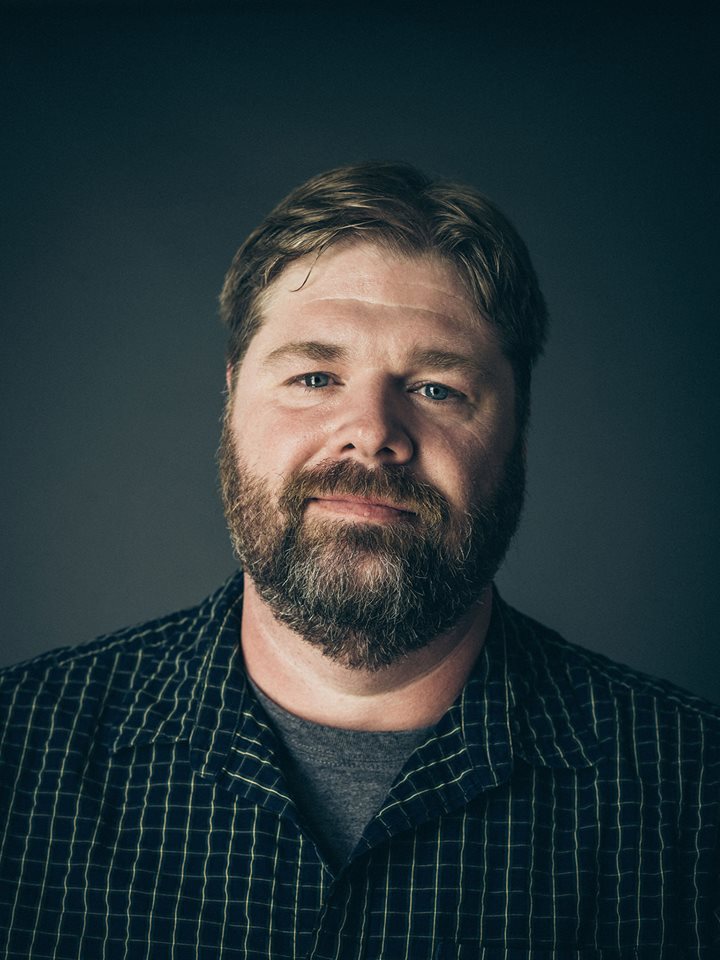
Actually Tyler Dilts is more of a Long Beach writer than an L.A. writer. I find that exciting because he writes about an interesting locale about which most people know very little. There have been writers about Beverly Hills and Hollywood before, but both places are way too enshrouded in their own myths. Long Beach is the 36th largest city in the United States, and the 7th largest in the State of California. It is an interesting city in its own right, and it is large and diverse enough to sustain a series of crime novels set within its borders.

To date, there are four novels in the Long Beach homicide series:

  • A King of Infinite Space (2009)
  • The Pain Scale (2012)
  • A Cold and Broken Hallelujah (2014)
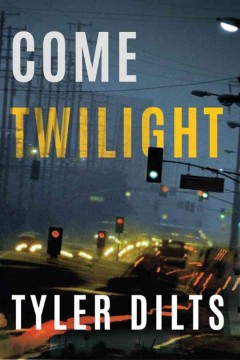
  • Come Twilight (2016)

All four feature Long Beach Homicide Detective Danny Beckett and his partner, Jennifer Tanaka. Beckett. In the first novel, Tyler’s wife dies in a car crash on Intersate-5. In the second book, Danny is sidelined with pain in his hand to his shoulder for an entire year, but he manages to go on.

A Cold and Broken Hallelujah was the first Dilts I had read, in Cusco, Peru, of all places. It is about the murder of a homeless man. In an interview with Craig Lancaster, Dilts describes his novel thus:

At the opening of the new novel, Danny’s come to terms with much of what was haunting him in the first two books, but a murder he investigates—a homeless man who is burned to death by a group of teenagers—tests his resolve, especially in mourning his late wife, who also died by burning. Danny’s the kind of detective who carries the weight of the past with him. It’s a quality that is certainly not healthy for him, but it keeps him connected to the victims of the crimes he investigates and allows him to maintain a sense of empathy. He knows that it is his greatest strength as a detective, so he can’t bring himself to let go, even though he’d be healthier and happier if he did.

As for the fourth book, I am reading that now.

The latest Novel by Dilts

The latest Novel by Dilts

What I like about the Danny Beckett novels is the empathy he feels for the characters with whom he comes into contact. He himself lives a life of occasionally disabling physical pain. Yet he works well with his colleagues in the LBPD and with both witnesses and even suspects. While there is no romance as such between Beckett and his partner Jennifer Tanaka, there is a closeness and mutual consideration that could potentially develop into one.

Tyler Dilts is the son of a Los Angeles County Sheriff’s Department detective. In the Craig Lancaster interview, he continues:

My father was Sheriff’s Deputy for Los Angeles County. He worked in quite a few different capacities—in the county jails, on patrol, as a trainer at the academy, and as a detective. I think I realized that I wouldn’t follow in his footsteps sometime in high school. But I didn’t know what path I would take until I got to college and discovered theatre. I got my BA in Acting and Directing and spent several years working in theatre in LA. I’m a big guy and found myself getting typecast, so a good friend, after hearing me complaining about the fourth time I played Lennie in Of Mice and Men, suggested that I start writing my own plays. That led me back to grad school, this time in English Lit and Creative Writing. In a way, writing about Danny Beckett feels like coming full circle and returning to that desire to follow in my father’s footsteps.

Dilts is still early in his writing career. I look forward to following it with great interest.


Serendipity: In Praise of the Short Biography

F. L. Lucas (1894-1967)

F. L. Lucas (1894-1967)

I had forgotten classical scholar F. L. Lucas entirely. In high school, I had read his most famous book, Style (1955), and loved it. Today, I was searching the stacks of the Los Angeles Central Library and ran into his The Search for Good Sense: Four Eighteenth Century Characters—Johnson, Chesterfield, Boswell, Goldsmith (1958). It was there I read the following:

On all these men there already exist many books—many of them big. One feels embarrassed at adding to the number. Nothing can be a substitute for Boswell’s Johnson; or for those works on an American scale of magnificence, the Boswell Papers and the fifty volume edition of Walpole’s letters. But, given the brevity and busyness of life, many have not time time to read these large works, or a series of full-scale biographies; still less, to re-read them. There is a need for both long and short biographies, as for large-scale and small-scale maps. And it is not only a question of time. One reads such things not only for the amusement of reading, but also to remember. For this, I feel, biographies tend to grow too long. Just because one is told far more than one really needs, one remembers far less. The impression is blurred by multitudinousness; just as one could not, says Aristotle (with a flash of imagination rare in his austere pages) grasp as a unity a creature ten thousand furlongs in length.

I love to rediscover authors whose existence I had forgotten. Unfortunately, it seems that Lucas has also been forgotten by others as well. I had a hell of a time finding a decent photograph of him on the Internet.

Well, I for one plan to search out more of his books, and the L.A. Central Library is the perfect place for it.  I love his writing style. After all, he influenced mine when I was a teenager in Cleveland. I can only hope that I’ve lived up to his teachings.

Serendipity: “Drowned Untimely”

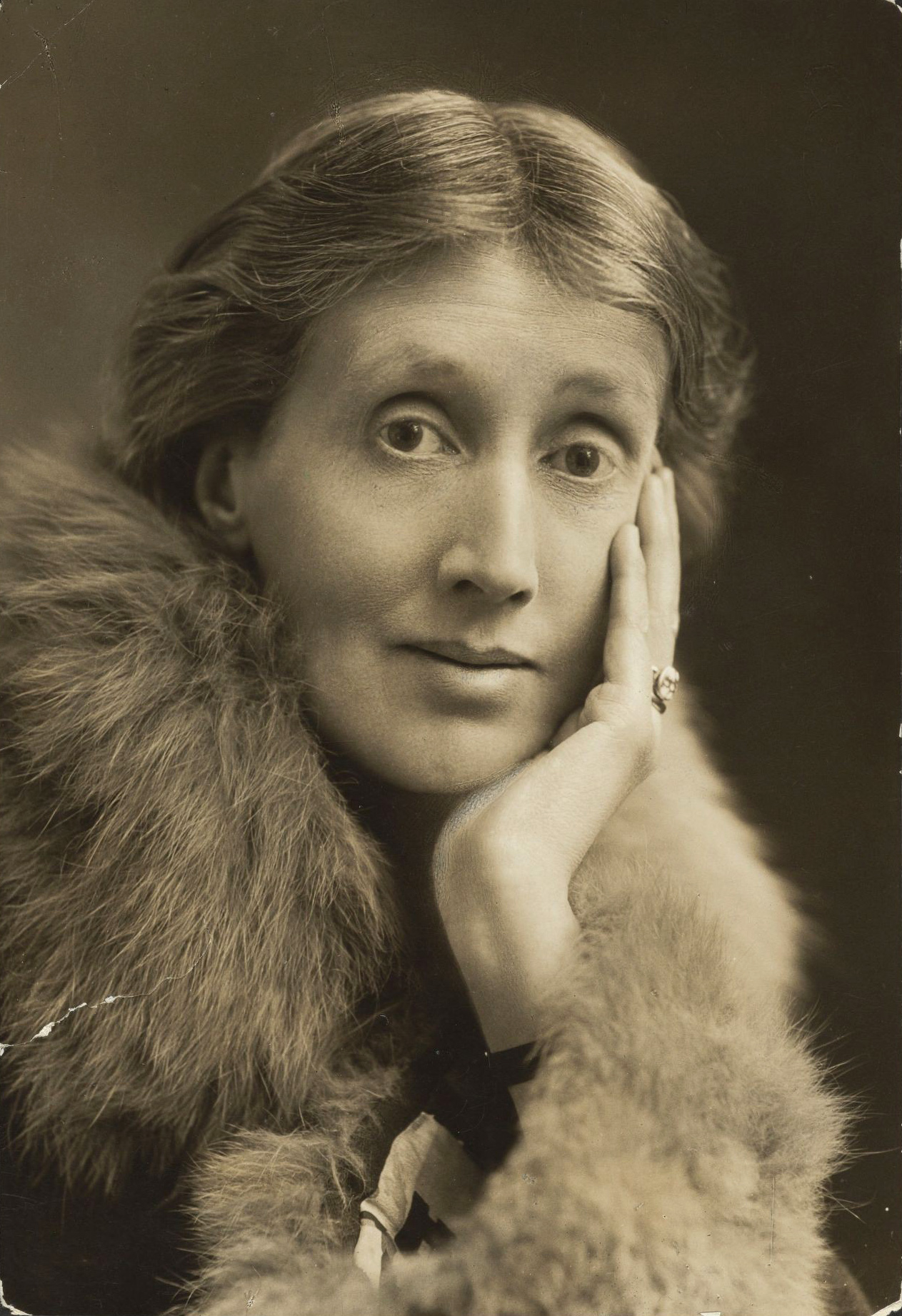
Virginia Woolf (1882-1941)

Virginia Woolf (1882-1941)

I am currently reading (among other things) Virginia Woolf’s The Death of the Moth and Other Essays. In particular, I was drawn to the essay entitled “Street Haunting,” which contains a sustained reverie about Woolf’s walking the streets of London on a winter evening in search of a lead pencil. Following are a couple of paragraph’s about her visit to a second-hand bookstore, with its prophetic phrase about a poet “drowned untimely,” as the author was herself when, depressed by the onset of the Second World War, she filled her pockets with heavy stones and committed suicide by walking into the River Ouse near her home:

But here, none too soon, are the second-hand bookshops. Here we find anchorage in these thwarting currents of being; here we balance ourselves after the splendours and miseries of the streets. The very sight of the bookseller’s wife with her foot on the fender, sitting beside a good coal fire, screened from the door, is sobering and cheerful. She is never reading, or only the newspaper; her talk, when it leaves bookselling, which it does so gladly, is about hats; she likes a hat to be practical, she says, as well as pretty. 0 no, they don’t live at the shop; they live in Brixton; she must have a bit of green to look at. In summer a jar of flowers grown in her own garden is stood on the top of some dusty pile to enliven the shop. Books are everywhere; and always the same sense of adventure fills us. Second-hand books are wild books, homeless books; they have come together in vast flocks of variegated feather, and have a charm which the domesticated volumes of the library lack. Besides, in this random miscellaneous company we may rub against some complete stranger who will, with luck, turn into the best friend we have in the world. There is always a hope, as we reach down some grayish-white book from an upper shelf, directed by its air of shabbiness and desertion, of meeting here with a man who set out on horseback over a hundred years ago to explore the woollen market in the Midlands and Wales; an unknown traveller, who stayed at inns, drank his pint, noted pretty girls and serious customs, wrote it all down stiffly, laboriously for sheer love of it (the book was published at his own expense); was infinitely prosy, busy, and matter-of-fact, and so let flow in without his knowing it the very scent of hollyhocks and the hay together with such a portrait of himself as gives him forever a seat in the warm corner of the mind’s inglenook. One may buy him for eighteen pence now. He is marked three and sixpence, but the bookseller’s wife, seeing how shabby the covers are and how long the book has stood there since it was bought at some sale of a gentleman’s library in Suffolk, will let it go at that.

Thus, glancing round the bookshop, we make other such sudden capricious friendships with the unknown and the vanished whose only record is, for example, this little book of poems, so fairly printed, so finely engraved, too, with a portrait of the author. For he was a poet and drowned untimely, and his verse, mild as it is and formal and sententious, sends forth still a frail fluty sound like that of a piano organ played in some back street resignedly by an old Italian organ-grinder in a corduroy jacket. There are travellers, too, row upon row of them, still testifying, indomitable spinsters that they were, to the discomforts that they endured and the sunsets they admired in Greece when Queen Victoria was a girl. A tour in Cornwall with a visit to the tin mines was thought worthy of voluminous record. People went slowly up the Rhine and did portraits of each other in Indian ink, sitting reading on deck beside a coil of rope; they measured the pyramids; were lost to civilization for years; converted negroes in pestilential swamps. This packing up and going off, exploring deserts and catching fevers, settling in India for a lifetime, penetrating even to China and then returning to lead a parochial life at Edmonton, tumbles and tosses upon the dusty floor like an uneasy sea, so restless the English are, with the waves at their very door. The waters of travel and adventure seem to break upon little islands of serious effort and lifelong industry stood in jagged column upon the floor. In these piles of puce-bound volumes with gilt monograms on the back, thoughtful clergymen expound the gospels; scholars are to be heard with their hammers and their chisels chipping clear the ancient texts of Euripides and Aeschylus. Thinking, annotating, expounding goes on at a prodigious rate all around us and over everything, like a punctual, everlasting tide, washes the ancient sea of fiction. Innumerable volumes tell how Arthur loved Laura and they were separated and they were unhappy and then they met and they were happy ever after, as was the way when Victoria ruled these islands.