Encountering an Old Friend

A Book That Greatly Influenced My High School Years

A Book That Greatly Influenced My High School Years

There it was on the shelf of Iliad Book Store in February 2009: A not-too-beat-up copy of the Committee on College Reading’s Good Reading, circa 1964. Naturally, I picked it up if for no other reason than to walk down memory road when I was a voracious reader. (And, if you read this blog, you know of course that I still am.)

I was the valedictorian of my class of 1962 at Chanel High School in Bedford, Ohio—a school that no longer exists. First it changed its name to Saint Peter Chanel, then, some years later, the Catholic Diocese of Cleveland shut it down. Even though I was in excruciating pain from a tumor that was pressing on my optic nerve, I still read as much as I could. On weekends, I would take the 56A bus downtown, stop in at Schroeder’s Bookstore on Public Square, and then spend some time at the main library, which was built in 1925.

What I felt I needed were books that served as a bibliographic reference to what I ought to be reading. That’s what Good Reading did. There were individual chapters by different members of the Committee on College Reading, all faculty members at various colleges. Just to give an example, here are some of Robert Clark White’s recommendations for 20th Century Continental Novels:

  • Samuel Beckett: Molloy
  • Albert Camus: The Stranger and The Plague
  • Karel Čapek: The War with the Newts
  • André Gide: The Counterfeiters
  • Jaroslav Hasek: The Good Soldier Schweik
  • Hermann Hesse: Steppenwolf and Siddhartha
  • Franz Kafka: The Trial
  • Thomas Mann: Buddenbrooks, The Magic Mountain, and The Joseph Tetralogy
  • Marcel Proust: The Remembrance of Things Past
  • Jean-Paul Sartre: Nausea and Troubled Sleep

These are not bad titles for the time. I probably would have added something by Iceland’s Halldor Laxness and Portugal’s Fernando Pessoa, but these are mere cavils. Thanks largely to this book, my attention was directed to great writers in every field. And the book covered more than literature: There was also history, philosophy, religion, anthropology, physical sciences, and other subjects.

I was such an earnest young student. Even while on the bus, I would pore over books such as Norman Lewis’s 30 Days to a More Powerful Vocabulary and Word Power Made Easy, taking all the quizzes in the books over and over until I got a perfect score. Despite all the physical pain, I had a good childhood, starting with what my loving parents gave me and adding what I could along the way.


L.A. Writers: Tyler Dilts

An Up-and-Coming Police Procedural Mystery Writer

An Up-and-Coming Police Procedural Mystery Writer

Actually Tyler Dilts is more of a Long Beach writer than an L.A. writer. I find that exciting because he writes about an interesting locale about which most people know very little. There have been writers about Beverly Hills and Hollywood before, but both places are way too enshrouded in their own myths. Long Beach is the 36th largest city in the United States, and the 7th largest in the State of California. It is an interesting city in its own right, and it is large and diverse enough to sustain a series of crime novels set within its borders.

To date, there are four novels in the Long Beach homicide series:

  • A King of Infinite Space (2009)
  • The Pain Scale (2012)
  • A Cold and Broken Hallelujah (2014)
  • Come Twilight (2016)

All four feature Long Beach Homicide Detective Danny Beckett and his partner, Jennifer Tanaka. Beckett. In the first novel, Tyler’s wife dies in a car crash on Intersate-5. In the second book, Danny is sidelined with pain in his hand to his shoulder for an entire year, but he manages to go on.

A Cold and Broken Hallelujah was the first Dilts I had read, in Cusco, Peru, of all places. It is about the murder of a homeless man. In an interview with Craig Lancaster, Dilts describes his novel thus:

At the opening of the new novel, Danny’s come to terms with much of what was haunting him in the first two books, but a murder he investigates—a homeless man who is burned to death by a group of teenagers—tests his resolve, especially in mourning his late wife, who also died by burning. Danny’s the kind of detective who carries the weight of the past with him. It’s a quality that is certainly not healthy for him, but it keeps him connected to the victims of the crimes he investigates and allows him to maintain a sense of empathy. He knows that it is his greatest strength as a detective, so he can’t bring himself to let go, even though he’d be healthier and happier if he did.

As for the fourth book, I am reading that now.

The latest Novel by Dilts

The latest Novel by Dilts

What I like about the Danny Beckett novels is the empathy he feels for the characters with whom he comes into contact. He himself lives a life of occasionally disabling physical pain. Yet he works well with his colleagues in the LBPD and with both witnesses and even suspects. While there is no romance as such between Beckett and his partner Jennifer Tanaka, there is a closeness and mutual consideration that could potentially develop into one.

Tyler Dilts is the son of a Los Angeles County Sheriff’s Department detective. In the Craig Lancaster interview, he continues:

My father was Sheriff’s Deputy for Los Angeles County. He worked in quite a few different capacities—in the county jails, on patrol, as a trainer at the academy, and as a detective. I think I realized that I wouldn’t follow in his footsteps sometime in high school. But I didn’t know what path I would take until I got to college and discovered theatre. I got my BA in Acting and Directing and spent several years working in theatre in LA. I’m a big guy and found myself getting typecast, so a good friend, after hearing me complaining about the fourth time I played Lennie in Of Mice and Men, suggested that I start writing my own plays. That led me back to grad school, this time in English Lit and Creative Writing. In a way, writing about Danny Beckett feels like coming full circle and returning to that desire to follow in my father’s footsteps.

Dilts is still early in his writing career. I look forward to following it with great interest.


Serendipity: In Praise of the Short Biography

F. L. Lucas (1894-1967)

F. L. Lucas (1894-1967)

I had forgotten classical scholar F. L. Lucas entirely. In high school, I had read his most famous book, Style (1955), and loved it. Today, I was searching the stacks of the Los Angeles Central Library and ran into his The Search for Good Sense: Four Eighteenth Century Characters—Johnson, Chesterfield, Boswell, Goldsmith (1958). It was there I read the following:

On all these men there already exist many books—many of them big. One feels embarrassed at adding to the number. Nothing can be a substitute for Boswell’s Johnson; or for those works on an American scale of magnificence, the Boswell Papers and the fifty volume edition of Walpole’s letters. But, given the brevity and busyness of life, many have not time time to read these large works, or a series of full-scale biographies; still less, to re-read them. There is a need for both long and short biographies, as for large-scale and small-scale maps. And it is not only a question of time. One reads such things not only for the amusement of reading, but also to remember. For this, I feel, biographies tend to grow too long. Just because one is told far more than one really needs, one remembers far less. The impression is blurred by multitudinousness; just as one could not, says Aristotle (with a flash of imagination rare in his austere pages) grasp as a unity a creature ten thousand furlongs in length.

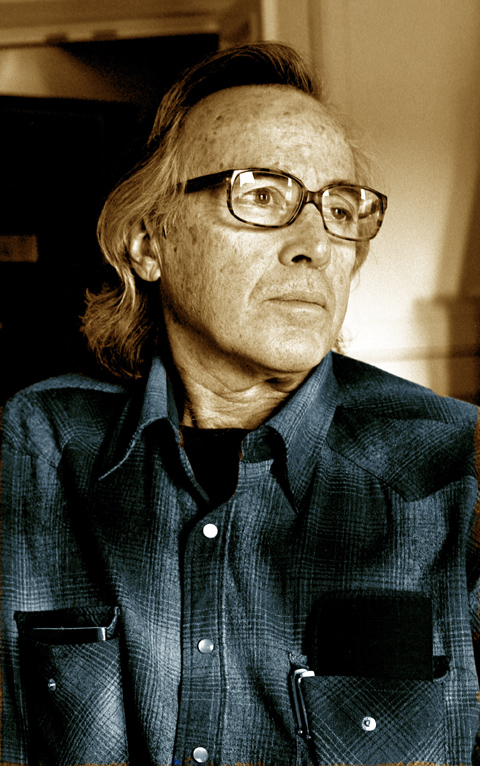
I love to rediscover authors whose existence I had forgotten. Unfortunately, it seems that Lucas has also been forgotten by others as well. I had a hell of a time finding a decent photograph of him on the Internet.

Well, I for one plan to search out more of his books, and the L.A. Central Library is the perfect place for it.  I love his writing style. After all, he influenced mine when I was a teenager in Cleveland. I can only hope that I’ve lived up to his teachings.

Serendipity: “Drowned Untimely”

Virginia Woolf (1882-1941)

Virginia Woolf (1882-1941)

I am currently reading (among other things) Virginia Woolf’s The Death of the Moth and Other Essays. In particular, I was drawn to the essay entitled “Street Haunting,” which contains a sustained reverie about Woolf’s walking the streets of London on a winter evening in search of a lead pencil. Following are a couple of paragraph’s about her visit to a second-hand bookstore, with its prophetic phrase about a poet “drowned untimely,” as the author was herself when, depressed by the onset of the Second World War, she filled her pockets with heavy stones and committed suicide by walking into the River Ouse near her home:

But here, none too soon, are the second-hand bookshops. Here we find anchorage in these thwarting currents of being; here we balance ourselves after the splendours and miseries of the streets. The very sight of the bookseller’s wife with her foot on the fender, sitting beside a good coal fire, screened from the door, is sobering and cheerful. She is never reading, or only the newspaper; her talk, when it leaves bookselling, which it does so gladly, is about hats; she likes a hat to be practical, she says, as well as pretty. 0 no, they don’t live at the shop; they live in Brixton; she must have a bit of green to look at. In summer a jar of flowers grown in her own garden is stood on the top of some dusty pile to enliven the shop. Books are everywhere; and always the same sense of adventure fills us. Second-hand books are wild books, homeless books; they have come together in vast flocks of variegated feather, and have a charm which the domesticated volumes of the library lack. Besides, in this random miscellaneous company we may rub against some complete stranger who will, with luck, turn into the best friend we have in the world. There is always a hope, as we reach down some grayish-white book from an upper shelf, directed by its air of shabbiness and desertion, of meeting here with a man who set out on horseback over a hundred years ago to explore the woollen market in the Midlands and Wales; an unknown traveller, who stayed at inns, drank his pint, noted pretty girls and serious customs, wrote it all down stiffly, laboriously for sheer love of it (the book was published at his own expense); was infinitely prosy, busy, and matter-of-fact, and so let flow in without his knowing it the very scent of hollyhocks and the hay together with such a portrait of himself as gives him forever a seat in the warm corner of the mind’s inglenook. One may buy him for eighteen pence now. He is marked three and sixpence, but the bookseller’s wife, seeing how shabby the covers are and how long the book has stood there since it was bought at some sale of a gentleman’s library in Suffolk, will let it go at that.

Thus, glancing round the bookshop, we make other such sudden capricious friendships with the unknown and the vanished whose only record is, for example, this little book of poems, so fairly printed, so finely engraved, too, with a portrait of the author. For he was a poet and drowned untimely, and his verse, mild as it is and formal and sententious, sends forth still a frail fluty sound like that of a piano organ played in some back street resignedly by an old Italian organ-grinder in a corduroy jacket. There are travellers, too, row upon row of them, still testifying, indomitable spinsters that they were, to the discomforts that they endured and the sunsets they admired in Greece when Queen Victoria was a girl. A tour in Cornwall with a visit to the tin mines was thought worthy of voluminous record. People went slowly up the Rhine and did portraits of each other in Indian ink, sitting reading on deck beside a coil of rope; they measured the pyramids; were lost to civilization for years; converted negroes in pestilential swamps. This packing up and going off, exploring deserts and catching fevers, settling in India for a lifetime, penetrating even to China and then returning to lead a parochial life at Edmonton, tumbles and tosses upon the dusty floor like an uneasy sea, so restless the English are, with the waves at their very door. The waters of travel and adventure seem to break upon little islands of serious effort and lifelong industry stood in jagged column upon the floor. In these piles of puce-bound volumes with gilt monograms on the back, thoughtful clergymen expound the gospels; scholars are to be heard with their hammers and their chisels chipping clear the ancient texts of Euripides and Aeschylus. Thinking, annotating, expounding goes on at a prodigious rate all around us and over everything, like a punctual, everlasting tide, washes the ancient sea of fiction. Innumerable volumes tell how Arthur loved Laura and they were separated and they were unhappy and then they met and they were happy ever after, as was the way when Victoria ruled these islands.

On Re-Reading

Aldous Huxley (1894-1963)

Aldous Huxley (1894-1963)

As Juan Vidal wrote for National Public Radio:

The best books are the ones that open further as time passes. But remember, it’s not because they changed. Every letter and punctuation mark is exactly where it always has been, and where it will remain forever. It’s you who are different; it’s you who’s been affected by the depth of your experience. And it’s you that has to grow and read and reread in order to better understand your friends.

I have just finished re-reading Aldous Huxley’s first novel, Crome Yellow, written in 1921 at the beginning of his career. In 1975, I was abashed by the romantic failures of Dennis Stone, the book’s narrator, with whom I identified because of my own experiences at that time. Now I see that Huxley not only was living through his own callow youth, but very neatly encapsulated for all time that obsessiveness with our own tactical failures can result in even more serious strategic failures in this life. Dennis fails with Anne Winbush, but his consciousness of failure prevents him from seeing Mary Bracegirdle, who is interested in him.

There are some books I re-read on a regular basis. Most notably: Marcel Proust’s In Search of Lost Time. I am now in my third reading of the seven-volume novel, and ready to start re-reading the third volume, The Guermantes Way. Then there are works like The Iliad and The Odyssey, Don Quixote, Dante’s Divine Comedy, Balzac’s Comédie Humaine, and any number of great books that I want to re-investigate because I have changed. To re-read is to measure that change.

When I was in my thirties, I loved Aldous Huxley and read many of his works. Now I think I’m about to check out his novels, stories, and essays again. The years have sped on, and we are all a work in progress.


Divisive Politics and Friendship

Even Greater Than Before

Even Greater Than Before

Alexandre Dumas Père wrote several novels starring the D’Artagnan and the Three Musketeers. The original novel was The Three Musketeers (1844)—in which all the musketeers were in their youth—followed by Twenty Years After (1845) and the multiple volumes of The Vicomte de Bragelonne (1847-1850).

I am currently re-reading Twenty Years After and find that D’Artagnan and the Musketeers have not only grown older by twenty years: They have also matured in other ways. The novel takes place during the Wars of the Fronde (1648-1653) in which the nobility resists the penny-pinching Cardinal Mazarin, who with Anne of Austria (widow of Louis XIII) is acting as regent for the young Louis XIV.

As lieutenant of the King’s Musketeers, D’Artagnan is pledged to support the royal party. Mazarin discovers how the Musketeers has performed so valiantly two decades earlier and requests that D’Artagnan bring together his former companions. But time has passed. He succeeds in recruiting Porthos to his cause, especially as all he really wants is to become a Baron.

But Aramis and Athos are loyal to the Fronde. Even D’Artagnan’s old servant Planchet is of that party. What I find so interesting in this sequel is that the political disunity does not dissolve the old friendship: It is still “all for one and one for all.” I am constantly reminded of parallels to our own political situation in this grisly Presidential Election of 2016. The vagaries of national politics seem to have no effect on the friendship of these four valiant fighters.

Even though Twenty Years After is more crowded with incident than The Three Musketeers, I find it to be a better novel, if for no other reason than its insight into the nature of friendship—especially of friendships that last.

Serendipity: Books and Brain Pickings

“A Marvellously Noble and Transcendent Chimera”

“A Marvelously Noble and Transcendent Chimera”

I do not follow many blog sites; though every once in a while, I find one that is superb. Such is Brain Pickings, which I have now included among my links.

The following observation on reading comes from Hermann Hesse’s My Belief: Essays on Life and Art, by way of Brain Pickings:

The great and mysterious thing about this reading experience is this: the more discriminatingly, the more sensitively, and the more associatively we learn to read, the more clearly we see every thought and every poem in its uniqueness, its individuality, in its precise limitations and see that all beauty, all charm depend on this individuality and uniqueness — at the same time we come to realize ever more clearly how all these hundred thousand voices of nations strive toward the same goals, call upon the same gods by different names, dream the same wishes, suffer the same sorrows. Out of the thousandfold fabric of countless languages and books of several thousand years, in ecstatic instants there stares at the reader a marvelously noble and transcendent chimera: the countenance of humanity, charmed into unity from a thousand contradictory features.

A Book of Essays I Will Have to Read

A Book of Essays I Will Have to Read

Good books lead everywhere, but especially to places worth going.


Travelers, Wild and Tame

Freya Stark (1893-1993)

Freya Stark (1893-1993)

For over forty years (except for a brief interlude when she was married), Freya Stark spent some 40 years traveling by herself in the Middle East. I have just finished reading her first book, Baghdad Sketches (1932), consisting of columns written for the Baghdad Times plus some 8 pieces added later for the British edition.

I am amazed that she was able to not only survive traveling in a difficult part of the world roughly between 1928 and 1970, but she lived to the age of 100.

She is not the first to do so. Gertrude Bell (who died in Baghdad just a couple years before Freya arrived there), also covered much of the same ground. Still, I cannot imagine in this period of violent jihad and xenophobia that their travels could be duplicated without a military escort.

Freya had interesting attitudes about solitude and travel. On the former, she wrote that “solitude is the one deep necessity of the human spirit to which adequate recognition is never given in our codes. It is looked upon as a discipline or penance, but almost never as the indispensable, pleasant ingredient it is to ordinary life.” For the modern traveler, she felt with distaste that its purpose “is to give people a glimpse of the exotic places without the least bit of inconvenience to themselves.”

In Baghdad Sketches, she gives a picture of a much more diverse population than exists now in the era of ISIS/ISIL/Daesh. Stark frequently visited among the Kurds, Yezidis, Shi’as, and Eastern Christians living in Iraq during the 1930s.

Among her books that I have read with pleasure, in addition to Baghdad Sketches, are:

  • The Valleys of the Assassins and Other Persian Travels (1934)
  • The Southern Gates of Arabia: A Journey to the Hadhramaut (1938)
  • Alexander’s Path: From Caria to Cilicia (1958)—about Turkey

Many of her books are still in print.


You Can, But You Won’t

E-Readers Are OK, but Smart Phones Are Not

E-Readers Are OK, but Smart Phones Are Not

Once I saw a website somewhere about all the devices that smart phones will render obsolete. On the list were e-readers, such as Kindle and Nook. I do not believe, however, that people with smart phones will be reading Proust’s In Search of Lost Time (in seven volumes) anytime soon. I do not even think that they will be reading many shorter books, such as 10 Haikus for the Next Millennium.

Just because you can read books on a smart phone does not mean that you will ever want to. There are four reasons for this:

  • You can only see so many words on a page. Excessive page-turning will render the reading experience too clumsy.
  • If your device is backlit, it will bother your eyes to read for any length of time. E-book readers like Nook and Kindles use a technology that does not glare at you.
  • People past a certain age (and I am already there) have trouble reading words on small screens.
  • Smart phones are so small that the reading experience is psychologically different from cradling a physical book in your hands.

I remember when Gutenberg and other websites put the complete texts of thousands of books online. In the last ten years, I have succeeded in reading only one book online: Sir Richard F. Burton’s Falconry in the Valley of the Indus. It is a relatively short book, and I can tell you it was a real chore, what with the glareback from my monitor. I believe this may also be a problem on iPads and other pad devices.

Over the years, I have long suspected that those people staring at their cellphone screens while walking are probably not reading Moby Dick.


L.A. Writer: John Fante

John Fante, L.A. Novelist, Short Story Writer, and Scriptwriter

John Fante, L.A. Novelist, Short Story Writer, and Scriptwriter

This is a series about writers whose work is predominantly set in Los Angeles.Last Month, I wrote about Eve Babitz (who is still alive).  I am wondering whether to open this series up to people who came from other countries, such as Aldous Huxley or Raymond Chandler, who have written works that have added to the Southern California scene. Omitted will be writers like Nathanael West (The Day of the Locust) who are primarily oddities or one-shots.

At the corner of West 5th Street and South Grand Avenue, hard by the Los Angeles Central Library, is a sign commemorating John Fante Square (see below), just on the edge of the old Bunker Hill neighborhood made famous by the writer’s Arturo Bandini novels. These include:

  • Wait Until Spring, Bandini (1938)
  • The Road to Los Angeles (1936, Published 1985)
  • Ask the Dust (1939)
  • Dreams from Bunker Hill (1982)

The best of them that I have read is Ask the Dust, which I finished reading this morning in the Central Library just outside the foot of Bunker Hill, where Fante and his hero Bandini lived.

Sign Commemorating John Fante Square with the Tower of the Central Library

Sign Commemorating John Fante Square with the Tower of the Central Library

Arturo Bandini wanted more than anything else to be a great writer, but we see him on the edge of poverty and trying unsuccessfully to find a love interest—in the worst possible way. His choice in Ask the Dust is a hophead Mexican waitress named Camilla Lopez with whom he has a love/hate relationship that ends badly. He is torn between his Italian Catholic upbringing and the glitzy Hollywood life of famous writers and film people.

It is in no way a Hollywood novel. In fact, Bandini and Lopez don’t even drive through Hollywood or have any interest in seeing films together.

Today, Bunker Hill is no longer a ghetto of cheap boarding houses; rather, it is full of high rise banks and corporate headquarters that tower over the lowlands of Downtown L.A. The old funicular, Angel’s Flight, which rises to the top of Bunker Hill from Hill Street across from the Grand Central Market is still in existence, though it is not presently in operation.

The life of John Fante has a particular interest for me because the end of his life was characterized by severe diabetes. In 1978, he went blind. Subsequently, he lost both of his legs to the disease. He died in 1983 at the age of 74.