The Approach to J. L. Borges

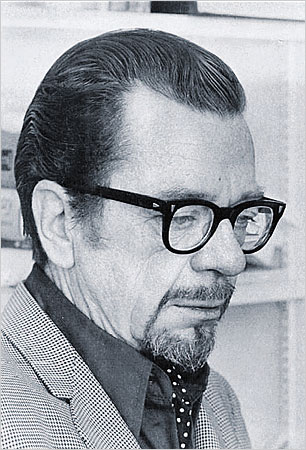
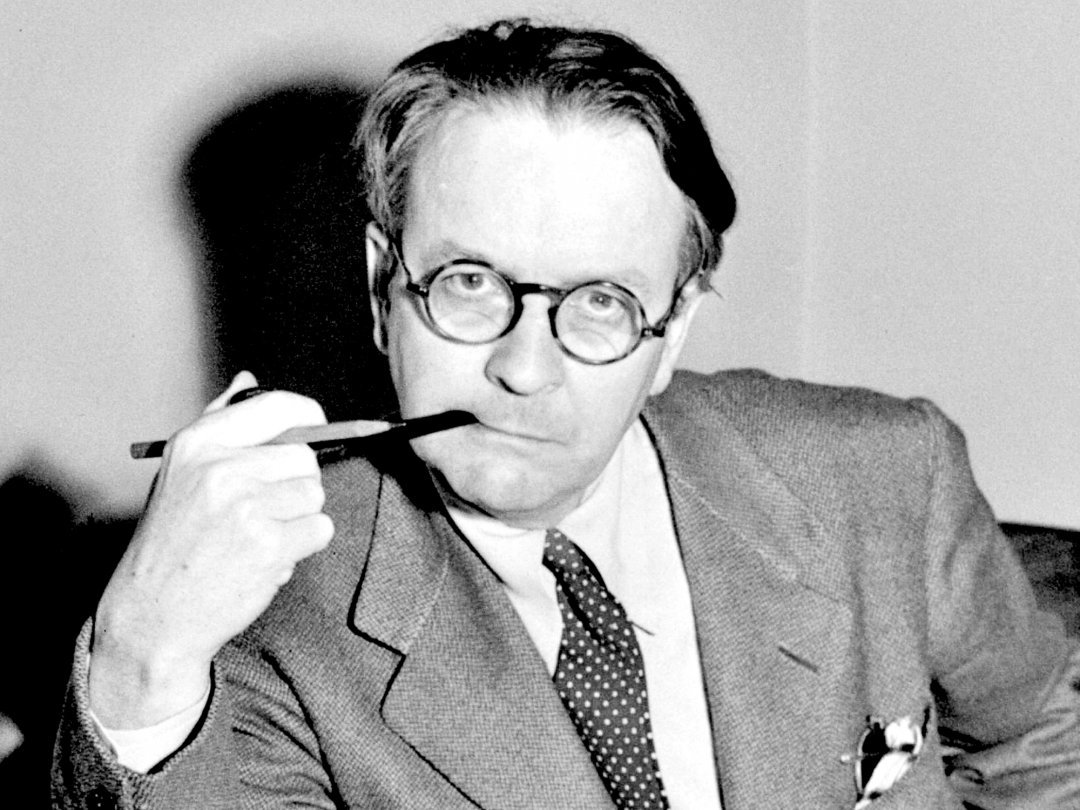
Argentinian Author and Poet Jorge Luis Borges

Argentinian Author and Poet Jorge Luis Borges

In 1935, Jorge Luis Borges wrote a story entitled “The Approach to al-Mu’tasim.” In it, he writes of a man who, after a religious riot between Hindus and Muslims, “becomes aware of a brief and sudden change in that world of ruthlessness—a certain tenderness, a moment of happiness, a forgiving silence in one of his loathsome companions.” He concludes that “somewhere on the face of the earth is a man from whom this light has emanated; somewhere on the face of the earth there exists a man who is equal to this light.”

For me, the source of that light—at least in the world of 20th Century literature—is Jorge Luis Borges himself. I have read all his works that have been translated into English, and even the many interviews he conducted toward the end of his life. I am now on the lookout for ever more obscure works … and I think I have found a good candidate.

The book is by Argentinian author and filmmaker Edgardo Cozarinsky, and its title is Borges In/And/On Film (New York: Lumen Books, 1988). Its three parts consist of:

  1. Reviews of films written by Borges before his blindness became total in the 1950s.
  2. The influence of Borges on film critics and filmmakers (mostly French).
  3. A survey of films based on Borges’s stories or scripts.

The parts become decreasingly interesting from one part to the next. He had a curious liking for the films of Josef von Sternberg—before that director had discovered Marlene Dietrich. Afterwards he regards him as “a devotee of the inexorable Muse of Bric-à-Brac.” Reviewing an Argentinian film, Borges writes it “is unquestionably one of the best Argentine films I have seen, which is to say, one of the worst films in the world.”

Of Citizen Kane, he writes that it “suffers from gigantism, from pedantry, from tediousness. It is not intelligent, it is a work of genius—in the most nocturnal and Germanic sense of that bad word.”

Of Victor Fleming’s version of Doctor Jekyll and Mr. Hyde, Borges complains that he “avoids all surprise and mystery; in the early scenes of the film, Spencer Tracy fearlessly drinks the versatile potion and transforms himself into Spencer Tracy, with a different wig and Negroid features.”

Although Borges did no write many film reviews, many of his observations are interesting. He also has made one notable howler: Recalling Sergei Eisenstein’s Battleship Potemkin (1925), he writes:

Thus, in one of the noblest Soviet films, a battleship bombards the overloaded port of Odessa at close range, with no casualties except for some marble lions. The markmanship is harmless because it comes from a virtuous, maximalist battleship.

It is not the Potemkin that bombards Odessa, but the Czarist Black Sea Fleet, whose shooting results in a massacre.

The above painting is the work of Beti Alonso.

The Journalist

Svetlana Alexievich, Winner of the 2015 Nobel Prize for Literature

Svetlana Alexievich, Winner of the 2015 Nobel Prize for Literature

I have only read two of her books so far, but they were both knockouts. First, there was Zinky Boys (1991), about the Soviet experience in Afghanistan. Now, added to that is Voices from Chernobyl: The Oral History of a Nuclear Disaster (1997). Both books are descriptions of incredible suffering, and they are both powerful disincentives from enlisting in the Soviet military.

Svetlana Alexievich (b. 1948) is usually described as a Belorussian journalist, though she herself rejects the title: She has been known to edit the first person testimonials from one edition to the next, which is a big no-no for oral historians, but the mark of an imaginative writer. I do not mind, because I will accept 99-44/100% accuracy if it involves stylistic or other improvements.

Both Afghanistan and Chernobyl were unspeakable disasters that seemed to go on forever (the latter is still claiming victims), and you cannot hope for a better introduction to both than read Alexievich’s books.

In Voices from Chernobyl, the wife of one Soviet soldier who was involved in the cleanup says:

They say, “Chernobyl,” and they write, “Chernobyl.” But no one knows what it is. Something frightening opened up before us. Everything is different for us: we aren’t born the same, we don’t die the same. If you ask me, How do people die after Chernobyl? The person I loved more than anything, loved him so much that I couldn’t possibly have loved him more if I’d given birth to him myself—turned—before my eyes—into a monster. They’d taken out his lymph nodes, so they were gone and his circulation was disrupted, and then his nose kind of shifted, it grew three times bigger, and his eyes became different—they sort of drifted away, in different directions, there was a different light in them now, and I saw expressions in them I hadn’t seen, as if he was no longer himself but there was still someone in there looking out. Then one of the eyes closed completely.

I do not recommend reading the book on a full stomach. The same with Zinky Boys:

We were combing through a village. You fling open the door and throw in a grenade in case there’s a machine-gun waiting for you. Why take  a risk if a grenade could sort it out for you? I threw the grenade, went in and saw women, two little boys and a baby in some kind of box making do for a cot.

You have to find some kind of justification to stop yourself going mad. Suppose it’s true that the souls of the dead look down on us from above?

I know that we considered the Soviets to be our enemies, but these books describe scenes that one wouldn’t wish upon one’s worst enemy.


Regarding Henry

Henry Miller (1891-1980)

Henry Miller (1891-1980)

Is Henry Miller famous? Or is he just infamous? Or is he both?

I have just finished reading a book of his essays, reviews, and prefaces entitled Stand Still Like the Hummingbird (1962) and find myself alternately idolizing and deploring the man’s work. Of course, he is probably most famous for his novels featuring S-E-X, especially The Tropic of Cancer (1934). And yet, he can write like a Bodhisattva, as in the essays “The Hour of Man” and “The Immorality of Morality.”

In the latter essay, he wrote what I regard as the definitive answer as to how to live in the era of Trump:

Neither would I urge one to run away from the danger zone. The danger is everywhere: there are no safe and secure places in which to start a new life. Stay where you are and make what life you can among the impending ruins. Do not put one thing above another in importance. Do only what has to be done—immediately. Whether the wave is ascending or descending, the ocean is always there. You are a fish in the ocean of time, you are a constant in an ocean of change, you are nothing and everything at one and the same time. Was the dinner good? Was the grass green? Did the water slake your thirst? Are the stars still in the heavens? Does the sun still shine? Can you talk, walk, sing, play? Are you still breathing?

And yet, in another essay entitled “To Read or Not To Read,” Miller brags about reading fewer books “I tried to make it clear that, as a result of indiscriminate reading over a period of sixty years, my desire now is to read less and less.”

One of Miller’s Water Colors

One of Miller’s Water Colors

Is it perhaps because Miller also sees himself as a painter, particularly of water colors? The ones I have seen are pretty good, and I shouldn’t be surprised if the author likes the act of pure creativity involved in coming up with these scenes, which he does not paint from life.

In the end, I see Henry Miller as, at times, gifted by his muses—and at other times merely producing when the muses aren’t present. There is a certain lack of consistency in his work. I will continue to read him for the times I find he is spot on.

L.A. Writers: James Ellroy’s Dark Places

James Ellroy, Age 10, with His Murdered Mother

James Ellroy, Age 10, and His Murdered Mother

Given his childhood, it is no wonder that the vision of crime novelist James Ellroy is full of dark places. At the age of 10, he experienced being orphaned when his divorced mother, Jean, was raped and murdered. To this date, the crime has not been solved. But it has resonated through the work of its littlest victim.

To date, I have read seven of his novels, most of which are set in Los Angeles. You can believe me when I say that the author’s L.A., the sun doesn’t shine much. He is perhaps most famous for his L.A. Quartet, which consists of:

  • The Black Dahlia (1987)
  • The Big Nowhere (1988)
  • L.A. Confidential (1990)
  • White Jazz (1992)

As a reviewer for National Public Radio wrote, “His L.A. might not be a city of angels, but the devils he conjures up tell one hell of a tale.”

At times, Ellroy twists the English language into a strange rhythm, as if he were the American Louis Ferdinand Céline. Some of his books, such as White Jazz and American Tabloid, are sometimes difficult to read because of their driving, staccato style. But the energy keeps you moving along. When you are finished with one of his books, you need to relax a bit.

I just finished reading Blood on the Moon (1984), which is set on an axis from West Hollywood (“Boys’ Town”) to Silverlake, with occasional visits to the LAPD’s Parker Center downtown. The novel has a fine local feel that is the hallmark of a real L.A. writer. He may have set some stories elsewhere, but L.A. is somehow the real center of his oeuvre.

Below is a picture of the writer as he is today:

James Ellroy Today

James Ellroy Today

I met the author several years ago when he spoke at the Los Angeles Times Book Festival back when it was still being held at UCLA. I remember his strange description of how he spent his hours alone in the dark, carrying on imaginary conversations with women who were not in the room with him.

Dark. Strange. Indeed—but also brilliant.


Serendipity: The Winds of Change

The Book Is the Same, Only the Reader Has Changed

The Book Is the Same, Only the Reader Has Changed

The thing about re-reading books you first encountered decades ago is to feel the winds of change in your life. When I first read J. D. Salinger’s The Catcher in the Rye, I was a high school student looking forward to leaving Cleveland to go to college. The book was a revelation to me, and re-reading it at this late stage in my life shows me sitting on the porch of our house at 3989 East 176th Street, turning the pages and marveling at a book written for kids like me. It’s a good feeling: I accept that 16-year-old kid. He was all right.

Following is a quote that pretty much describes my feeling at re-reading The Catcher in the Rye:

The best thing, though, in that museum was that everything always stayed right where it was. Nobody’d move. You could go there a hundred thousand times, and that Eskimo would still be just finished catching those two fish, the birds would still be on their way south, the deers would still be drinking out of that water hole, with their pretty antlers and their pretty, skinny legs, and that squaw with the naked bosom would still be weaving that same blanket. Nobody’d be different. The only thing that would be different would be you. Not that you’d be so much older or anything. It wouldn’t be that exactly. You’d just be different, that’s all. You’d have an overcoat on this time. Or that kid that was your partner in line last time had got scarlet fever and you’d have a new partner. Or you’d have a substitute taking the class, instead of Miss Aigletinger. Or you’d heard your mother and father having a terrific fight in the bathroom. Or you’d just passed by one of those puddles in the street with gasoline rainbows in them. I mean you’d be different in some way – I can’t explain what I mean. And even if I could, I’m not sure I’d feel like it.

Well, unlike Holden, I am in fact much older; but that’s okay. Better, in fact, than the alternative.


Meanwhile, Back in the Ukraine

Battle on January 10, 2014 at Kiev’s “Euromaidan”

Battle on January 10, 2014 at Kiev’s “Euromaidan”

The one Ukrainian author I have read is Andrey Kurkov, a Russian who lives in Kiev and considers himself Ukrainian. He is best known for three mystery novels, the first two of which feature a penguin named Mischa: Death and the Penguin, Penguin Lost, and The Case of the General’s Thumb.

During the 2013-2014 revolution that sent President Viktor Yanukovych to Russia requesting asylum from Putin, Kurkov kept a diary of daily events in Kiev, the Crimea, and Eastern Ukraine. It was published in 2014 as Ukrainian Diaries: Dispatches from Kiev. His mystery novels have a wry sense of humor which also carries over to this diary:

Posters and signs have been put up all over the country with images showing that all Ukrainians, after the signature of the Association Agreement with the EU, will become homosexuals. Even in the metro, each time you take an escalator, you have to pass dozens of these posters. In Kiev, he propaganda campaign is considered laughable, but I am afraid that in the east and in the provinces, people will naively believe that universal conversion to homosexuality is the condition imposed by Europe on Ukraine for the signature of the treaty. (November 28, 2013)

And: “Yesterday, Parliament announced an open forum day. Everyone was given the chance to speak. Or, in other words, no one listened.” (February 5, 2014)

Ukrainian Author Andrey Yuryevich Kurkov

Ukrainian Author Andrey Yuryevich Kurkov

Since it declared its independence from the former Soviet Union in 1991, the Ukraine has had a succession of governments that could only be described as a combination of thuggery and rapine—in fact, pretty much the sort of governing we could expect from a Donald J. Trump. You can see in Kurkov’s penguin mysteries the dysfunctionality of Ukrainian politics at work. Now, in the diaries, we see Kurkov losing sleep whether he would be dragged out of his flat by security forces, tortured, and killed.

Fortunately for us, he wasn’t. I look forward for his other works to be translated from Russian to English.


Getting Ready for Halloween

On Reading Ghost Stories

On Reading Ghost Stories

For several years now, I have been reading collections of horror stories published by Dover Publications. Apparently, there are so many of them, that I haven’t come anywhere near reading all of them. Here is a partial list of titles in this series:

  • Algernon Blackwood: Best Ghost Stories
  • J. Sheridan LeFanu: Best Ghost Stories
  • Bram Stoker: Best Ghost and Horror Stories
  • Arthur Conan Doyle: Best Supernatural Tales
  • Robert Louis Stevenson: The Body Snatcher and Other Tales
  • Hugh Lamb (ed.): A Bottomless Grave and Other Victorian Tales of Terror
  • Horace Walpole: The Castle of Otranto
  • Charles Dickens: A Christmas Carol
  • John Grafton (ed.): Classic Ghost Stories (I just finished this one tonight)
  • Algernon Blackwood: The Complete John Silence Stories
  • Bram Stoker: Dracula
  • E. F. Bleiler (ed.): Five Victorian Ghost Novels
  • Mary Shelley: Frankenstein (In four editions!)
  • Hugh Lamb (ed.): Gaslit Horror and Gaslit Nightmares
  • J. Sheridan LeFanu: Ghost Stories and Mysteries
  • M. R. James: Ghost Stories of an Antiquary
  • Ambrose Bierce: Ghost and Horror Stories
  • James Reynolds: Ghosts in Irish Houses

And this only takes us through the letter “G” in the alphabetical list of ghost titles. I have read almost all of these, and I have yet to find a bad collection (though some individual short stories may not be up to the general level).

I strongly recommend that you check out the excellent website of Dover Publications. The books are relatively inexpensive to begin with, but once they have our e-mail address, you will receive many attractive offers.

Then you, too, can shudder and shake your way through the dread month of October.


The Photographer and the Cañar

St. Anthony Day Parade

St. Anthony Day Parade

In preparation for my trip, I am reading Judy Blankenship’s excellent Cañar: A Year in the Highlands of Ecuador. Although the text is excellent, what impressed me the most were Judy’s photographic portraits in black and white of the Cañar villagers she and her husband Michael got to know in the time they spent in the indigenous Andean area some two hours north of Cuenca. Unfortunately, these portraits must be well protected, because I was unable to hijack any of them to show you. (I guess you’ll just have to get your hands on the book.)

Below is one of Judy’s pictures in black and white of the Carnaval parade in Curreucu:

Carnaval Parade in Curreucu

Carnaval Parade in Curreucu

Although Judy Blankenship is not a professionally trained ethnologist, she could have fooled me. Her description of marriage, entrada (betrothal), funeral, and other rituals makes for delightful reading—not to mention her photography workshops for indigenous women and even a few nuns. Below is a photograph of the author:

Judy Blankenship

Judy Blankenship

At this point, I have not read anything else by her; but I do believe it would be worth hunting down some of her other work, most especially her photographs.

American Moralist

Chris Hedges

Chris Hedges

You are not likely to see him on television unless you get RT, the Russian-owned English-language news channel. There he has a weekly show called On Contact, during which he conducts interviews with economists and social and political figures.

He has a way of looking as if he were fiercely uncomfortable. During his interviews, which are excellent, he rarely laughs or even smiles.

Before he cut loose from the corporate-owned world of news media, he was a Pulitzer Prize-winning journalist for the New York Times, the Dallas Morning News, The Christian Science Monitor, and National Public Radio. He traveled around the world such global hot spots such as El Salvador, Lebanon, and Bosnia.

The son of a Presbyterian minister, Chris Hedges aimed to follow in his father’s footsteps, but found that the reality of Christian charity in the slums of Boston’s Roxbury ghetto was affecting his own survival. But he never forgot what he learned at Colgate and Harvard Divinity School about morality, personal and political. One effect was to make him a confirmed pacifist. When he gave an anti-war graduation address at Rockford College during the gung-ho days after the 2003 invasion of Iraq, he was heckled and booed by the “patriots” in the audience.

Hedges is the author of some of the most painfully truthful books about life in our time. The titles below which I have read are marked with an asterisk (*):

  • War Is a Force That Gives Us Meaning (2002)
  • Losing Moses on the Freeway: The 10 Commandments in America* (2005)
  • American Fascists: The Christian Right and the War on America (2007)
  • I Don’t Believe in Atheists* (2008)
  • Empire of Illusion: The End of Literacy and the Triumph of Spectacle* (2009)
  • Death of the Liberal Class (2010)
  • Days of Destruction, Days of Revolt (2012) with Joe Sacco
  • Wages of Rebellion: The Moral Imperative of Revolt (2015)

You can find a weekly column by Chris Hedges at Truthdig.Com, whose politics are very close to my own.


Slow Days, Fast Company

Eve Babitz

Eve Babitz

The following is based on a book review I published on Goodreads.Com yesterday:

In the 1960s and 1970s, when I used to dread the approach of another lonely weekend, I wished I could meet a girl like Eve Babitz, intelligent, articulate, and drop-dead beautiful. And there she was, living just a few miles from me in Hollywood while I was in Santa Monica. Describing a friend of hers, “she lacked that element, raw and beckoning, that trailed like a vapor” behind her.

Like her first book, Eve’s Hollywood, Slow Days, Fast Company: The World, the Flesh, and L.A. is a series of seemingly biographical essays with a hefty admixture of fiction. Where the first book talked about Eve’s teeny-bopper years in the 1960s, in her second she becomes the lovely, knowing score girl that everyone wants to meet … and bed. She hung out with the likes of Jim Morrison, Steve Martin, artist Ed Ruscha, and gallery owner Walter Hopps.

Highly Recommended

Highly Recommended

What she writes about in Slow Days, Fast Company is about her friendships and relationships with people who are usually not identified with their last names; and even their first names could have been modified. In the end, it doesn’t matter a bit. Eve knows success, and how it twists people so they becoming boring “celebrities” who rely on drugs and booze to get through the day. She writes:

But everyone knows that it would have been much better to have been popular in high school when your blood was clean, and pure lust and kisses lasted forever, Chocolate Cokes in high school are better than caviar on a yacht when you’re forty-five. It’s common knowledge.

Eve Babitz knew herself far better than most people, and she had a wicked sense of humor, as in this exchange:

The very next night I was having dinner with this fashionable young rich man who looked at me as I smoothed some paté over some toast and said, “You better watch out with that stuff. It’ll make you fat.”

“Well, gee,” I said to him, “there are so many perfect women, it’s just horrible you have to spend time sitting here with me.”

Horrible indeed! No use being morose about it, however. Even if I never found an Eve Babitz, I can appreciate her discriminating mind even at this distant remove. This is a girl who did not believe in the viability of most relationships: “The real truth is that I’ve never known any man-woman thing to pan out (it may pan out to them, of course, but couples in middle age who don’t speak to each other are not my idea of a good movie.)”

Eve Babitz in her time and place—Los Angeles in the 1960s and 1970s—was as good as they come. She is in many ways the best that Los Angeles has to offer. If you read her books, I think you will understand why.