On Re-Reading

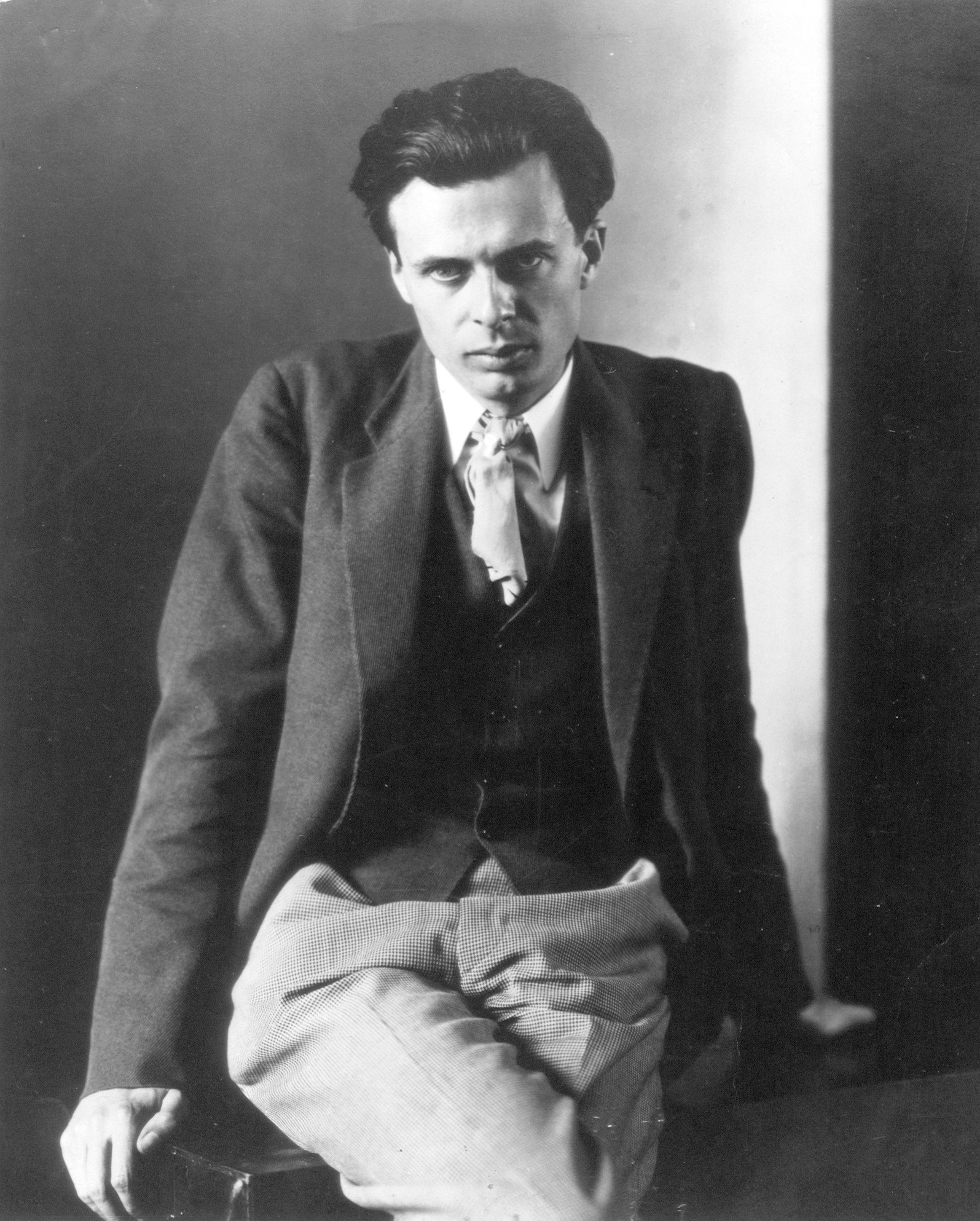
Aldous Huxley (1894-1963)

Aldous Huxley (1894-1963)

As Juan Vidal wrote for National Public Radio:

The best books are the ones that open further as time passes. But remember, it’s not because they changed. Every letter and punctuation mark is exactly where it always has been, and where it will remain forever. It’s you who are different; it’s you who’s been affected by the depth of your experience. And it’s you that has to grow and read and reread in order to better understand your friends.

I have just finished re-reading Aldous Huxley’s first novel, Crome Yellow, written in 1921 at the beginning of his career. In 1975, I was abashed by the romantic failures of Dennis Stone, the book’s narrator, with whom I identified because of my own experiences at that time. Now I see that Huxley not only was living through his own callow youth, but very neatly encapsulated for all time that obsessiveness with our own tactical failures can result in even more serious strategic failures in this life. Dennis fails with Anne Winbush, but his consciousness of failure prevents him from seeing Mary Bracegirdle, who is interested in him.

There are some books I re-read on a regular basis. Most notably: Marcel Proust’s In Search of Lost Time. I am now in my third reading of the seven-volume novel, and ready to start re-reading the third volume, The Guermantes Way. Then there are works like The Iliad and The Odyssey, Don Quixote, Dante’s Divine Comedy, Balzac’s Comédie Humaine, and any number of great books that I want to re-investigate because I have changed. To re-read is to measure that change.

When I was in my thirties, I loved Aldous Huxley and read many of his works. Now I think I’m about to check out his novels, stories, and essays again. The years have sped on, and we are all a work in progress.


Divisive Politics and Friendship

Even Greater Than Before

Even Greater Than Before

Alexandre Dumas Père wrote several novels starring the D’Artagnan and the Three Musketeers. The original novel was The Three Musketeers (1844)—in which all the musketeers were in their youth—followed by Twenty Years After (1845) and the multiple volumes of The Vicomte de Bragelonne (1847-1850).

I am currently re-reading Twenty Years After and find that D’Artagnan and the Musketeers have not only grown older by twenty years: They have also matured in other ways. The novel takes place during the Wars of the Fronde (1648-1653) in which the nobility resists the penny-pinching Cardinal Mazarin, who with Anne of Austria (widow of Louis XIII) is acting as regent for the young Louis XIV.

As lieutenant of the King’s Musketeers, D’Artagnan is pledged to support the royal party. Mazarin discovers how the Musketeers has performed so valiantly two decades earlier and requests that D’Artagnan bring together his former companions. But time has passed. He succeeds in recruiting Porthos to his cause, especially as all he really wants is to become a Baron.

But Aramis and Athos are loyal to the Fronde. Even D’Artagnan’s old servant Planchet is of that party. What I find so interesting in this sequel is that the political disunity does not dissolve the old friendship: It is still “all for one and one for all.” I am constantly reminded of parallels to our own political situation in this grisly Presidential Election of 2016. The vagaries of national politics seem to have no effect on the friendship of these four valiant fighters.

Even though Twenty Years After is more crowded with incident than The Three Musketeers, I find it to be a better novel, if for no other reason than its insight into the nature of friendship—especially of friendships that last.

Serendipity: Books and Brain Pickings

“A Marvellously Noble and Transcendent Chimera”

“A Marvelously Noble and Transcendent Chimera”

I do not follow many blog sites; though every once in a while, I find one that is superb. Such is Brain Pickings, which I have now included among my links.

The following observation on reading comes from Hermann Hesse’s My Belief: Essays on Life and Art, by way of Brain Pickings:

The great and mysterious thing about this reading experience is this: the more discriminatingly, the more sensitively, and the more associatively we learn to read, the more clearly we see every thought and every poem in its uniqueness, its individuality, in its precise limitations and see that all beauty, all charm depend on this individuality and uniqueness — at the same time we come to realize ever more clearly how all these hundred thousand voices of nations strive toward the same goals, call upon the same gods by different names, dream the same wishes, suffer the same sorrows. Out of the thousandfold fabric of countless languages and books of several thousand years, in ecstatic instants there stares at the reader a marvelously noble and transcendent chimera: the countenance of humanity, charmed into unity from a thousand contradictory features.

A Book of Essays I Will Have to Read

A Book of Essays I Will Have to Read

Good books lead everywhere, but especially to places worth going.


Travelers, Wild and Tame

Freya Stark (1893-1993)

Freya Stark (1893-1993)

For over forty years (except for a brief interlude when she was married), Freya Stark spent some 40 years traveling by herself in the Middle East. I have just finished reading her first book, Baghdad Sketches (1932), consisting of columns written for the Baghdad Times plus some 8 pieces added later for the British edition.

I am amazed that she was able to not only survive traveling in a difficult part of the world roughly between 1928 and 1970, but she lived to the age of 100.

She is not the first to do so. Gertrude Bell (who died in Baghdad just a couple years before Freya arrived there), also covered much of the same ground. Still, I cannot imagine in this period of violent jihad and xenophobia that their travels could be duplicated without a military escort.

Freya had interesting attitudes about solitude and travel. On the former, she wrote that “solitude is the one deep necessity of the human spirit to which adequate recognition is never given in our codes. It is looked upon as a discipline or penance, but almost never as the indispensable, pleasant ingredient it is to ordinary life.” For the modern traveler, she felt with distaste that its purpose “is to give people a glimpse of the exotic places without the least bit of inconvenience to themselves.”

In Baghdad Sketches, she gives a picture of a much more diverse population than exists now in the era of ISIS/ISIL/Daesh. Stark frequently visited among the Kurds, Yezidis, Shi’as, and Eastern Christians living in Iraq during the 1930s.

Among her books that I have read with pleasure, in addition to Baghdad Sketches, are:

  • The Valleys of the Assassins and Other Persian Travels (1934)
  • The Southern Gates of Arabia: A Journey to the Hadhramaut (1938)
  • Alexander’s Path: From Caria to Cilicia (1958)—about Turkey

Many of her books are still in print.


You Can, But You Won’t

E-Readers Are OK, but Smart Phones Are Not

E-Readers Are OK, but Smart Phones Are Not

Once I saw a website somewhere about all the devices that smart phones will render obsolete. On the list were e-readers, such as Kindle and Nook. I do not believe, however, that people with smart phones will be reading Proust’s In Search of Lost Time (in seven volumes) anytime soon. I do not even think that they will be reading many shorter books, such as 10 Haikus for the Next Millennium.

Just because you can read books on a smart phone does not mean that you will ever want to. There are four reasons for this:

  • You can only see so many words on a page. Excessive page-turning will render the reading experience too clumsy.
  • If your device is backlit, it will bother your eyes to read for any length of time. E-book readers like Nook and Kindles use a technology that does not glare at you.
  • People past a certain age (and I am already there) have trouble reading words on small screens.
  • Smart phones are so small that the reading experience is psychologically different from cradling a physical book in your hands.

I remember when Gutenberg and other websites put the complete texts of thousands of books online. In the last ten years, I have succeeded in reading only one book online: Sir Richard F. Burton’s Falconry in the Valley of the Indus. It is a relatively short book, and I can tell you it was a real chore, what with the glareback from my monitor. I believe this may also be a problem on iPads and other pad devices.

Over the years, I have long suspected that those people staring at their cellphone screens while walking are probably not reading Moby Dick.


L.A. Writer: John Fante

John Fante, L.A. Novelist, Short Story Writer, and Scriptwriter

John Fante, L.A. Novelist, Short Story Writer, and Scriptwriter

This is a series about writers whose work is predominantly set in Los Angeles.Last Month, I wrote about Eve Babitz (who is still alive).  I am wondering whether to open this series up to people who came from other countries, such as Aldous Huxley or Raymond Chandler, who have written works that have added to the Southern California scene. Omitted will be writers like Nathanael West (The Day of the Locust) who are primarily oddities or one-shots.

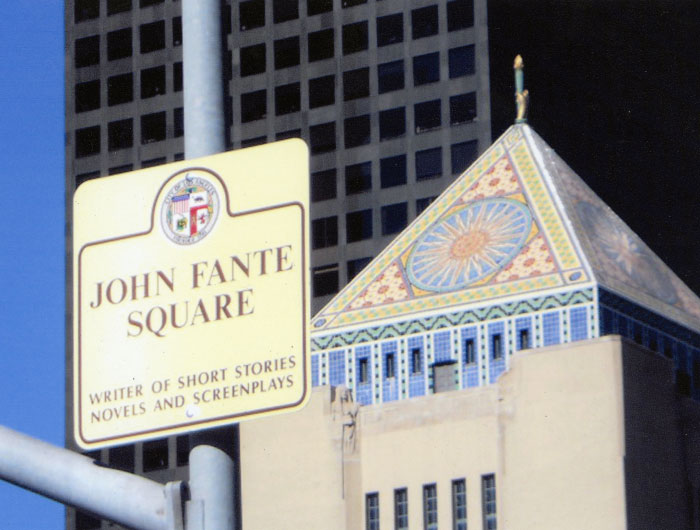
At the corner of West 5th Street and South Grand Avenue, hard by the Los Angeles Central Library, is a sign commemorating John Fante Square (see below), just on the edge of the old Bunker Hill neighborhood made famous by the writer’s Arturo Bandini novels. These include:

  • Wait Until Spring, Bandini (1938)
  • The Road to Los Angeles (1936, Published 1985)
  • Ask the Dust (1939)
  • Dreams from Bunker Hill (1982)

The best of them that I have read is Ask the Dust, which I finished reading this morning in the Central Library just outside the foot of Bunker Hill, where Fante and his hero Bandini lived.

Sign Commemorating John Fante Square with the Tower of the Central Library

Sign Commemorating John Fante Square with the Tower of the Central Library

Arturo Bandini wanted more than anything else to be a great writer, but we see him on the edge of poverty and trying unsuccessfully to find a love interest—in the worst possible way. His choice in Ask the Dust is a hophead Mexican waitress named Camilla Lopez with whom he has a love/hate relationship that ends badly. He is torn between his Italian Catholic upbringing and the glitzy Hollywood life of famous writers and film people.

It is in no way a Hollywood novel. In fact, Bandini and Lopez don’t even drive through Hollywood or have any interest in seeing films together.

Today, Bunker Hill is no longer a ghetto of cheap boarding houses; rather, it is full of high rise banks and corporate headquarters that tower over the lowlands of Downtown L.A. The old funicular, Angel’s Flight, which rises to the top of Bunker Hill from Hill Street across from the Grand Central Market is still in existence, though it is not presently in operation.

The life of John Fante has a particular interest for me because the end of his life was characterized by severe diabetes. In 1978, he went blind. Subsequently, he lost both of his legs to the disease. He died in 1983 at the age of 74.


Cold War Nostalgia

The Spy Vs. Spy Characters from Mad magazine

The Spy Vs. Spy Characters from Mad Magazine

Looking back, the Communists were a worthy enemy. There were no suicide vests or improvised explosive devices aimed at innocent civilians. (Religious wars are always the most brutal.) Mind you, the Russians weren’t Boy Scouts, either. But after the ugliness and indiscriminate savagery of the current Sunni Muslim jihad against the West, I grow downright nostalgic about the 1960s.

Lately, I have been reading the three great spy novelists of that time—with great pleasure. I just finished Funeral in Berlin by one of them, the great Len Deighton. The other two were Ian Fleming of James Bond fame, and John Le Carré, author of Tinker, Tailor, Soldier, Spy and The Spy Who Came In from the Cold.

Funeral in Berlin is typical of the period. The hero, who is called Harry Palmer in the movies but is unnamed in the books, arranges to transfer a Russian scientist to West Berlin by means of a coffin. No one seems to be trustworthy. In fact, the character one would think would be the most villainous, Colonel Stok of the KGB, is actually the most sympathetic character that “Harry” encounters. The people who are supposedly his allies are an untrustworthy lot: two of them try to kill him, others just want to sell him down river.

In comparison, James Bond is almost never surprised by villains who are supposed to be on the same side as him. There are all those lovely girls, and Felix Leiter of the CIA appears as a supporting hero in several of the novels.

Only Le Carré comes close to Deighton in creating a murky world of spies and supposed friends. My favorite of his books is Tinker, Tailor, Soldier, Spy, which has been made into an excellent film and a great British TV series starring Sir Alez Guinness as George Smiley.


At the Café of Lost Youth

Paris Café Scene, 1950s

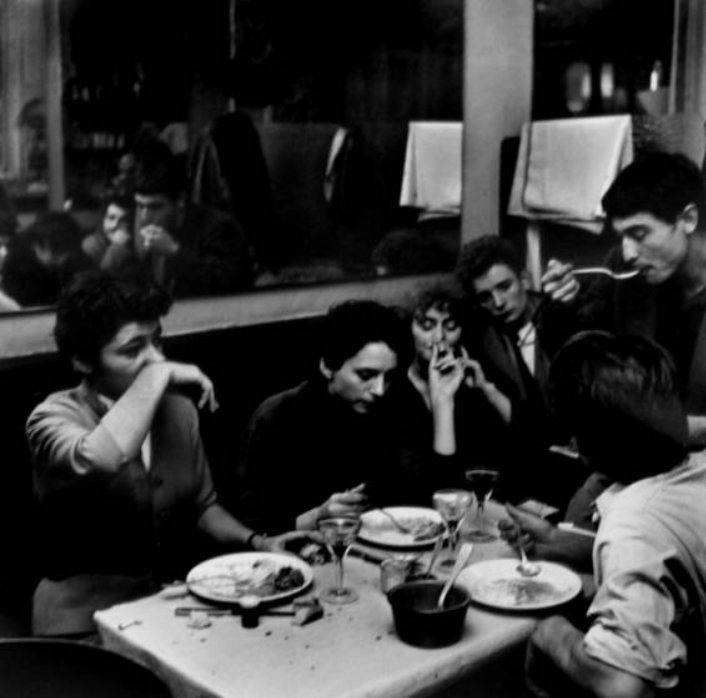
Paris Café Scene, 1950s (Ed van der Elsken)

On the back cover of my New York Review edition of Patrick Modiano’s In the Café of Lost Youth was an intriguing blurb:

In the Café of Lost Youth is vintage Patrick Modiano, an absorbing evocation of a particular Paris of the 1950s, shadowy and shady, a secret world of writers, criminals, drinkers, and drifters. The novel, inspired in part by the circle (depicted in the photographs of Ed van der Elsken) of the notorious and charismatic Guy Debord, centers on the enigmatic, waiflike figure of Louki, who captures everyone’s attention even as she eludes possession or comprehension.

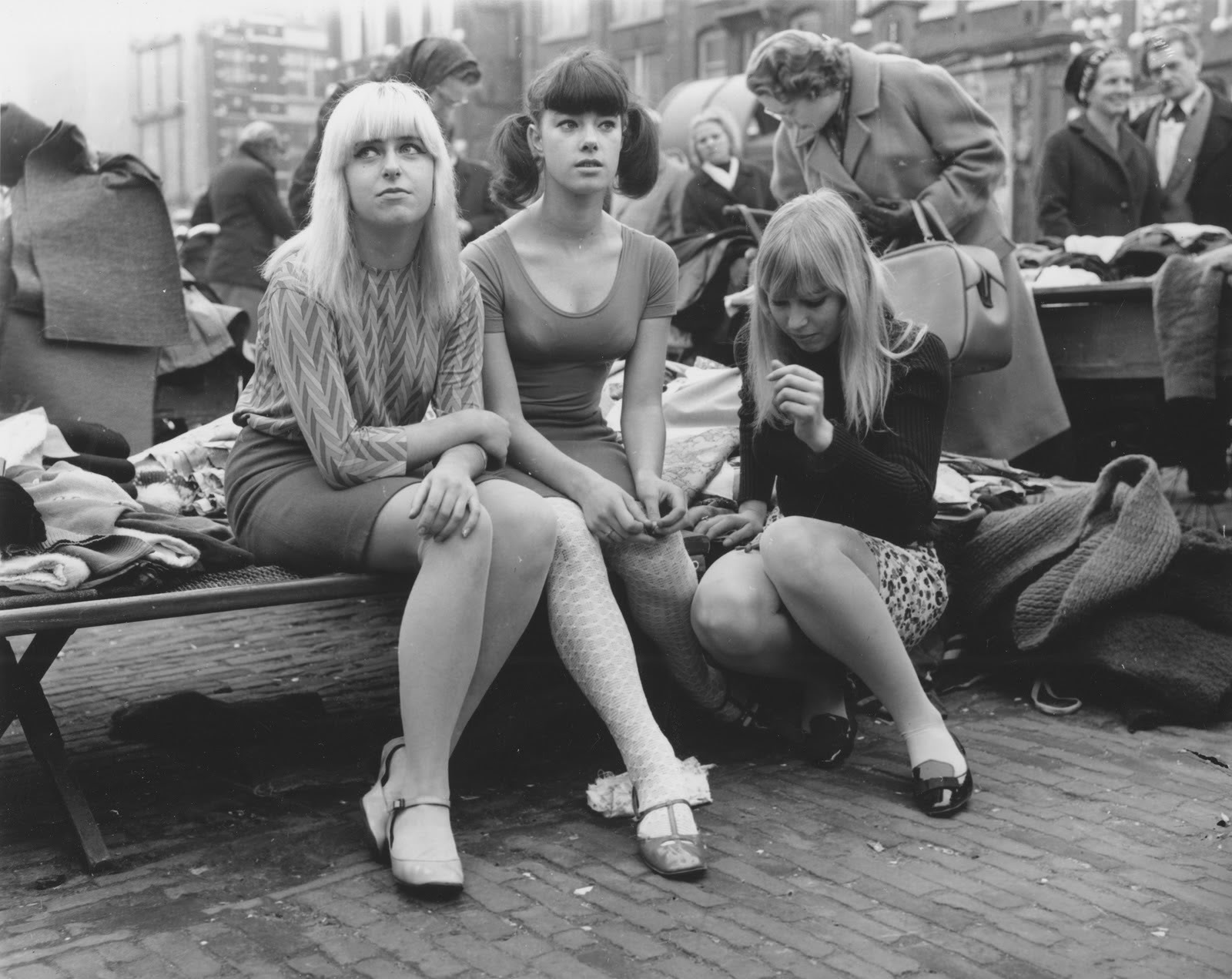
Naturally, I was intrigued and looked up the photos of Ed van der Elsken, of which I present two samples here. The above café scene is strongly suggestive of the Modiano book. The Parisian girls shown below are appealing images from a time long past:

Parisian Girls 1950s (Ed van der Elsken)

Parisian Girls 1950s (Ed van der Elsken)

One of the reasons I am drawn to Modiano’s work is that I am in love with Paris of the 1950s. I love the films (Melville, Chabrol, early Godard), the philosophy (Sartre, Camus), and now, with Modiano, the writers—even though he is writing retrospectively about the period over the last decade.

For more photos by Ed van der Elsken, click here.


Serendipity: Vikings in Black and White

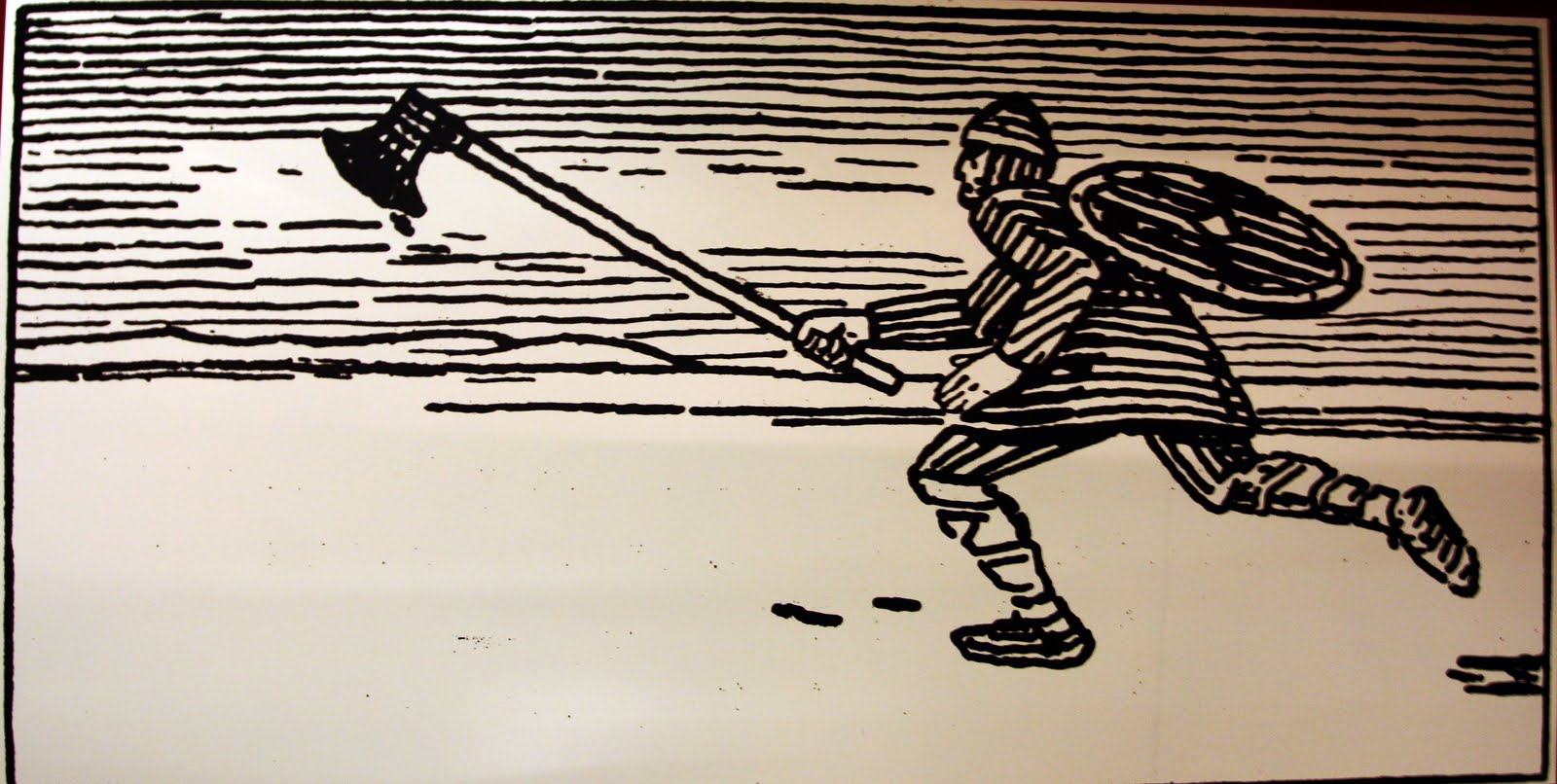
Skarphedinn the Viking Warrior from Njal’s Saga

Skarphedinn the Viking Warrior from Njal’s Saga

It took a blind poet to note something very interesting about Nordic literature at the time of the Vikings. On October 21, 1966, the Argentinian poet Jorge Luis Borges gave a class on Anglo-Saxon literature at the University of Buenos Aires. The book consists of notes recorded by the lecturer’s students and translated and published by New Directions in a volume entitled Professor Borges: A Course on English Literature. When the I read the following this morning at Los Angeles’s Central Library, I had chills up and down my spine:

And further south is what the Norse historians called Blaland, “blue land,” “land of blue men,” or rather Negroes, because they mixed the colors up a little. Besides one word, sölr, which means “yellowed” and is used to describe fallow fields and the sea, they have no colors. The snow is often spoken of, but they never say the snow is white. Blood is spoken of, but they never say it is red. They talk about the fields, but they never say they are green. We don’t know if this is the result of some kind of colorblindness or if it was simply a poetic convention. The Homeric Greeks said “the color of wine.” But we don’t know what color wine was for the Greeks; they don’t talk about colors, either. On the other hand, Celtic poetry that is contemporaneous or prior to Germanic poetry, contains an abundance of colors—it’s full of colors. There, every time a women is mentioned, they speak about her white body, her hair the color of gold or fire, her red lips. They also talk about green fields, and specify the colors of fruits, etcetera. In other words, the Celts lived in a visual world; the Norse did not.

At the time Borges gave this literature, his blindness was almost complete, though he was able to detect the color yellow.

Doctor Destouches and Mister Hyde

Louis-Ferdinand Céline

French Author Louis-Ferdinand Céline

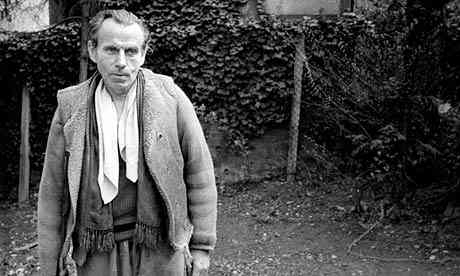
There are some writers in which critical opinion is inevitably polarized. Especially Louis-Ferdinand Céline, who committed the unpardonable sin of being politically incorrect to the nth degree. On one hand, he was the kindly Doctor Destouches, who ministered to the health needs of the poor without overcharging them. On the other, he wrote three anti-Semitic pamphlets in the lead-up to the Second World War that endeared him to the Nazi occupation forces and earned death threats from the French Resistance.

Not mentioned in the above paragraph is the fact that Céline wrote two of the greatest books of the 20th Cemtury: Journey to the End of the Night (1932) and Death on the Installment Plan (1936). His postwar trilogy about his travails for his “war crimes” is almost as great: Castle to Castle (1957), North (1960), and Rigadoon (1961).

The Young Céline

The Young Céline

In his biography of the author, Patrick McCarthy aska:

What remains alive of Céline? When one looks beyond his period and and beyond all the different roles he played, what remains of the man and his work? His life was dedicated to probing the pain that men feel at their contact with the world. Each person knows, as he goes about his daily round, that one part of himself does not join in. It remains outside, permanent and untouched. One tries to ignore it but it is there. It was Céline’s destiny to face this “otherness”: to look hard at it and to liberate it. It rushes out in his work as fear: the fear of man abandoned to himself. In Céline’s vision this fear engulfs all existence. It expresses itself in many ways: as pain, loneliness, hatred and pity. These are the guiding demons of Céline’s work—inseparably interwoven. But beyond all of them is this fundamental and total fear. It explains why reading Céline is such a shattering experience. It is not that fate dominates or that death lies in wait. It is that every moment the “otherness” is rampant. It runs around screaming that the nightmare is real and the waking hours only a dream. It imposes on the reader a very special kind of pain—reminiscent perhaps of Shakespeare’s wildest moments in King Lear.

When interviewed by an Italian journalist, American poet Charles Bukowski ended by saying, “Don’t shout so much. And read Céline.” That’s good advice.