“Fixed Points”

Avenue Rachel, 18th Arrondissement

Avenue Rachel, 18th Arrondissement

There are two parts of Paris that I know fairly well from having stayed there for a few days in May 1997 and again a few years later. I couldn’t say exactly when because, for some reason, our arrival at and departure from Charles De Gaulle were inexplicably missing from my passport of that period.

During the first visit, Martine and I stayed at the Citadines ApartHotel on Avenue Rachel between Montmartre and the place de Clichy. Avenue Rachel is a one-block street that dead ends (how appropriate is that expression!)  at the main entrance to the Montmartre Cemetery. Opened in 1825 at the site of an old gypsum quarry, it was originally called the Cimetière des Grandes Carrières (Cemetery of the Grand Quarries). Buried therein were such notables as Hector Berlioz, Henri-Georges Clouzot, Edgar Degas, Theophile Gautier, Edmond and Jules de Goncourt, and many other luminaries.

Something brough the Avenue Rachel to mind this week: It was Patrick Modiano’s somber and brilliant novelette entitled In the Café of Lost Youth: “I had forgotten the silence and calm of avenue Rachel, which leads to the cemetery, slthough you never think of the cemetery, you tell yourself that at its end it must let out into the countryside, or even, with a bit of luck, onto a seaside promenade.”

I, on the other hand, was very aware of the street ending in a cemetery. From my hotel window on an upper floor, I would stare at the funerary statuary. I also got to know the immediate area pretty well, from the massive Lycée Jules Ferry, the Rue Caulaincourt with its bridge arcing over the necropolis, Place Blanche, and the nearby Moulin Rouge—all of which figure in Modiano’s story as locales where the heroine, if she could indeed be called one, was raised.

In a futile search for a patisserie, I tromped up and down the streets of the neighborhood. It was not a particularly picturesque area, known primarily for nude dancers and sleazy bars.

It was interesting to be reminded of the place. Such a short street. And yet so memorable!

All About Albertine

Marcel and Albertine from a Film Version

Marcel and Albertine from a Film Version

The following is both a long prose poem and a work of literary criticism by Canadian poet Anne Carson. It tells everything you ever wanted to know about Albertine, who appears in 5 of the 7 volumes of In Search of Lost Time. It’s called “The Albertine Workout.” The poem is taken from The London Review of Books.

1. Albertine, the name, is not a common name for a girl in France, although Albert is widespread for a boy.

2. Albertine’s name occurs 2363 times in Proust’s novel, more than any other character.

3. Albertine herself is present or mentioned on 807 pages of Proust’s novel.

4. On a good 19 per cent of these pages she is asleep.

5. Albertine is believed by some critics, including André Gide, to be a disguised version of Proust’s chauffeur, Alfred Agostinelli. This is called the transposition theory.

6. Albertine constitutes a romantic, psychosexual and moral obsession for the narrator of the novel mainly throughout Volume Five of Proust’s seven-volume (in the Pléiade edition) work.

7. Volume Five is called La Prisonnière in French and The Captive in English. It was declared by Roger Shattuck, a world expert on Proust, in his award-winning 1974 study, to be the one volume of the novel that a time-pressed reader may safely and entirely skip.

8. The problems of Albertine are
(from the narrator’s point of view)
a) lying
b) lesbianism,
and (from Albertine’s point of view)
a) being imprisoned in the narrator’s house.

9. Her bad taste in music, although several times remarked on, is not a problem.

10. Albertine does not call the narrator by his name anywhere in the novel. Nor does anyone else. The narrator hints that his first name might be the same first name as that of the author of the novel, i.e. Marcel. Let’s go with that.

11. Albertine denies she is a lesbian when Marcel questions her.

12. Her friends are all lesbians.

13. Her denials fascinate him.

14. Her friends fascinate him too, especially by their contrast with his friends, who are gay but very closeted. Her friends ‘parade themselves’ at the beach and kiss in restaurants.

15. Despite intense and assiduous questioning, Marcel cannot discover what exactly it is that women do together (‘this palpitating specificity of female pleasure’).

16. Albertine says she does not know.

17. Once Albertine has been imprisoned by Marcel in his house, his feelings change. It was her freedom that first attracted him, the way the wind billowed in her garments. This attraction is now replaced by a feeling of ennui (boredom). She becomes, as he says, a ‘heavy slave’.

18. This is predictable, given Marcel’s theory of desire, which equates possession of another person with erasure of the otherness of her mind, while at the same time positing otherness as what makes another person desirable.

19. And in point of fact, how can he possess her mind if she is a lesbian?

20. His fascination continues.

21. Albertine is a girl in a flat sports cap pushing her bicycle across the beach when Marcel first sees her. He keeps going back to this image.

22. Albertine has no family, profession or prospects. She is soon installed in Marcel’s house. There she has a separate bedroom. He emphasises that she is nonetheless an ‘obedient’ person. (See above on Albertine as a ‘heavy slave’.)

23. Albertine’s face is sweet and beautiful from the front but from the side has a hook-nosed aspect that fills Marcel with horror. He would take her face in his hands and reposition it.

24. The state of Albertine that most pleases Marcel is Albertine asleep.

25. By falling asleep she becomes a plant, he says.

26. Plants do not actually sleep. Nor do they lie or even bluff. They do, however, expose their genitalia.

27. a) Sometimes in her sleep Albertine throws off her kimono and lies naked.
27. b) Sometimes then Marcel possesses her.
27. c) Albertine appears not to wake up.

28. Marcel appears to think he is the master of such moments.

29. Perhaps he is. At this point, parenthetically, if we had time, which we don’t, several observations could be made about the similarity between Albertine and Ophelia – Hamlet’s Ophelia – starting from the sexual life of plants, which Proust and Shakespeare equally enjoy using as a language of female desire. Albertine, like Ophelia, embodies for her lover blooming girlhood, castration, casualty, threat and pure obstacle. Albertine, like Ophelia, is condemned for a voracious sexual appetite whose expression is denied her. Ophelia takes sexual appetite into the river and drowns it amid water plants. Albertine distorts hers into the false consciousness of a sleep plant. In both scenarios the man appears to be in control of the script yet he gets himself tangled up in the wiles of the woman. On the other hand, who is bluffing whom is hard to say.

30. Albertine’s laugh has the colour and smell of a geranium.

31. Marcel gives Albertine the idea that he intends to marry her but he does not. She bores him.

32. Albertine’s eyes are blue and saucy. Her hair is like crinkly black violets.

33. Albertine’s behaviour in Marcel’s household is that of a domestic animal which enters any door it finds open or comes to lie beside its master on his bed, making a place for itself. Marcel has to train Albertine not to come into his room until he rings for her.

34. Marcel gradually manages to separate Albertine from all her friends, whom he regards as evil influences.

35. Marcel never says the word ‘lesbian’ to Albertine. He says ‘the kind of woman I object to’.

36. Albertine denies she knows any such women. Marcel assumes she is lying.

37. At first Albertine has no individuality, indeed Marcel cannot distinguish her from her girlfriends or remember their names or decide which to pursue. They form a frieze in his mind, pushing their bicycles across the beach with the blue waves breaking behind them.

38. This pictorial multiplicity of Albertine evolves gradually into a plastic and moral multiplicity. Albertine is not a solid object. She is unknowable. When he brings his face close to hers to kiss she is ten different Albertines in succession.

39. One night Albertine goes dancing with a girlfriend at the casino.

40. When questioned about this she lies.

41. Albertine is a quick and creative liar; she may even be a natural liar. But she is a bad liar.

42. Albertine lies so much and so badly that Marcel is drawn into the game. He lies too.

43. Marcel’s jealousy, fury, envy, impotence, curiosity, pride, boredom, suffering and desire are all exasperated to their highest pitch by the game.

44. Who is bluffing whom is hard to say. (See above on Hamlet).

45. Near the end of Volume Five, Albertine finally runs away, vanishing into the night and leaving the window open. Marcel fusses and fumes and writes her a letter in which he claims he had just decided to buy her a yacht and a Rolls Royce when she disappeared, now he will have to cancel these orders. The yacht had a price tag of 27,000 francs, about $75,000, and was to be engraved at the prow with her favourite stanza of a poem by Mallarmé.

46. Albertine’s death in a riding accident on p.642 of Volume Five does not emancipate Marcel from jealousy, it removes only one of the innumerable Albertines he would have to forget. The jealous lover cannot rest until he is able to touch all the points in space and time ever occupied by the beloved.

47. There is no right or wrong in Proust, says Samuel Beckett, and I believe it. The bluffing, however, remains a grey area.

48. Let’s return to the transposition theory.

49. On 30 May 1914, French newspapers reported that Alfred Agostinelli, a student aviator, fell from his machine into the Mediterranean sea near Antibes and was drowned. Agostinelli, you recall, was the chauffeur whom Proust in letters to friends admitted that he not only loved but adored. Proust had bought Alfred the aeroplane, which cost 27,000 francs, about $75,000, and had had it engraved on the fuselage with a stanza of Mallarmé. Proust also paid for Alfred’s flying lessons and registered him at the flying school under the name Marcel Swann. The flying school was in Monaco. In order to spy on Alfred while he was there, Proust sent another favourite manservant, whose name was Albert.

50. Compare and contrast Albertine’s sudden fictional death by runaway horse with Alfred Agostinelli’s sudden real-life death by runaway plane. Poignantly, both unfortunate beloveds managed to speak to his/her lover from the wild blue yonder. Agostinelli, before setting out for his final flight, had written a long letter, which Proust was heartbroken to receive the day after the plane crash. Transposed to the novel, this exit scene becomes one of the weirdest in fiction.

51. Several weeks after accepting the news that Albertine has been thrown from her horse and killed, Marcel gets a telegram:

You think me dead but I’m alive and long to see you! affectionately Albertine.

Marcel agonises for days about this news and debates with himself whether to resume relations with her, only to realise that the signature on the telegram has been misread by the telegraph operator. It is not from Albertine at all but from another long-lost girlfriend whose name (Gilberte) shares its central letters with Albertine’s name.

52. ‘One only loves that which one does not entirely possess,’ says Marcel.

53. There are four ways Albertine is able to avoid becoming possessable in Volume Five: by sleeping, by lying, by being a lesbian or by being dead.

54. Only the first three of these can she bluff.

55. Proust was still correcting a typescript of La Prisonnière on his deathbed, November 1922. He was fine-tuning the character of Albertine and working into her speech certain phrases from Alfred Agostinelli’s final letter.

56. It is always tricky, the question whether to read an author’s work in light of his life or not.

57. Granted the transposition theory is a graceless, intrusive and saddening hermeneutic mechanism; in the case of Proust it is also irresistible. Here is one final spark to be struck from rubbing Alfred against Albertine, as it were. Let’s consider the stanza of poetry that Proust had inscribed on the fuselage of Alfred’s plane – the same verse that Marcel promises to engrave on the prow of Albertine’s yacht, from her favourite poem, he says. It is four verses of Mallarmé about a swan that finds itself frozen into the ice of a lake in winter. Swans are of course migratory birds. This one for some reason failed to fly off with its fellow swans when the time came. What a weird and lonely shadow to cast on these two love affairs, the fictional and the real; what a desperate analogy to offer of the lover’s final wintry paranoia of possession. As Hamlet says to Ophelia, accurately but ruthlessly, ‘you should not have believed me.’

58.

Un cygne d’autrefois se souvient que c’est lui
Magnifique mais qui sans espoir se délivre
Pour n’avoir pas chanté la région où vivre
Quand du stérile hiver a resplendi l’ennui

(Mallarmé, ‘Le vierge, le vivace et le bel aujourd’hui’)

a swan of olden times remembers
that it is he:
the one
magnificent but
without hope setting himself free
for he failed to sing
of a region for living
when barren winter
burned all around him with ennui

59. ‘Everything, indeed, is at least double.’

La Prisonnière p.362

 

LA Writer: Eve Babitz

Eve Babitz Plays Chess with Marcel Duchamp

Eve Babitz Plays Chess with Marcel Duchamp

This is the start of a new series of blogs by me to be called “LA Writer.” Los Angeles has its own literary scene, some native born, some expatriate, and some just passing through. I plan to make at least one entry in this series each month.

You are a famous French painter and chess master named Marcel Duchamp. It is October 1963, and you are at the Pasadena Art Museum to attend the opening of a show dedicated to your work, mostly from the earlier part of the century. You are seated at a chessboard. Across from you is a nude 20-year-old who is, in many ways, the numero uno L.A. babe of the 1960s. Her name? Eve Babitz.

All you could say? “Alors!

Eve didn’t win the chess game, but she won the match. It didn’t take long before she was widely known. Her boyfriends included Jim Morrison of the Doors, Ed Rucha, Harrison Ford, Steve Martin, and practically everyone who was anyone in the world of art and entertainment. The chess game was just a start.

She is also the author of a semi-autobiographical, semi-fictional memoir entitled Eve’s Hollywood, which shows her to have been wide awake in a decade in which many were half-asleep at best. Not only is she an excellent writer: She designed scores of album covers for rock bands—and you know that album covers of the time are some of the most memorable icons of the 60s.

Eve Batitz by Ed Rucha

Eve Batitz by Ed Rucha

Eve’s style is all her own. It’s the way a beautiful and confident young woman who was on top of the world—but who had a serious brain—would write. For example, about the city of her birth:

Culturally, L.A. has always been a humid jungle alive with seething L.A. projects that I guess people from other places just can’t see. It takes a certain kind of innocence to like L.A., anyway. It requires a certain plain happiness inside to be happy in L.A., to choose it and be happy here. When people are not happy, they fight against L.A. and say it’s a “wasteland” and other helpful descriptions.

That leaves out Woody Allen.

Take, for example, this description as to why quit being a Brownie:

In grammar there is a noun and there are adjectives. Adjectives modify the noun, they alter it and cramp its style. I didn’t want to be a Brownie girl. So I quit the Brownies.

And how’s this for a mission statement:

What I wanted, although at the time I didn’t understand what the thing was because no one ever tells you anything until you already know it, was everything.

Eve Babitz was a gorgeous young woman at the top of the world who knew what she liked and was not afraid to talk about it in a way that was both interesting and all her own. She writes with a supreme confidence in a slightly unorthodox, yet highly workable style, that is highly engaging.

In my review of Eve’s Hollywood for Goodreads.Com, I wrote:

When I arrived in Los Angeles between Christmas and New Years in 1966, I was fully prepared to “put up with” the place while my heart remained in … Cleveland, for God’s sake! I am sad to say it took a number of years before I woke up and let the magic of the place begin to work on me. Those first few years I now regard as “the lost years.” I studied film history and criticism at UCLA, saw thousands of movies, but was oblivious to the flower-scented air, redolent with night-blooming jasmine.

Now I have found a writer who has helped reconcile me to my own past: It is Eve Babitz, whose book Eve’s Hollywood covers my black-out years. Eve was born in L.A. of artistic parents and lived in Hollywood, living life to the fullest—sleeping with the likes of Jim Morrison of the Doors, artist Ed Rucha, and numerous other males known for beauty and/or brains.

Eve’s Hollywood is available in a paperback edition published by New York Review Books.


Books Are Dangerous

Bookmarks from The Last Bookstore

Bookmarks from The Last Bookstore

The wording is ominous:

Books are dangerous!
Report to The Last Bookstore
To sell or trade your books
While you still can!

Founded in 2005, The Last Bookstore claims to be California’s largest bookstore, and it may very well be. “What are you waiting for?” its website asks. “We won’t be here forever.”

This is what I call a Filboid Studge marketing campaign, based on the Saki short story entitled “Filboid Studge: The Story of a Mouse That Helped.” I’ve included a link because the story is very short and outrageously hilarious.

The bookstore at the corner of West 5th and Spring Streets in Downtown Los Angeles was one of the highlights of yesterday’s safari by Martine and me. I took eleven books to donate to the store and wound up buying four titles, including Eve Babitz’s Eve’s Hollywood, which I am currently reading with great excitement.

Interior of The Last Bookstore (2nd Floor)

Interior of The Last Bookstore (2nd Floor)

I have been in Los Angeles for half a century now, and I look back at my time here with all the pleasurable hours I spent in bookstores that, for the most part, are no more. There was Papa Bach’s at Santa Monica and Sawtelle; the Westwood Book Company, Butler Gabriel, Campbell’s, Brentano’s, and Borders—all in Westwood; Martindale’s in Santa Monica; Zeitlin & Verbrugge on the West Side; Acres of Books in Long Beach; Brand Books in Glendale; and Pickwick in Hollywood.

They are all gone now. People stare intently at their smart phones and pretend to communicate—but really don’t. They say they could read books on their devices, but never seem to. Perhaps the whole idea of the book is dying while a new generation willfully enslaves itself to a handheld electronic device.

So kudos to The Last Bookstore. Be defiant! Be a dinosaur! Wave your standard proudly!


Ghost Train to Anywhere

Paul Theroux on One of His Mythical Train Rides

Paul Theroux on One of His Mythical Train Rides

For almost forty years, I have been traveling around the world with Paul Theroux—starting with his train ride books The Great Railway Bazaar (1975) and The Old Patagonian Express (1979) to whatever I could get my hands on. Even when I said to myself, “This guy is altogether too snarky,” I followed his adventures with an interest bordering on zeal.

Only now do I realize he is one of the great influences on my life. It was not until November 1975 that I began my own travels (other than back and forth between Los Angeles and Cleveland). My visit to Yucatán opened my eyes and was followed by trips to Britain, Hungary, Czechoslovakia, and a lot more of Mexico. It was as if the floodgates were open, and my eyes were focussed on the world at large, and not just at whatever place I was living at the time.

I have glorious memories of my trips, even the first one to Argentina, when I broke my right shoulder in a blizzard in Tierra del Fuego. I was hooked, and have been ever since.

Yeah, I Second the Motion!

Yeah, I Second the Motion!

A few days ago, I finished reading Theroux’s Ghost Train to the Eastern Star (2008) in which I found the following quotes which resonated with me:

Often on a trip, I seem to be alive in a hallucinatory vision of difference, the highly colored unreality of foreignness, where I am vividly aware (as in most dreams) that I don’t belong; yet I am floating, an idle anonymous visitor among busy people, an utter stranger. When you’re strange, as the song goes, no one remembers your name.

Also, it doesn’t matter any more who’s topping the charts. Taylor Swift doesn’t mean anything to me; and if Kim Kardashian’s ass were offered to me on a silver platter, I would not too politely refuse. I have climbed the Mayan pyramids at Uxmal and Chichén Itzá. I have taken a fall at Magallanes and Rivadavia in Ushuaiah and injured myself. I have visited two Communist Eastern European countries before 1989. I have seen things most people have not seen, and it has changed me forever.

It seemed to me that this was the whole point of traveling—to arrive alone, like a specter, in a strange country at nightfall, not in the brightly lit capital but by the back door, i9n the wooded countryside, hundreds of miles from the metropolis where typically people didn’t see many strangers and were hospitable and did not instantly think of me as money on two legs.

Being a traveler is being something of a loner. I am certainly that. But I wouldn’t have it any other way. I will travel as long as I can.


Meeting Marcel

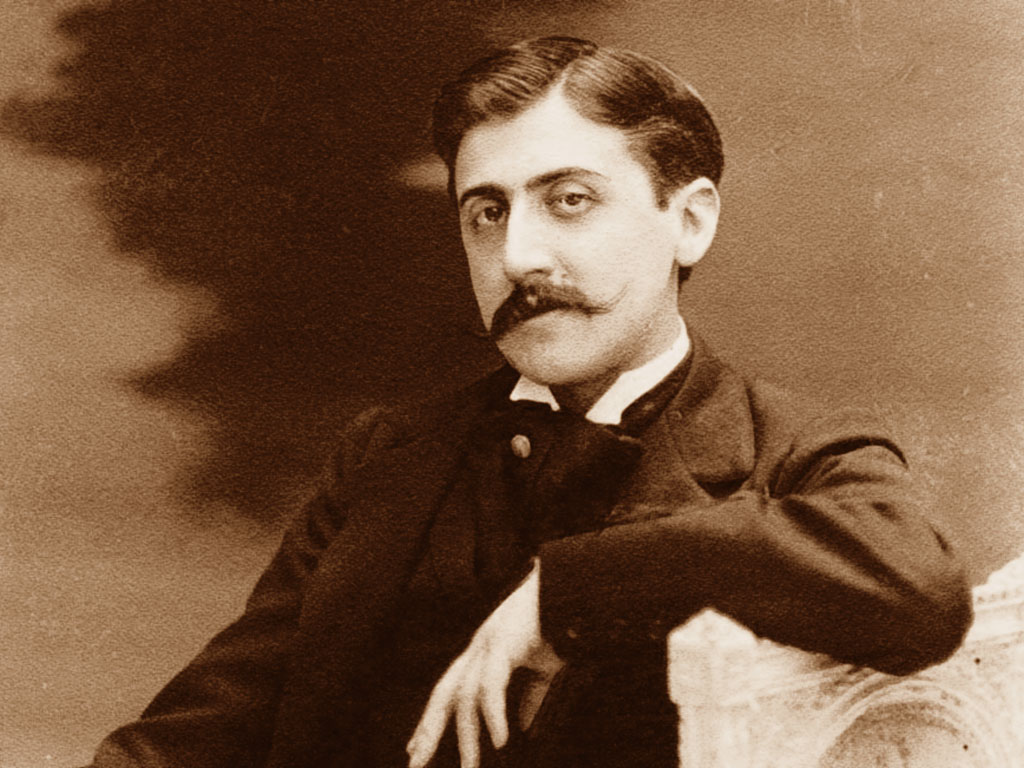
Marcel Proust

Marcel Proust

It is always interesting to read one great writer’s judgment on another. Such was François Mauriac about his meeting in February 1918 with Marcel Proust:

He seemed rather small to me, stoopshouldered in his tight-fitting jacket, his thick black hair shadowing his pupils, dilated, it appears, by drugs. Stuffed into a very high collar, his starched shirtfront bulging like a breastbone, he cast on me a nocturnal eye whose intensity intimidated me.

At the end of the great first chapter in his book Proust’s Way, Mauriac pays homage to the brilliance of his colleague:

The integral history of a young life, of its loves, its friendships, its weaknesses, its intellectual or religious crises, offers the vast proportions of the history of the ideas and customs at a certain epoch as they are reflected in a single spirit. And a long old age would not be enough to complete the account or to exhaust its drama.

As I slowly wend my way through A la recherche du temps perdu—for the third time—I can vouch for that. I will never be finished with his intense vision of the life of one particular individual and his milieu some century and a quarter ago in a distant European country.


One-Trick Ponies

Many Countries Are Too Small or Obscure for More Than One Great Writer

Many Countries Are Too Small or Obscure for More Than One Great Writer

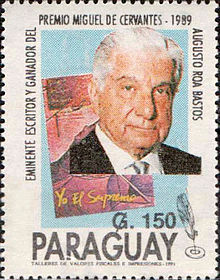
The photo above is of a snake devouring a lizard in Paraguay’s Gran Chaco, one of the most desolate areas on earth. And yet Paraguay gave birth to Augusto Roa Bastos (1917-2005), author of  The Son of Man and I the Supreme, two works that would be better known if their author were not from Paraguay.

Iceland’s claim to fame is the Nobel-Prize-winning novelist Halldór Kiljan Laxness (1902-1998), who wrote many novels that were translated into English, the most famous of which is Independent People. And yet his name is frequently mentioned by people who are carping about the Nobel Prize Committee’s penchant for obscure works. In this case, however, they were dead wrong; and the critics have some learning to do.

Talk about obscure, what about Bosnia? That little country’s literary star is Ivo Andrić  (1892-1975), whose most famous work is The Bridge on the Drina, a work which I think is necessary if you want to understand the tragic and horribly snarled history of the Balkans.

Augusto Roa Bastos

Augusto Roa Bastos

The doyen of South African literature is J. M. Coetzee (1940-Present), author of Waiting for the Barbarians and other excellent novels, plus several penetrating collections of literary essays.

Peru’s most famous author is Mario Vargas Llosa (1936-Present) who is his country’s only Nobelist, and who is also famous for having beaten up Colombia’s most famous author Gabriel García Márquez (1927-2014) in an argument over a woman’s honor. Gave him quite a shiner, in fact!

I guess the point I am trying to make is that it’s worth the effort to go farther afield than those well-traveled paths through the United States, England, and France. I made made many literary discoveries in strange places—a practice which I definitely intend to continue.

A corollary to this: There are many small countries which have rich literatures. Hungary and Portugal immediately come to mind. But there is also Australia, which I am finding is quite the treasure trove.


The Eight Rules of Writing

Kurt Vonnegut (1922-2007)

Kurt Vonnegut (1922-2007)

I admire the simplicity of Kurt Vonnegut’s eight rules of writing, as set down below:

  1. Use the time of a total stranger in such a way that he or she will not feel the time was wasted. [Maybe this is the best rule of them all.]
  2. Give the reader at least one character he or she can root for.
  3. Every character should want something, even if it is only a glass of water.
  4. Every sentence must do one of two things—reveal character or advance the action.
  5. Start as close to the end as possible.
  6. Be a Sadist. No matter how sweet and innocent your leading characters, make awful things happen to them—in order that the reader may see what they are made of.
  7. Write to please just one person. If you open a window and make love to the world, so to speak, your story will get pneumonia.
  8. Give your readers as much information as possible as soon as possible. To hell with suspense. Readers should have such complete understanding of what is going on, where and why, that they could finish the story themselves, should cockroaches eat the last few pages.

Now these rules pertain almost exclusively to writing fiction. I wonder if I could adapt them to writing blogs. I’ll have to get back to you on that.


The Tropics We Cross

Julian Barnes and His Late Wife, Pat Kavanagh

Julian Barnes and His Late Wife, Pat Kavanagh

Little did I think when the read the first few pages of Levels of Life by Julian Barnes that, before long, I would be immersed in an essay about the grief of losing one’s wife. I can quote the paragraph where the book, quite suddenly, more than halfway through, changes gears:

Early in life, the world divides crudely into those who have had sex and those who haven’t. Later, into those who have known love, and those who haven’t. Later still—at least if we are lucky (or, on the other hand, unlucky)—it divides into those who have endured grief, and those who haven’t. These divisions are absolute; they are tropics we cross.

The book began as a kind of essay on lighter-than-air ballooning, with an interesting sidelight on photography. Then, in he second section, we meet Captain Fred Burnaby, an avid balloonist, who falls in love with the French actress Sarah Bernhardt. But it is not to be, she rejects him by simply switching partners, and he goes on to marry a young woman who becomes ill and must spend the rest of her life in a sanatorium in the Alps for consumptives. He later fights with Gordon in Khartoum, and dies of a spear thrust at the Battle of Abu Klea.

Early in the third and last section, Barnes tells us what the book is really about: namely, what happens to his life when his wife of thirty years, Pat Kavanagh, dies of cancer, leaving her husband to realize that there is no simple and sure-fire way of dealing with protracted grief:

Love may not lead where we think or hope, but regardless of outcome it should be a call to seriousness and truth. If it is not that—if it is not moral in its effect—then love is no more than an exaggerated form of pleasure. Whereas grief, love’s opposite, does not seem to occupy a moral space. The defensive, curled position it forces us into if we are to survive makes us more selfish. It is not a place of upper air; there are no views. You can no longer hear yourself living.

I have often wondered what would happen to me if I should lose Martine. I see myself on a long journey, taking interminable bus rides in Patagonia perhaps, where the outer desolation would mirror my own insides. Or else, I would not. It is possible I would live the rest of my life as an unfinished conversation with my departed little French girl that continues despite strange looks from my friends. Who knows?

In the meantime, I will try to live while I can. It’s a mistake not to.

Word

Now Which of These Can Be Considered as Medioxumous?

Now Which of These Can Be Considered as Medioxumous?

I was always a word freak. Even from my middle school years, I studied vocabulary books to increase my store of words. Imagine my delight when, in 1968, as a graduate student in film at UCLA, I got a job proofreading two computerized transcripts of Merrian-Webster dictionaries.

One interesting wrinkle was that my predecessor in my job, a young lady, was murdered by a graduate student in film at UCLA. (It wasn’t me, honest!)

In the process of proofreading thousands of pages of dictionary entries, I collected a few interesting words that don’t make it into print much these days:

  • Septemfluous: “flowing in seven streams,” describing the blood of the crucified Christ.
  • Medioxumous: “of or relating to the middle rank of deities”
  • Rotl: “any of various units of weight of Mediterranean and Near Eastern countries ranging from slightly less than one pound to more than six pounds”
  • And, coming to us from Welsh, cwm and crwth (not misprints), meaning “valley” and “crowd” respectively, and pronounced “coom” and “crooth.”

I have a few words to add to these from the 1755 edition of Dr. Samuel Johnson’s Dictionary of the English Language. They don’t seem to have made it into subsequent editions, though the Futility Closet managed to ferret them out:

  • Finger-flinger: “a pretender to astrology and prediction,” not to be confused with an irate motorist
  • Pissburnt: “stained with urine”
  • Centuriator: “a name given to historians, who distinguish times by centuries”
  • Longimanous: “long-handed; having long hands”
  • Overyeared: “too old,” like the writer of this blog

The illustration above is by the talented BurenErdene at DeviantArt.