I AM That Demon


A Representation of the Mandaean Demon Dinanukht

A Representation of the Mandaean Demon Dinanukht

It is strange how reading a few lines on some abstruse subject can set your mind going. I was reading Christian Caryl’s review of Gerard Russell’s book Heirs to Forgotten Kingdoms: Journeys into the Disappearing Religions of the Middle East in the December 4, 2014 issue of The New York Review of Books. There I came upon this quote from the book regarding the Mandaeans from the marshes of Southern Iraq:

There is Krun, the flesh mountain, who sounds a bit like Jabba the Hutt; as [E. S.] Drower wrote, “The whole visible world rests on this king of darkness, and his shape is that of a huge house.” There is Abraham, who appears as a failed Mandaean guided by an evil spirit to leave and found his own community. There is the dragon Ur, whose belly is made of fire and sits above an ocean of flammable oil. There is Ptahil, “who takes souls to be weighed and sends his spirits to fetch souls from their bodies.” My favorite was the demon Dinanukht, who is half man and half book and “sits by the waters between the worlds, reading himself.” [Italics mine]

Omigosh, that sounds like me.


Serendipity: “Nothing Is Ever Repeated”

Juan José Saer (1937-2005)

Juan José Saer (1937-2005)

This is how I find new authors: Sick with a miserable cold, I go to Yamadaya Ramen in Westwood and while snarfing down a premium shio with extra bamboo shoots, I read the November 20, 2014 edition of The New York Review of Books and find a review by David Gallagher of an Argentinean author I would very much like to read, Juan José Saer. Here he talks about La Grande, Saer’s unfinished novel that has recently been published by Open Letter:

On a long, meditative bus ride from Rosario back to Santa Fe, Tomatis concludes that even the most familiar objects in his house change all the ti9me. “When we return to the kitchen from the dining room, or to the dining room from the kitchen, in the time it takes to find a clean knife in the utensil drawer, everything has changed,” he muses, and in the manner of the Colastiné Indians, he wonders if his house or town will still be there when he gets back. Nula is fascinated with the notion that no two instances are alike, and he obsesses about it on the most unlikely occasions, as when he kisses for the first time a girl called Virginia, with whom he is about to have a one-night stand. In his car, on their way to a motel he reflects that no two kisses are the same. With Virginia by his side he somehow has the time and the inclination to tell himself that

although everything is alike, nothing is ever repeated, and that since the beginning of time, when the great delirium began its expansion, … every event is unique, flaming, unknown, and ephemeral: the individual does not incarnate the species, and the part is not a part of the whole, but only a part, and the whole in turn is always a part; there is no whole; the goldfinch that sings at dawn sings for itself; … and its previous song, which even it does not remember singing, and which seems so much like the one before, if one listened carefully, would clearly be different.


Cranking Up the Januarius

Janus: Looking Forward and Backward

Janus: Looking Forward and Backward

It all started with the new millennium. I saw that I was reading a lot of books but didn’t want to get stuck in a rut; so I started what I called my Januarius system. To explain it, let me refresh your memory from my post of January 26, 2014:

For many years now, I have had a habit during the month of January of reading only those books written by authors I have never read before. Here are some of the discoveries I have made in past years:

2001 – Kazuo Ishiguro, An Artist of the Floating World
2002 – Lieut Col F M Bailey, Mission to Tashkent
2003 – Orhan Pamuk, My Name Is Red
2004 – William Hazlitt, Essays
2005 – Michael Cunningham, The Hours
2006 – Victor Segalen, René Leys
2007 – Haruki Murakami, Kafka on the Shore
2008 – Simon Sebag Montefiore, In the Court of the Red Tsar
2009 – Mischa Glenny. The Balkans: Nationalism, War, and the Great Powers 1804-1999
2010 – Harper Lee, To Kill a Mockingbird (I didn’t want to be the only person in America who hadn’t read this book)
2011 – Fernando Pessoa, The Book of Disquiet
2012 – W G Sebald, Vertigo
2013 – Vasily Grossman, Life and Fate

In January 2014, the highlights were Tony Judt’s Postwar and Junot Diaz’s The Brief Wondrous Life of Oscar Wao. This month, I am reading Andrey Platonov’s Soul and Andrew Hodges’s Alan Turing: The Enigma. (I could tell already that Platonov is going to become one of my favorites.)

I have found that this practice introduces me to more world literature and more women writers. In the latter group, it led me to discover Lydia Davis, Shirley Hazzard, A. S. Byatt, Annie Ernaux, Anita Brookner, and Herta Müller to name just a few. Without being spurred to do it, I find I tend to neglect too many excellent women novelists, poets, and short story writers. I guess it’s those damned chromosomes.


Tarnmoor’s ABCs: Newspapers

Take a Good Look While They’re Still There

Take a Good Look While They’re Still There

I was so very impressed by Czeslaw Milosz’s book Milosz’s ABC’s. There, in the form of a brief and alphabetically-ordered personal encyclopedia, was the story of the life of a Nobel Prize winning poet, of the people, places, and things that meant the most to him. Because his origins were so far away (Lithuania and Poland) and so long ago (1920s and 1930s), there were relatively few entries that resonated personally with me. Except it was sad to see so many fascinating people who, unknown today, died during the war under unknown circumstances.

My own ABCs consist of places I have loved (Iceland), things I feared (Earthquakes), writers I have admired (Chesterton, Balzac, Proust, and Borges); things associated with my past life (Cleveland and Dartmouth College), people who have influenced me (John F. Kennedy), and things I love to do (Automobiles and Books). This blog entry is my own humble attempt to imitate a writer whom I have read on and off for thirty years without having sated my curiosity. Consequently, over the months to come, you will see a number of postings under the heading “Tarnmoor’s ABCs” that will attempt to do for my life what Milosz accomplished for his. To see my other entries under this category, hit the tag below marked “ABCs”. I don’t guarantee that I will use up all 26 letters of the alphabet, but I’ll do my best. Today the letter is “N” for Newspapers.

I know that newspapers are in trouble, especially in this country. Still, I cannot imagine beginning my day without reading the Los Angeles Times with my breakfast. (It used to be the Herald Examiner, but that died almost exactly twenty-five years ago.) I scan the front page, the California section, the business section, and—most especially—the comics.

The comics have always given me a good feel for the way people really look at life. It’s the most “popular” section of the paper, and it cuts across age boundaries and even socioeconomic boundaries. I know I could see many of the comics on individual websites, but not easily while I am drinking my tea and munching my cheese and crackers. This morning it would not have been possible at all because I think my Uninterrupted Power Supply unit crashed overnight. Despite a fearsome rainstorm, however, my paper was still leaning on my doorstep.

There are parts of my newspaper I don’t read, including the sports page and many opinions of columnists and pundits. I’m down on pundits in general. It’s kind of pathetic that these people, who get paid for being experts, are often so ignorant and opinionated. As for sports, I have no allegiance to these highly-paid mercenaries from L.A. and elsewhere.

Will American newspapers eventually disappear? I wish I knew. In the meantime, I will continue to read the Times.


Beatniks Then and Now

Fifty Years Before the Opera Came the Novel

A Full Fifty Years Before the Opera Came the Novel

A hundred years before Jack Kerouac, Allen Ginsberg, and the Beat Generation came into being, there were the “original” Bohemians—although, possibly, one could make a case for tracing them all the way back to François Villon in the 15th Century—popularized by Henri Murget in Scènes de la Vie de Bohème (or Bohemians of the Latin Quarter). We are probably much more familiar with the operas based on this popular novel of the 1840s, including Giacomo Puccini’s La Bohème. Ruggiero Leoncavallo also wrote an operatic version, and the Broadway musical Rent is loosely based on  Murger’s novel of 1846-1847.

The big difference between the Beats and Murget’s Bohemians is that, while the Beats were more heavily into booze and drugs, the Parisian artists and artistes of the 1840s were more into surviving. The whole picture of the starving young artist really came into fruition around then. We see pieces of it in Honoré de Balzac’s Illusions Perdues (Lost Illusions) and some of his other works, but it was Murger who popularized it, while graciously acknowledging Balzac’s contribution.

In Murget’s novel, there were four main heroes: Rodolphe, Marcel, Colline, and Schaunard, along with their mistresses, especially Mimi and Musette. What distinguishes Murget from Balzac is that he is nowhere near as dark. His Bohemian artists are impoverished, but generous and good-hearted. Although it has a “where are the snows of yesteryear” (itself a quote from Villon) sadness to it, we do not feel there is any evil present, except perhaps in the landlords who persist on asking for rent. As Marcel cynically says at one point toward the end:

It is no longer possible for us to continue to live much longer on the outskirts of society—on the outskirts of life almost—under the penalty of justifying the contempt felt for us, and of despising ourselves. For, after all, is it a life we lead? And are not the independence, the freedom of mannerism of which we boast so loudly, very mediocre advantages? True liberty consists of being able to dispense with the aid of others, and to exist by oneself, and have we got to that? No, the first scoundrel, whose name we would not bear for five minutes, avenges himself for our jests, and becomes our lord and master the day on which we borrow from him five francs, which he lends us after having made us dispense the worth of a hundred and fifty in ruses or in humiliations. For my part, I have had enough of it. Poetry does not alone exist in disorderly living, touch-and-go happiness, loves that last as long as a bedroom candle, more or less eccentric revolts against those prejudices which will eternally rule the world, for it is easier to upset a dynasty than a custom, however ridiculous it may be. It is not enough to wear a summer coat in December to have talent; one can be a real poet or artist whilst going about well shod and eating three meals a day. Whatever one may say, and whatever one may do, if one wants to attain anything one must always take the commonplace way.

Unfortunately, not many people today read Murger. It is interesting, however, to trace an idea back to its origins; and Murger makes for pleasant reading. You can find a free English translation on Gutenberg.Com.

Serendipity: Ishmael and Queequeg

The “Cannibal” Queequeg

The “Cannibal” Queequeg

Today, I found myself waiting in the library of Loyola Marymount University for several hours while Martine did her errands. So I went over to the bookstore and bought the Norton Critical Edition of Herman Melville’s Moby-Dick and began my third reading of the classic. To my surprise, it didn’t take long into the book before I found the perfect paradigm of the United States in dealing with the rest of the world.

At the Spouter Inn in New Bedford, Massachusetts, Ishmael can have a place to sleep only if he shares a bed with the harpooner who rents the room. According to the landlord, he is out trying to “sell his head.” Ishmael tries sleeping on a downstairs bench that is too narrow and too short, but finally decides to take a chance. His awakening when the harpooner stumbles in in the middle of the night is a classic:

Lord save me, thinks I, that must be the harpooneer, the infernal head-peddler. But I lay perfectly still, and resolved not to say a word till spoken to. Holding a light in one hand, and that identical New Zealand head in the other, the stranger entered the room, and without looking towards the bed, placed his candle a good way off from me on the floor in one corner, and then began working away at the knotted cords of the large bag I before spoke of as being in the room. I was all eagerness to see his face, but he kept it averted for some time while employed in unlacing the bag’s mouth. This accomplished, however, he turned round—when, good heavens! what a sight! Such a face! It was of a dark, purplish, yellow colour, here and there stuck over with large blackish looking squares. Yes, it’s just as I thought, he’s a terrible bedfellow; he’s been in a fight, got dreadfully cut, and here he is, just from the surgeon. But at that moment he chanced to turn his face so towards the light, that I plainly saw they could not be sticking-plasters at all, those black squares on his cheeks. They were stains of some sort or other. At first I knew not what to make of this; but soon an inkling of the truth occurred to me. I remembered a story of a white man—a whaleman too—who, falling among the cannibals, had been tattooed by them. I concluded that this harpooneer, in the course of his distant voyages, must have met with a similar adventure. And what is it, thought I, after all! It’s only his outside; a man can be honest in any sort of skin. [Italics mine] But then, what to make of his unearthly complexion, that part of it, I mean, lying round about, and completely independent of the squares of tattooing. To be sure, it might be nothing but a good coat of tropical tanning; but I never heard of a hot sun’s tanning a white man into a purplish yellow one. However, I had never been in the South Seas; and perhaps the sun there produced these extraordinary effects upon the skin. Now, while all these ideas were passing through me like lightning, this harpooneer never noticed me at all. But, after some difficulty having opened his bag, he commenced fumbling in it, and presently pulled out a sort of tomahawk, and a seal-skin wallet with the hair on. Placing these on the old chest in the middle of the room, he then took the New Zealand [shrunken] head—a ghastly thing enough—and crammed it down into the bag. He now took off his hat—a new beaver hat—when I came nigh singing out with fresh surprise. There was no hair on his head—none to speak of at least—nothing but a small scalp-knot twisted up on his forehead. His bald purplish head now looked for all the world like a mildewed skull. Had not the stranger stood between me and the door, I would have bolted out of it quicker than ever I bolted a dinner.

Little by little, Ishmael and Queequeg (for such is his name) warm up to each other. Returning from the famous sermon in the Whaleman’s Chapel, Ishmael encounters Queequeg again at the Spouter Inn:

With much interest I sat watching him. Savage though he was, and hideously marred about the face—at least to my taste—his countenance yet had a something in it which was by no means disagreeable. You cannot hide the soul. [Italics mine] Through all his unearthly tattooings, I thought I saw the traces of a simple honest heart; and in his large, deep eyes, fiery black and bold, there seemed tokens of a spirit that would dare a thousand devils. And besides all this, there was a certain lofty bearing about the Pagan, which even his uncouthness could not altogether maim. He looked like a man who had never cringed and never had had a creditor. Whether it was, too, that his head being shaved, his forehead was drawn out in freer and brighter relief, and looked more expansive than it otherwise would, this I will not venture to decide; but certain it was his head was phrenologically an excellent one. It may seem ridiculous, but it reminded me of General Washington’s head, as seen in the popular busts of him. It had the same long regularly graded retreating slope from above the brows, which were likewise very projecting, like two long promontories thickly wooded on top. Queequeg was George Washington cannibalistically developed.

As I read this, I thought that Melville was a man who was comfortable in his own skin and who understood the world—understood it far better than those police in Missouri and New York who killed out of fear, understood it far better than George Zimmerman who “stood his ground” because of his fear.

Fear is not only a mind killer, it is also a killer of otherwise innocent black people who are confronted with very limited white people who don’t know how to take them.


My Years with Gabo

The Mayan Ruins at Chichén Itzá

The Mayan Ruins at Chichén Itzá

It was November 1975. For the first time in my life, I was outside the United States on my own. I always thought it was somehow significant that my first bid for freedom from those endless bad weather trips back and forth to Cleveland to see my parents was a two week vacation in Yucatán. When visiting the ruins at Chichén Itzá, I stayed at the old Hacienda Chichén, which contained the cottages used by earlier archaeologists. I was within walking distance of the ruins.

Back then, a road cut through the ruins. On one side was the Castillo and the structures best known to visitors; on the other, there was Old Chichén. By the side of the road, there was an open-air souvenir stand with thatched roof that sold the usual tourist junk. On the side, there was a book rack that happened to have a Penguin paperback edition of Gabriel García Márquez’s One Hundred Years of Solitude (1967). I had heard of the author before and was just beginning to wake up to that breakout generation of Latin American writers that included Borges, Cortázar, Vargas Llosa, and García Márquez. Here in front of me was a grey-covered Penguin (“This edition not for sale in the United States”) that looked like an interesting read.

How could I not read a book that opened this way:

Many years later, as he faced the firing squad, Colonel Aureliano Buendía was to remember that distant afternoon when his father took him to discover ice. At that time Macondo was a village of twenty adobe houses, built on the bank of a river of clear water that ran along a bed of polished stones, which were white and enormous, like prehistoric eggs. The world was so recent that many things lacked names, and in order to indicate them it was necessary to point.

That was my first acquaintance with the Colombian writer whose work was to become a lifelong pursuit with me. Ever since, I have rationed the books I read by him so that I didn’t run out too soon. Yesterday, I re-read Chronicle of a Death Foretold, which I last read thirty years ago in a magazine that had an illustration by Fernando Botero. (I forget which magazine it was.)

Since my first acquaintance with Colonel Buendía in 1975, I have gone on to read:

  • Leaf Storm (1955)
  • No One Writes to the Colonel (1961)
  • In Evil Hour (1962)
  • The Story of a Shipwrecked Sailor (1970)
  • The Incredible and Sad Tale of Innocent Erendira and Her Heartless Grandmother (1978)
  • Chronicle of a Death Foretold (1981)
  • Love in the Time of Cholera (1985)
  • The General in His Labyrinth (1989)

Then, too, there were numerous short stories, which I will re-read in as many years as are left to me. Although we lost García Márquez in April of this year, his work will live forever.


American Muse

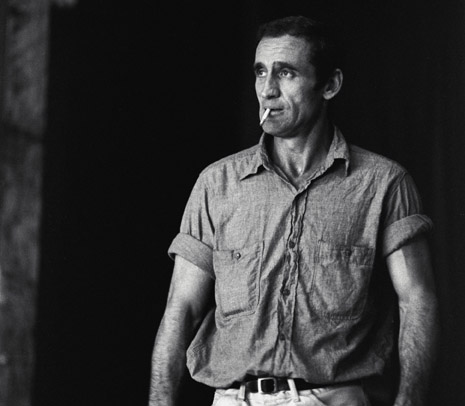
Neal Cassady, “American Muse and Holy Fool”

Neal Cassady, “American Muse and Holy Fool”

He was the real hero of the Beat Generation. Variously called Dean Moriarty and Cody Pomeray by Jack Kerouac, Hart Kennedy by John Clellon Holmes, and in Allen Ginsberg’s “Howl” (1955), “N.C, secret hero of these poems.” It is almost as if the whole Beat moment were mainly about Neal Cassady (1926-1968), a petty criminal who served time in prison for car theft, shoplifting, and fencing of stolen goods. Although he never published a word during his lifetime, it was Neal who acted as a catalyst for his friends. As Jack Kerouac wrote in On The Road:

He was simply a youth tremendously excited with life, and though he was a con-man, he was only conning because he wanted so much to live and to get involved with people who would otherwise pay no attention to him…. Somewhere along the line, I knew there’d be girls, visions, everything; somewhere along the line, the pearl would be handed to me.

Kerouac described his friend’s influence on his writing style “as in a rush of mad ecstasy, without self-consciousness or mental hesitation.” You can see some of this in this YouTube interview at the City Lights Bookstore in San Francisco between Cassady and Allen Ginsberg:

In a 1953 letter to his friend Jack, he wrote:

Well it’s about time you wrote, I was fearing you farted out on top that mean mountain or slid under while pissing in Pismo, beach of flowers, food and foolishness, but I knew the fear was ill-founded for balancing it in my thoughts of you, much stronger and valid if you weren’t dead, was a realization of the experiences you would be having down there, rail, home, and the most important, climate, by a remembrance of my own feelings and thoughts (former low, or more exactly, nostalgic and unreal; latter hi) as, for example, I too seemed to spend time looking out upper floor windows at sparse, especially nighttimes, traffic in females—old or young.

It is not so much a well-constructed unit of thought as an onrush, barely keeping on the rails.

And, in the end, it was the rails that did him in. He was in San Miguel Allende in Mexico in 1968 when he drank too much alcohol and took Seconal, then went walking along the rails on his way to the next town. That’s where he was found, unresponsive, dying in the local hospital. He could have died of an overdose or of renal failure or of “exposure.”

Beat

It All Started as Friendship...

It All Started as a Friendship…

The so-called beat generation actually started as a bunch of friends who liked to get together to talk, drink, smoke marijuana, and—perhaps—even have some casual sex along the way. The only difference between Jack Kerouac, Allen Ginsberg, John Clellon Holmes, and millions of other groups of rambunctious youngsters was that some of them had talent.

Last month, I read Kerouac’s Big Sur; and I am now reading John Clellon Holmes’s Go. The original beats would probably think of me as some sort of stick-in-the-mud, but I admire their all-out pursuit of freedom, even when it leads—as it did for many of them—to disorder and early sorrow. In Big Sur, Kerouac turns to drink the way that most people turn to inhaling oxygen. In Go, the action is frenetic and endless, especially once Hart Kennedy [Neal Cassady] joins them:

Ben’s connection had not showed; the sweet cologne fragrance of benzedrine about him and the discoloration of his lips suggested that there may have been no marijuana connection at all, but somehow that did not matter. Continuance was what concerned them, and where to go next. After a number of improbable ideas (places that would not be open, people who would not be up), they settled on a friend of Ben’s, who lived on One Hundred and Twenty-third Street and Amsterdam Avenue, who would “surely have liquor.” Although at another moment this would have seemed unlikely to them all, now they believed it with bland innocence as though all discord in the universe had been resolved by their harmony, which, in any case, did not depend on such details.

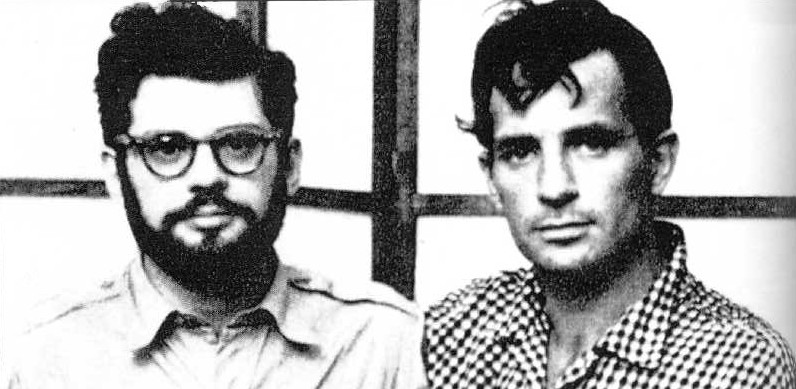
Below is a photo of Jack Kerouac with Allen Ginsberg, who was probably the most talented writer of the lot:

Allen Ginsberg and Jack Kerouac

Allen Ginsberg and Jack Kerouac

In the months to come, I plan to read more works by this unique “band of brothers” who had an outsize influence on the middle of the Twentieth Century, even if, as the movies and lurid paperbacks above show, it was mostly misinterpreted.

“The Burning of the World”

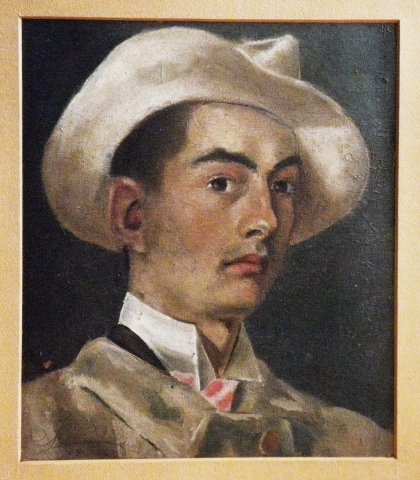
Béla Zombory-Moldován in His Early Twenties

Béla Zombory-Moldován in His Early Twenties

Two days ago, I posted a blog entitled A Hungarian Artist Goes to War about the experiences of a young Magyar officer who was called up for the First World War on the Galician Front. In that post, I concentrated on Béla Zombory-Moldován’s paintings. Today, I would like to reprint a review of his memoirs about fighting the Russians in 1915. Entitled The Burning of the World: A Memoir of 1914, his book was translated by his grandson Peter and released by the New York Review of Books. Here is an edited text of my review from Goodreads.Com:

When the wounded Béla Zombory-Moldován went by train through Eperjes (now Presov) early in 1915, my father was nearby, a toddler at the age of three. I cannot help but wonder if he heard the train go by, carrying the wounded officers and men of the Royal Hungarian Army after its defeat to the Russians at Rava-Ruska.

BZM, as I shall call him, managed to survive and, in fact, managed to live for another half century, becoming one of Hungary’s most beloved artists. But in The Burning of the World: A Memoir of 1914, we see only a tiny slice of that life. Would that it were more! Supposedly the remainder of his autobiography was hidden or destroyed by a relative for personal reasons.

Hungarian Soldiers at the Front

Hungarian Soldiers at the Front

We tend not to know much about the Galician Front in 1914-1915, except that the casualty rates for the monarchy’s forces were horrifying. In the first two weeks of fighting alone, the Austro-Hungarian forces lost some 400,000 killed, wounded or captured. The “butcher’s bill” rose to 850,000 by the end of 1914 and to 1,600,000 by March.

We meet young Béla at a seaside resort in Croatia (then part of Hungary) the day that war is declared. Then we follow him to Veszprém, where he is called up to report, and from there to Galicia, where he engages in the battles at Rava-Ruska and Magierov. Wounded, he returns to Budapest where he has a month to recuperate before returning to duty. During that month, he visits a village priest relative in the north of Hungary, and then returns for a while to the Croatian Adriatic.

During this time, BZM came to a realization:

Nature slumbered, seemingly indifferent. Everything moved forward in accordance with unchanging laws; sleeping or waking, every struggle, in accordance with its slow, gradual, hidden evolutionary laws. Nature flowed on its course, impervious to the absurd behavior of men, their mutual slaughter and assorted acts of wickedness. The whole world was manifestly indifferent in the face of the life-and-death struggles of men: it neither took their side nor opposed them, but simply paid no attention. Let them get on with it. Let them reap what they sow.