For over a decade, I have tackled one or two works of horror literature during the month of October. In the past, most of these were collections of horror stories in the excellent collections put out by Dover Publications, but I am coming to the end of these; so I am branching out a bit.
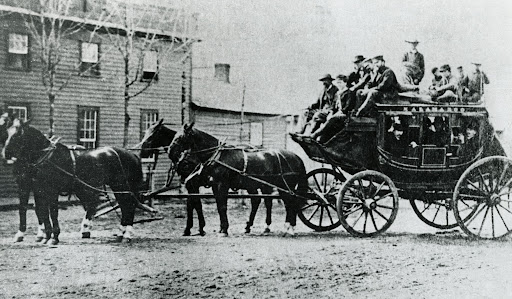
This month, I have read two collections: Amelia B. Edwards¹s The Phantom Coach and Other Stories and Thomas Ligotti’s Noctuary. Ms Edwards (1831-1892) was not only an excellent teller of tales, but also a world traveler, journalist, and—to add a touch of the weird—an early Egyptologist of some note. I have downloaded her book A Thousand Miles Up the Nile from Amazon Kindle to read sometime next year.
Thomas Ligotti, on the other hand, is a contemporary, born in 1953. I had previously read two of his collections—Songs of a Dead Dreamer and Grimscribe: His Lives and Works—and found them satisfyingly eldritch in every way. The same could be said of Noctuary, which I loved. In fact yesterday’s post on this blog site was a short short story entitled “One May Be Dreaming” from Noctuary in its entirety. Click on the link to check it out.
For Halloween, I’ve decided to excerpt as short short story in its entirety from Thomas Ligotti’s excellent collection entitled Noctuary.
One May Be Dreaming
Beyond the windows a dense fog spreads across the graveyard, and a few lights beam within hazy depths, glowing like old lamps on an empty street. Night is softly beginning.
Within the window are narrow bars, both vertical and horizontal, which divide it into several smaller windows. The intersections of these bars form crosses. Not far beyond the windowpanes, there are other crosses jutting out of the earth-hugging fog in the graveyard. To all appearances, it is a burial ground in the clouds that I contemplate through the window.
Upon the window ledge is an old pipe that seems to have been mine in another life. The pipe’s dark bowl must have brightened to a reddish-gold as I smoked and gazed beyond the window at the graveyard. When the tobacco had burned to the bottom, perhaps I gently knocked the pipe against the inside wall of the fireplace, showering the logs and stones with warm ashes. The fireplace is framed within the wall perpendicular to the window. Across the room are a large desk and a high-backed chair. The lamp positioned in the far right corner of the desk serves as illumination for the entire room, a modest supplement to those pale beacons beyond the window. Some old books, pens, and writing paper are spread across the top of the desk. In the dim depths of the room, against the fourth wall, is a towering clock that ticks quietly.
Those, then, are the main features of the room in which I find myself: window, fireplace, desk, and clock. There is no door.
I never dreamed that dying in one’s sleep would encompass dreaming itself. I often dreamed of this room and now, near the point of death, have become its prisoner. And here my bloodless form is held while my other body somewhere lies still and without hope. There can be no doubt that my present state is without reality. If nothing else, I know what it is like to dream. And although a universe of strange sensation is inspired by those lights beyond the window, by the fog and the graveyard, they are no more real than I am. I know there is nothing beyond those lights and that the obscured ground outside could never sustain my steps. Should I venture there I would fall straight into an absolute darkness, rather than approaching it by the degrees of my dying dreams.
For other dreams came before this one—dreams in which I saw lights more brilliant, a fog even more dense, and gravestones with names I could almost read from the distance of this room. But everything is dimming, dissolving, and growing dark. The next dream will be darker still, everything a little more confused, my thoughts … wandering. And objects that are now part of the scene may soon be missinfg: perhaps even my pipe—if it was ever mine—will be gone forever.
But for the moment I am safe in my dream, this dream. Beyond the window a dense fog spreads across the graveyard, and a few lights beam within hazy depths, glowing like old lamps along an empty street. Night is softly beginning.
The following short short story is from a collection of Antonio Tabucchi’s short stories entitled Message from the Shadows. The author, an Italian who lives in Portugal, is known for his diverse points of view, In this story, we see humanity from the perspective of a whale.
Postscript: A Whale’s View of Man
Always so feverish, and with those long limbs waving about. Not rounded at all, so they don’t have the majesty of complete, rounded shapes sufficient unto themselves, but little moving heads where all their strange life seems to be concentrated. They arrive sliding across the sea, but not swimming, as if they were birds almost, and they bring death with frailty and graceful ferocity. They’re silent for long periods, but then shout at each other with unexpected fury, a tangle of sounds that hardly vary and don’t have the perfection of our basic cries: the call, the love cry, the death lament. And how pitiful their lovemaking must be: and bristly, brusque almost, immediate, without a soft covering of fat, made easy by their threadlike shape, which excludes the heroic difficulties of union and the magnificent and tender efforts to achieve it.
They don’t like water, they’re afraid of it, and it’s hard to understand why they bother with it. Like us, they travel in herds, but they don’t bring their females, one imagines they must be elsewhere, but always invisible.
Sometimes they sing, but only for themselves, and their song isn’t a call to others, but a sort of longing lament. They soon get tired and when evening falls they lie down on the little islands that take them about and perhaps fall asleep or watch the moon. They slide silently by and you realize they are sad.
It was ten years before the completion of the transcontinental railroad in 1869. Just by chance, there were three notable journeys across the Plains to the West that year which were described in books that are still worth reading and readily available:
Mark Twain’s Roughing It is partly fictionalized but largely true, and it is still one of the funniest books ever written
Sir Richard Francis Burton’s The City of the Saints: Among the Mormons and Across the Rocky Mountains to California is mostly about a trip to visit Salt Lake City and Brigham Young, but includes the whole journey from East to West
Newspaper Editor Horace Greeley’s An Overland Journey from New York to San Francisco in the Summer of 1859 is not as well known but equally valuable
If you are interested in the history of the Western United States, these three books together constitute a priceless snapshot of what it was like in one particular year.
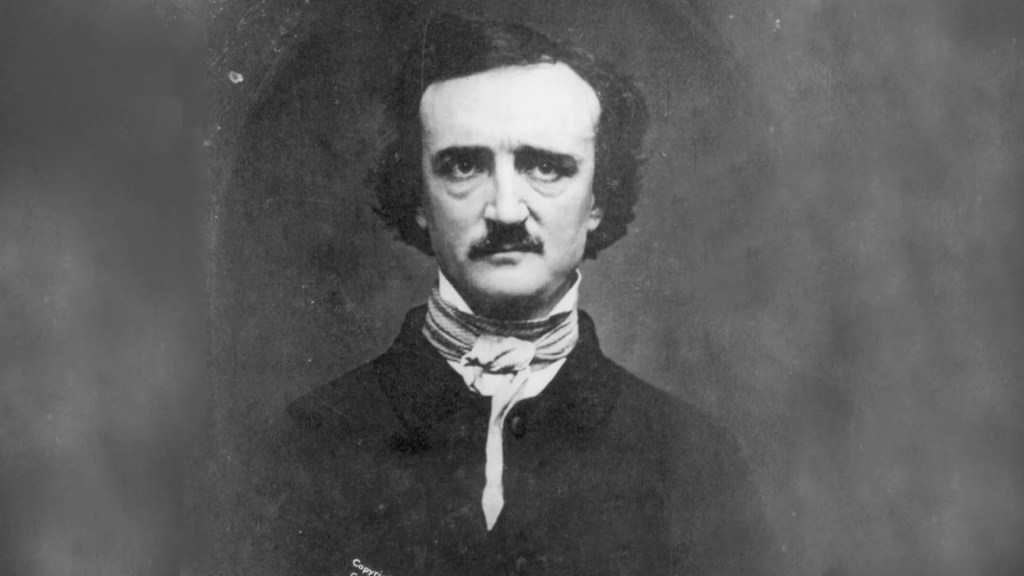
I am currently in the middle of the riches of Van Wyck Brooks’s The Times of Melville and Whitman (published 1947), devouring each chapter slowly, mining it for information on obscure 19th century American authors. I am even paying close attention to all the footnotes, in which I found this excerpt of a letter from Edgar Allan Poe to F. W. Thomas written on February 14, 1849. The subject was why Poe wasn’t interested in joining the Gold Rush:
Talking of gold and temptations at present held out to ‘poor-devil authors,’ did it ever strike you that all that is really valuable to a man of letters—to a poet in especial—is absolutely unpurchasable? Love, fame, the dominion of intellect, the consciousness of power, the thrilling sense of beauty, the free air of heaven, exercise of body and mind, with the physical and moral health which result—these and such as these are really all that a poet cares for—then answer me this—why should he go to California?
In fact, Poe wrote a poem on the subject:
Eldorado
Gaily bedight, A gallant knight, In sunshine and in shadow, Had journeyed long, Singing a song, In search of Eldorado.
But he grew old— This knight so bold— And o’er his heart a shadow Fell as he found No spot of ground That looked like Eldorado.
And, as his strength Failed him at length, He met a pilgrim shadow— “Shadow,” said he, “Where can it be— This land of Eldorado?”
“Over the Mountains Of the Moon, Down the Valley of the Shadow, Ride, boldly ride,” The shade replied— “If you seek for Eldorado!”
If the poem sounds vaguely familiar, it was quoted in its entirety in a Howard Hawks Western made in 1967 called, suitably enough, El Dorado. The film starred John Wayne, James Caan, and Robert Mitchum.
The Town of Akranes, Setting for Eva Björg Ægisdottir’s Novels
It’s difficult to think of Iceland as a “scene of the crime” involving murder. The entire nation has a population under 400,000, with approximately half living in or near the capital of Reykjavík. Yet I know of three mystery authors who write about more Icelandic murders than could have occurred within the last half century..
The writers, in the order that I discovered them, are:
Arnaldur Indriðason
Yrsa Siguðardottir (who also writes children’s books)
Eva Björg Ægisdottir
All three are excellent writers. Below are my favorites among their works:
Hypothermia and Reykjavík Nights by Arnaldur Indriðason
Ashes to Dust and My Soul to Take by Yrsa Siguðardottir
Girls Who Lie and Night Shadows by Eva Björg Ægisdottir
These are just some of my favorites, but I haven’t read a single stinker by any of these authors.
I have always been fond of reading collections of short stories by my favorite authors. For some writers such as Jorge Luis Borges, Anton Chekhov, and Edgar Allan Poe, that’s pretty much all there is. But for great novelists like Henry James, Mark Twain, Joseph Conrad, and William Faulkner the stories serve to fill out their work with an extra dimension of conciseness and sharpness.
Paul Theroux is for me a special case. I have been reading (and re-reading) his travel books for half a century, but it is only recently that I have turned to his fiction: both novels and stories. The following is a complete short short story from his collection Mr Bones: Twenty Stories. It is part of a microcollection of short short stories called “Long Story Short.”
A Real Break
Mother and Grace—let’s just say they weren’t best buddies. So as the elder daughter, and single, I began to look after Mother when she began to fail. And she was a wreck. Got confused in stores, left the oven on, real muddled about time. I made her stop driving, so of course I had to take the wheel. God, the hills. I wrote Grace that I was moving in with Mother. The big Polk Street house had been in Mother’s family for years; Mother was lost in it. Grace understood completely and said she was relieved. She had been in a Minnesota convent since taking her vows, though she sometimes spent extended periods in Nevada and Florida as a hospital worker, “and doing spiritual triage too,” on Indian reservations. We seldom heard from her, but Mother sent her money now and then. Because of the strictness of her religious order, she was never able to visit us in San Francisco. “And just as well,” Mother said.
It got so that Mother could only manage with my assistance. I resigned from my secretarial job, lost my retirement and my medical plan, and became Mother’s full-time caregiver. I updated Grace on Mother’s condition and mentioned the various challenges we faced. Grace wrote saying that she was praying for us, and she asked specific questions because these infirmities were to be specified in the prayers, or intercessions, as she called them.
About three years into my caregiving, Grace called. She said, “Why not take a few months off? My superior has given me special dispensation to look after Mom for a while. It’ll be a break for me. And you can have a real break. Maybe go to Europe.”
Mother wasn’t overjoyed, but she could see that I was exhausted. Grace flew in. It was an emotional reunion. I hardly recognized her—not because she had gotten older, though she had. But she was dressed so well and in such good health. She even mentioned how I looked stressed and could obviously do with some time off.
I went on one of those special British Airways fares, a See Scotland package. It was just the break I needed, or so I thought.
Long story short, when I got back to San Francisco, the Polk Street house was being repainted by people who said they were the new owners. Everything I possessed was gone. Mother was in a charity hospice. She had been left late one night at the emergency room of St Francis Hospital. There was no money in Mother’s bank account. Everything she had owned had been sold. I saw Mother’s lawyer. He found a number for Grace—the 702 area code, a cell phone. Nevada.
“I’m glad you called,” Grace said. I could hear music in the background and a man talking excitedly, a fishbowl babble, aqueous party voices. I started to cry but she interrupted me with a real hard voice. “Everything I did was legal. Mother gave me power of attorney. I never want to see you again. And you will never undo it.” Unfortunately for me, that was true.
I have just read for the third or fourth time William Faulkner’s short novel The Bear—this time in the version used for the author’s Big Woods (1955) collection of hunting stories. All the other times were in the version used for Go Down Moses (1942). Here Sam Fathers talks to Ike McCaslin and Ash about the bear Old Ben.
“He do it every year,” Sam said. “Once: Ash and Boon say he comes up here to run the other little bears away. Tell them to get the hell out of here and stay out until the hunters are gone. Maybe.” The boy no longer heard anything at all, yet still Sam’s head continued to turn gradually and steadily until the back of it was toward him. Then it turned back and looked down at him—the same face, grave, familiar, expressionless until it smiled, the same old man’s eyes from which as he watched there faded slowly a quality darkly and fiercely lambent, passionate and proud. “He dont care no more for bears than he does for dogs or men neither. He come to see who’s here, who’s new in camp this year, whether he can shoot or not, can stay or not. Whether we got the dog yet that can bay and hold him until a man gets there with a gun. Because he’s the head bear. He’s the man.”
One of the characters in Kurt Vonnegut Jr’s Bluebeard has an interesting take on Henrik Ibsen’s play A Doll’s House, which ends shockingly (for its time) by the wife, Nora Helmer, walking out on her husband. Speaking is Marilee Kemp, with whom the artist Rabo Karabedian, is in love.
Her sense of her lace in the world back in 1933, with the Great Depression going on, revealed itself, I think, in a conversation we had about A Doll’s House, the play by Henrik Ibsen. A new reader’s edition of that play had just come out, with illustrations by Dan Gregory, so we both read it and then discussed it afterwards.
Gregory’s most compelling illustration showed the very end of the play, with the leading character, Nora, going out the front door of her comfortable house, leaving her middle-class husband and children and servants behind, declaring that she had to discover her own identity out in the real world before she could be a strong mother and wife.
. . .
That is how the play ends. Nora isn’t going to allow herself to be patronized for being as uninformed and helpless as a child anymore.
And Marilee said to me, “That’s where the play begins as far as I’m concerned. We never find out how she survived. What kind of job could a woman get back then? Nora didn’t have any skills or education. She didn’t even have money for food and a place to stay.”
. . .
That was precisely Marilee’s situation, too, of course. There was nothing waiting for her outside the door of Gregory’s very comfortable dwelling except hunger and humiliation, no matter how meanly he might treat her.
A few days later, she told me that she had solved the problem. “That ending is a fake!” she said, delighted with herself. “Ibsen just tacked it on so the audience could go home happy. He didn’t have the nerve to tell what really happened, what the whole rest of the play says has to happen.”
“What has to happen?” I said.
“She has to commit suicide,” said Marilee. “And I mean right away—in front of a streetcar or something before the curtain comes down. That’s the play. Nobody’s ever seen it, but that’s the play!”
On most days, I check the “Deals” section of the Amazon Kindle Store for titles I want to read and can get cheap. As I go through the list of titles, I encounter mostly dreck. I thought I would present a list of the most revolting titles from today’s deals. As they were obviously written with little attention to care, I thought it would be best not to italicize or boldface the titles. They barely even deserve upper case letters.
That Time I Got Drunk and Saved a Demon by Kimberly [the] Lemming
The Perfect Marriage: A Completely Gripping Psychological Suspense [Gripping where?]
The Healer’s Way (Book 1): A Portal Progression Fantasy Series [Huh?]
Future Proof: The Time Travel Novel That Everyone’s Talking About. [I sincerely doubt that]
Stranded: The Bestselling Psychological Thriller with a Jaw-Dropping Twist, Perfect for Summer [of 1953?]
Heat of the Moment: A Billionaire Romance [Must be self love]
The Patriot: A Second Chance, Fake Relationship Romance [What?]
Forge Master: A LitRPG Adventure [When I found out that LitRPG meant literary role playing game, I yawned and thought “greasy kid stuff”]
The Hero She Needs by Anna [the] Hack[ett]
Come Back for Me: A Small Town Second Chance Romance [Jeez, that must be a whole genre]
Fury: A Fake Dating Workplace Romance [So, is fake dating a thing now?]
The Silent Wife: A Gripping Emotional Page Turner with a Twist That Will Take Your Breath Away [I’m choking already]
Wielder of Shadows: An Enemies to Lovers Fantasy Romance
This Is Going to Hurt: Secret Diaries of a Young Doctor [Ouch!]
The Awe of God: The Astounding Way a Healthy Fear of God Transforms Your Life [About the same way an unhealthy fear of everything would]
I know that most of these titles are destined for women readers; and I know that there is a male equivalent which is just as off-putting. It’s just that Amazon doesn’t feature them in their store deals page.








 Tarnmoor
You must be logged in to post a comment.