Old Ben

I have just read for the third or fourth time William Faulkner’s short novel The Bear—this time in the version used for the author’s Big Woods (1955) collection of hunting stories. All the other times were in the version used for Go Down Moses (1942). Here Sam Fathers talks to Ike McCaslin and Ash about the bear Old Ben.

“He do it every year,” Sam said. “Once: Ash and Boon say he comes up here to run the other little bears away. Tell them to get the hell out of here and stay out until the hunters are gone. Maybe.” The boy no longer heard anything at all, yet still Sam’s head continued to turn gradually and steadily until the back of it was toward him. Then it turned back and looked down at him—the same face, grave, familiar, expressionless until it smiled, the same old man’s eyes from which as he watched there faded slowly a quality darkly and fiercely lambent, passionate and proud. “He dont care no more for bears than he does for dogs or men neither. He come to see who’s here, who’s new in camp this year, whether he can shoot or not, can stay or not. Whether we got the dog yet that can bay and hold him until a man gets there with a gun. Because he’s the head bear. He’s the man.”


A New Ending for “A Doll’s House”

Nora Helmer Walking Out of Her Marriage

One of the characters in Kurt Vonnegut Jr’s Bluebeard has an interesting take on Henrik Ibsen’s play A Doll’s House, which ends shockingly (for its time) by the wife, Nora Helmer, walking out on her husband. Speaking is Marilee Kemp, with whom the artist Rabo Karabedian, is in love.

Her sense of her lace in the world back in 1933, with the Great Depression going on, revealed itself, I think, in a conversation we had about A Doll’s House, the play by Henrik Ibsen. A new reader’s edition of that play had just come out, with illustrations by Dan Gregory, so we both read it and then discussed it afterwards.

Gregory’s most compelling illustration showed the very end of the play, with the leading character, Nora, going out the front door of her comfortable house, leaving her middle-class husband and children and servants behind, declaring that she had to discover her own identity out in the real world before she could be a strong mother and wife.

. . .

That is how the play ends. Nora isn’t going to allow herself to be patronized for being as uninformed and helpless as a child anymore.

And Marilee said to me, “That’s where the play begins as far as I’m concerned. We never find out how she survived. What kind of job could a woman get back then? Nora didn’t have any skills or education. She didn’t even have money for food and a place to stay.”

. . .

That was precisely Marilee’s situation, too, of course. There was nothing waiting for her outside the door of Gregory’s very comfortable dwelling except hunger and humiliation, no matter how meanly he might treat her.

A few days later, she told me that she had solved the problem. “That ending is a fake!” she said, delighted with herself. “Ibsen just tacked it on so the audience could go home happy. He didn’t have the nerve to tell what really happened, what the whole rest of the play says has to happen.”

“What has to happen?” I said.

“She has to commit suicide,” said Marilee. “And I mean right away—in front of a streetcar or something before the curtain comes down. That’s the play. Nobody’s ever seen it, but that’s the play!”

Books I Won’t Be Reading Any Time Soon

Dreck

On most days, I check the “Deals” section of the Amazon Kindle Store for titles I want to read and can get cheap. As I go through the list of titles, I encounter mostly dreck. I thought I would present a list of the most revolting titles from today’s deals. As they were obviously written with little attention to care, I thought it would be best not to italicize or boldface the titles. They barely even deserve upper case letters.

  • That Time I Got Drunk and Saved a Demon by Kimberly [the] Lemming
  • The Perfect Marriage: A Completely Gripping Psychological Suspense [Gripping where?]
  • The Healer’s Way (Book 1): A Portal Progression Fantasy Series [Huh?]
  • Future Proof: The Time Travel Novel That Everyone’s Talking About. [I sincerely doubt that]
  • Stranded: The Bestselling Psychological Thriller with a Jaw-Dropping Twist, Perfect for Summer [of 1953?]
  • Heat of the Moment: A Billionaire Romance [Must be self love]
  • The Patriot: A Second Chance, Fake Relationship Romance [What?]
  • Forge Master: A LitRPG Adventure [When I found out that LitRPG meant literary role playing game, I yawned and thought “greasy kid stuff”]
  • The Hero She Needs by Anna [the] Hack[ett]
  • Come Back for Me: A Small Town Second Chance Romance [Jeez, that must be a whole genre]
  • Fury: A Fake Dating Workplace Romance [So, is fake dating a thing now?]
  • The Silent Wife: A Gripping Emotional Page Turner with a Twist That Will Take Your Breath Away [I’m choking already]
  • Wielder of Shadows: An Enemies to Lovers Fantasy Romance
  • This Is Going to Hurt: Secret Diaries of a Young Doctor [Ouch!]
  • The Awe of God: The Astounding Way a Healthy Fear of God Transforms Your Life [About the same way an unhealthy fear of everything would]

I know that most of these titles are destined for women readers; and I know that there is a male equivalent which is just as off-putting. It’s just that Amazon doesn’t feature them in their store deals page.

Survival Mechanism

My father was a semi-professional athlete both in Czechoslovakia and in Cleveland, where he played in the 1930s in a nationality-based soccer league. As his firstborn, I was something of a disappointment to him. I was a bit of a shrimp, later ballooning into a short tubby boy with a broad spectrum of allergies. Plus, around the age of ten, I started getting severe frontal headaches almost daily that were constantly misdiagnosed by the physicians we saw. (It turned out to be a pituitary tumor, which was successfully operated on after I graduated from college.)

What unpromising material!

When my brother was born, my father must have breathed a sigh of relief. Dan was tall and an athlete in my father’s mold.

Where did that leave me?

Thanks to my mother’s genius for story-telling—what with dark forests and witches and princesses—I turned to books as soon as I learned to read. There was a period of adjustment of several years during which I had to switch from being an American kid who spoke only Hungarian to an English-speaker. Those dark forests and witches and princesses, luckily, could also be found in books, together with a lot of other interesting stuff.

Although I always had friends, I was left out of school sports because I was frankly somewhat sickly. That turned out to be all right in the end, as my friends were interested in the same sort of things that I was. With Richard Nelson, who was an astronomy freak, I collaborated in writing an illustrated hand-printed study of our solar system and galaxy. Richard later became a meteorologist. Then there was James Anthony, who became a gynecologist.

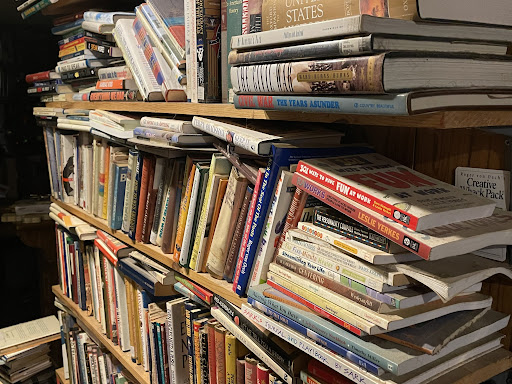
While I was physically weak, books made me strong in every other way. I never became a famous author or a college professor, but I held down some interesting jobs that help finance my love of books. And I always read a lot. Even today, as I approach my ninth decade, I read anywhere from twelve to sixteen books a month.

What started out as a survival mechanism has brought happiness to my life. I have no children (because I no longer have a pituitary gland), but my retirement years have been mostly contented.

I know that there will be bad times to come as Martine and I age, but I retain a mostly sunny view of life. And in an election year in which Donald Trump is running, that’s a major accomplishment.

Tolstoy on the 2024 Election

Count Leo Tolstoy (1828-1910)

Well, of course Tolstoy did not write anything about our upcoming presidential election, but what he said back over 125 years ago can still resonate with Americans today. Below is an excerpt from his diary entry for February 7, 1895.

The situation of the majority of people educated in true brotherly love and now oppressed by the deceit and cunning of those who wield power and who force the majority to ruin their own lives—this situation is terrible and seems to offer no way out. Only two ways out present themselves and both are barred: one is to break violence by violence, terror, dynamite bombs and daggers as our nihilists and anarchists did, to smash the conspiracy of governments against peoples, without our participation; the other is to enter into agreement with the government, make concessions to it and, by taking part in it, gradually unravel the net which holds the people fast and free it….

Dynamite and daggers, as experience shows us, only provoke reaction and destroy the most valuable power, the only power in our control—public opinion; the other way out is barred by the fact that governments have already come to know how far to tolerate the participation of people who want to reform them. They only tolerate what doesn’t destroy the essentials, and are very sensitive about what is harmful to them, sensitive because it concerns their very existence. They do tolerate people who don’t agree with them and want to reform the government, not only to satisfy the demands of these people, but also for their own sakes, for the sake of the government. These people would be dangerous for governments if they remained outside these governments and rose up against them; they would strengthen the one weapon which is stronger than governments—public opinion—and so they need to make these people safe, win them over by means of concessions made by the government, render them harmless like microbe cultures—and then use them to serve the aims of governments, i.e., the oppression and exploitation of the people.

Both ways out are firmly and impenetrably barred. What then remains? You can’t break violence by violence—you increase reaction; nor can you join the ranks of government. Only one thing remains: to fight the government with weapons of thought, word and way of life, not making concessions to it, not joining its ranks, not increasing its power oneself.

On the Open Road

Sam Riley and Garrett Hedlund in Walter Salles’ Movie On the Road

This month I read two classical “road novels.” The first was Jean Giono’s The Open Road (Grands Chemins) about two down-at-heel pals walking through the countryside of Southern France around 1950 looking to pick up cash from work or gambling. Conceived of around the same time was Jack Kerouac’s On the Road about two down-at-heel pals crossing the continent at high speed looking to pick up enough cash for gas to get to their destination. Curiously, neither writer was aware of the other, even though Kerouac came from a French-Canadian family.

Both books are well worth reading, especially as I feel that Kerouac and Giono would have admired each other’s work.

Jean Giono (1895-1970)

I had read the Kerouac decades earlier, but upon finishing Giono’s book, I thought I wanted to get on the road again, so I re-read On the Road. They were two very different authors. Giono was in love with the land of his birth as was Kerouac. Unfortunately, Kerouac’s love was so heavily suffused with alcohol that he only lasted to the age of 47. His later books, such as Big Sur, showed him to be headed down the road to liver failure.

Still, I love reading Kerouac’s books. He had such a vital enthusiasm for his friends and for mid-century America that, even in his experiments in bop prosody, something splendid shines through. Perhaps it was a never ending sense of youthfulness. Giono’s France is centuries old, but Kerouac’s America was bottled in bond in the years right after the Second World War.

One That Got Away

Enroute to Mexico with Neal Cassady in On The Road, Jack Kerouac falls for a young woman he sees briefly in Michigan. Considering Kerouac’s dismal track record with women, maybe it was a good thing she didn’t join him.

I took up a conversation with a gorgeous country girl wearing a low-cut cotton blouse that displayed the beautiful sun-tan on her breast tops. She was dull. She spoke of evenings in the country making popcorn on the porch. Once this would have gladdened my heart but because her heart was not glad when she said it I knew there was nothing in it but the idea of what one should do. “And what else do you do for fun?” I tried to bring up boy friends and sex. Her great dark eyes surveyed me with emptiness and a kind of chagrin that reached back generations and generations in her blood from not having done what was crying to be done—whatever it was, and everybody knows what it was. “What do you want out of life?” I wanted to take her and wring it out of her. She didn’t have the slightest idea what she wanted. She mumbled of jobs, movies, going to her grandmother’s for the summer, wishing she could go to New York and visit the Roxy, what kind of outfit she would wear—something like the one she wore last Easter, white bonnet, roses, rose pumps, and lavender gabardine coat. “What do you do on Sunday afternoons?” I asked. She sat on her porch. The boys went by on bicycles and stopped to chat. She read the funny papers, she reclined on the hammock. “What do you do on a warm summer’s night?” She sat on the porch, she watched the cars in the road. She and her mother made popcorn. “What does your father do on a summer’s night?” He works, he has an all-night shift at the boiler factory, he’s spent his whole life supporting a woman and her outpoppings and no credit or adoration. “What is he aching to do? What are we all aching to do? What do we want?” She didn’t know. She yawned. She was sleepy. It was too much. Nobody could tell. Nobody would ever tell. It was all over. She was eighteen and most lovely, and lost.

Endlessly Wandering the Streets of Paris

Auteuil in Paris’s 16th Arrondissement

Of recent French authors, the one I am most addicted to is Patrick Modiano, winner of the 2014 Nobel Prize for Literature. Since I first read his Out of the Dark (1998) for an Internet French Literature group ten years ago, I have read most of his work and am still hungry for more, though there are only a few titles left to go. And, no doubt, I will probably start re-reading them.

Scene of the Crime (2021) is one of his most recent novels, which I just finished today. Jean Boesman experienced some fascinating but very dicey people back in the 1960s and is haunted by the memory. He has been sought after by several of them for knowing where some swag from past smuggling has been hidden, but he successfully avoids them. Nonetheless, he still endlessly goes over his relationship with the young women in the group. As he says at one point, “We are from our childhood as we are from a country.”

That country was the Paris of the 1960s and 1970s. I cannot read Modiano without a map book of Paris on my lap, following his characters wanderings and evasions through the most walkable city on Earth.

In Scene of the Crime, I tracked Boesman through Boulogne-Billancourt (where Modiano was born), Auteuil, Pigalle/Place Blanche, the Quays along the Seine, and Saint Lazare.

None of Modiano’s books are particularly long: Most can be completed in one or two sittings. I usually take a little longer, because I am following the action on a map of Paris.

Tolstoy’s Journal

Count Leo Tolstoy (1828-1910)

Toward the end of his life, Count Leo Tolstoy wrote entries in a journal. He was a desultory writer by this time, frequently skipping days, weeks, and even months. Many entries end with the expression “If I Live,” highlighting to Tolstoy that he was approaching the end of his life. Most of his entries are about man’s relationship with his Creator and frequently end with short criticisms of what he wrote, such as “Stupid,” “Not clear and not what I want to say,” “I have not succeeded,” “Again, not what I want to to say,” and “I feel that there is something in this, but I can not yet express it clearly.” But then, even when he is struggling, Tolstoy is worth reading. Following are several excerpts from the first 80 pages.

Oh, not to forget death for a moment, into which at any moment you can fall! If we would only remember that we are not standing upon an even plain (if you think we are standing so, then you are only imagining that those who have gone away have fallen overboard and you yourself are afraid you will fall overboard), but that we are rolling on, without stopping, running into each other, getting ahead and being got ahead of, yonder behind the curtain which hides from us those who are going away, and will hide us from those who remain. If we remember that always, then, how easy and joyous it is to live and roll together, yonder down the same incline, in the power of God, with Whom we have been and in Whose power we are now and will be afterwards and forever. I have been feeling this very keenly.

§

I am alive, but I don’t live…. I lay down to sleep, but could not sleep, and there appeared before me so clearly and brightly, an understanding of life whereby we would feel ourselves to be travellers. Before us lies a stage of the road with the same well-known conditions. How can one walk along that road otherwise than eagerly, gaily, friendly, and actively together, not grieving over the fact that you yourself are going away or that others are going ahead of you thither, where we shall again be still more together.

§

I was going from the Chertkovs on the 5th of July. It was evening, and beauty, happiness, blessedness, lay on everything. But in the world of men? There was greed, malice, envy, cruelty, lust, debauchery. When will it be among men as it is in nature? Here there is a struggle, but it is honest, simple, beautiful. But there it is base. I know it and I hate it, because I myself am a man.

Water from the Limpopo

The Library of Water in Stykkishólmur, Iceland

I have just finished reading the first volume of Konstantin Paustovsky’s Story of a Life. In Chapter 14, we are introduced to a geography teacher at the high school Kostik (short for Konstantin) attends in Kyiv named Cherpunov. Paustovsky describes his collection:

Bottles filled with yellowish water, corked and sealed with sealing wax, stood in rows on the classroom table. They had labels, inscribed in an uneven elderly hand: ‘Nile,’ ‘Limpopo,’ ‘Mediterranean.’

There were bottles of water from the Rhine, the Thames, Lake Michigan, from the Dead Sea and the Amazon, but however long we looked at them they all remained equally yellow and uninteresting.

Curiously, there is one such collection in Stykkishólmur, Iceland, on the Snæfellsness Peninsula. It is called the Library of Water. Although I have been in Stykkishólmur twice, I have never bothered to visit it. Perhaps because I suspected what Paustovsky was to find out after Cherpunov’s young wife ran off and the old teacher quit.

‘Do you remember Cherpunov?’

‘Yes, of course.’

‘Well, I can tell you now that there was never anything in his bottles except ordinary water from the tap. You’ll ask me why he lied to you. He rightly believed that he was stimulating your imagination. He attached great value to it. I remember him telling me that it was all that distinguished man from the beasts. It was imagination, he said, that had created art, it expanded the boundaries of the world and of the mind, and communicated the quality we call poetry to our lives.’